


Clear and Open
Group and social spaces radiate outward from a central core housing all technical and ancillary functions.
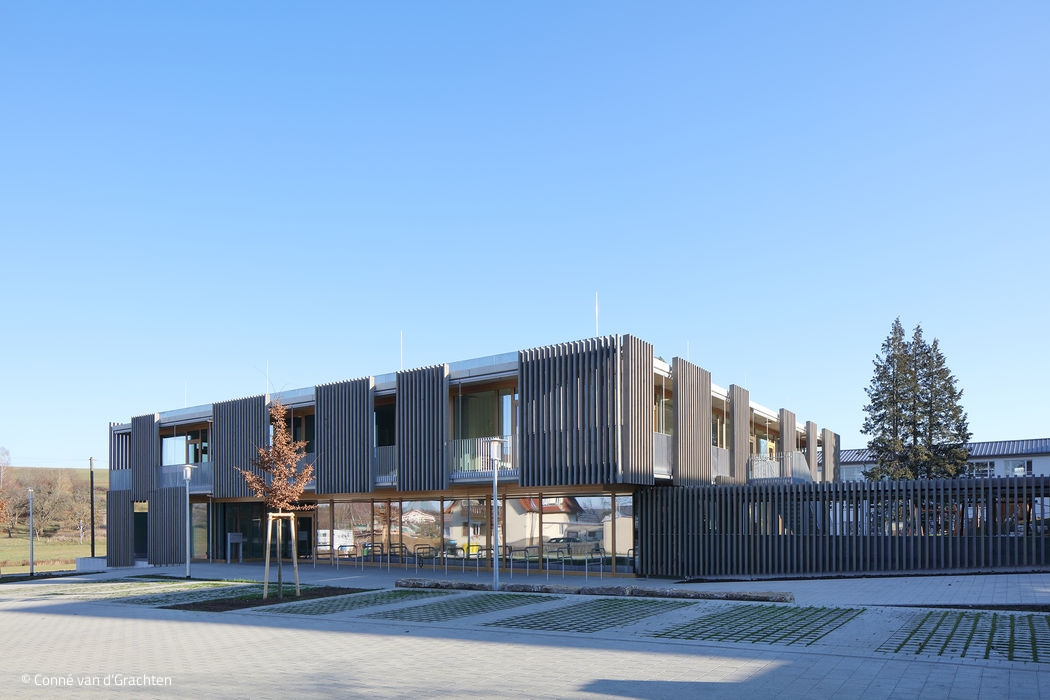
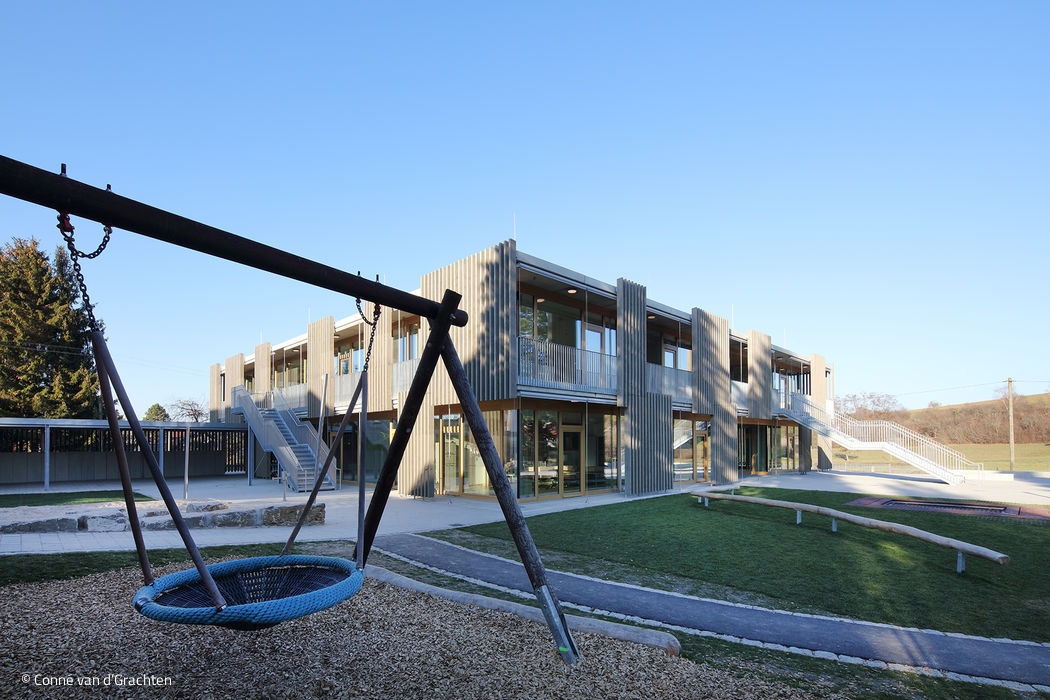
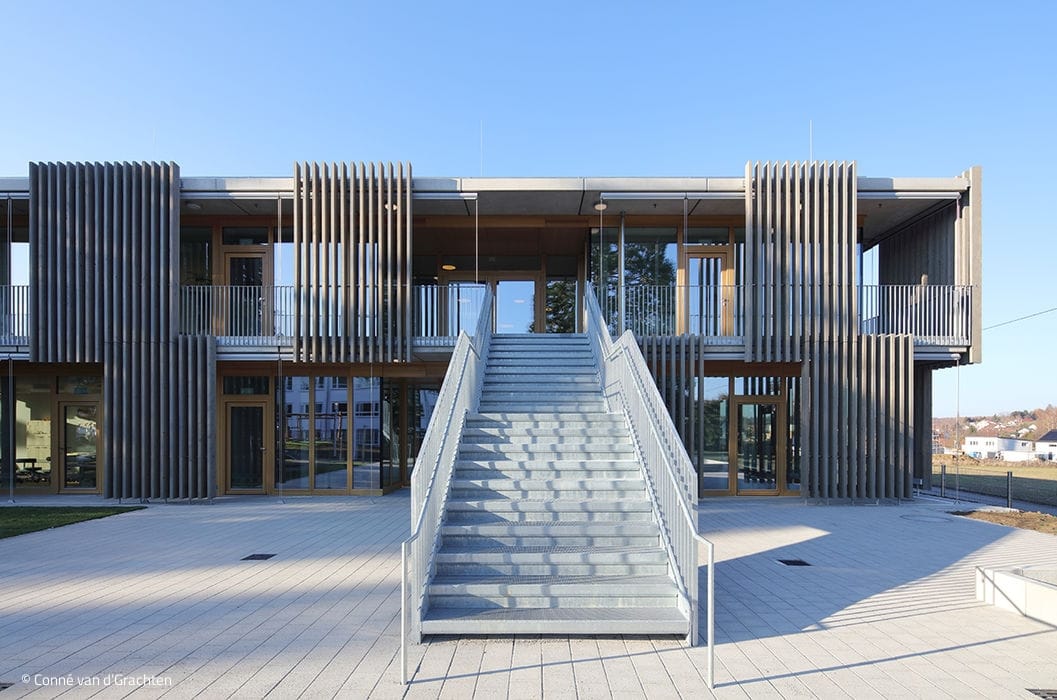
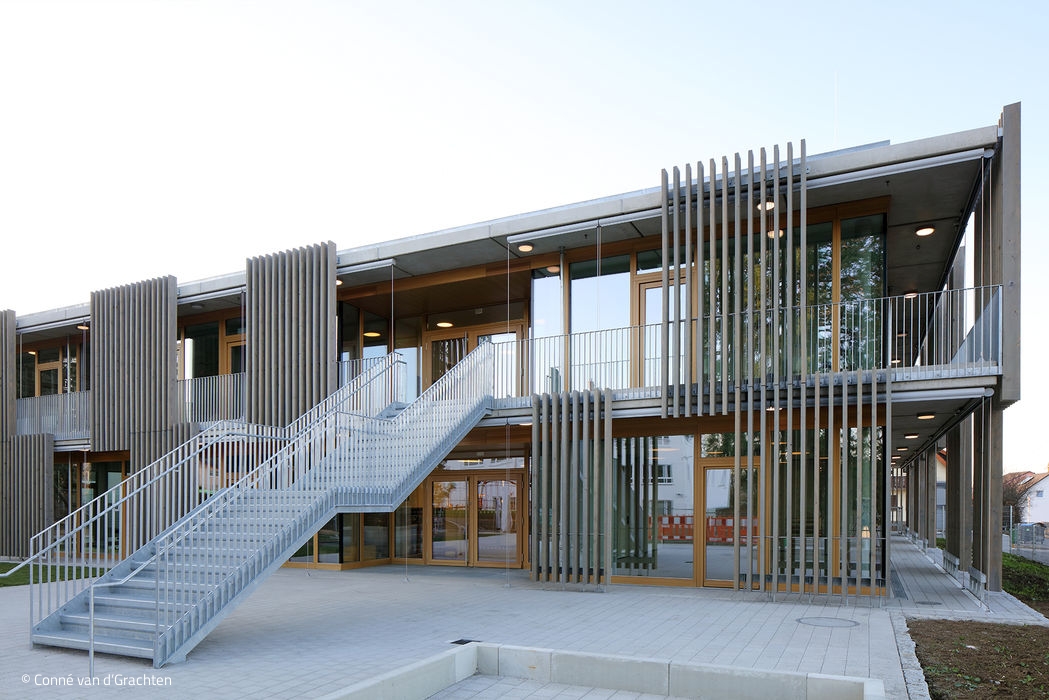
This compact, two-storey building sits deliberately at the northwest edge of Bodelshausen, opening toward the landscape like a pavilion—equally a part of the village and the surrounding countryside. For architects Mühlich, Fink & Partner and the municipality of Bodelshausen, this dialogue between building, open space, and landscape was essential. Two striking staircases with intermediate landings descending from the upper floor to the garden embody this principle. Each step reveals a new perspective on the landscape, inviting children to pause on the broad concrete steps and take in their surroundings. A veranda encircles the building, functioning both as a design element and as an additional emergency exit from every interior space. Full-height glazing establishes a visual continuity between inside and outside. Vertical wooden louvers across both floors provide privacy and sun control simultaneously. Combined with motorized textile blinds, these transparent facades flood the interiors with natural light while protecting against overheating. The building incorporates a heat pump system, rooftop photovoltaic panels, and mechanical ventilation.
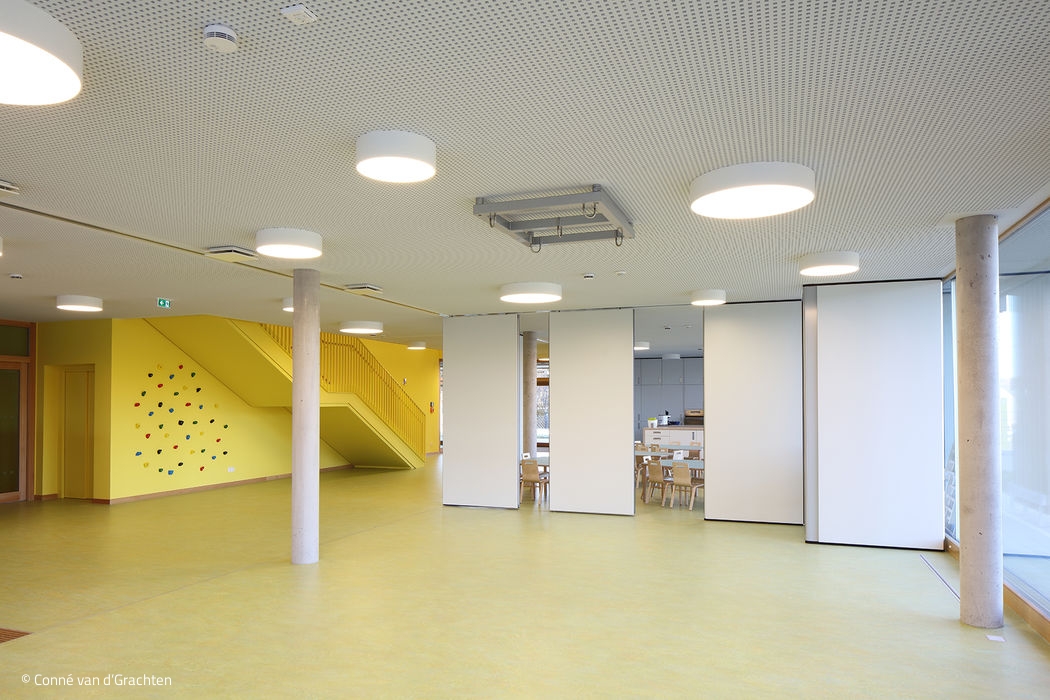
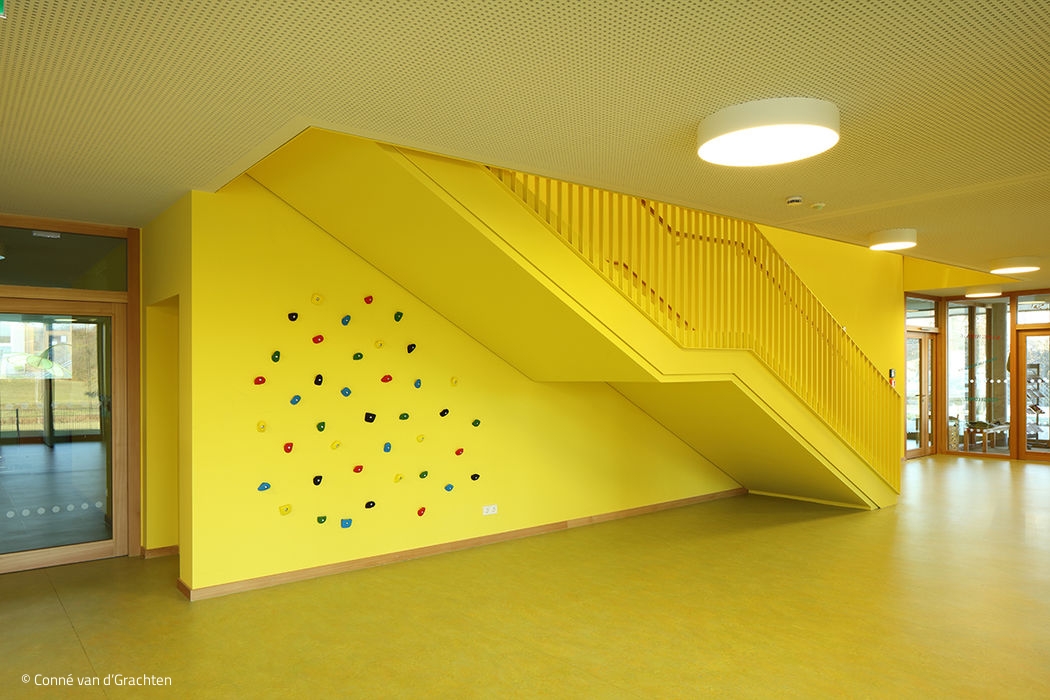
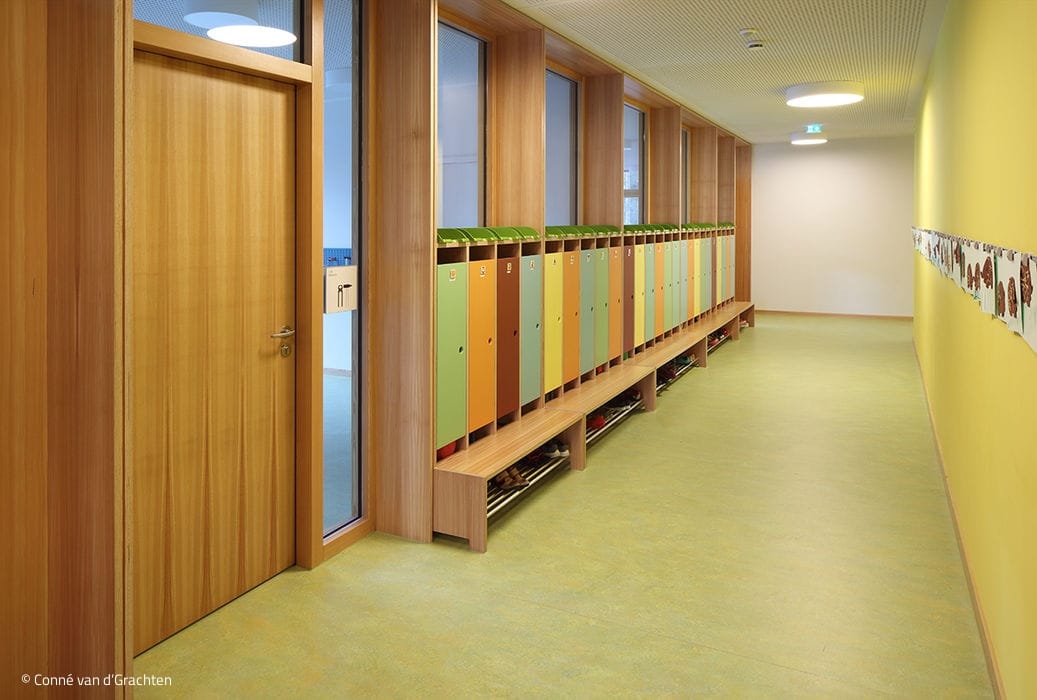
Across 1,170 m², group and gathering spaces organize around the central service core—a simple, legible layout with flexible, multipurpose rooms. Four groups enjoy full-day care in this children's house. There are no dark corridors or dead ends; instead, a luminous circulation zone wraps around the building, offering constant visual connection to the group spaces. Each group room is preceded by a generous timber cloakroom featuring glass upper sections for clothing and shoe storage. Playful color across walls, floors, and furnishings welcomes children to their new learning environment. Built from wood, glass, and concrete—primary, honest materials—the house radiates warmth and openness, proving that restraint and joy need not be at odds. The expansive outdoor play areas provide room to grow and explore.
Before the children's house—whose award-winning design took first prize in the municipality's architectural competition—could rise, the existing structure required demolition and the contaminated site had to be remediated. Planning and construction spanned two years. To the east, the architects unified two roadways, ensuring access to the building from multiple directions.
Photography Credits:
Conné van d'Grachten
(Featured in CUBE Stuttgart 01|20)


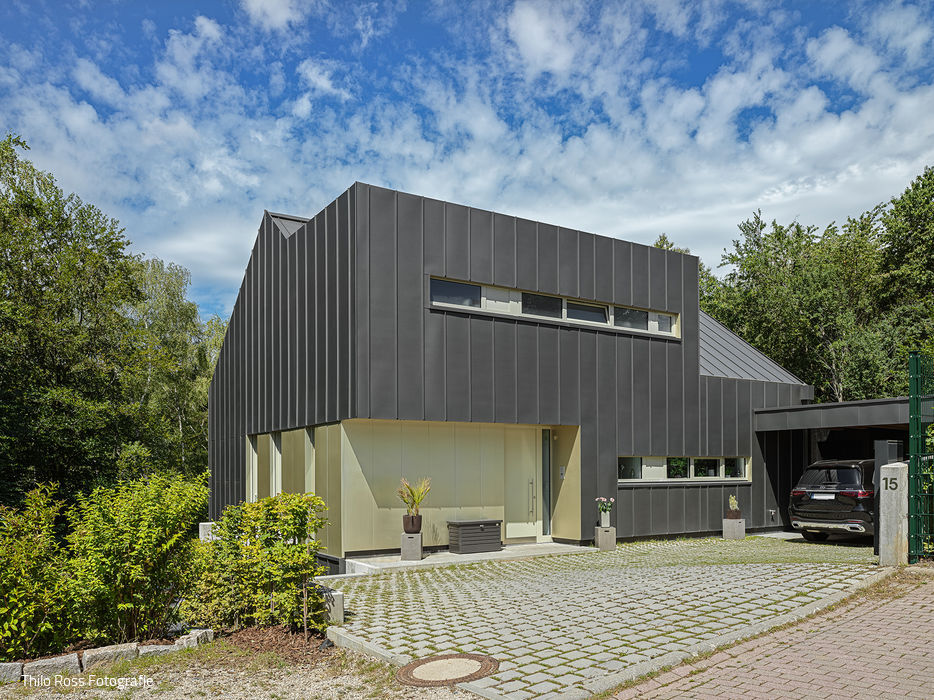
A design-driven sanctuary for living
A Distinctive Home in Harmony with Nature
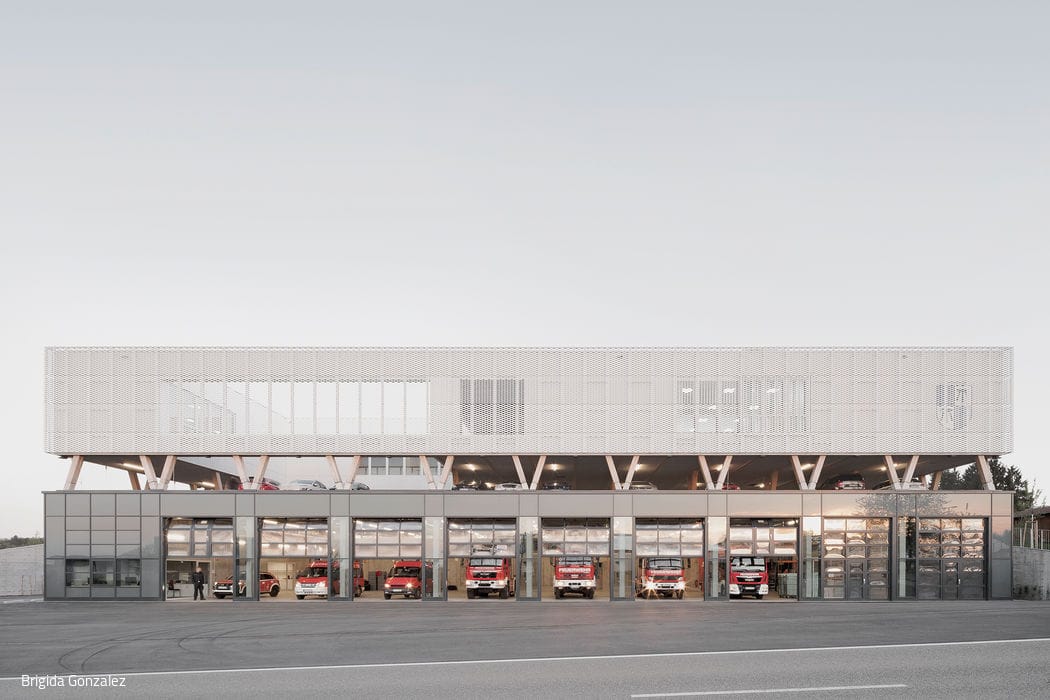
A Smart Design
A New Fire Station Built from Circular Materials—Designed as a Materials Bank
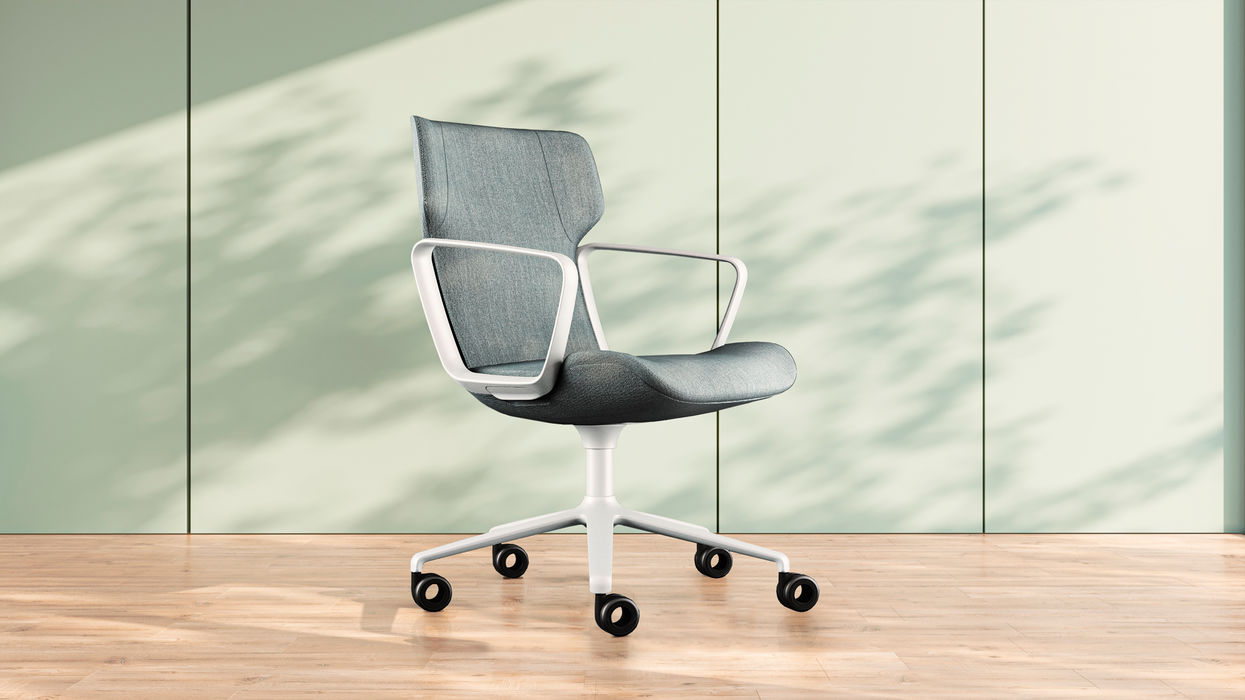
With Logic, Morality, and Magic
Phoenix: Where intelligent design meets innovation
Two Sides to the Story
Organic curves meet linear precision