


Diversity in unity
A representative, densely designed new building providing affordable housing for healthcare professionals
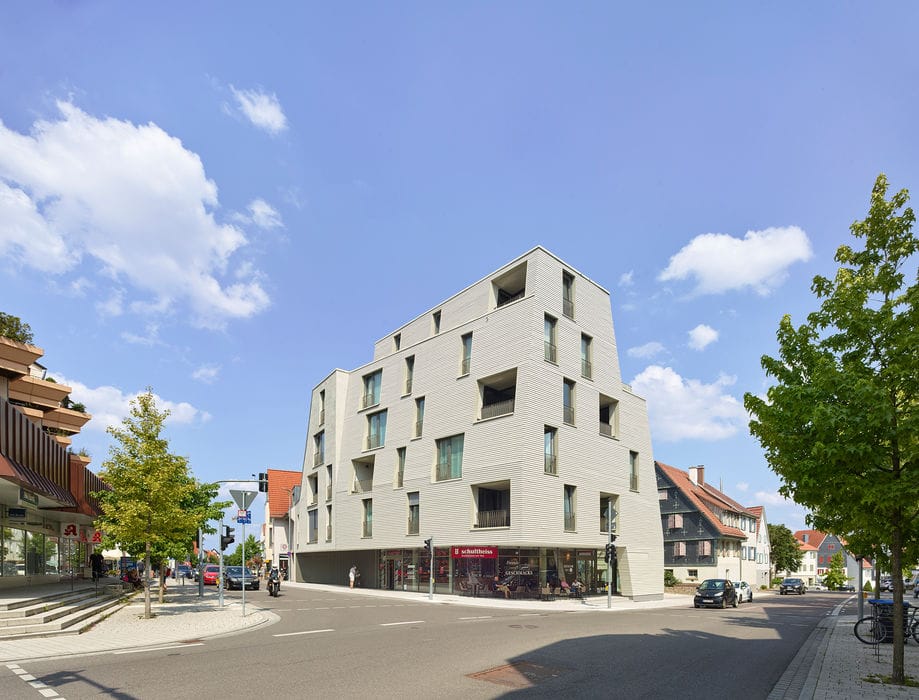
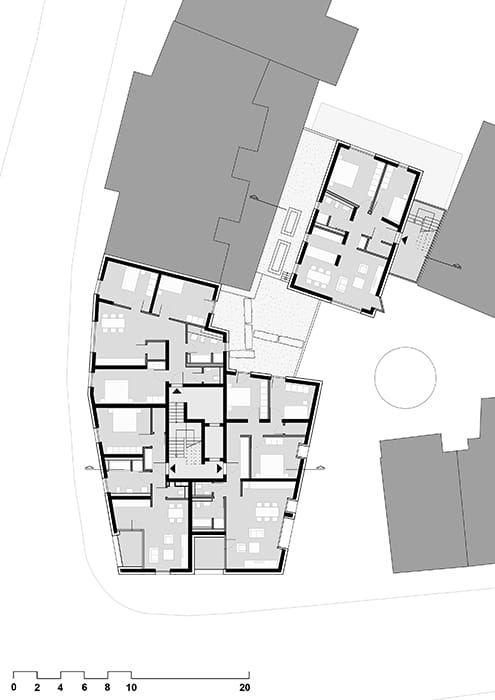
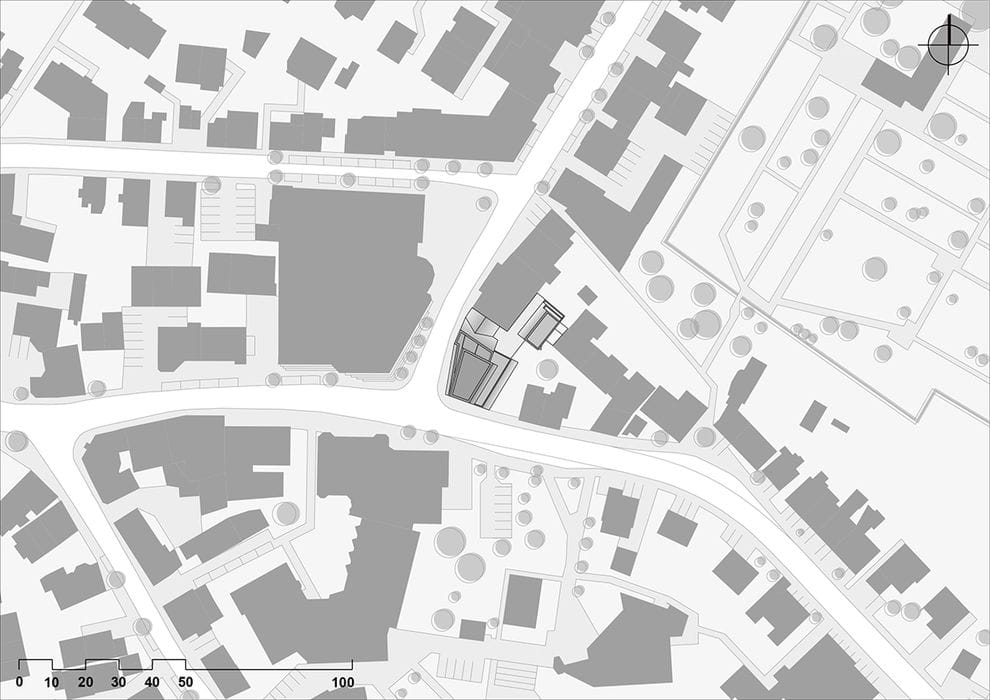
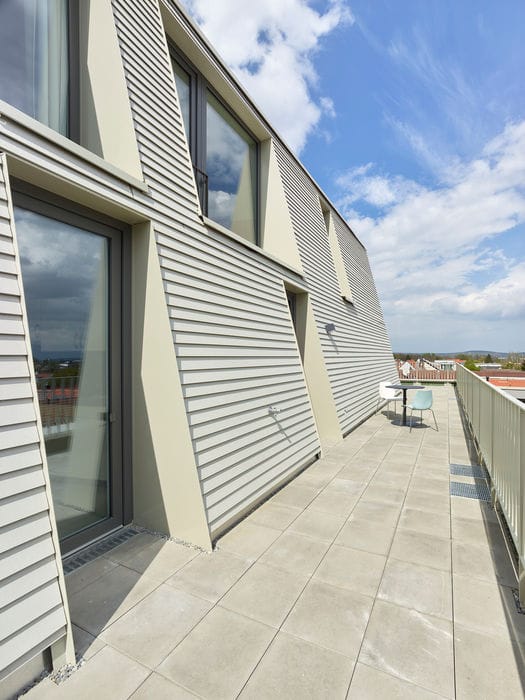
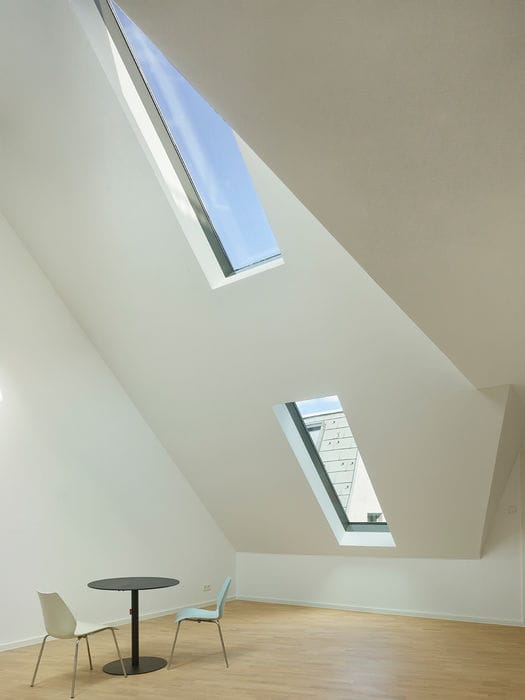
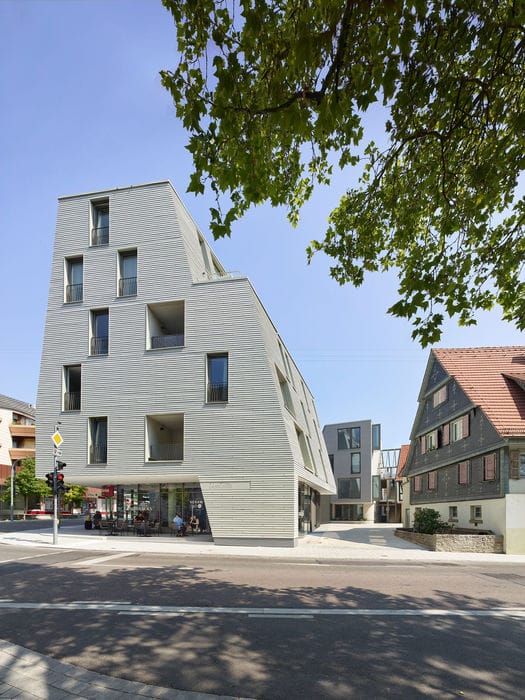
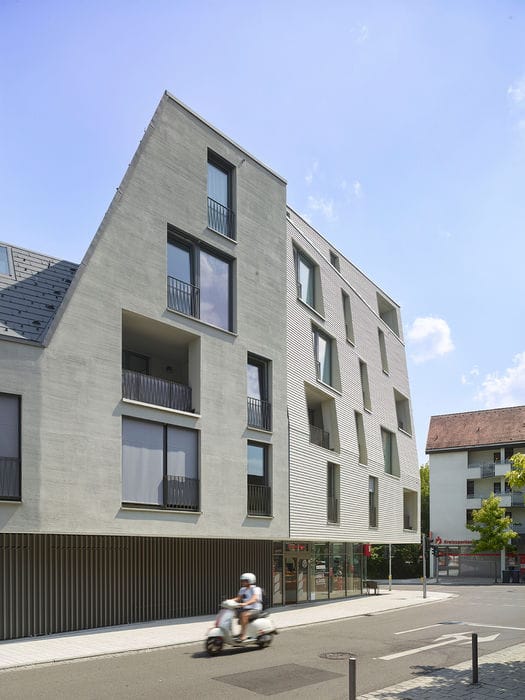
This project emerged from a partnership between the city of Ostfildern, the Gradmann Foundation, and architects Kauffmann Theilig & Partner. By strategically acquiring additional land to expand the city's initial offering, the architects developed an innovative densification concept. Their vision ultimately won the support of both the municipal council and the surrounding community—a significant achievement for a six-storey development.
Standing at a prominent intersection, the new building makes a striking architectural statement. The structure—rising to six storeys—presents itself as a unified mass at ground level, then branches into two distinct volumes above. This sculptural form responds thoughtfully to the site's characteristics and regulatory constraints. Through carefully considered cuts and bevelled edges, the architects transformed maximum permitted volume into a contextual building that respects its neighbours. Existing eave and ridge heights informed the design. The result achieves excellent natural light despite high density, creates a shared courtyard for residents, and establishes a visual and physical connection between the market square and public park—enhanced by the recessed ground floor housing a bakery with café. Above, the corner building features eleven uniquely designed residential units across five storeys, offering living and recreational spaces. The Samaritan Foundation lets these exclusively to local nursing staff at reduced rates, accommodating more than 40 residents. A four-storey building at the rear adds three more units. The new courtyard provides six parking spaces, with two additional spaces along the street frontage.
The façade cladding—composed of horizontally articulated fibre cement panels—wraps the building's expressive form like a sculptural skin. This design balances transparency and opacity to establish the façade's visual identity. Integrated loggias draw daylight and ventilation deep into the interior spaces. Material and colour selections echo the historic context, while the interplay of fibre cement, plaster, and metal cladding creates visual richness within a coherent design language. Skilled craftsmanship and premium materials elevate the building's presence and longevity. The compact footprint maximises site efficiency, and through thoughtful design, a KfW Efficiency House 55 standard was achieved—demonstrating that sustainable building doesn't require excess.
Photography Credits:
Roland Halbe
www.rolandhalbe.eu
(Published in CUBE Stuttgart 04|22)

With Lightness
A refined structure with wooden slat facade—proof that exceptional design quality can thrive within strict building constraints
Urban Repair
A former municipal yard reimagined as distinctive cooperative housing
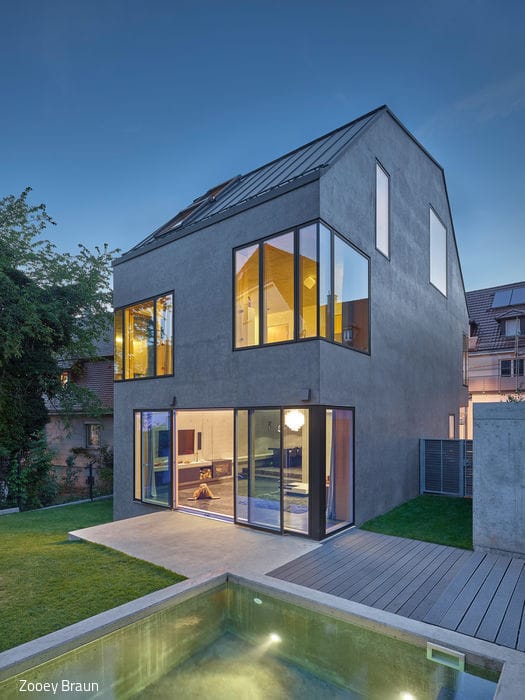
Expansive Design on a Tight Budget
A monolithic building envelope featuring softened corners that frame carefully curated sightlines and choreograph an evolving interplay of light throughout the day.
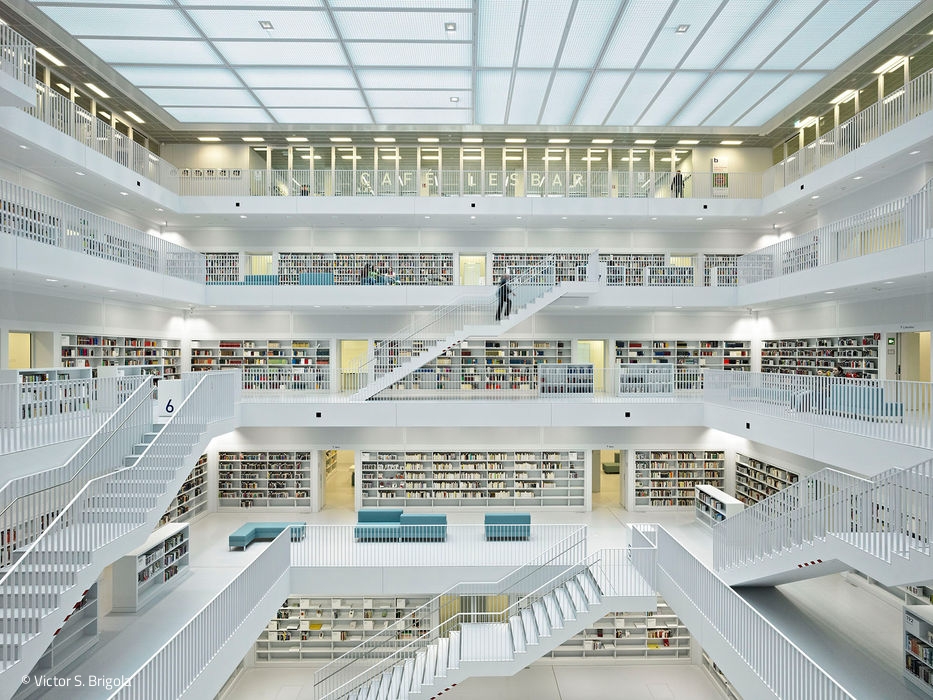
Crystal clarity
The interior design and furnishings echo the building's sharply geometric order throughout the interior spaces.