


Tailored on All Sides
Infill and intensification create living space within established neighbourhoods
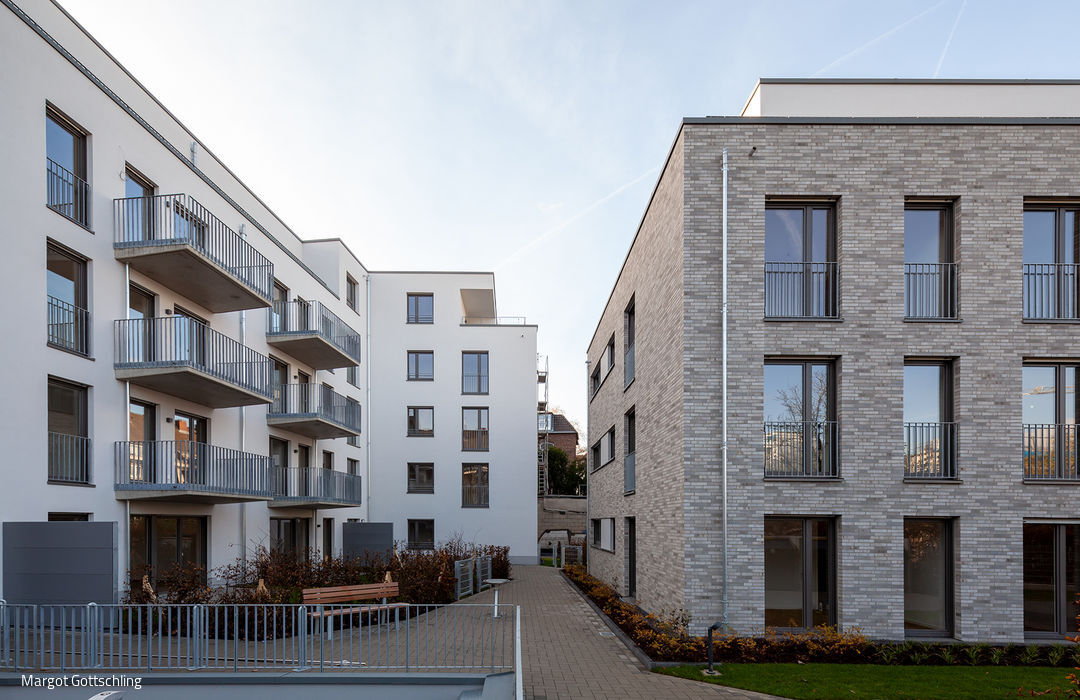
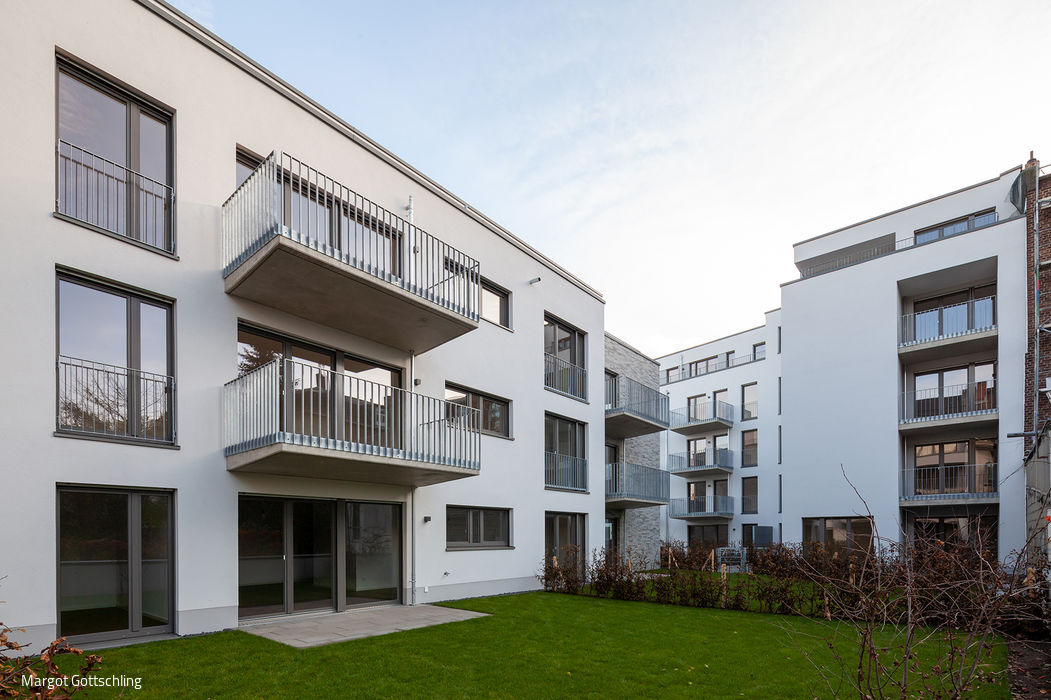
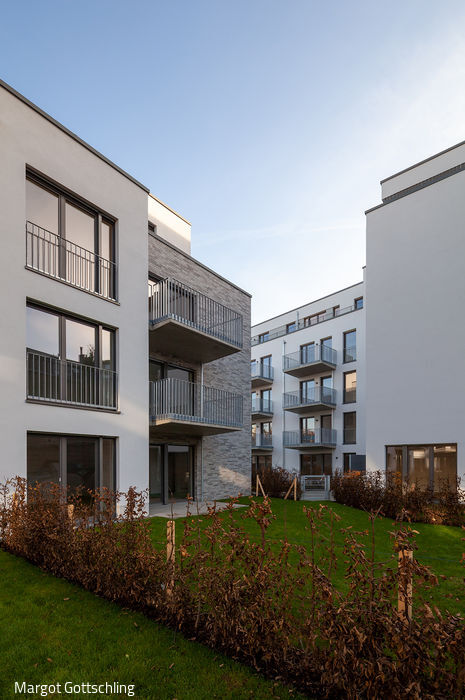
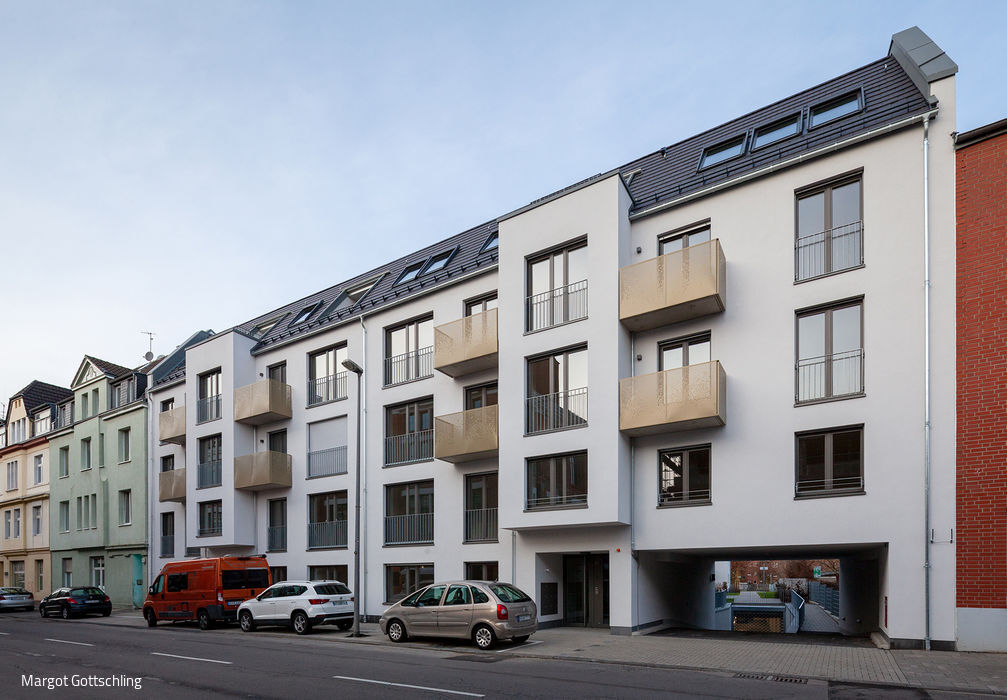
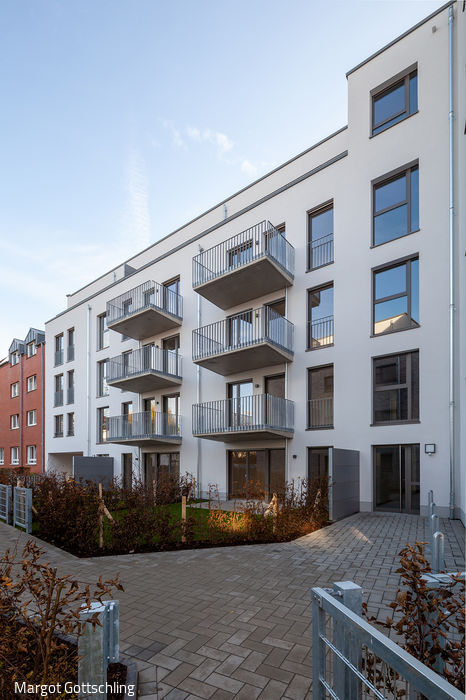
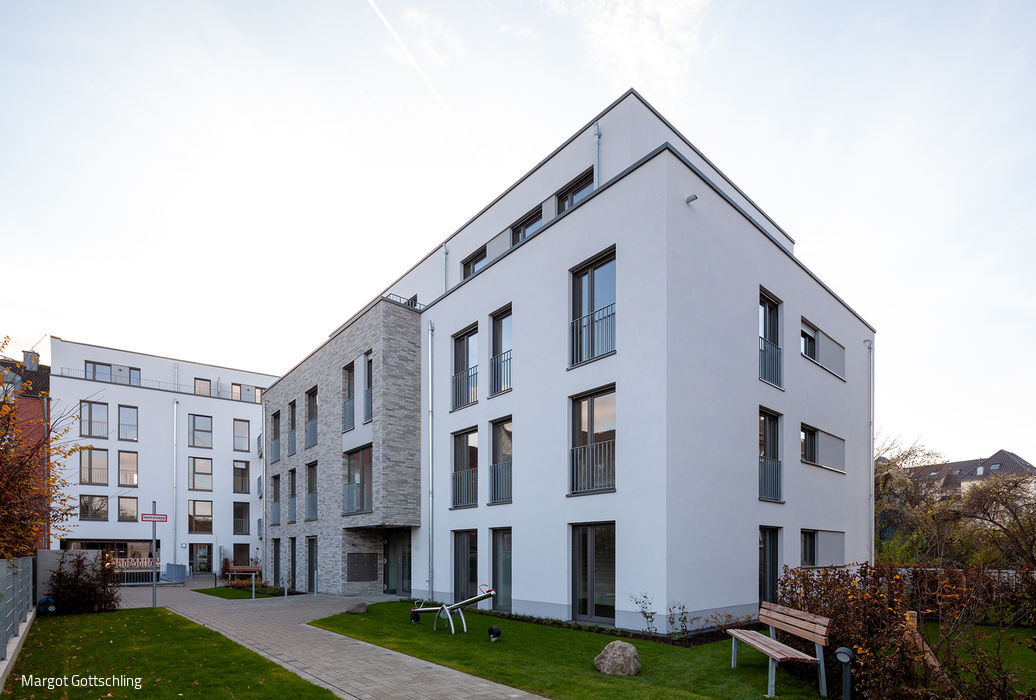
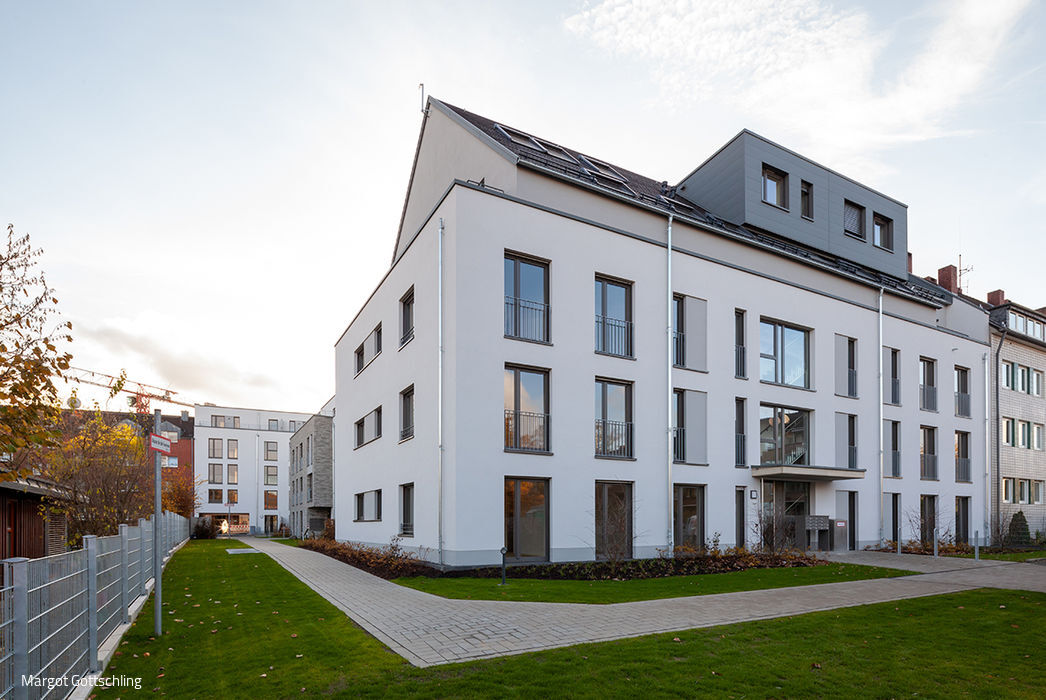
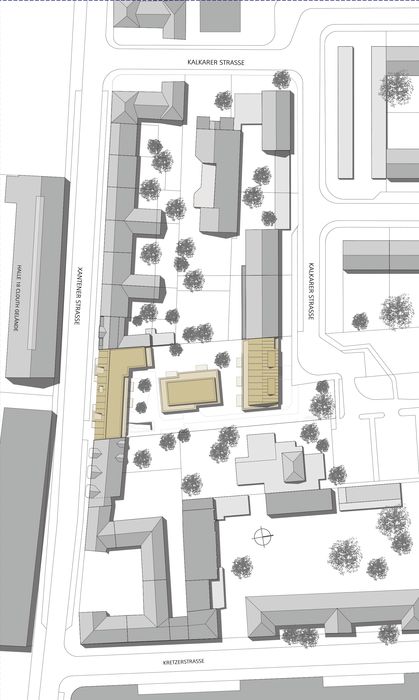
New residential quarters inevitably reshape the surrounding urban fabric. The Clouth Quarter—rising on the former grounds of the eponymous rubber factory in Cologne-Nippes—exemplifies this dynamic. Where a gap once interrupted the row of turn-of-the-century townhouses opposite the listed Hall 18 on Xantener Strasse, vibrant residential life has returned. The site, narrow at just 35 metres but stretching 70 metres deep, sits between two distinctly different streetscapes. Rather than imposing a uniform building mass, Jürgensen & Jürgensen Architekten designed two residential buildings that respond thoughtfully to their existing neighbours, connected by a central structure that demonstrates sensitive infill development.
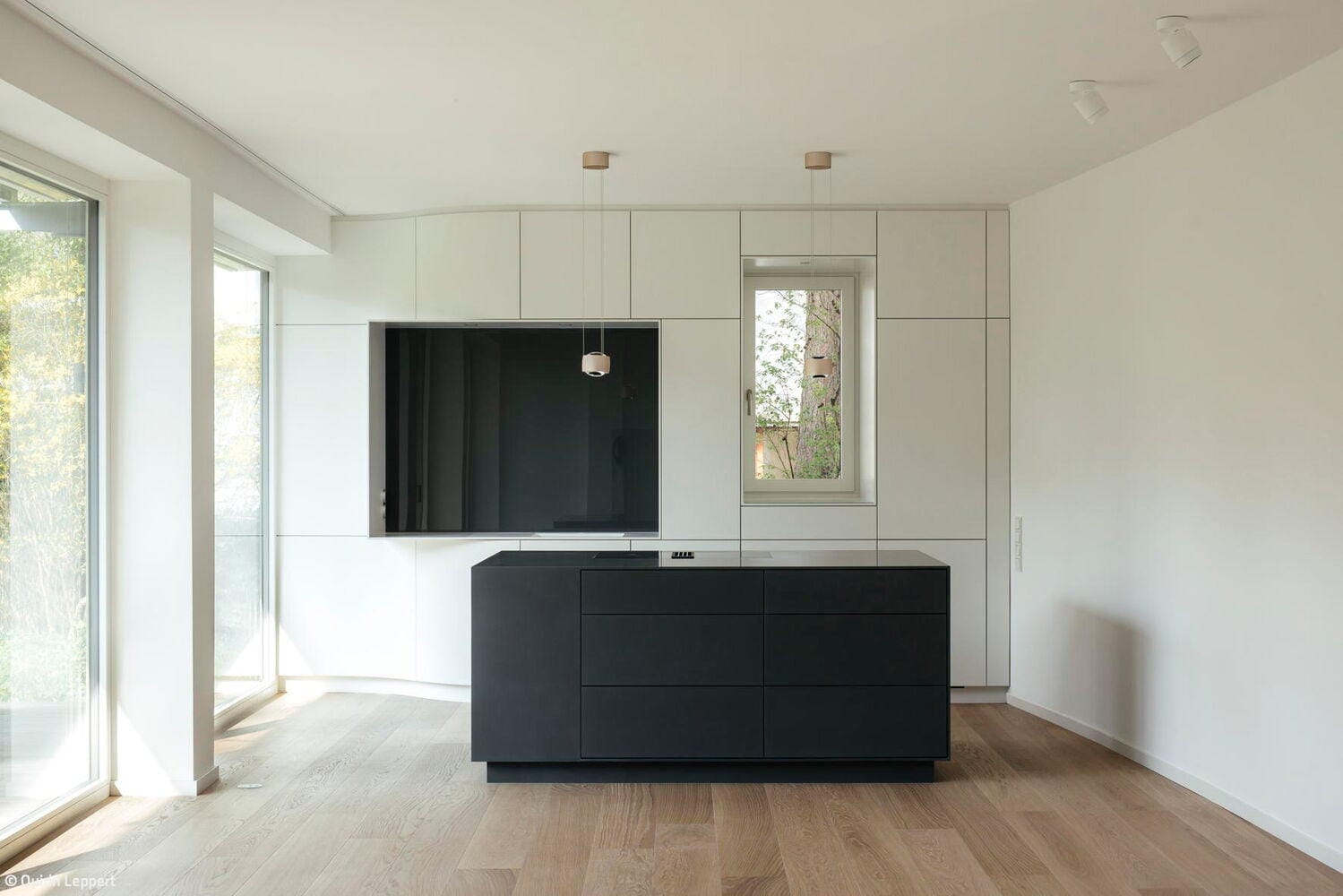
A five-storey building slides into place along Xantener Strasse, nestled between the period townhouses. Its height and sloping roof echo the neighbouring facades, while bay windows and recessed entrance zones subtly reference their design vocabulary—refined by floor-to-ceiling windows that flood the interiors with light. Facing the quiet courtyard, the residential blocks feature flat roofs with verdant garden terraces, creating a graceful transition to the central structure, whose brick-slip cladding and grey plaster finish integrate seamlessly. This freestanding volume steps back above the third floor, creating a form of densification that never feels imposing—its reduced height and carefully preserved greenery allow the neighbourhood to breathe. The building connects to the 1950s housing row on just one side, preserving a wide, green passage between. The architecture respects the existing cornice lines and stylistic character, with the rear elevation stepping back to align with the courtyard compositions of its neighbours. The same care extends to private outdoor space: all 42 units enjoy either a garden, balcony, loggia, or roof terrace—with the architects' notably unconventional attic apartments each crowned with terraces. The two- to five-room apartments, ranging from 50 to 130 m², are suffused with natural light through expansive glazing. Paired with oak parquet, pristine white walls, and fine porcelain stoneware finishes in the bathrooms, these spaces create an ideal setting for a fresh start.
www.juergensen-architekten.de
www.projekton.de
Photography Credits:
Margot Gottschling
www.mgottschling.de
(Featured in CUBE Cologne Bonn 01|22)


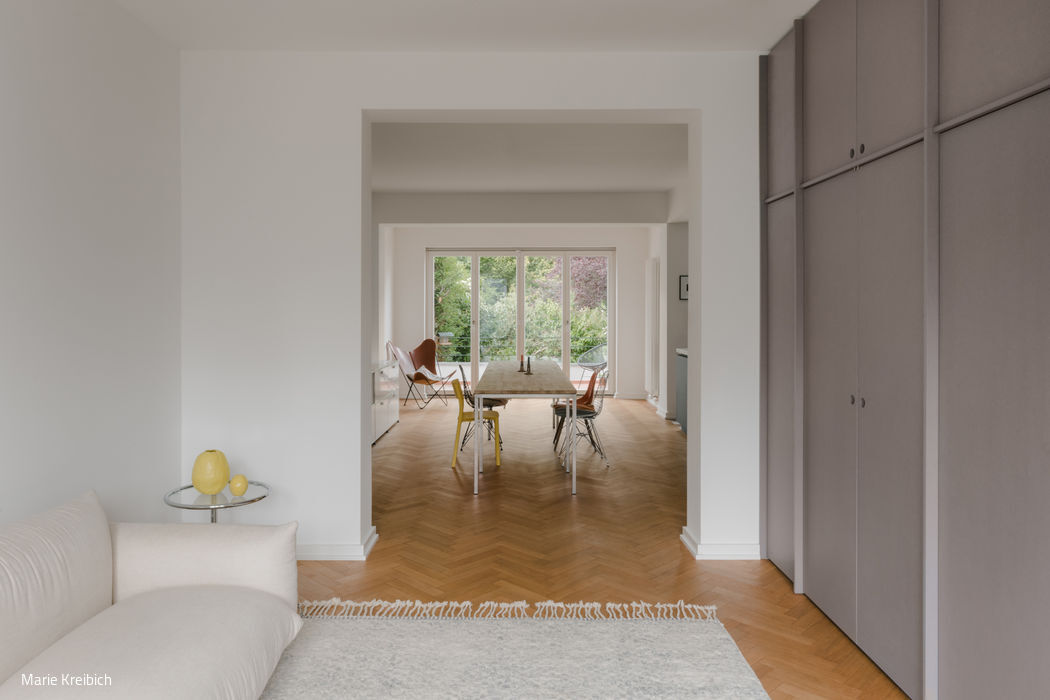
Breaking Free from the Terrace House
A 1920s house in Braunfels finds new openness and vibrant character
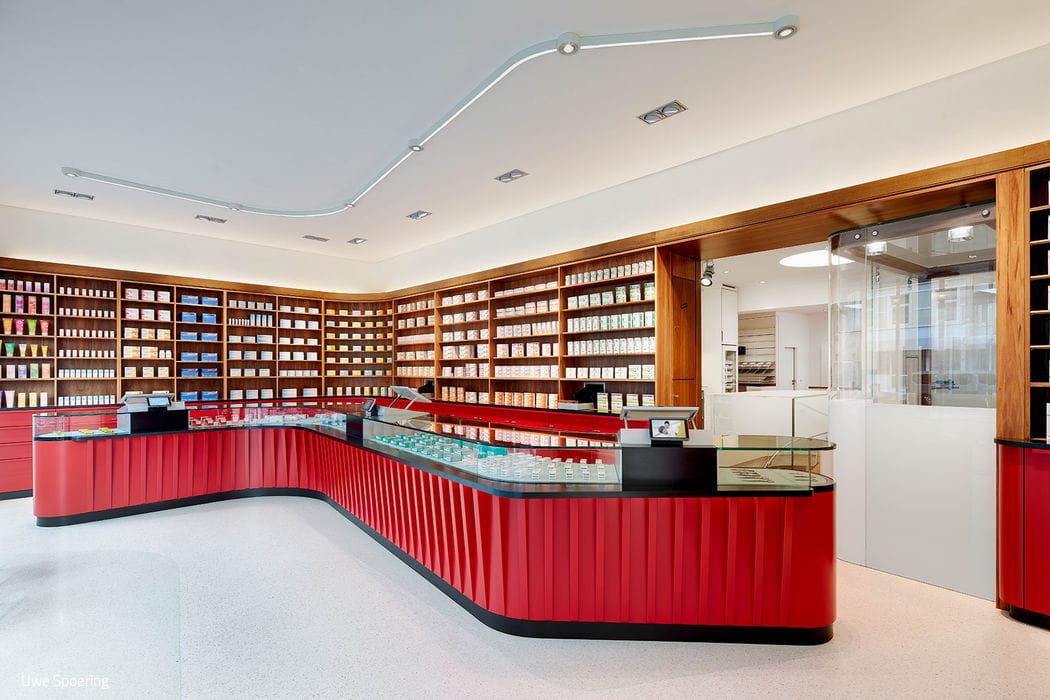
Kidney Table Reimagined
Mid-Century Design Meets Modern Pharmacy
New Life for the Kidney Table
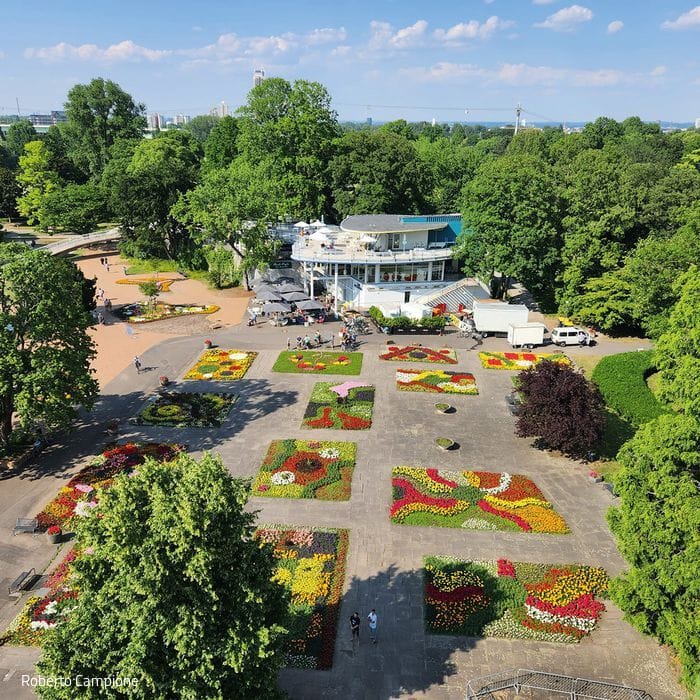
The Park Café in Deutz's Rheinpark Resurrects the Spirit of the 1950s
Back to the beginning
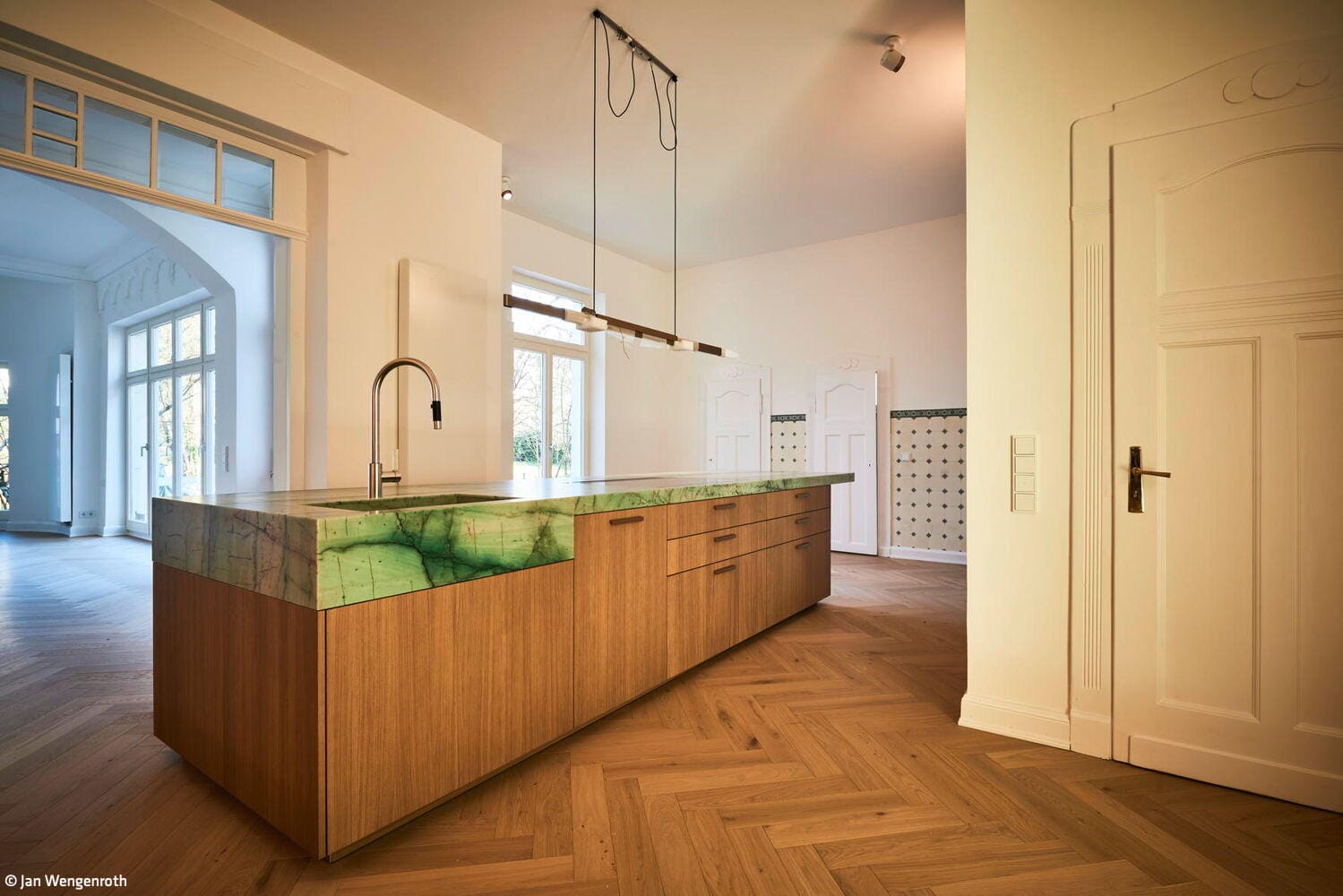
Gründerzeit villa transformed back into a single-family home