


Creating More Space for Students
Primary School Expands with Three-Part Complex and New Sports Facility
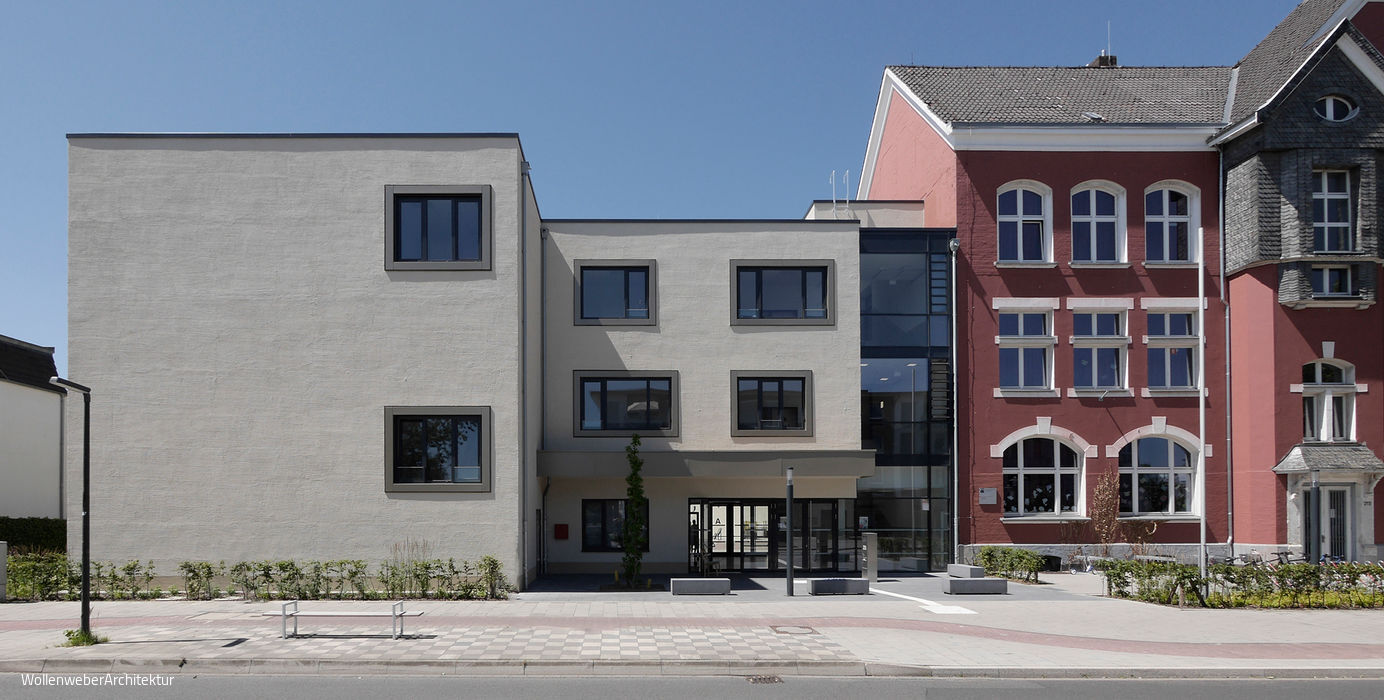


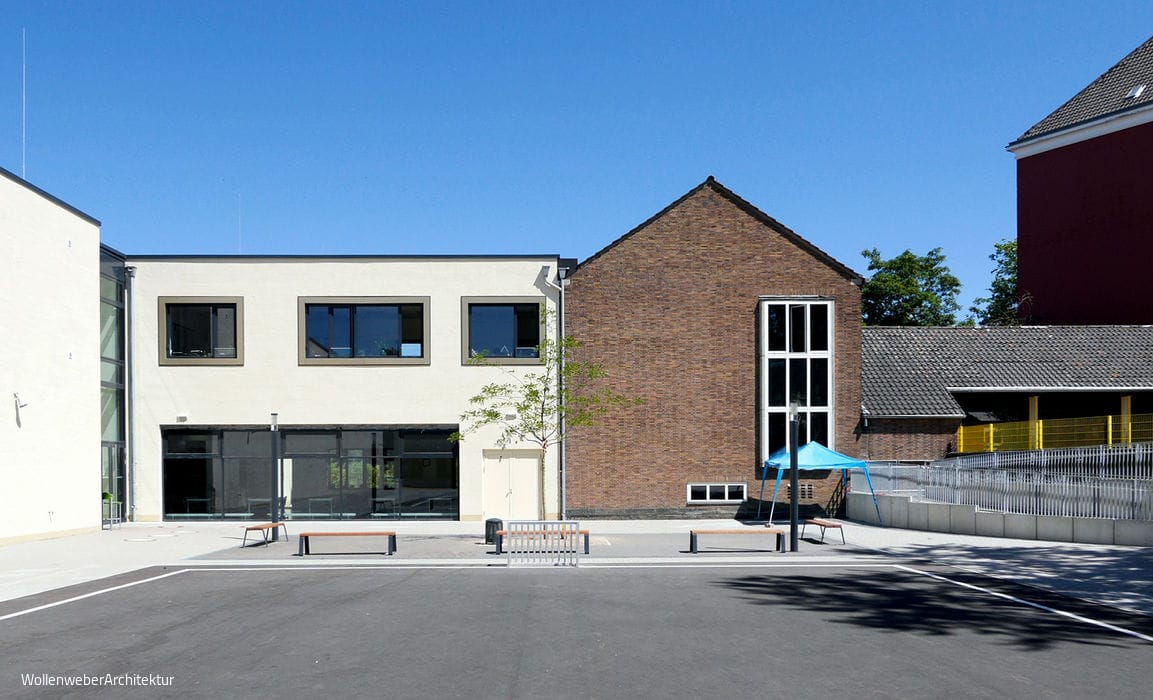

KGS Fleher Straße Primary School spans 115 years of architectural evolution—from a 1904 heritage building with its playful character to contemporary minimalist design. Yet despite their differences, old and new create a harmonious whole. The expansion was driven by growing enrollment demands. The three-part addition transforms the school from a two-form to a three-form facility, providing essential space for afternoon programs and inclusive education for students with diverse learning needs.
Situated on a sloping site with a 1.25 m elevation change, the school previously comprised a heritage building alongside 1960s structures. The new three-part complex bridges these elements while introducing barrier-free access throughout the grounds via a lift positioned within the structural joint. Component A, nestled between the heritage building and choir room, spans three stories and contains classrooms and flexible multipurpose spaces. Its ground floor features a new representative main entrance. Component B adjoins the administrative wing and aligns with the lower courtyard level, maintaining a seamless transition to the existing administration area. The ground floor exploits the site's slope to create an elevated level housing the canteen with a "cook and chill" kitchen.
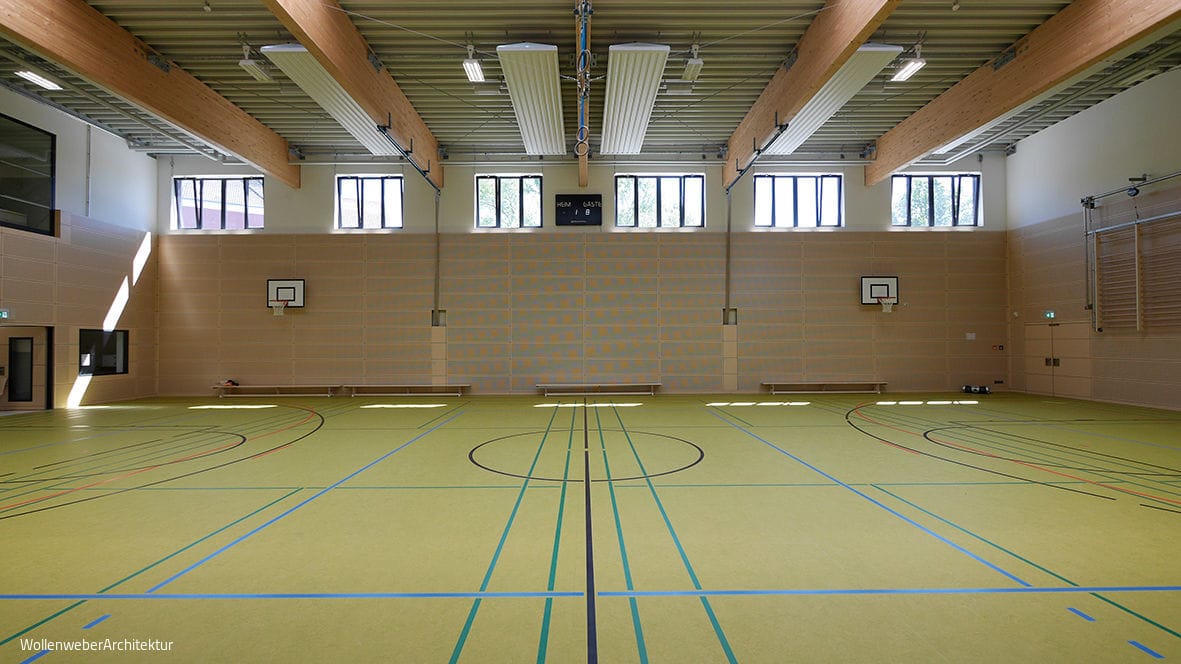
Component C runs along the western boundary and accommodates the sports hall with supporting facilities. Designed for dual use by both the school and local sports clubs during afternoon hours, the hall can operate independently from the main building while serving as the school's primary gathering space for assemblies and events accommodating up to 450 people. The new complex creates a protected courtyard with varied elevations—transforming it into a dynamic, engaging outdoor learning environment. The entire schoolyard has been thoughtfully redesigned to support comprehensive student care and meet evolving educational needs.
Photography Credits:
Wollenweber Architektur
(Published in CUBE Düsseldorf 02|21)
Transparency as Design Principle
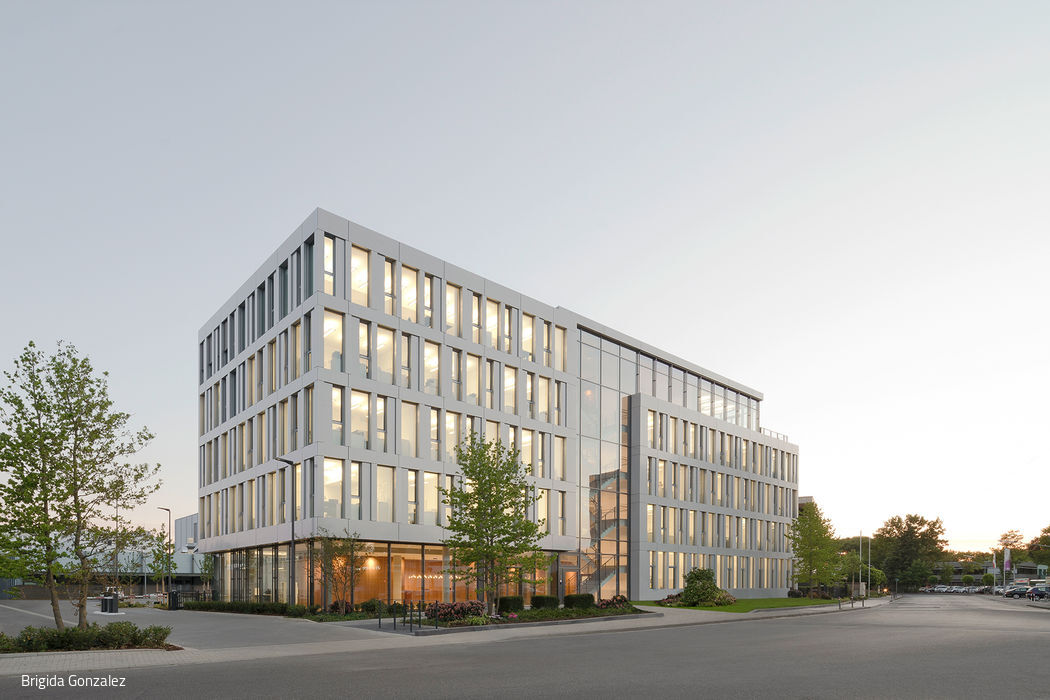
Stadtwerke Neuss now houses an additional administrative building at its central campus.

Sustainable with consistency
A climate company focuses on flexibility and reusable materials
Sculptural Form
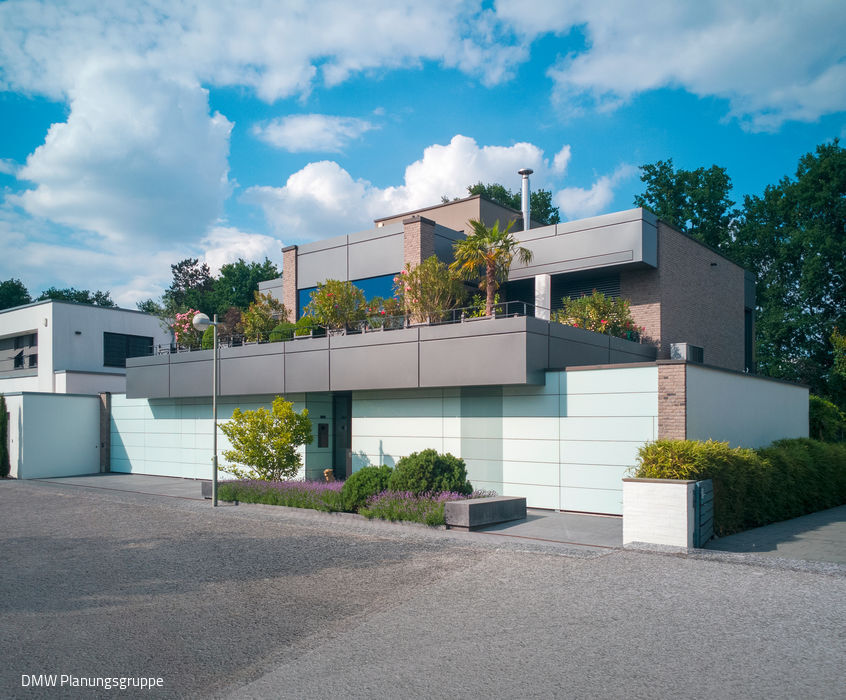
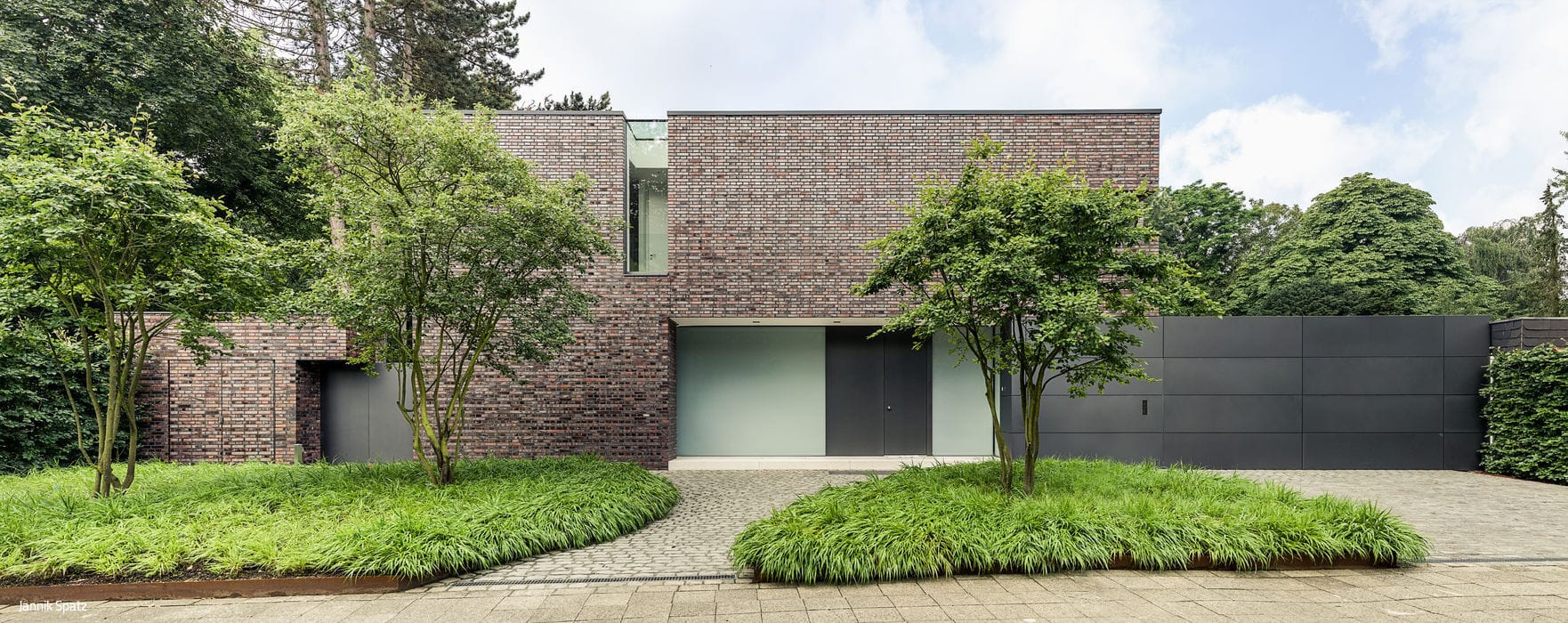
A villa distinguished by its sculptural presence and refined restraint.
A Cube of Possibilities
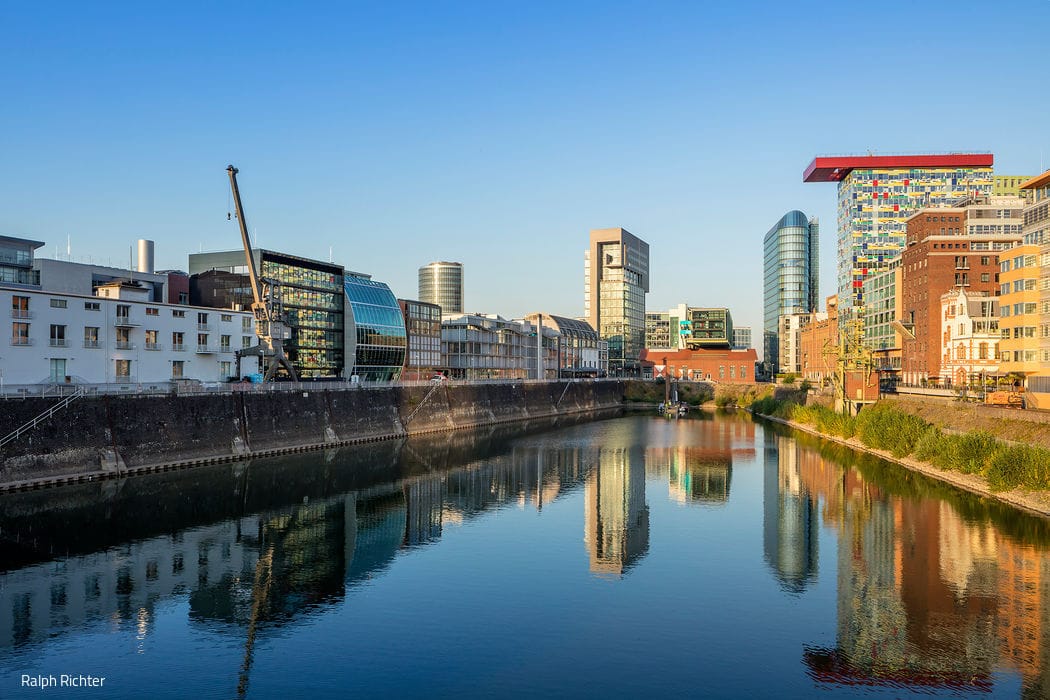
A striking new headquarters takes shape in the Media Harbour, defined by transparency and clarity