


The Starry Hall of Culture
Where Mozart, Schinkel, and Dudler Converge: Museumsinsel's New Underground Station
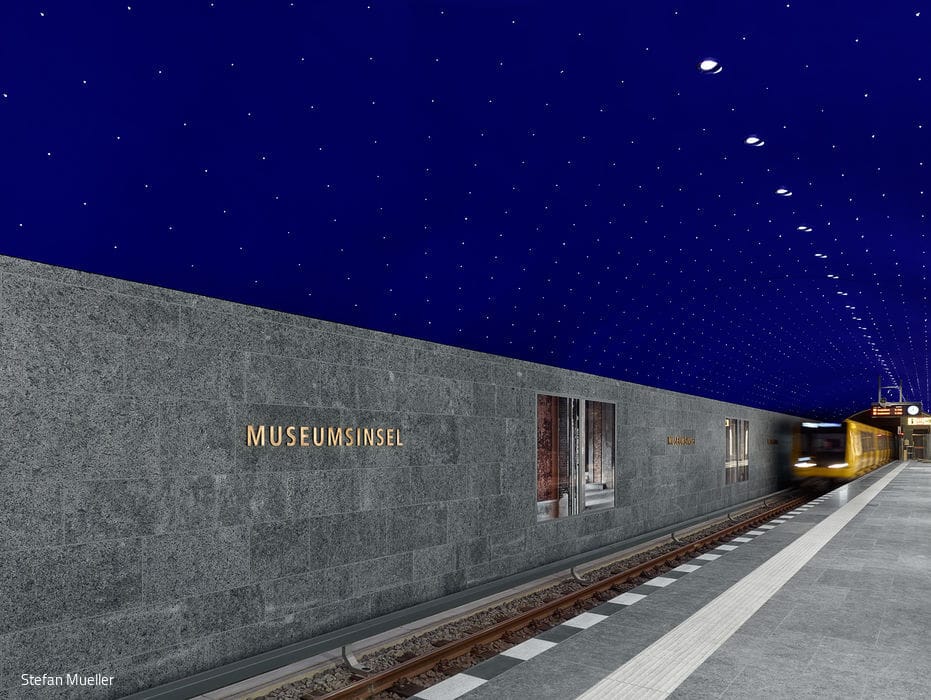
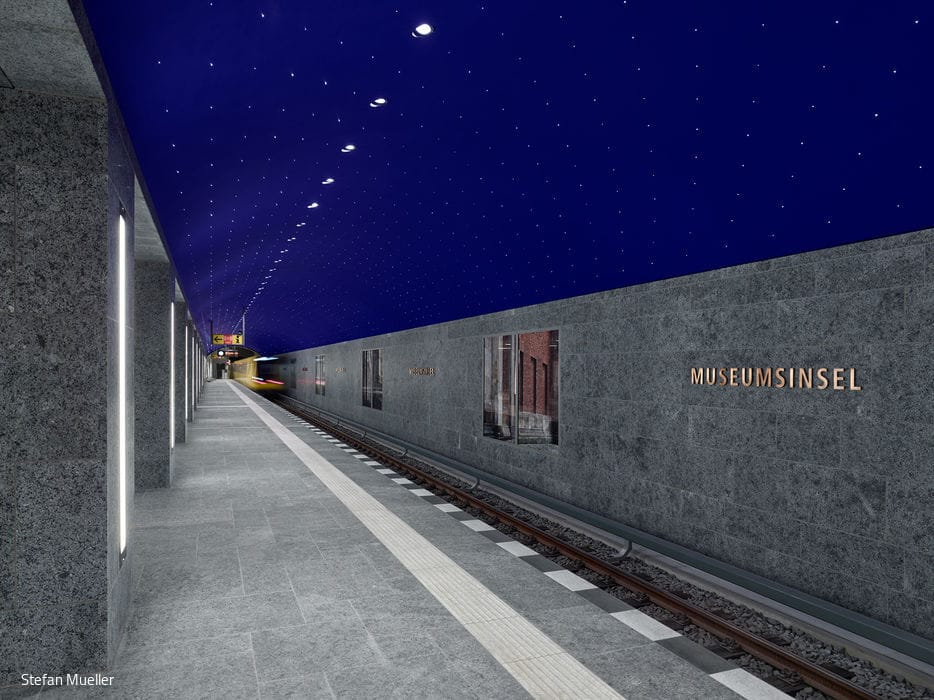
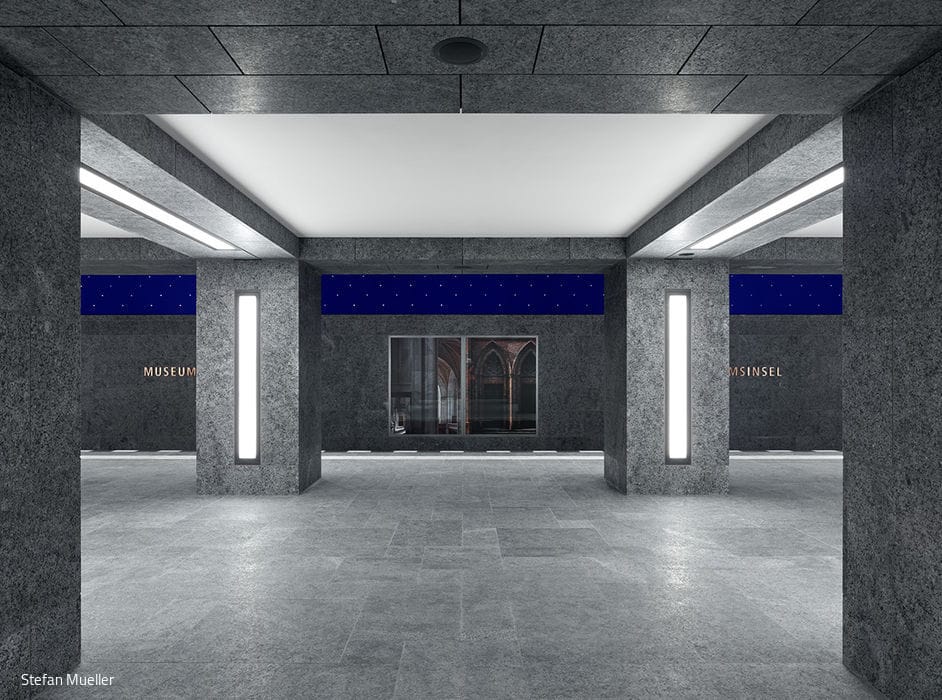
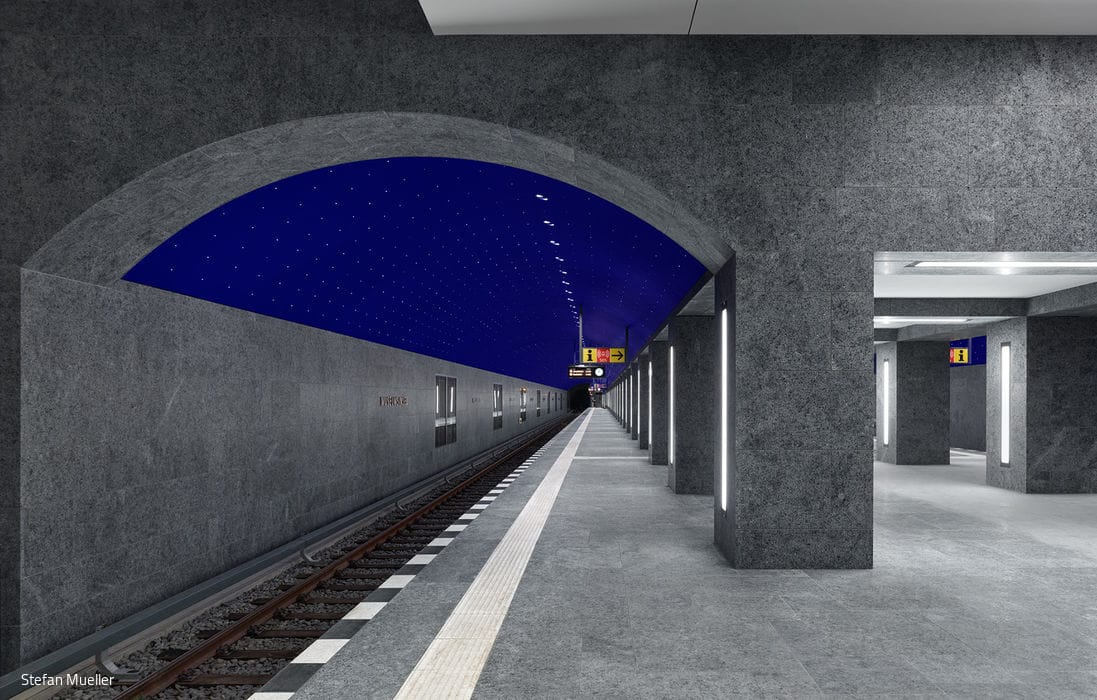
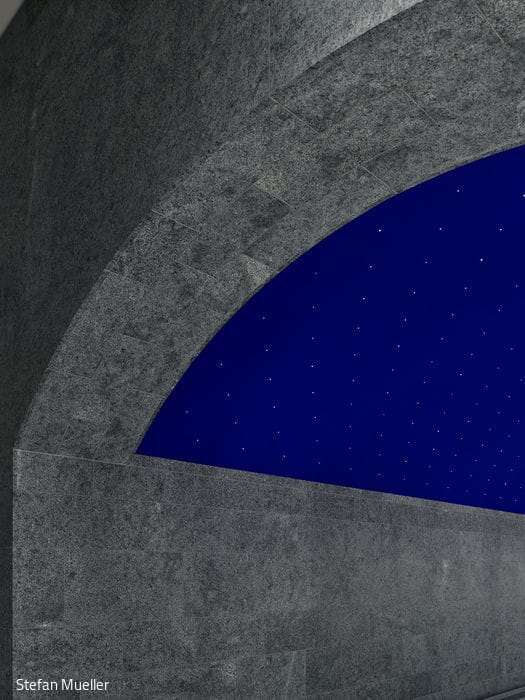
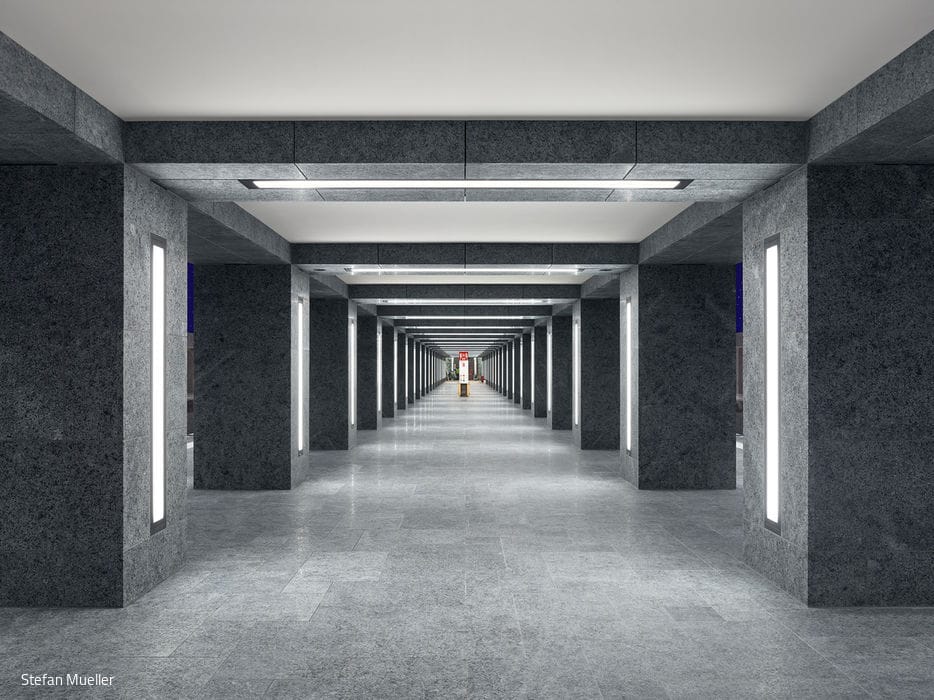
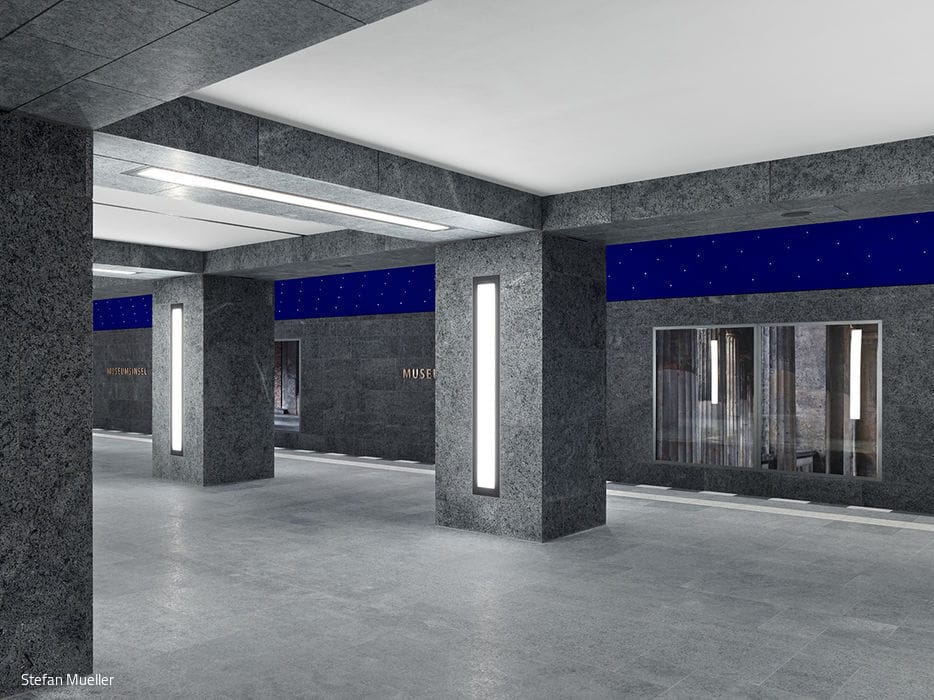
Good things come to those who wait. With three new underground stations—Rotes Rathaus, Unter den Linden, and Museumsinsel—the U5 line has finally been restored after decades of division. Now you can travel uninterrupted from Hönow to the main station—a truly historic moment. But it's the Museumsinsel station that captures the imagination. Designed by architect Max Dudler and opened on July 9, it deserves every accolade: it is not only the most splendid station architecturally, but also the most strategically positioned. As a cultural gateway, it connects travelers to the city's greatest institutions: the Humboldt Forum, the Staatsoper Unter den Linden, and all the museums on Museum Island.
Dudler conceived this station as pure theater. His inspiration came from Karl Friedrich Schinkel's legendary stage design for Mozart's The Magic Flute, created in 1816. Two luminous ultramarine vaults stretch the length of the 180-meter tunnel, punctuated by a starry sky—6,662 pinpoints of light that evoke an enchanted scene: the Hall of Stars of the Queen of the Night. Schinkel's vision proved so powerful that it has been revived for virtually every Magic Flute production ever since.
Four entrances provide access to Museumsinsel station. Two on the east side lead directly to the Humboldt Forum; two on the west connect to the Kronprinzenpalais and the German Historical Museum. This convergence attracts a diverse crowd—Humboldt University students, museum enthusiasts, tourists, opera and concert attendees—a true cross-section of the city.
Natural Kösseine granite clads both the entrance portals and the central supports dividing the opposing platforms, creating a colonnade effect throughout the station. This particular stone is remarkable: it's the only blue granite extracted in Europe. The rear platform walls display photographs by Stefan Müller and Philipp Arnold, capturing nearby monuments and their layered histories—a compelling dialogue with Dudler's abstract, almost austere geometric vision.
Max Dudler won first prize in the design competition for this project in 1998. Twenty-two years passed before his vision finally became reality in 2020.
Photography Credits:
Stefan Müller
www.stefanjosefmueller.de
(Published in CUBE Berlin 03|21)

Growing Old Gracefully Together
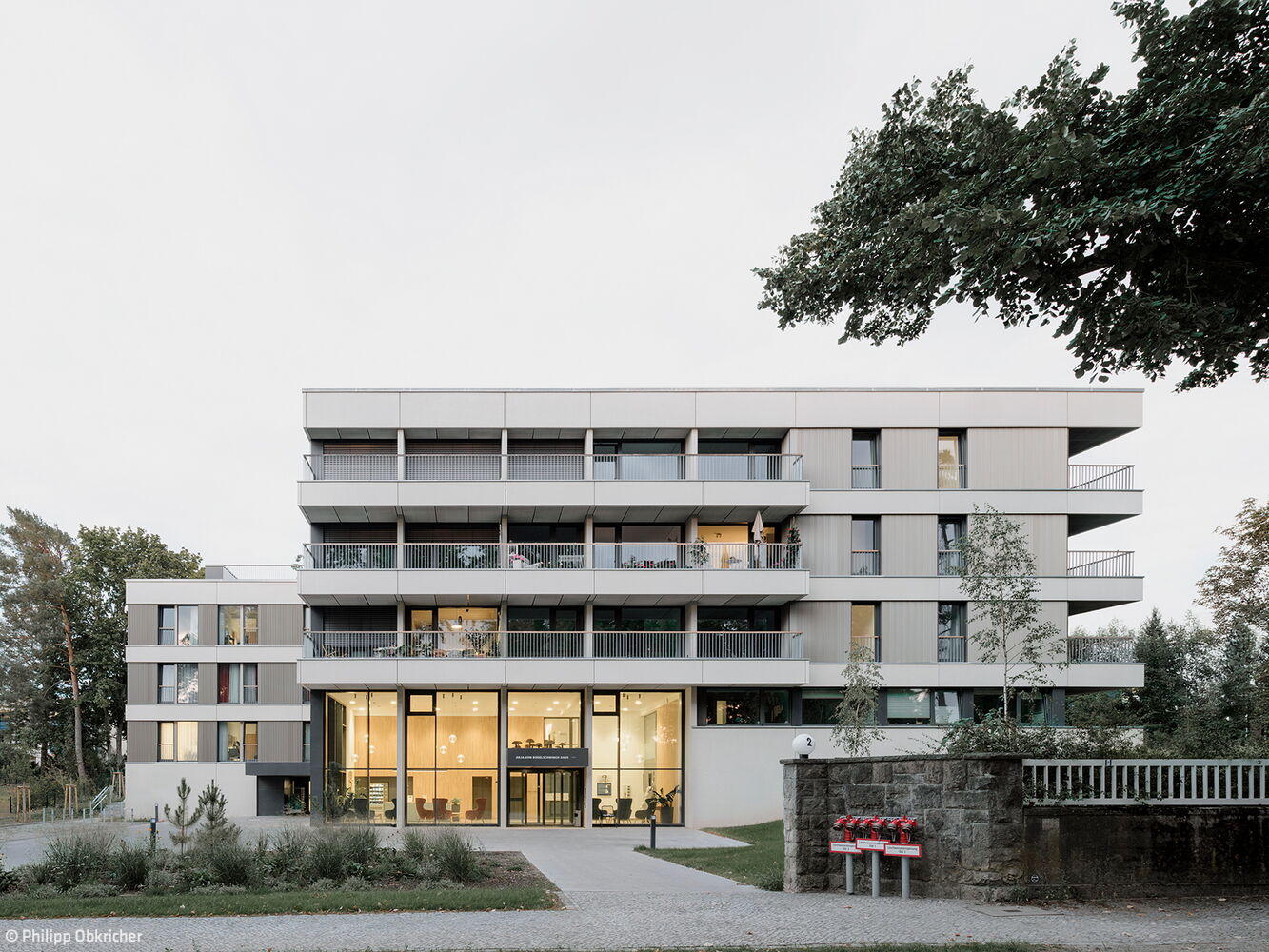
A newly designed senior living community makes this vision real.
Sustainable Design
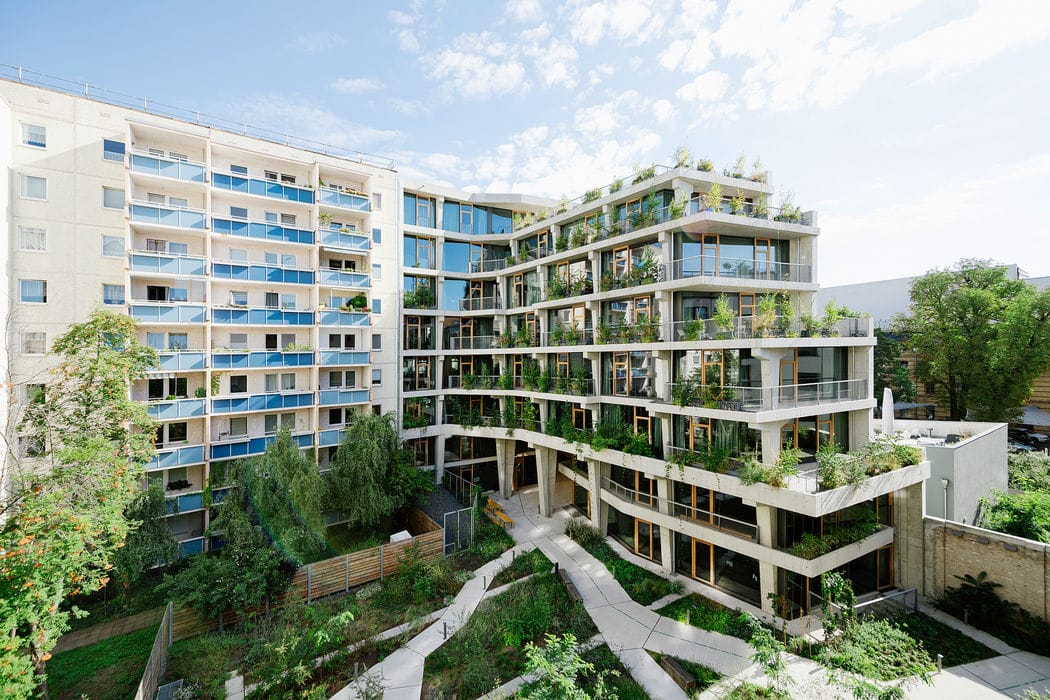
Where Historic Architecture Meets Contemporary Design: A Green Workplace Oasis
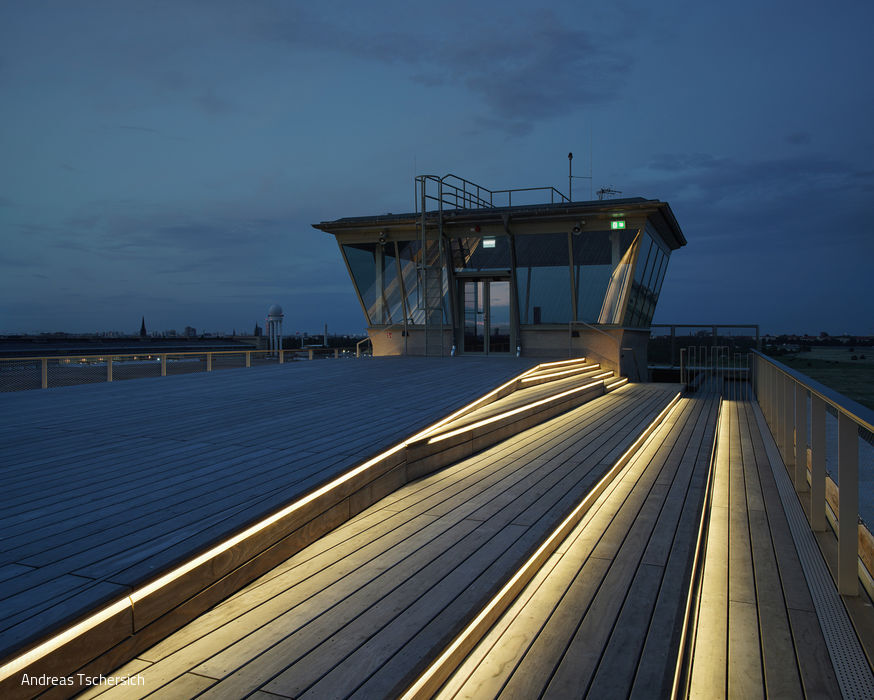
A New Sky Over Berlin
Tempelhof's Information and Visitor Centre Has Opened
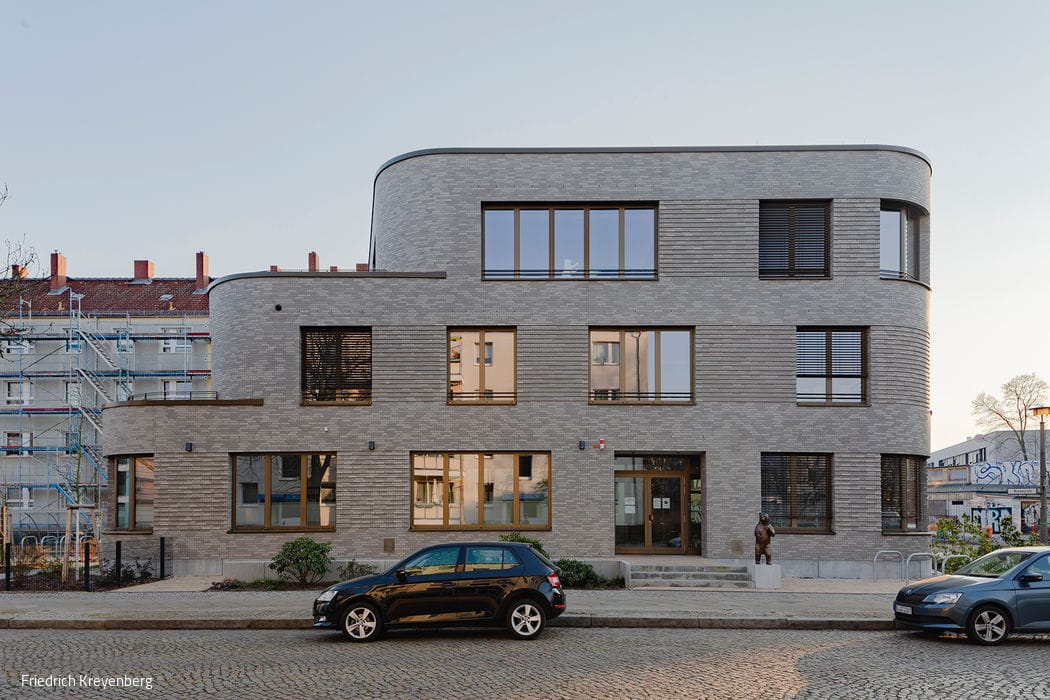
Three Distinct Voices
Standing in a Row: One Commercial Building and Two Residences in Oberschöneweide