


Appreciated
Revitalisation of an existing building, the structure of which has been largely preserved
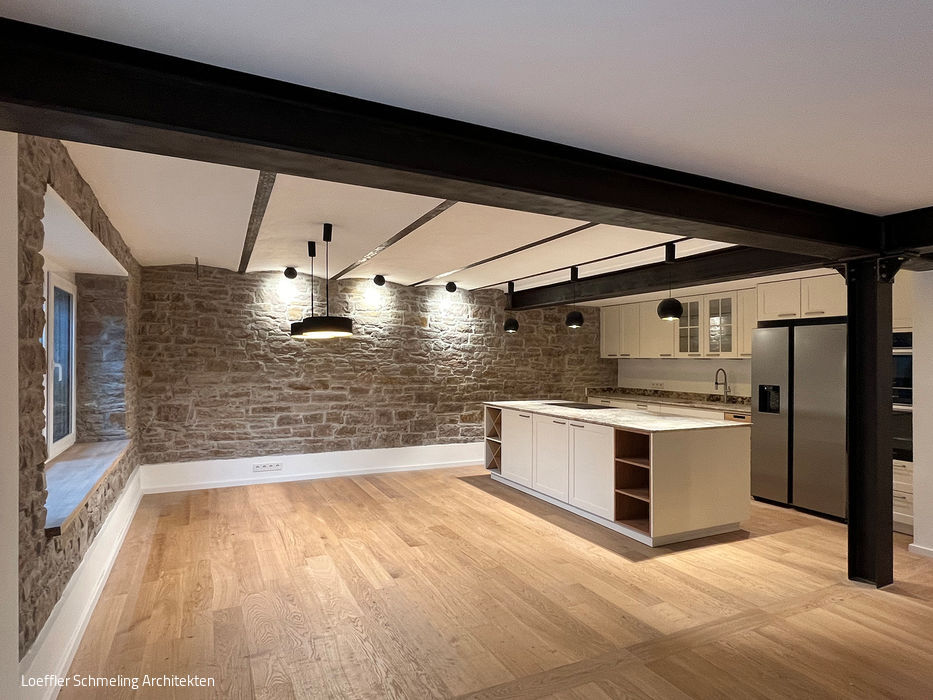
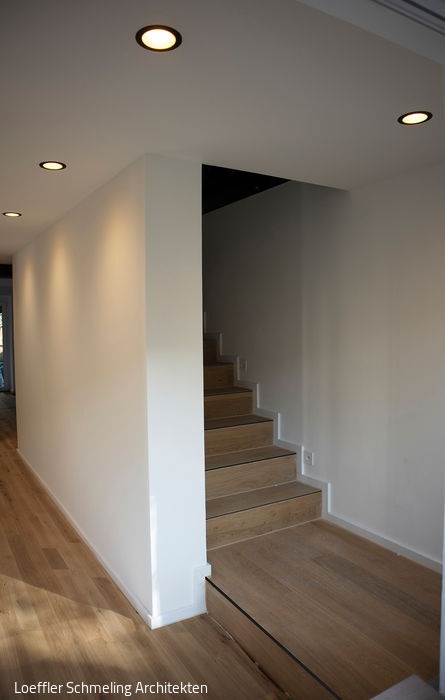
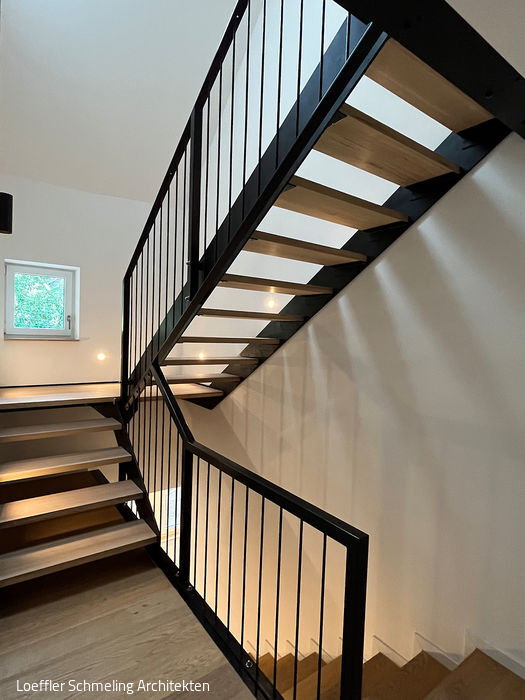
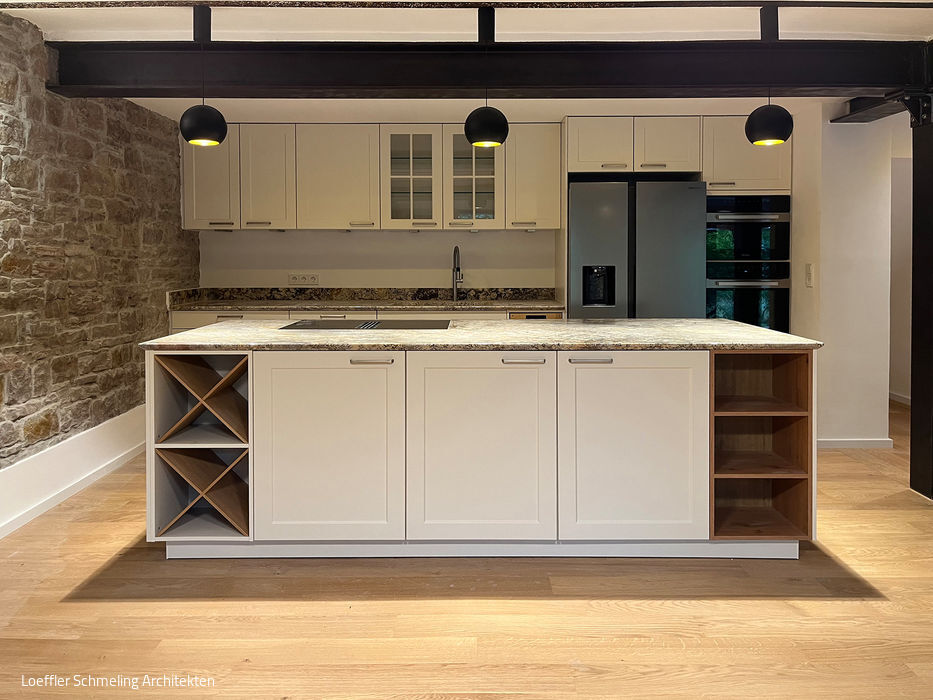
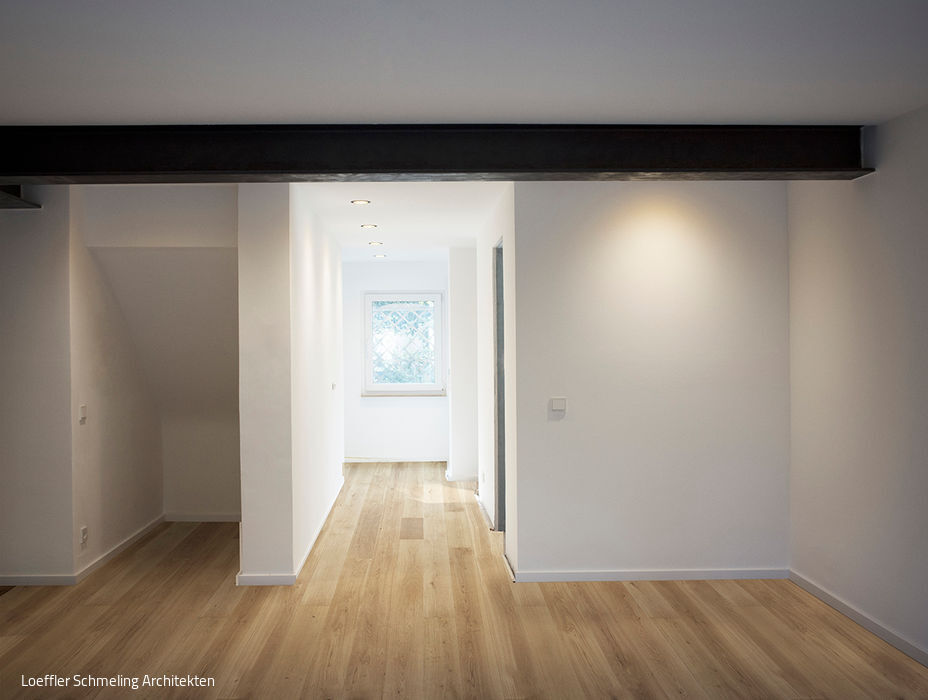


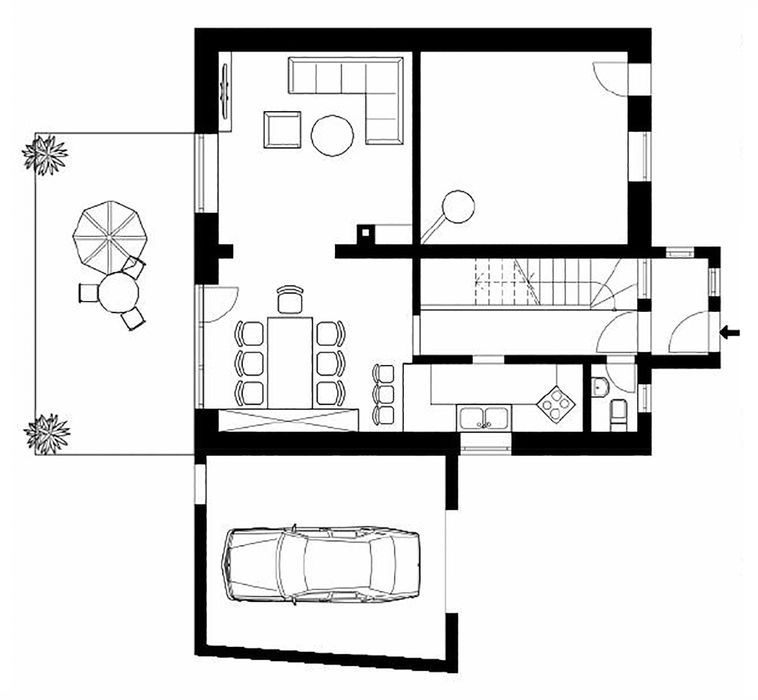
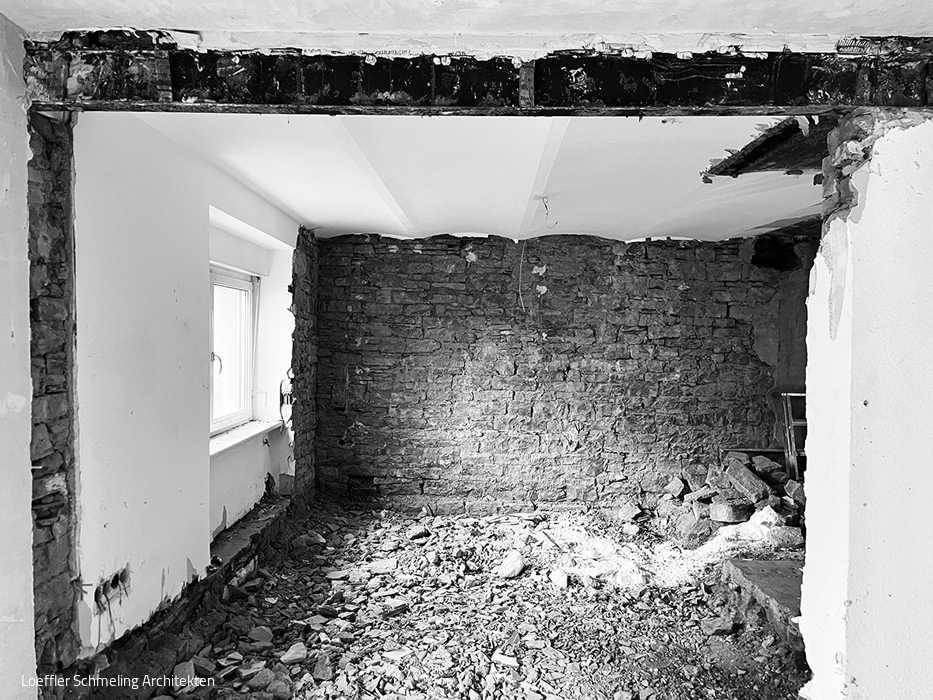
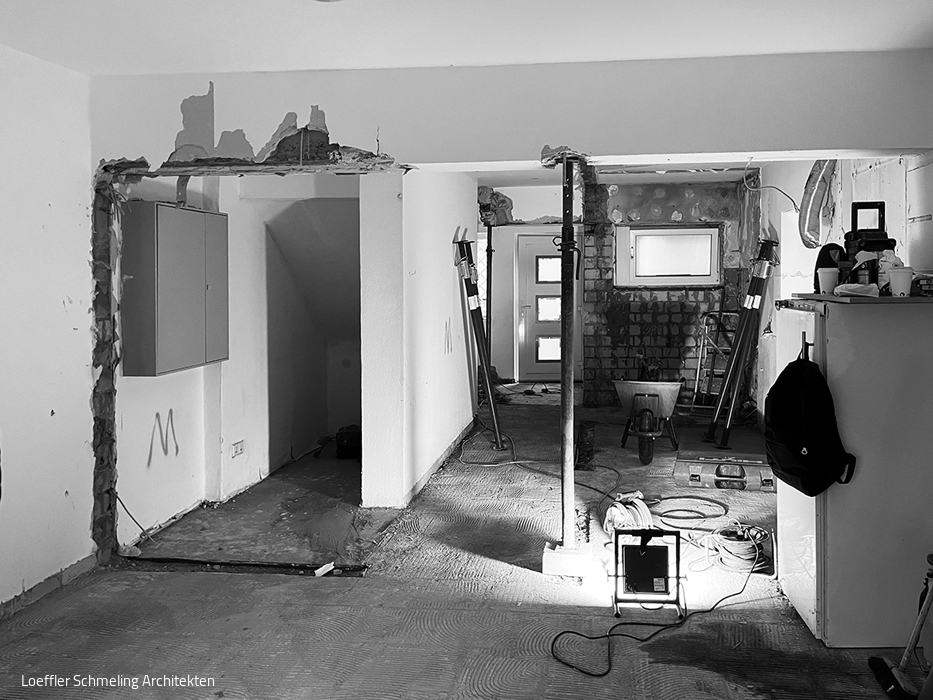
The old building probably served as a barn originally, and both the room layout and the differences in floor height on the ground floor suggest that the building has already undergone renovation. The older part is built of sandstone and has wooden beam ceilings on the upper floor and vaulted ceilings on the lower floor, as well as a coal cellar. The new extension consists of reinforced concrete ceilings and solid, thickly bricked exterior walls. The house had also recently been given a new exterior skin with 20-centimetre-thick insulation and plaster, giving it a good appearance.
When inspecting the load-bearing structure and walls, Löffler Schmeling Architects determined that they would have to intervene more deeply into the building fabric than expected, but that the effort would still be worthwhile. They formulated the goals of the modernisation and conversion accordingly: the building was to be brought up to the latest technical standards and the floor plans redesigned. The aim was to make the rooms more open, brighter and more inviting. Functionality, design and quality were to play a central role in this. In line with sustainable practices, as much of the existing structure as possible was to be used and as little as possible disposed of. The energy concept was to be designed with the future in mind. The renovation work included the demolition of walls and parts of the old floor slab, the redesign of the bathrooms and the wall and floor surfaces. A new staircase and new windows on the ground floor were added. The underfloor heating is operated by an air-to-water heat pump, which draws most of its electricity from a photovoltaic system. The house meets the KfW 55+ energy standard. The planners consistently sought ways to make use of existing materials and repurpose them intelligently. The demolition material from the floor slab was used as filling material for the disused coal cellar. The exposed stone wall was supplemented with stones that had been removed from other parts of the house and then repointed with trass cement. Existing steel beams were upgraded and reinstalled in a new location. The original terrace slabs now serve as the border for the new terrace. The old garage door was repaired and reused. Where possible, new materials were added in their raw state. For example, the new rolled profiles replace the walls on the ground floor. They were simply cleaned and greased to provide simple and effective corrosion protection.
www.loeffler-schmeling-architekten.de
Photography Credits:
Löffler Schmeling Architects
(Published in CUBE Stuttgart 03|23)


Where Tradition Meets Modern Design
New Winery Building Rooted in Local Character

Reimagining the Office
Creative agency designs an inspiring workspace that stimulates all the senses
Nature's Embrace
Wooden Home and Garden: Local Materials Meet Insect-Friendly Design
A Compelling Composition
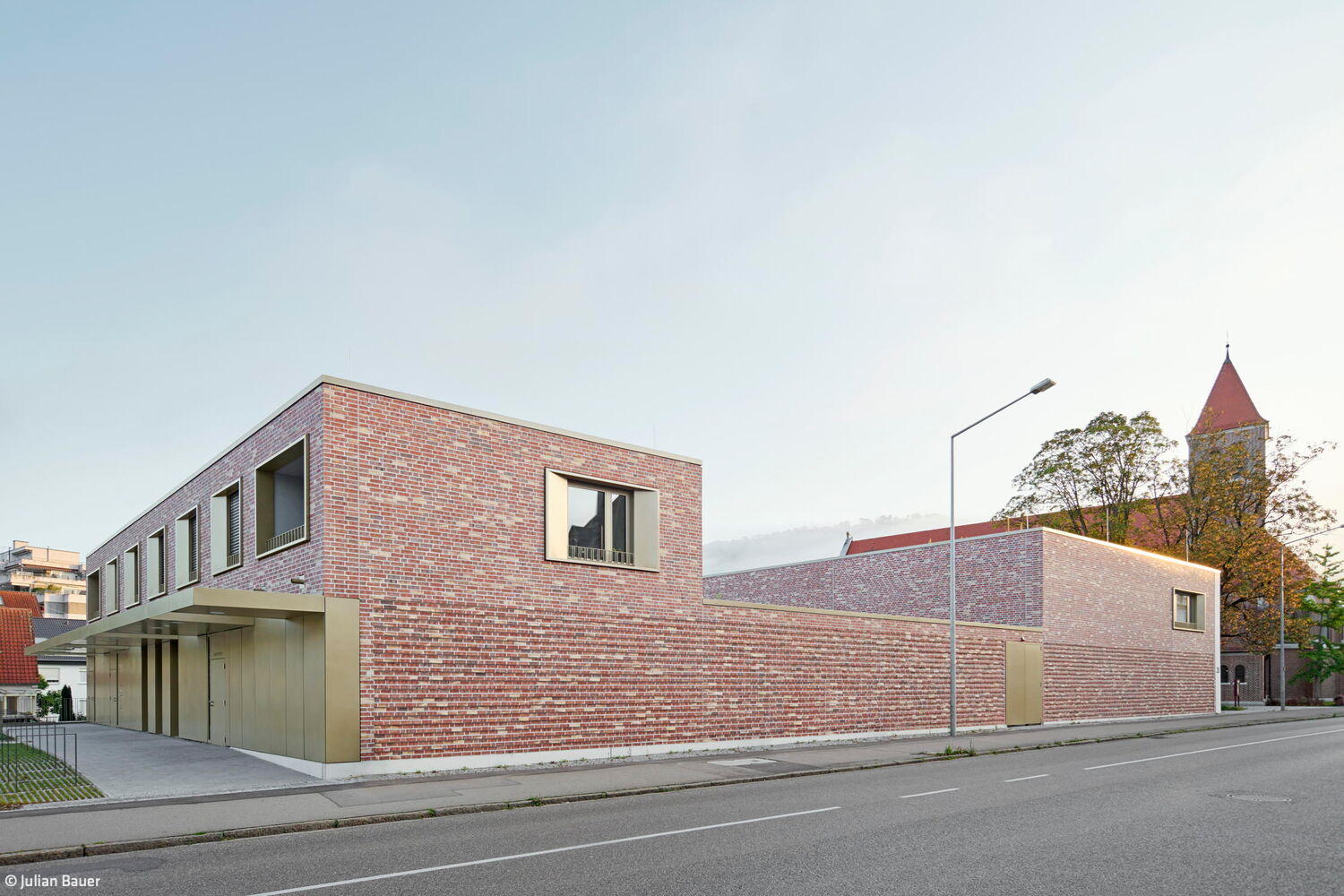
A Distinctive New Building That Unifies Multiple Functions While Honoring the Historic Church