


A House in Raspberry Red
A thoughtful design approach that addresses the urgent demand for livable urban housing
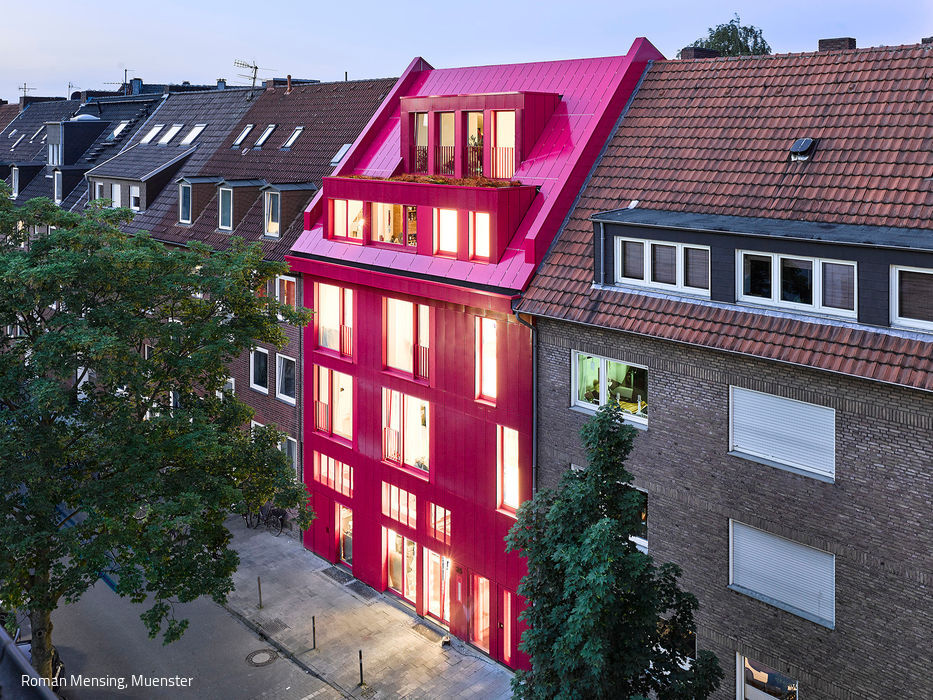
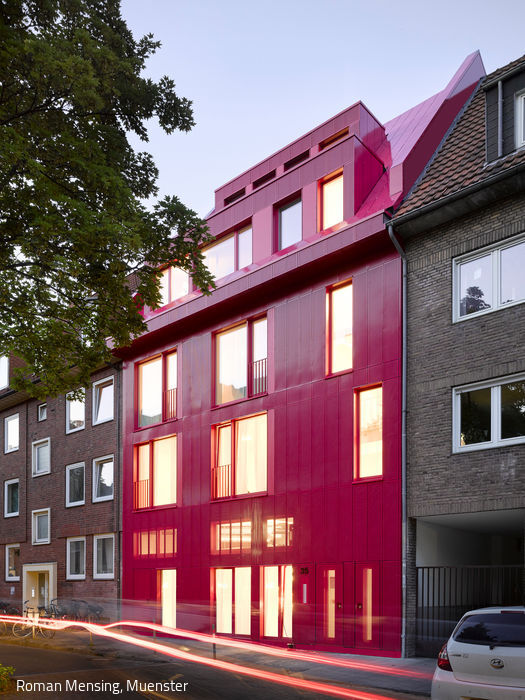

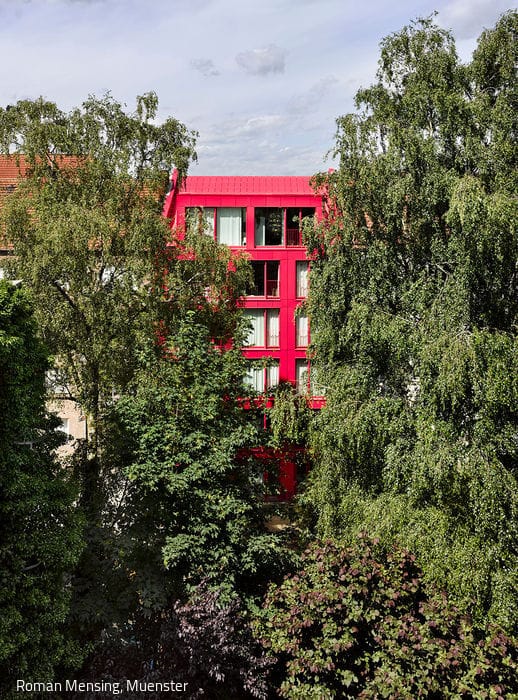
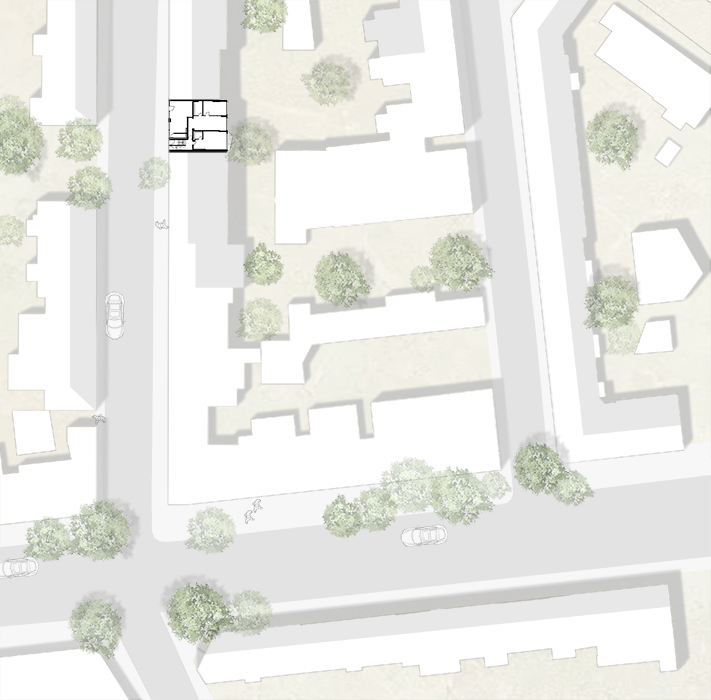
Housing shortages are a pressing challenge across Germany, affecting many urban districts and neighborhoods highly sought after by residents. In one such densely developed urban quarter, Kresings Architektur saw an opportunity to thoughtfully reimagine a 1950s terraced house to address contemporary housing needs.
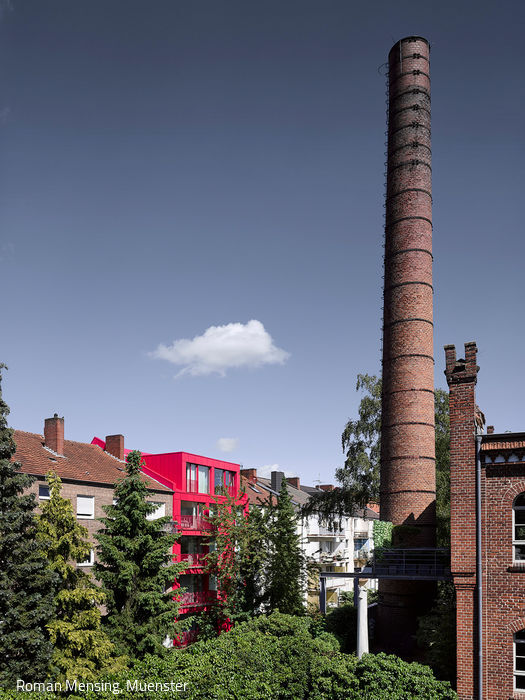
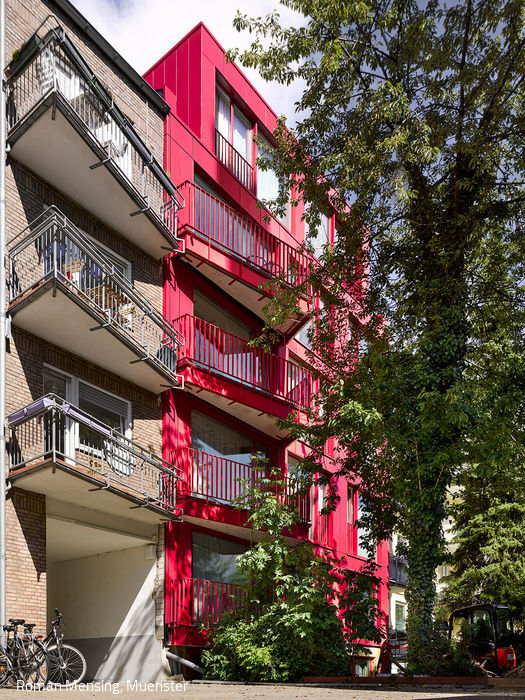
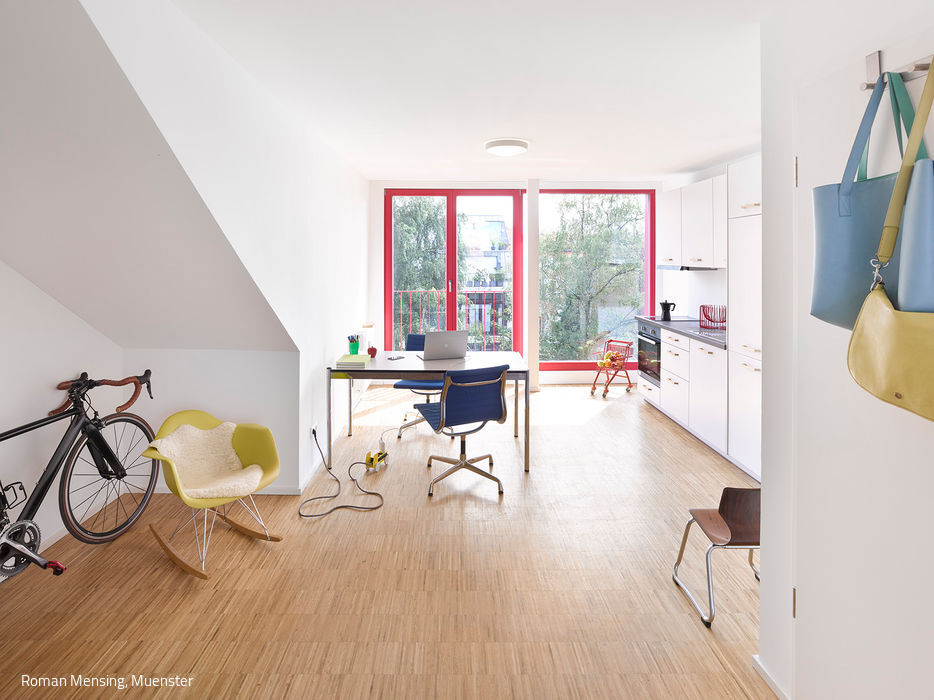
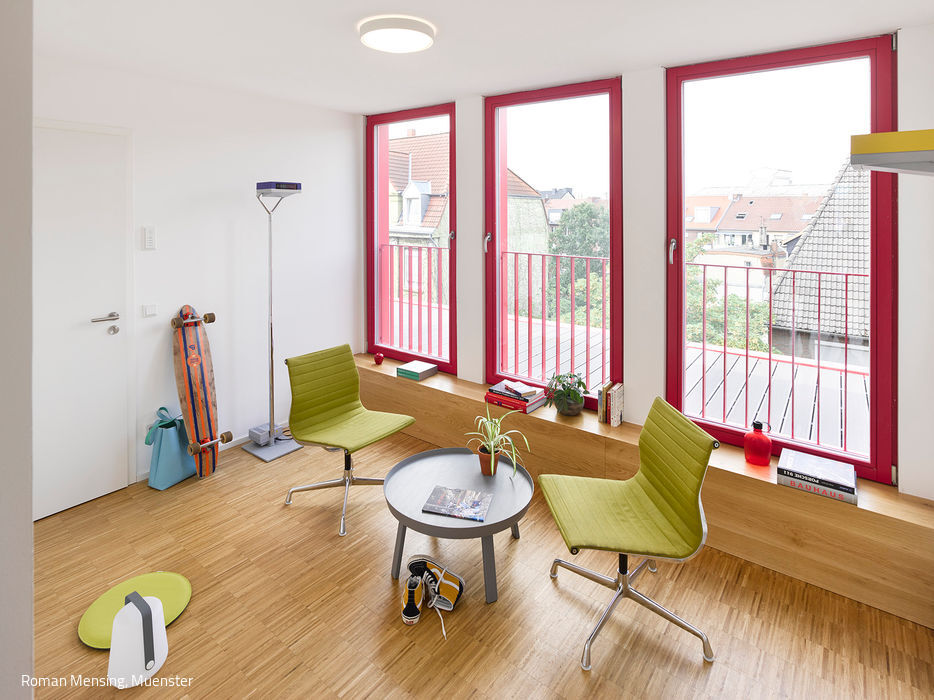
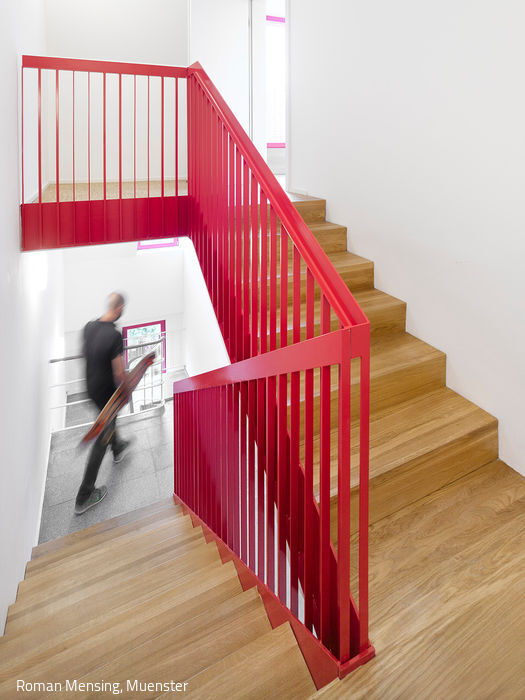
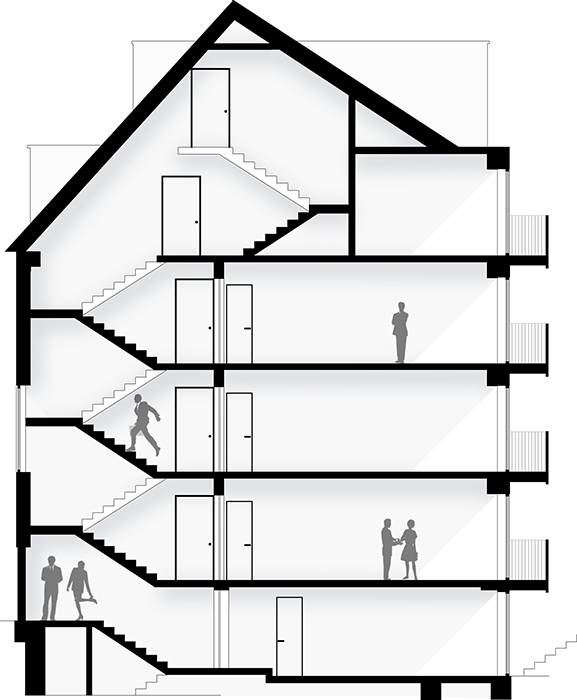
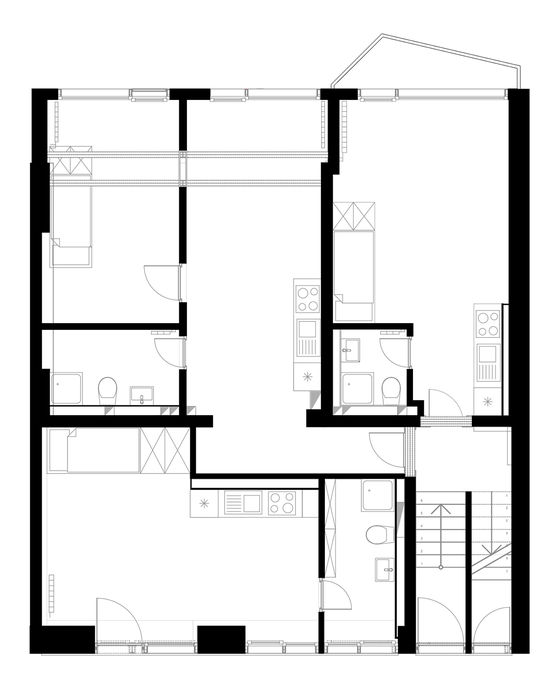
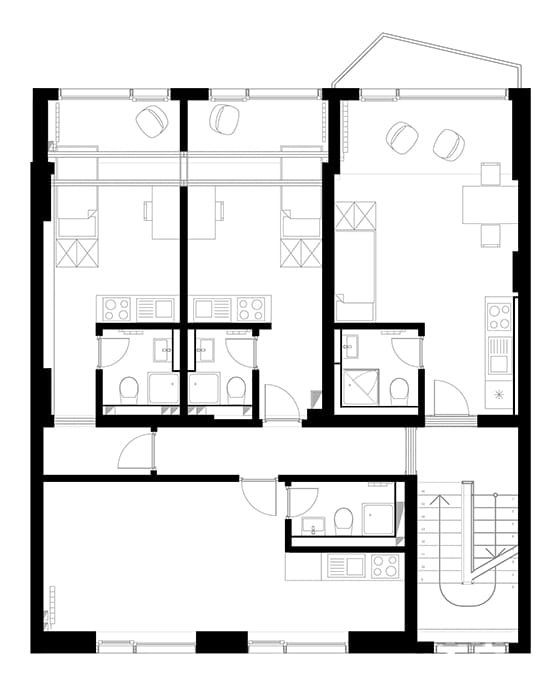
"We needed to reimagine the floor plans—moving from the oversized layouts of the past to designs that respond to today's living patterns, dramatically reduce energy consumption, and enhance residents' quality of life," explains architect Kilian Kresing, who partnered with his brother as developer. Today, the award-winning conversion houses 17 residents of all ages from eight nations across 15 thoughtfully designed units within 450 m² of living space. The building's form and façade echo its neighbors in abstracted fashion, yet the newly extended roof—clad in standing-seam sheet metal—signals a fresh chapter. This roofline integrates seamlessly with the completely revamped façade, where color plays a starring role. Striking raspberry red accents define the sheet metal, wooden window frames, intercom, parapets, railings, and balconies. On the garden-facing side, a new timber-framed exterior wall extends beyond the original balcony line, effectively deepening the spatial volume and enabling compact units on both the western and eastern exposures. The interior layout eliminates unnecessary circulation space. Expansive floor-to-ceiling wooden windows flood the rooms with natural light, while French doors in each unit gracefully compensate for the restructured balcony arrangement. Oak-finished doors, solid oak floorboards, and compact high-efficiency radiators outfit each apartment. Soft-white plaster walls frame the distinctive raspberry-red window frames. Both shared areas and individual units feature LED lighting, with motion sensors in the entrance hall and basement further reducing energy draw. The entire conversion was modeled in 3D, streamlining coordination between trades—particularly benefiting the carpentry work on the new façade.
Photography Credits:
Roman Mensing, Münster
www.romanmensing.de
(Published in CUBE Ruhrgebiet 04|21)


A Study in Form and Mass
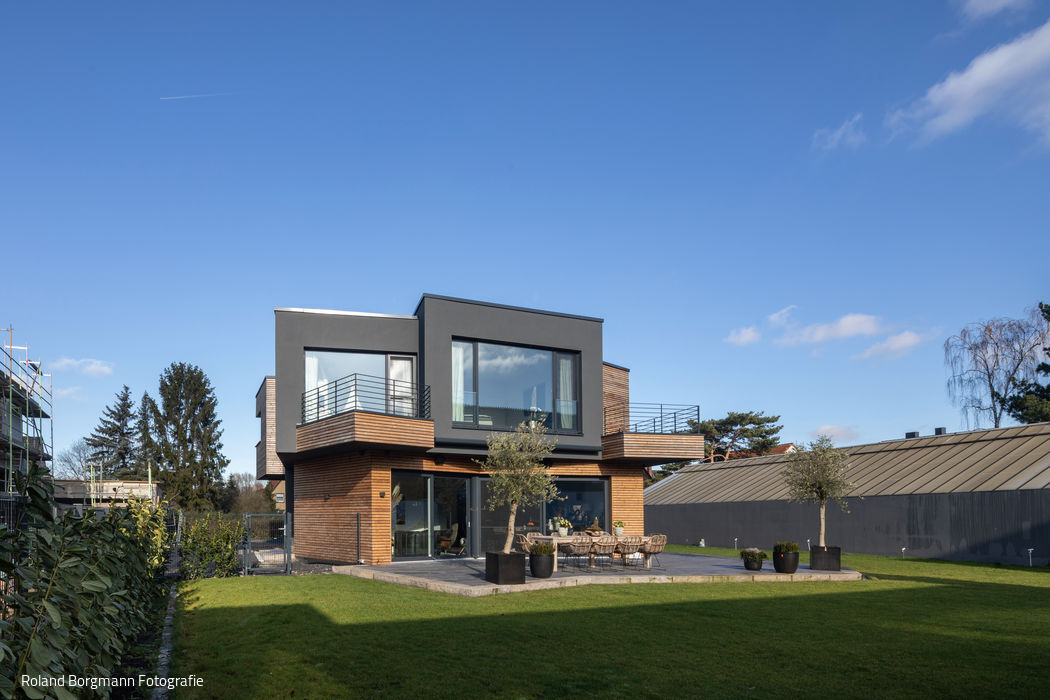
A home in Hamm where distinctive architecture takes center stage
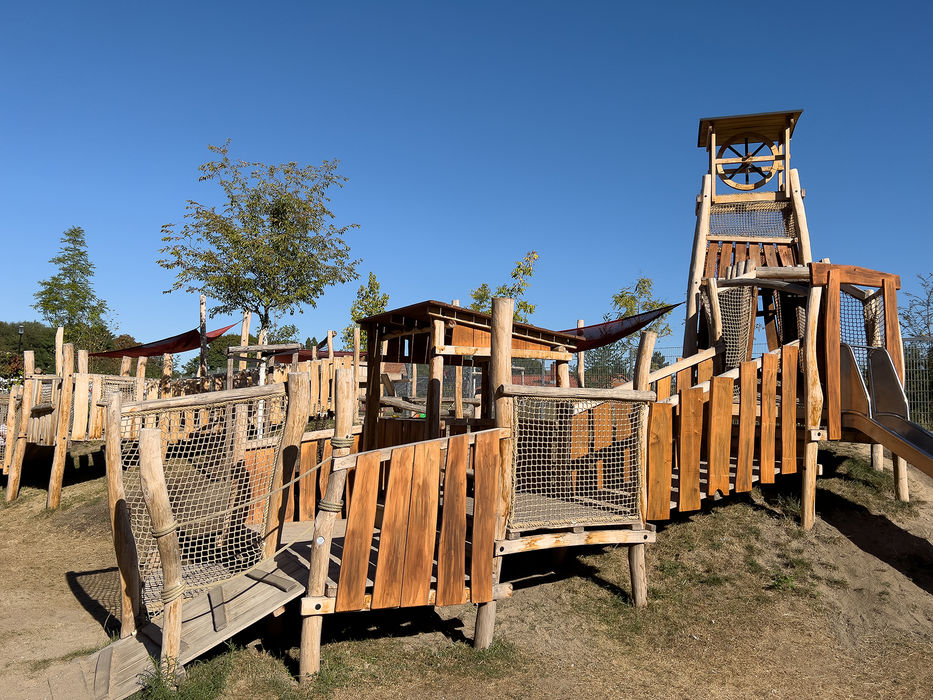
Creative Play Haven
The "Kleiner Pütt" daycare, nestled at the edge of the Zollverein Coal Mine Industrial Complex, now boasts a spacious and inventively designed outdoor playground.
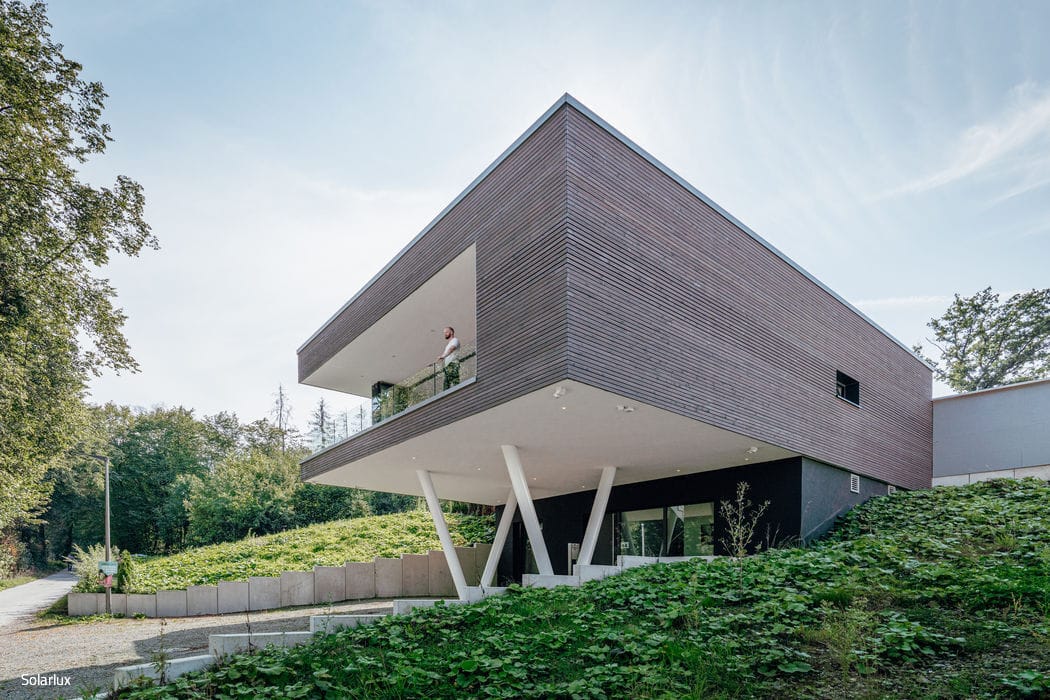
Living with Freedom
A Futuristic Home Designed for Maximum Openness
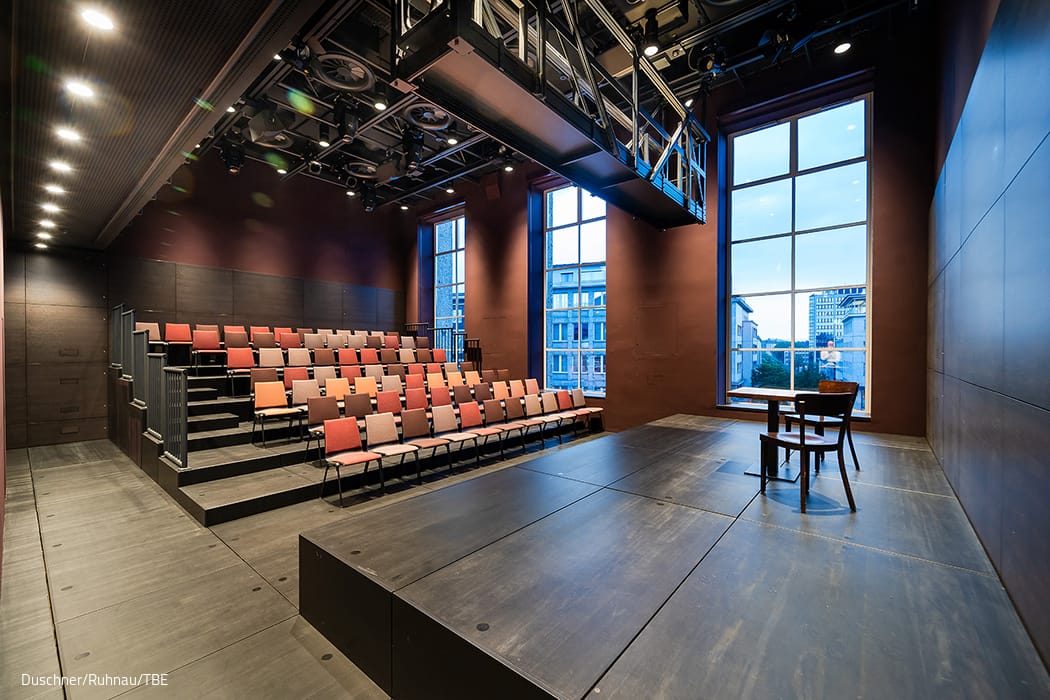
Hero Bar becomes theatre space
The New ADA: A Multifunctional Theatre Space for the Grillo Theatre in Essen