


Vertical Extension
Expansion of the Ruhr Rheumatism Centre in Herne
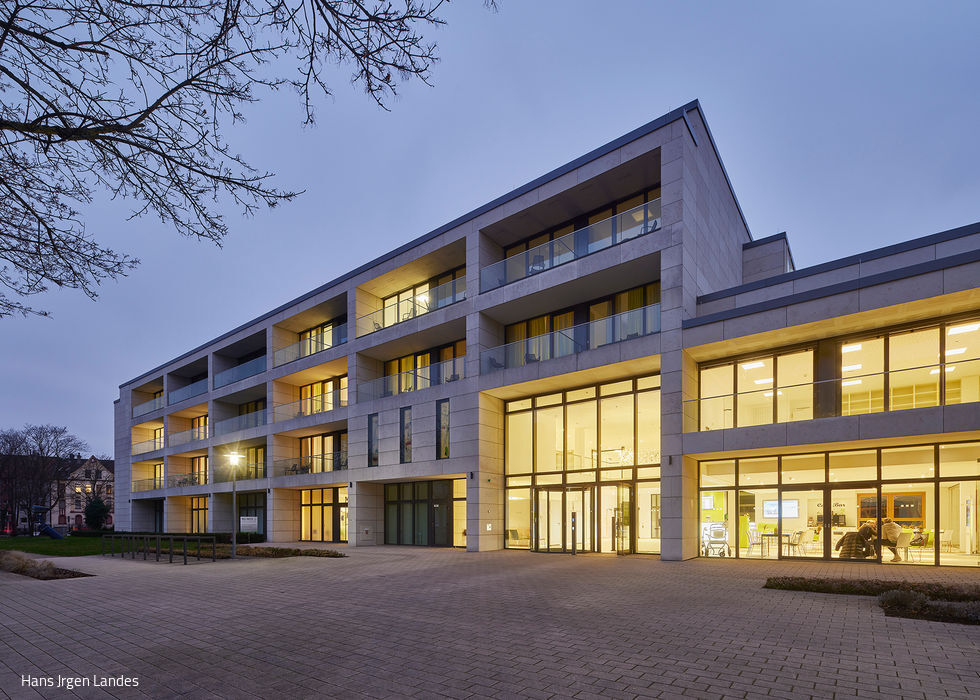
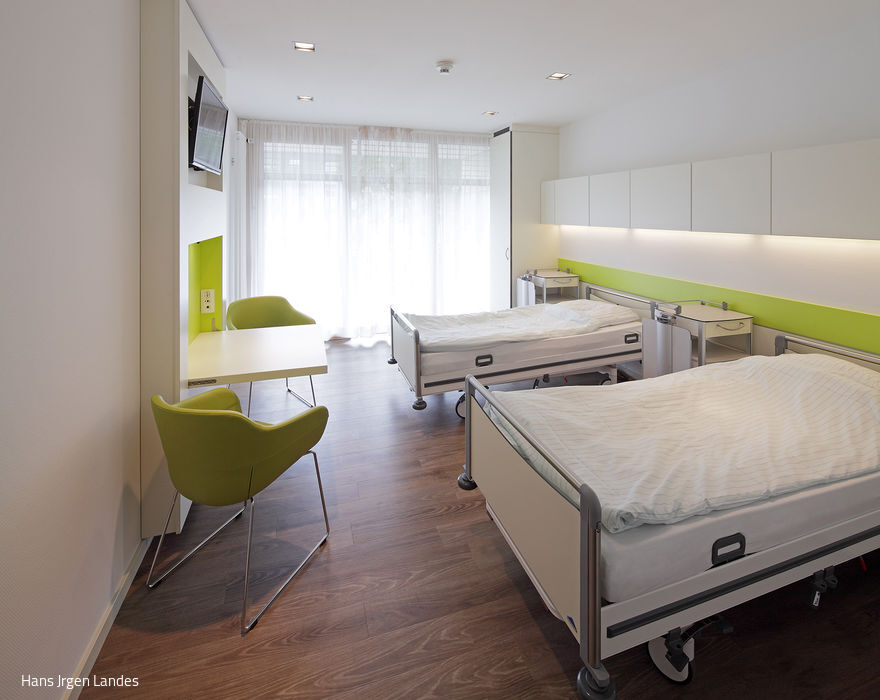
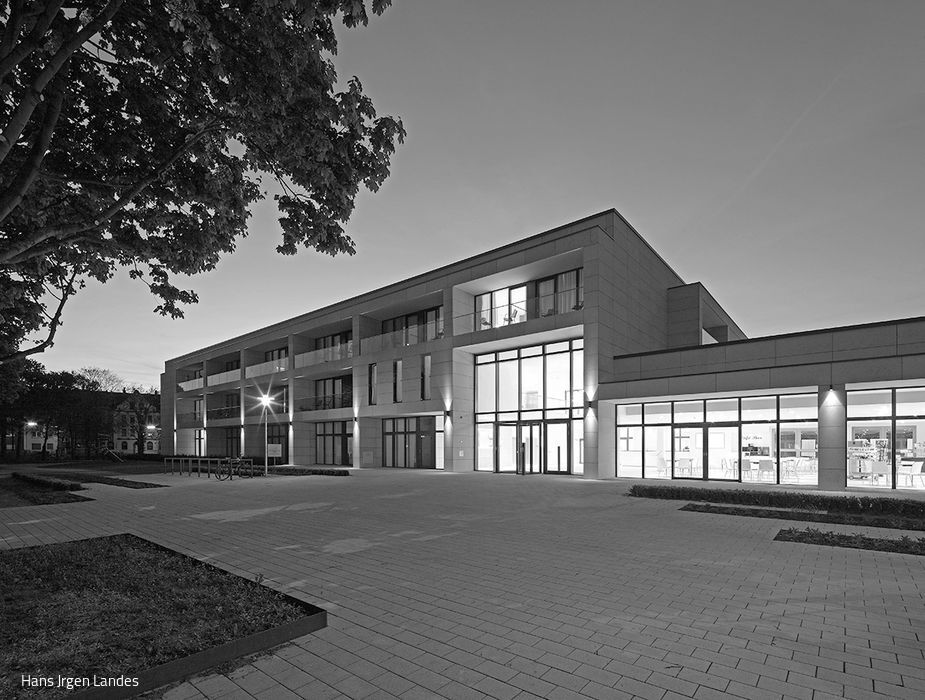
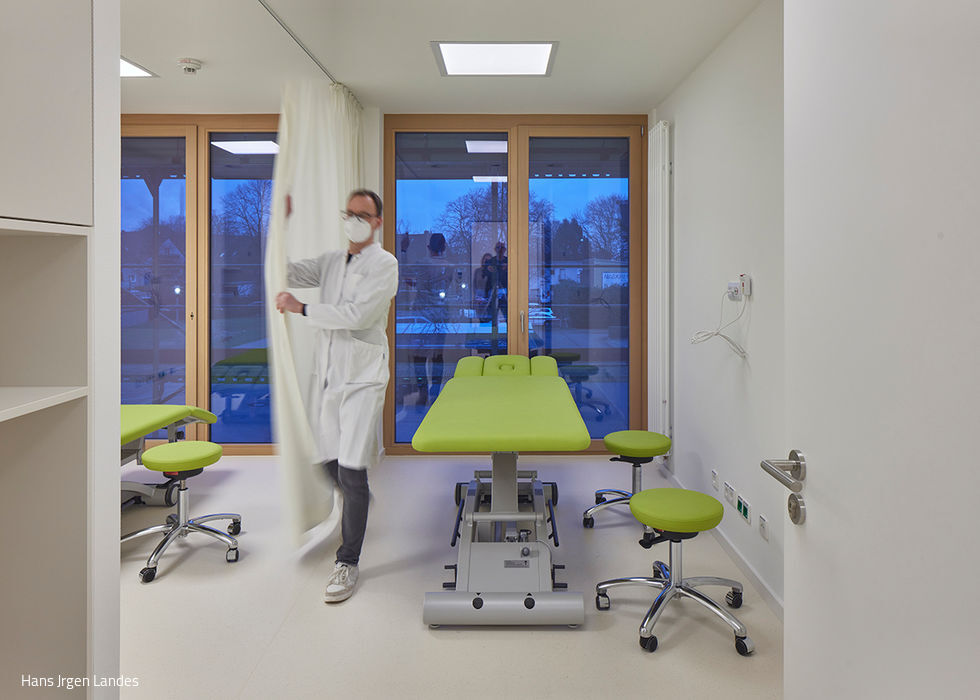
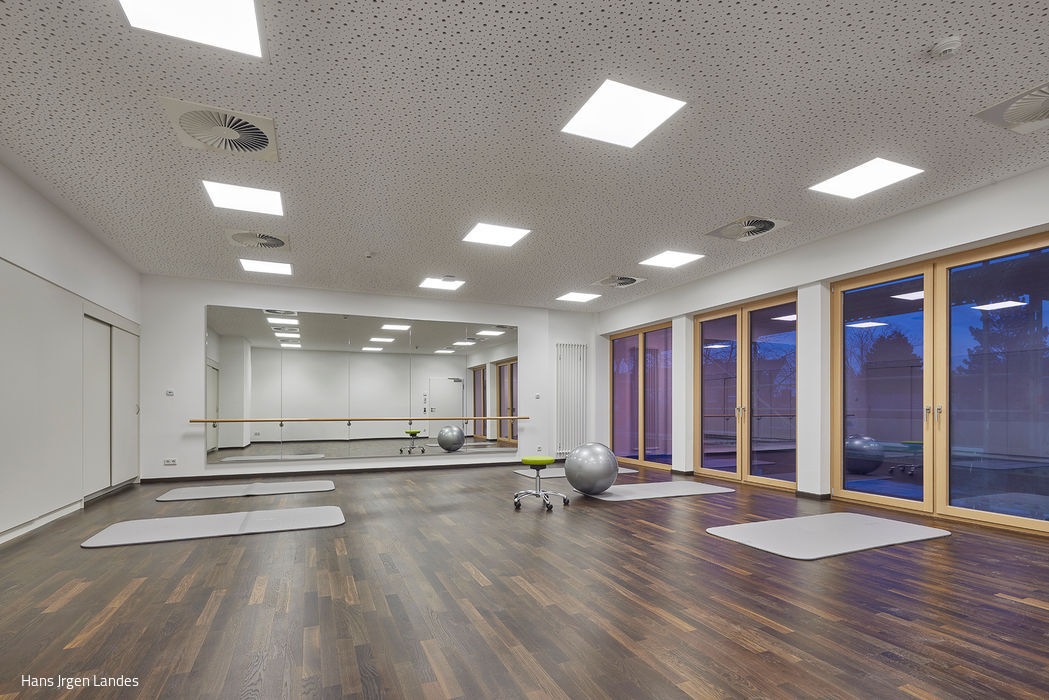
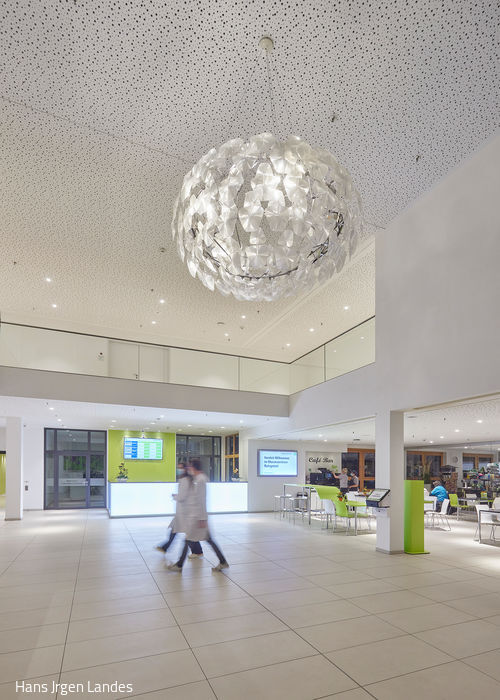
To meet growing demand for inpatient rheumatology services, Krampe Schmidt Architects expanded the Rheumatism Centre Ruhrgebiet in Herne by adding an additional floor, enabling the facility to deliver optimal care to patients with rheumatic diseases.
The architects capitalized on the roof structure of the 2014 building—also designed by the Bochum-based firm—to create this sustainable expansion without consuming additional land or green space. Notably, this vertical expansion option had been anticipated in the original 2014 design. From an economic standpoint, building upward also proved the most compelling solution. Over approximately two years of construction, the project delivered 22 two- and three-bed rooms, new physician and examination spaces, fitness areas, and occupational therapy facilities. The architects maintained architectural continuity by extending the original façade and structural language, using light-colored Jura natural stone in horizontal formats. The result is a unified aesthetic that, despite its increased scale, integrates seamlessly into the mature residential character of the Wanne district.
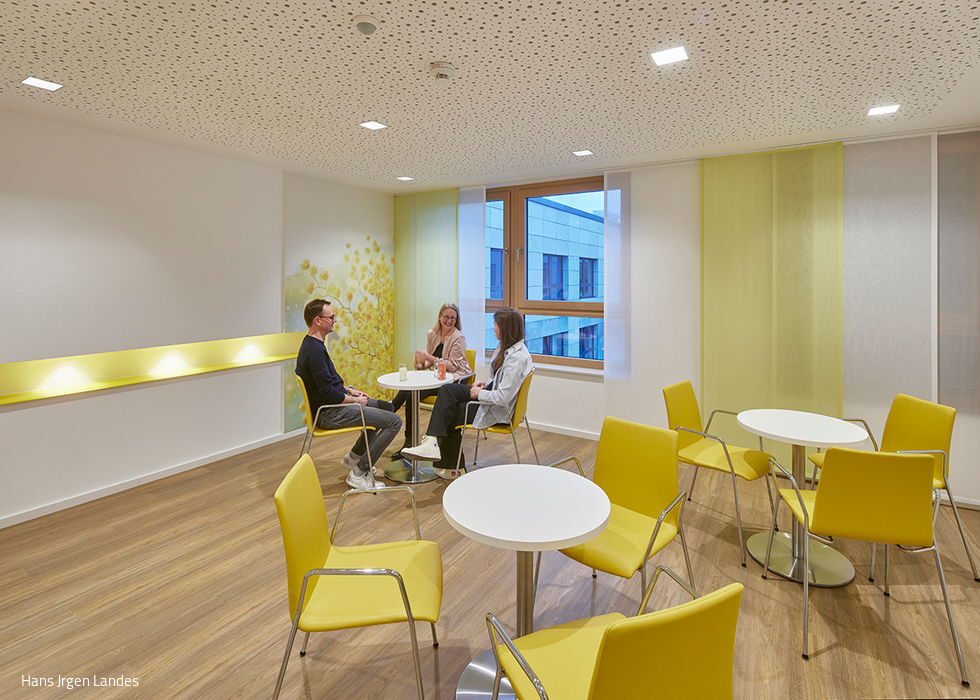
The two-story main entrance remains a defining façade element, visually extended by a generous physicians' library featuring floor-to-ceiling glazing. Patient rooms throughout the new floor showcase floor-to-ceiling windows, loggias, and glass railings—a design strategy that extends to the north-facing rooms as well. This commitment to natural light reaches beyond the corridors: two atriums flood common areas with daylight from basement through upper levels. These shared spaces—waiting areas, a cafeteria, and a rooftop garden terrace—create gathering places where patients can connect and build community. The extension expands not only the soaring two-story foyer but also distributes additional physician, examination, and patient rooms across multiple levels to address clinical demand. Three new gymnastics studios and occupational therapy spaces were also added. The patient-focused ring-corridor concept continues on the new floor, with strategic color and material shifts marking key zones—the nursing station and recreation areas—to enhance wayfinding and spatial clarity.
Photography Credits:
Hans Jürgen Landes
www.landesfoto.de
(Featured in CUBE Ruhrgebiet 03|23)
Efficient Design: Proximity at Work
Health centre unites diverse services under one roof—the new extension

Living heritage
Historic Salt Facility at Hansa Coking Plant Transforms into Dynamic Event Venue
Designed for Tomorrow
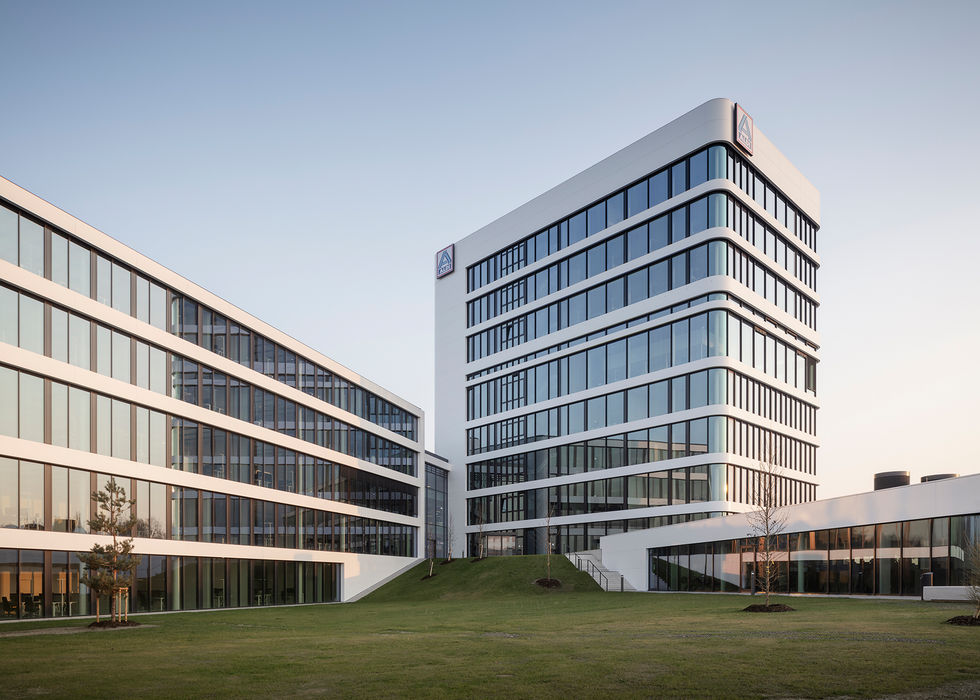
The architecture of Aldi Nord Campus fosters collaboration and embodies sustainable design principles.