


Protected Space
The gently rolling hills of Rheinhessen frame a small chapel
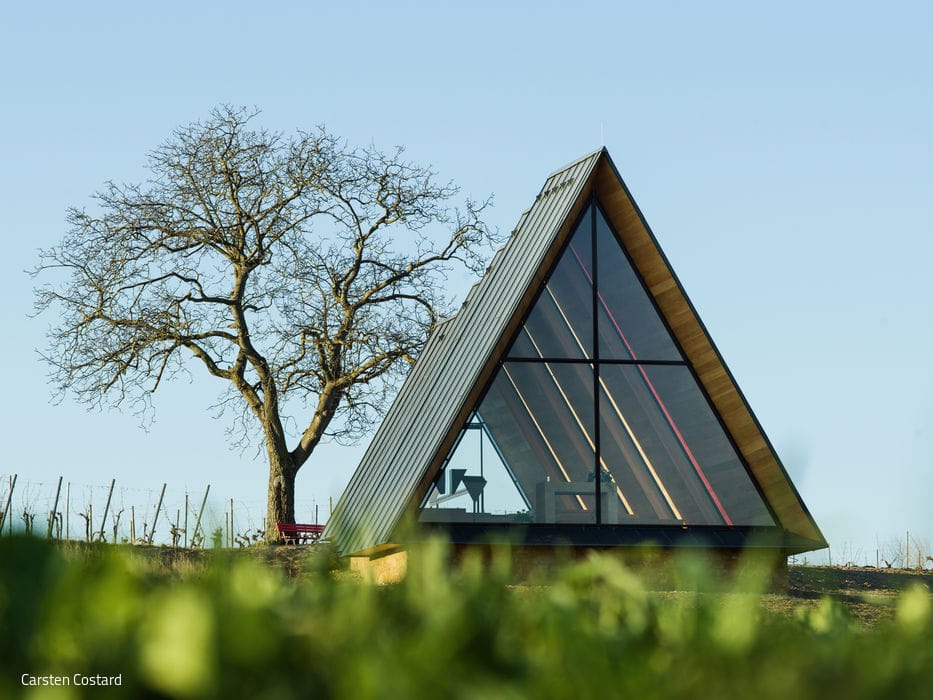
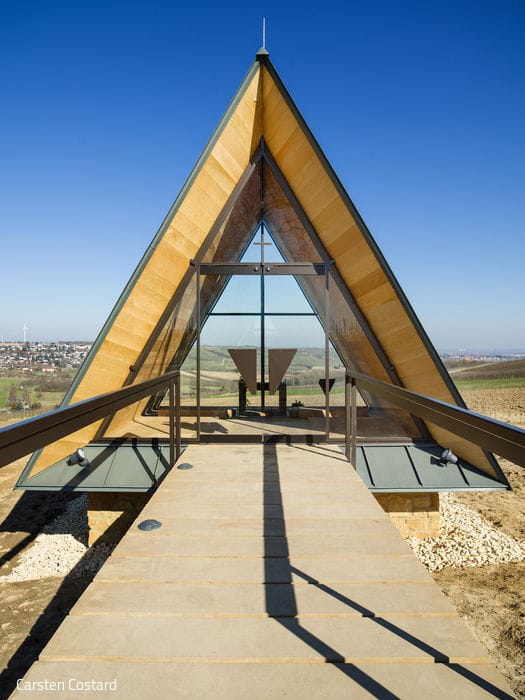
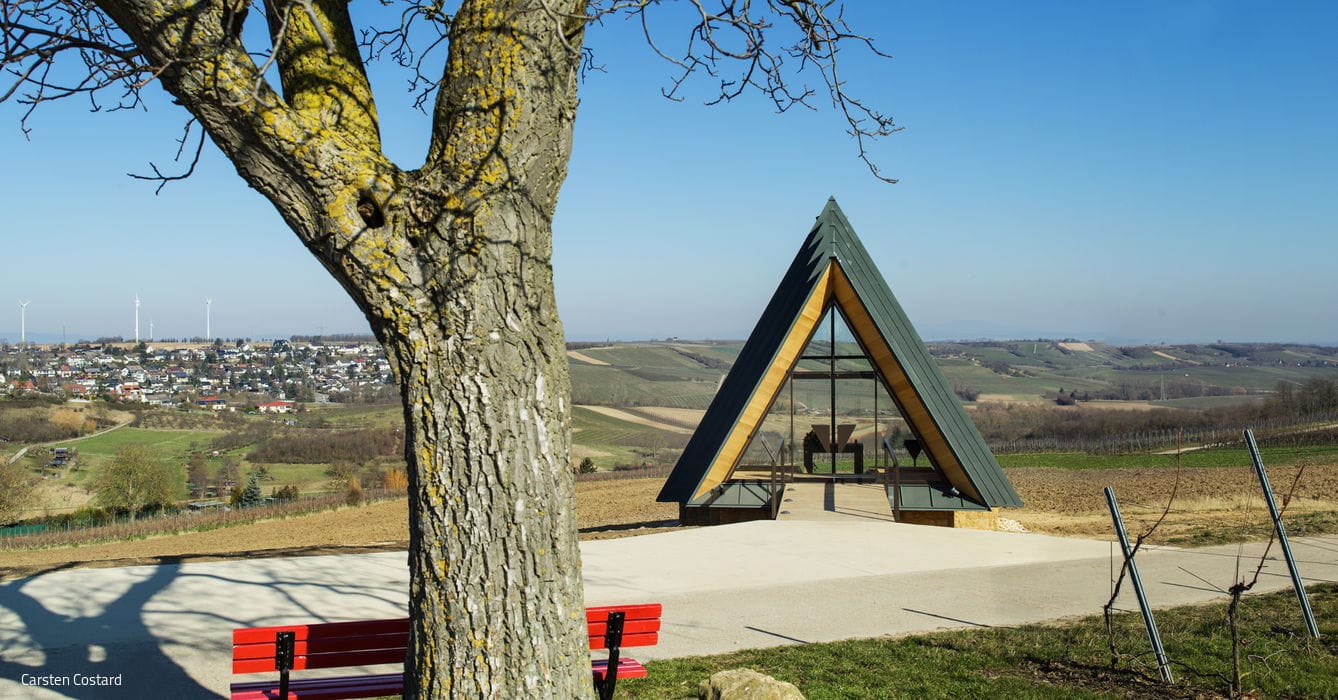
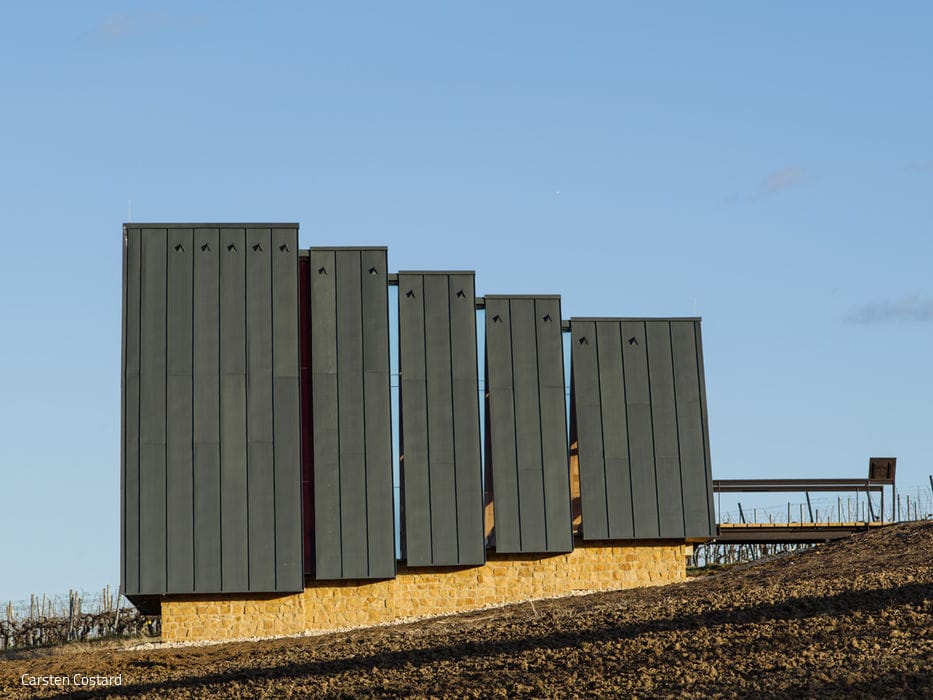
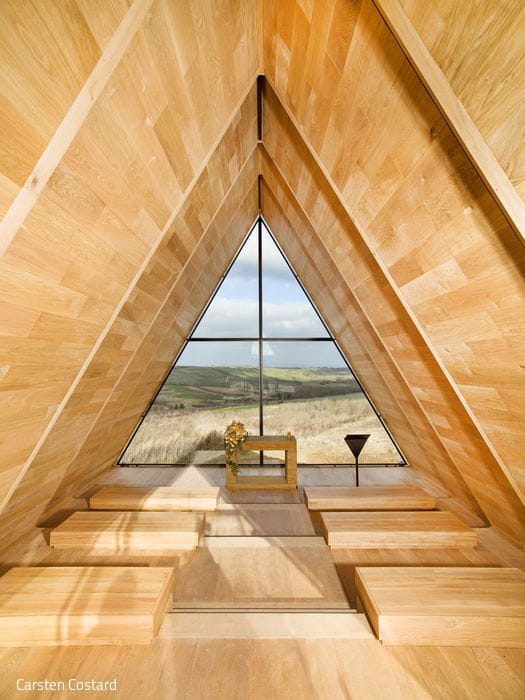
Nestled among the vineyards and gently rolling hills of Rheinhessen, a small chapel emerges from the landscape. Its defining feature is a distinctive triangular tent form—a wood and glass construction that embodies both the tent of God and the concept of the Holy Trinity. Through its carefully considered placement, orientation, and openness to the surrounding terrain, the chapel functions as both a contemplative sanctuary and a space for quiet reflection or prayer. Rooted in Christian principles, it transcends denominational boundaries, offering a spiritual experience that stands independent of institutional religion.
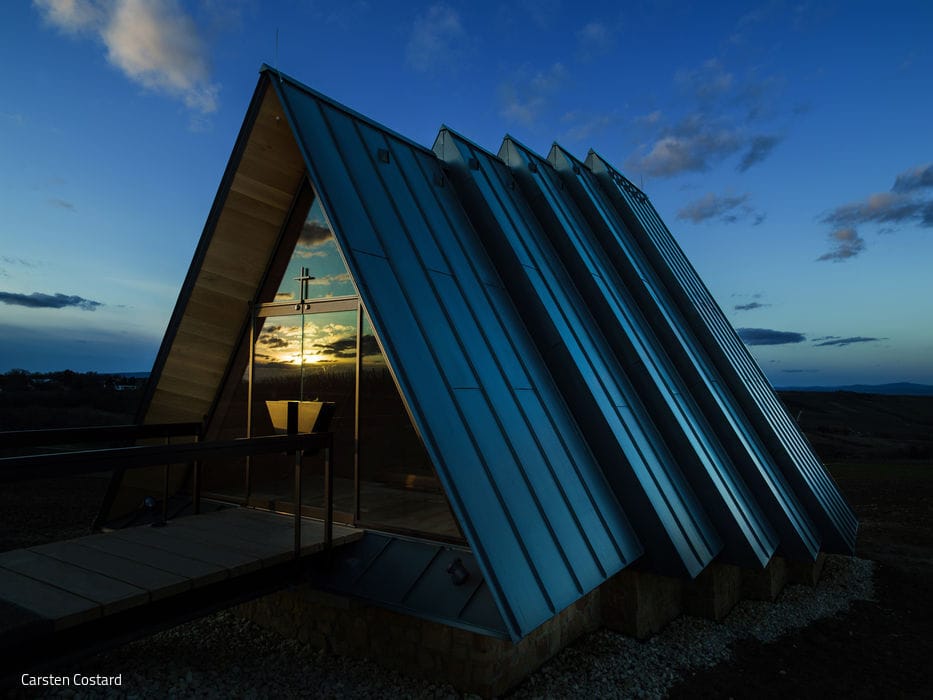
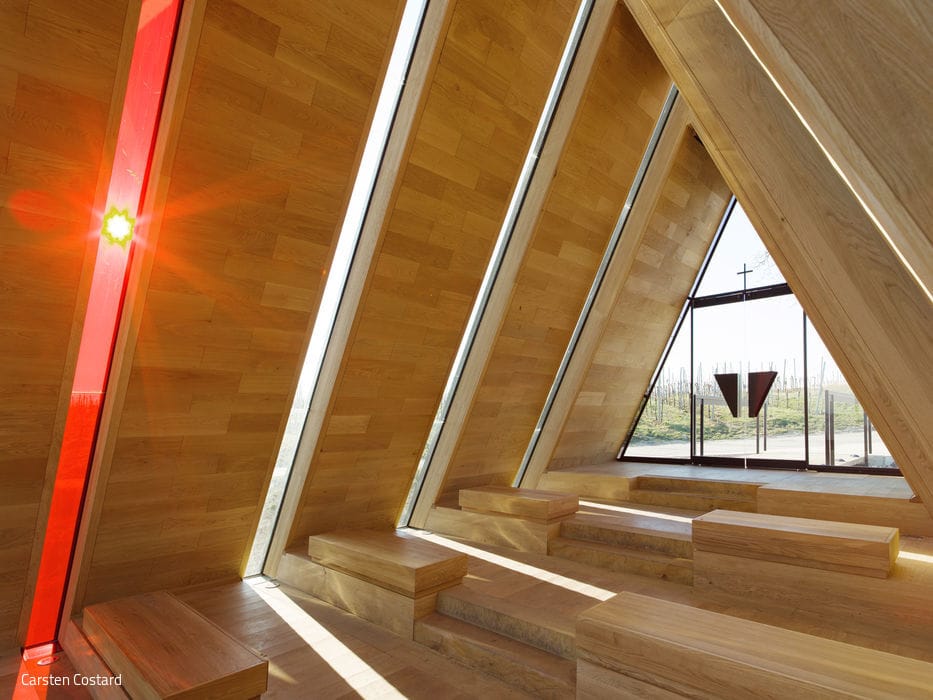
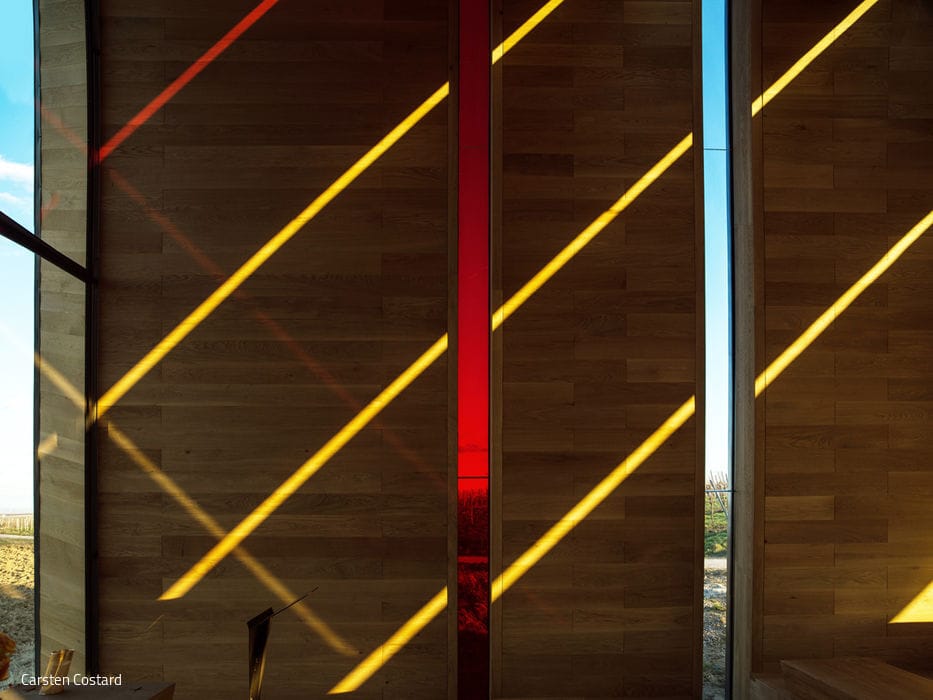
The architects at Kissler Effgen + Partner faced an initial challenge: determining the right scale within such an expansive landscape. They tackled this by temporarily mapping the building's footprint with scaffolding, simultaneously establishing its final position and orientation. Perched on a hilltop, the chapel faces relentless exposure to wind and rain—conditions that led the architects to specify glass façades for the traditionally vulnerable gable ends. When weather permits, the chapel offers sweeping views toward Feldberg and the Frankfurt skyline. More poetically, the glazed gables and glass strips in the side walls create a visual dissolution, allowing the landscape to appear as though it flows through the chapel itself. The structure's geometry rests on five equilateral triangles, their edges expanding continuously from 5.50 metres at the uphill entrance to 9 metres at the downhill main façade. Glass joints between triangles articulate the approximately 11-metre structure, while the trapezoidal interior steps progressively down the slope. Seating accommodates 15 to 20 visitors, inviting them to step away from daily life and absorb the space's quiet presence. A minimal liturgical arrangement—altar and moveable ambo—grounds the design in Christian practice while remaining accessible to all.
The chapel's interior lighting draws power from a photovoltaic module discreetly positioned at the property's edge. Glass strips between the solid triangular sections and the main façade are illuminated from within, transforming the chapel into a luminous landmark visible across the landscape at night (engineering design and lighting concept by EPL, Wiesbaden). The chapel stands as a legacy of Peter Eckes, the recently deceased honorary citizen of Zornheim, and his wife Ruth. Honoring the donors' vision of a chapel rooted in—and serving—the local region, the architects selected materials from the area: Flonheim sandstone for the altar and steps, Zornheim limestone for the base.
Photography Credits:
Carsten Costard
www.costard.de
(Featured in CUBE Frankfurt 04|23)
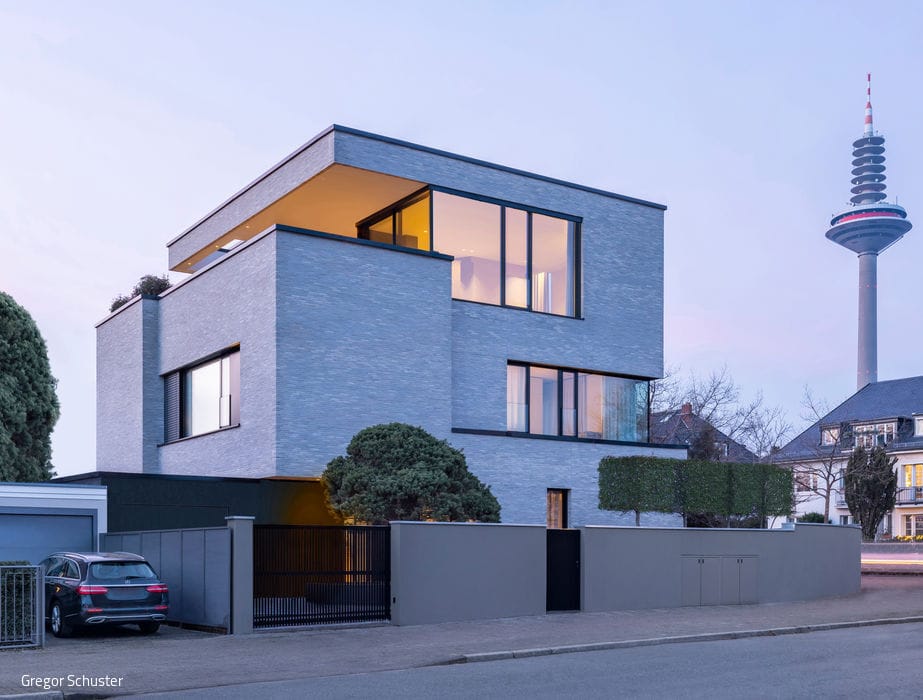
Emotional & Distinctive
Dream Home: Where Timeless Design Meets Contemporary Expression
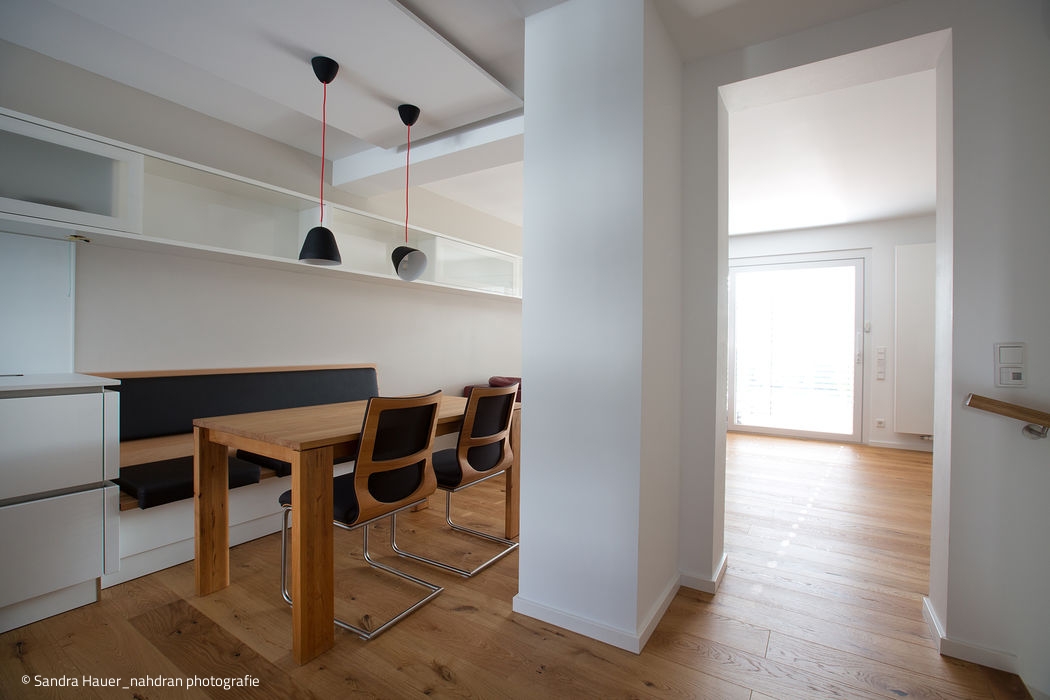
Bright, Open & Spacious
From Fragmented Layout to Unified Living Space
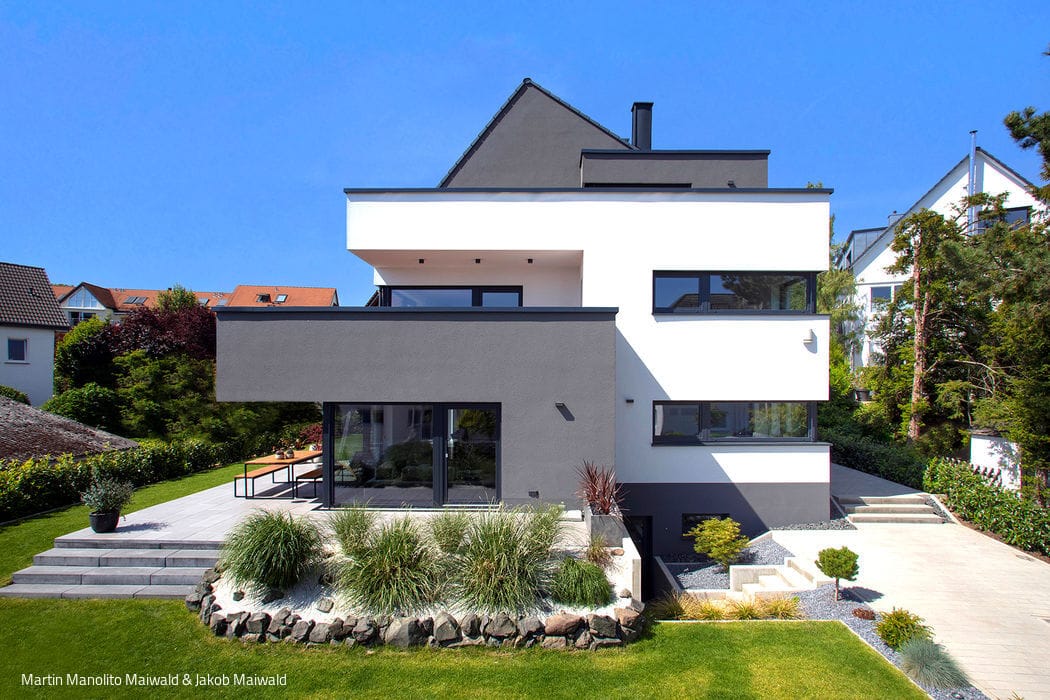
Skillfully Angled
How Building Codes Led a Family to Their Dream Home
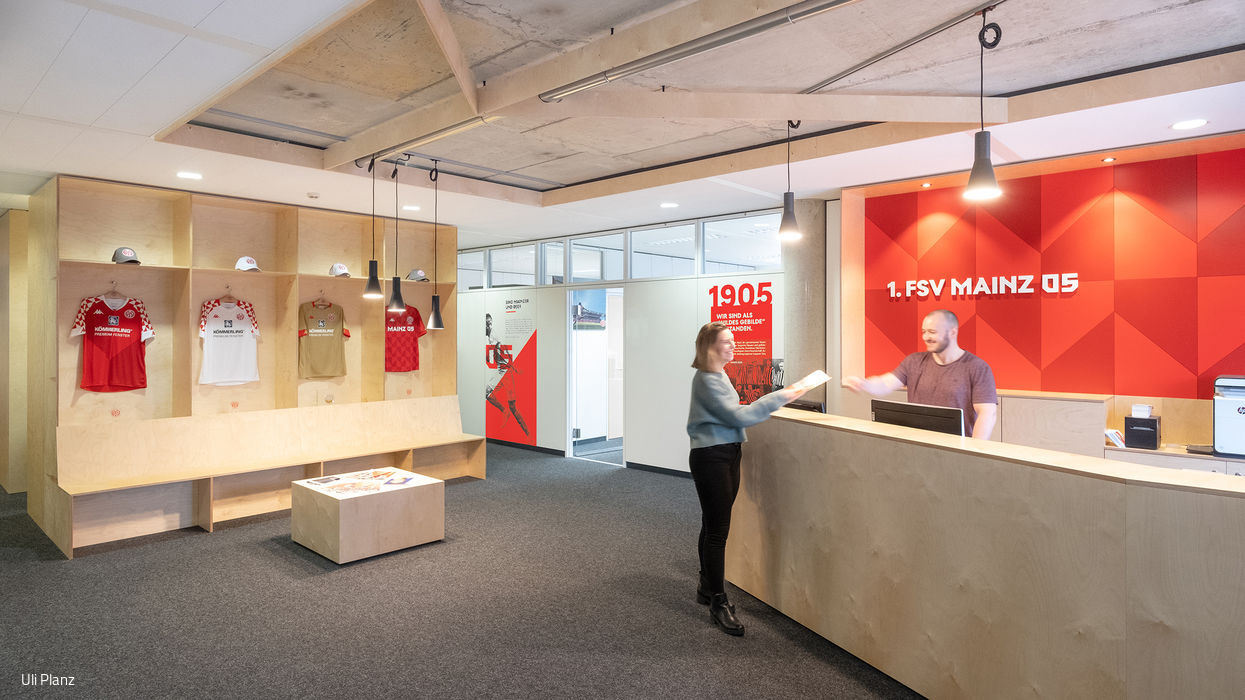
Mainz Takes All Five
Mainz 05's renovated office embodies the club's true identity