


Thoughtfully Renewed
A renovation that extends the house with sensitivity, honoring its cherished period character.
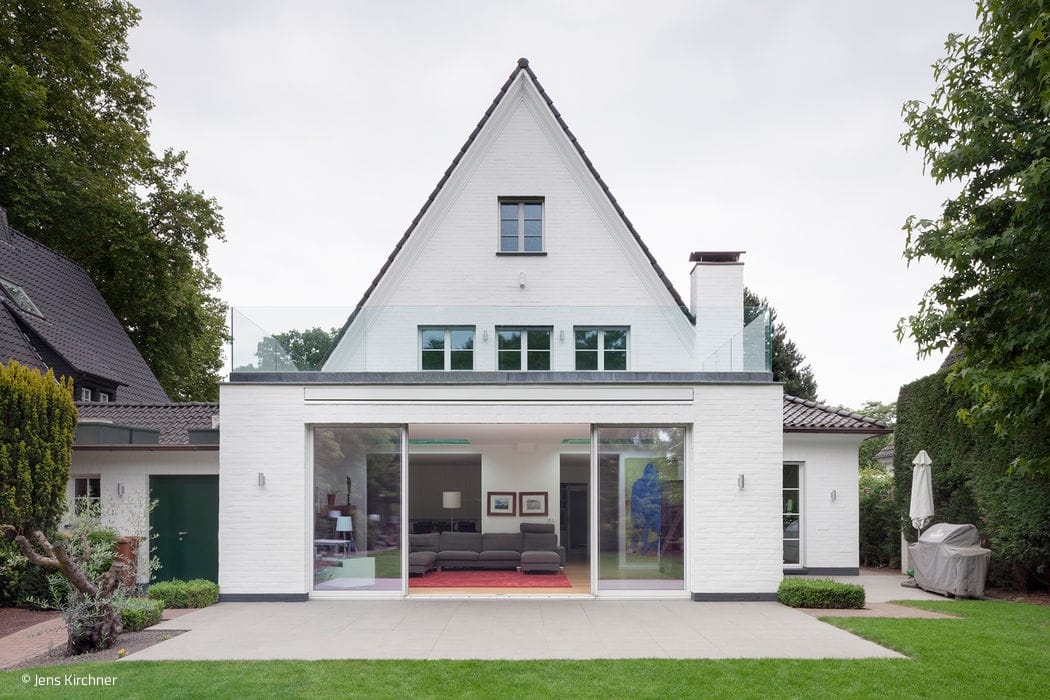
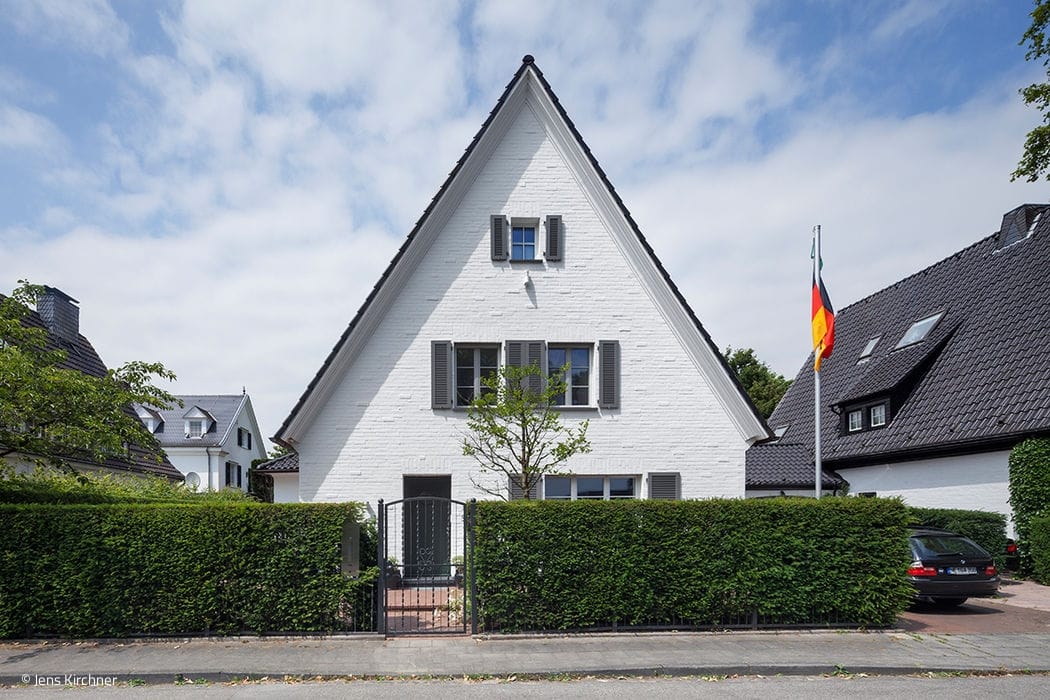
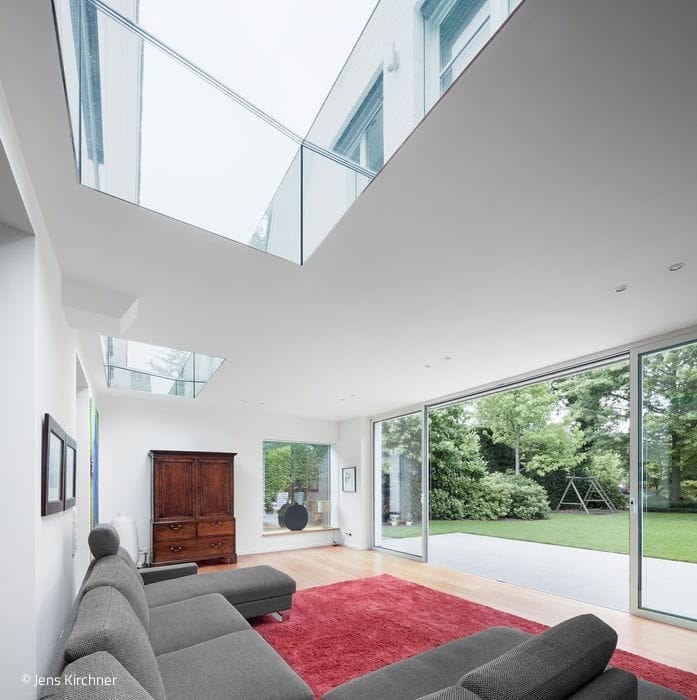
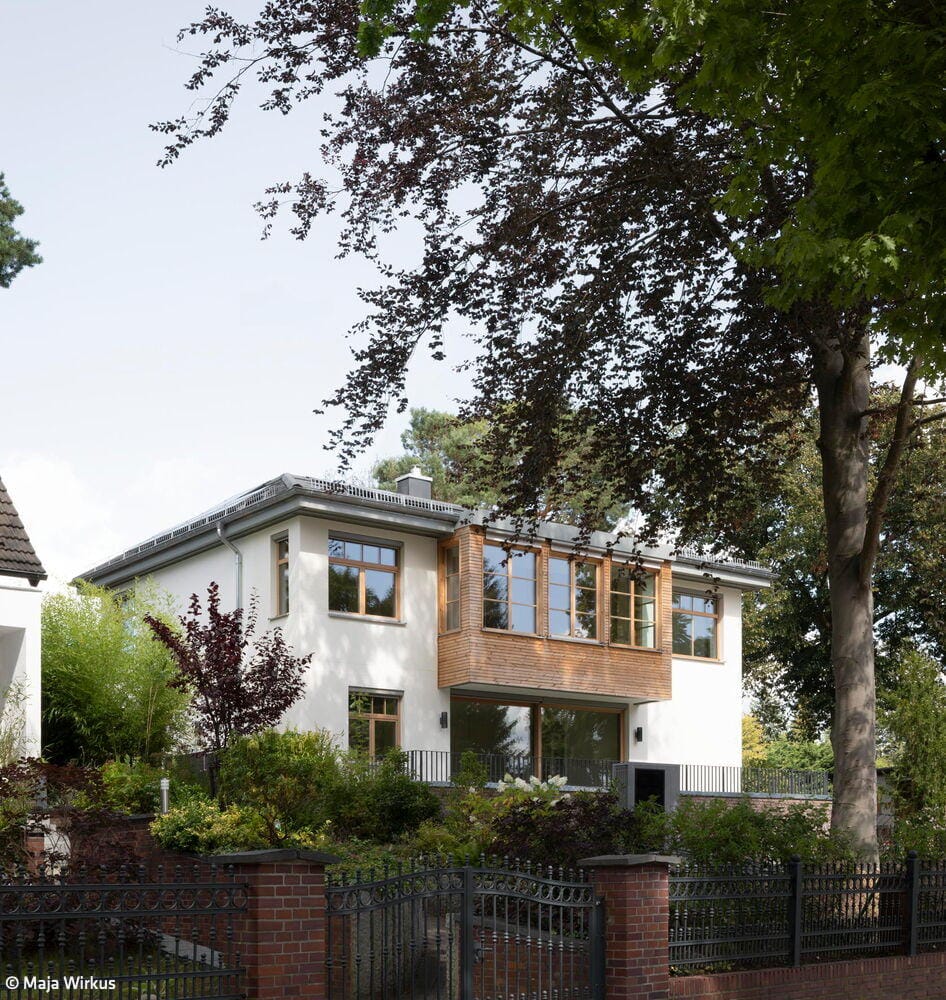
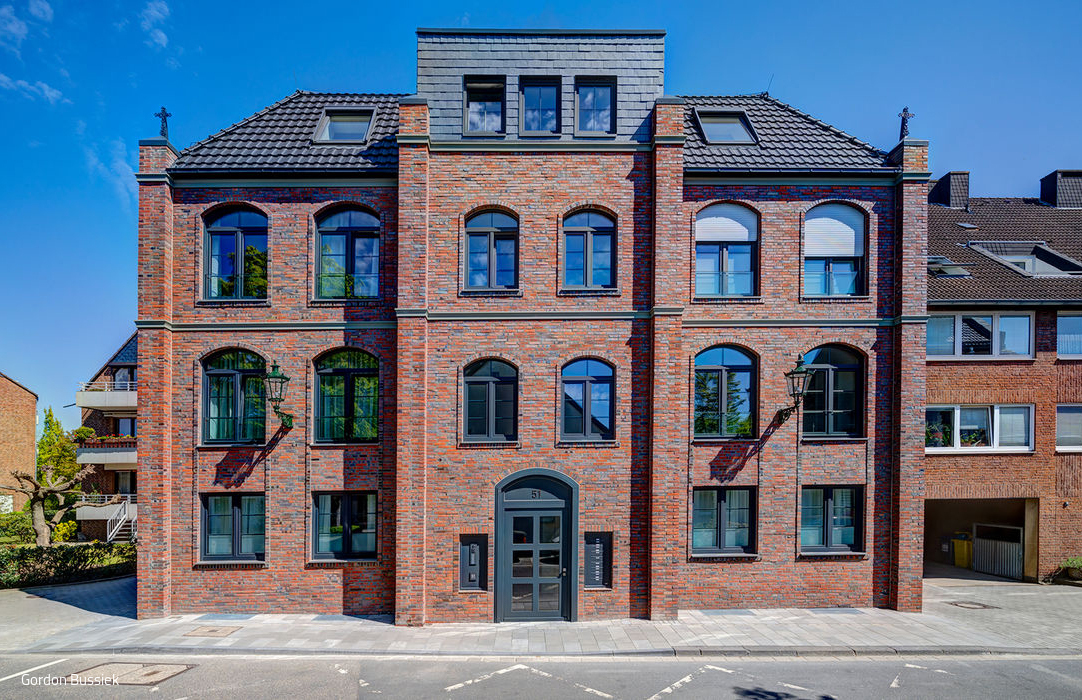
Eigentlich war alles schon da – das Backsteinhaus aus den 1930er-Jahren, erbaut im niederrheinischen Stil mit Satteldach und weiß geschlemmter Fassade, Garage an Garage gelegen mit einem baugleichen Haus in einer Siedlung in Meerbusch. Eine Erneuerung und Ergänzung waren allerdings geboten: Nicht nur, dass sich übliche bauphysikalische Mängel an der Grundsubstanz zeigten – die Mauern und Fenster waren kaum isoliert und die Dachsparren teilweise marode – auch die Raumanzahl war nicht mehr perfekt auf die Bedürfnisse der vierköpfigen Bauherrenfamilie zugeschnitten. Eine frühere Erweiterung hatte dem Haus gartenseitig zwar einen Wintergarten beschert, aber auch dieser war voller Wärme- und Kältebrücken und ließ nur wenig Tageslicht ins Innere hinein.
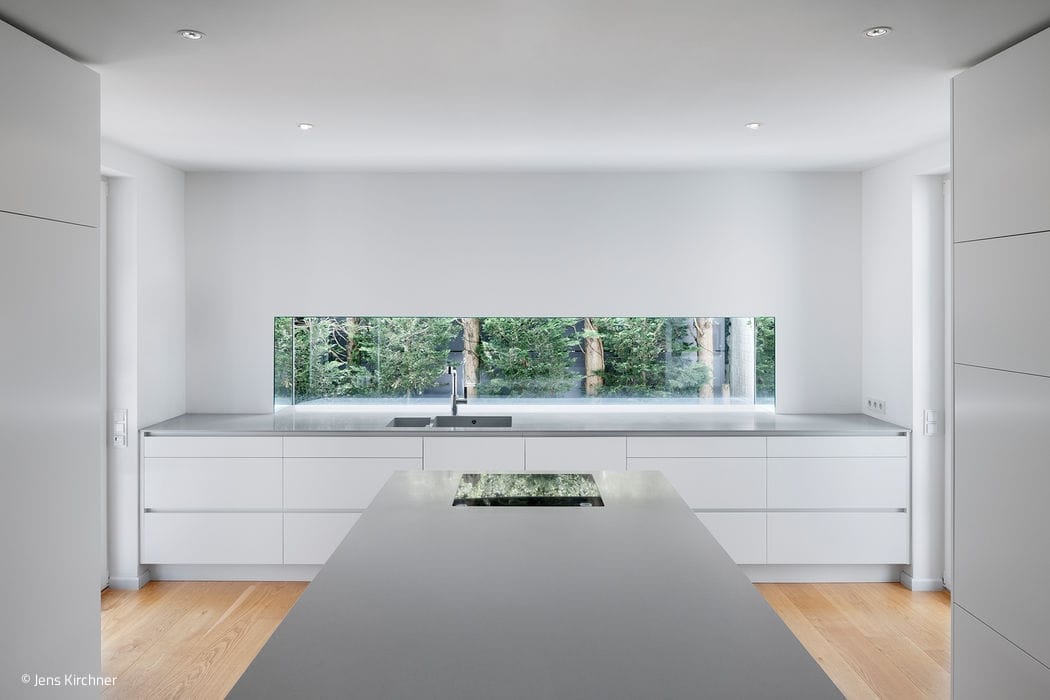
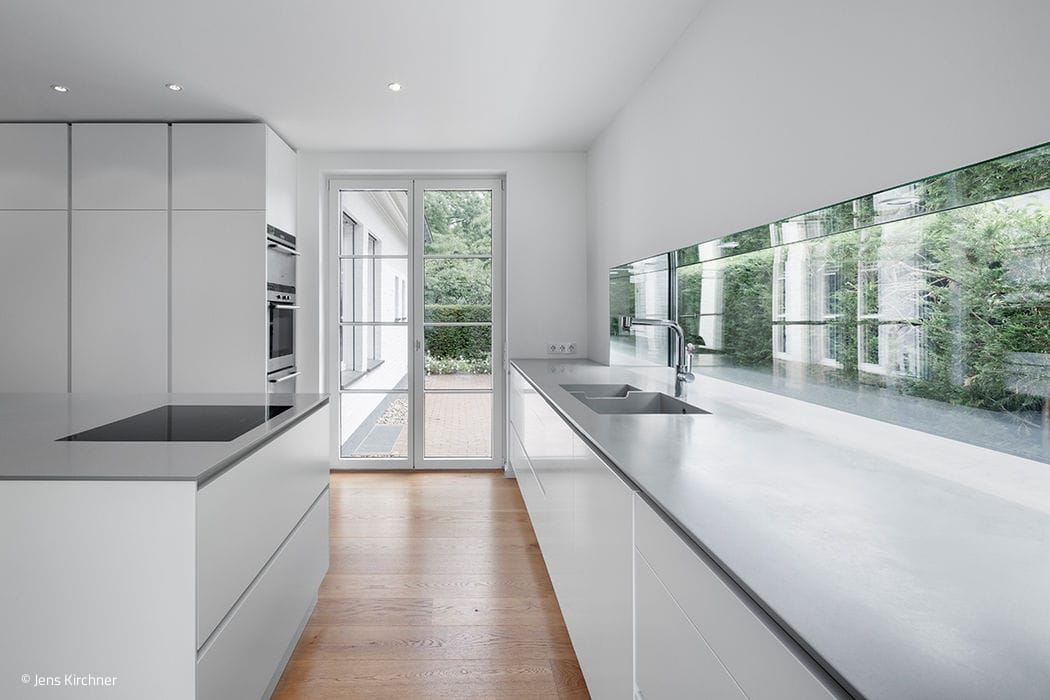
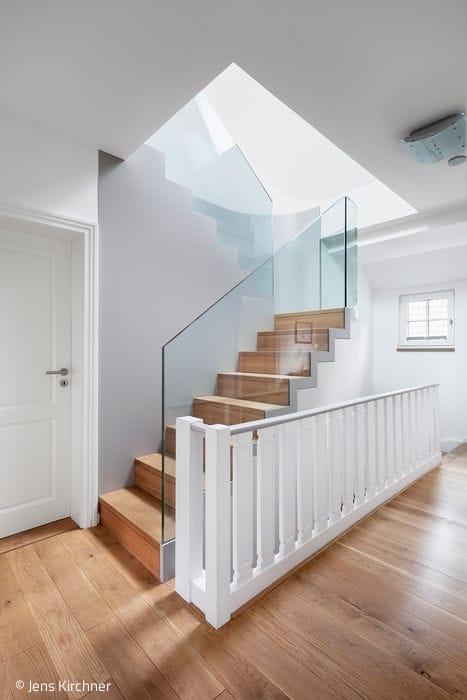
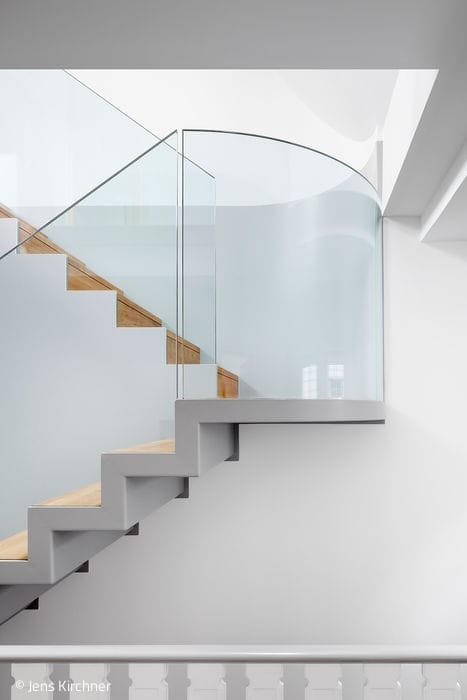
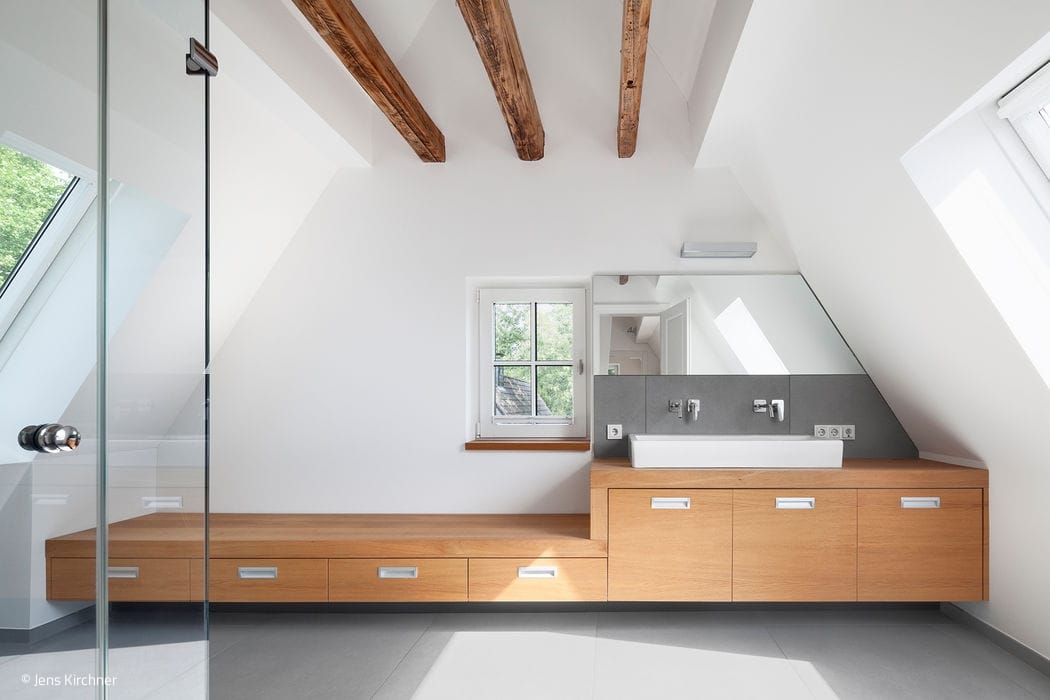
Das beauftrage Düsseldorfer Architekturbüro beige.box von Patrick Müller-Langguth entwickelte einen Umbau, der das Haus einfühlsam erweitert, ohne es in seiner lieb gewonnenen bauzeittypischen Gestalt zu verändern. Der Wintergarten wurde dabei komplett zurückgebaut und durch einen eingeschossigen Anbau ersetzt, der das großzügige Wohnzimmer mit Ausblick in den Garten beherbergt. Zwei Oberlichter, deren Laibungen komplett verspiegelt wurden, sorgen dafür, dass nicht nur Tageslicht, sondern auch der Himmel in den Wohn- und Essbereich fällt. Dabei entstand – fast automatisch – auch eine Dachterrasse mit Gartenblick. Blickfang in der Küche ist zudem ein in das Mauerwerk eingelassenes Fensterband, in das sich die Küchentheke ohne Aufkantung hineinverlängert. Um eine separierte Elternetage mit Bad und Ankleide zu erhalten, wurde der nun erstmals gedämmte Spitzboden ausgebaut, durch größere Dachfenster belichtet und durch eine neue, skulpturale Stahl-Glas-Treppe in Verlängerung der Haupttreppe erschlossen. Ansonsten wurde darauf geachtet, dass nur wenige, aber authentische Materialien zum Einsatz kommen. Auch von außen: Die Stuckprofile an den verlängerten Dachüberständen wurden originalgetreu wiederhergestellt, die alten Sprossenfenster in matt lackierter Holz-Alu-Bauweise ersetzt. Geschlemmte Klinkerriemchen bekleiden in verschiedenen Stärken das neu gedämmte Mauerwerk und erzeugen so geschickt die baulichen Unregelmäßigkeiten der früheren Backsteinfassade. Es ist also mehr als ein Kompliment, wenn man über das Haus sagt, dass es auch nach dem Umbau wie sein baugleicher Nachbar aussieht.
(Featured in CUBE Düsseldorf 01|20)

Refined Minimalism
A contemporary villa where flowing spaces unite multiple generations
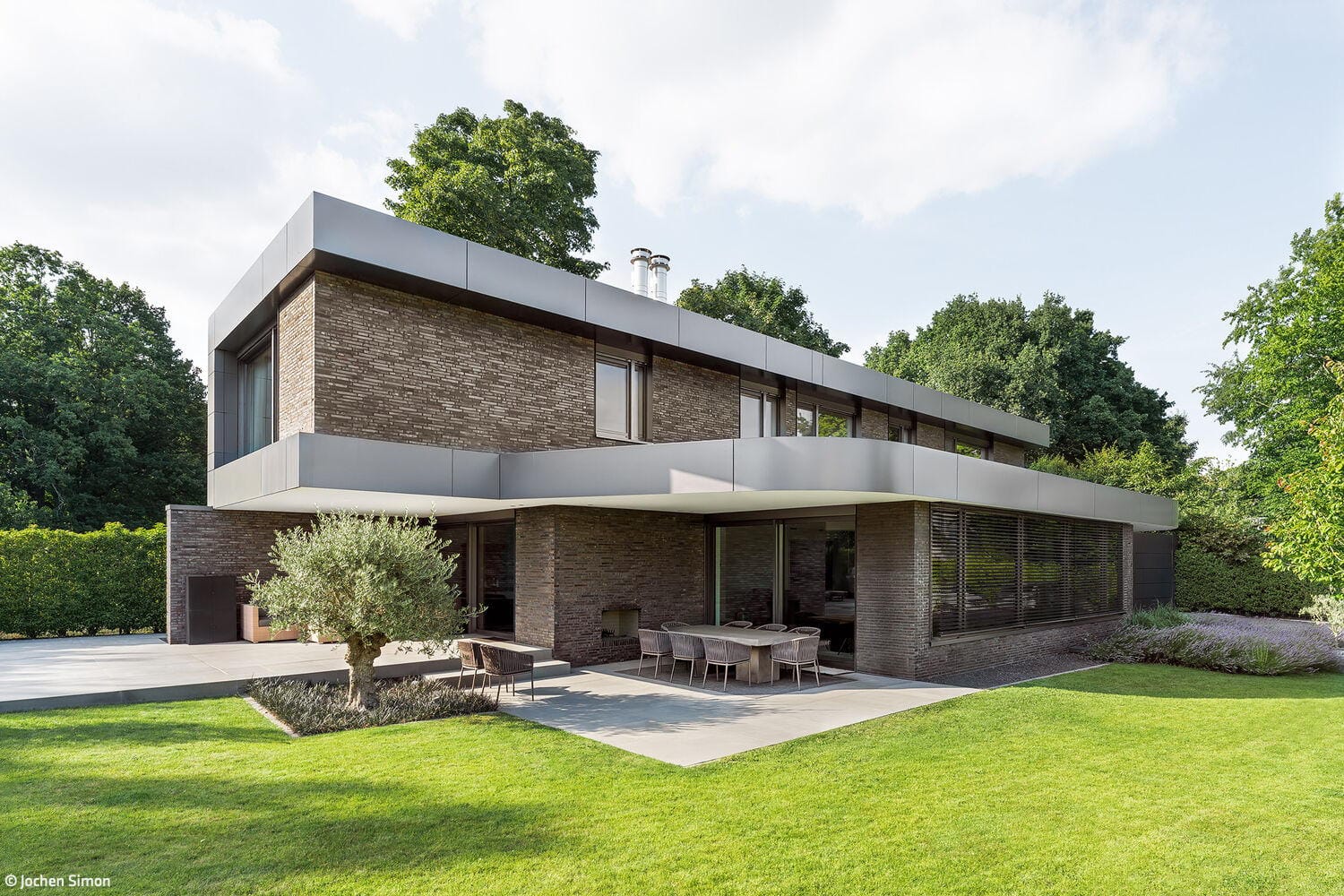
Monolith with Rounded Forms
A home that masterfully bridges interior and exterior while celebrating refined architectural detail
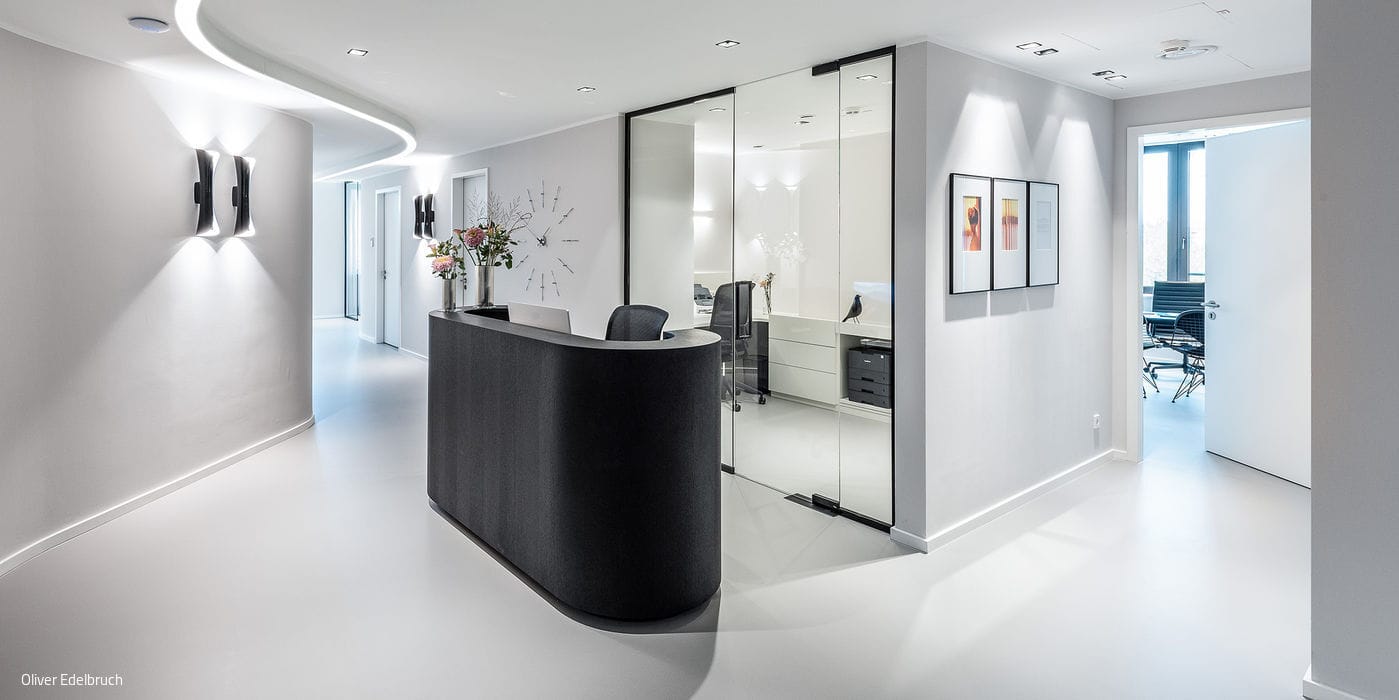
Clear and Flowing
A plastic surgery practice in Heerdt that speaks through restraint and clarity
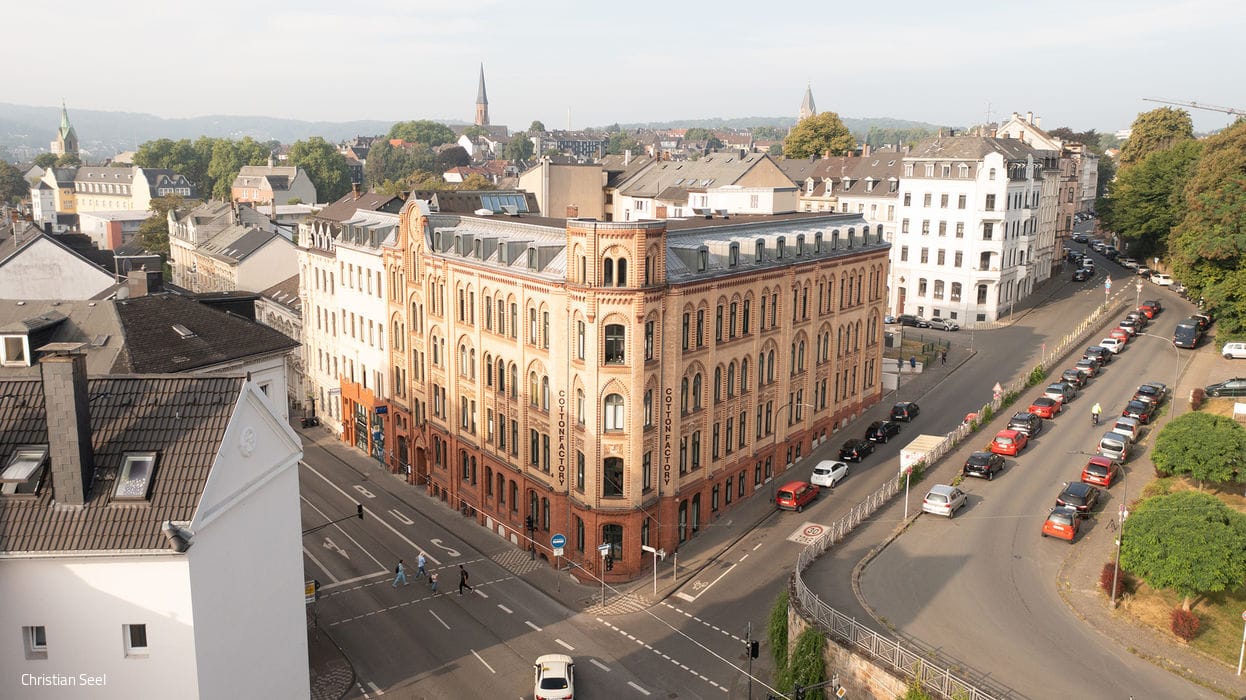
Structures Reimagined
An industrial landmark, thoughtfully restored and revitalized with respect for its heritage.