


Aldi South Goes Urban
The discount retailer is increasingly opening locations in city centers – including its latest flagship in the Macherei district.
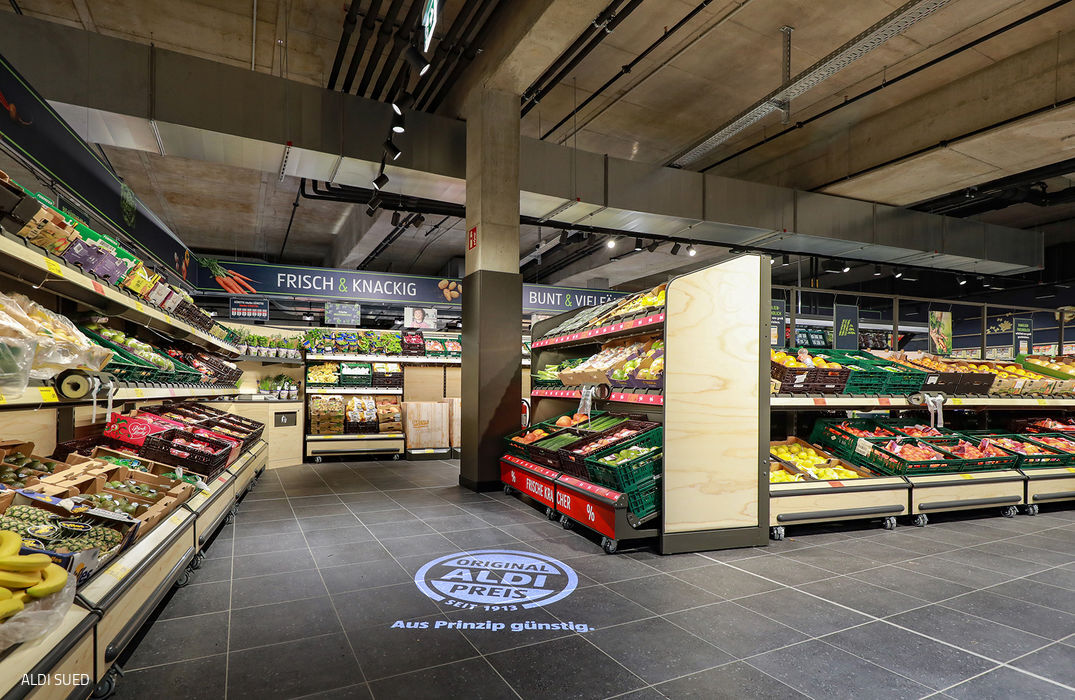
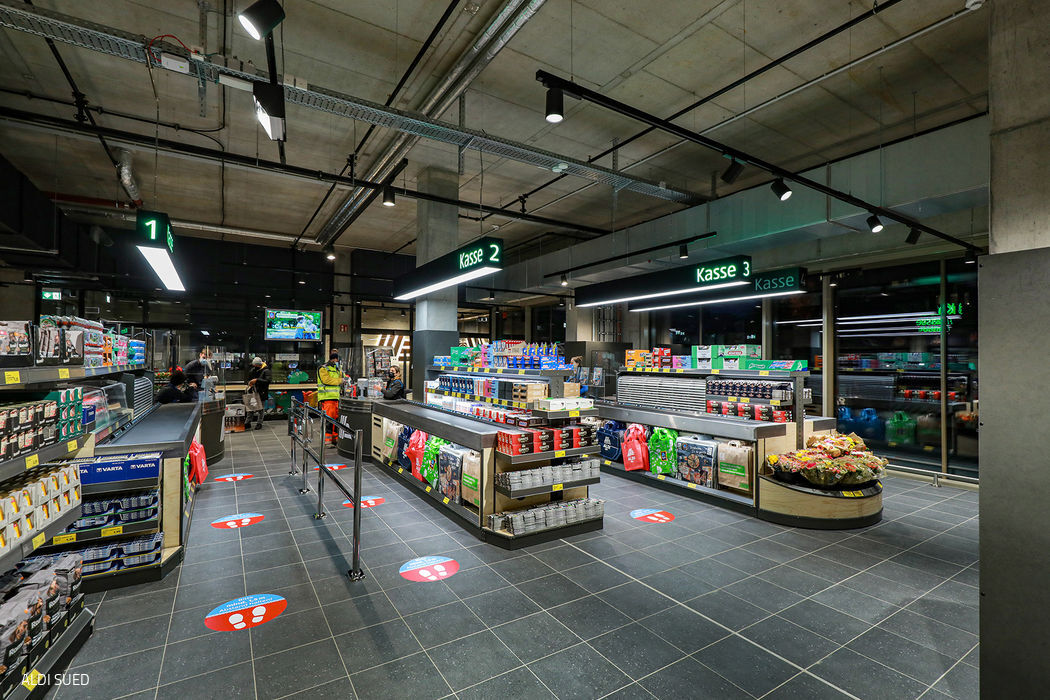
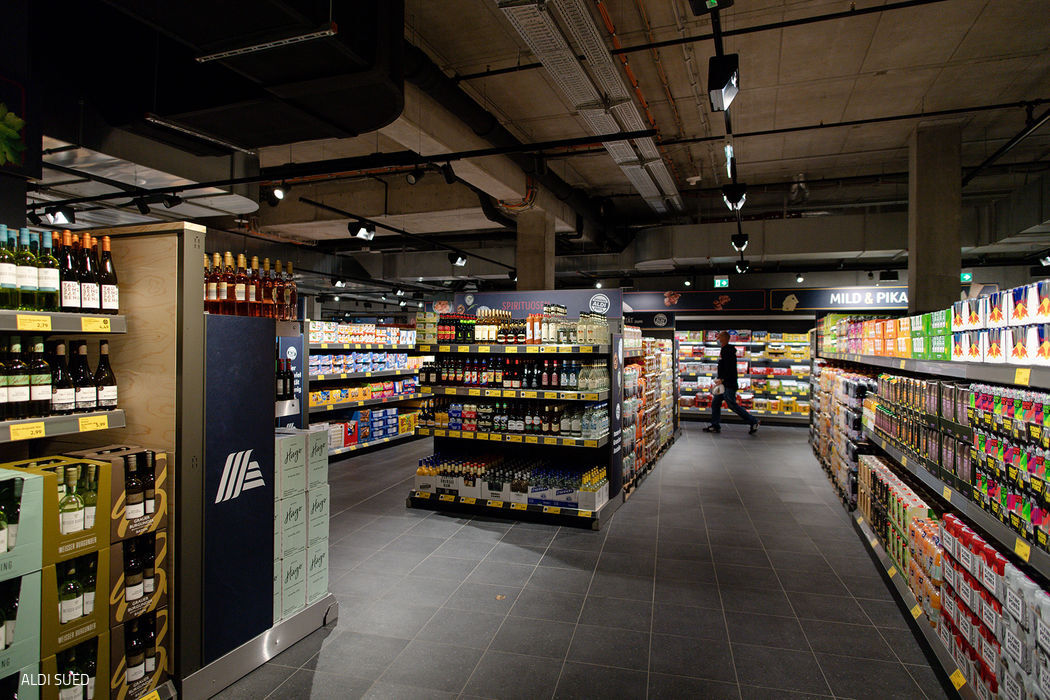
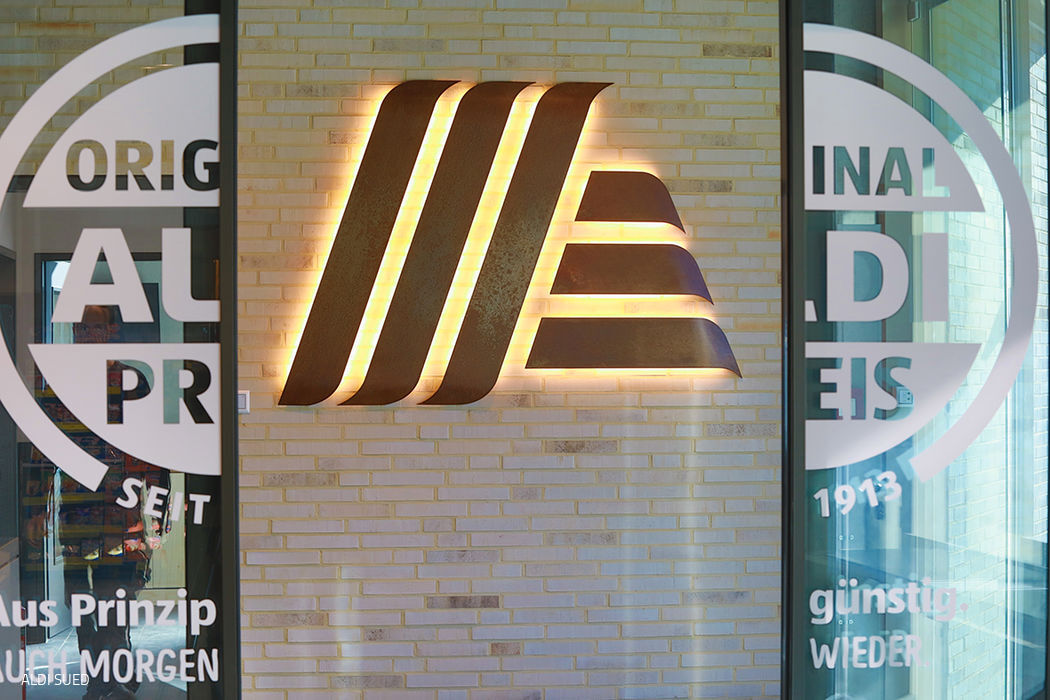


The traditional Aldi South store—a single-storey building with a flat roof tucked away on the town's edge—has long been the formula. Car-accessible and fully accessible to all. Yet retail reinvention is underway. Today, you'll increasingly find Aldi South in thriving urban centers, serving city dwellers, commuters, and professionals seeking a quick lunch option. Urban centers demand a different approach: mixed-use buildings replace the classic suburban box. The Macherei in Munich's Berg am Laim district exemplifies this evolution. This contemporary development celebrates its brick façades, a nod to the historic brickworks that once defined Munich's eastern quarter—and to Aldi South's own industrial heritage. It's no coincidence that the retailer finds a natural home here. The grocery tenant occupies approximately 1,500 m² on the ground floor, taking over the refined raw shell space. The subsequent fit-out and interior concept closely align with Aldi South's established design standards, requiring only minimal modifications. "From initial partner discussions to opening day, we achieved this in under eleven months," notes Justus Rehn, head of Munich's project development office. He credits this remarkable timeline—delivered despite material shortages and skilled labor constraints—to trusted long-term partners and collaborators. ADA, the Geretsried-based architecture firm, led the design and build-out, while Grünewald Design authored the entire wayfinding and orientation system. "We embraced industrial romanticism, authentic materiality, and elements that echo traditional craftsmanship," explains designer Anja Grünewald. "From hand-painted lettering to welded steel pipes to Corten steel signage—each element orchestrates a cohesive narrative." The interior embraces an industrial aesthetic: exposed concrete walls and open ceilings (as preferred by the landlord) define the space. While the standard lighting concept defaults to white, the Macherei boldly departs with black—mirroring the equally minimalist black Aldi lettering above the entrance. The exterior clinker brickwork grounds the entry in the district's architectural identity. Visitors are welcomed by a custom-made, illuminated Corten steel Aldi South logo—a signature touch. To challenge the convention of heavily branded retail, the developers maximized uncluttered window frontage. The result: abundant natural light indoors and genuine visual connection with the streetscape outside.
www.gruenewald-design.de
www.aldi-sued.de/de/immobilien
Photography:
ALDI SOUTH
(Published in CUBE Munich 03|22)
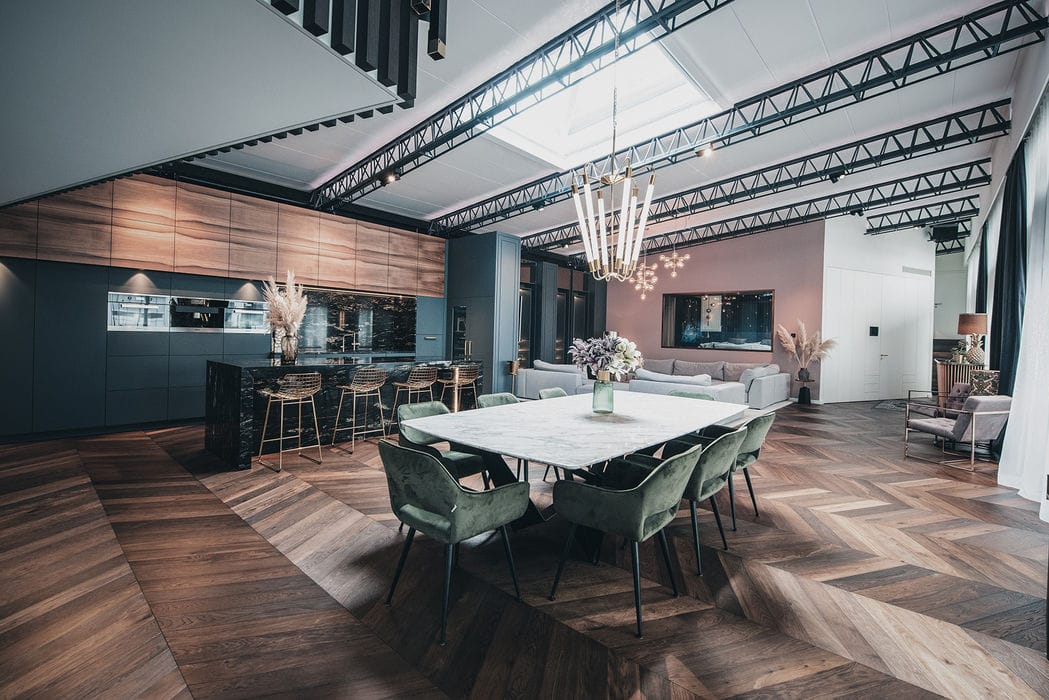
Simply Wow
From Warehouse to Wonder: Inside a Stunning Sendling Loft Transformation
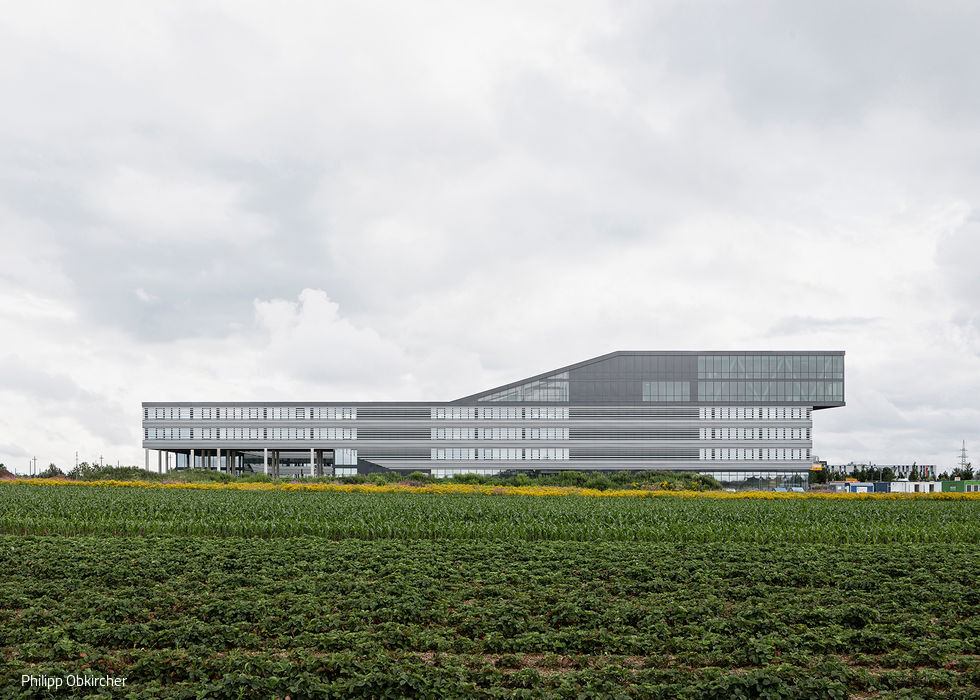
City in a Building
Holistic innovation creates space for how we work and learn tomorrow
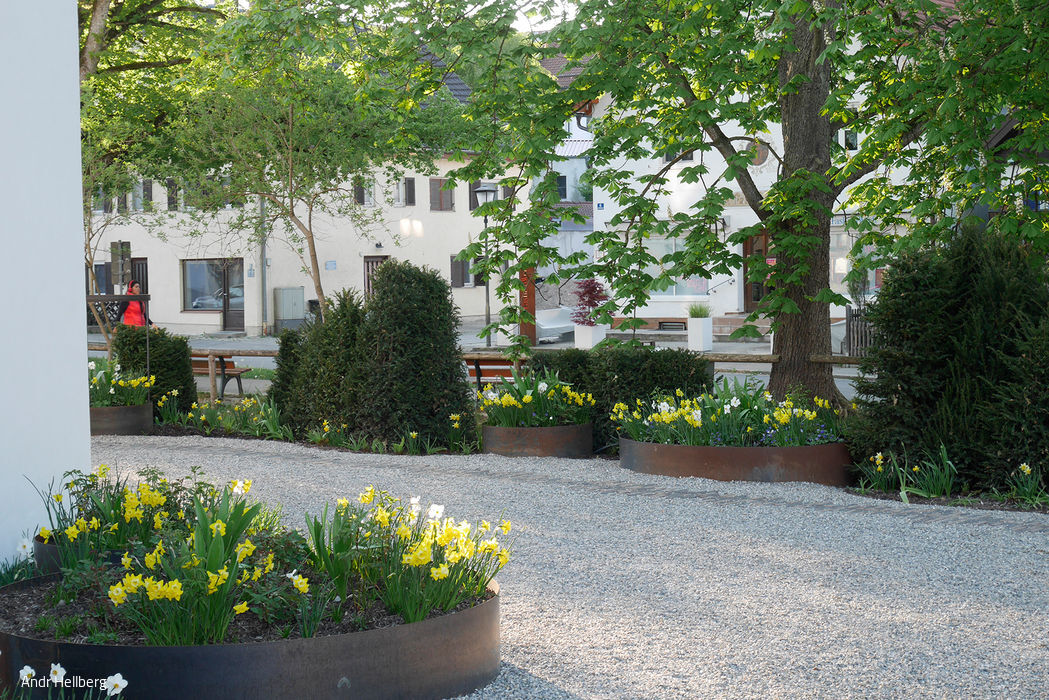
Garden at the Village Fountain
Much to the relief of longtime residents, the place has been restored to its former character.
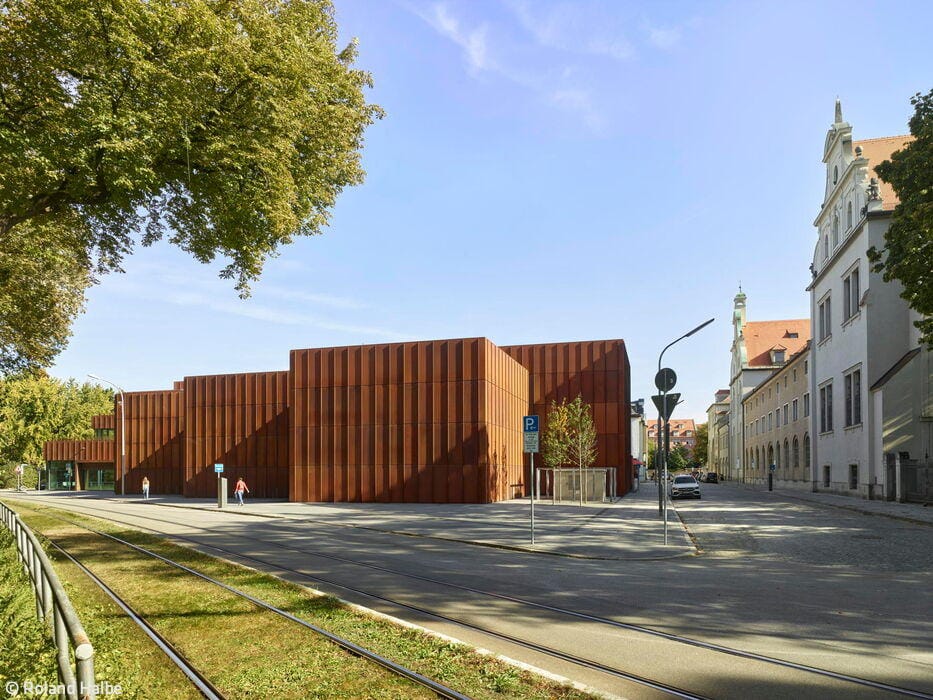
Preserve Rather Than Demolish
A historic collection finds new purpose: the renovated Archaeological Museum sets a new standard for heritage architecture.