


Through the Years
Modern Office Building Replaces 1950s Residential Structure
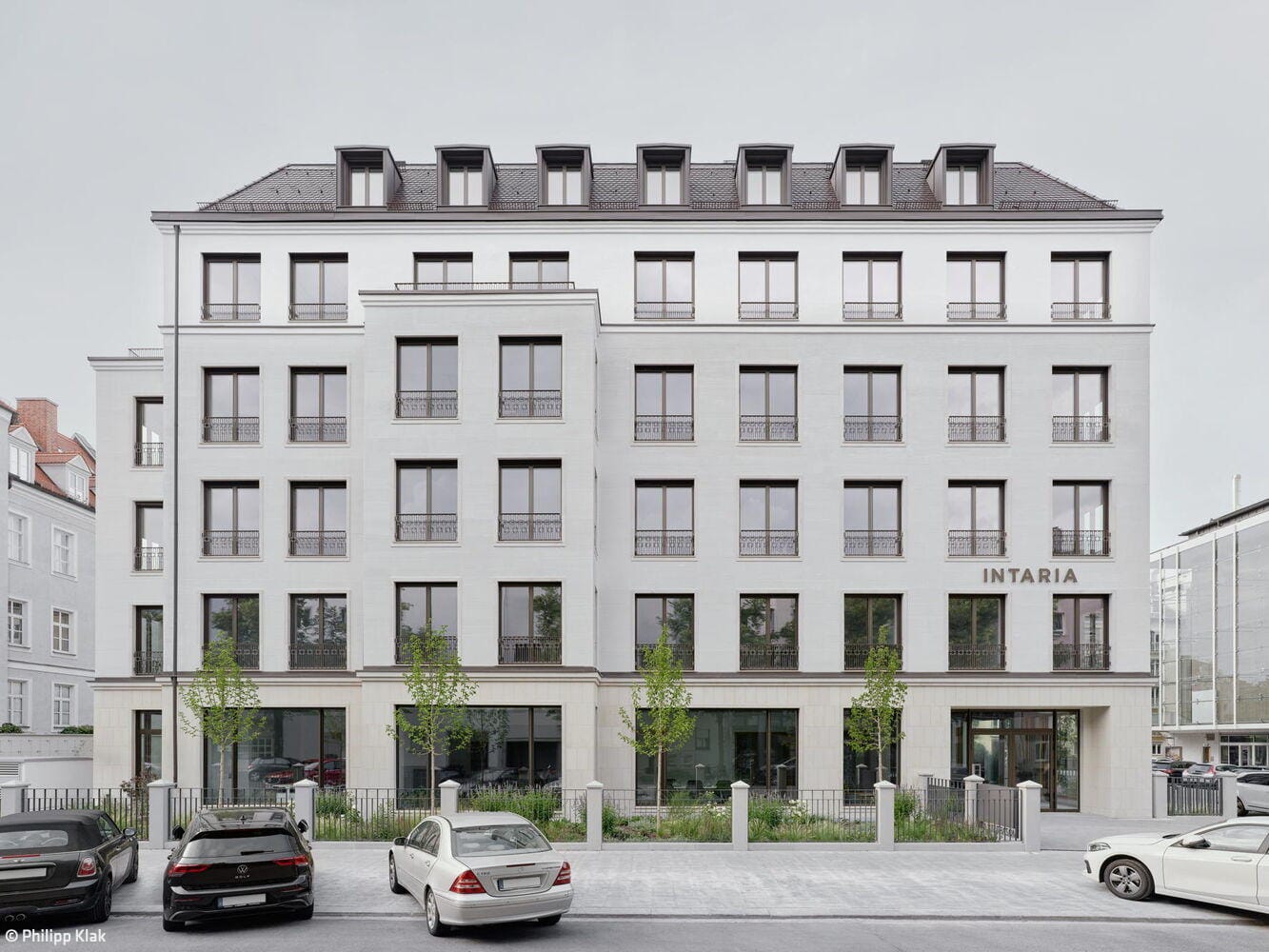
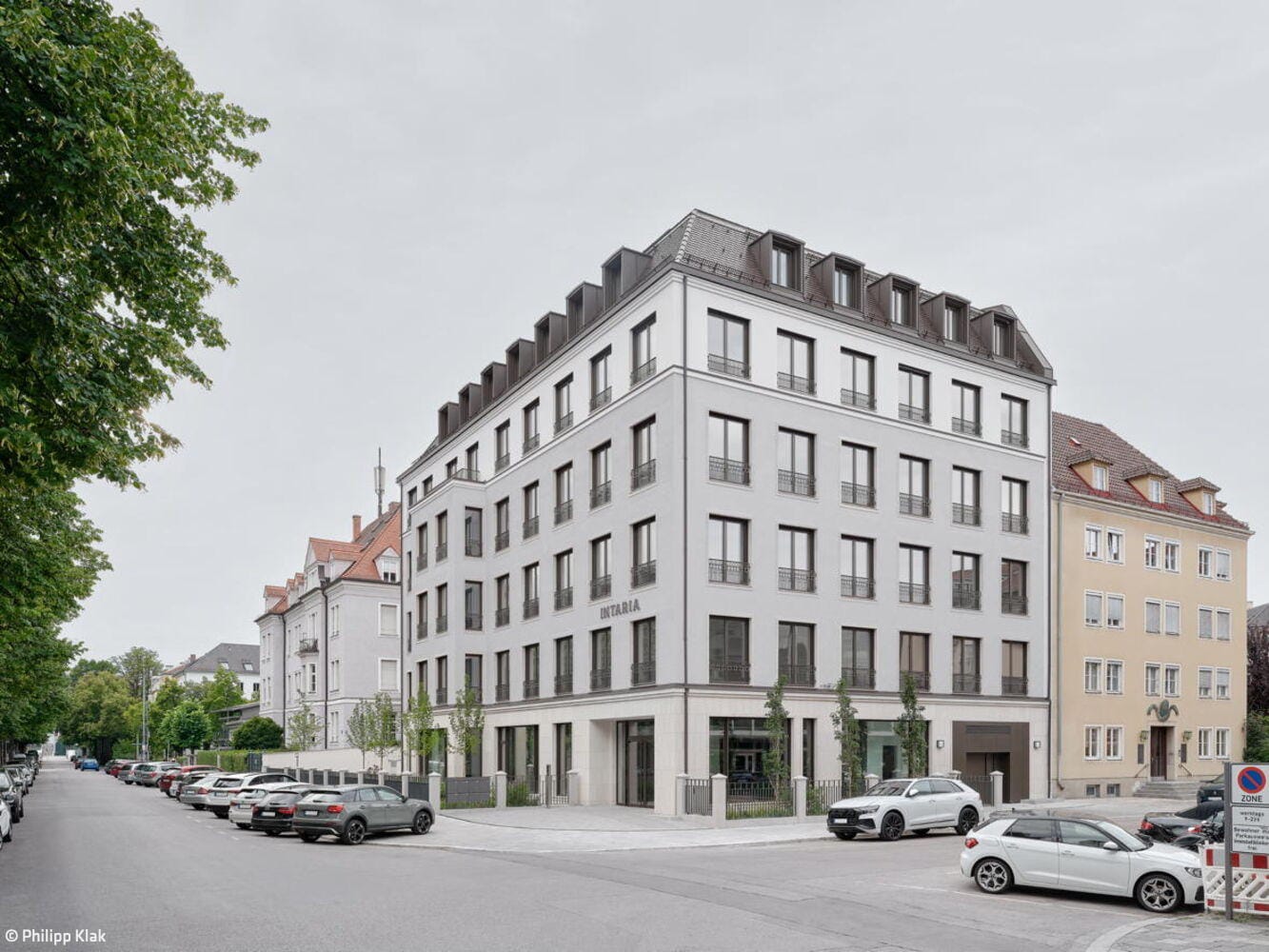
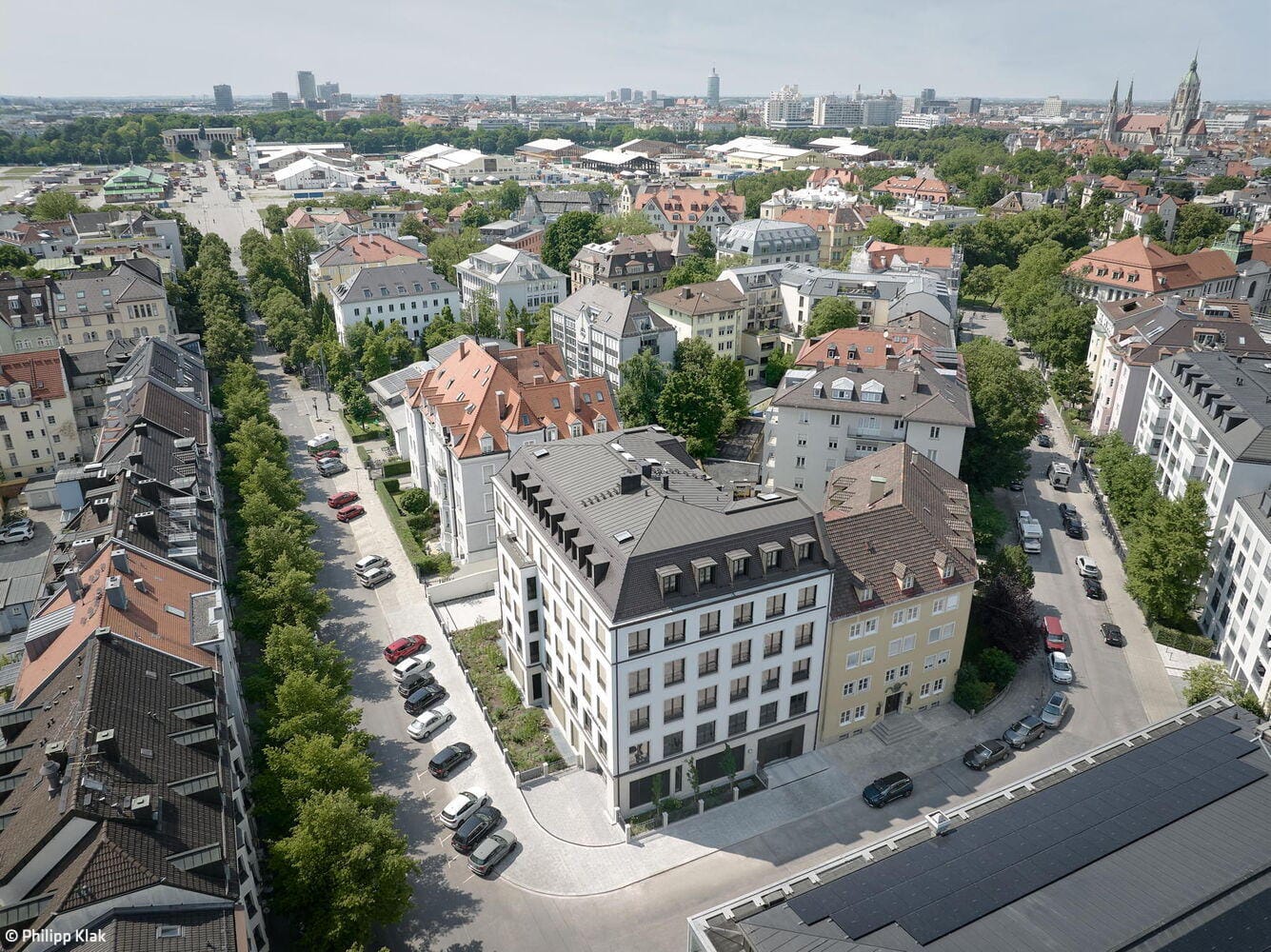
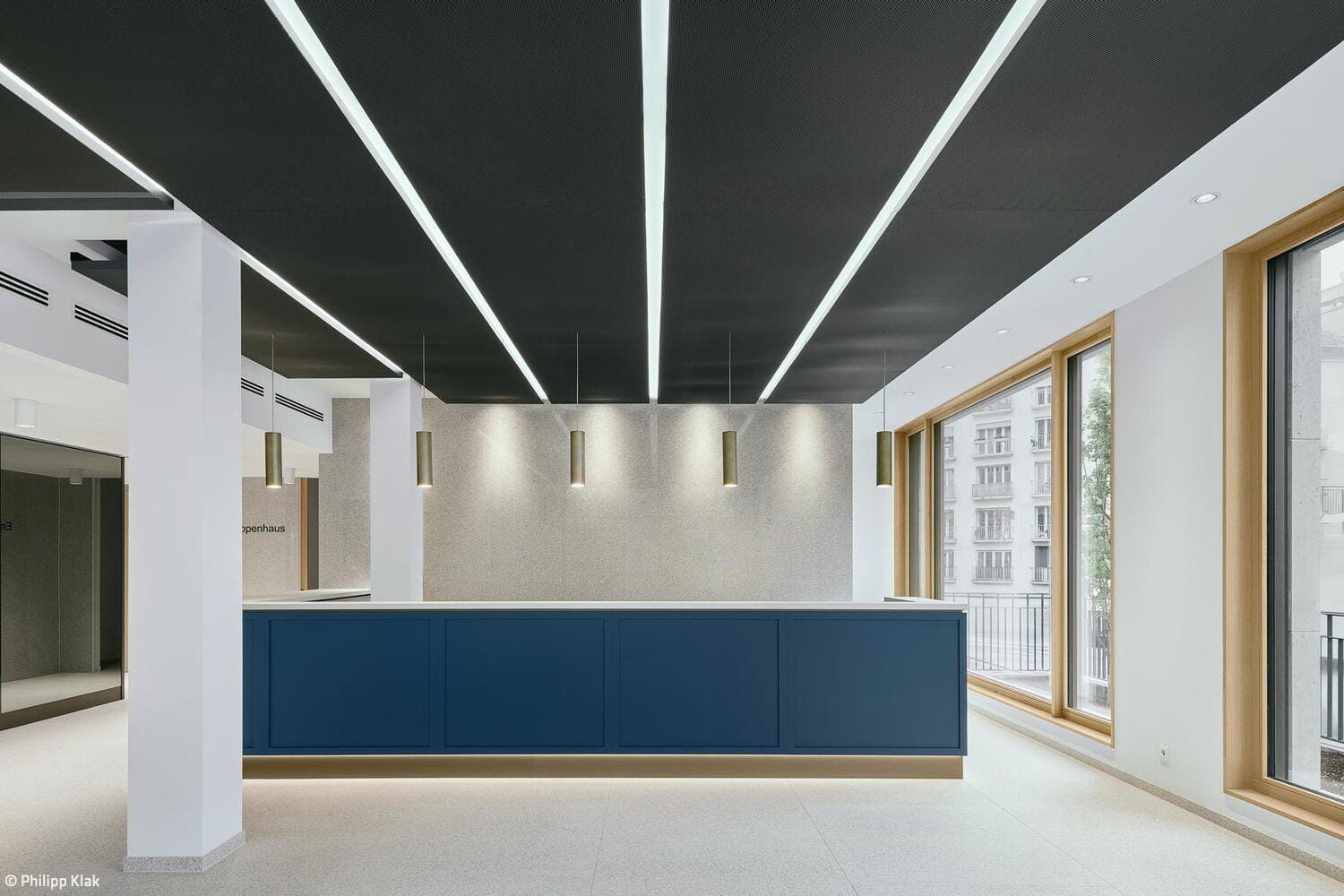
In the heart of the action – at least during the "fifth season" – a new office building rises near Theresienwiese. The site carries considerable history: in the early 1950s, architect Ernst Barth designed a residential building here. Until recently, it thrived as a hostel with a ground-floor café, beloved by backpackers from across the globe. True to Munich's post-war modernist character, the structure seamlessly anchored the urban ensemble between Goetheplatz and Theresienwiese. Its distinguished neighbors remain: the "Royal" cinema, designed by Sep Ruf and Hein Goldstein in 1954, and the corner building across the way by Robert Vorhoelzer, Walther Schmidt, and Franz Holzhammer, exemplifying the New Objectivity style – still serving as a post office and residential building today. The hostel and café are gone. The demolition sparked considerable debate within Munich's architectural community and among local residents, who viewed the structure as integral to the area's architectural heritage.
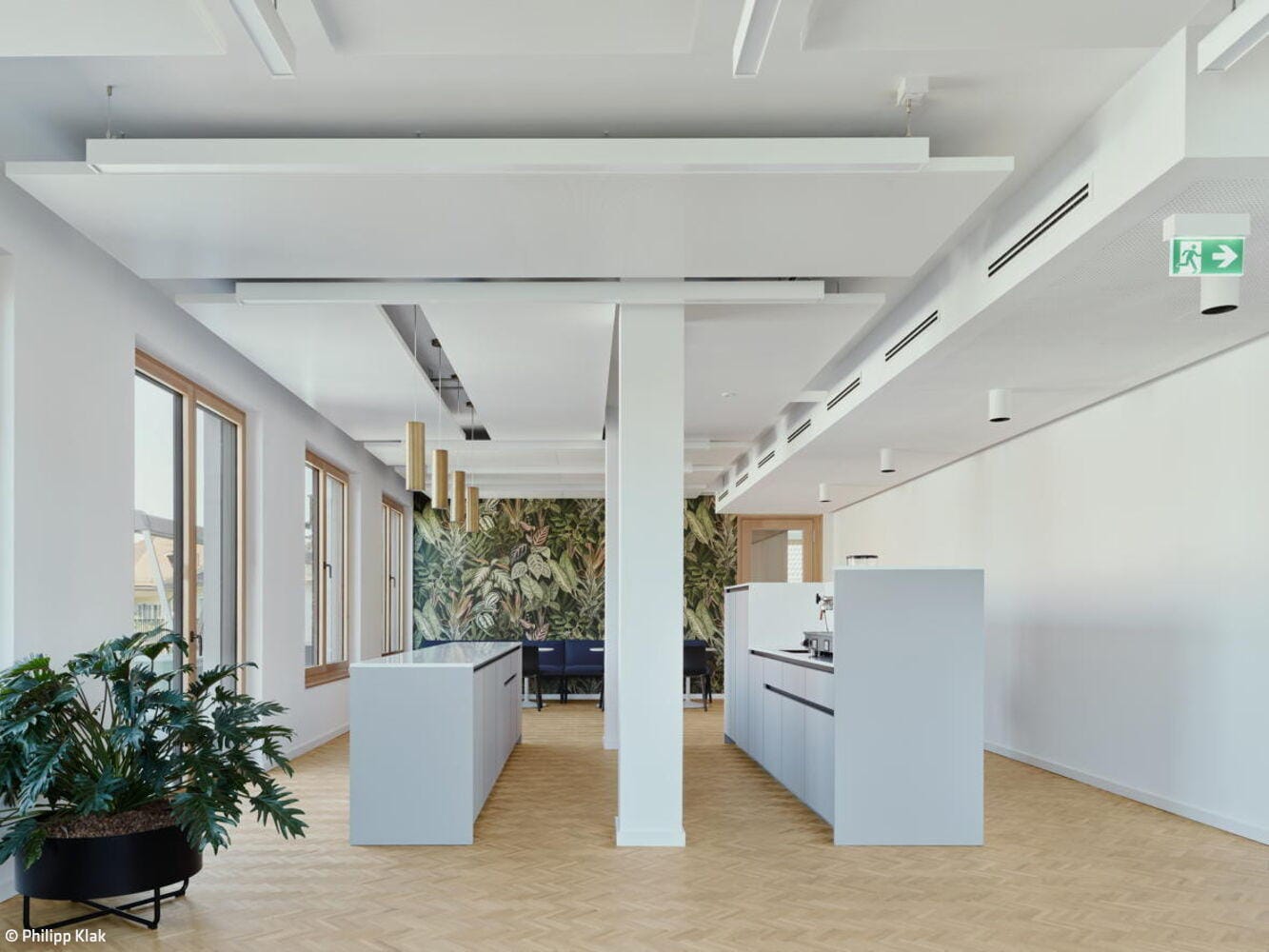
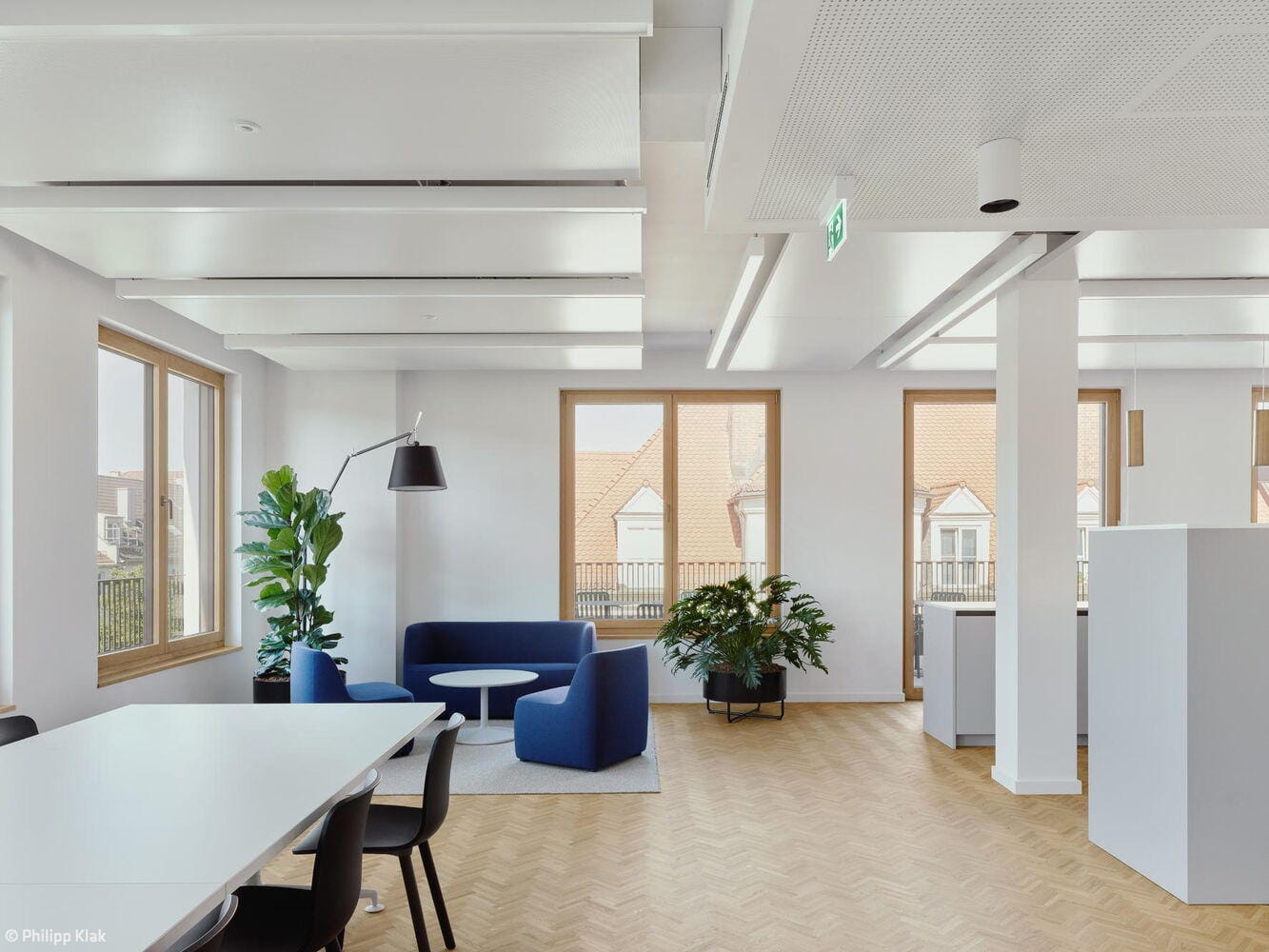
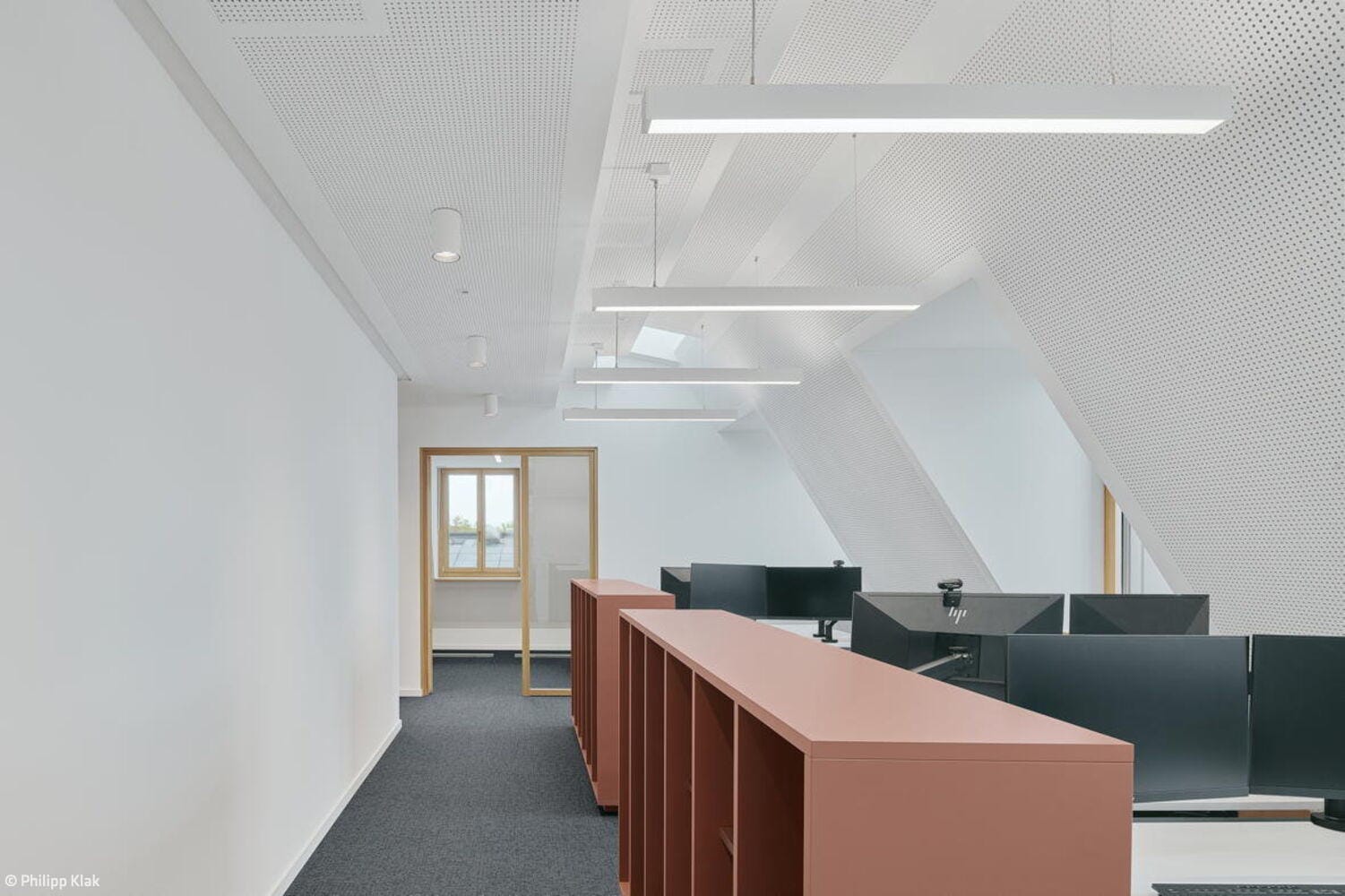
Munich-based Oliv Architects designed this striking four-story office building. The base showcases transparency through expansive windows, finished with natural stone cladding—a treatment repeated on the facades of the upper floors. Levels one through three feature textured plaster, while the fourth floor sports a sleek smooth finish. A hipped roof punctuated with dormers crowns the structure. The entrance sits on the east elevation, with a bay window and balcony on the south side adding visual interest to the fourth floor. Rhythmic window bands animate the facade, which projects outward as an avant-corps on the rear. Two open staircases and a dual passenger elevator provide access throughout. The ground floor houses various office configurations, while upper floors offer flexible layouts—from individual offices to open-plan spaces—allowing the law firm occupying the entire building to adapt its workspace as needed. The fourth floor features a generously proportioned communal kitchen with premium finishes, complementing the kitchenettes on each level.
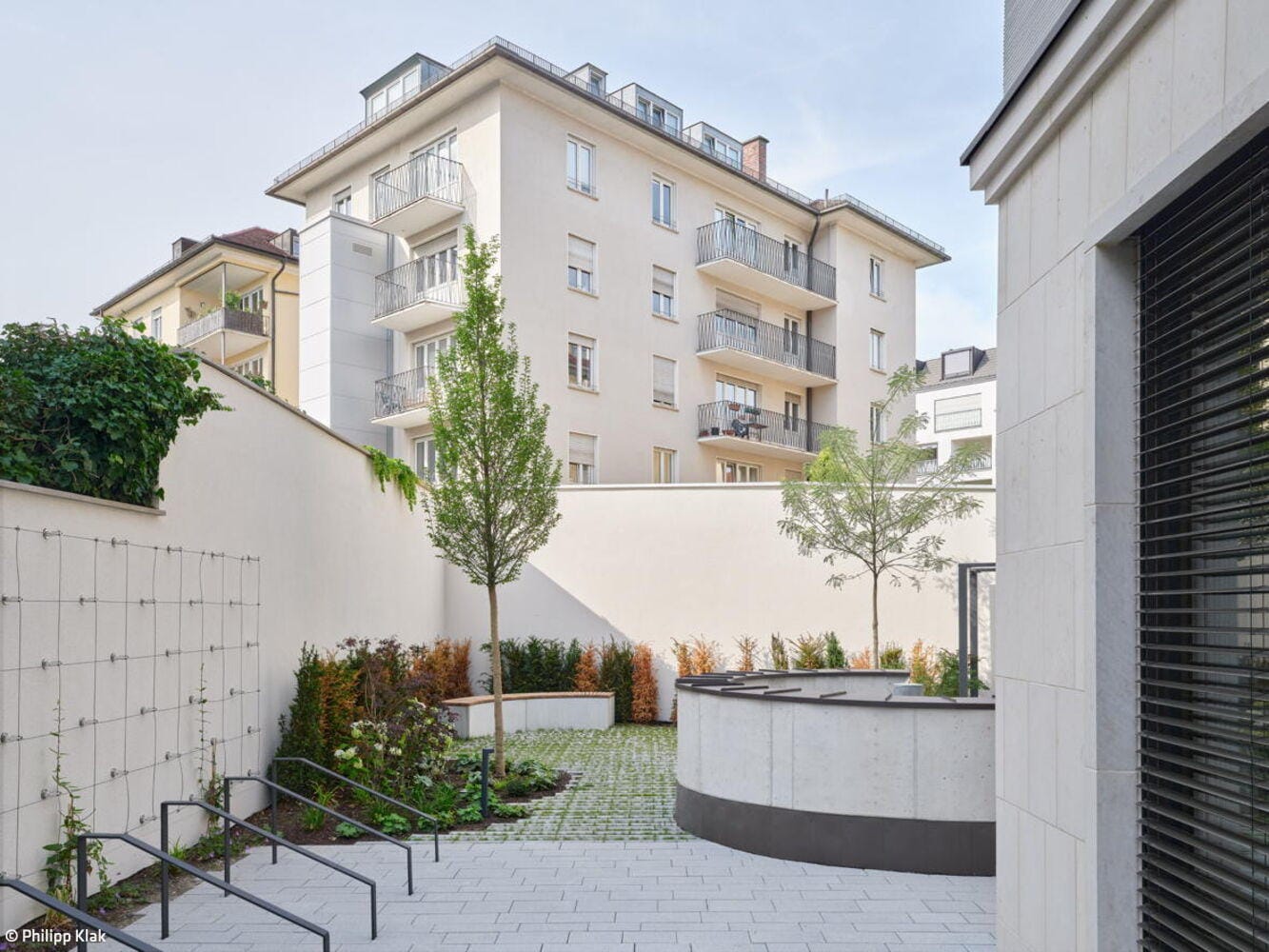
Durable, refined materials define the interior: mineral stone in the kitchens and wood-aluminium windows with deep reveals create a restrained elegance. Balconies on every floor and two roof terraces on the top level extend working areas into the open air. A landscaped garden at the building's rear, designed by kübertlandschaftsarchitektur, provides employees with a verdant retreat. Oliv Architects has achieved something notable: a refined, understated building that resonates harmoniously with its historic surroundings.
Photography:
Philipp Klak
www.philippklak.com
(Published in CUBE Munich 04|25)
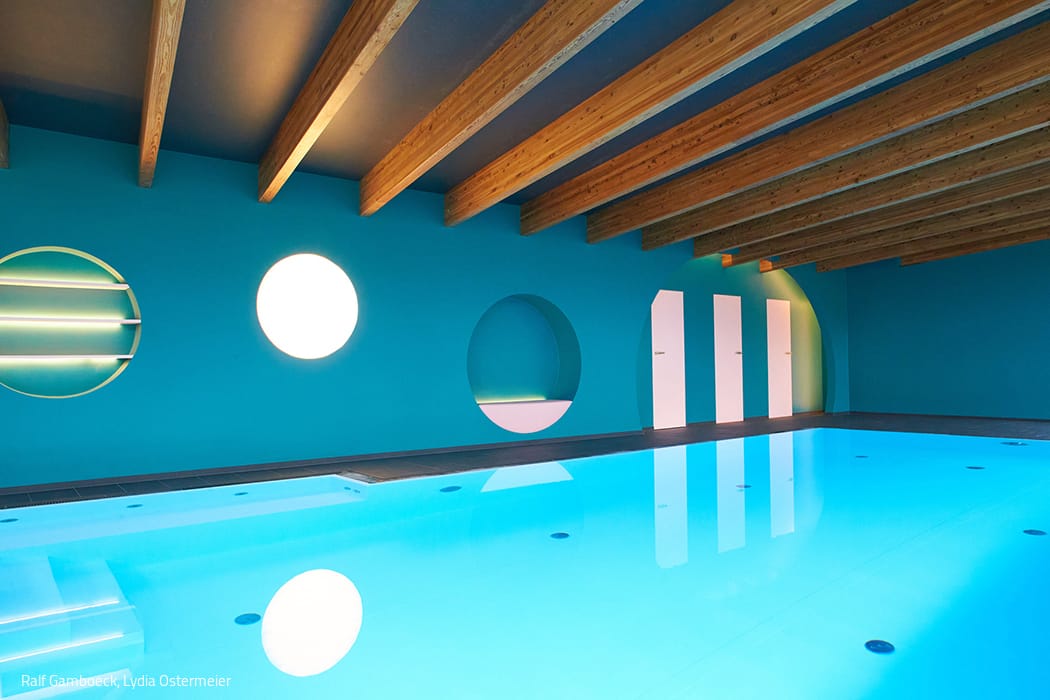
Caribbean Spirit
A swimming pool with spa—where exotic color and spirited elegance converge.
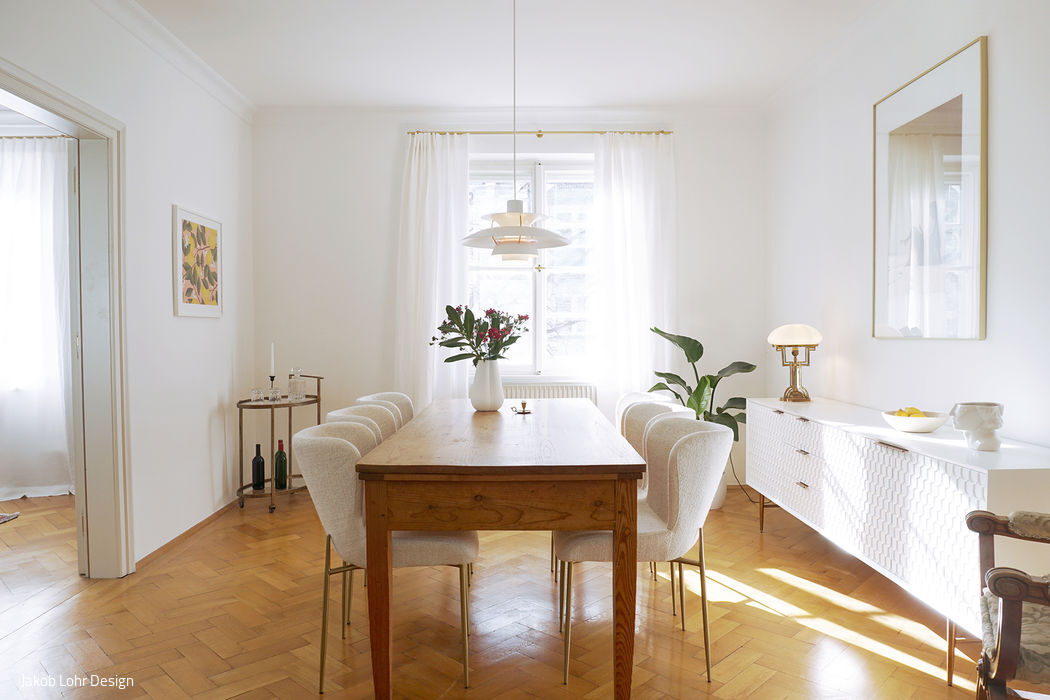
Blending Old and New
The ground floor of a Laim villa transformed into an entirely new spatial experience.

Learning in distinguished surroundings
Expanding the Fresenius Campus: Two New Pavilions

"I wanted to create something that would endure"
Marie Aigner: Designing for Sound—Discovering the Beauty in Acoustic Solutions