


Designing with Heritage
A school extension that merges open spatial design with local character
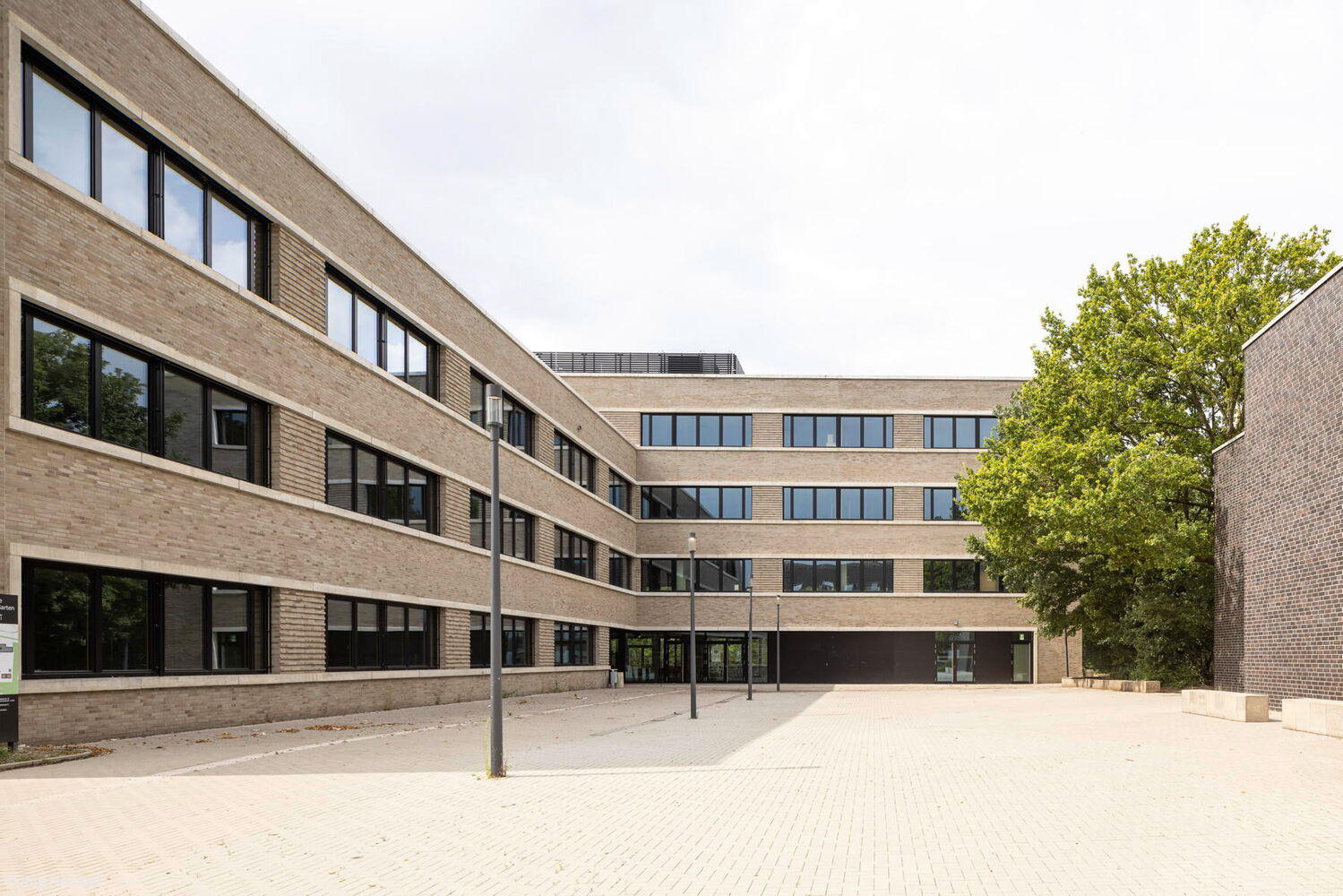
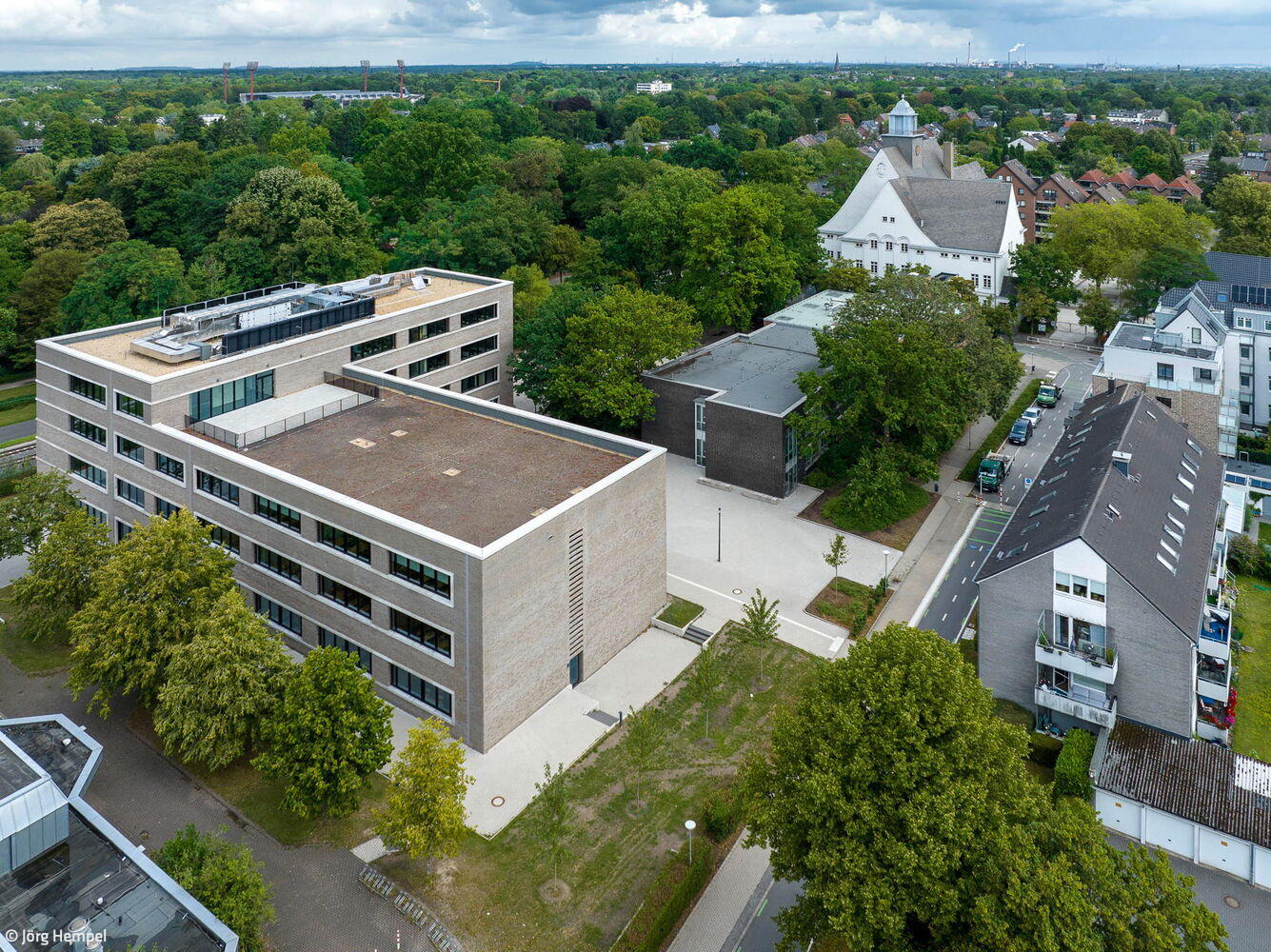
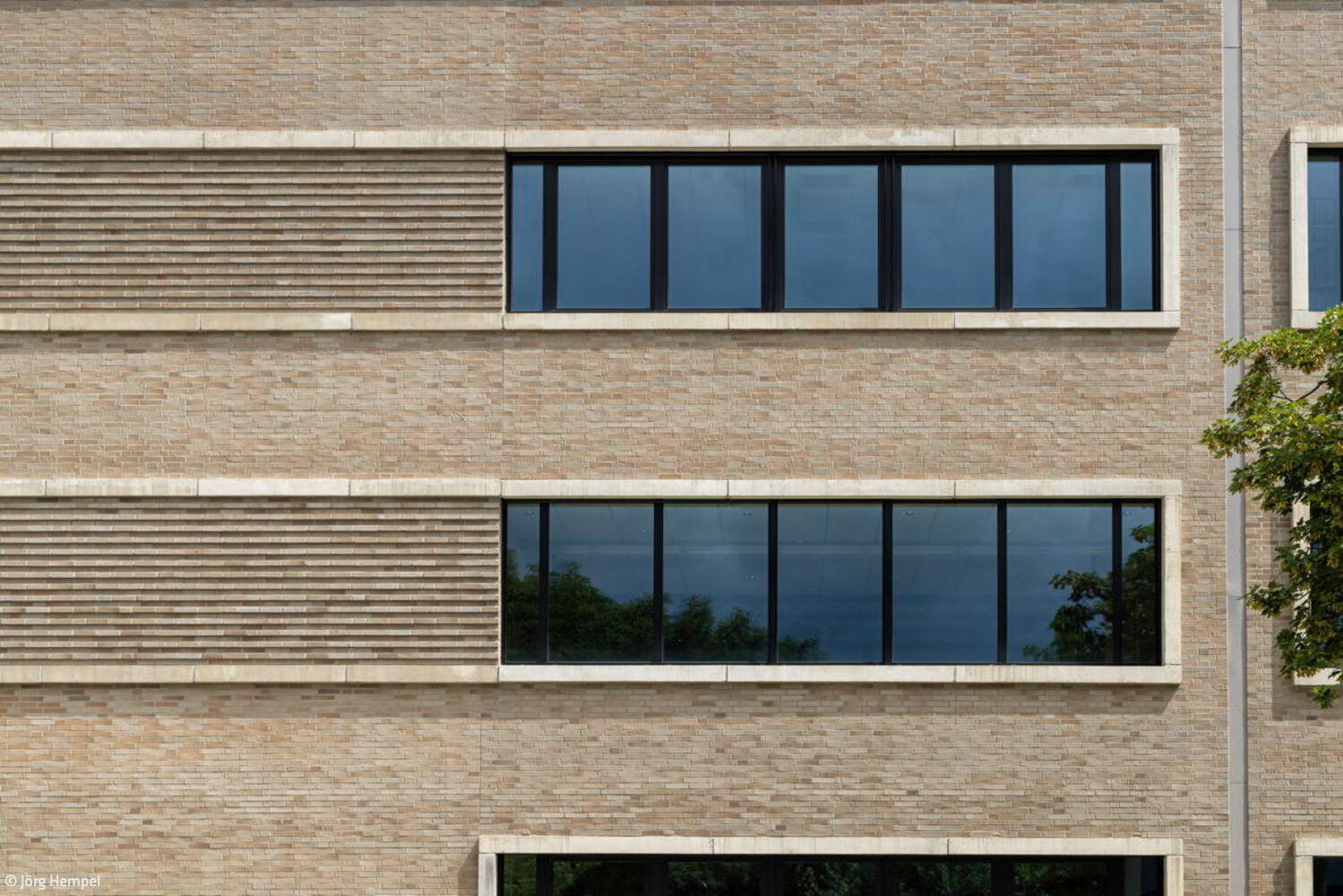
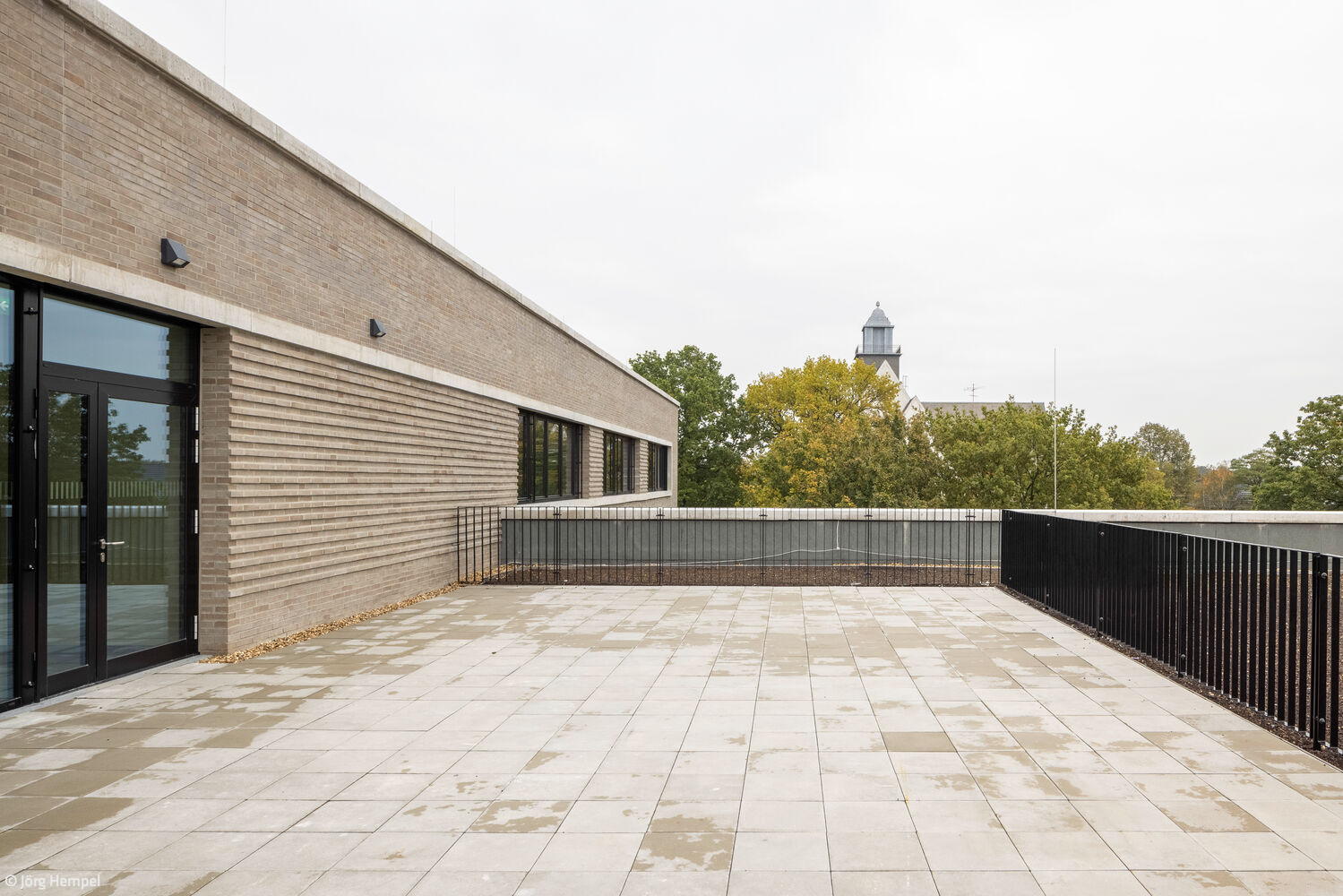
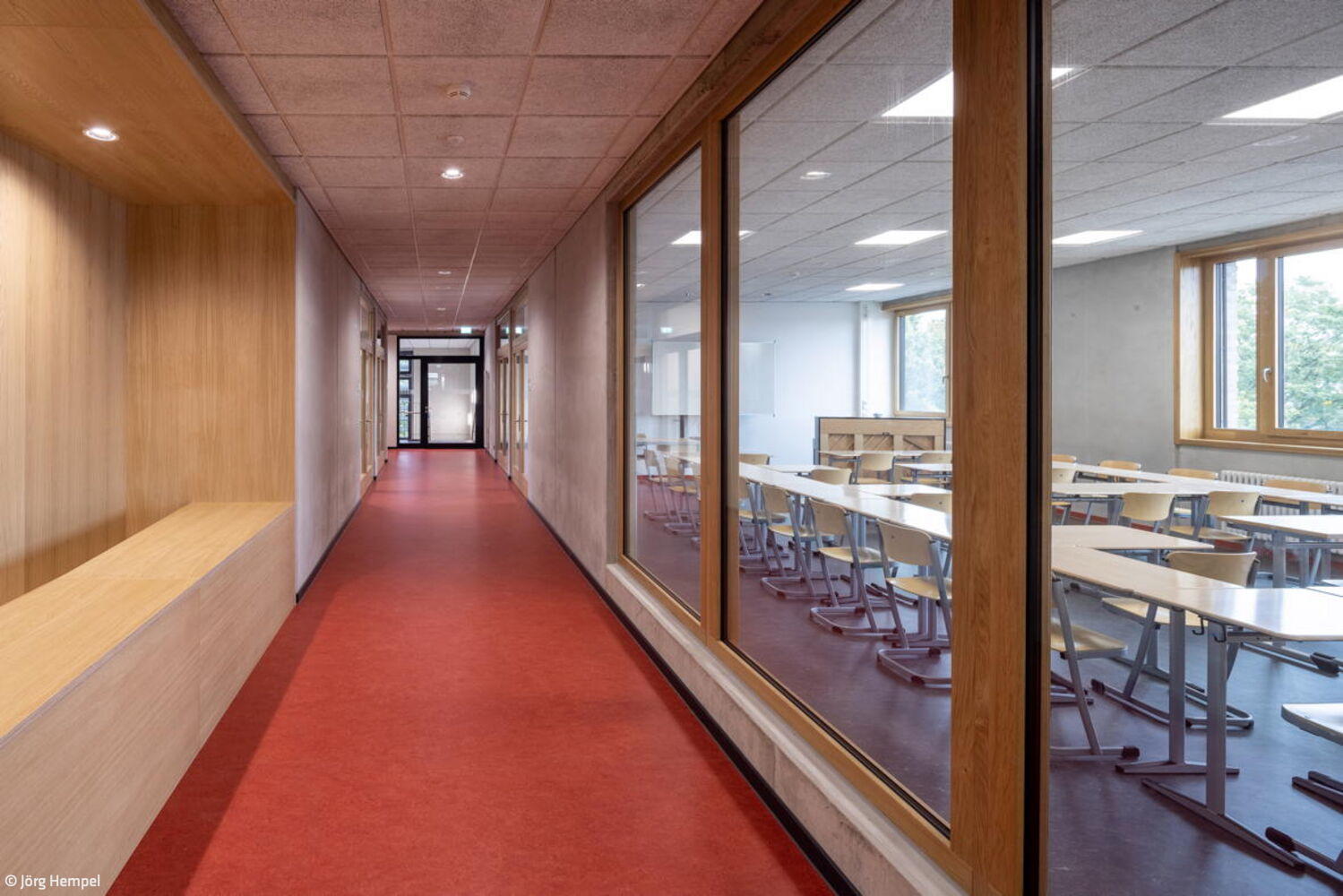
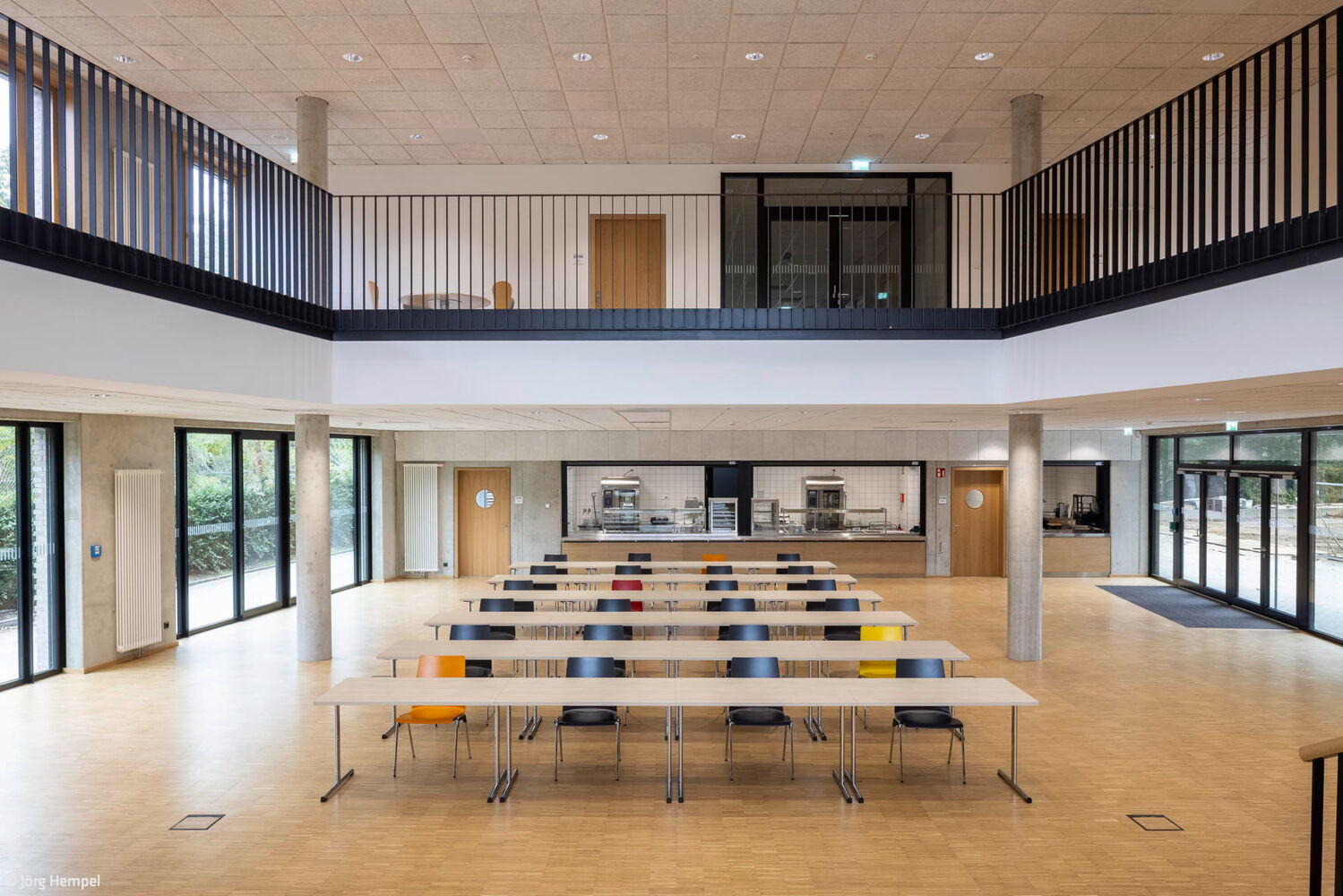
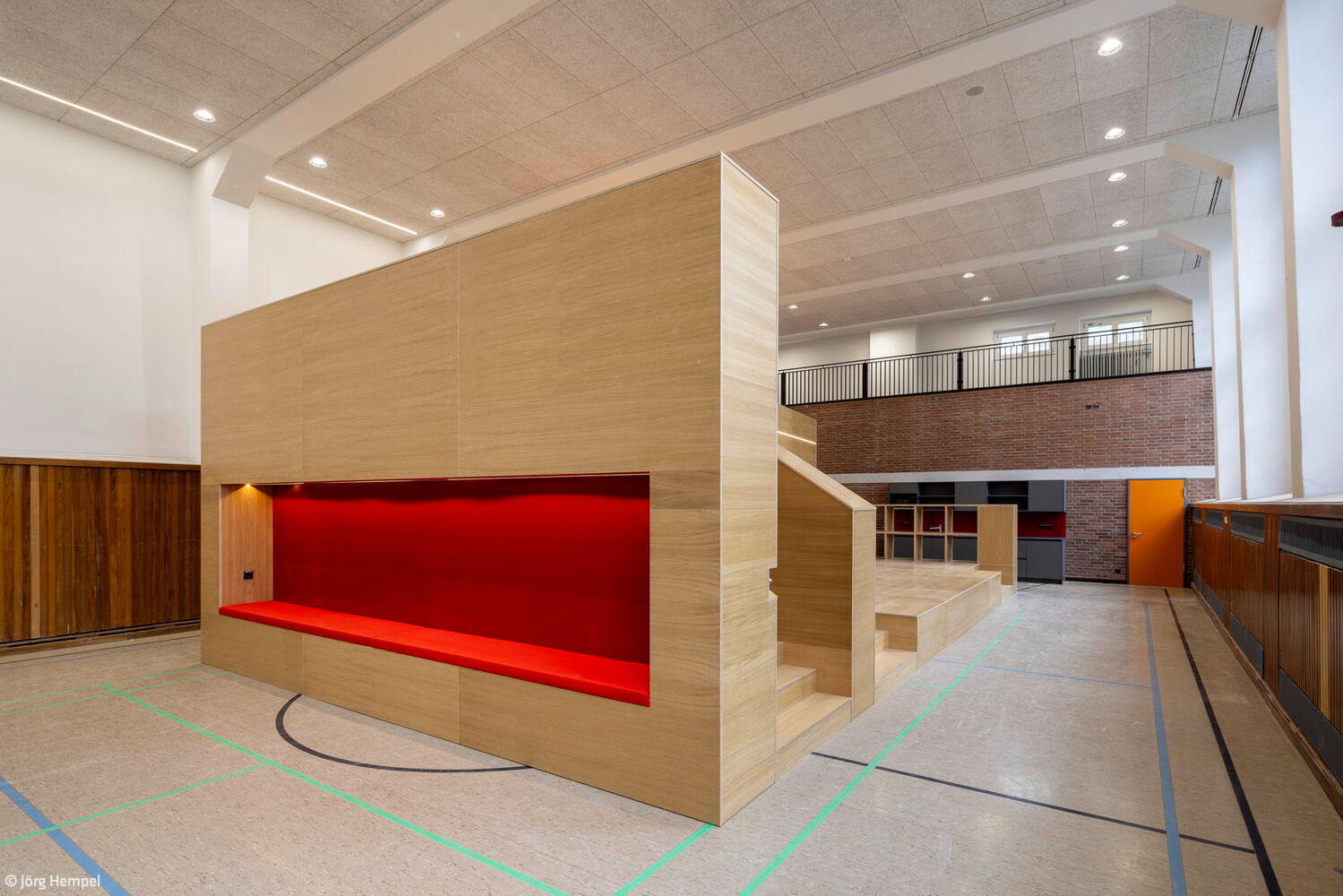
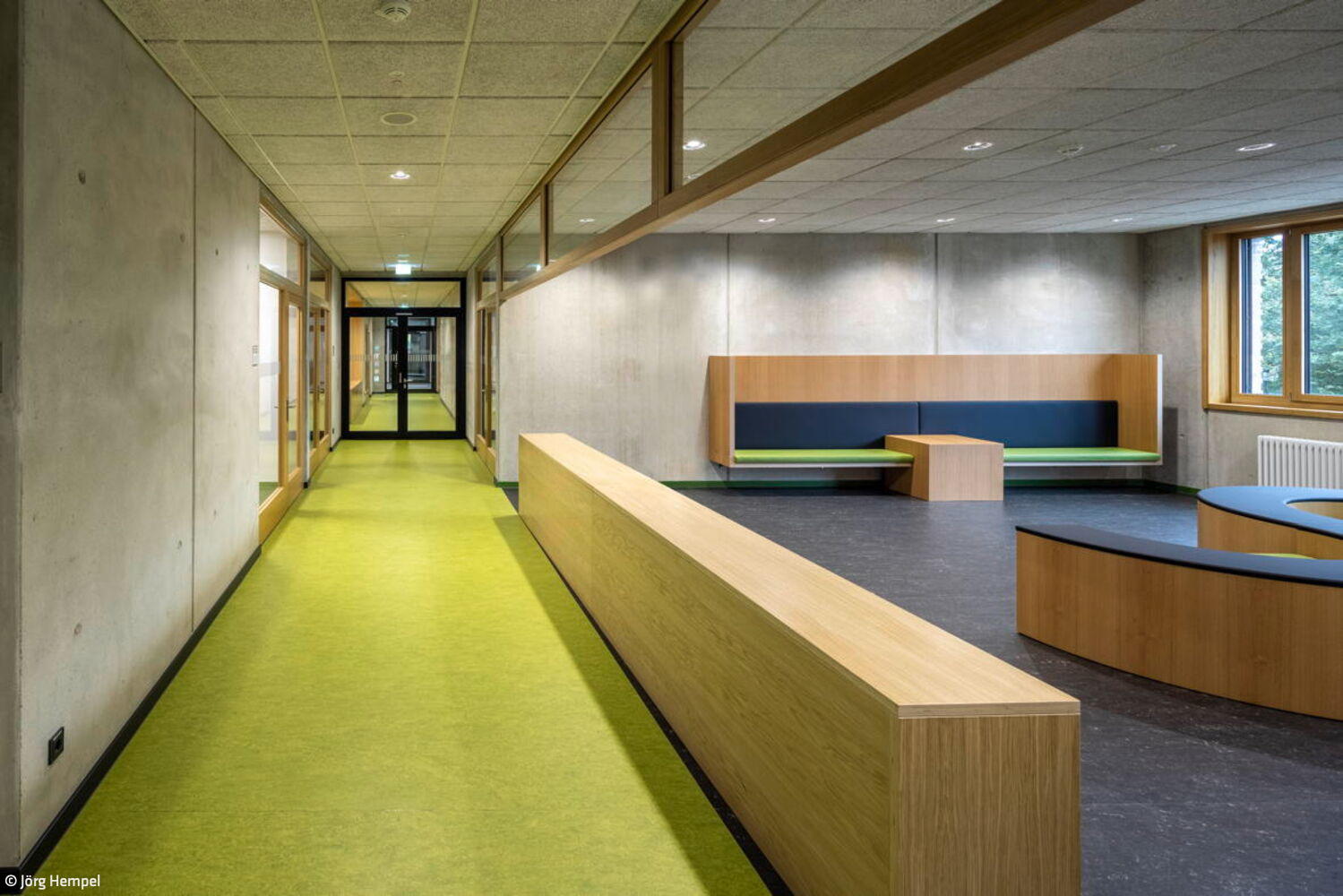
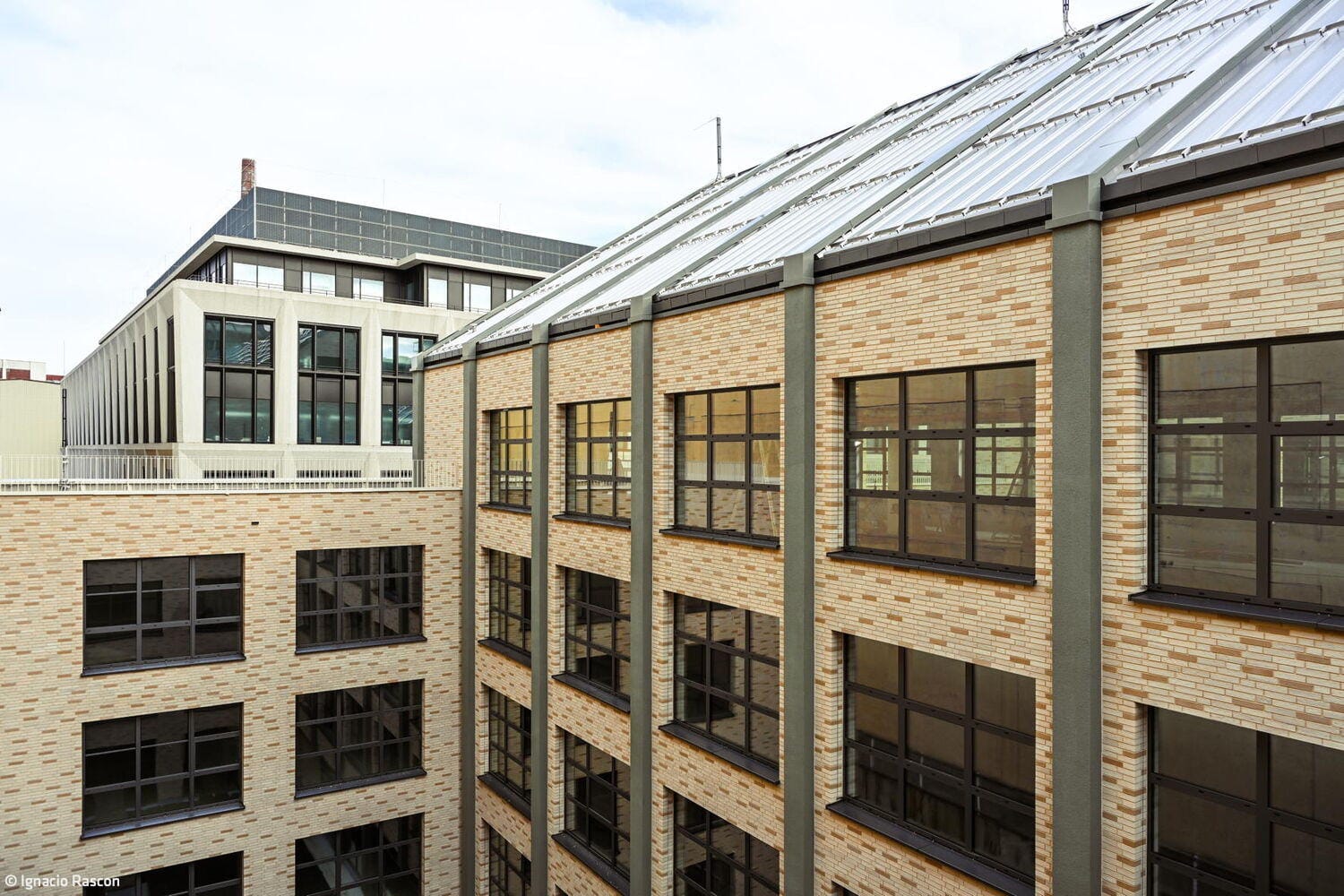
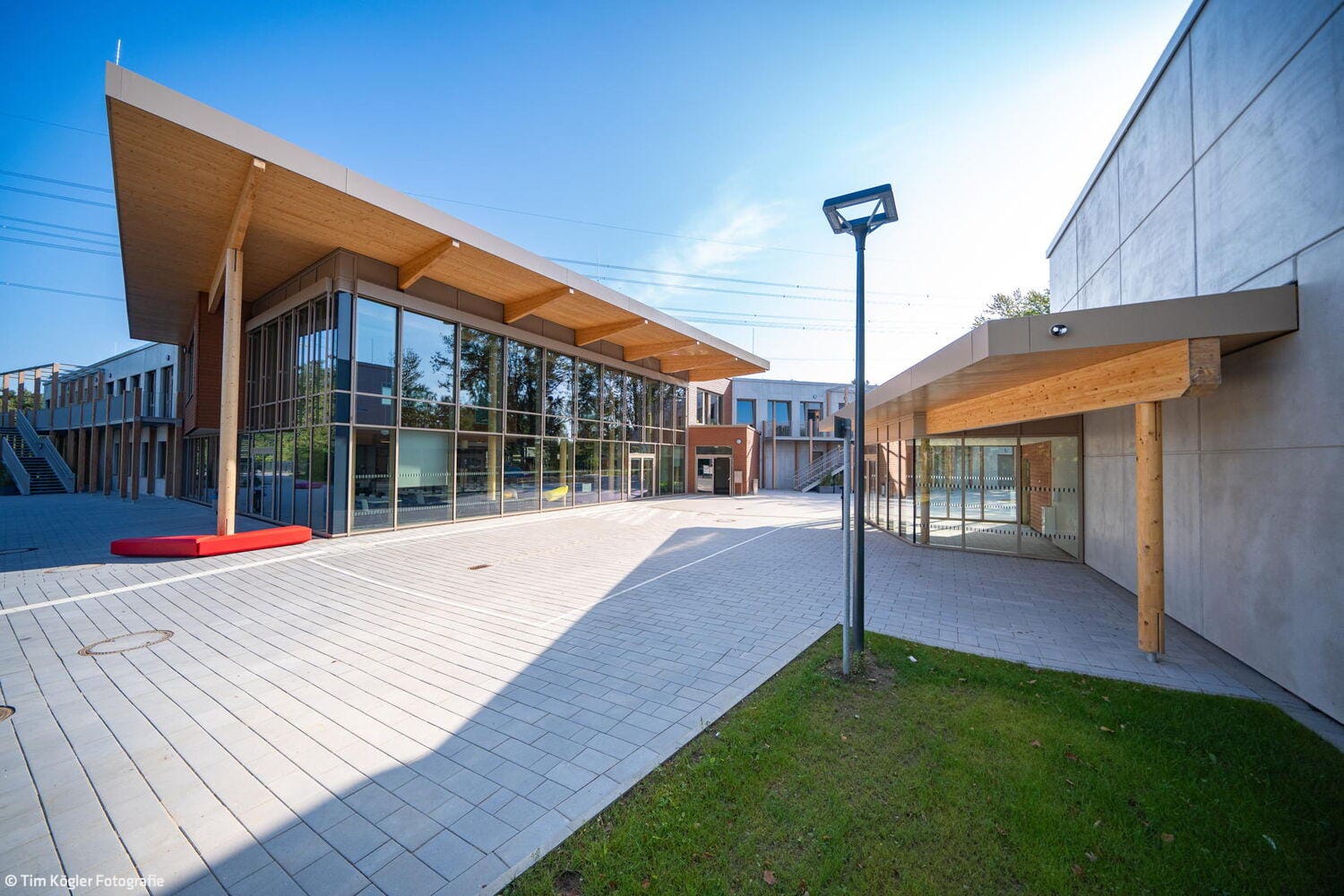
The newly founded Oppum comprehensive school takes over a secondary school campus that has evolved over decades, with its diverse architectural character. It upgrades the three-stream operation to five streams. In a Europe-wide competition, the Bochum-based architectural firm SSP AG won the contract to partially renovate and convert this historically protected ensemble. Their design for the extension respectfully acknowledges the site's history while bringing fresh identity to the school. Positioned between the existing buildings and sports hall on a cleared plot—formerly occupied by temporary structures and contaminated buildings—the extension creates a defining urban gesture: a clear spatial boundary that establishes a striking counterpoint to the historic main building with its clock tower. The three-storey block, punctuated by a four-storey accent, integrates seamlessly into the existing campus. Its angled form generates a new schoolyard that conveys both security and openness. Nearly all mature trees on the site were preserved. Consistent floor and window rhythms establish a calm, monolithic presence, refined by carefully composed sculptural details. The light-coloured clinker brick—developed through extensive collaboration with a local manufacturer—echoes both neighbouring structures and the historic building from the turn of the century. The new wing houses classrooms for upper grades, specialist spaces for art, music, drama, and IT, plus a student self-study centre. A generous two-storey multipurpose hall—featuring an auditorium, stage, and canteen on the ground level—anchors daily school life while serving as a performance and event venue. The open building organization, enabled by a sophisticated fire safety strategy, creates distinct pedagogical zones. Rather than the conventional "corridor school," fluid learning landscapes have emerged—transparent, thoughtfully equipped, and built from sustainable materials—fostering contemporary, inspiring environments. Every classroom features high-quality wood and glass frame doors that offer visual connection to adjacent spaces while allowing natural light to penetrate the central corridors. Corridors are punctuated by open zones with exterior views, fostering informal gathering and flexible teaching and learning spaces. A fully accessible roof terrace crowns the design—a retreat with views that doubles as a teaching, exhibition, and performance platform for the neighbouring art and music studios.
Photos: Jörg Hempel
www.joerg-hempel.com
(Published in CUBE Düsseldorf 04|24)
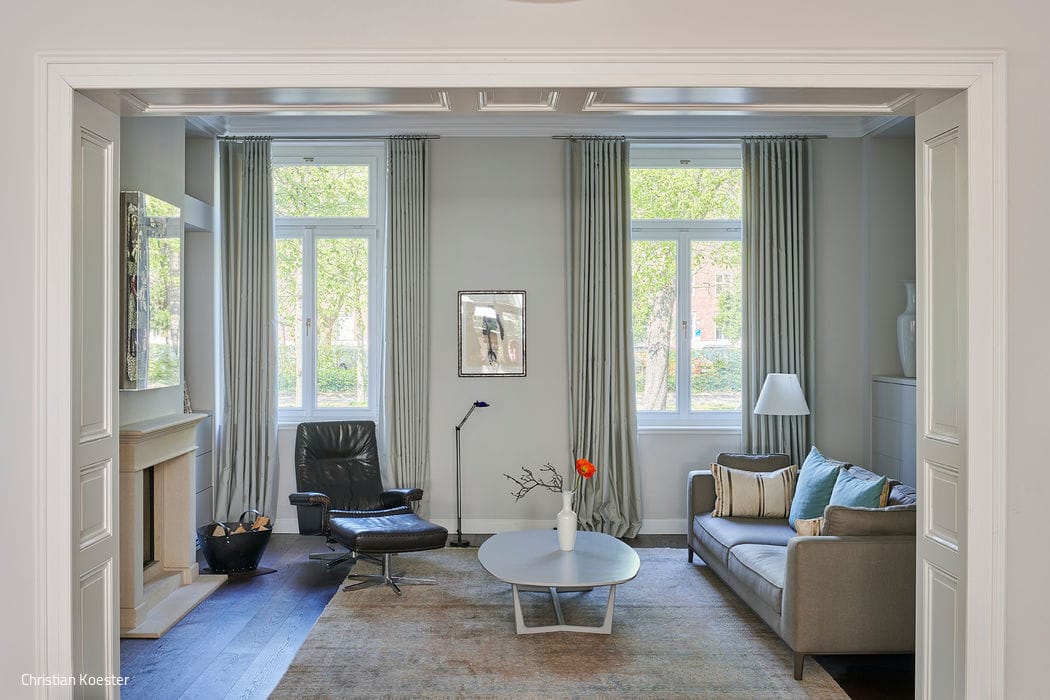
Heritage reimagined
A Düsseldorf townhouse thoughtfully restored and reimagined
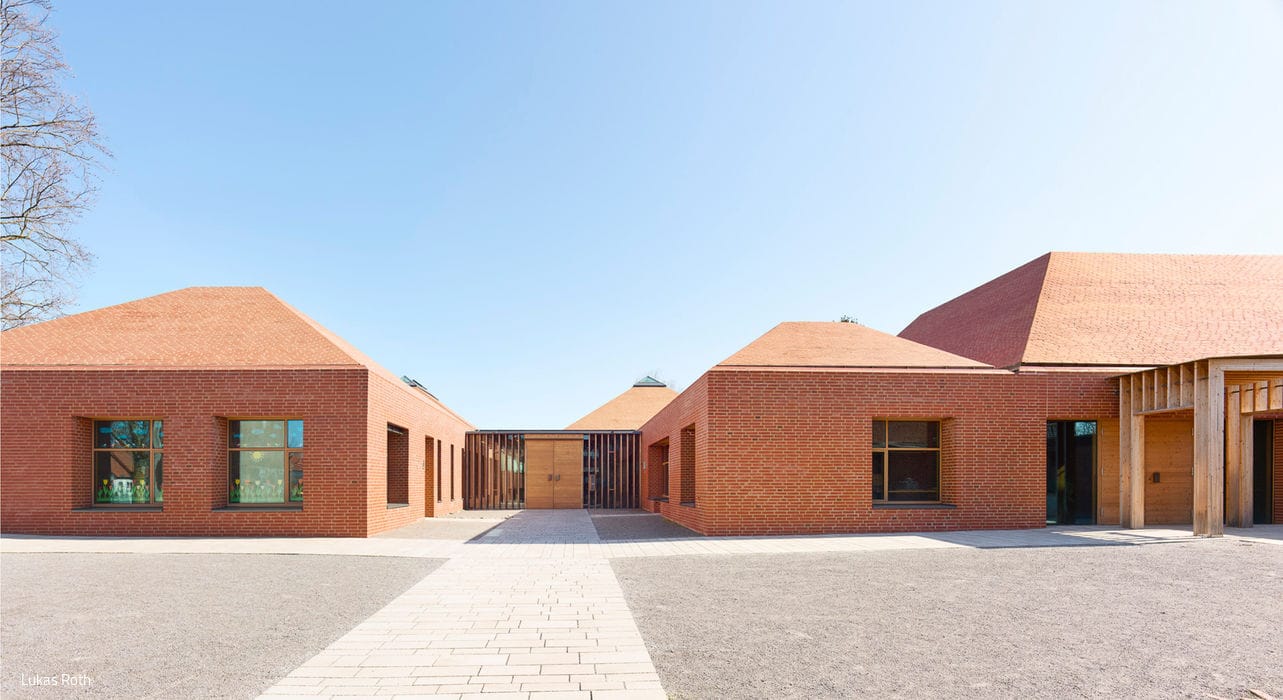
Father and son
Paul Böhm creates a new plaza around Gottfried Böhm's St. Konrad
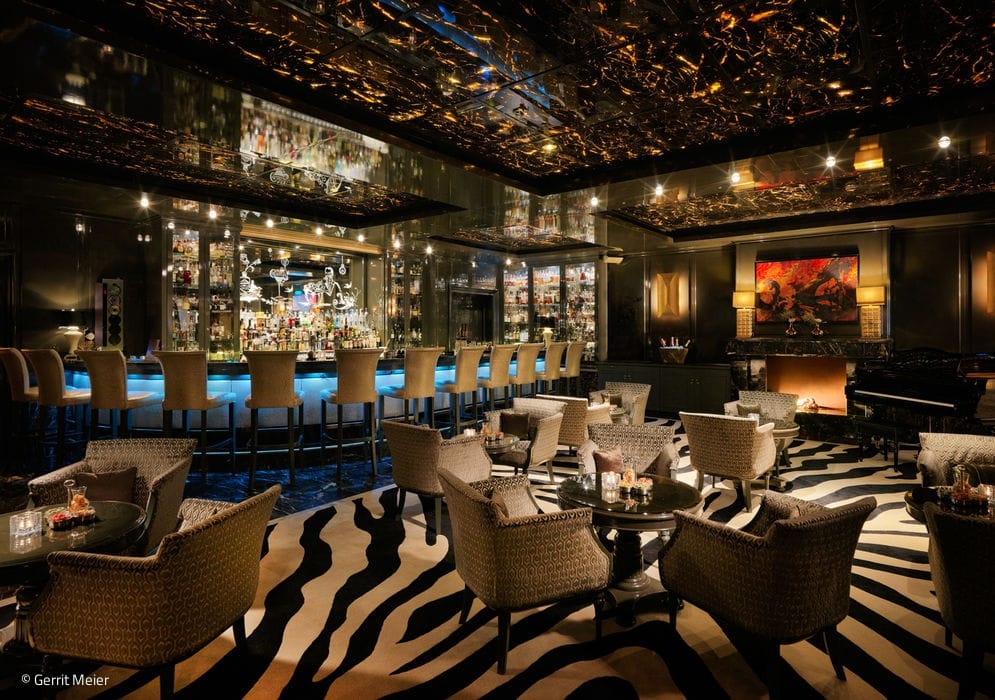
An Evening of Glamour
The Capella Bar: sophisticated design meets exceptional cocktails.
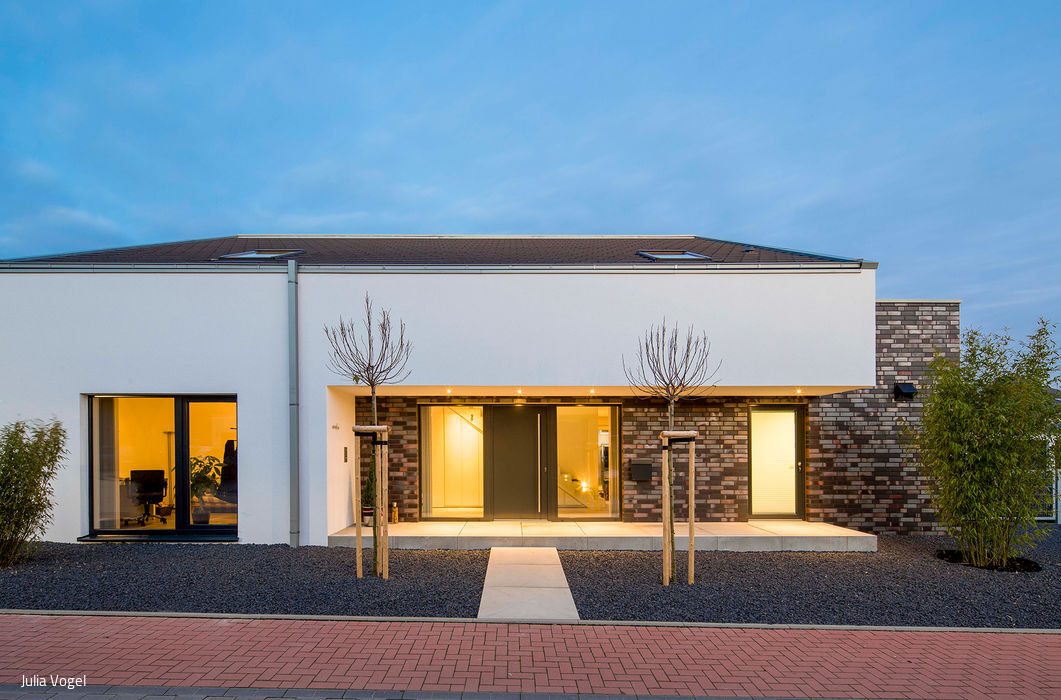
One into two
A single-family home that creatively reconciles building codes with design ambition