


Höhenpark
Innovative technology enables the roof park to dramatically reduce flooding during heavy downpours
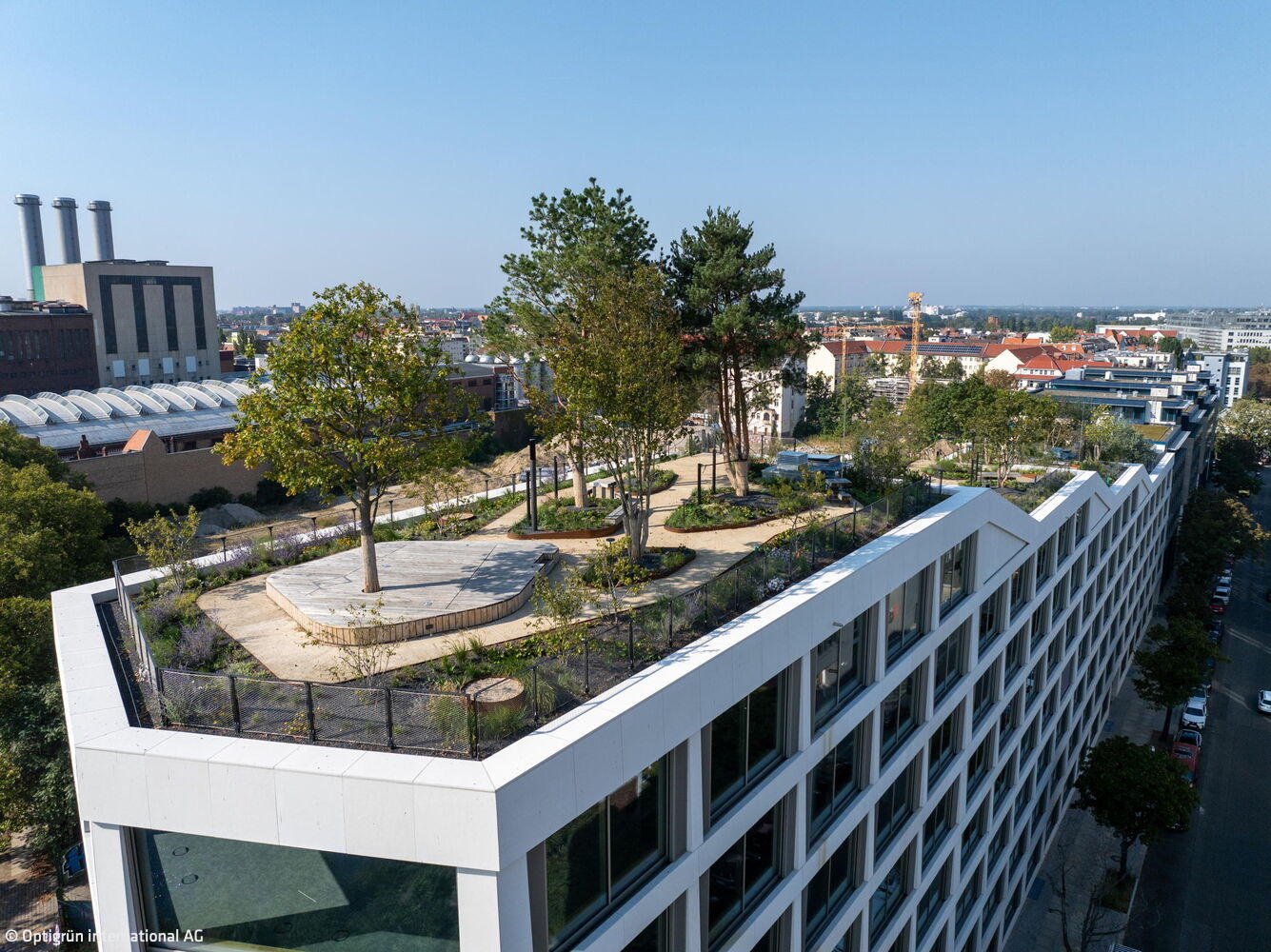
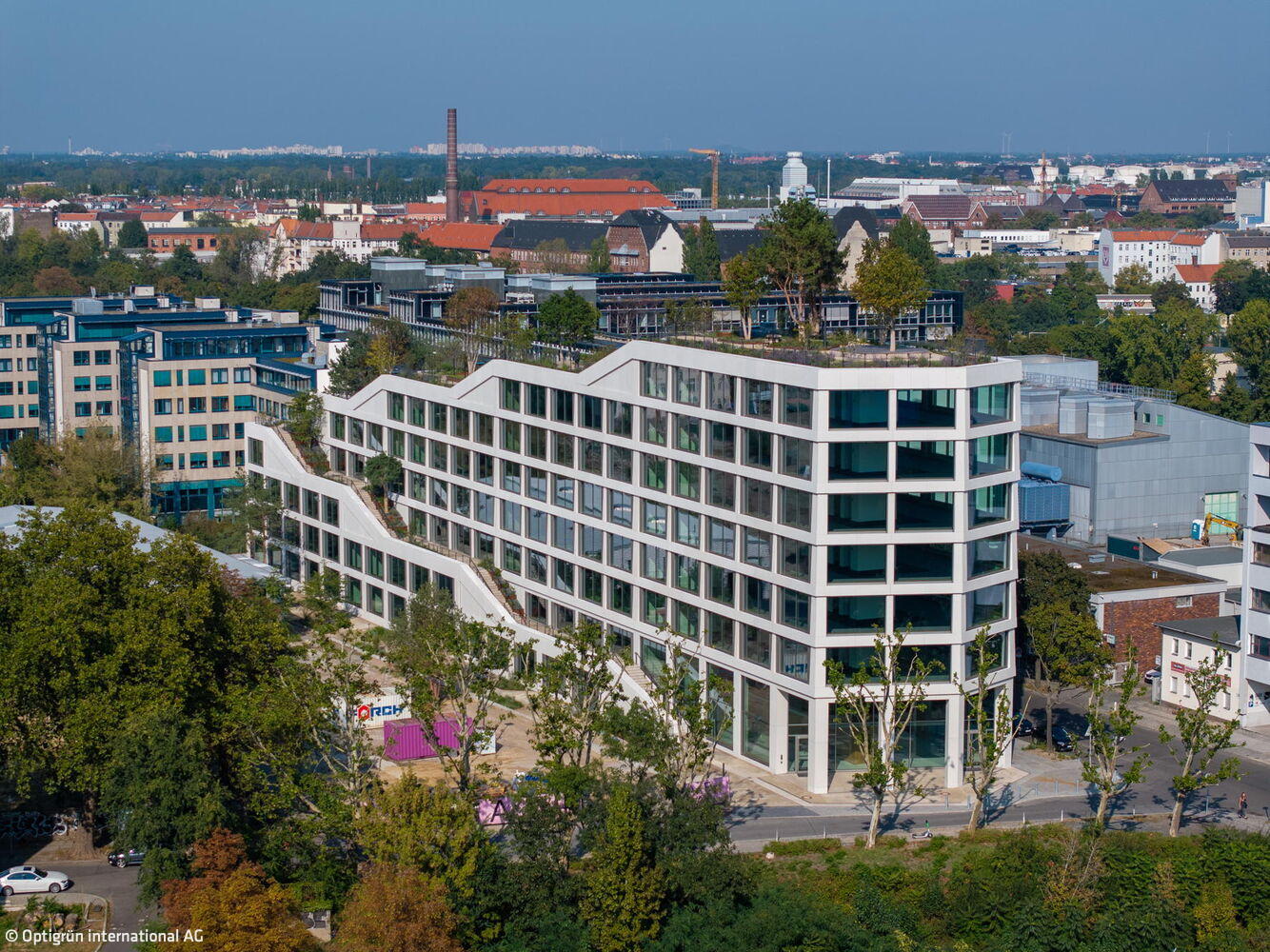

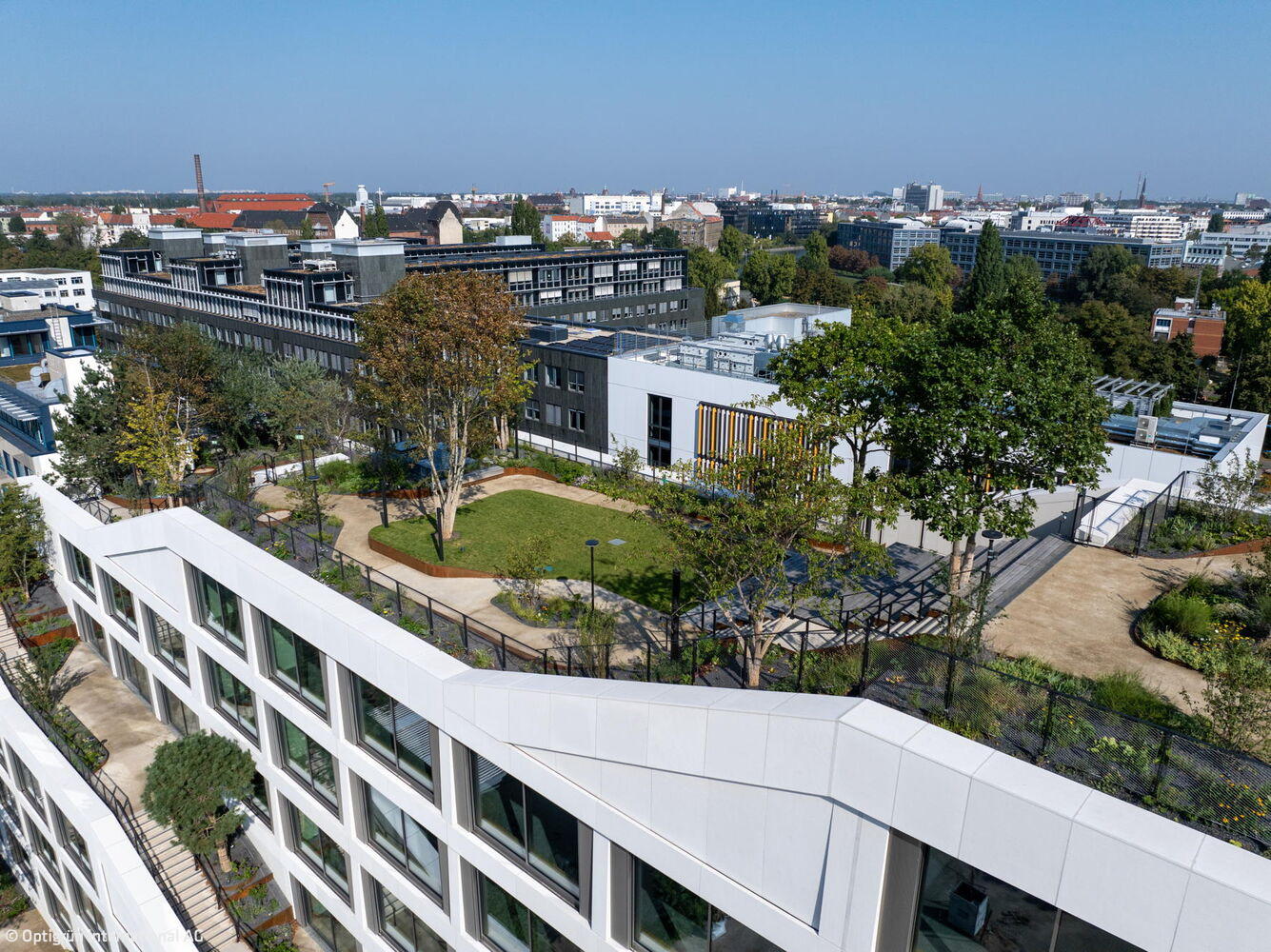
Standing as a landmark on Berlin's evolving skyline is "Area," a striking office building on the artificial Mierendorff Island in Charlottenburg, nestled between the Spree River and Westhafen Canal. What truly distinguishes it, however, is the spectacular rooftop park that crowns the structure. Since October 2023, this verdant landscape has stolen the show: thirty towering pines, oaks, maples, and wild cherry trees—each reaching twelve meters—now flourish atop the 2,200 m² green roof. Following the sponge city principle, this innovative design captures and retains rainwater within the urban environment. Is this a watershed moment? Arguably so. While comparable mega-projects elsewhere—such as Marina Bay Sands in Singapore or Fukuoka's Prefectural International Hall—prioritize visual spectacle with vegetation overwhelming entire structures, Area puts environmental innovation front and center.
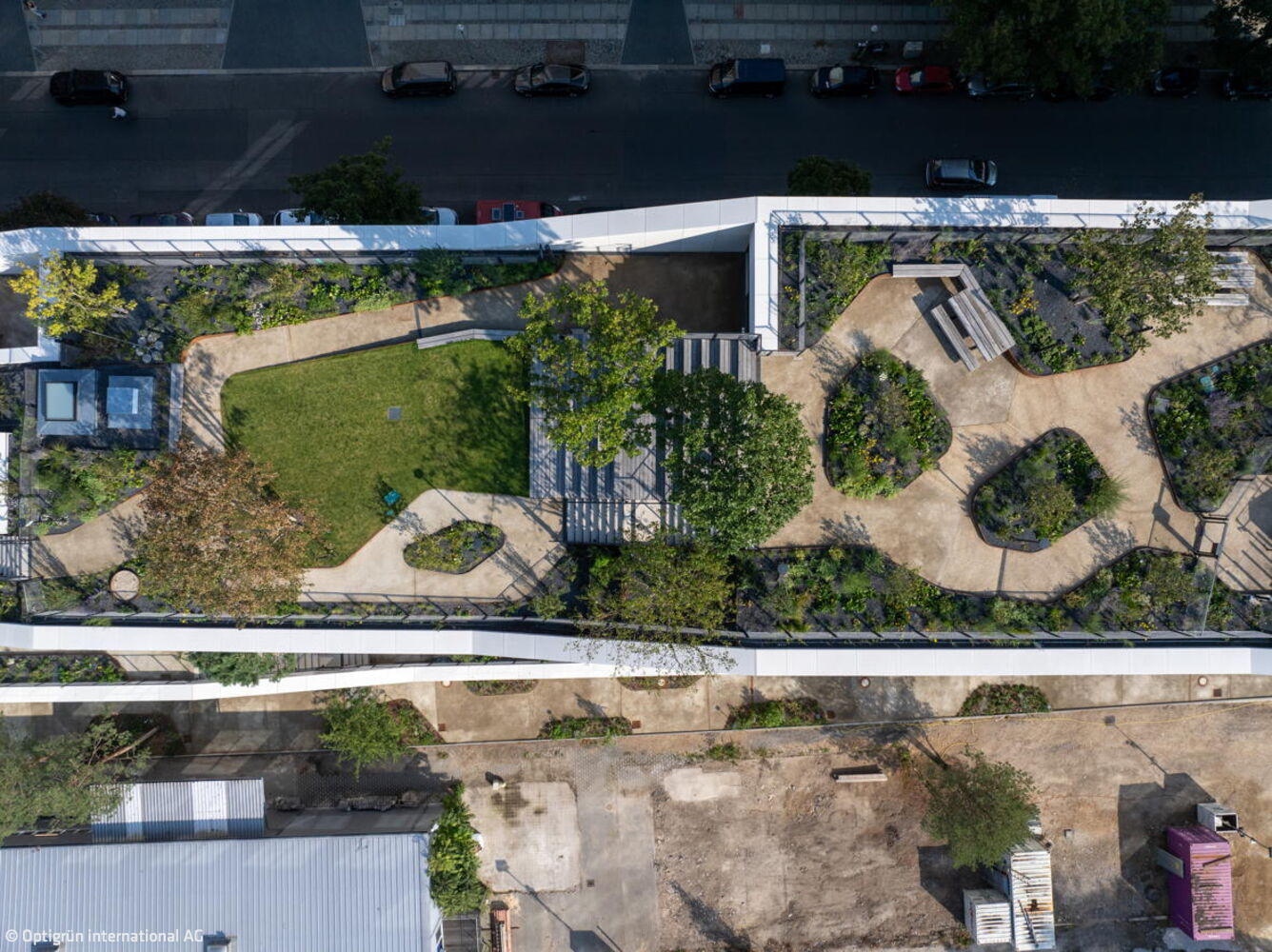
The building's terraced architecture allows the park to ascend organically across the landscape. Beyond the trees themselves, the planting scheme encompasses 850 m² of perennials, shrubs, and woody species, complemented by a 90 m² grass area—a carefully curated palette of plantings selected to withstand the region's variable weather. To guarantee the trees' stability, engineers conducted wind simulations up to Force 12. The rooftop garden serves a dual purpose: enhancing the local microclimate while providing a restorative refuge for employees and, at select times, the general public. A wooden terrace on the uppermost level offers unobstructed 360-degree views across the city. Visitors can access the park directly from the office spaces via elevator or via a gently inclined outdoor stairway.
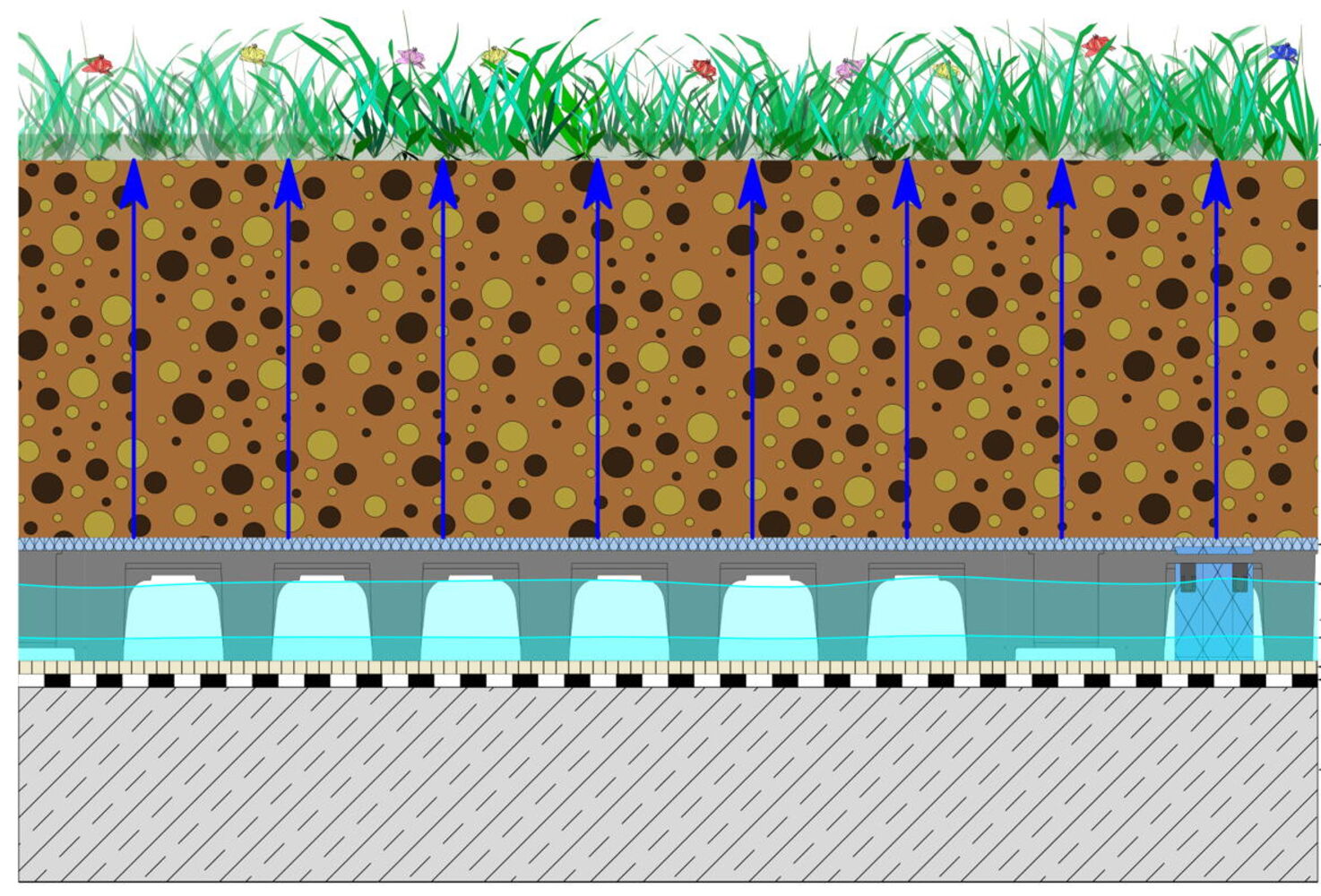
The building's concept combines work, recreation and sustainability in an urban environment. The "Area" was designed by Grüntuch Ernst Architects. The roof garden was planned by the Berlin-based firm Capattistaubach Urbane Landschaften, which specialises in sustainable urban greening. The project developer Bauwens implemented the construction project and played a central role in the design of the office complex. Particularly exciting is the idea of the sponge city, which aims to retain water in the city and improve the microclimate. The company Optigrün, which specialises in building greening, played a decisive role in the realisation of the roof park. The company has developed a retention roof that enables sustainable water storage and supports the sponge city concept. This technology stores rainwater in special boxes and returns it to the plants during dry periods. During heavy rainfall, the flow of water can be reduced, thereby reducing the risk of flooding due to overflowing sewers. The sponge city thus absorbs water and releases it again at a later stage, which also improves the urban climate.
www.gruentuchernst.de
www.optigruen.de
www.capattistaubach.de
Photos:
Optigrün International AG
(Published in CUBE Berlin 02|25)
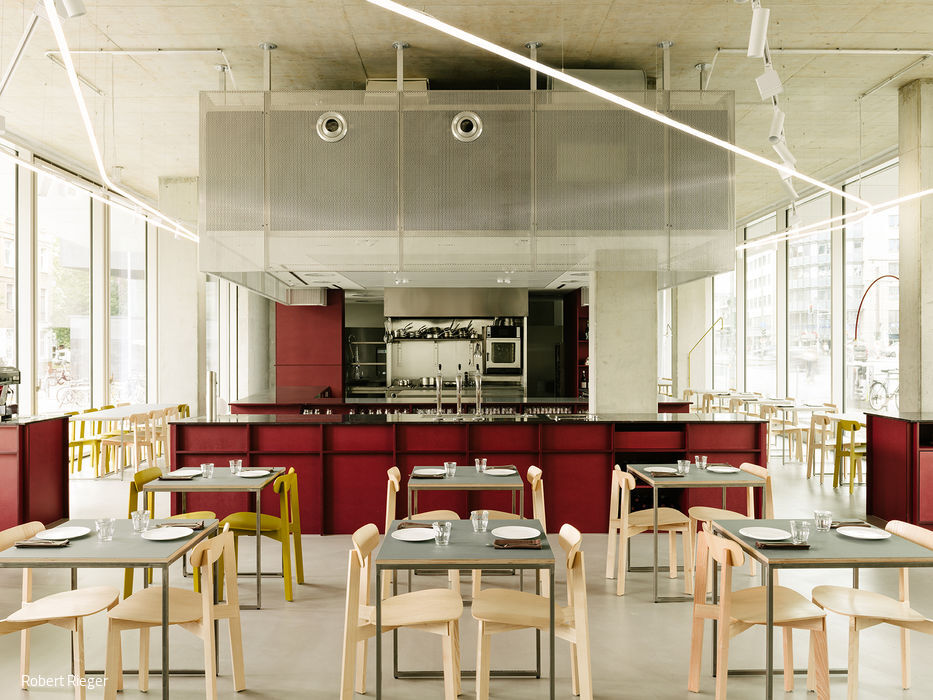

Campus for the Future
Europacity welcomes "Digital Campus," a visionary workspace for tomorrow's innovations.
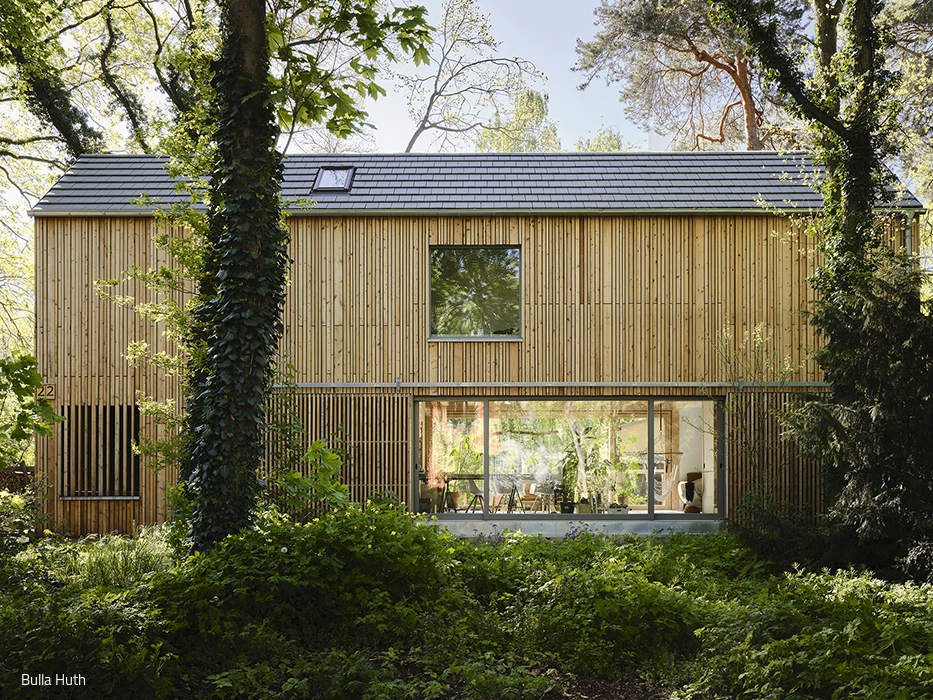
Wood of a Different Kind
Two timber homes emerge from a wooded landscape in Potsdam.

Tailored to Perfection
A penthouse crowning a landmark historic building on Fischerinsel
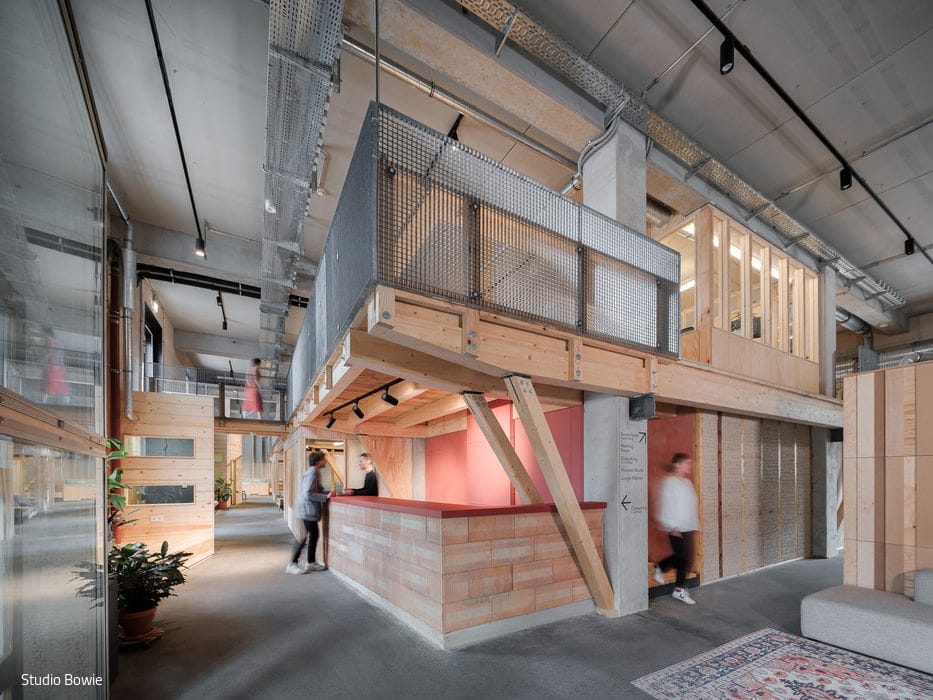
Sustainable & Circular
From Surplus Materials to Extraordinary Coworking