


Home and Conviction
A modest ensemble housing two families

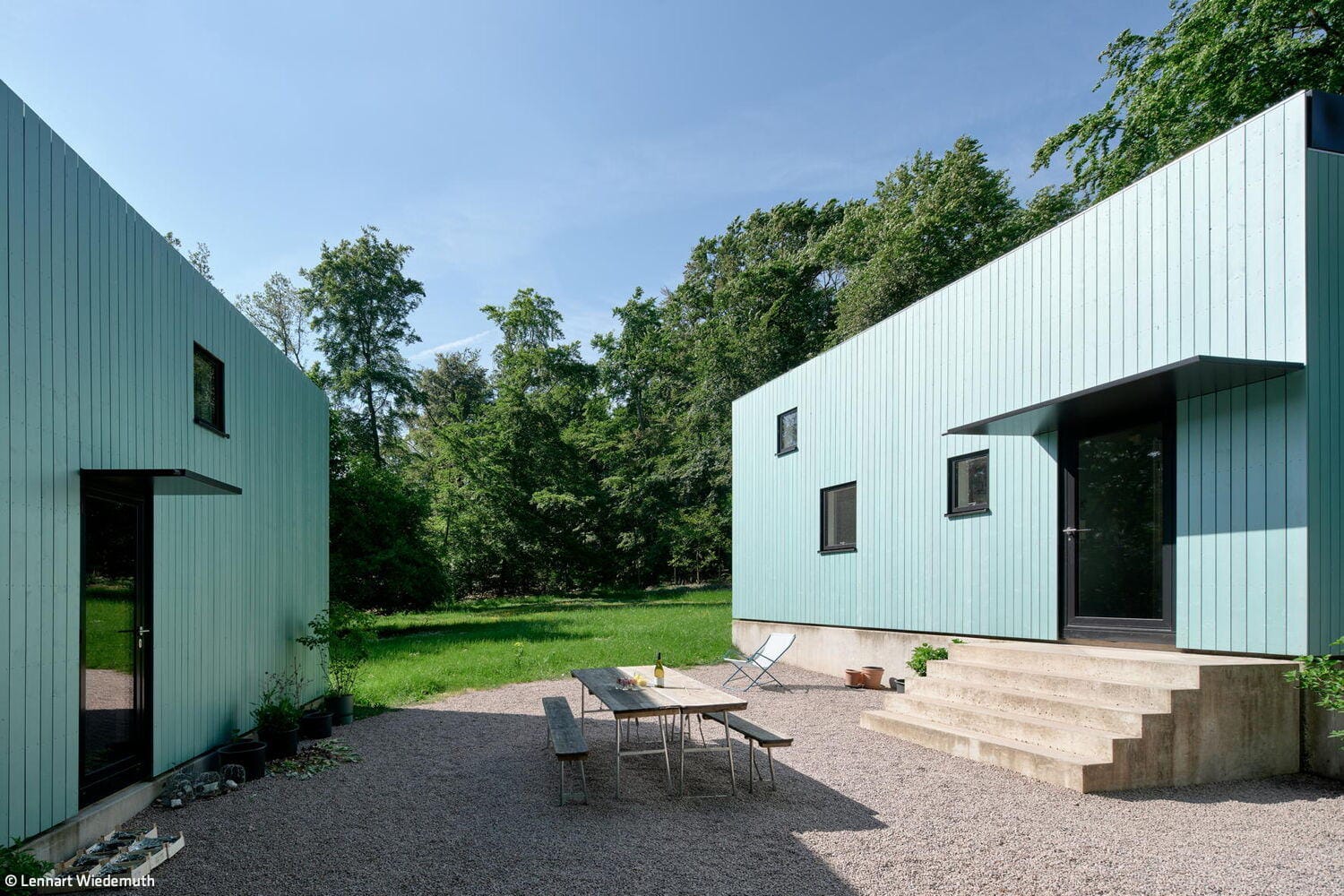
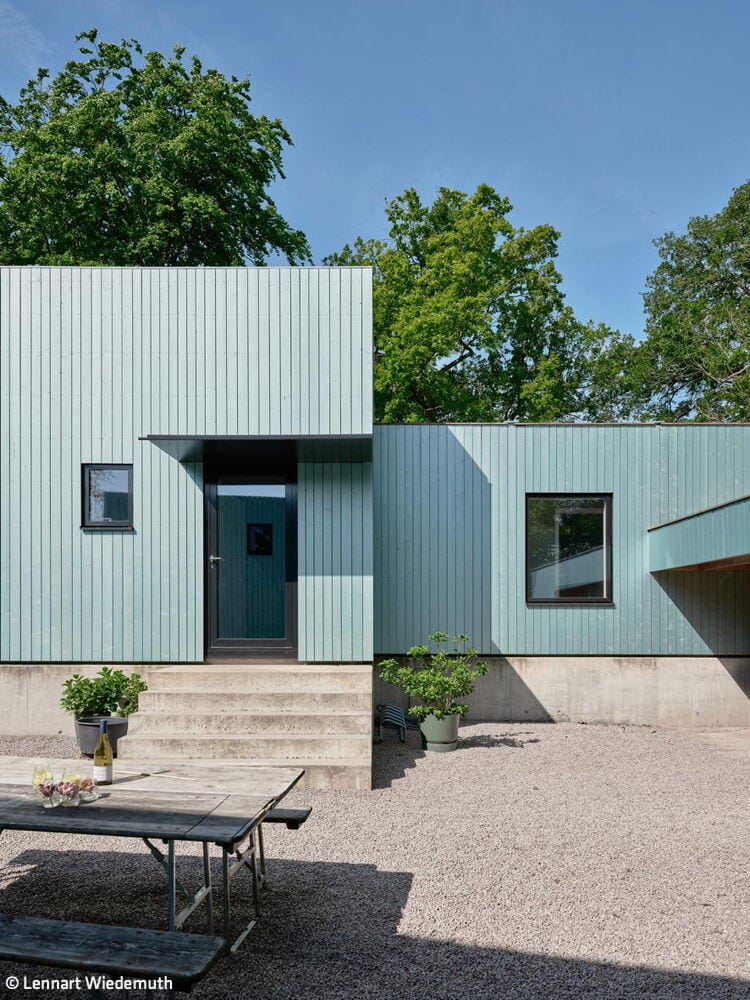
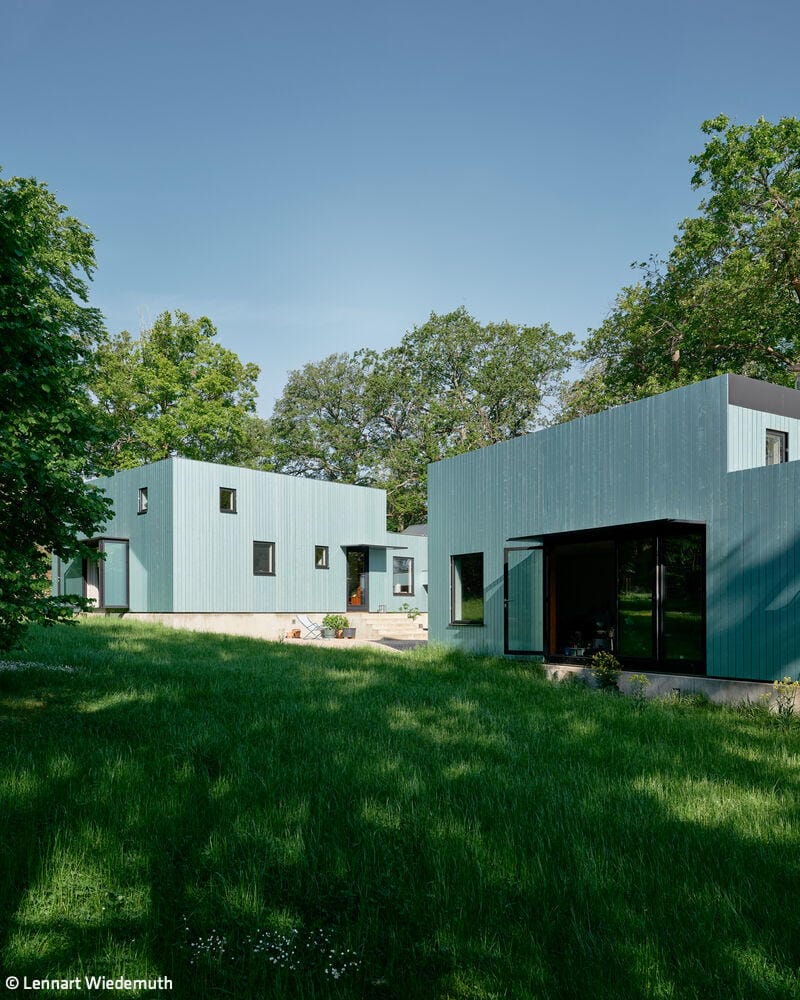
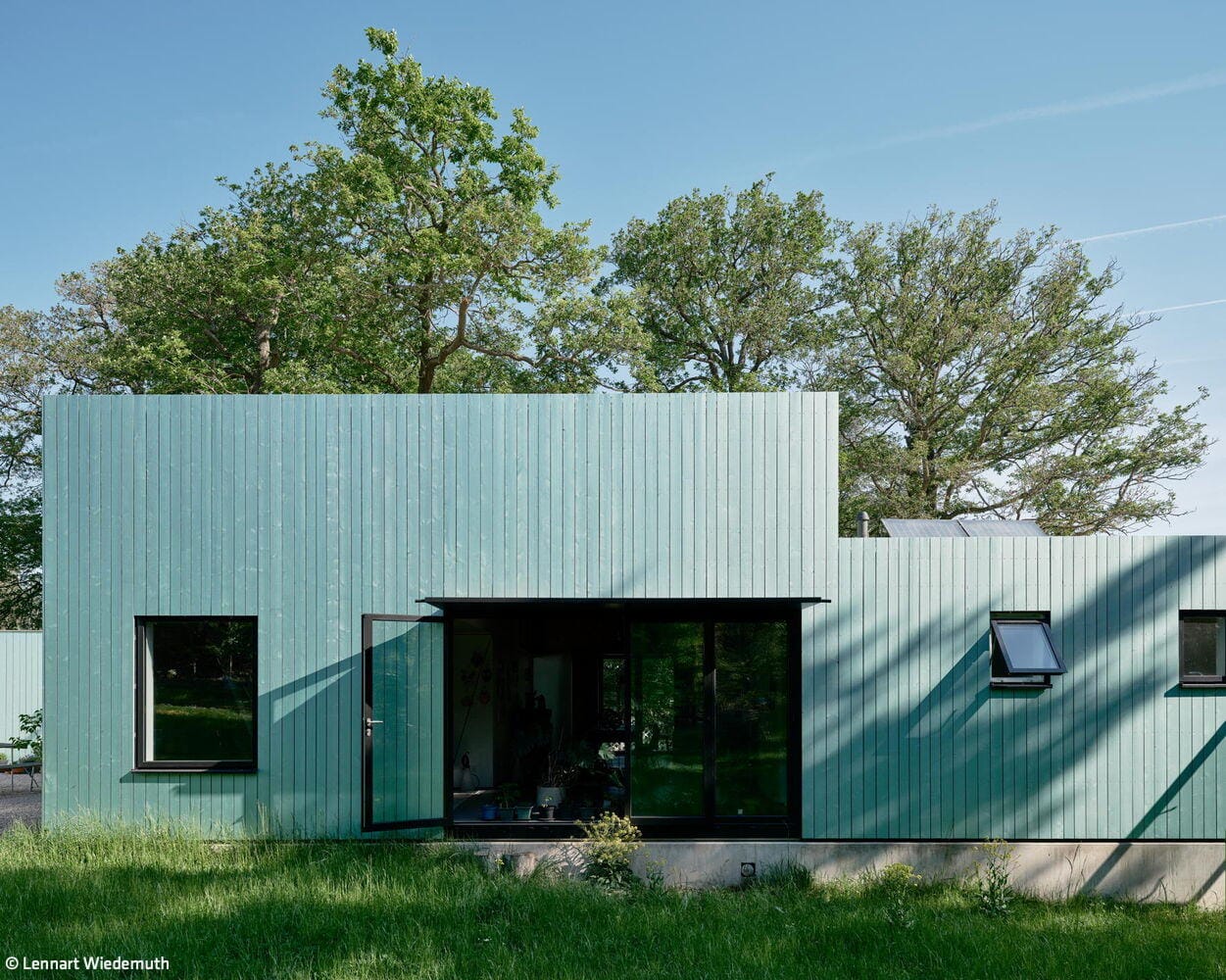
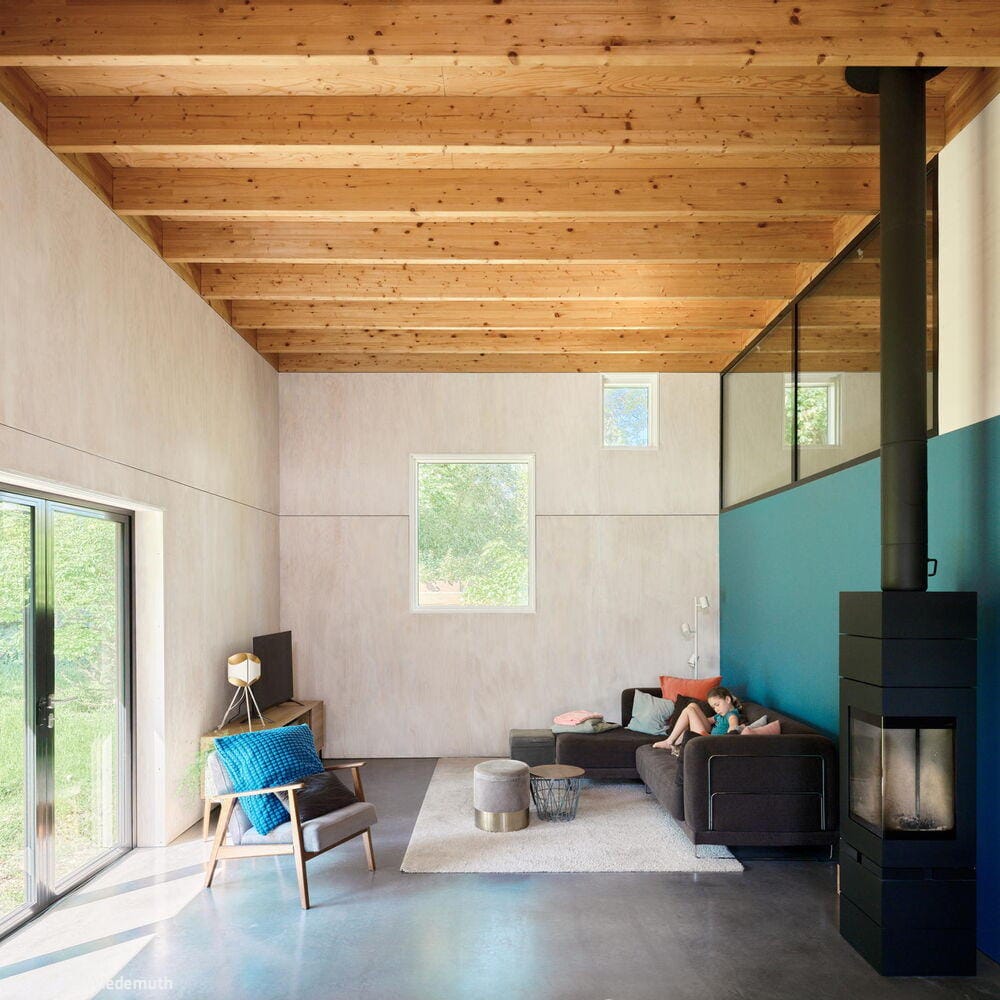
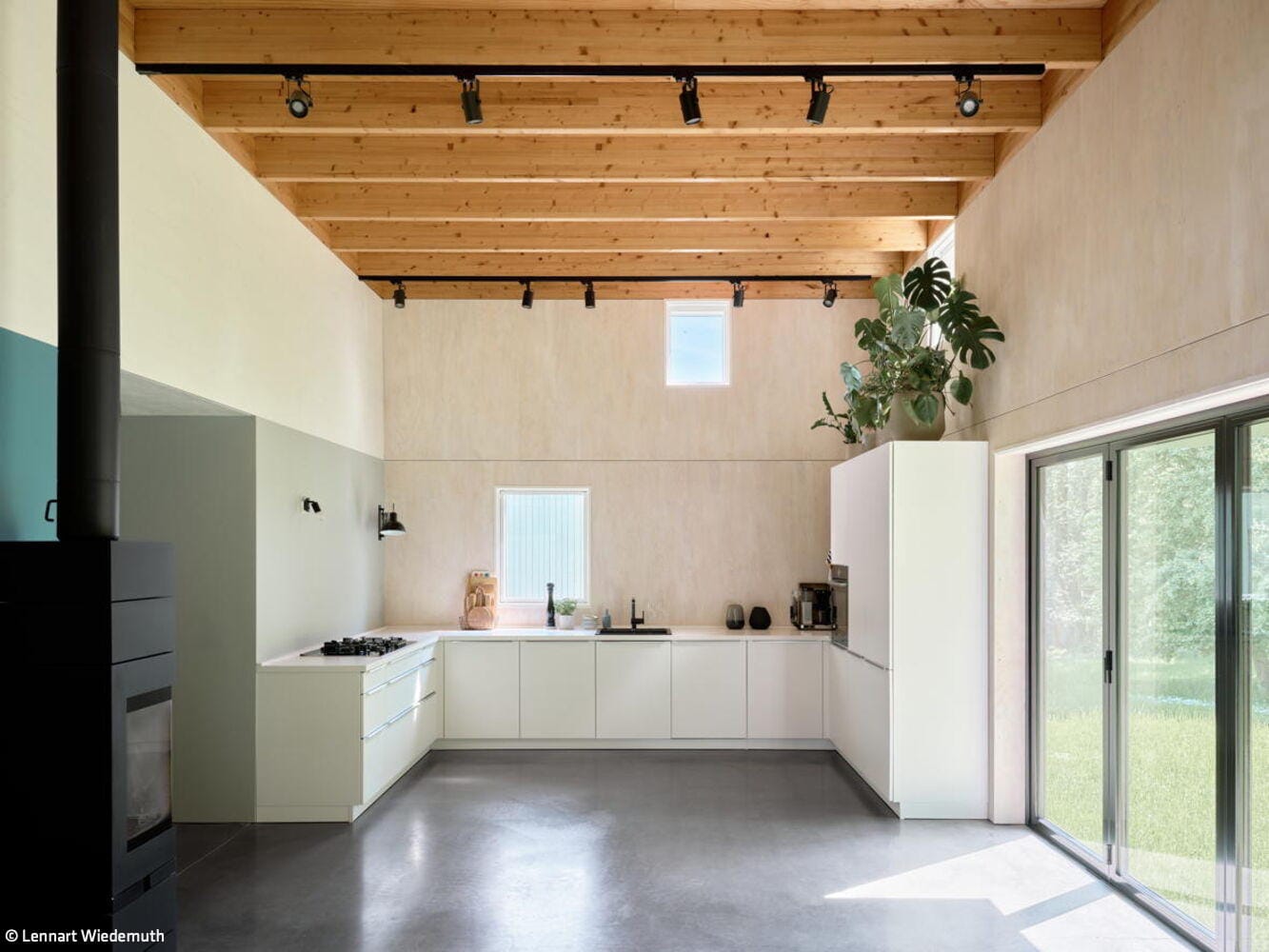
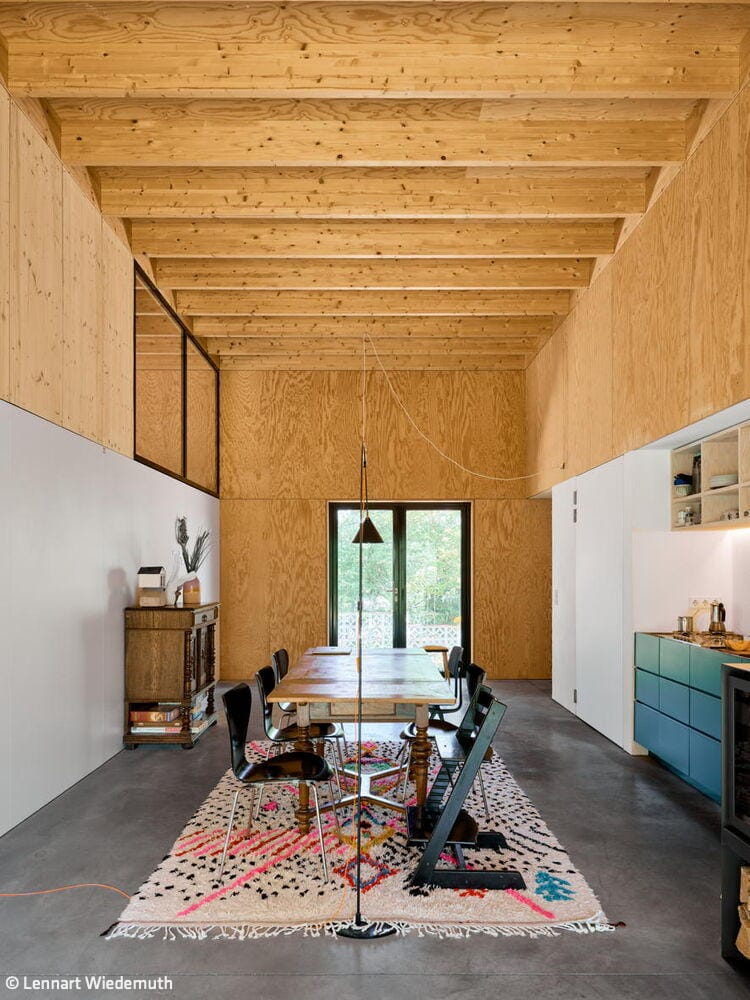
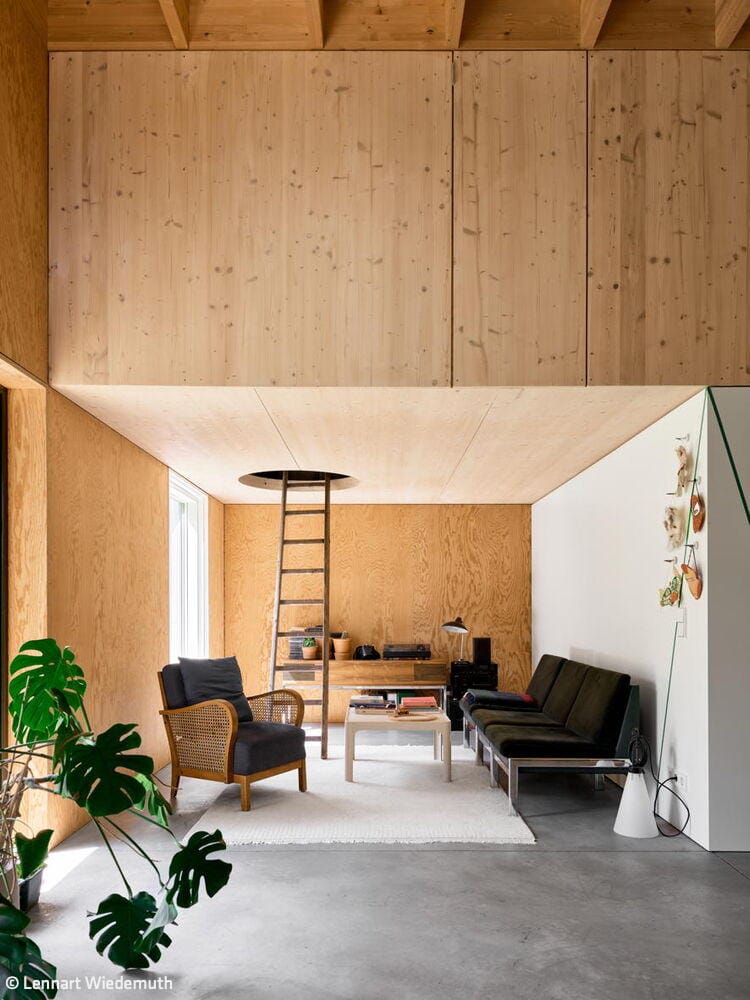
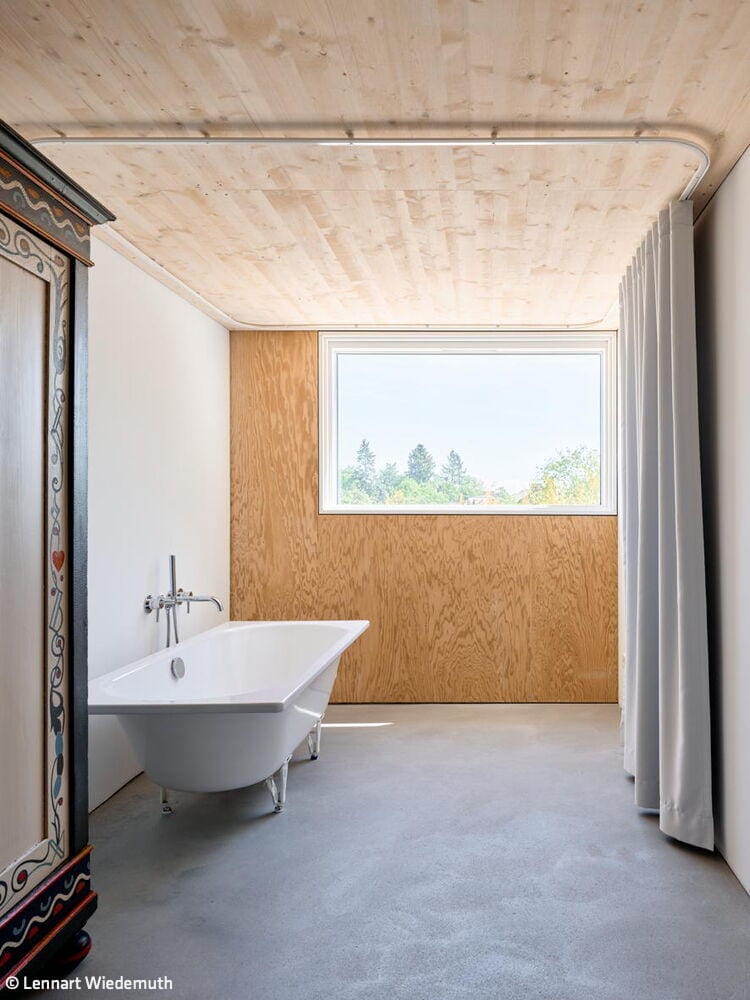
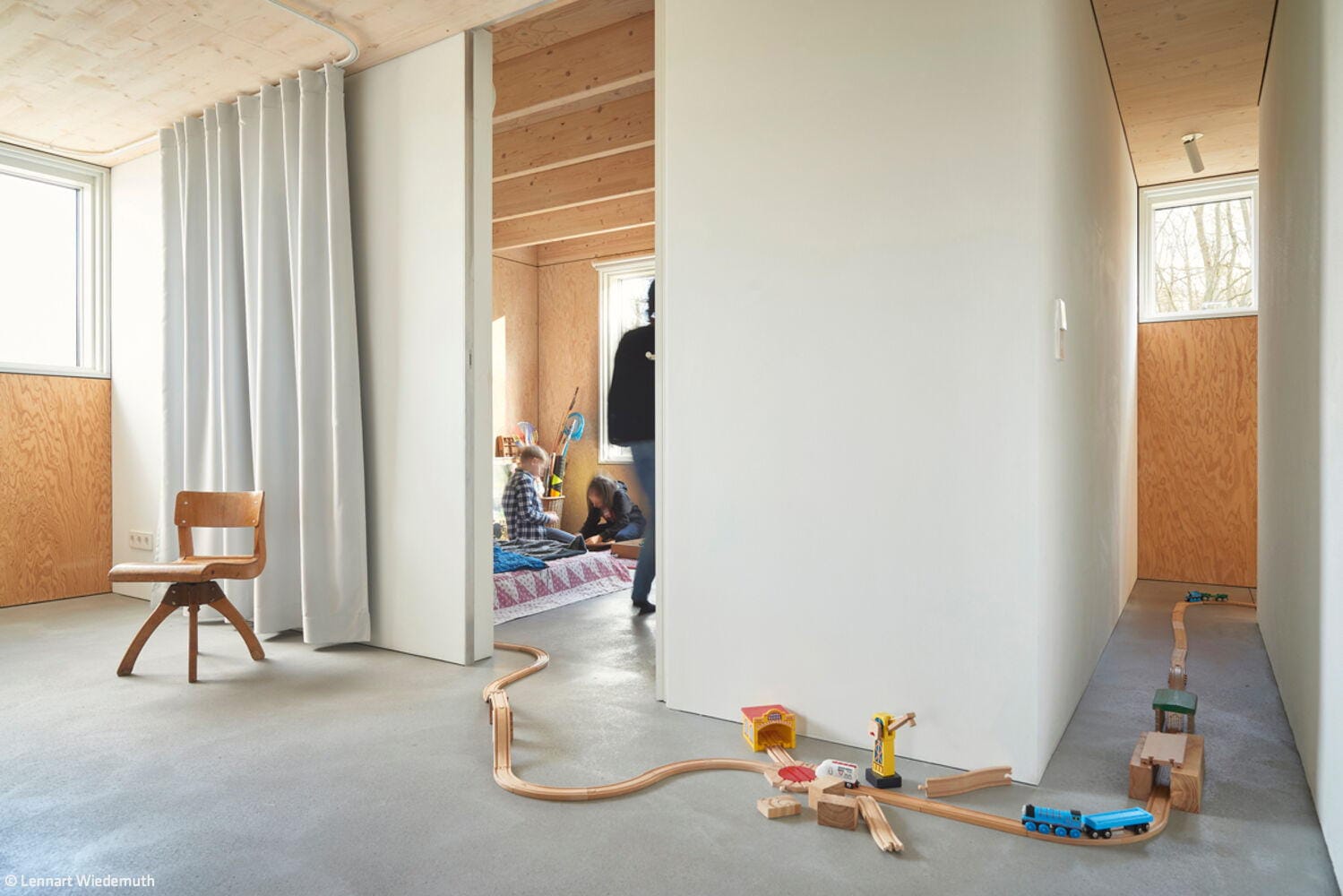
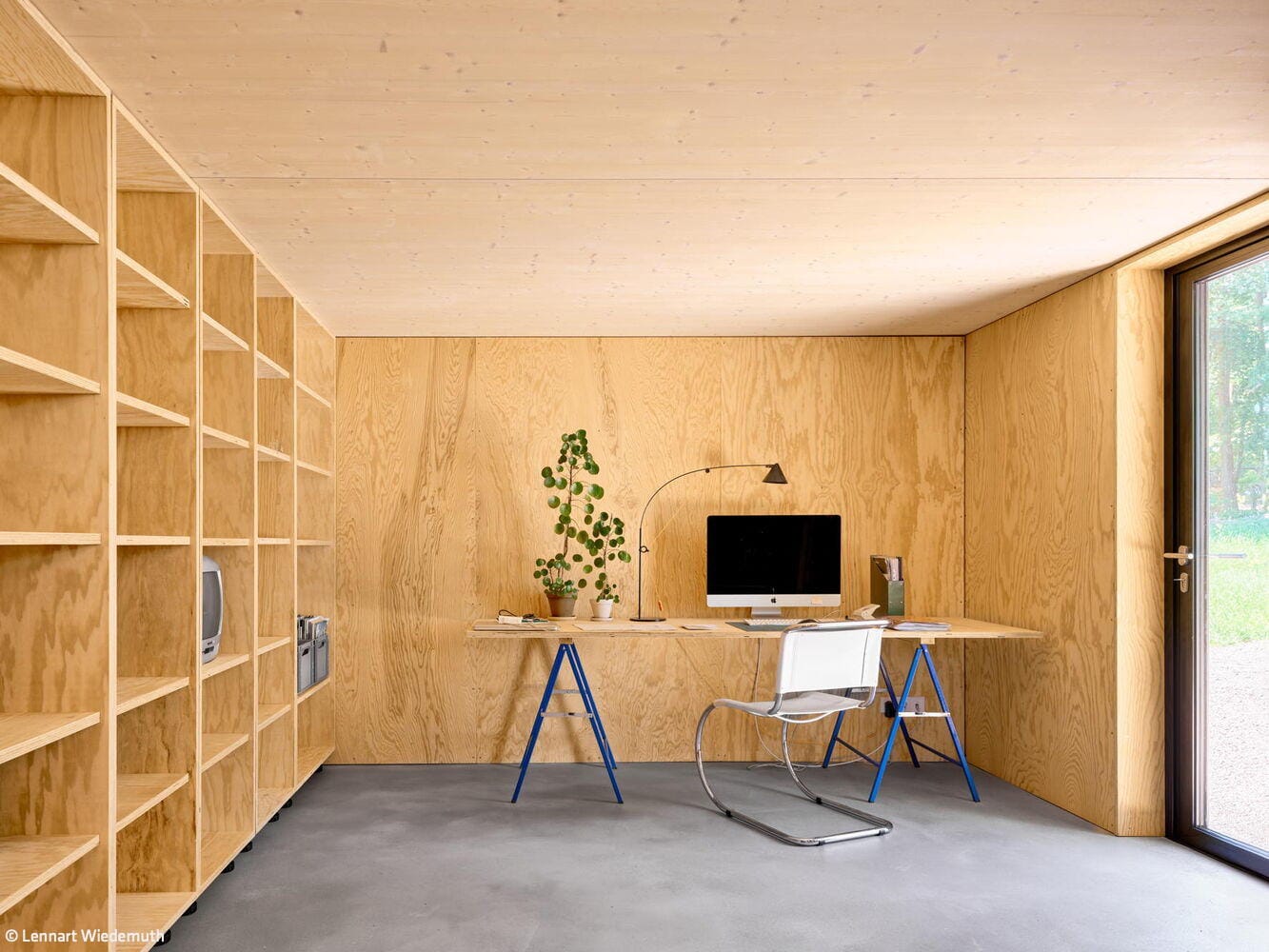
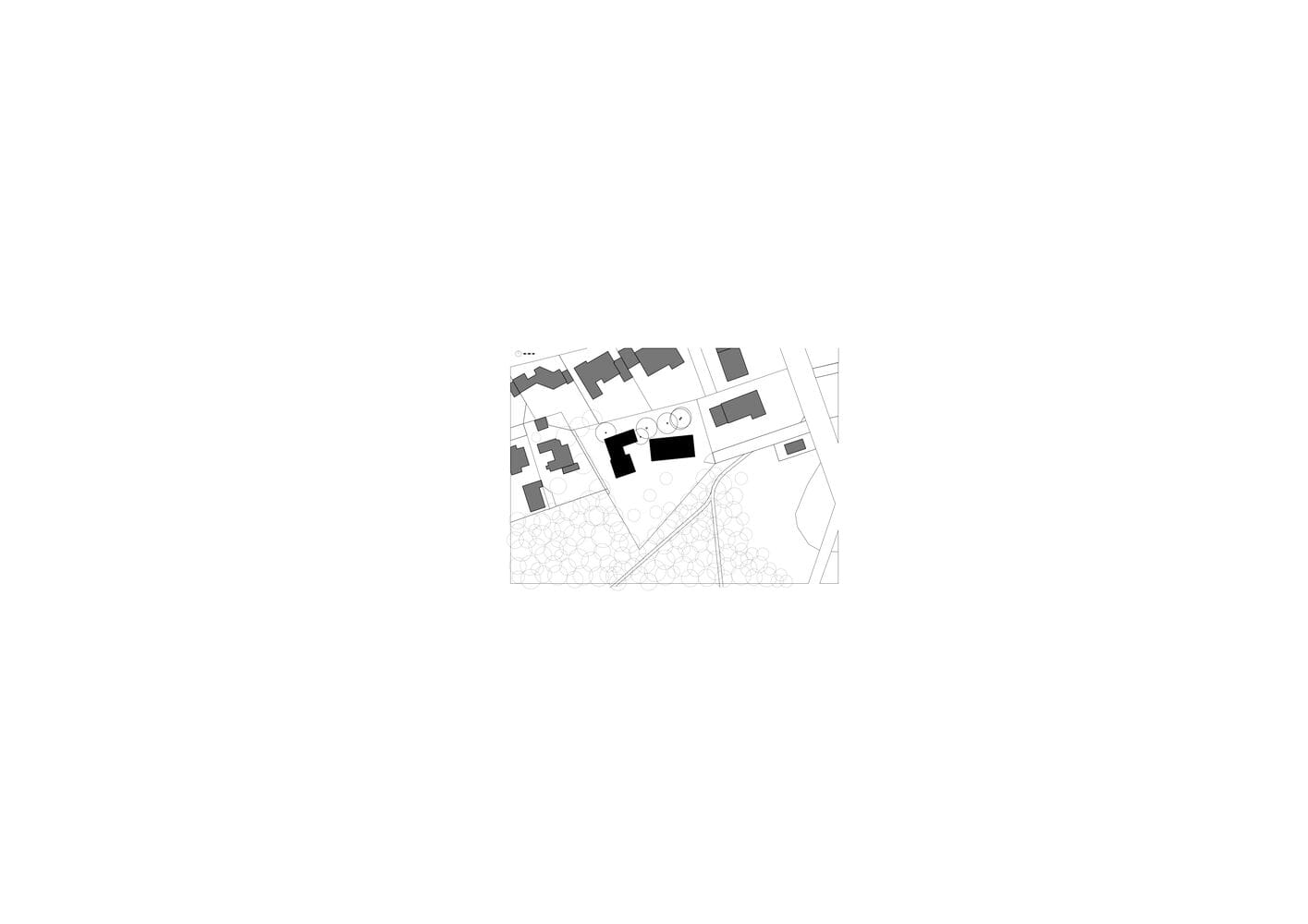
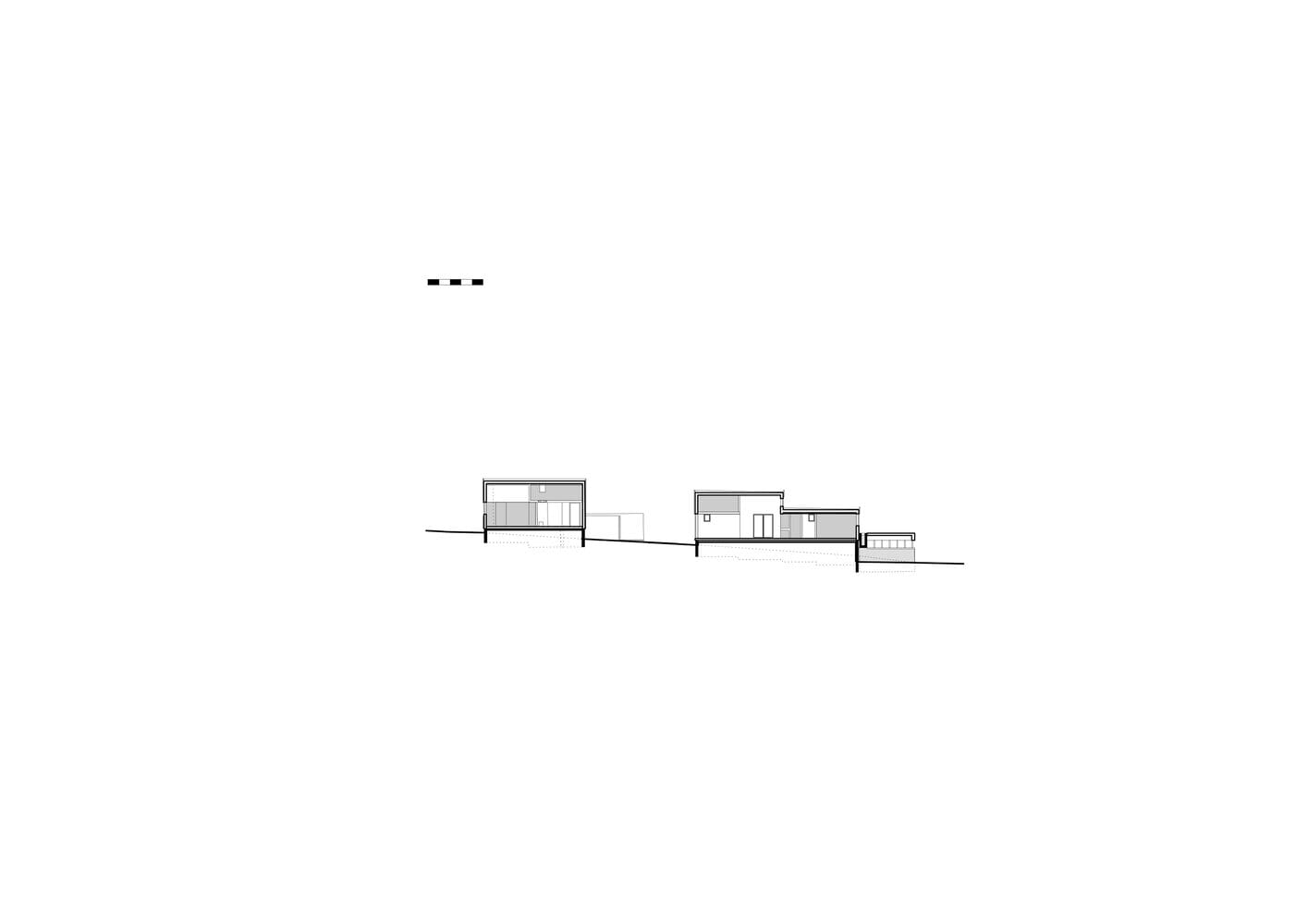
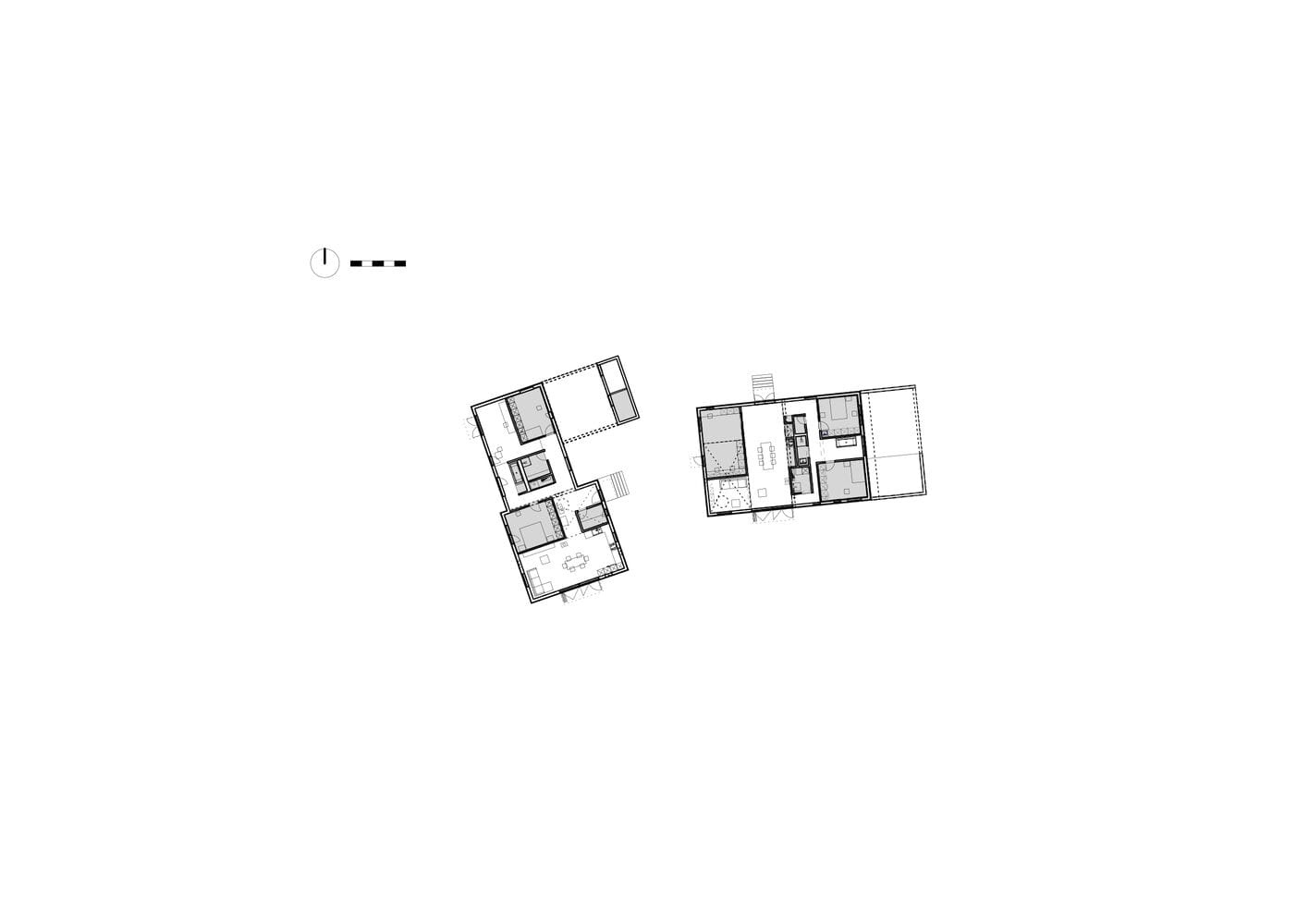
At the edge of a forest near Bad Kreuznach, two houses stand quietly yet with unmistakable presence. Built on a former US military installation, hdg Architekten created this ensemble that respects the flat-roofed character of its 1960s surroundings while asserting its own distinctive identity. Three clearly defined modules per house, arranged like a small village around a shared courtyard, foster connection without crowding for the families within.
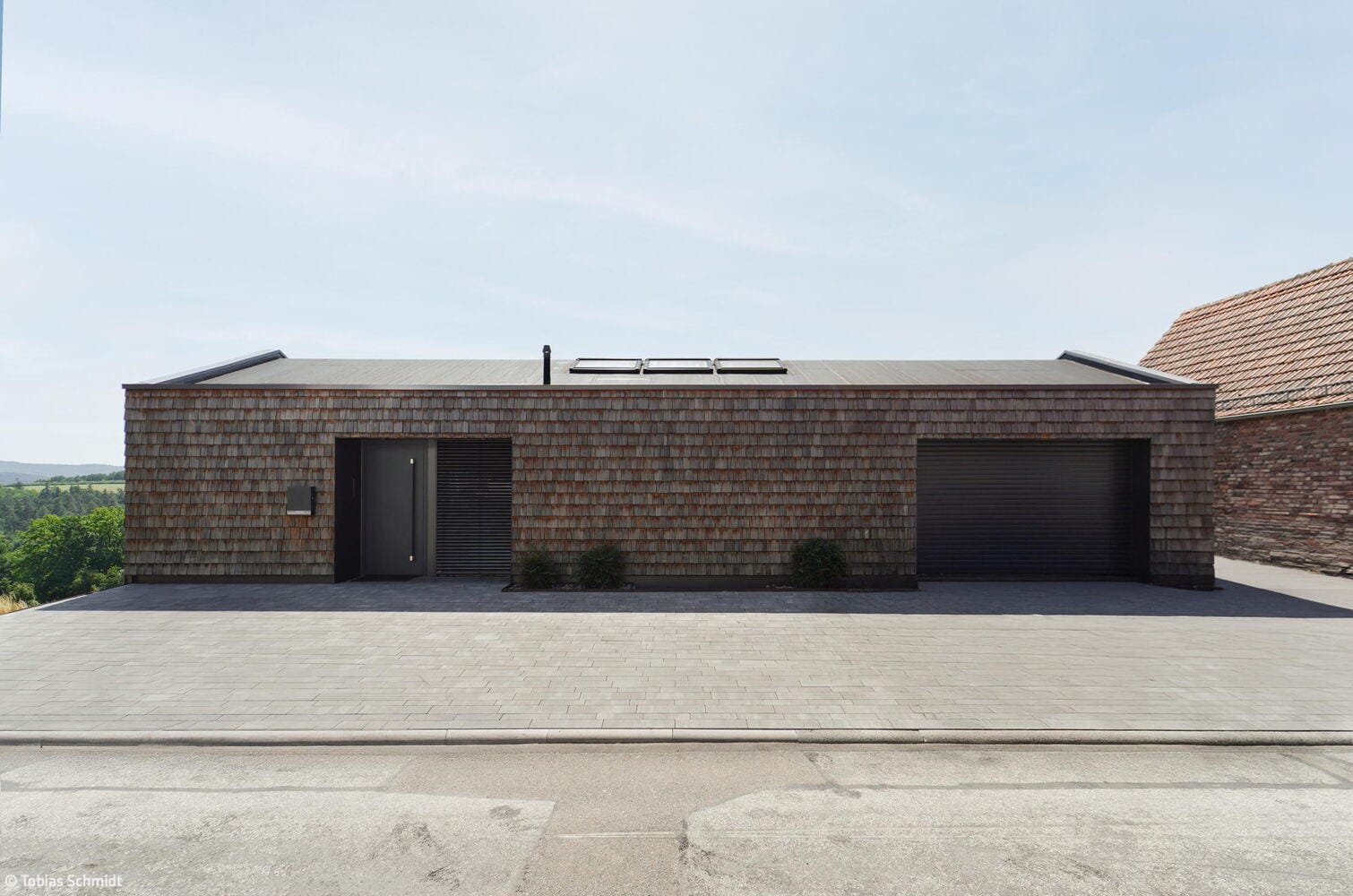
Getting here proved anything but straightforward. Because the site wasn't clearly defined under planning regulations, the project had to be assessed under Section 34 of the German Building Code. Success hinged on winning over the neighbors to secure access for both houses. Through face-to-face conversations, trust was established—a social commitment that would later shape how the two families lived together and move through shared space. The construction strategy embraces radical simplification and owner involvement to control costs. Instead of a traditional foundation slab, the floor comprises gravel, insulation, and an elevated exposed screed layer. Excavated material was retained within the strip foundation ring, eliminating disposal costs—both economical and ecologically sound. Maritime pine panels clad the exterior walls as finished surfaces, eliminating the need for a separate services layer. By routing all utilities within the walls, the design achieves calm, yet animated interior surfaces. The solid core finished in lime plaster regulates humidity as thermal mass and creates a healthy indoor climate.
These houses function like miniature towns. A central hall serves as the heart, with 'streets' and 'lanes' branching into private retreats and work alcoves. Three modules organize living: main living areas, private zones, and external storage for mobility. Three doors, eleven windows, and one interior window per house orchestrate sight lines and natural light.
The spaces are designed with remarkable flexibility—equally suited to a young family today or a live-in caregiver tomorrow. With restrained technical systems—a stove for transitional seasons and simple radiant floor heating—the design prioritizes essentials. Summer opens generously to the garden; winter concentrates life into roughly 120 m² of heated space.
The result is a 'sheltered refuge' with expansive views—a dwelling that embraces both introspection and openness, providing its inhabitants with enduring, adaptable space across generations.
Living area: 2 x 120 m²
Plot size: 2,800 m²
Construction timeline: 14 months
Construction type: Timber-frame
Energy standard: KfW 55, radiant floor heating, wood-burning stove
Photos:
Lennart Wiedemuth
www.lennartwiedemuth.com
(Published in CUBE Frankfurt 01|26)
Contemporary & Comfort
Compact & Sustainable: How Efficient Design Delivers Generous Living Space

Openness & Proximity
New development for assisted living with integrated childcare creates spaces for multiple generations
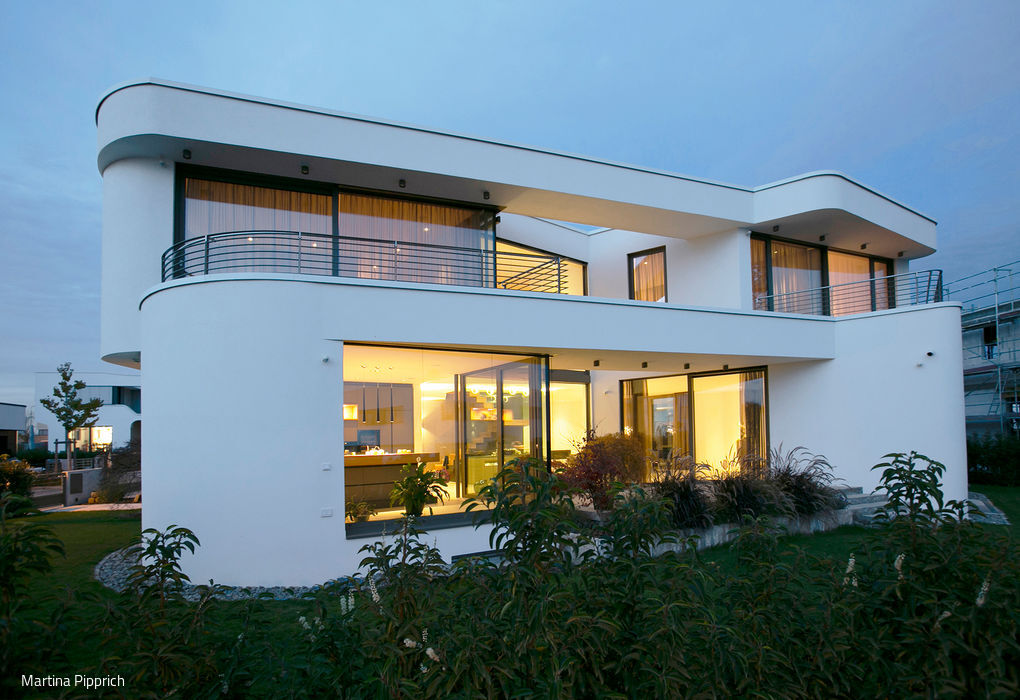
The Curve Miracle
Following these design principles, a villa exemplifying "organic design" took shape on Riedberg.