


A House of Character
A detached home in Bochum expands in scale while preserving its distinctive identity


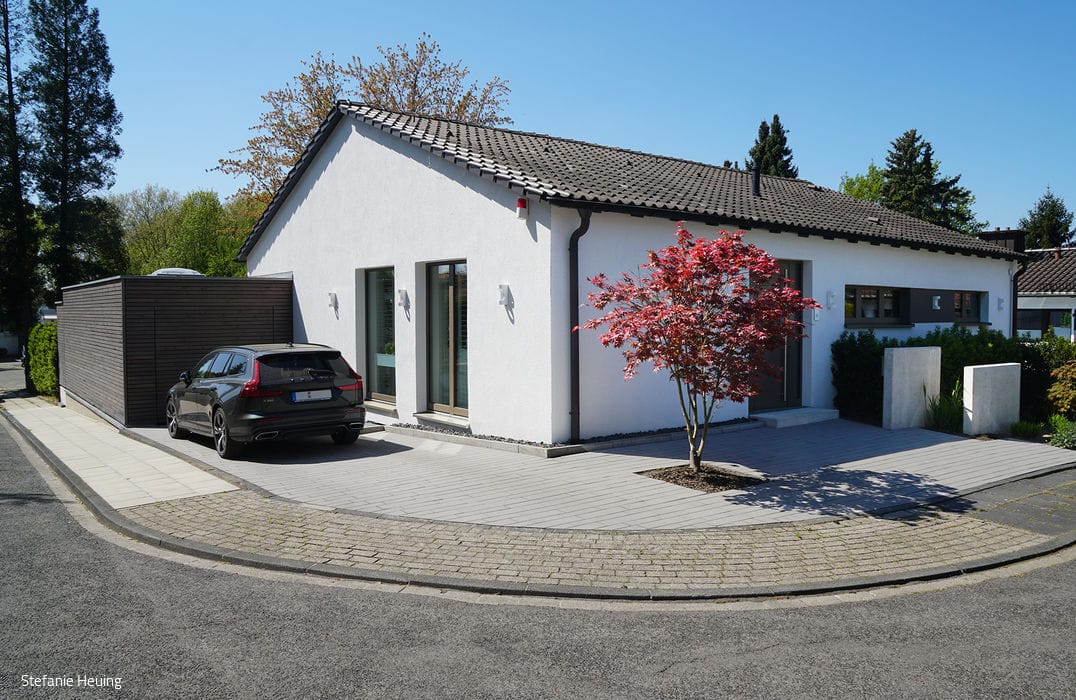
Germany's 1950s are remembered as the decade of economic prosperity. After years of hardship, people were eager to shape their own futures—and for many, that meant owning a home of their own. A beautiful example stands on an approximately 815 m² property in Bochum. Typ A. | The architectural team took on the exciting challenge of reimagining this classic mid-century detached home for a young family of five, preserving its original charm while bringing it fully into the present. Through thoughtful extensions, a refined spatial layout, and comprehensive energy upgrades, the house now achieves the EH50 energy efficiency standard.
Ole Wetterich was immediately captivated. The architect discovered a wealth of authentic 1950s character in this home, nestled in a quiet residential neighborhood at the city's edge: graceful proportions, a steeply pitched roof, a logical floor plan designed for families with children, and countless original details—including the hand-cranked exterior shutters. These fixtures, along with the front door hardware, were carefully removed and stored at the project's outset, then meticulously restored and reinstalled. The architect's original blueprints and drawings proved invaluable, offering tangible connections to the building's past. The owners envisioned more space, a flowing open plan, and seamless access to their north-facing garden. The program called for three children's bedrooms, a master suite with guest room and bathrooms, plus a study and hobby space. "We convinced them that the house would gain real strength and elegance by honoring its roots and traditional qualities," explains Martina Wetterich. "They only wanted creative control over the kitchen and garden."
The renovation delivers approximately 280 m² of living space for the family. The ground floor has been completely reimagined and opens seamlessly to the garden through a panoramic window. An open shelf positioned in front anchors the space and doubles as a welcoming window seat. The dining room now serves as the vital connection between kitchen and living areas, interior and exterior. Upstairs, the attic has been transformed into a children's domain—three generous bedrooms, a central playroom for shared activities, and a full bathroom with both shower and tub. A striking new staircase, crafted as a sharp-edged folded form, provides access to the upper level, where the master suite, dressing room, and ensuite bath are situated. As the most-used element in this multi-story home, the staircase makes a sculptural statement. Its new solid wood treads replace the original worn steps, creating visual continuity between floors. An interior wooden balustrade—a series of precisely arranged solid wood slats—ensures safety while contributing to the overall aesthetic.
The basement was externally waterproofed and its slab carefully insulated from below, transforming it into genuine living space. It now accommodates a guest bedroom, a multipurpose fitness and hobby room with ensuite bath, mechanical systems, and ample storage. The polished final result makes the journey almost seem effortless. Yet both design and construction unfolded during the pandemic, compounded by material scarcity, escalating costs, and unexpected challenges within the trade. Despite these obstacles, the family moved into their reimagined home in early 2024.
Photography:
Jannis Wiebusch
www.janniswiebusch.de
(Published in CUBE Ruhrgebiet 02|25)
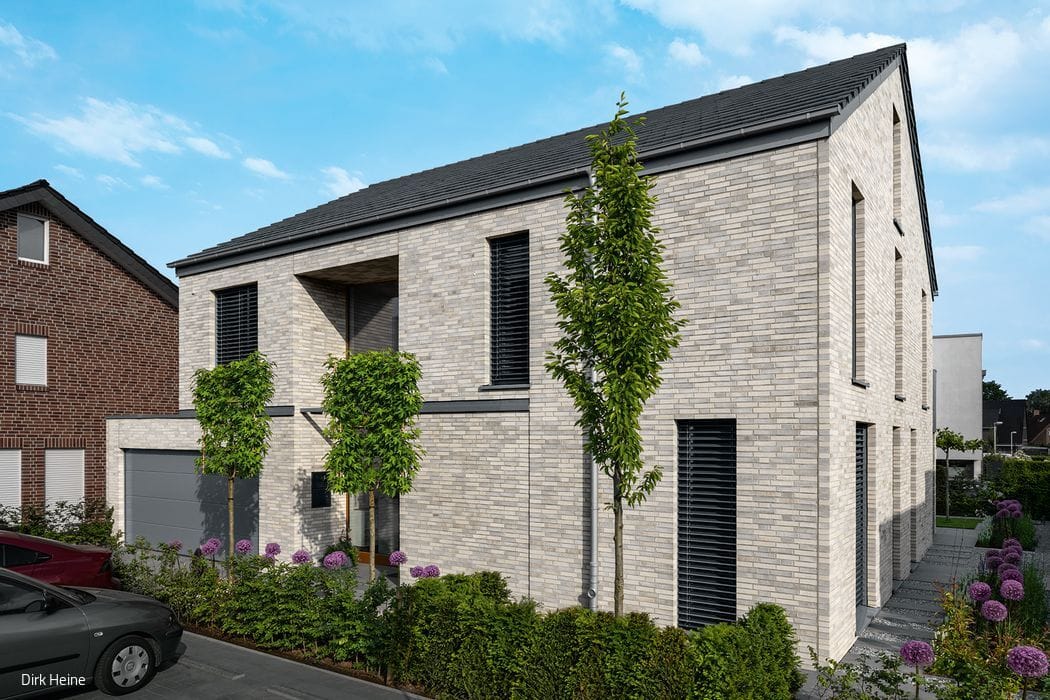
House and garden from a single source
Mastering restraint: achieving impact through simplicity
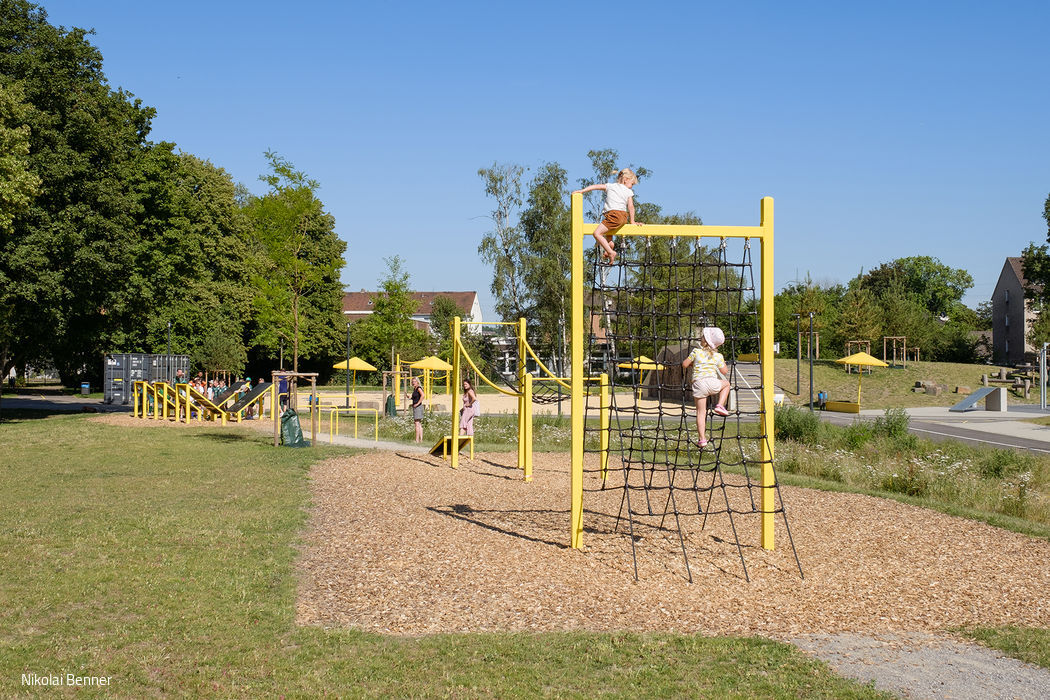
Play Hard, Relax Easy
Mülheim-Styrum now boasts a dynamic sports and leisure park designed for everyone.
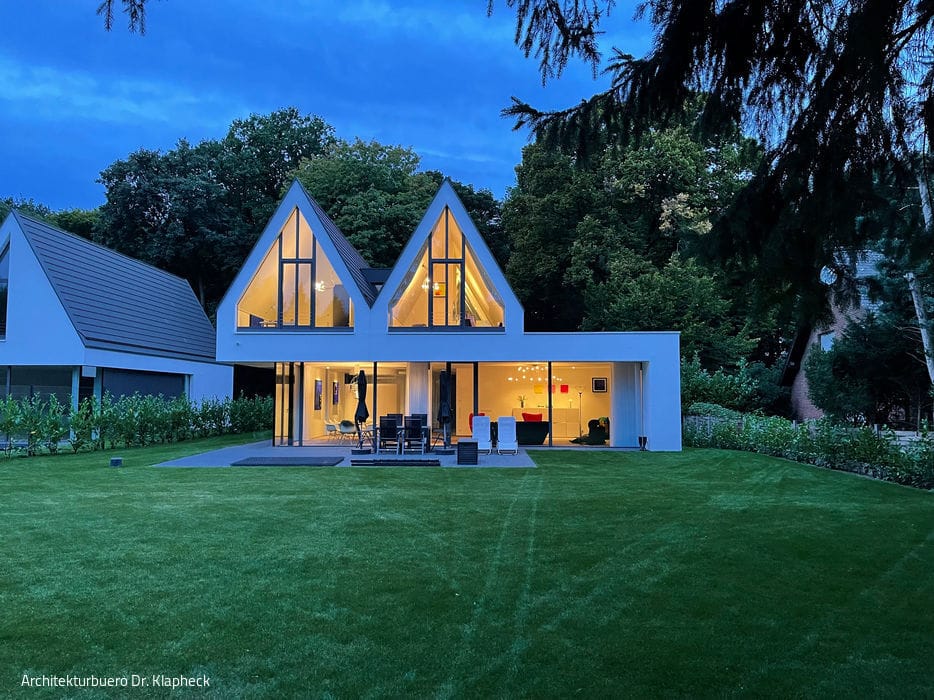
Vacation-Inspired Living
An Extraordinary Detached Home in Recklinghausen, Where Nature Unfolds Below
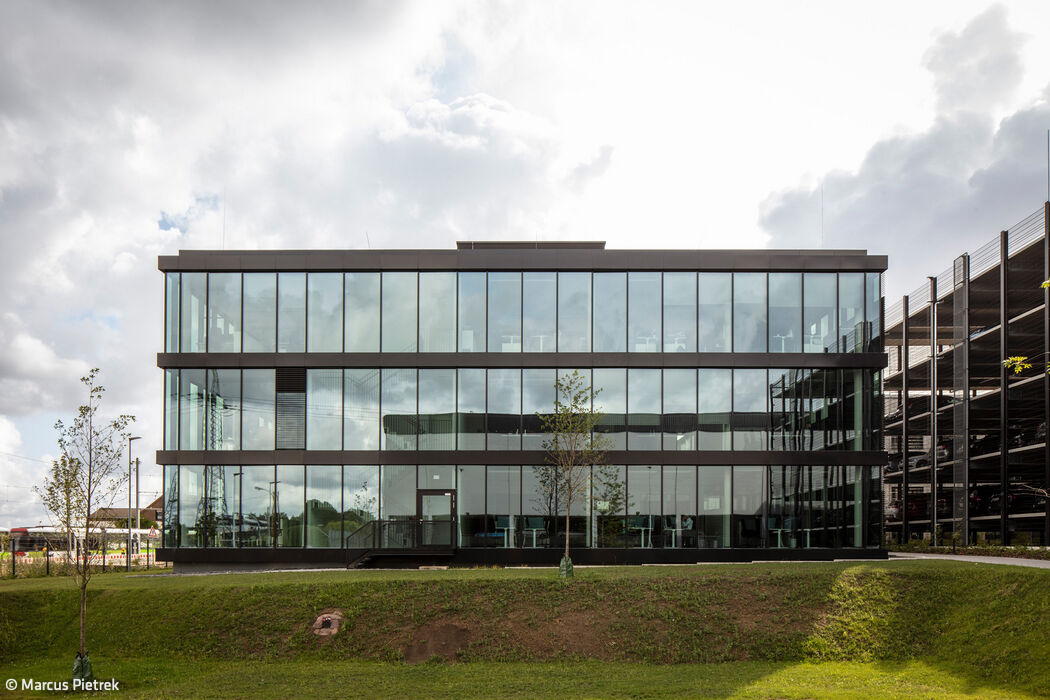
Where Elegance Meets Open Space
A Modern Office Building in Dortmund That Plays with Contrasts