


House of the Cooperative
The new administrative headquarters integrates seamlessly into the district's fabric


Hamburg's oldest cooperative, the Schiffszimmerer-Genossenschaft (Shipwrights' Cooperative), was established in 1875 to acquire and operate shipyards. By 1900, it had constructed its first apartment building for shipwrights. Today, it stands as one of Hamburg's largest housing cooperatives, serving nearly 15,000 members across approximately 100 residential complexes containing more than 9,000 homes.
Within Ohlsdorf, the cooperative manages 13 residential complexes, including the notable Rübenkampquartier—a quintessential example of 1950s row-house architecture spanning over 45,000 m² between Steenkoppel, Fuhlsbüttler Straße, Buekweg, and Rübenkamp. The cooperative's administrative offices have been housed here on Fuhlsbüttler Straße for more than six decades. Since the mid-2000s, TchobanVoss Architects has systematically revitalized the aging neighborhood according to a master plan, replacing older structures with modern buildings across six of ten planned phases. The resulting homes—ranging from one-and-a-half to five rooms—blend publicly subsidized and privately financed units, all offering barrier-free or low-barrier accessibility. As the seventh construction phase, this new administrative building anchors the corner of Steenkoppel and Rübenkamp with urban presence. Its distinctive red brick façade signals its place within the residential fabric, while its cubic form and carefully articulated windows unmistakably identify it as an office structure. A recessed ground floor creates an inviting threshold, establishing a legible entrance that welcomes visitors. Here, the central member services and a generous assembly hall occupy this prominent public zone.
The first and second floors provide flexible workspaces and kitchenettes for approximately 80 employees across various departments. The third floor houses the executive offices, conference facilities, and an expansive roof terrace—a treasured retreat for all staff. A sculptural staircase links the levels while fostering natural connection and collaboration. A standout feature is the naturally lit, verdant atrium that rises through all floors, creating a focal point for shared communication spaces. Every office enjoys views to the exterior. The underground parking provides 35 vehicle spaces and a dedicated bicycle area, both equipped with charging infrastructure for electric vehicles and e-bikes.
Photography:
Daniel Sumesgutner
www.sumesgutner.de
(Published in CUBE Hamburg 03|24)

Urban Refuge: Finding Calm in the City
The Hotel Europäischer Hof's pool and spa have undergone complete renovation and redesign.
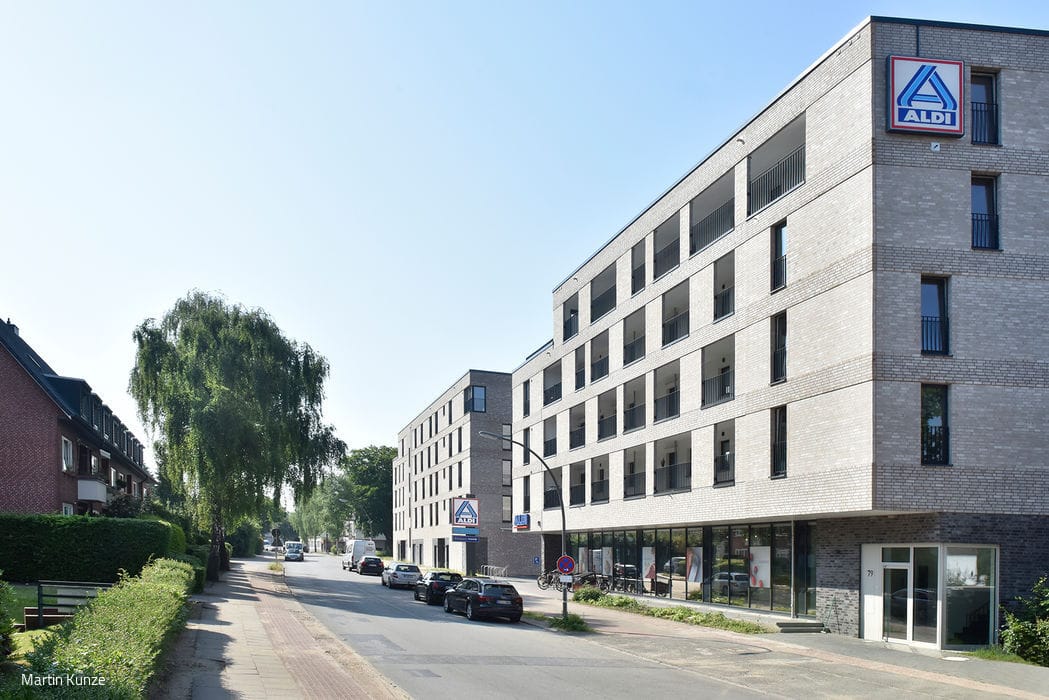
Smart solution
More homes, better shopping: reimagining Randstraße
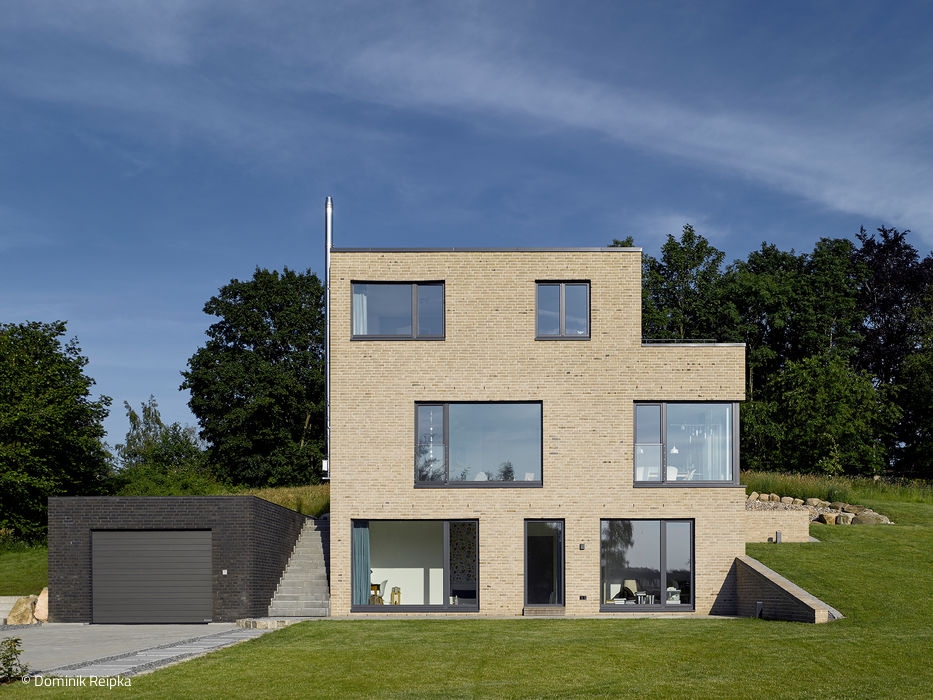
One House, Three Stories
Making brilliant use of the slope to maximize space
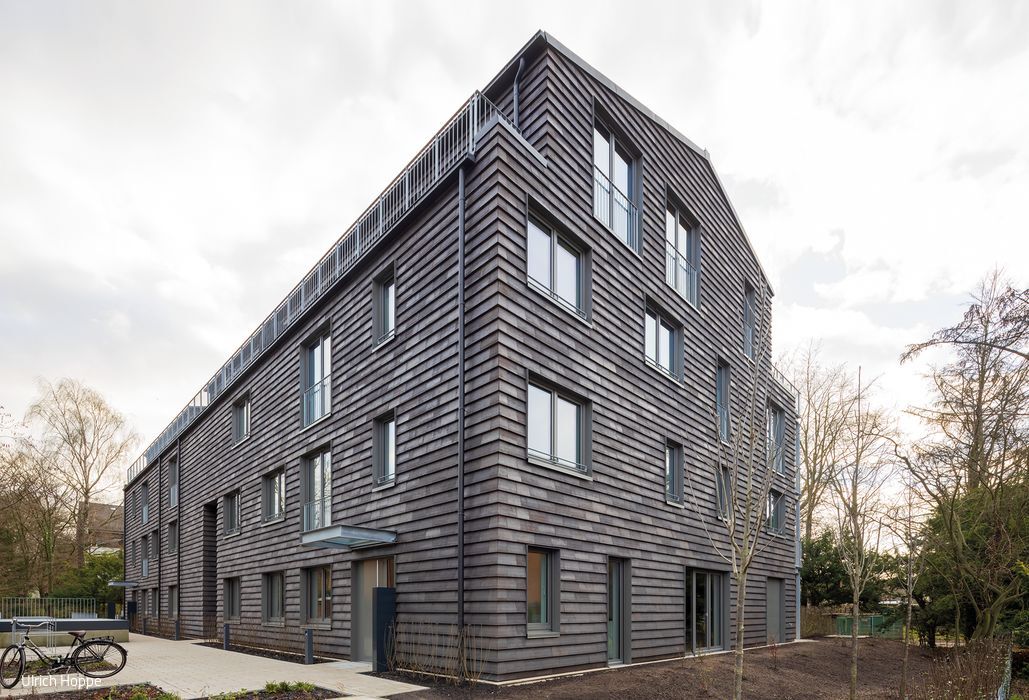
Sustainable and partially reversible
Living in Harmony with Nature