


Harmonious Dialogue
A new building for a Waldorf school designed according to anthroposophical architecture principles
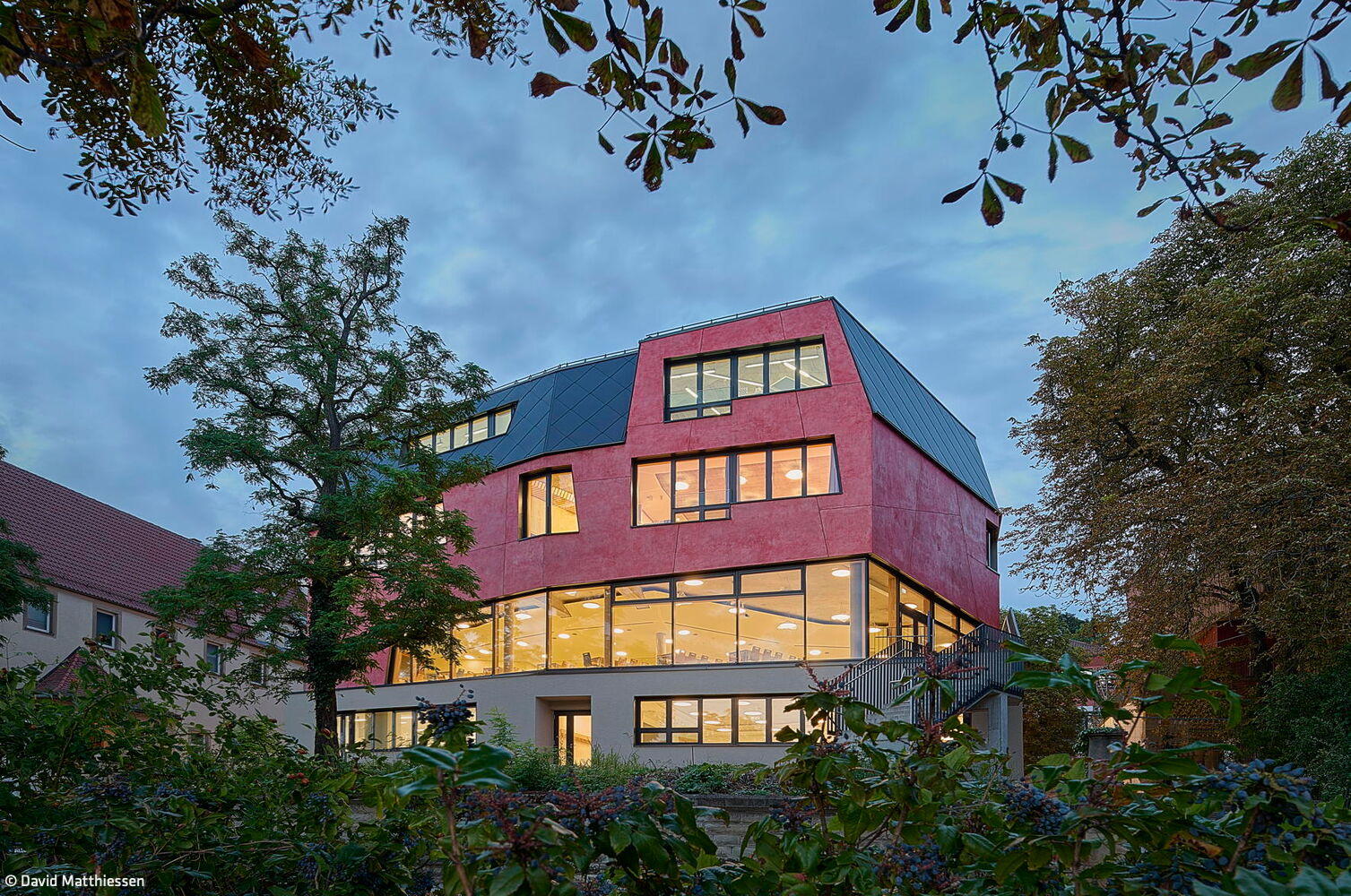




This Waldorf school holds a unique distinction as the world's first institution of its kind. Founded in 1919 in Stuttgart by Emil Molt—owner of the Waldorf-Astoria cigarette factory—the school embodies Rudolf Steiner's groundbreaking educational philosophy. Set in an elevated residential district, the Uhlandshöhe Waldorf School campus commands views across the city. Several buildings on campus reflect anthroposophical principles through their organic and geometric forms, drawing directly from nature. Notably, several structures were designed by renowned German architects.
Behnisch Architekten's new school building integrates seamlessly within this distinctive setting, completing the campus while establishing a meaningful dialogue with the existing architecture. The street-facing façade respects the scale of nearby villas, ensuring the addition feels native to its context. Its horizontal three-part composition—a base, two primary stories, and roof, accentuated through carefully considered colour—directly echoes anthroposophical architectural principles. As the building ascends the hillside, it thoughtfully responds to adjacent school structures, weaving them together in unified architectural harmony. At its core sits a transparent atrium—the building's vital centre—transforming the school's outdoor spaces into an internal "vertical courtyard." The striking black roof crowns the structure as four metaphorical land plates, each folded surface emerging from polygonal geometries that echo the roofscape of existing campus buildings, including the adjacent brutalist performance hall.
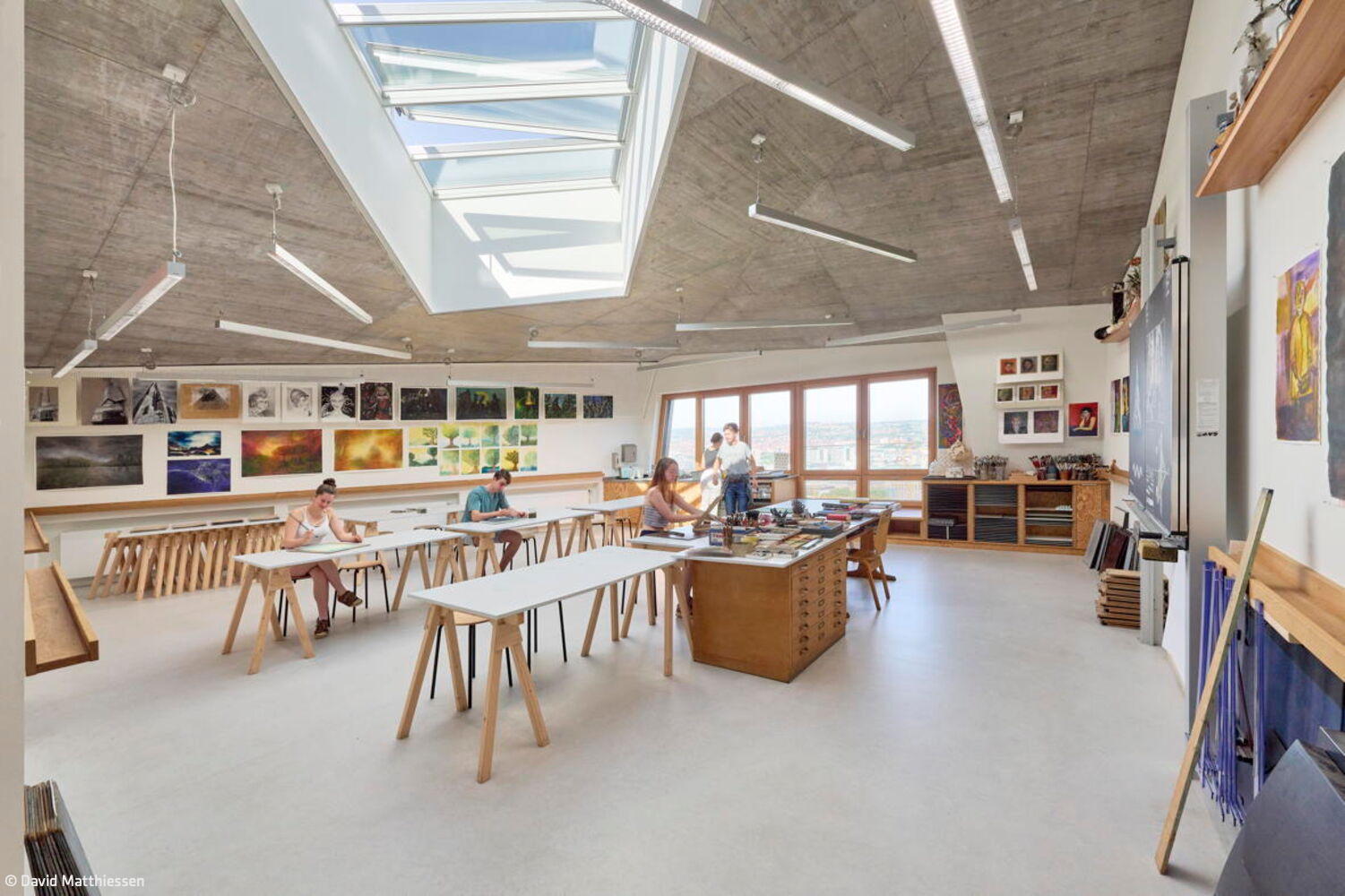
Spanning four floors and housing grades 8 through 13, the building nestles partially into the hillside, with its floor plan geometry rooted in anthroposophical thinking. Spaces are conceived not around traditional functional programmes, but rather as experiences defined by their distinctive qualities: views, adaptability, colour, acoustics, shelter, and sanctuary. Each room carries intentionality. Circulation zones transcend their conventional role as mere corridors—they function as gathering spaces and event venues. The interior colour palette draws from Rudolf Steiner's pedagogy, visually representing the distinct developmental stages of childhood.
Photography:
David Matthiessen
www.davidmatthiessen.com
(Published in CUBE Stuttgart 04|24)
Flexible, Connected, and Active
How 1990s Compartmentalized Office Design Transforms into a Modern, Open-Plan Workspace
Natural and Living
Colour for a 1950s Administrative Building
Where Private and Community Spaces Converge
Urban Quarter near the Railway Station – Unified by Ground Floor Connection and Sheltered Courts
A Distinctive Learning Environment
Interior Design: Making Learning a Memorable Experience