


The Staircase
Hans Poelzig's Steinert House in Krefeld – a vital gathering place for modernism's visionary architects
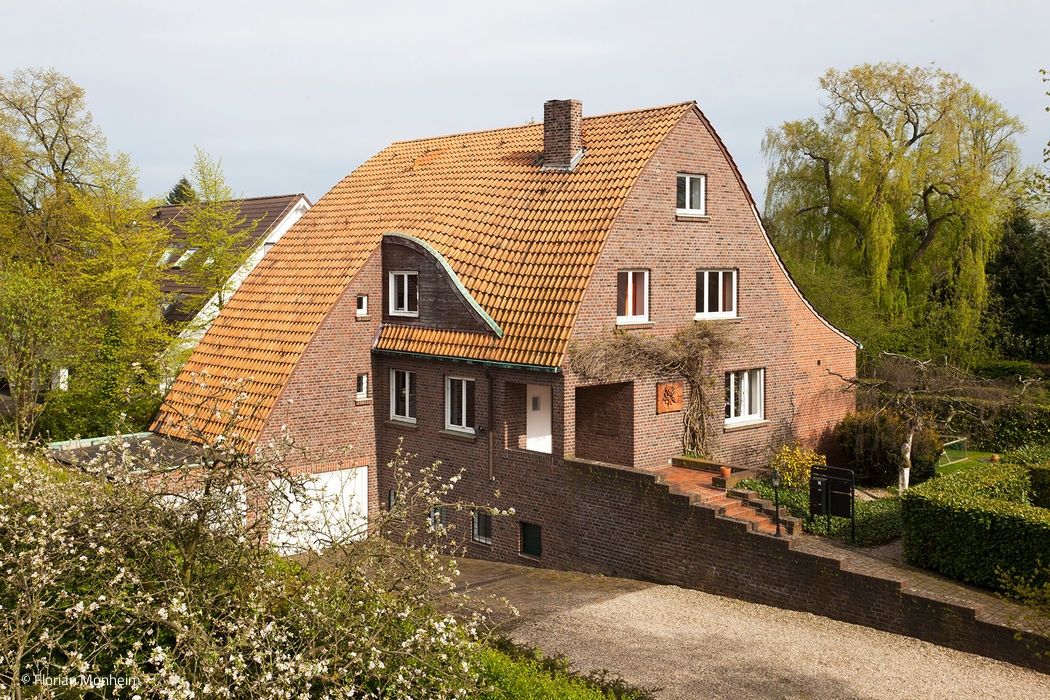
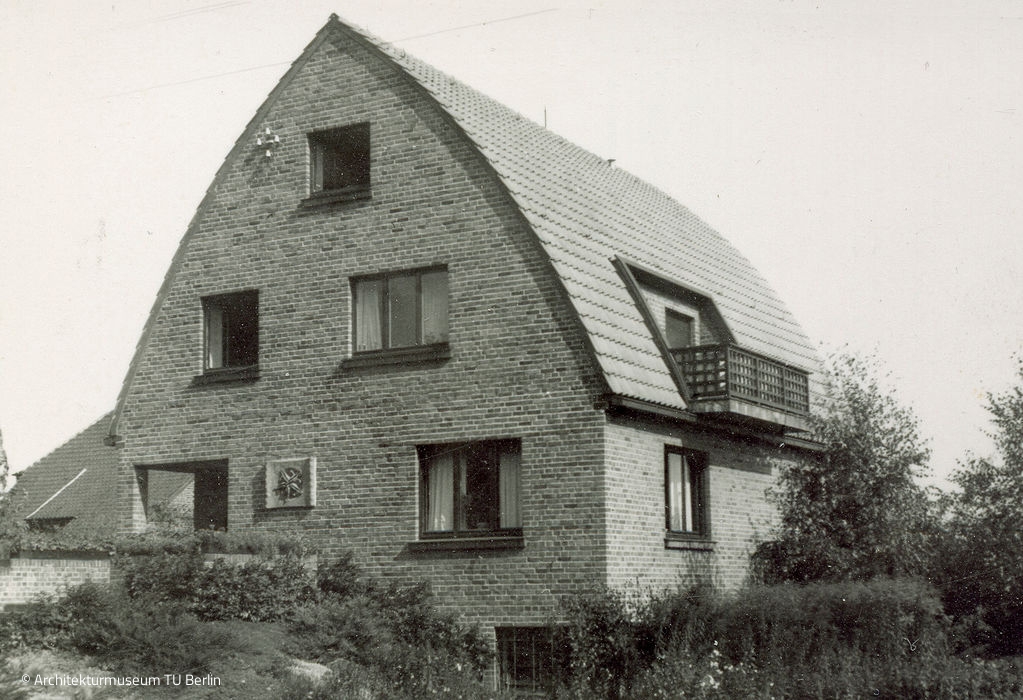
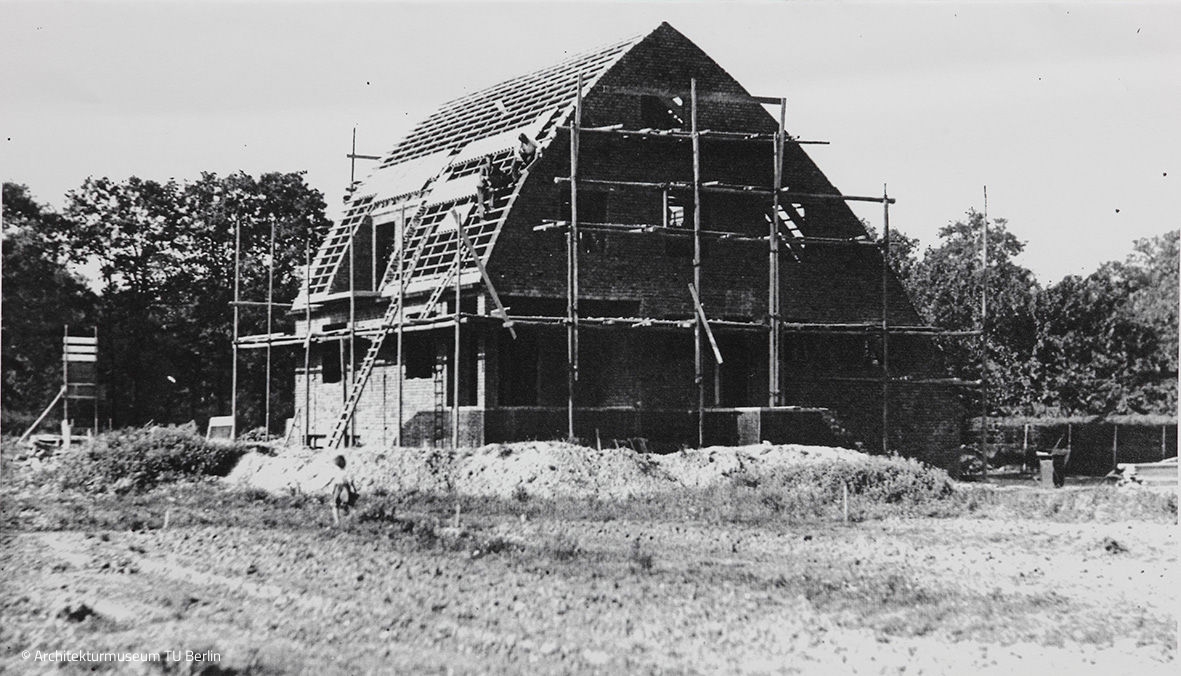
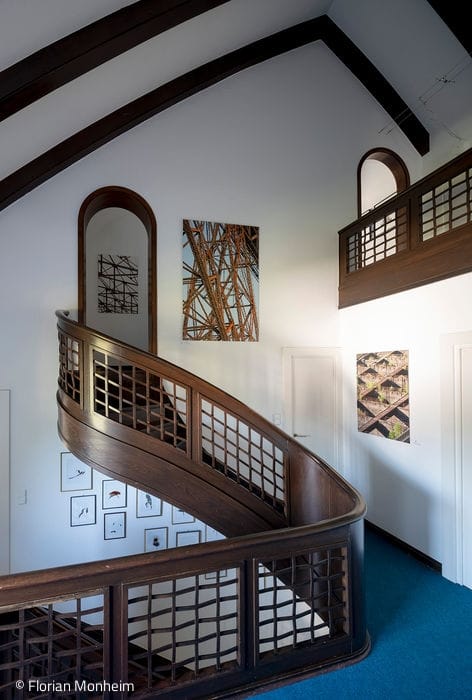
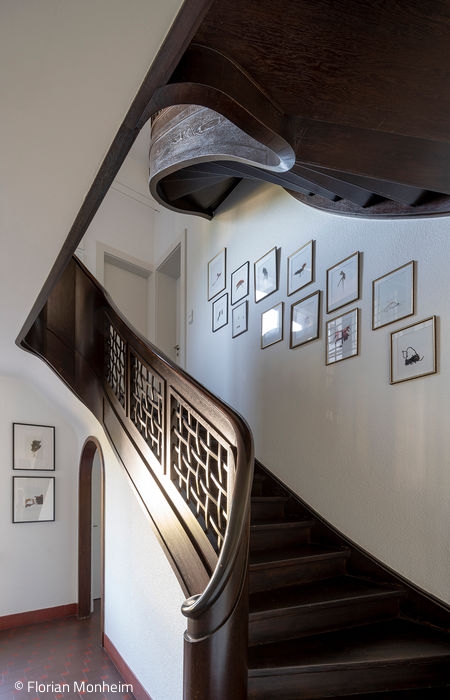
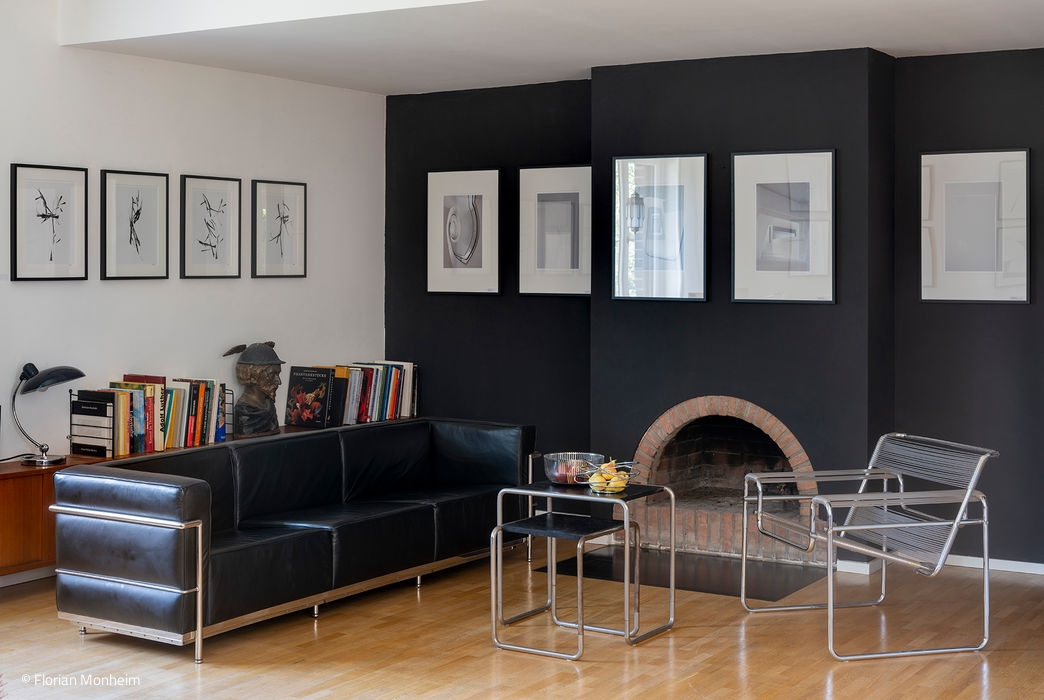
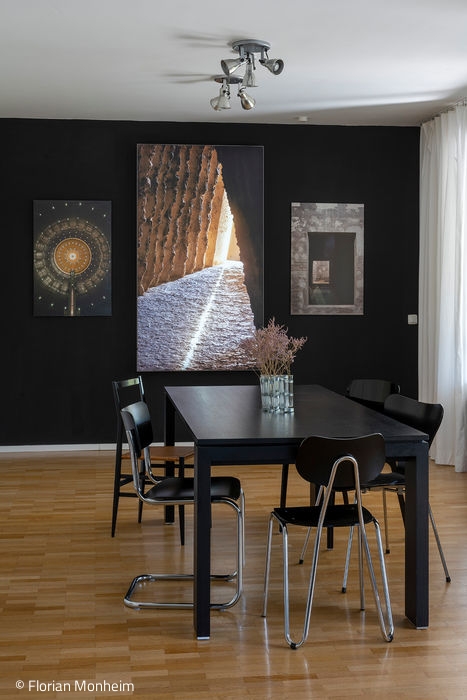
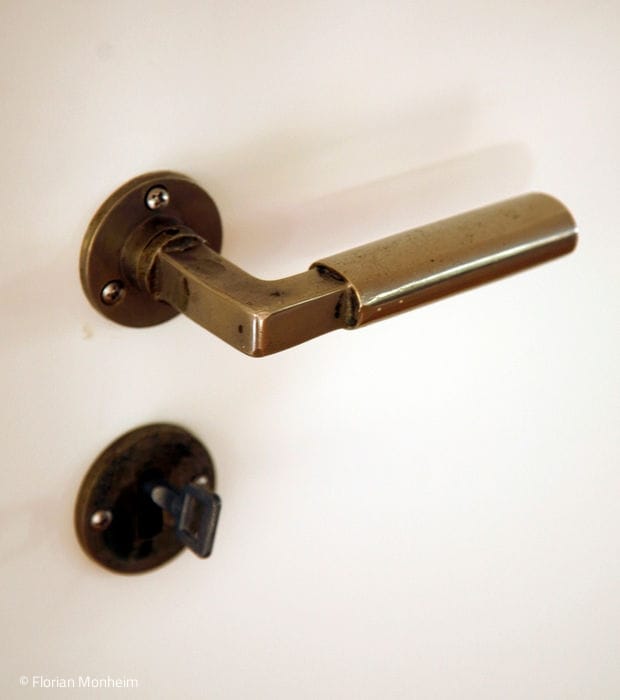
Architect Hans Poelzig (1869–1936) is celebrated for his expressionist masterworks—the Berlin House of Broadcasting and the I.G. Farben Building in Frankfurt stand as his most recognized achievements. Yet as one of the Weimar Republic's most influential architects, Poelzig rarely designed private residences; those he did were typically pavilions for architectural exhibitions. The Steinert House on Kliedbruchstraße in Krefeld is a striking exception. In 1929 or 1931, Fritz Steinert—owner of the Krefeld textile firm Storck Gebr. & Co.—commissioned Poelzig to design his family home. The two had already crossed paths in the mid-1920s through their shared commitment to the German Werkbund.
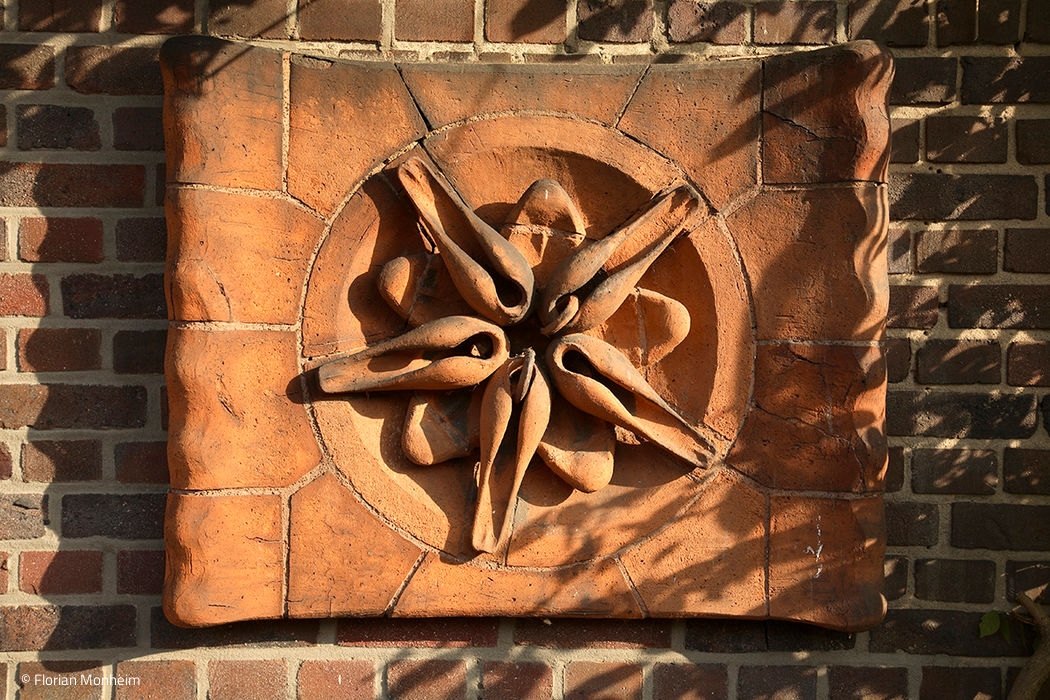
The recessed brick structure is dominated by an oversized roof that sweeps dramatically downward on one side, nearly touching the ground. Beneath it lies a generous living room with fireplace and an architectural tour de force: the staircase. A dark oak stairway ascends through three floors, shifting direction unexpectedly, disappearing into walls, and reemerging beneath curved roof trusses as an open gallery—a theatrical composition that recalls Poelzig's stagecraft, from his expressionist film sets like Der Golem to Berlin's Capitol cinema. Tellingly, the Steinerts held their chamber concerts here, not in the living room. During the Nazi era, this house—repository of a remarkable modern art collection—became a sanctuary. Artists and political dissidents gathered by candlelight to discuss forbidden ideas, while Fritz and Ilse Steinert quietly supported their persecuted "candle-bearers" with commissions. The terracotta silk flower beside the entrance—also the Storck company emblem—was sculpted by Ewald Mataré. In 1951, renowned landscape architect Hermann Mattern, a frequent Poelzig collaborator, redesigned the expansive 10,000 m² garden. A 1961 sale brought alterations: a second garage and southern extension drew inspiration from Poelzig's 1904 model house in Breslau. When the property changed hands again in 1997, demolition seemed certain. Neighboring residents' protests secured emergency landmark status—though subdivision of the land irreversibly consumed the garden.
Photography Credits:
Florian Monheim
www.bildarchiv-monheim.de
(Featured in CUBE Düsseldorf 04|19)
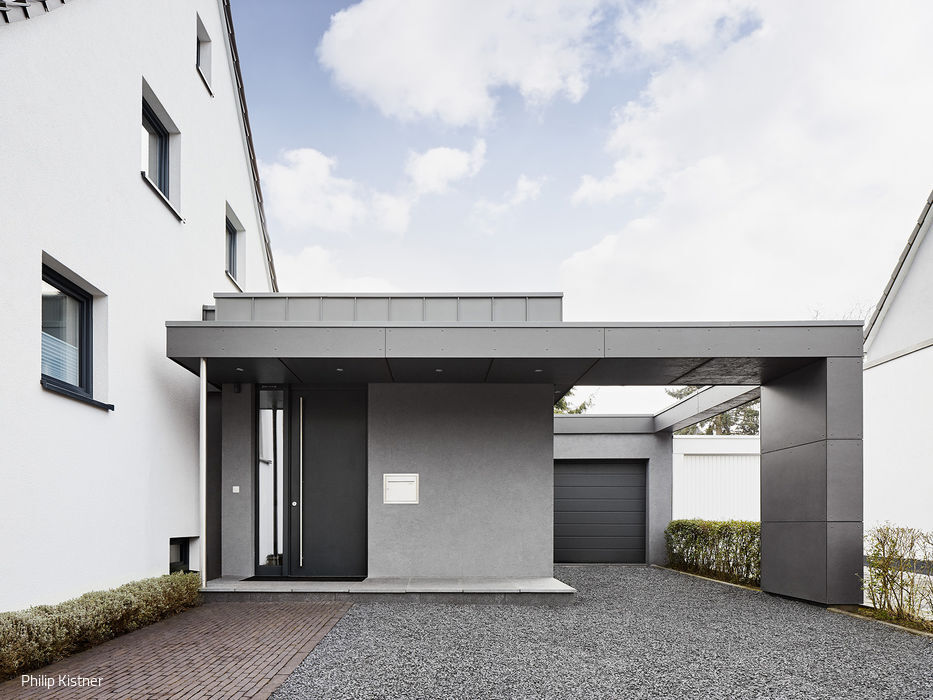
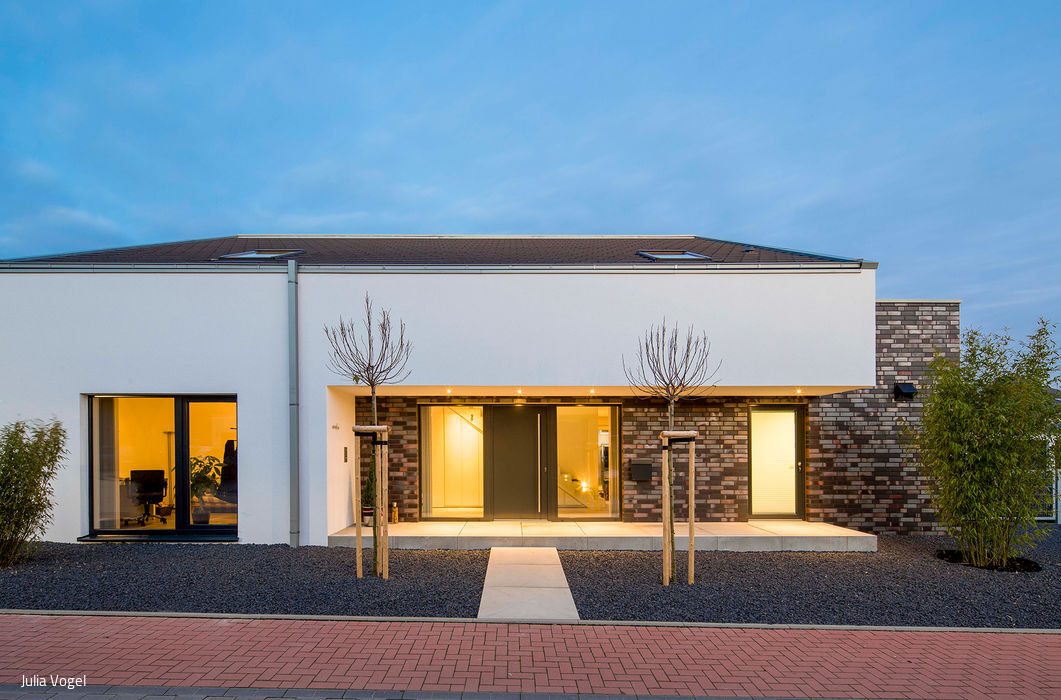
One into two
A single-family home that creatively reconciles building codes with design ambition
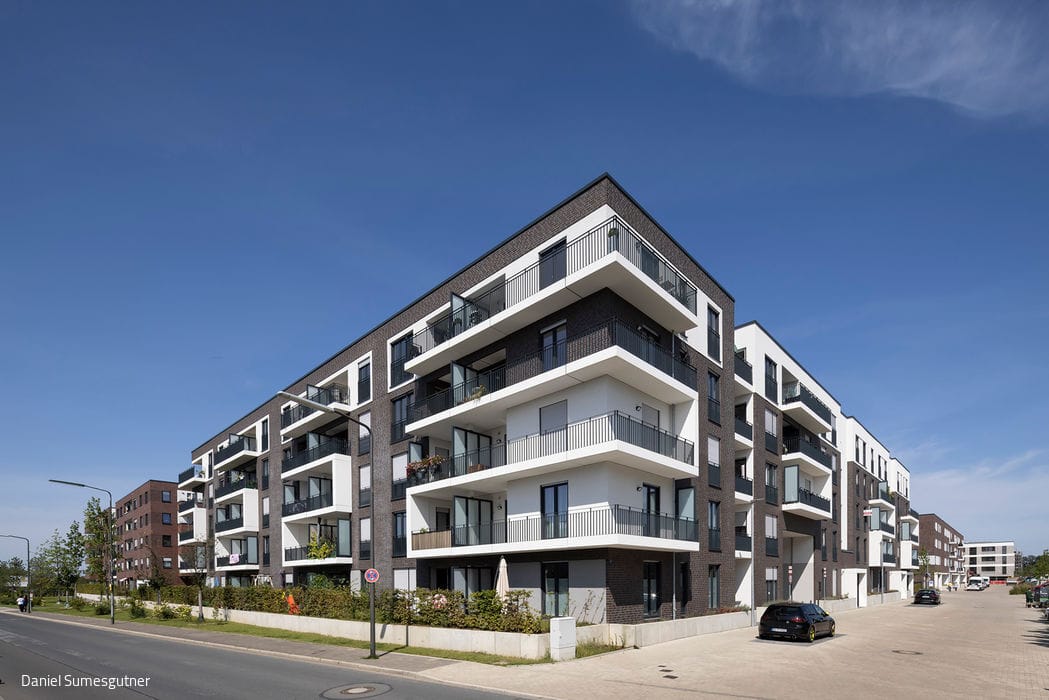
Car-free living by the water
The New "Vierzig459" Residential Quarter in Heerdt: Development Moves Forward
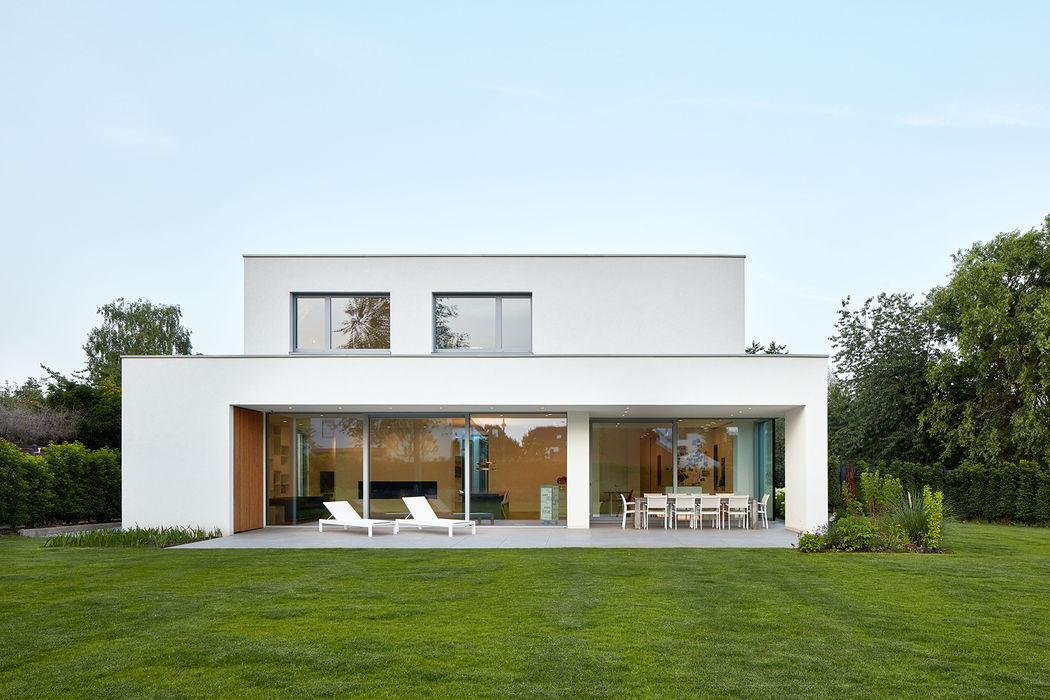
A Haven of Its Own
A family home in Angermund—flooded with natural light and framed by lush greenery
Sculptural transparency
A home that transforms constraints into surprising spatial richness.