


Expansion at the UKD
A Thoughtfully Designed New Building for Medical Research Centre II at the University Hospital
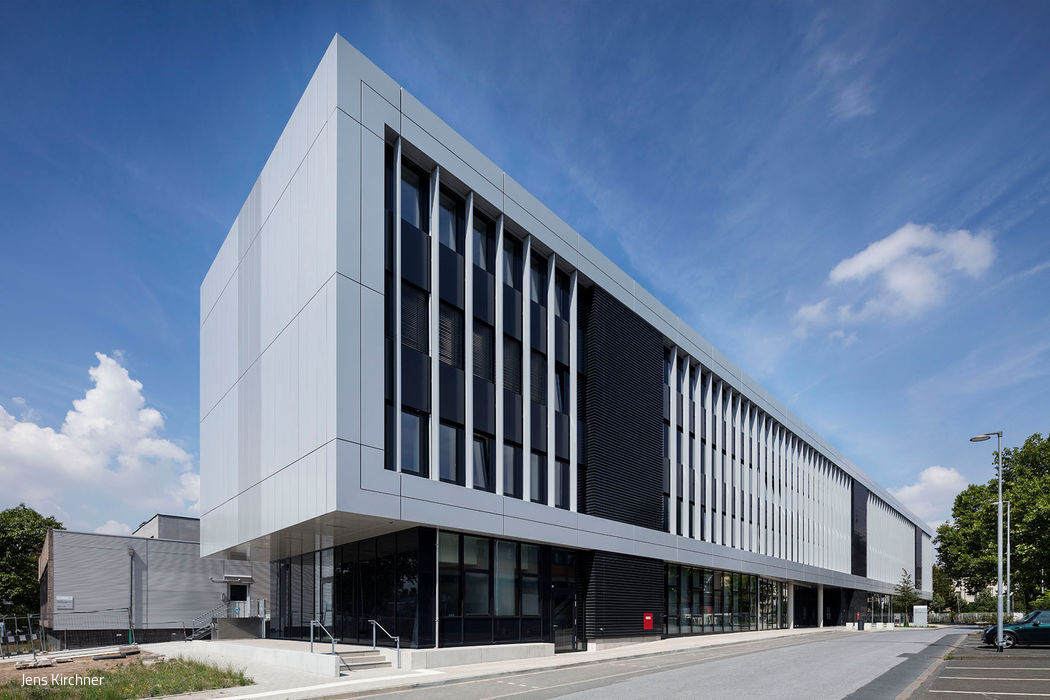
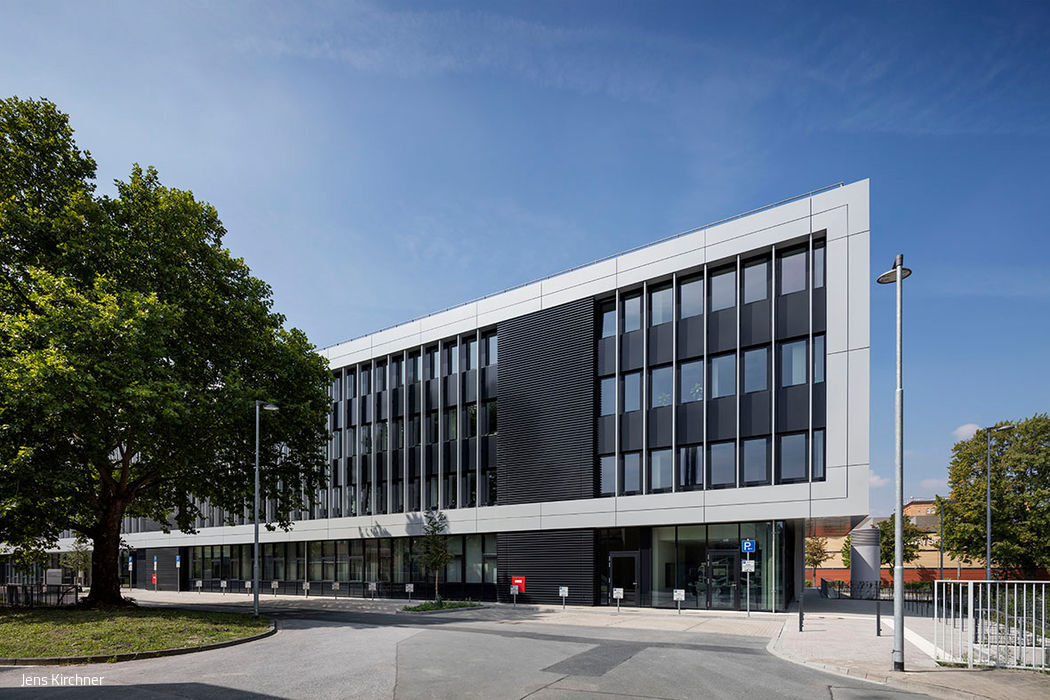
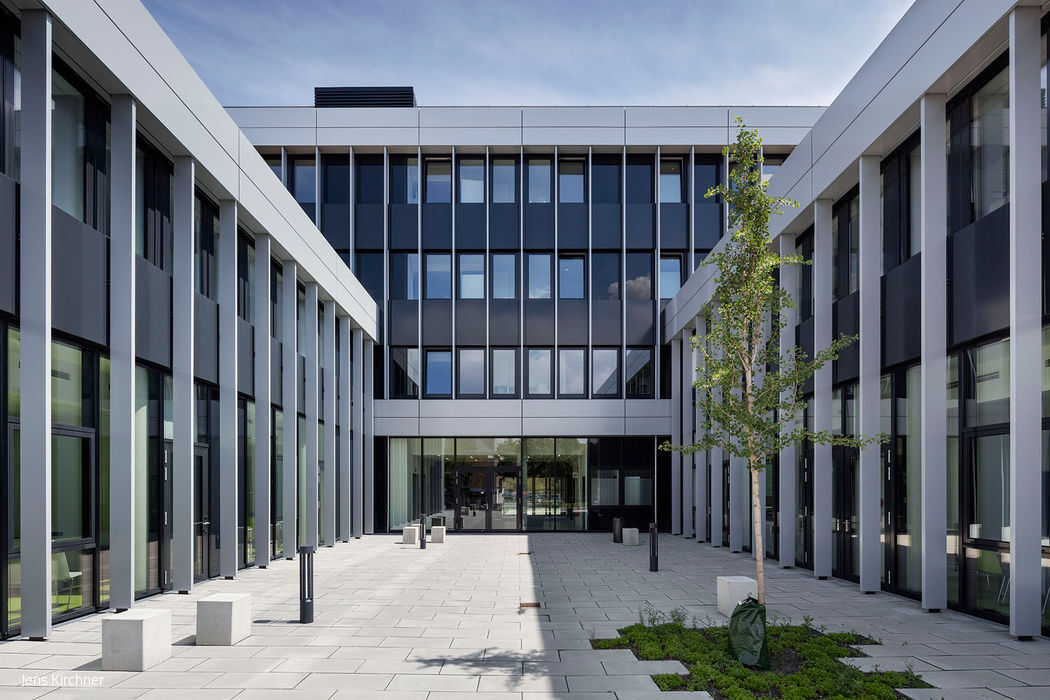
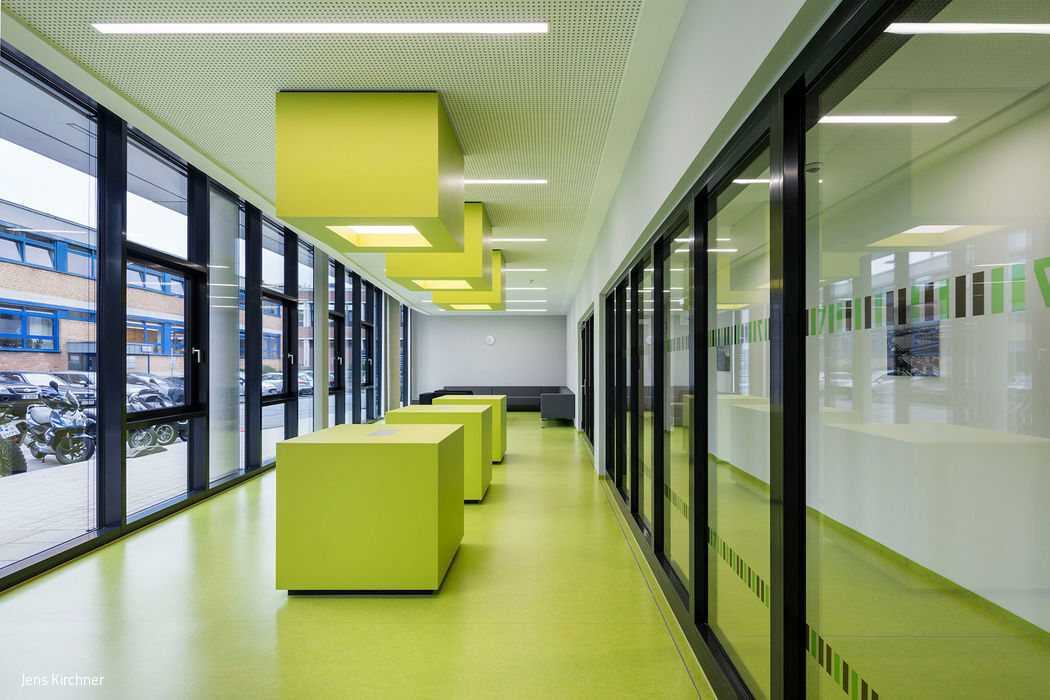
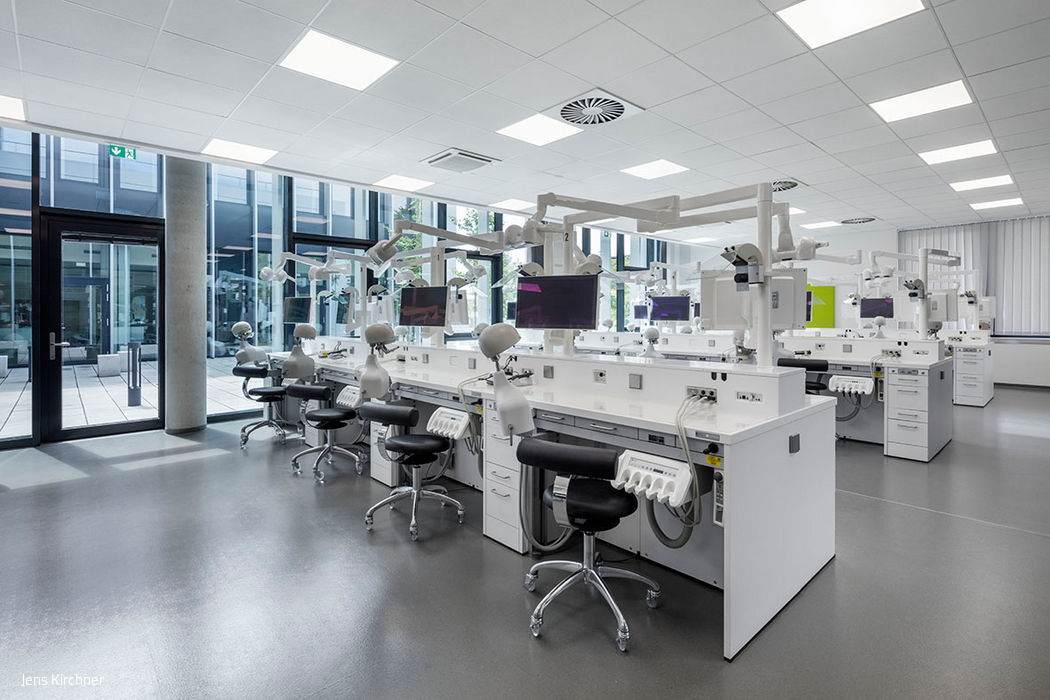
The Universitätsklinikum Düsseldorf (UKD) has undergone substantial transformation in recent years. As part of a comprehensive modernization initiative, the hospital's campus-like grounds have been strategically enhanced with contemporary, forward-thinking structures that inject new architectural vitality into the entire complex. The Medical Research Centre II exemplifies this evolution. Designed by Hahn Helten Architektur, the building marks a milestone by consolidating scientific and administrative functions under a single roof—a first for the campus. Spanning approximately 4,400 m², the facility houses offices, training and seminar spaces, alongside state-of-the-art examination and diagnostic rooms equipped with the latest medical technology.
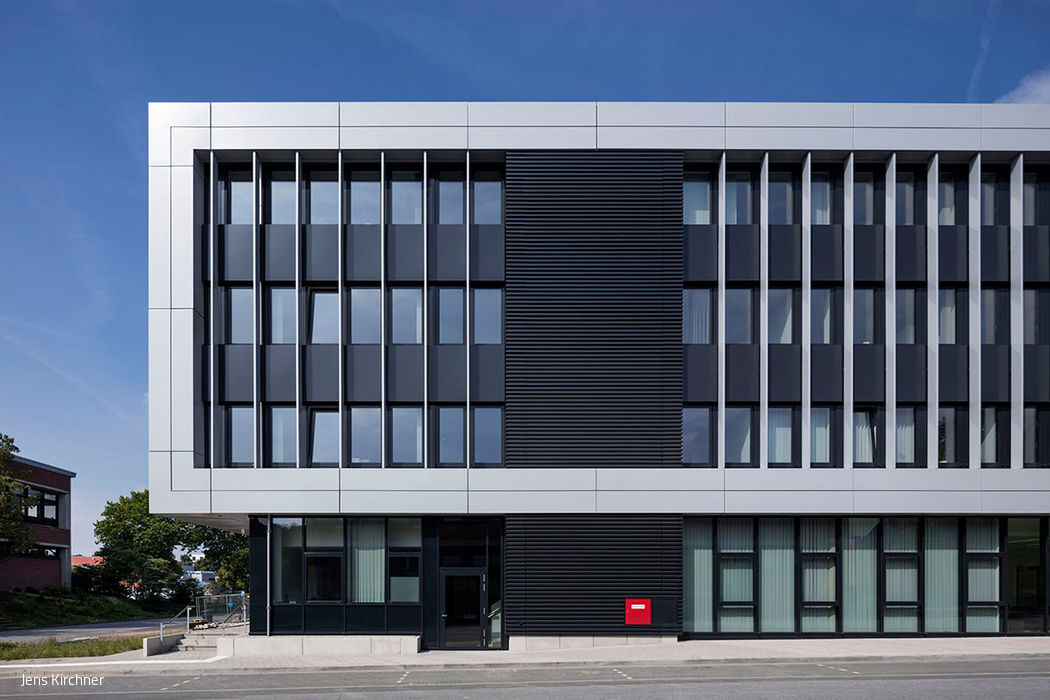
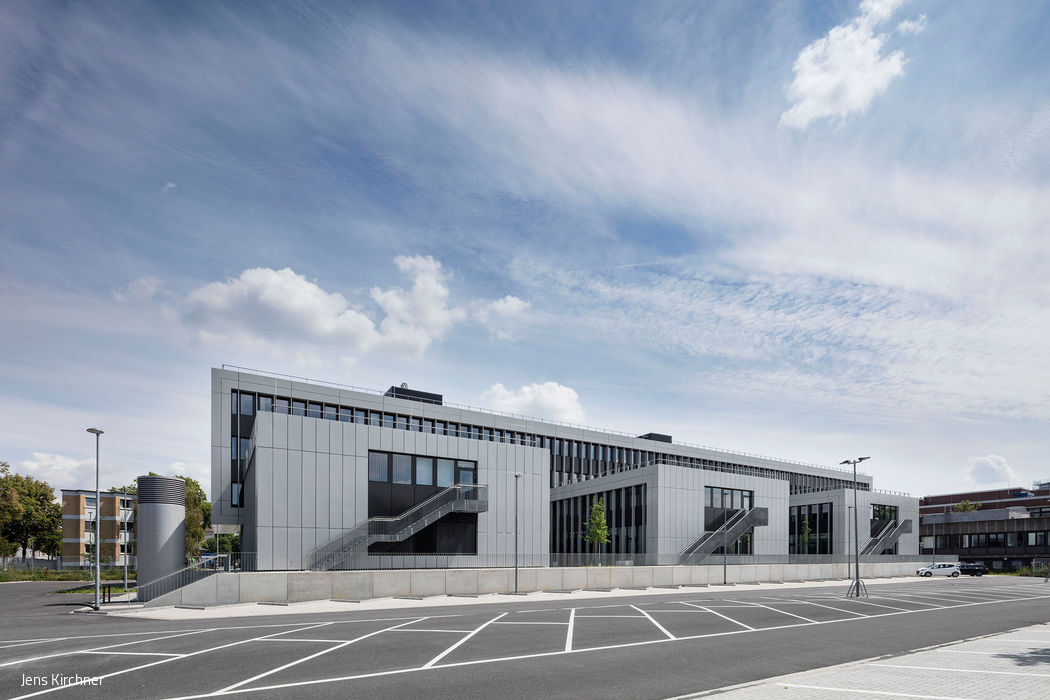
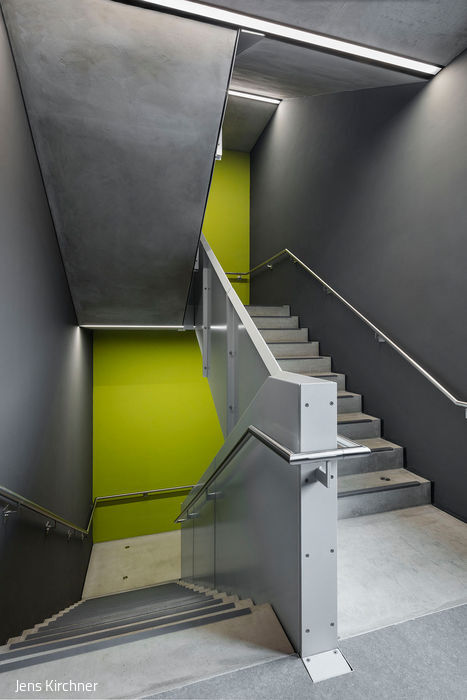
The building's architecture comprises a linear bar structure stretching roughly 100 metres, with three perpendicular wings creating two interior courtyards between them. A recessed, angled façade at ground level signals the primary entrance on the building's east side—a deliberate architectural move that intuitively draws visitors toward the main entry. Beyond the foyer, the layout naturally flows into the central staircase and elevator core. While the main bar primarily contains office space, the three wings accommodate specialized functions that demand non-standard dimensions: seminar rooms and dental simulation laboratories, among others. Organized as a tripartite arrangement in plan, these wings strategically position larger interior spaces that require no natural light—including the institute's art collection and the archive of the Institute for the History, Theory and Ethics of Medicine.
The façade treatment emphasizes the building's defining linear form—a robust structure that hovers above a largely open ground floor, visually interlocking with the forward-projecting wings. Save for the vertically expressed circulation spine, the bar's end walls are solid, establishing a powerful frame that houses the vertical louver system running along the length of the façade. The three stairwells, articulated with horizontal louvers, provide additional visual rhythm. Ultimately, the Medical Research Centre II stands as a defining contribution to the university hospital—a purpose-built facility for teaching and research whose architectural language and robust infrastructure create an inspiring environment for scientific advancement.
Photography Credits:
Jens Kirchner
www.jens-kirchner.com
(Published in CUBE Düsseldorf 04|20)

Thoughtful Transformation
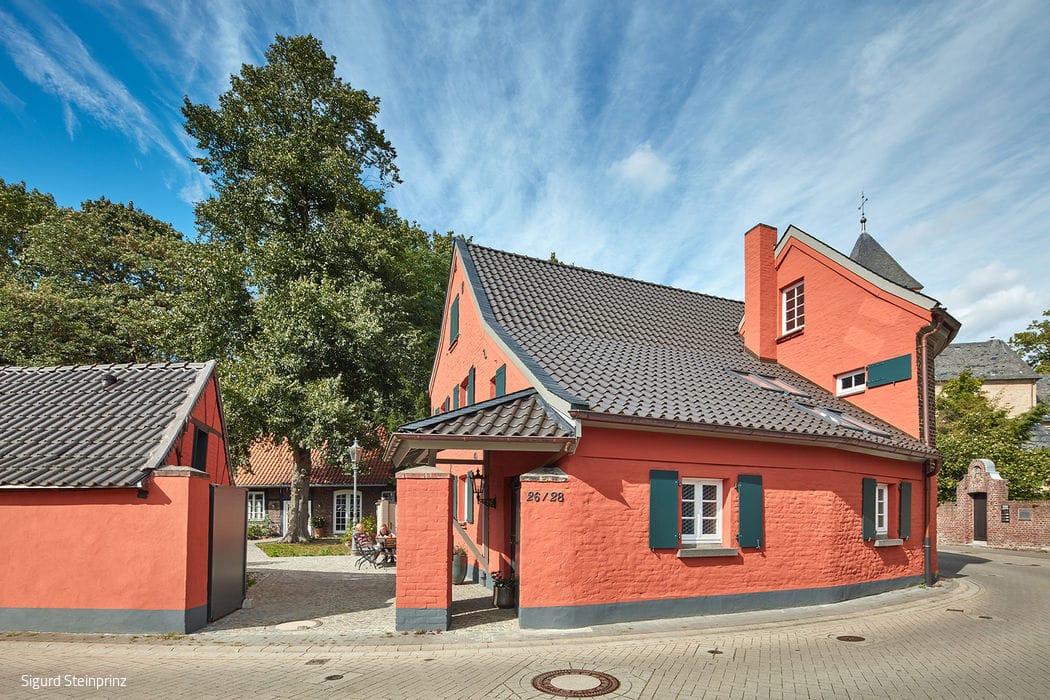
The Langersgut in Kalkum: a historic ensemble thoughtfully modernized and repurposed as a live-work studio.
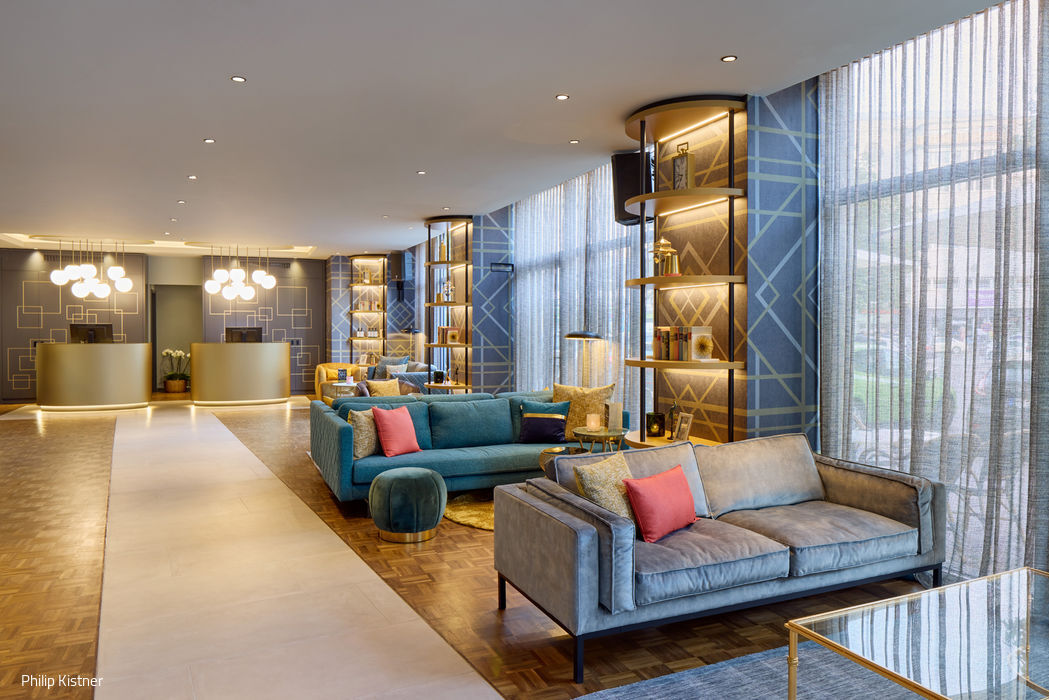
Elegance in a Historic Landmark
Glamour and elegance await at the Postboutique Hotel—thoughtfully positioned in the heart of the city.
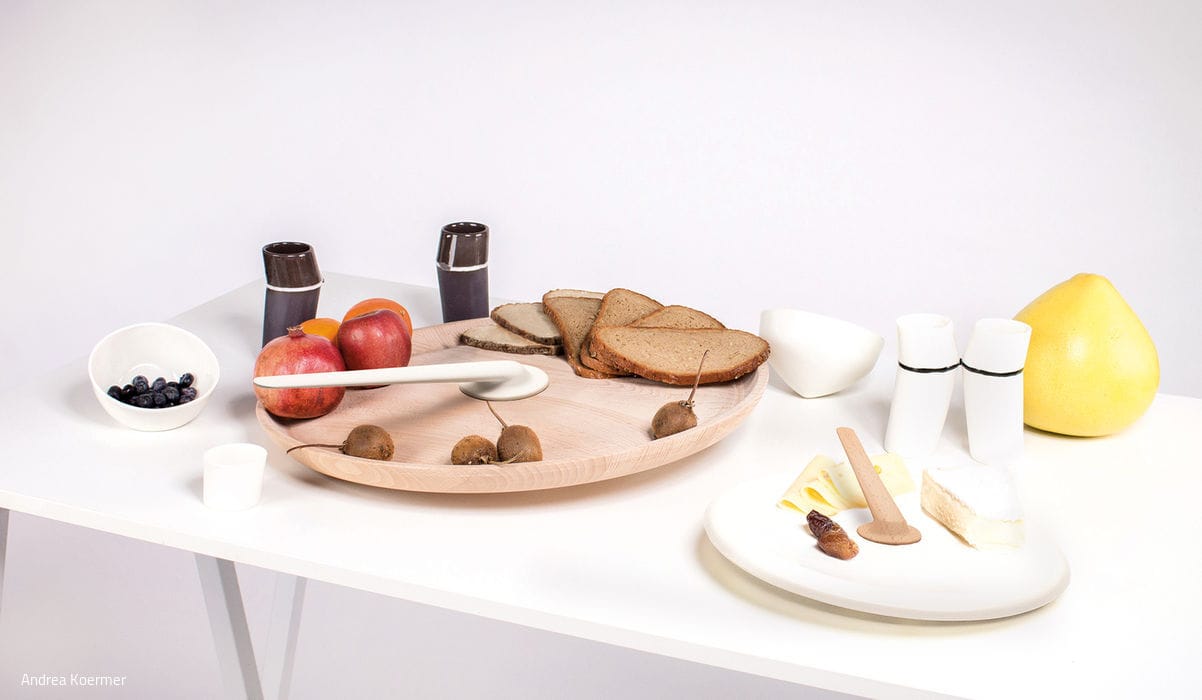
Timeless and Functional
Andrea Körmer's designs are rooted in a clear, purposeful formal language.

Historic Elegance Reimagined
An elegant Düsseltal residence that proves transparency and timeless character can beautifully coexist.