


The Singing Architects
Building More Than Singing: The Graft Success Story
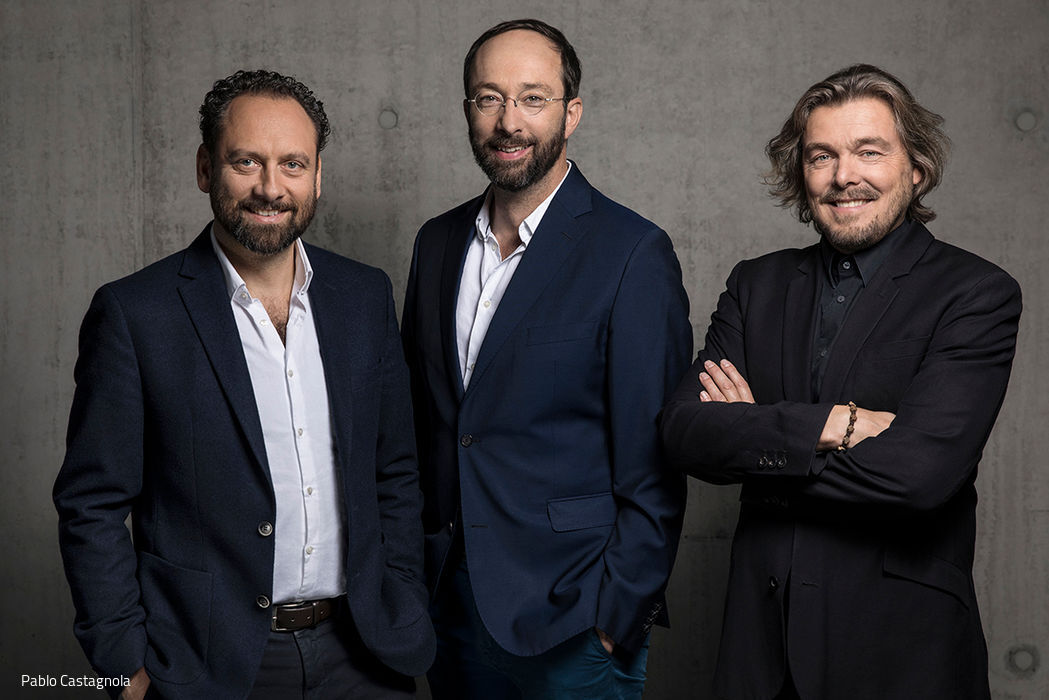
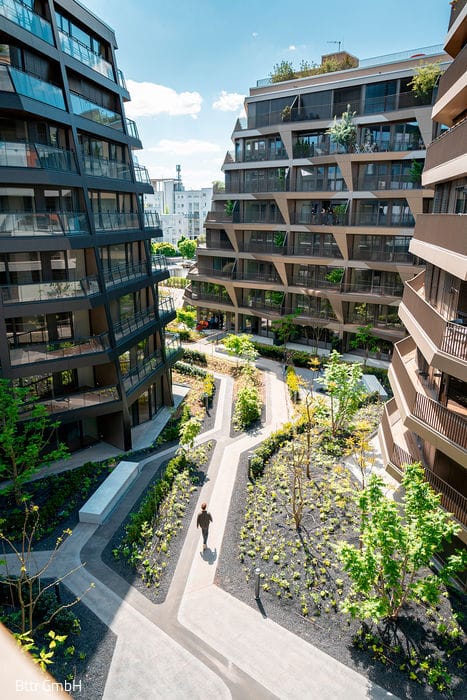
CUBE: The theme of walls seems to have captured your attention – first at the 2018 Architecture Biennale, and now with the Charlie Living residential project.
Thomas Willemeit: Zimmerstraße is one of the few places where the Wall cut directly through the baroque old town, and our property happened to sit right on the Wall's former strip. I think that legacy of a fractured urban fabric was one of our design's key starting points. The second was an equally important conversation we're having today: the relationship between city and countryside – perhaps transcending those somewhat ideological divides between dense urban blocks and garden cities of the 1920s. As an office named Graft – evoking the notion of grafting, connecting different elements – we set out to combine the best of all worlds. We succeeded here because we restored the baroque block structure while simultaneously opening the entire site to the public, creating something that feels both connected and broken open at once.
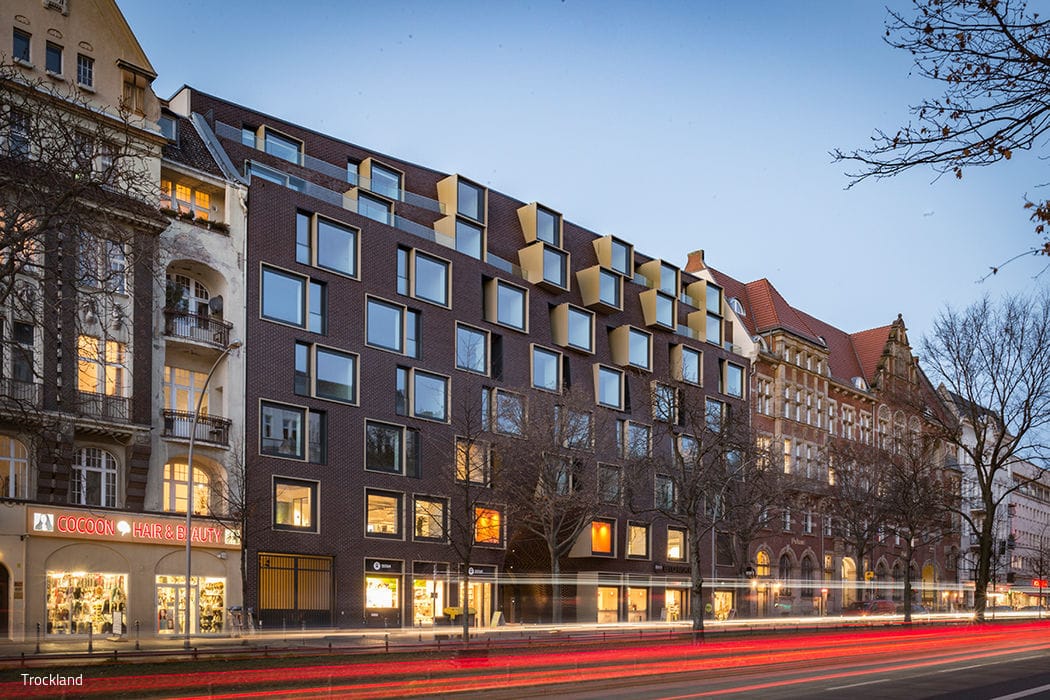
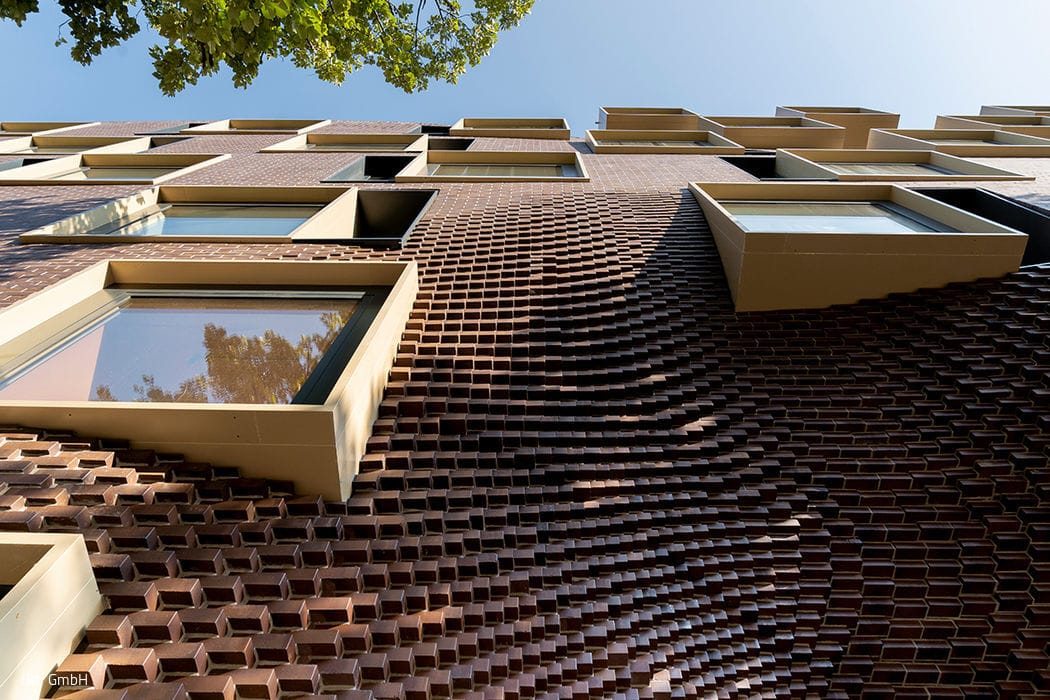
Also recently completed is the Bricks project in Schöneberg.
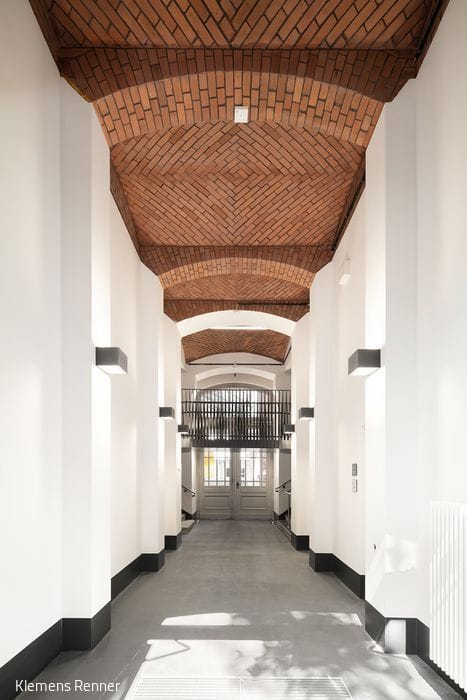
Lars Krückeberg: This may be the most complex project we've tackled in recent years, precisely because it involved a listed heritage building. Originally built between 1905 and 1920, we were tasked with something thrilling: essentially doubling its volume while respecting its protected status. We renovated and converted the existing structure – primarily for offices, but also for some restaurants and private universities. Then we added new buildings, where we created residential apartments.
Graft consistently works to integrate multiple dimensions into its buildings – striking visual expression paired with genuine consideration of social, economic, and ecological concerns. How do you balance all of this?
Wolfram Putz: You have to be a true generalist – genuinely curious about many different things. That's perhaps always been our office's strength. Because we've remained a collaborative group with diverse perspectives, we naturally bring many different interests to bear. We actually invest in fundamental research and research projects as well.
Then there's "pursuit of happiness" – the motto that guided us from the start – and it's remarkable that you found each other as collaborators.
Krückeberg: We still stand by that completely. The partnership was perhaps sparked by our education in an intensely competitive university environment – we were trained as competitive architects at the Braunschweig School. Paradoxically, amid all that individual competition, we founded a choir and started making jazz together.
So not a legend – it actually happened...
Putz: Over many years – and we can prove it – we nearly won the German Jazz Choir Competition, which happens every four years. We're German runners-up. We never intended to go professional, but we were deeply committed to it. We still sing together, and some of the original members are still involved.
Graft has always had its finger on the pulse. You seem to anticipate trends before they become mainstream...
Willemeit: For years, we wrote trend reports for the Future Institute, identifying five key topics shaping our industry: health, which suddenly became central to housing design; mobility – whether we travel individually or collectively, and how that shapes consumption; tourism and its evolution; retail – the future of shops and city centres, where we predicted early on that radical transformation was coming; and social responsibility, meaning transparency in global supply chains. These are compelling themes that inevitably reach architects. Beyond that, we also conduct genuine scientific research.
Do you bring scientists on board for this work?
Willemeit: Yes, we've completed several research commissions. Recently, one for Charité that generated considerable attention and earned us funding from the Ministry of Economics. The research examined how architecture affects health outcomes. We created two prototypical intensive care rooms, each with two beds, and launched what was probably the first worldwide attempt to rigorously measure whether architectural atmosphere impacts patient health. Specifically: when admitted to intensive care, does placement in this room versus a conventional one change how much pain medication patients need? Does it affect relapse rates or post-operative complications? These are major questions in medicine. We provided the architectural design to prove, measurably and conclusively, that one environment performs better than another. That genuinely interests us.
You've also pursued social projects – "Make it right" in New Orleans, and the "Solar Kiosks" initiative. Do you secure sponsors, or is this purely driven by your own commitment?
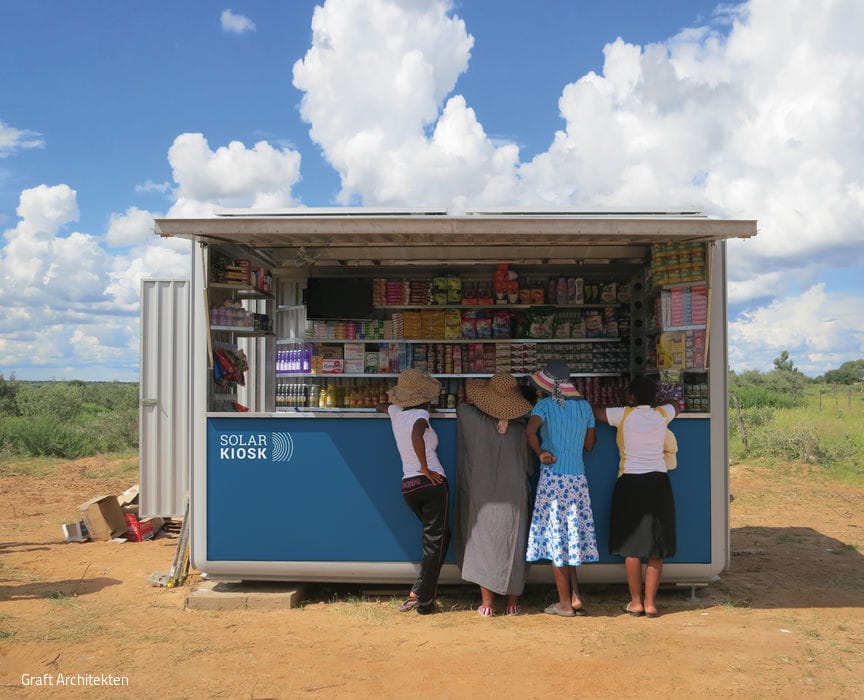
Krückeberg: With the Solar Kiosks, we actually worked with a consortium of investors who backed and financed the project. The first kiosk was a research initiative, co-funded through small business development programmes. Solar panels and batteries naturally degrade faster when running constantly in 40-degree heat. We developed a low-tech cooling strategy using air circulation to bring temperatures down inside the kiosks. That informed the architecture, and then a strategic investor committed to financing 15 units, which we deployed as prototypes in Kenya and Ethiopia. Today, there are 200 kiosks operating across Tanzania, Rwanda, Kenya, Botswana, and Ethiopia.
And it works? People on the ground are genuinely building sustainable livelihoods?
Putz: In purely economic terms, it's hardly a blockbuster story – but that's beside the point. The real success isn't just that the kiosks themselves thrive; it's that by bringing electricity to remote areas, we catalyze economic activity. Someone with a cable and a razor can suddenly open a barber shop. A coffee vendor can set up stand. We saw the solar kiosk as a small intervention that could jumpstart productive cycles and unlock development potential in rural communities. And that's precisely what happened. Around these kiosks, marketplace ecosystems began to flourish.
These are exceptions – but how does architecture reclaim its fundamental purpose: creating meaningful living spaces?
Willemeit: Architecture is a tool for living – that's the crux of it. When I work architecturally, I'm designing for a specific human activity or shared ritual. For that to work, I need deep understanding of that ritual, or at least a thoughtful humanistic vision of it. It's absolutely not about creating an object that photographs well. Photography is one aspect, but it's not what drives architecture. We release our buildings into the world like children who eventually live their own lives. The life that unfolds within them must contain its own beauty – not just the building itself, but the human experience it enables.
Your firm's success is truly remarkable. Twenty-two years since founding – can you still track how many buildings you've realized?
Willemeit: We still keep count – each project gets a number – and we're at around 780 now. I haven't verified exactly, but roughly a third to half of those have actually been built. So we're talking at least 300 completed buildings.
How do you account for this extraordinary trajectory – is it your holistic approach? What's your take?
Putz: What we love is approaching things with positivity and joy. We've always wondered why our peers – and sometimes ourselves – adopted that black turtleneck monk mentality where everything becomes a problem, everything gets heavy. We found that playfulness, and claiming you can move forward with lightness, actually makes it easier to stay open, find consensus, and genuinely listen to outside perspectives. The underlying attitude that someone with a different view isn't your adversary but might contribute something valuable – that's a foundational mindset you either have or you don't. We've cultivated it as a group. It naturally leads to unexpected angles emerging in projects. The real goal is finding the unique solution that only works in this specific context. Not a template recycled from what we've done before. Rather, discovering what makes this particular residential building, in this exact neighbourhood, at this historical moment, with this climate, for these future residents – what makes it special. That's the pursuit.
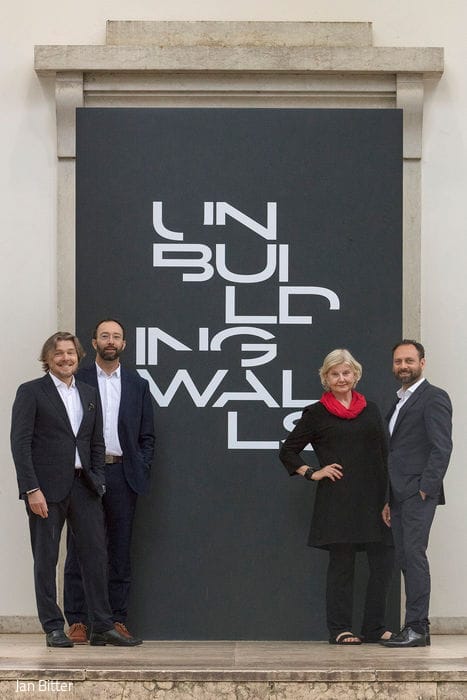
In retrospect, it must have felt like hitting the jackpot when you had the chance to design the German Pavilion in Venice in 2018 with Marianne Birthler. What was the core idea behind "Unbuilding Walls"?
Krückeberg: Every architect dreams of curating their nation's pavilion at some point – it's arguably the highest discipline, representing your country through a single question. When the 2018 call came out, the wall emerged as our concept. I've long been interested in how we perceive time, and it struck me as significant that the Wall had now been gone as long as it had stood. That felt like the right moment to look back. We honed in on a micro-scale: the Wall's former strip itself, examining precisely what happened there to understand how city and countryside had grown back together. What emerged from that investigation would reveal something about how that reunification actually worked. Marianne Birthler, as an East German, brought a distinct perspective – a different voice in the conversation. We constructed a black spatial wall. Upon entering, visitors encountered this black wall that dissolved as they moved through the space. The message was deliberate: we often carry walls in our minds, but shift your vantage point, and those walls dissolve. It was a direct statement, delivered powerfully. It was an extraordinary experience – we learned enormously from it.
That enthusiasm comes through – still present after more than two decades.
Willemeit: Absolutely, especially when you're surrounded by kindred spirits – though a certain amount of grumpiness is always part of the package.
If you had to label your evolution – how would you describe the office's journey from its founding onward?
Willemeit: I'd call it "seasoned enthusiasm." We've always pursued what captivates us. Of course, we've had our share of setbacks and learned hard lessons – that comes with the territory. But with all the experience we've accumulated, we actually have more fun now. We spot dead ends earlier and recognize which paths lead to solutions that are both innovative and genuinely buildable.
Mr. Krückeberg, Mr. Putz, Mr. Willemeit – thank you for your time.
Interview by Christina Haberlik
Graft
Twenty-two years on, the young architectural trio of Thomas Willemeit, Wolfram Putz, and Lars Krückeberg has evolved into a globally recognized practice with over 100 staff and hundreds of completed projects to their name. Most recently, Graft finished two ambitious new developments in Berlin: Charlie Living and Bricks.
(Featured in CUBE Berlin 03|20)
More is More
Luxury holiday accommodation on Usedom
Modernized for the 21st Century
Comprehensive modernisation, renovation and expansion of a secondary school
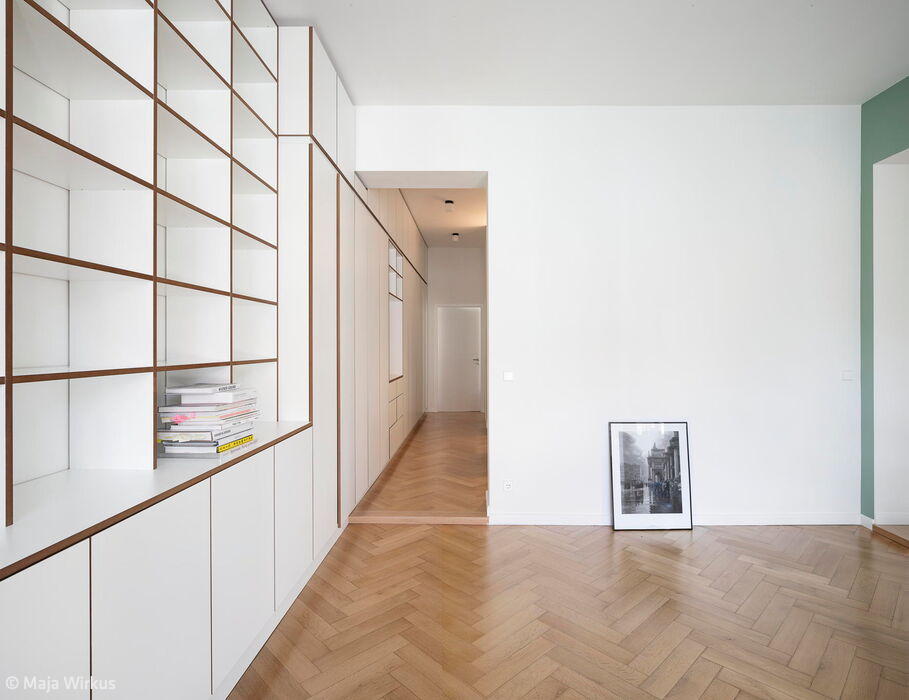
Refresh and Renewal
A historic Gründerzeit apartment receives a complete makeover and contemporary redesign.
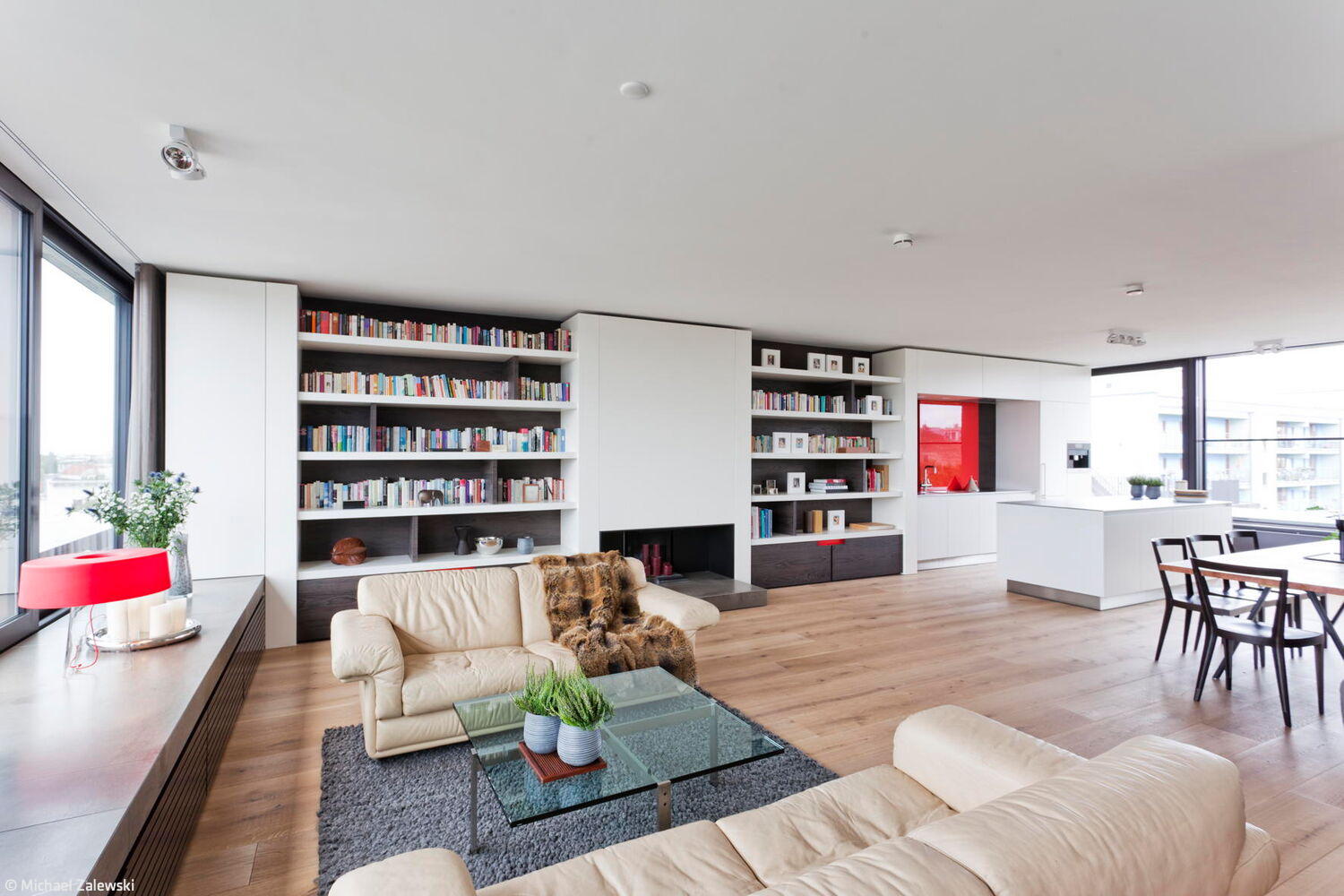
A Throne Above the City
Exclusive Penthouse Maisonette in Mitte