


Enhanced Industrial Building
In the Neue Bahnstadt district, a piece of railway history was transformed into an office building
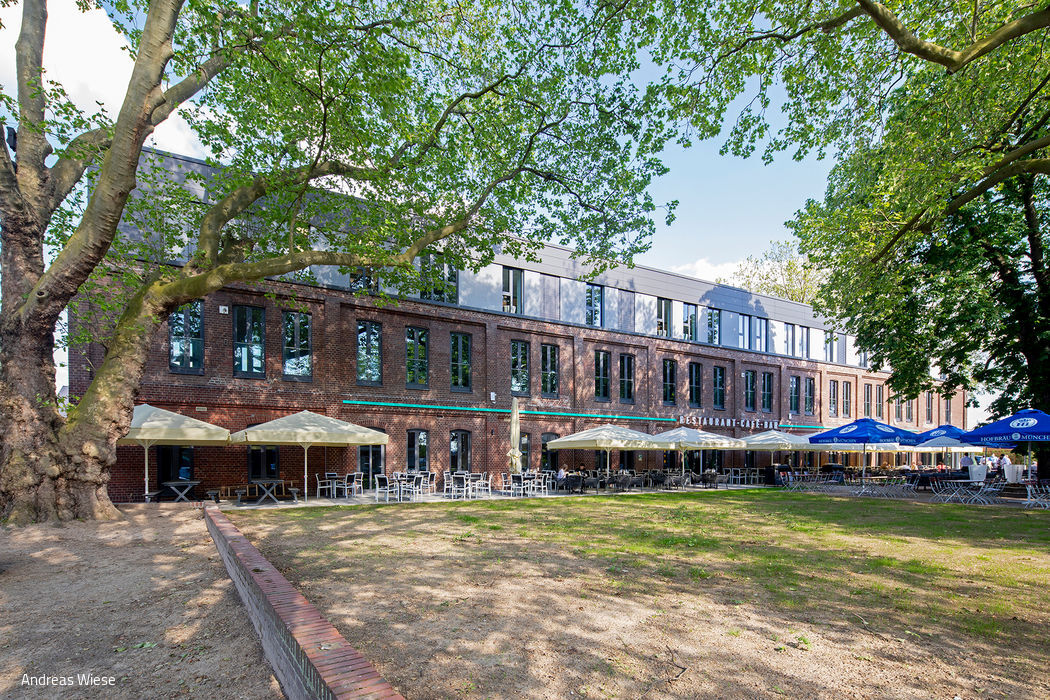


For exactly 100 years, trains were repaired and maintained at the railway repair works on what is now the Neue Bahnstadt Opladen site. When the facility closed in 2003, an important chapter in the district's history came to an end. In the course of reclaiming and converting the 70-hectare former industrial site, an entirely new urban quarter emerged. The Leverkusen architecture firm Rotterdam Dakowski undertook the renovation of several historic existing buildings on the site—including the building at Werkstättenstraße 21–23, which once housed the German Federal Railways' drawing offices. The new owner and developer, the Employers' Association of the Metal and Electrical Industry Rhein-Wupper, planned to establish their administrative headquarters here. The long, bar-like structure oriented parallel to the railway tracks, with its brick façade, was completely gutted, raised by additional stories, and extended to accommodate office space, gastronomy, and commercial areas.
"The building was in really terrible condition," recalls Ulrich Dakowski, managing director of the architecture firm. When examining which portions of the existing structure could be preserved, very little ultimately remained viable. Rather than demolishing the building entirely, however, the decision was made—following a structural assessment—to completely strip the interior while retaining the outer brick perimeter walls and the previously reinforced foundations. The two original stories, originally crowned by a pitched roof, received a roof addition that was extensively clad on the exterior with black asbestos cement panels. An extension building directly adjoining the existing structure houses the stairwells and additional utility spaces. Reflecting this secondary function, and also to create a clear distinction between the historic and new building layers, this section was given a white rendered façade. Within the exterior shells, the main tract develops a "building within a building" with a room height of approximately four meters and usable floor space of roughly 1,800 m². On the ground floor, the generously proportioned Restaurant Gallodini, seating around 200 guests with extensive outdoor dining, has opened. The entire first floor accommodates the Employers' Association, the second floor is occupied by a large dental practice and a real estate firm. Due to the mature tree stock—featuring plane trees over 120 years old—an underground parking garage was not feasible; instead, parking spaces were created in front of the building.
Photography Credits:
Andreas Wiese
www.fotografie-wiese.de
(Featured in CUBE Cologne Bonn 02|22)

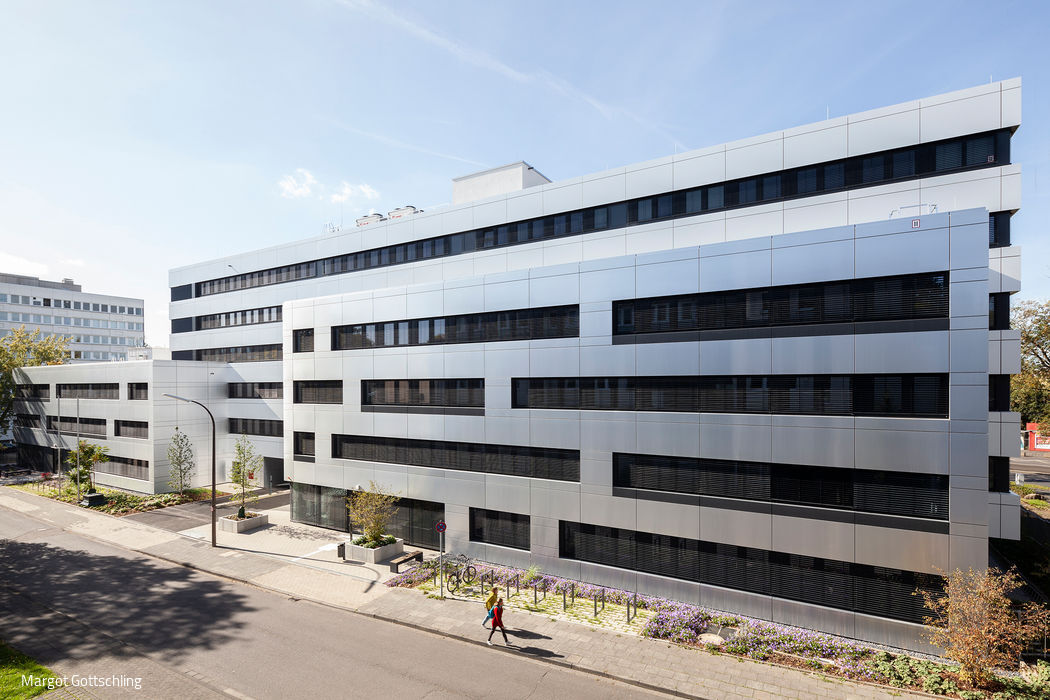
Shifting Metamorphosis
A 1980s Office Complex Reimagined for a Sustainable Tomorrow

Creating Community Together
Where New Architecture and Heritage Create a Vibrant Living Community
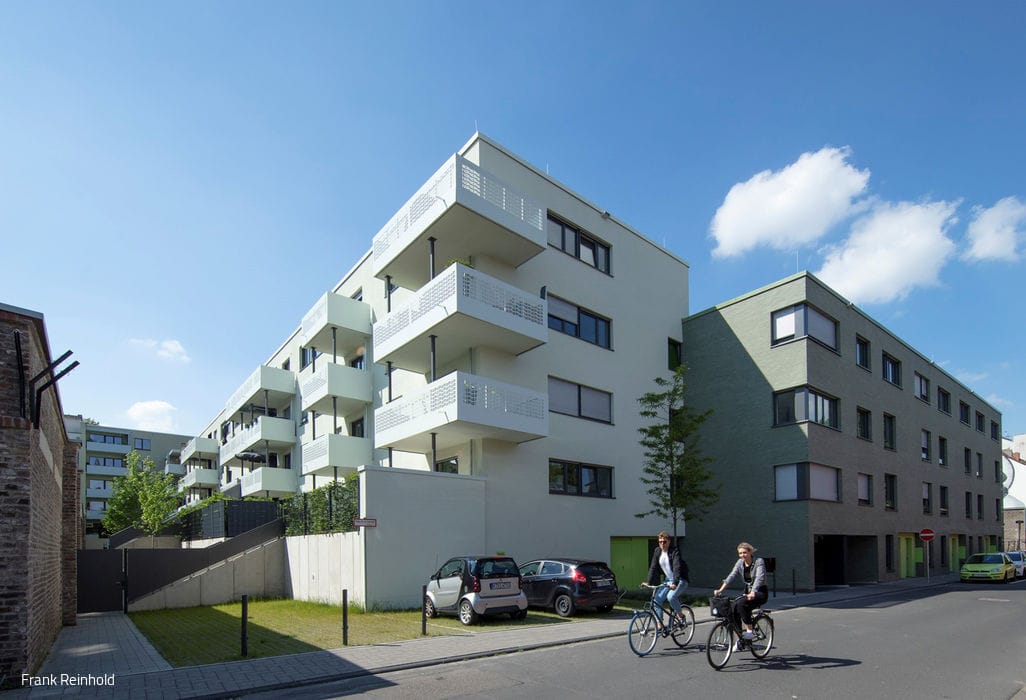
Right in the Heart of Ehrenfeld
A former industrial site transforms into an open, verdant residential neighbourhood.
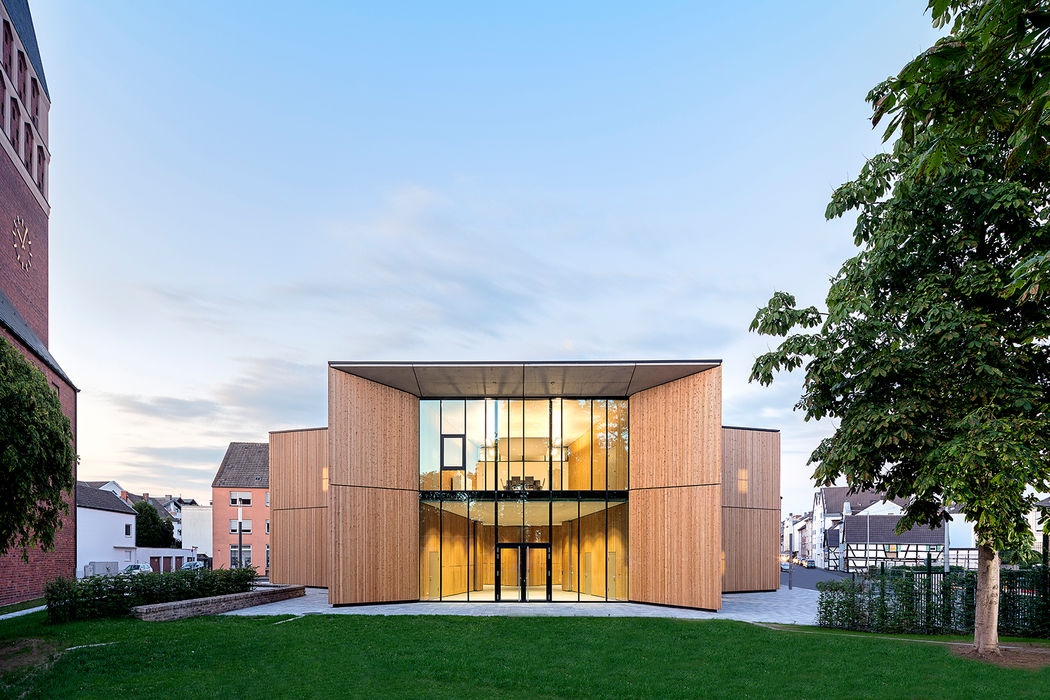
Dynamic Urban Gateway
A new parish residence completes the St. Hippolytus ensemble in Troisdorf.