


A Striking Counterpoint
Steinhalle in Alzey: A museum extension and worthy home for Roman treasures


For over 90 years, the Roman altars, statues, and towering columns of Alzey languished in temporary storage, nearly forgotten. Now they've found their rightful place—a fully accessible exhibition space of remarkable design. The elongated new building that shelters them rises above an irregular footprint, functioning not merely as a display venue but as a sculptural work in its own right.
Eichler Architects' new stone hall extends the protected hospital building—erected around 1580—and connects to it via a glass passage. While the design respectfully references the historic structure and integrates thoughtfully into the urban context, it simultaneously asserts its own distinct identity. This freedom of form emerged organically from the site's constraints, reflecting the architects' vision of a "promenade architecturale" through the religious world of late antiquity.
The structure features two tilted walls of solid laminated timber, each thoughtfully bent to create dynamic form. The rear-ventilated skin of square ceramic hollow elements accentuates the building's sculptural presence. Strategically positioned windows reveal tantalizing glimpses of the treasures within, drawing visitors deeper into the space. Inside the stone hall, a carefully orchestrated path guides you past ritual stone monuments dedicated to Roman and related deities—originally Celtic and Near Eastern—culminating at the breathtaking forum. Flooded with natural light, this showcase displays fragments of Jupiter's columns, some once reaching 12 metres in height. The atmosphere here is deliberately transcendent. Black-painted walls and the hall's conical geometry evoke a sacred vault or cathedral nave. The flooring—a departure from the museum's parquet—reinforces this contemplative mood. Cast concrete anchors the design, echoing the Romans' legendary "opus caementitium," while Rhine gravel aggregate imparts its warm, grey-brown patina. Beyond its striking presentation of these ancient monuments, the stone hall gives the city something precious: a new public space that transforms what lies beneath—the parking garage—into an afterthought. After dark, the expansive windows become portals to an enchanted world, dramatically lit by precisely calibrated spotlights.
Photography:
Michael Heinrich
www.mhfa.de
(Published in CUBE Frankfurt 03|24)
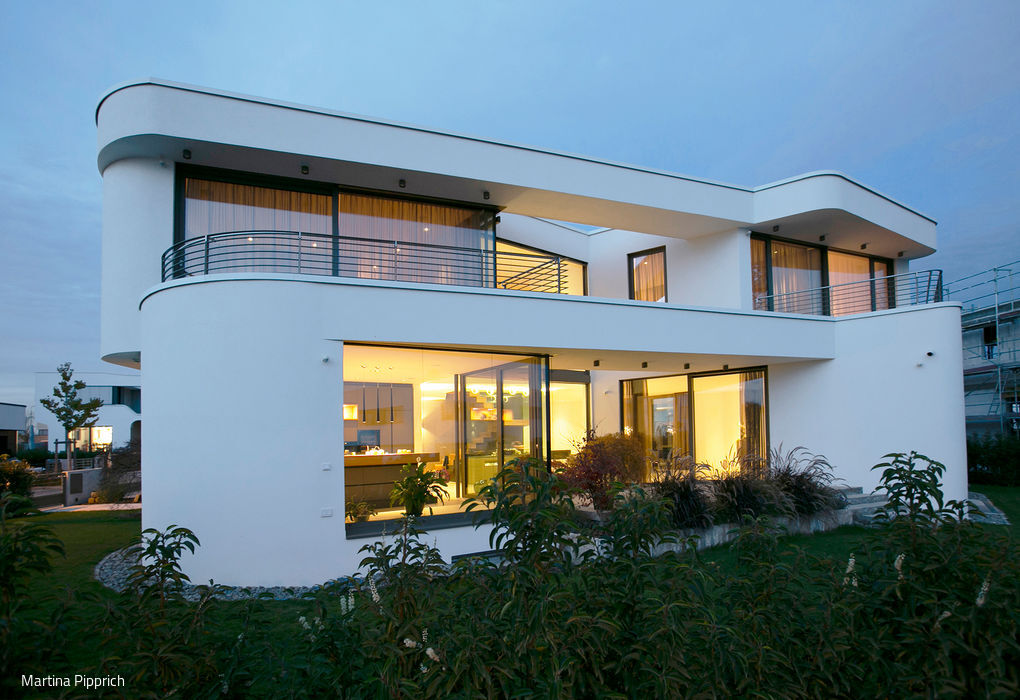
Mastering the Curve
Following these design principles, a villa exemplifying "organic design" took shape on Riedberg.
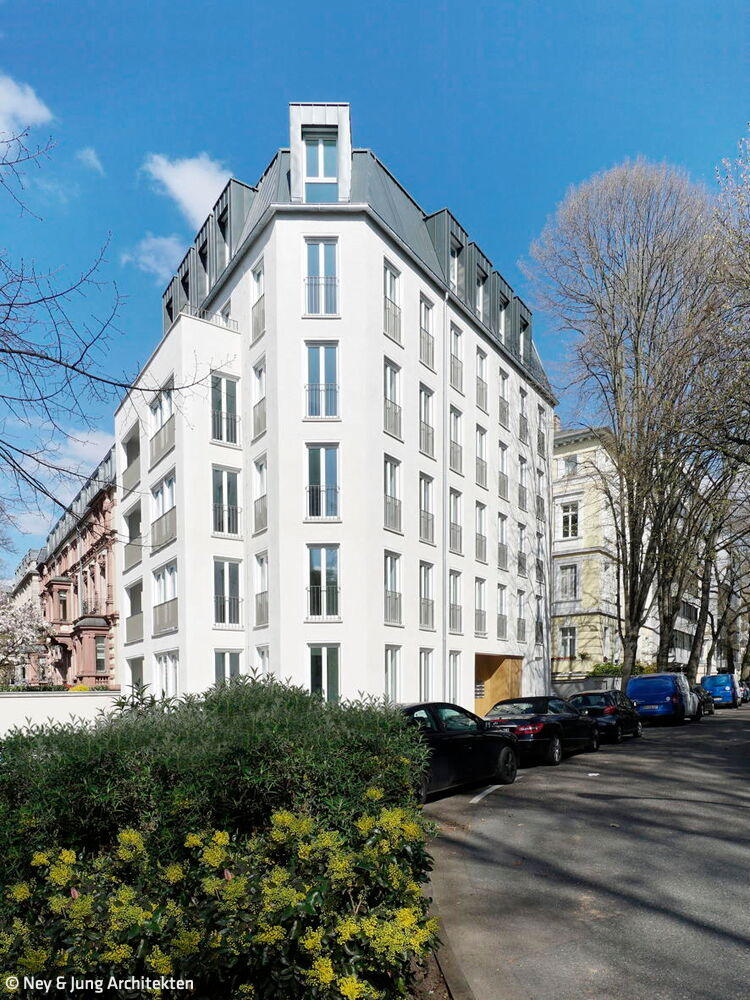
Understated & Self-Assured
Eight apartments rise on the site of a former office tower.
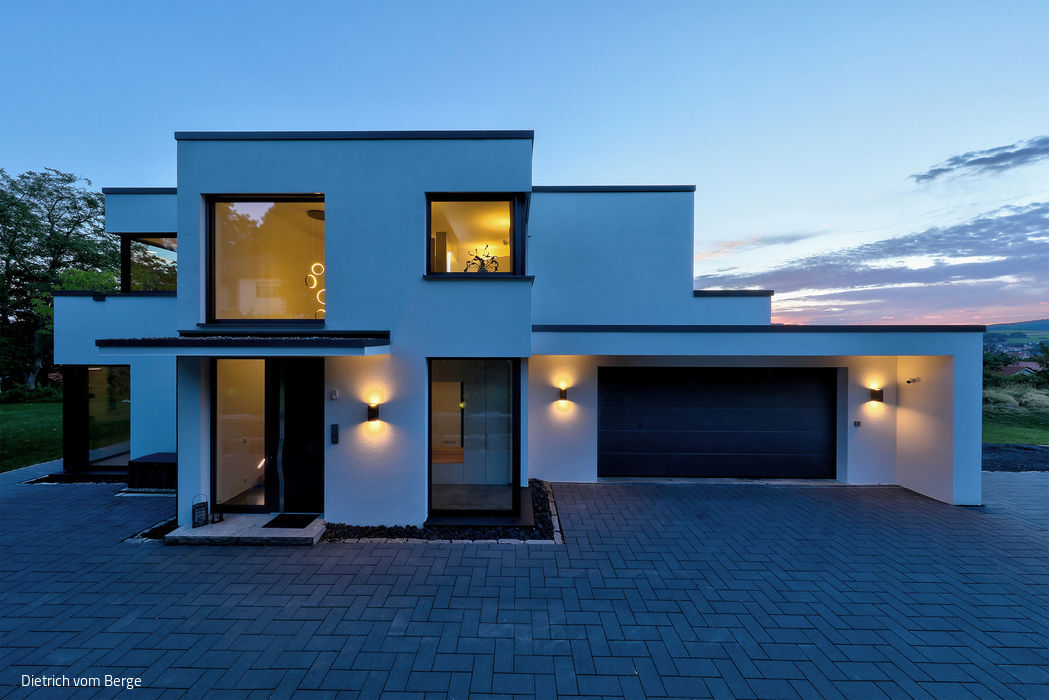
Odenwald Panorama
A classically modern home harmonizes with its historically rich setting

A Place for New Perspectives
Office Design That Unlocks Flexibility and Collaboration