


Rethinking Disposable Architecture
"Element & Lingot" – Visionary Densification in Moabit
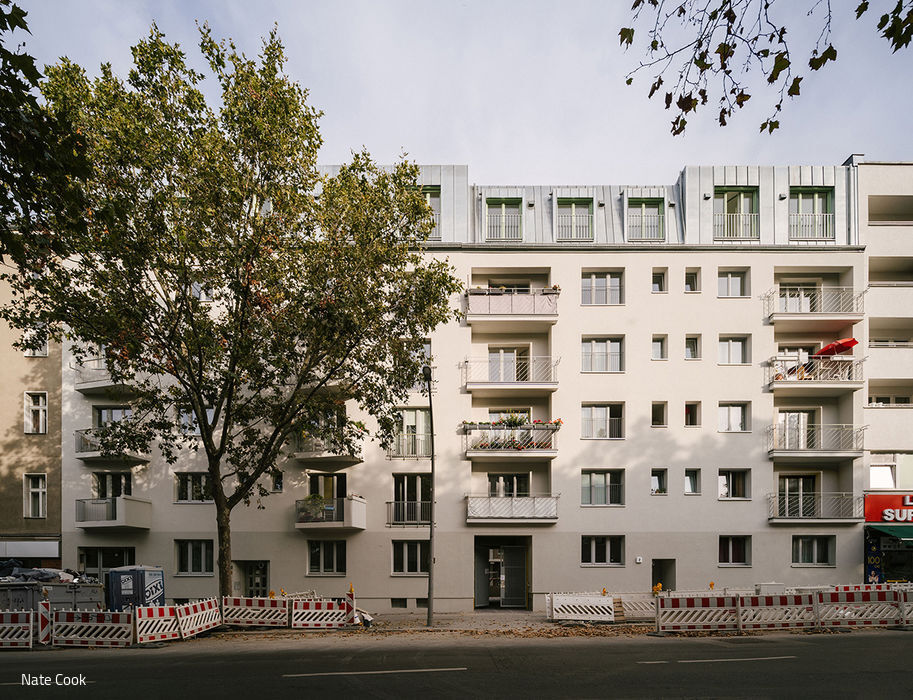


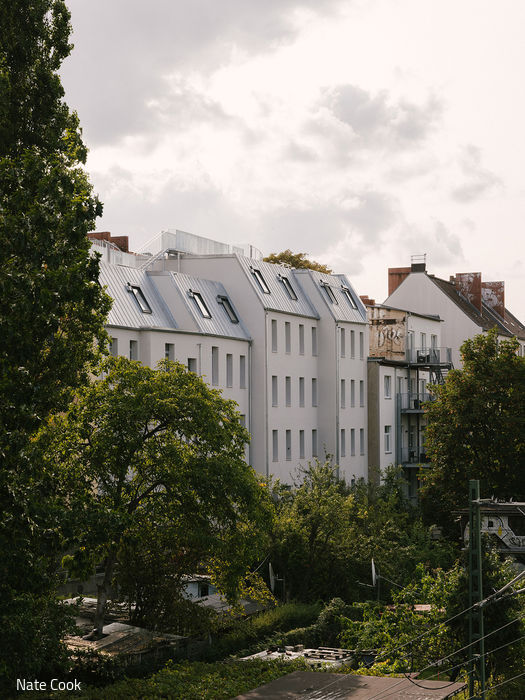


This article's title draws from architectural historian Vittorio M. Lampugnani's essay, encapsulating exactly what Berlin-based Studio Loes achieved with its "Element & Lingot" project: a vision of intelligent densification and resource-conscious building. The architects have created tangible value through modernizing the existing structures and adding 28 new residences via strategic infill and vertical extension.
Between four existing residential blocks in Moabit—two front and two rear buildings—the architects inserted a five-story structure called "Element" into the tight urban fabric. Across 3,370 m², twenty apartments ranging from three to five rooms (57–101 m²) were created. Using an exposed precast concrete exoskeleton, the units feature exterior access every other floor—a contemporary interpretation of traditional gallery walkways. Extended corridors on the east and south sides provide residents with additional gathering spaces, while the actual façade sits behind these layered passages. The existing buildings, dubbed "Lingot," were expanded through a modern reinterpretation of Berlin's iconic roof tradition. Historically, these faux gabled roofs concealed flat roofs from street view, maximizing internal space for dormers and larger apartments. The architects applied the same efficiency here with prefabricated timber-frame stabilizers and modular timber and concrete elements. Photovoltaic systems and heat pumps supply heating, earning the project KfW certification. The result: eight generous four- to five-room apartments. The rhythm of the new rooflines echoes the existing façade below, creating a seamless dialogue between old and new. This approach also delivers practical benefits: shorter construction timelines and reduced noise. The roofs are extensively planted, while remaining courtyards are "reforested" following Akira Miyawaki's "tiny forest" methodology.
Photography Credits:
Nate Cook
www.natecookphotography.com
(Featured in CUBE Berlin 01|24)


Leading by Example
A solid wood house: prefabricated, sustainable, and energy-smart
Chasing the Sun
How a troubled site becomes a haven for children
Hidden Champion
For years, Hermann August Weizenegger has ranked among Berlin's most accomplished designers.
Mobility in Flux: A Radical Shift Ahead
"We remain quite cautious about new technologies," Thomas Willemeit explains.