


Completely new
Industrial heritage site transformed into a commercial and office complex
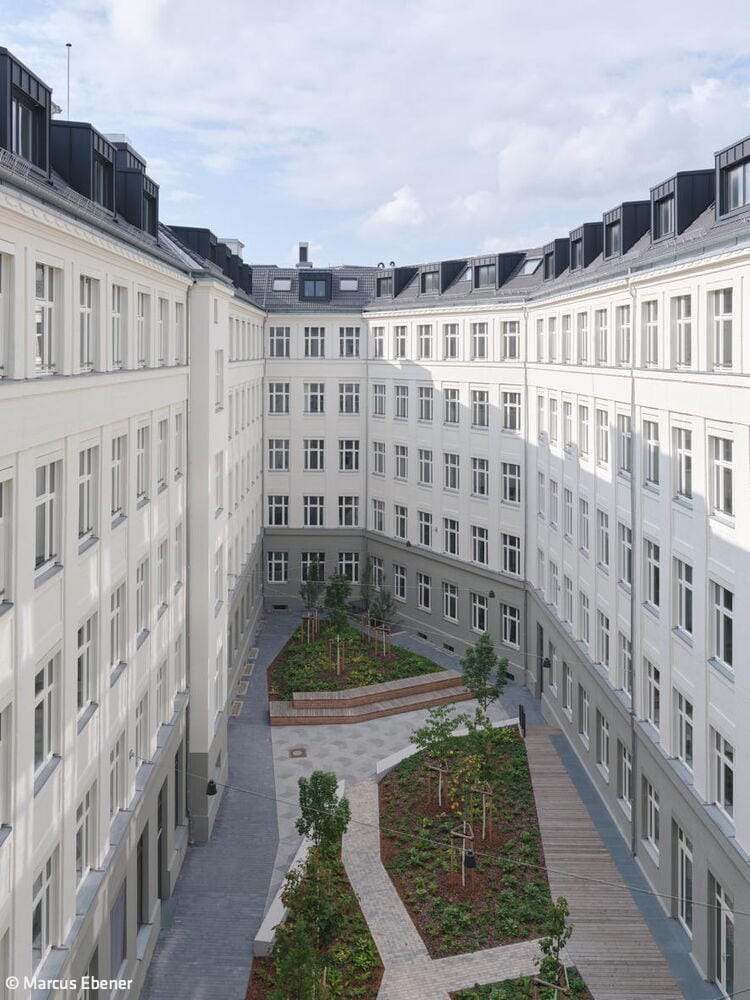
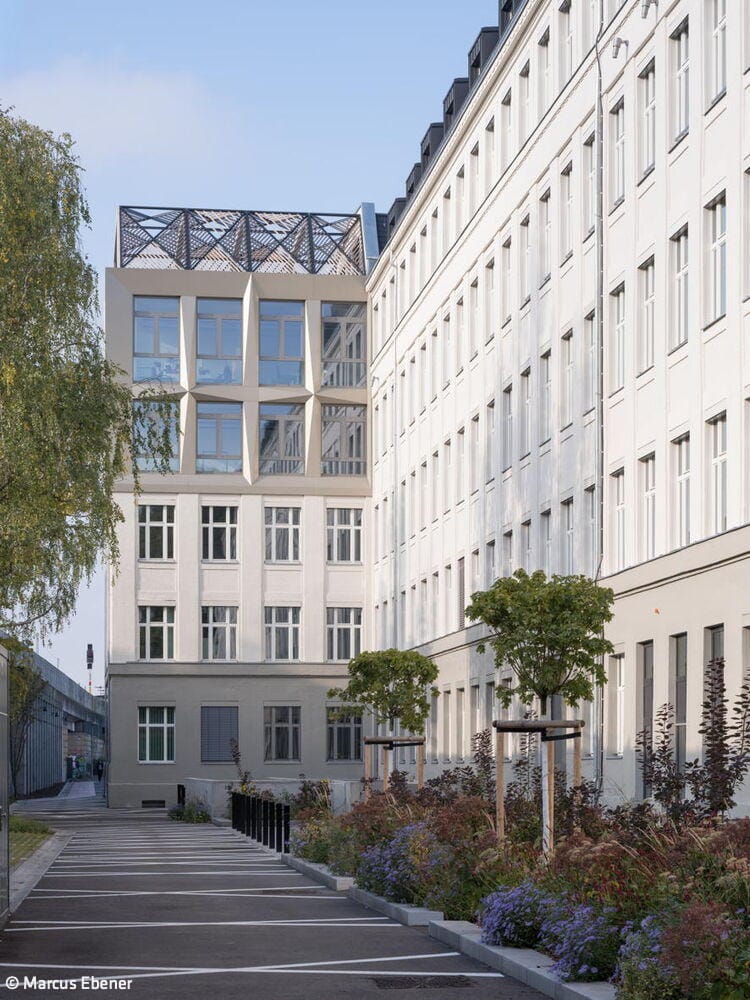
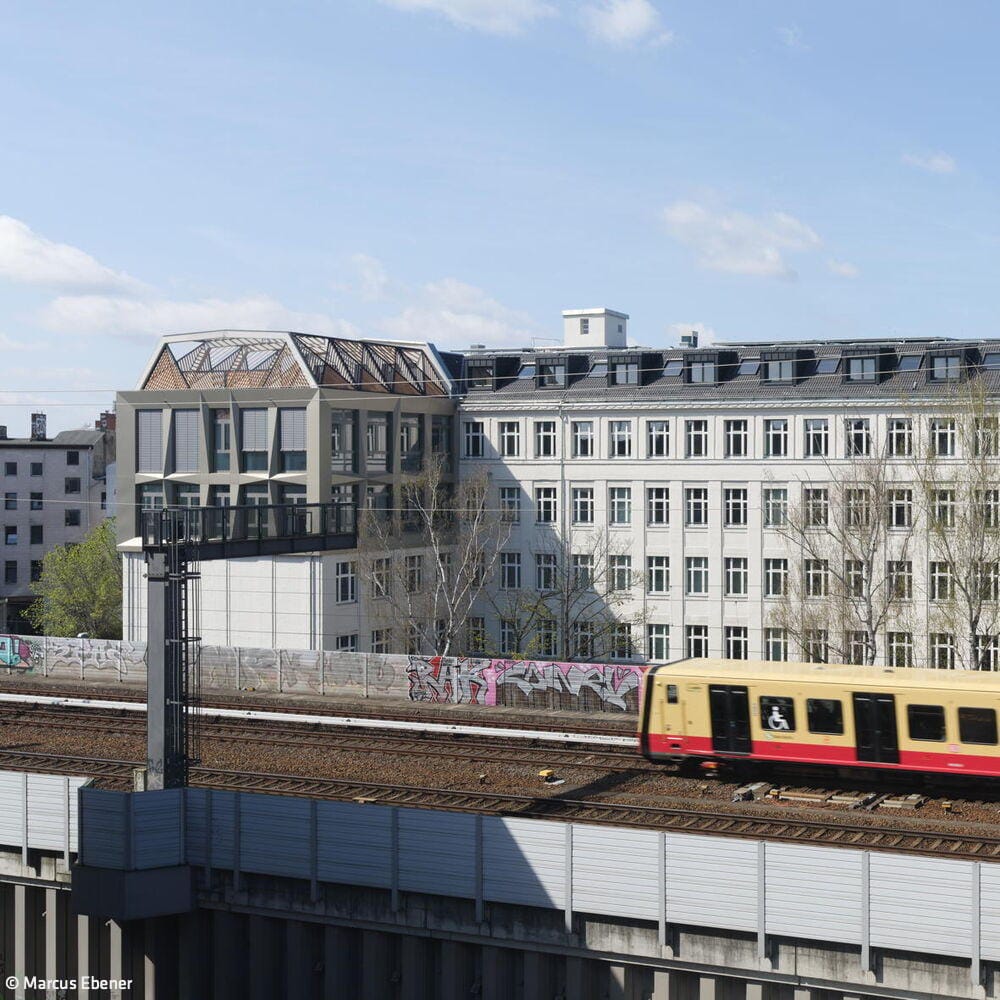
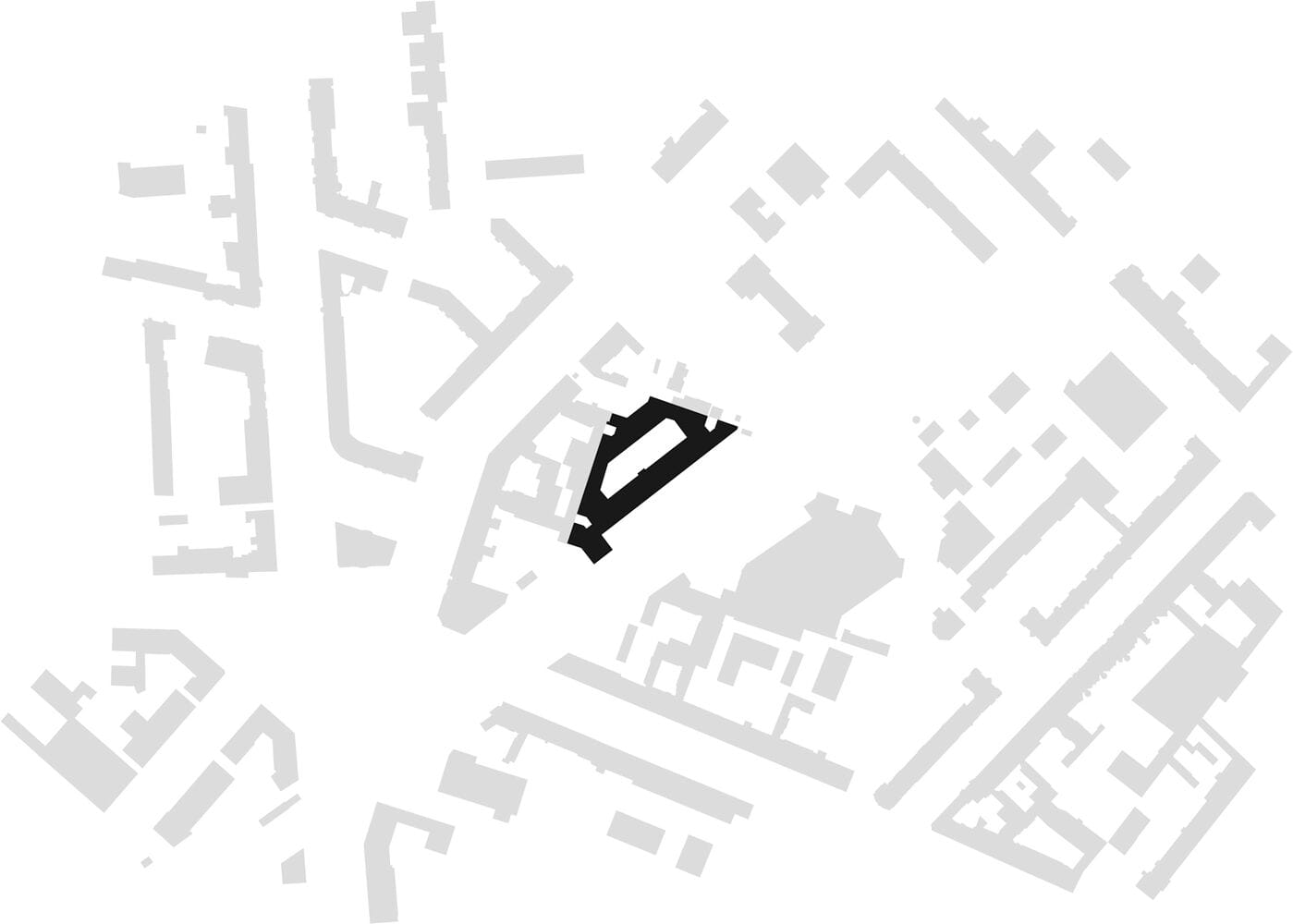
Since the dawn of industrialisation, Wedding has grown into one of Berlin’s largest working-class districts. Numerous traces of this era remain to this day, such as the typical clinker-brick industrial buildings. They bear witness to this chapter in the district’s history. One such building is the listed laundry factory at Gerichtstraße 27. It is one of the earliest buildings to have been constructed largely from reinforced concrete. The factory is situated within a block between Pankstraße, the Ringbahn tracks and Gerichtstraße, and is accessible only via a narrow access road. The building was constructed between 1910 and 1912. The laundry factory was severely damaged during the war and underwent various uses and alterations until its current, comprehensive regeneration by the construction firm Dyckerhoff & Widmann. One of the modernisation projects took place in the 1980s: amongst other things, the remaining buildings were fitted with a roof extension including dormers.
It is only in recent years, between 2019 and 2025, that a comprehensive modernisation, energy-efficiency upgrade and restoration of the building’s structure have taken place, based on new plans by the architects Bollinger + Fehlig on behalf of the investor Westbrook Partners. Although the original triangular shape had survived the war damage, several storeys were missing in two places, which have now been completed. The main façade runs parallel to the Ringbahn tracks and, with its two side wings, joins a transverse building that forms the entrance to the complex.
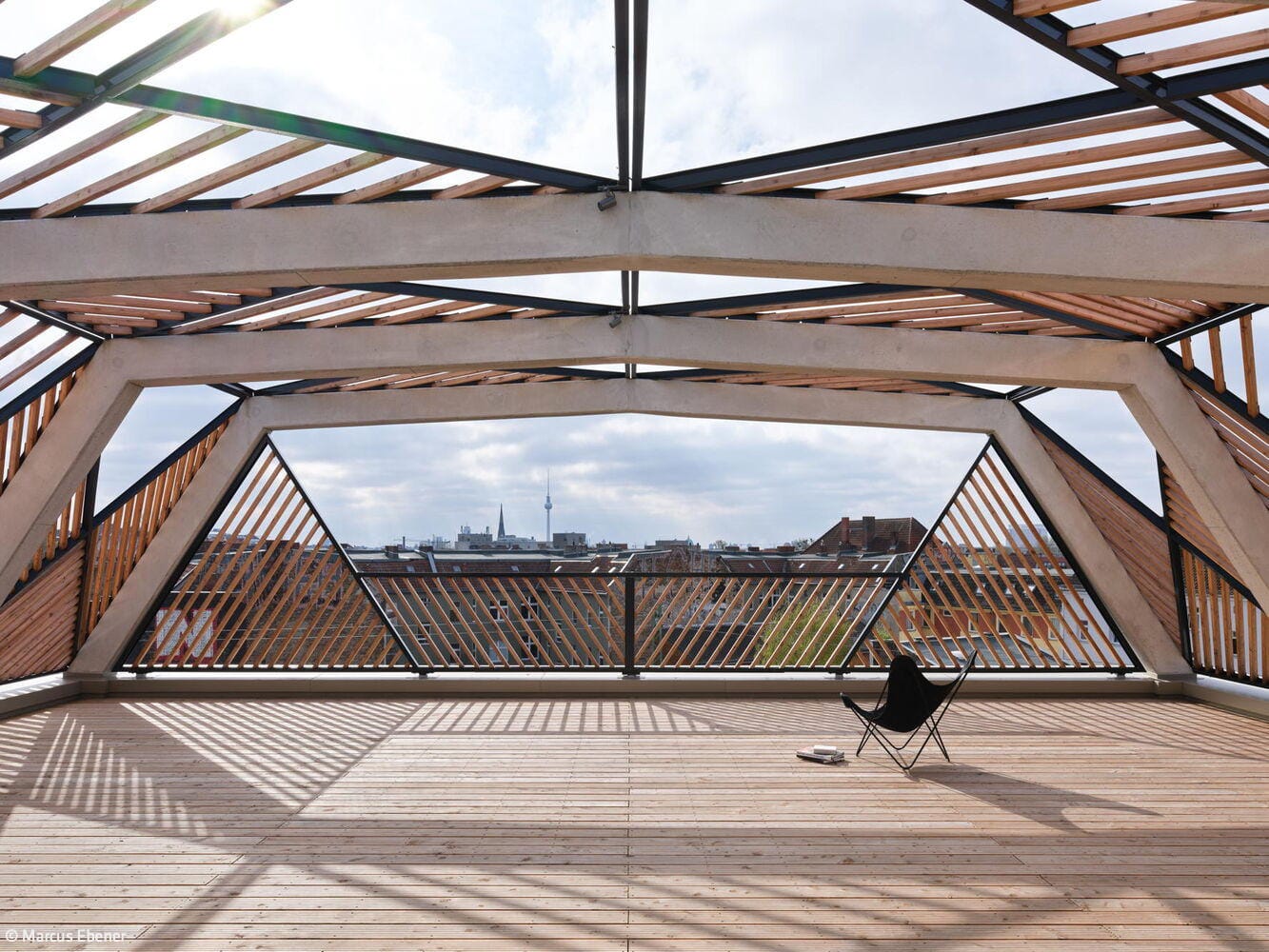
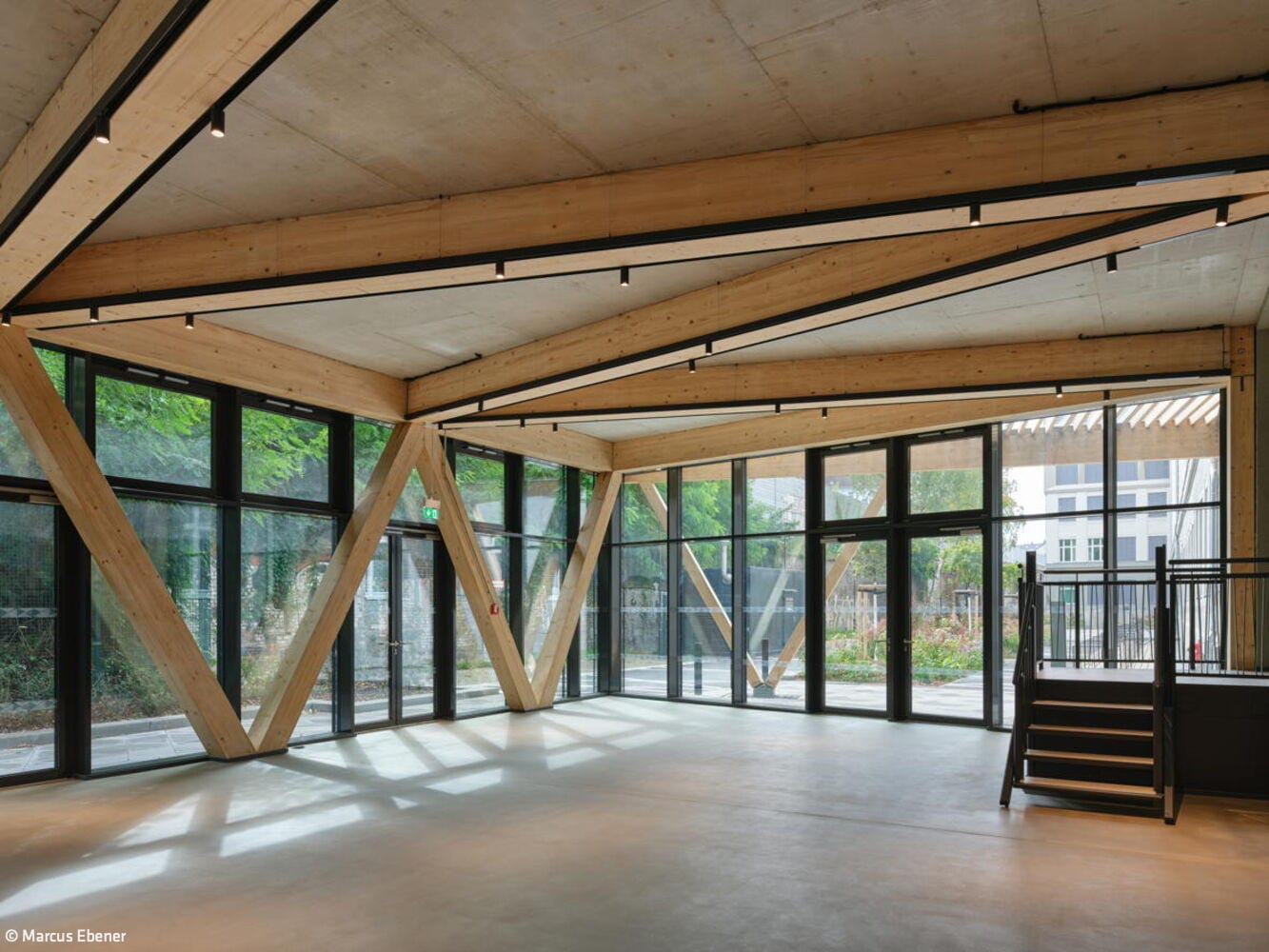
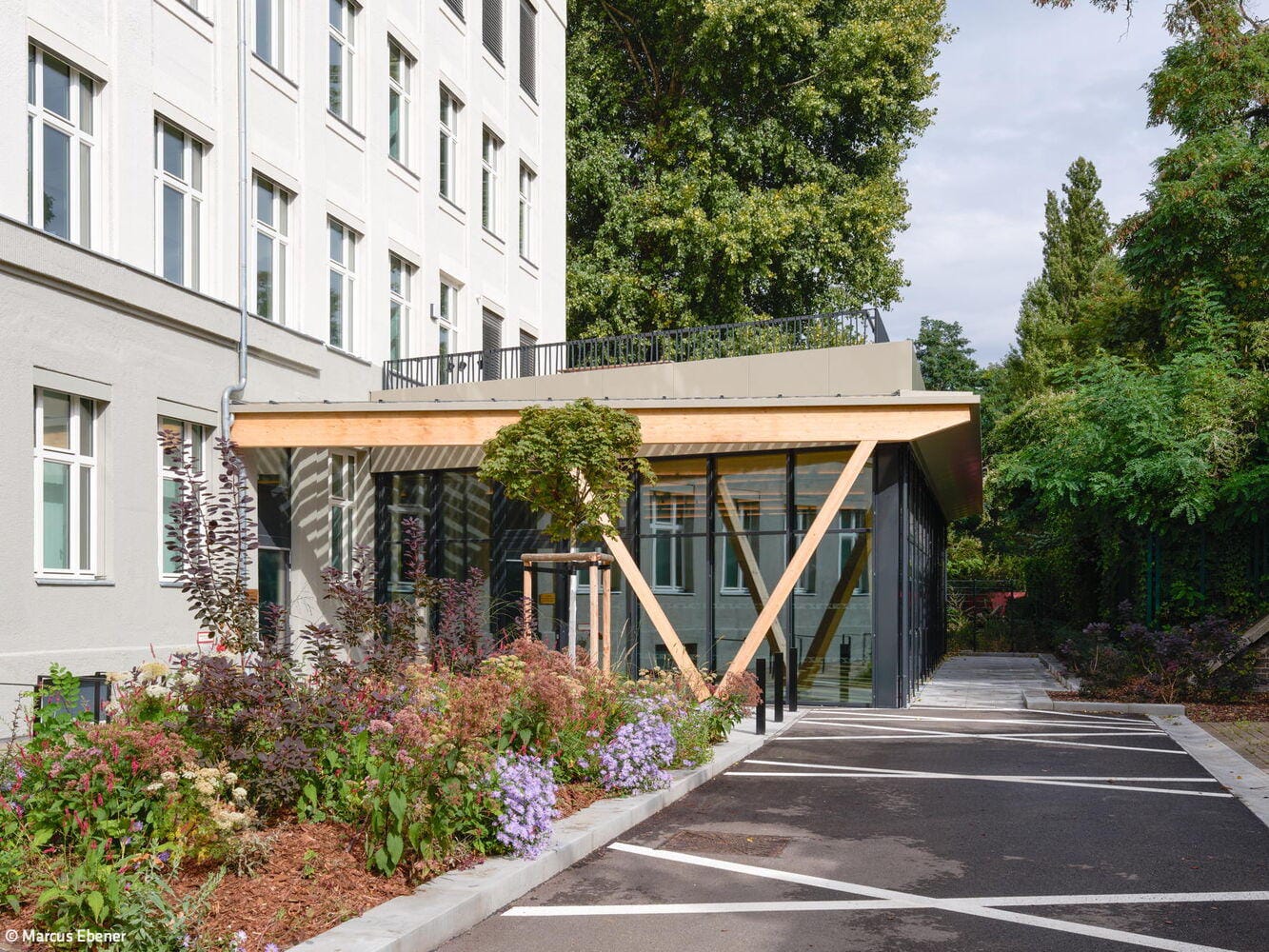
The architects have succeeded in transforming an old industrial building into a modern, loft-style office block which, thanks to its flexibility, meets all the requirements of modern working environments. The workspaces are flexible and can be divided into a total of 16 self-contained rental units. Following the transformation from an industrial site into a commercial and office location, the lettable space covers approximately 15,000 m² across six floors. Depending on requirements, open-plan or cubicle offices can be created. There are also co-working spaces, meeting rooms and coffee bars. Particularly noteworthy are the references to the past: subtle stitches, folds and other nods to the art of sewing characterise the design additions. A new feature is a pergola on the roof terrace. It replicates the volume of the original hipped roof. A studio in the courtyard facing the railway occupies the site of a former garage building. The previously completely sealed-off inner courtyard has been opened up and now serves as a green recreational area for staff, featuring shrubs, trees and seating. The architects’ conversion and new-build project has attracted considerable attention within the professional community.
Photos:
Marcus Ebener
www.marcus-ebener.de
(Published in CUBE Berlin 01|26)
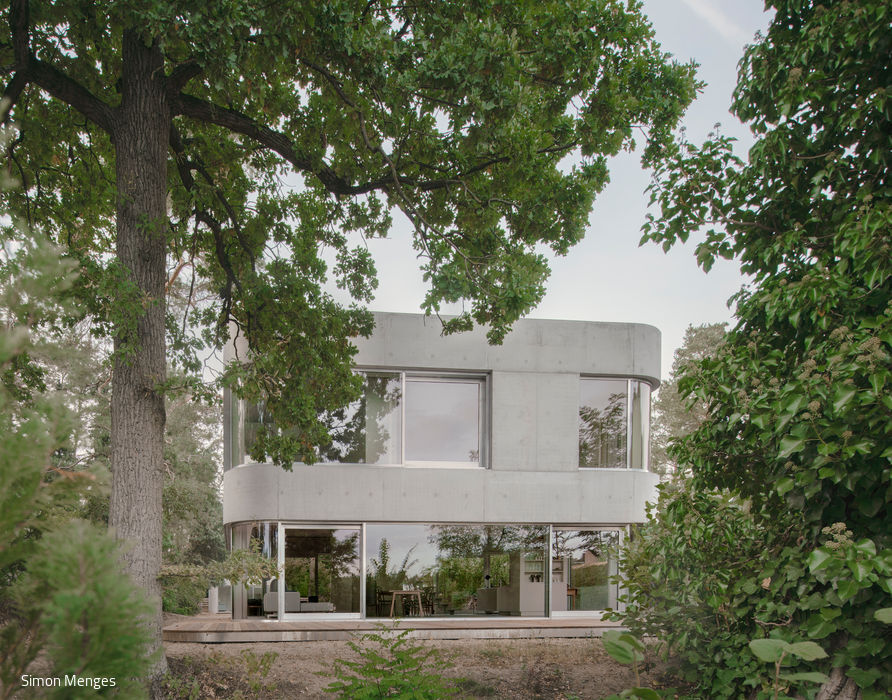
A Duet of Glass and Concrete
A Remarkable Lakeside Residence at Elsensee
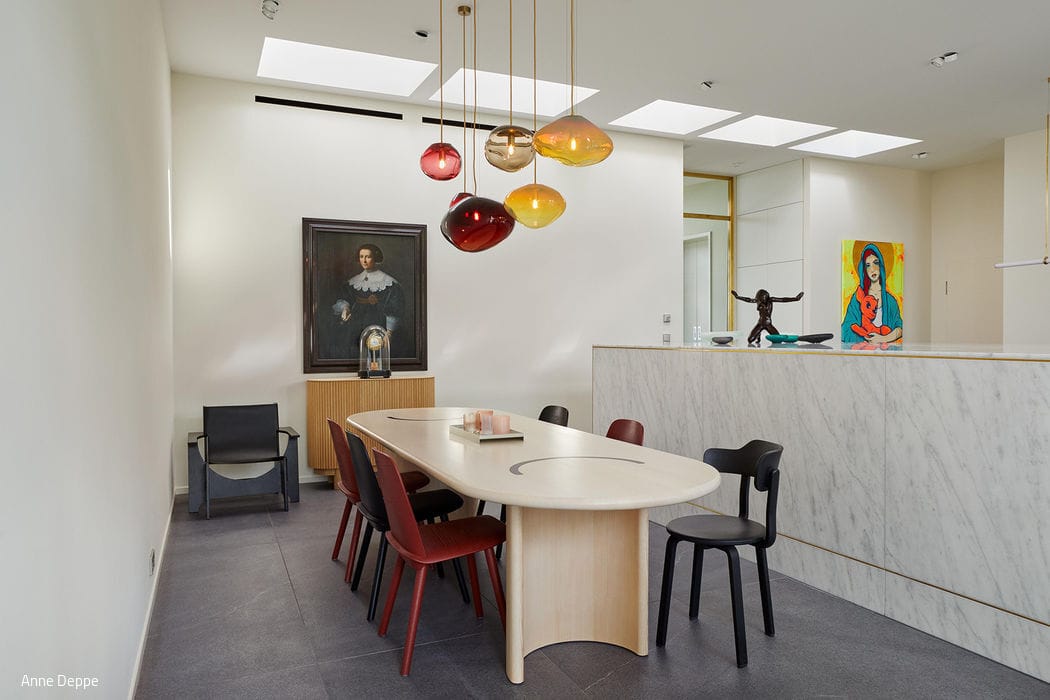
New Home for Art and Collectors
Two Compact Attic Apartments Become One Spacious Home

Thoughtfully Executed
Reconstructing a Historic Corner Tenement: A Rooftop Addition Expands Residential Space
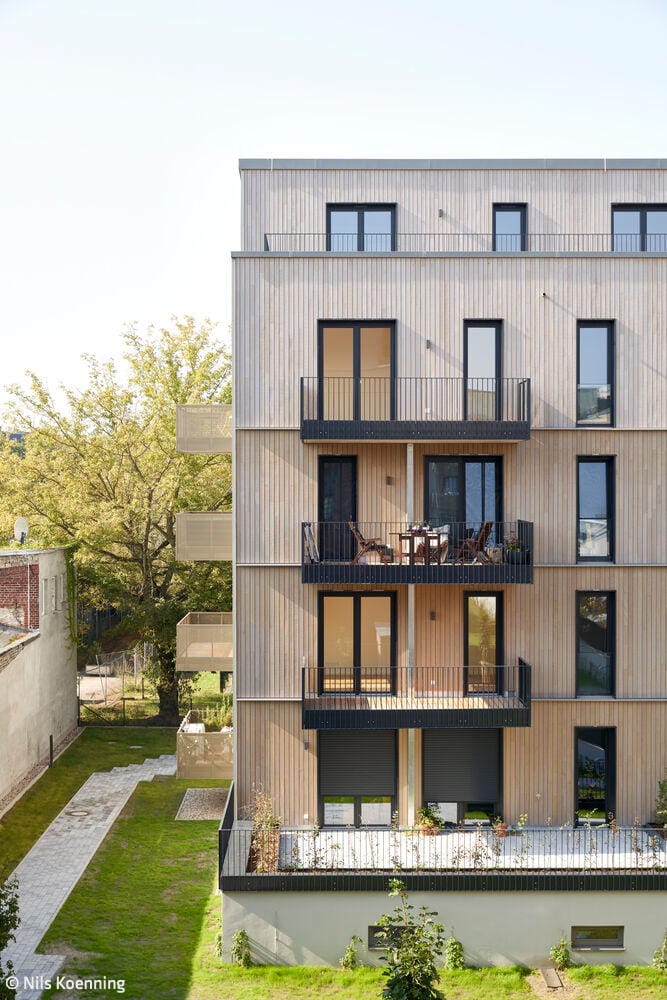
More Vibrancy in the Neighborhood
A thoughtful residential complex that redefines comfortable living