


A Gateway to the City
Locally sourced timber defines a highly functional new fire station with integrated exhibition space
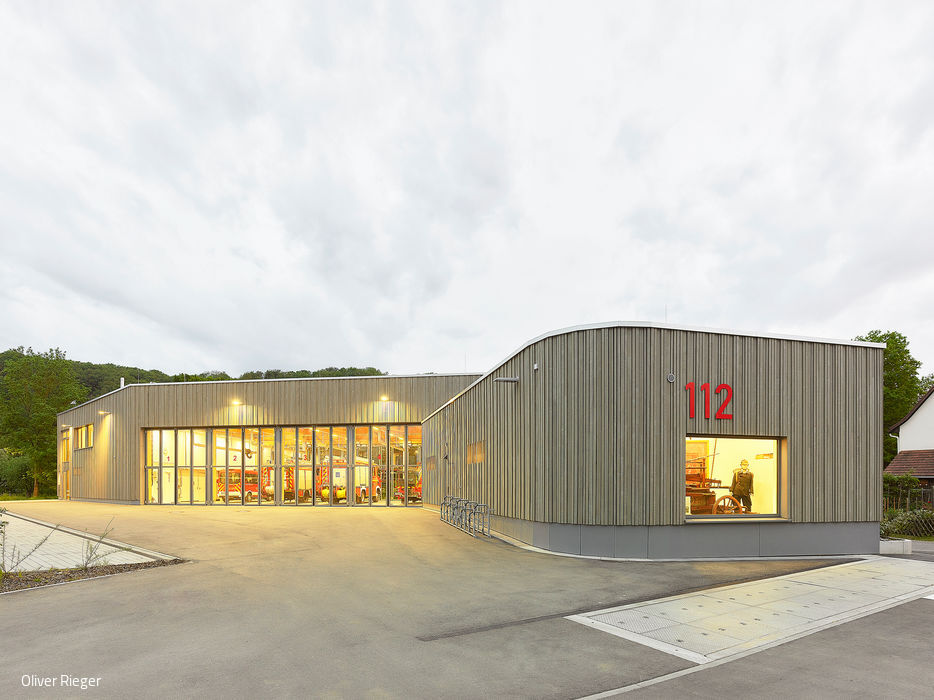


The former fire station in Lustnau no longer met the demands of modern firefighting operations. In 2020, the city of Tübingen decided to build a new facility positioned closer to residential areas, allowing faster response times during emergencies. The site—selected for its excellent transport links and proximity to woodland and the Ammer river—sits at the edge of the residential area. Today, the new fire station serves as a distinctive gateway to Lustnau and the university town of Tübingen, visible across the landscape.
Gaus Architects won the commission with a design that responds thoughtfully to the site's complex context while redefining its urban edges. Their concept interprets the building's form and function across 1,313 m² of gross floor area. At the heart of the facility is a seven-metre-high hall for five emergency vehicles and four swap-body containers—a space that opens fully on two sides and doubles as a venue for community fire service events. Two wings flank this central cube, their geometry shaping the surrounding landscape. The north wing, slightly lower in profile, contains storage, workshop, and drying facilities, plus a public exhibition window showcasing the fire service's work. The south wing houses changing rooms, break areas, training spaces, the operations centre, and support facilities—its massing logically organized around the operational flows demanded by emergency response.
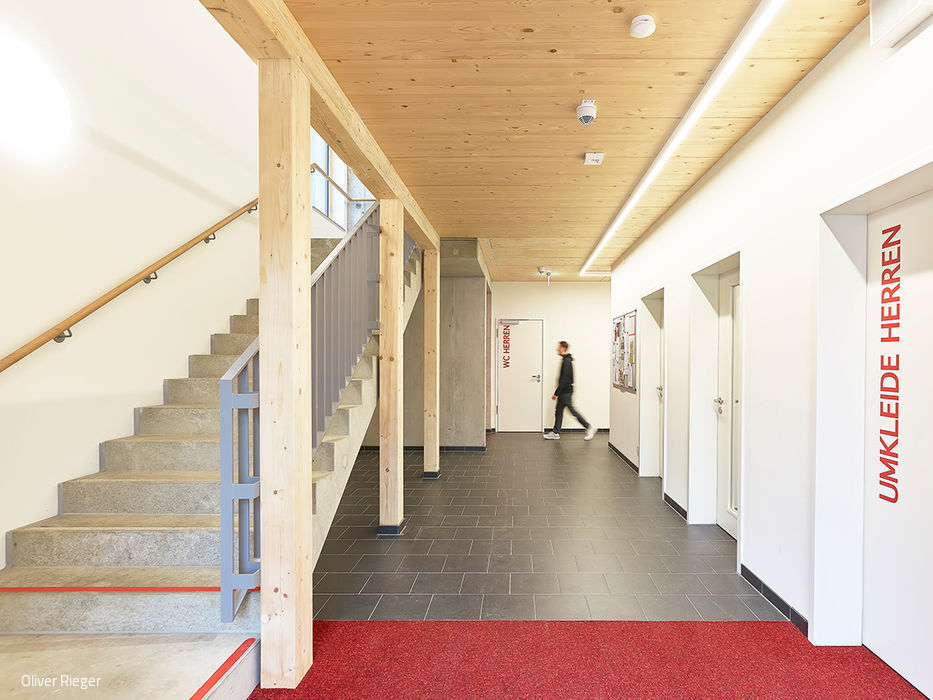
The rear-ventilated timber façade features wooden slats in varying widths and depths, creating an ever-shifting play of light and shadow that brings the building to life within the urban landscape. This material language continues throughout the interior: untreated glulam ceilings, oak parquet in training and youth areas, and spruce window frames (with beech used for specialized fire-rated glazing). The timber-frame exterior walls are filled with blown insulation, while internal structural elements are crafted from construction-grade beech. The hall's distinctive fish-belly beam structure rests on wooden supports. Every piece of timber comes from FSC-certified regional forests in the Black Forest and Allgäu. An extensive green roof hosts a photovoltaic array for on-site power generation, while solar thermal panels support heating via a wood pellet system.
Photography Credits:
Oliver Rieger
www.oliverrieger.com
(Published in CUBE Stuttgart 03|23)
Minimalism With Color
A Family Home: Generous Storage Meets Modern Art
Architecture with a Story
New nursery for three groups—an inspiring creative workshop for children
Respectfully Balanced
Conversion of a Heritage-Protected 1907 Military Building into a District Court
Order and Connection
A Sculptural Timber Structure with Metal Cladding Becomes the Focal Point of a Parish Community