


Openness as Core Identity
The Mercator Foundation's Essen headquarters embodies openness, connectivity, and forward-thinking design.
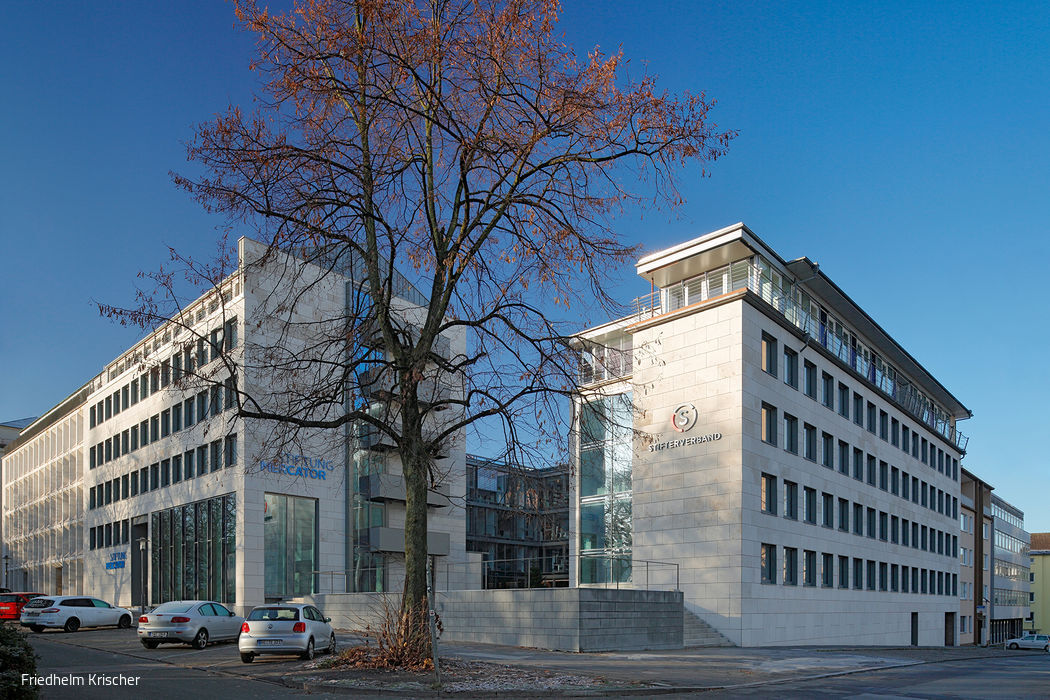
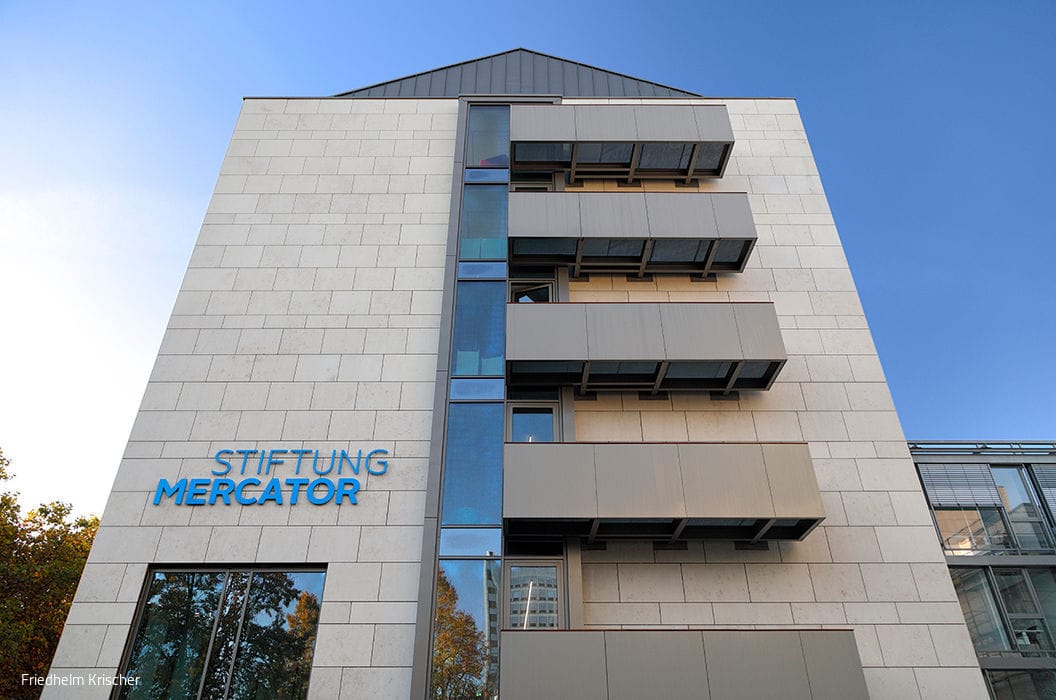

Das vierteilige Gebäudeensemble befindet sich an der Ecke Huyssenallee/Baedekerstraße südlich des Essener Hauptbahnhofs in exponierter Lage. Neben Großkonzernen im direkten Umfeld bildet das Aalto-Theater gegenüber einen städtebaulichen Fixpunkt. Durch den Rückbau des Eckgebäudes konnte eine interessante doppelte Platzsituation geschaffen werden, die eine einladende Campusatmosphäre vermittelt. Durch die Ecköffnung ist eine offene, transparente Architektur entstanden, die das Selbstverständnis des Nutzers, der Stiftung Mercator, nach außen transportiert.
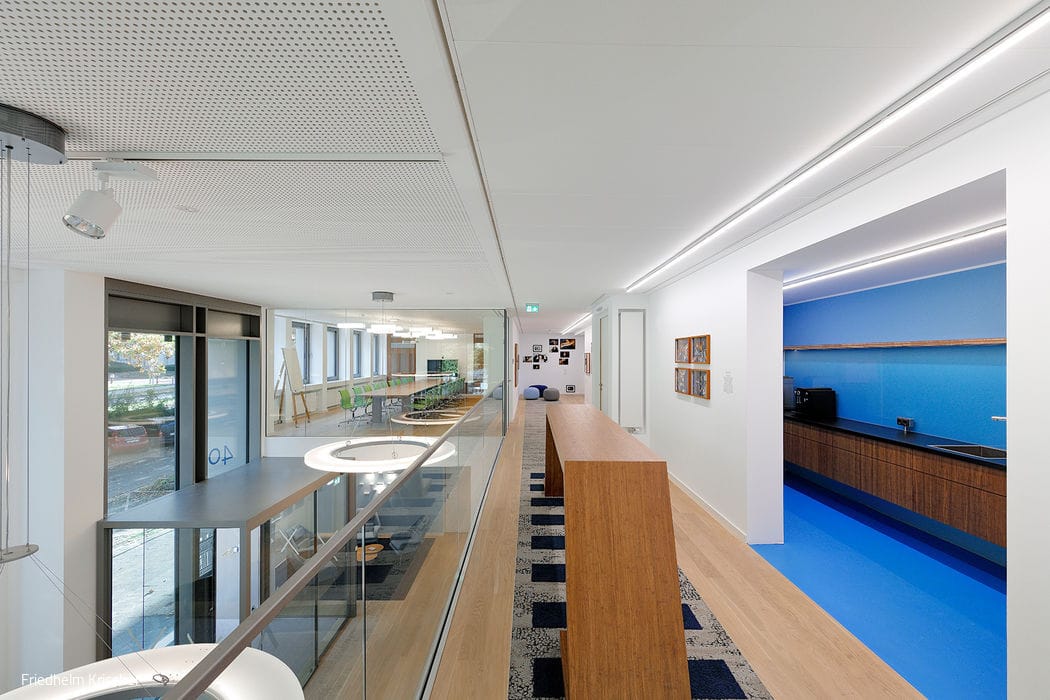
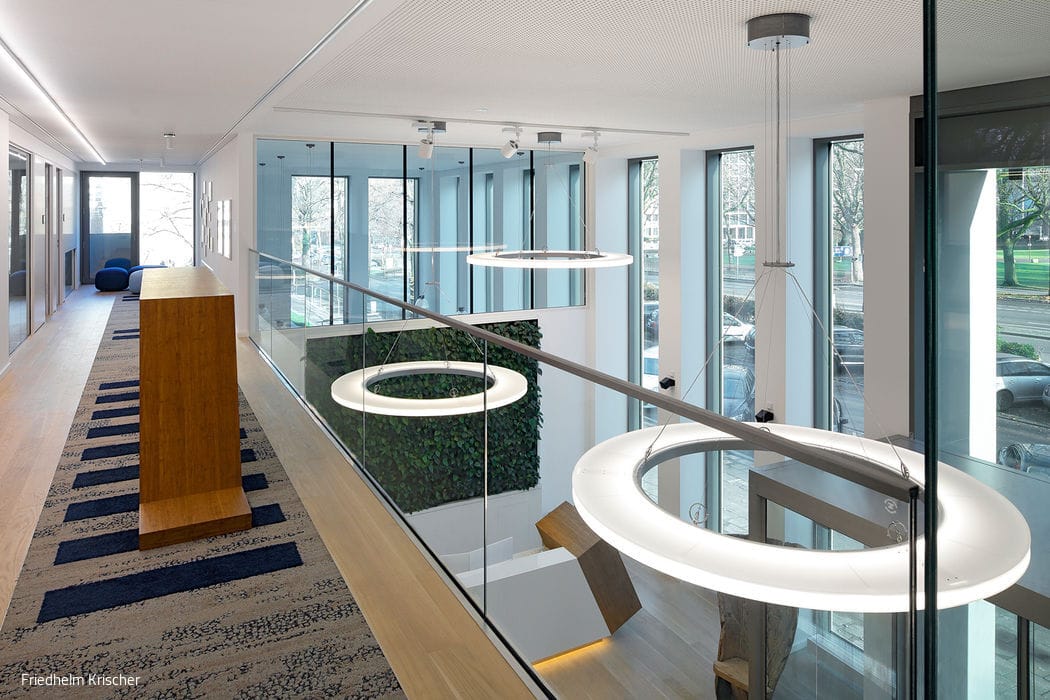
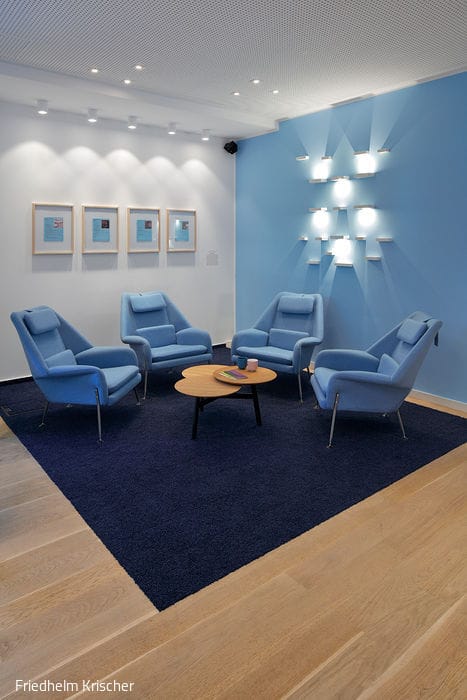
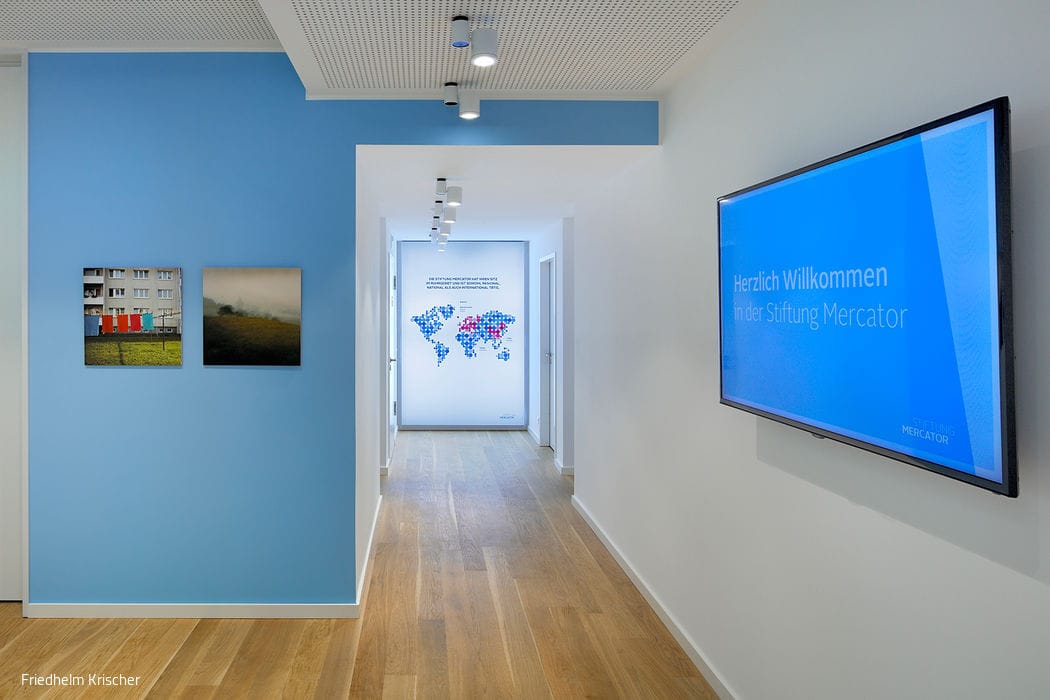
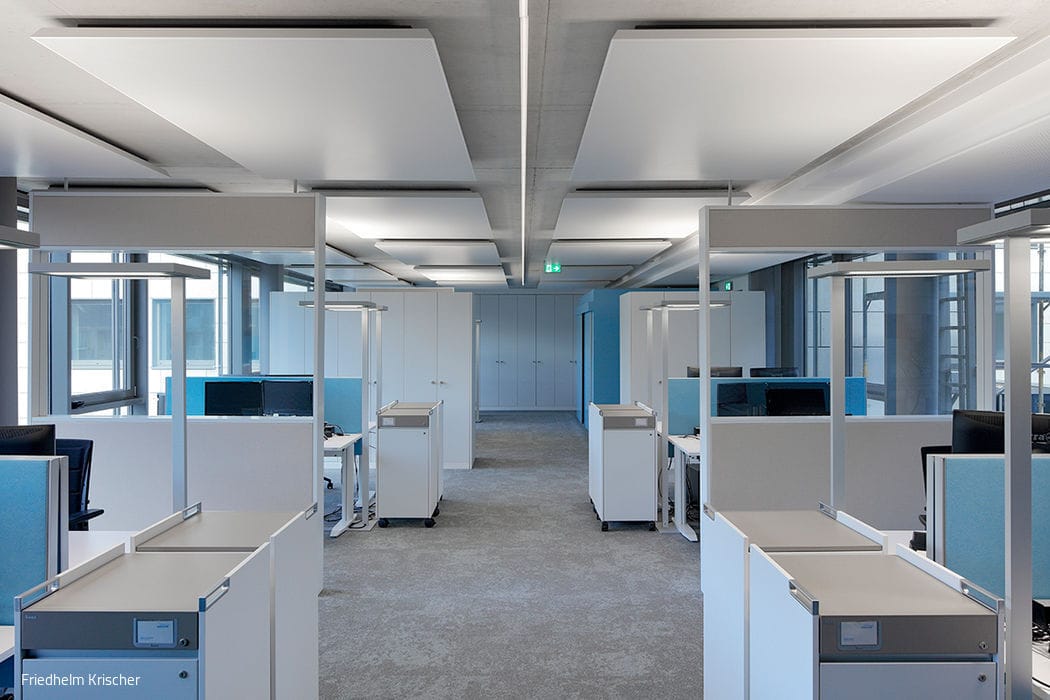
Die Gebäudehöhen und Kubaturen des Bürogebäudes orientieren sich an der anliegenden Bebauung. Auch die Oberflächen der neuen Vorhangfassadenelemente reagieren auf die umliegende Architektur: Die helle Natursteinfassade spiegelt sich in der Philharmonie auf der gegenüberliegenden Straßenseite und dem Gerlinggebäude zur Linken wider. Im vorderen fünfgeschossigen Baukörper an der Huyssenallee befinden sich in den Obergeschossen Büroflächen, im Erdgeschoss sind der Haupteingang sowie ein Gastronomiebereich. Der innere dreigeschossige Gebäudewinkel schließt im Erdgeschoss mit dem großzügigen Veranstaltungssaal an den Empfangsbereich an. Veranstaltungssaal und Casino öffnen sich zum Campus und verbinden beide Zonen kommunikativ miteinander. Dieses Winkelgebäude zeichnet sich durch seine transparente Glasarchitektur aus und ermöglicht Ein- und Ausblicke in alle anderen Gebäudeteile. Der Gebäudekomplex an der Baedekerstraße wird über den Campus erschlossen. So wird durch die erhöhte Frequenz eine städtische Urbanität erreicht und die Wege zu der zentralen Plaza verkürzt. Das komplette Architekturkonzept ist auf Kommunikation und Transparenz ausgerichtet. Bei der Gestaltung der Büroebenen wurden in Zusammenarbeit mit der Innenarchitektin Birgit Zittrich im Vorfeld die Bedürfnisse der Mitarbeiter mit den Anforderungen an deren Arbeitsbereiche definiert. Das Ergebnis: Open Space Büros mit non-territorialer Nutzung, großzügige Kommunikations- und offene Besprechungsbereiche sowie Zonen, die Diskretion und Rückzugsmöglichkeiten erlauben. Um eine zentrale Kücheneinheit wurden Teambereiche eingerichtet und in jeder Eingangssituation befinden sich grüne, frische Zonen in Form von Pflanzwänden, die die Arbeitsebenen nochmals strukturieren. Bodenintarsien markieren Funktionsbereiche und spielen mutig mit Farben und Materialitäten. Für eine optimale Arbeitsplatzakustik haben Fachingenieure Wanddisplays, Möbeloberflächen aus Akustikmaterial, geräuschhemmende Raumtrenner sowie Oberflächen mit absorbierender Wirkung verwendet, die alle Anforderungen erfüllen. Die Beleuchtung wird energiesparend über Bussysteme mit Bewegungsmeldern und Dämmerungserfassung geregelt. Zum ressourcenschonenden Bau gehören auch eine manuell zu steuernde Verschattungsanlage zwischen den Scheiben der Verbundfenster sowie die Wettersteuerung der Außenjalousien im Winkelgebäude.
Photography Credits:
Friedhelm Krischer
www.krischerfotografie.de
(Published in CUBE Ruhrgebiet 03|20)



Emphasizing Exceptional Character
A generous home that engages its setting and makes a statement
Sometimes less is more
The Cube Garden in Krefeld radiates calm through its minimalist design.
Motivational architecture
The New WEB Individual School Building Embodies Its Mission
Characteristic Settlement Ensemble
New residential space and administrative building for the foundation on Margarethenhöhe in Essen