Continuing the Lines
An extension to a 1960s end-of-terrace house creates additional living space
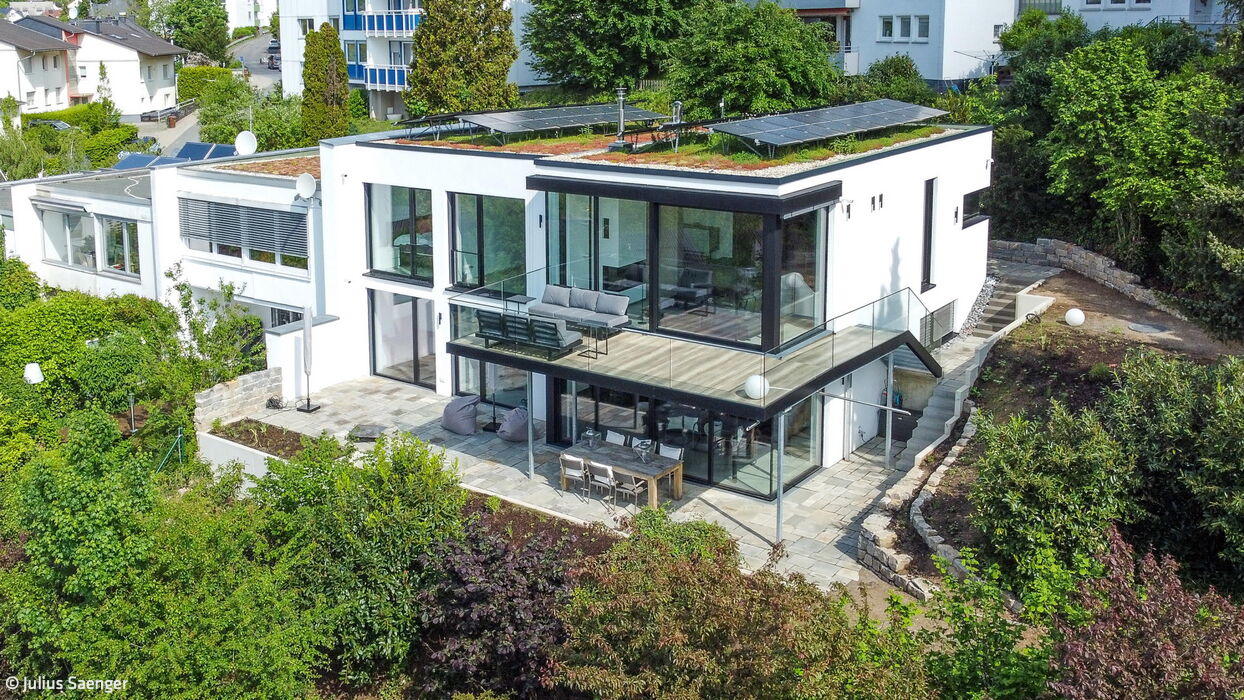
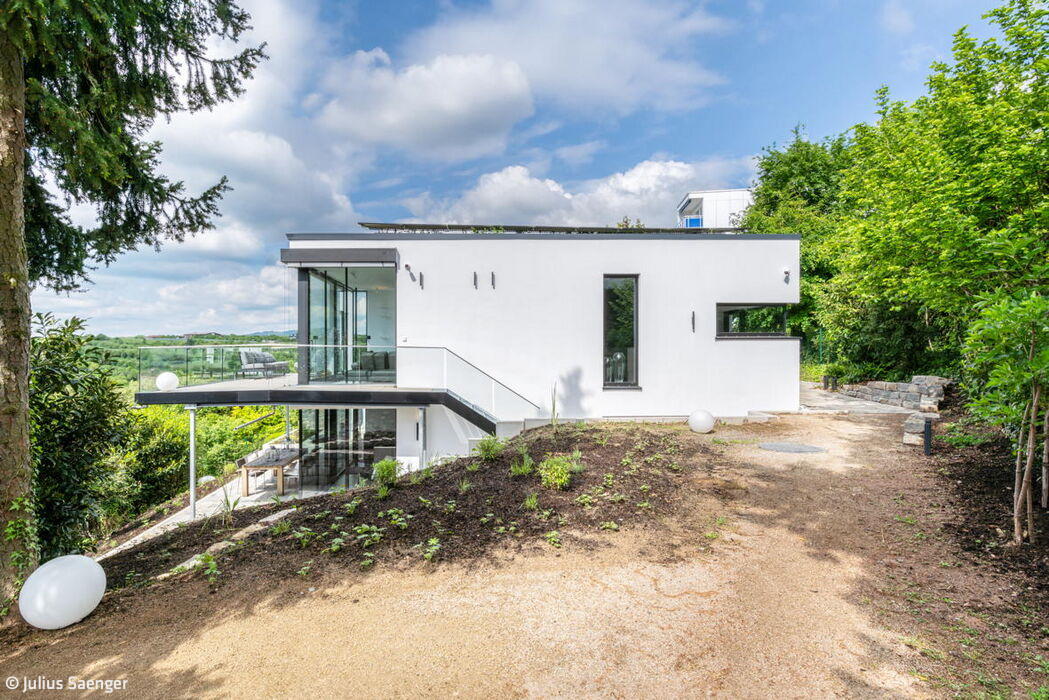
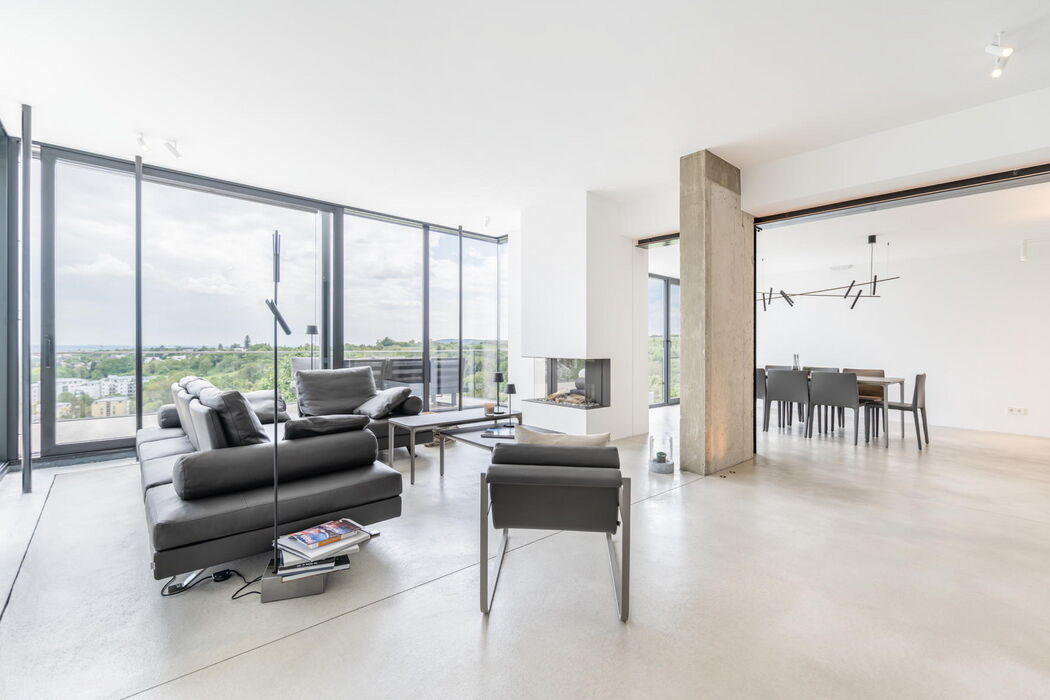
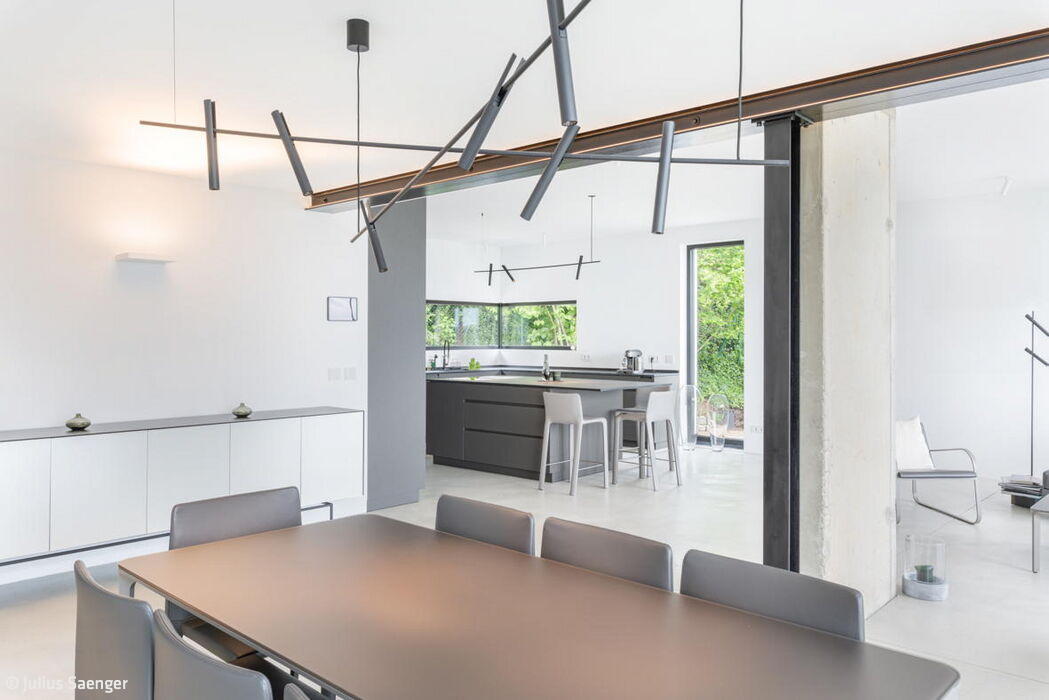
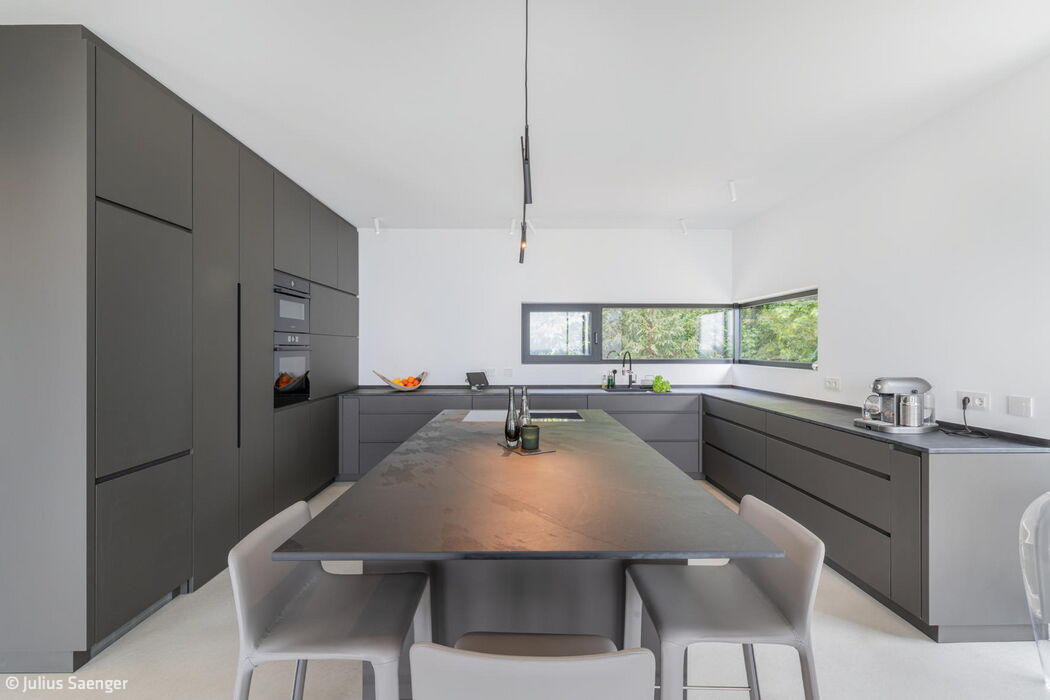
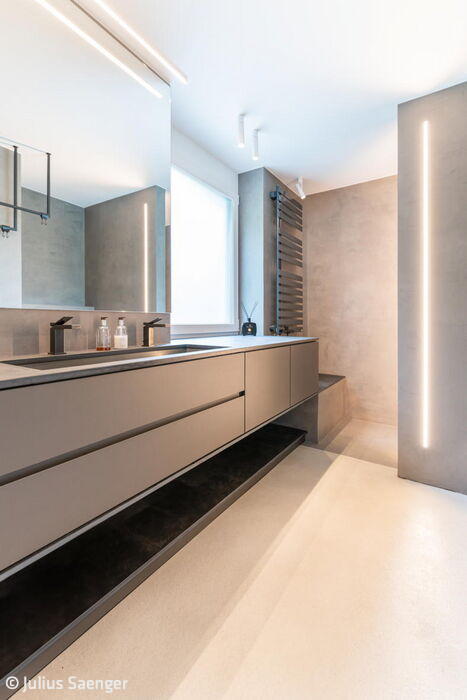
At the end of a 1960s row of terraced houses, an extension more than doubled the living space of the original structure. The project presented multiple challenges: a steeply sloping site combined with difficult access required a large crane to deliver materials to the construction site. Further complicating matters, a public sewer line crossed the property and had to be partially built over. Architect Marita Güntert from Giessen prepared the initial designs through to building approval, while Frankfurt-based firm räume+bauten handled the detailed planning and floor plans. Their approach was elegant in its restraint: by continuing the modernist linearity of the original building while adding a contemporary dimension, the extension integrates seamlessly into the existing structure without compromising its refined proportions.
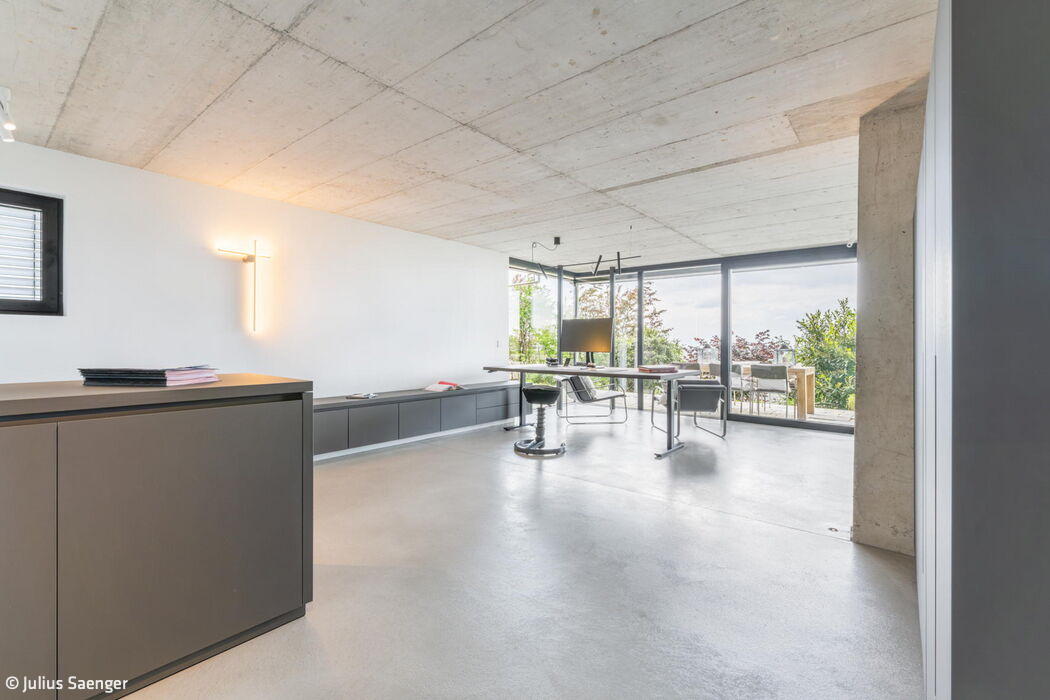
The open floor plan inside offers generous space for flexible living. Floor-to-ceiling windows flood the interior with natural light and create a bright, welcoming atmosphere. The lighting design reinforces the architectural axes, highlighting the crisp lines and balanced proportions throughout. A study occupies the basement level, while the ground floor opens onto a generous balcony overlooking the sloped garden—surprisingly accessible given the challenging topography. The careful design makes the most of what could have been a limitation.
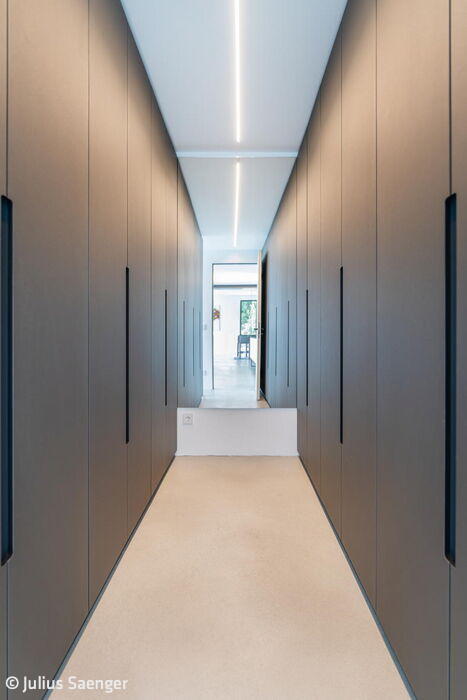
Although Poroton brick was initially specified for the exterior walls, supply constraints led the architects to choose Purit lightweight concrete blocks instead—offering equivalent thermal performance. Concrete Ciré and pigmented self-leveling screed appear throughout the bathrooms and as flooring, creating seamless, refined surfaces. The built-in furniture features linoleum fronts, introducing a contemporary yet natural quality to the overall aesthetic.
The green roof not only enhances summer heat protection but also maximizes the efficiency of the photovoltaic system. Together, these elements—photovoltaics, green roof, and heat pump—form an integrated approach to the home's energy needs.
Photography:
Julius Saenger
www.julius-saenger.com
(Published in CUBE Frankfurt 03|24)
Graceful and Elegant
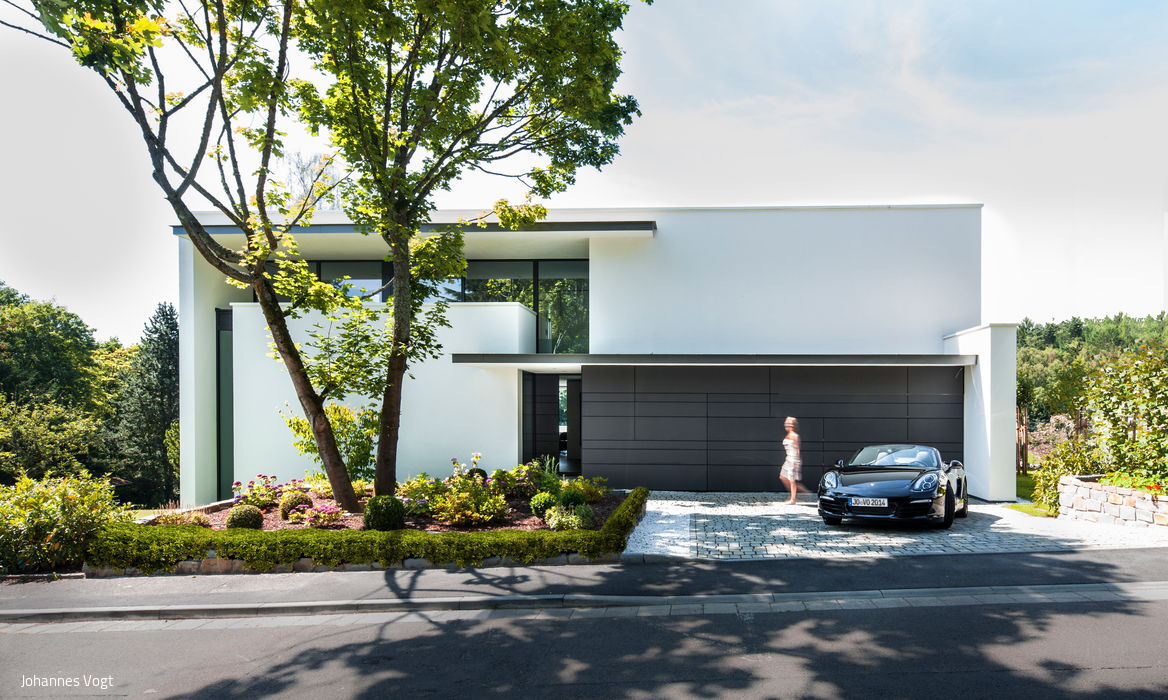
A Villa Balancing Openness and Privacy
Refined Texture
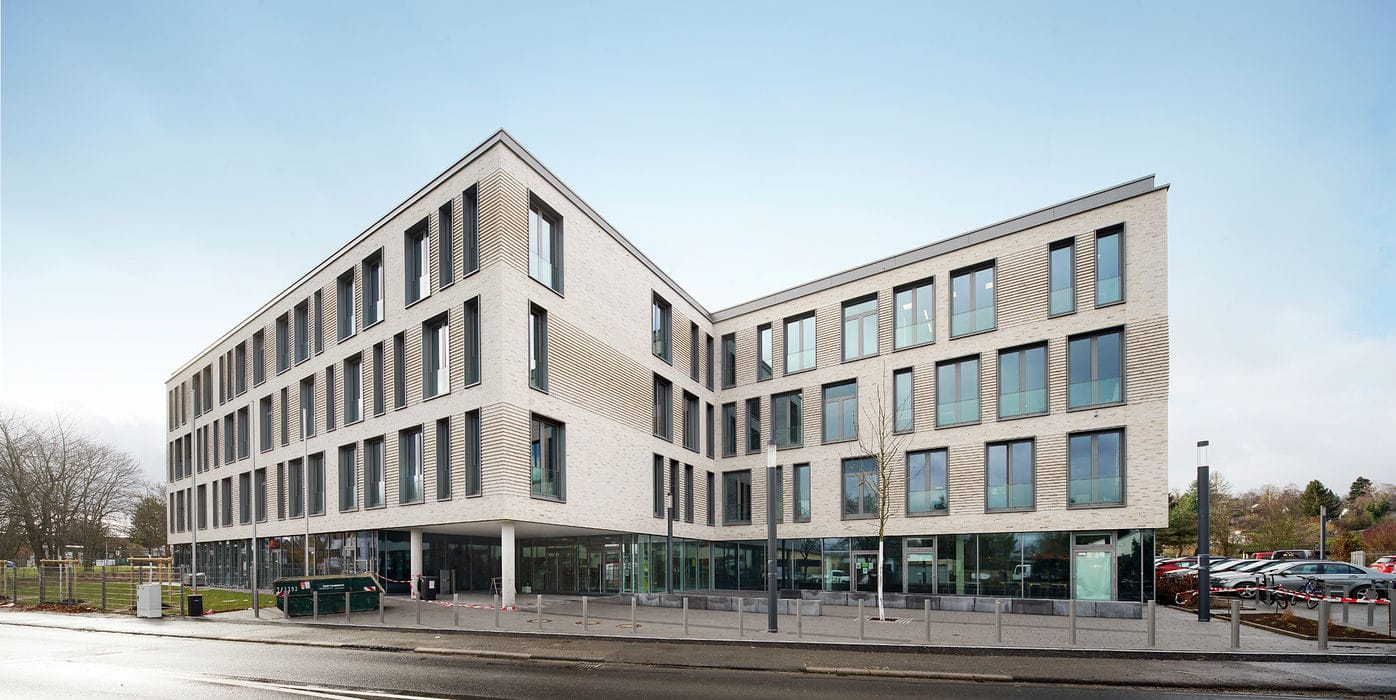
New school building designed to modern educational standards

Protection and Openness
Exposed concrete walls unite purism, generous proportions, and superior insulation in a contemporary villa.