


As Colorful as Life
A sufficient and sustainable housing project in Nordend, minimizing per capita space consumption


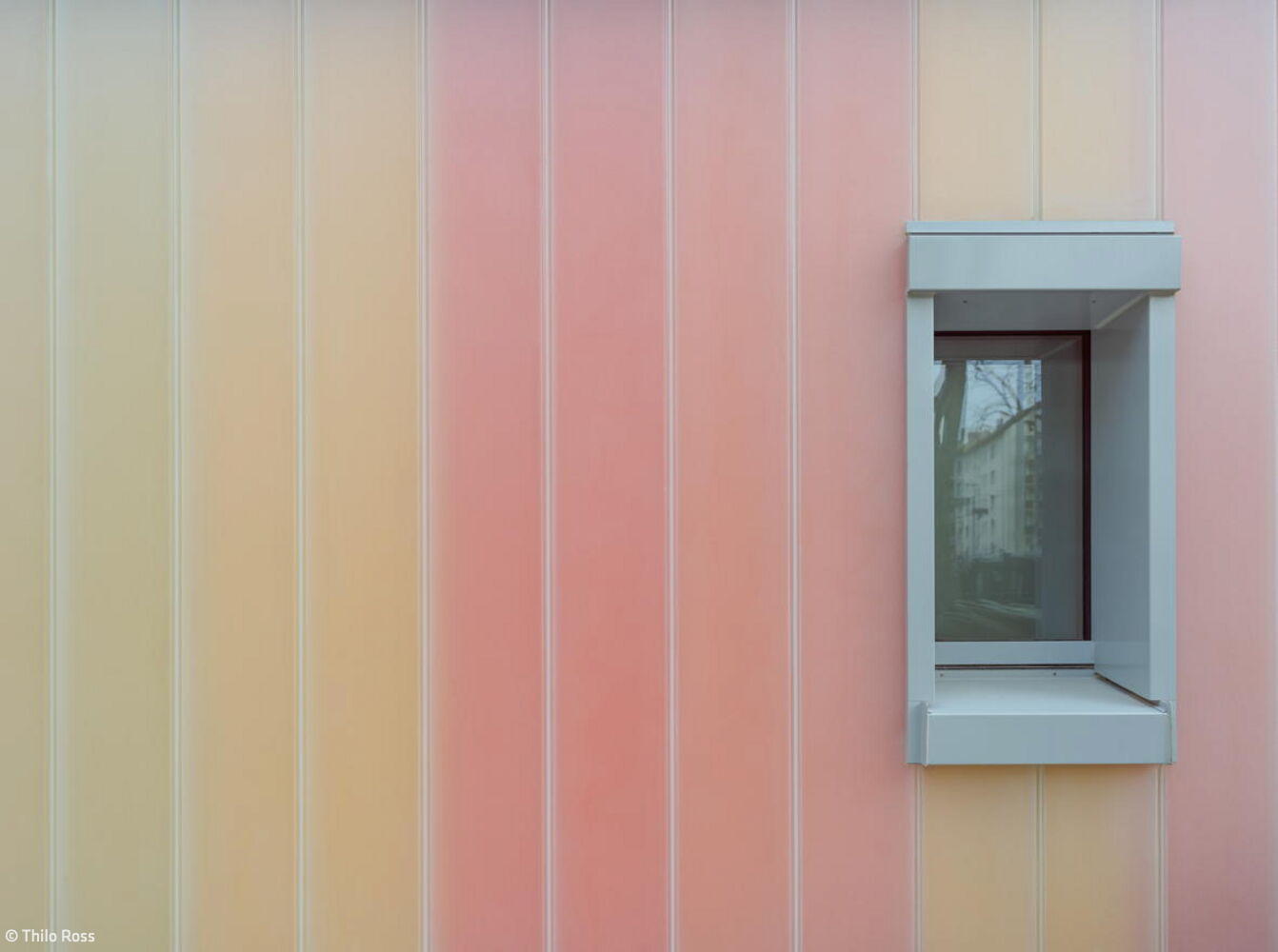


The colorful house of the "Gemeinsam suffizient leben" (Living Sufficiently Together) housing project tackles multiple pressing urban challenges: it's both a vibrant gathering place that fosters social connection across families and generations, and a pioneering model for sustainable, future-ready construction developed through collaborative planning with residents and clients alike. The flexible living concept, realized through innovative timber construction, earned the prestigious "Hessian Prize for Innovation and Community Spirit in Housing Construction" in 2018. Completed in 2023, the house occupies a narrow 313 m² plot in the densely built Nordend neighborhood – a site that conventional developers had deemed unsuitable. For DGJ Architektur, it presented an exciting opportunity: to create multifunctional communal spaces within an exceptionally compact footprint.
The building's striking façade brings warmth and vitality to the otherwise uniform streetscape of Friedberger Landstraße, its cheerful color palette reflecting both the neighborhood's rich diversity and the residents' open-minded, community-focused ethos. The color scheme also echoes the surrounding architectural vocabulary. Like its inhabitants, the building embodies the "principle of sufficiency": individual living spaces are intentionally modest, while residents collectively share a kitchen-diner, communal balconies, and a flexible guest/multipurpose room. By positioning these shared areas directly off the entrance and linking them to the stairwell, the design simultaneously creates vibrant social hubs and eliminates unnecessary circulation space. The result: a per capita footprint of just 27.8 m² compared to the national average of 47.4 m² in 2024. Yet generous windows, built-in storage, ample basement shelving, and efficient floor plans ensure residents enjoy a high quality of living.
The primary structure employs pure timber-frame construction with wood-to-wood joints and zero metal fasteners. This approach makes the building largely recyclable—aligned with cradle-to-cradle principles—since wood is both renewable and carbon-sequestering. Because interior partitions are non-structural, floor plans can adapt to changing needs without compromising the building's integrity. The timber skeleton enables independent installation and removal of interior walls, allowing apartments to be reconfigured from smaller chambers to open-plan living spaces (including cluster arrangements) with flexible storey divisions.
Photography:
Thilo Ross
www.thiloross.de
(Published in CUBE Frankfurt 04|24)


Intersection & Meeting Place
A Bold New Addition: How Mainz's New School Building Transforms the Learning Environment
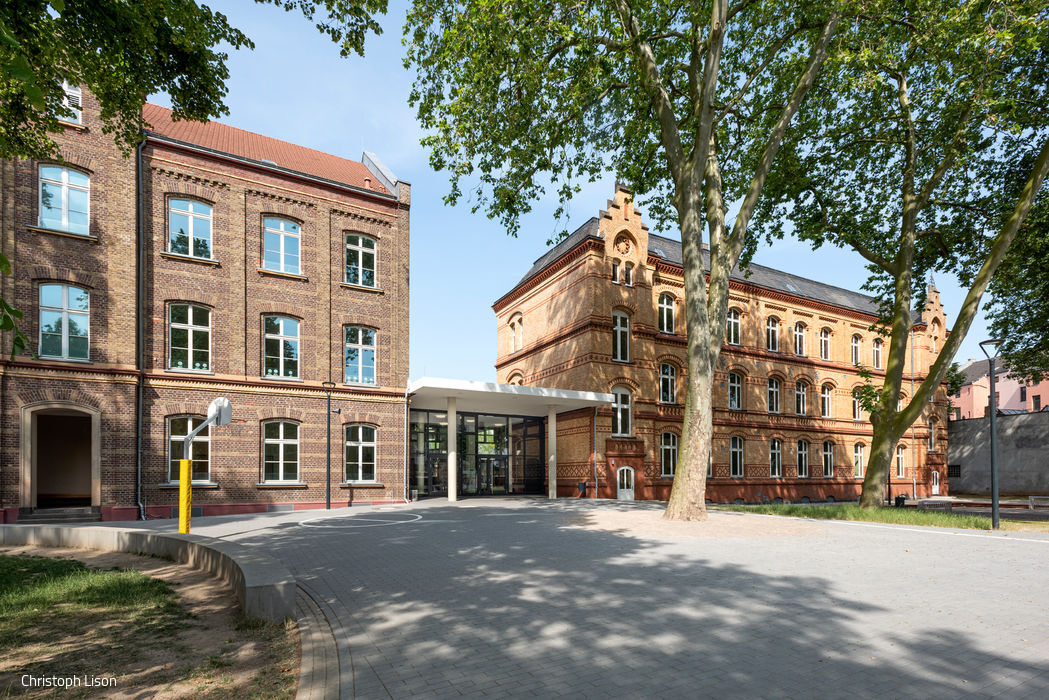
Refined Extension
The Jan Wellem School in Bilk forms a harmonious ensemble of old and new.
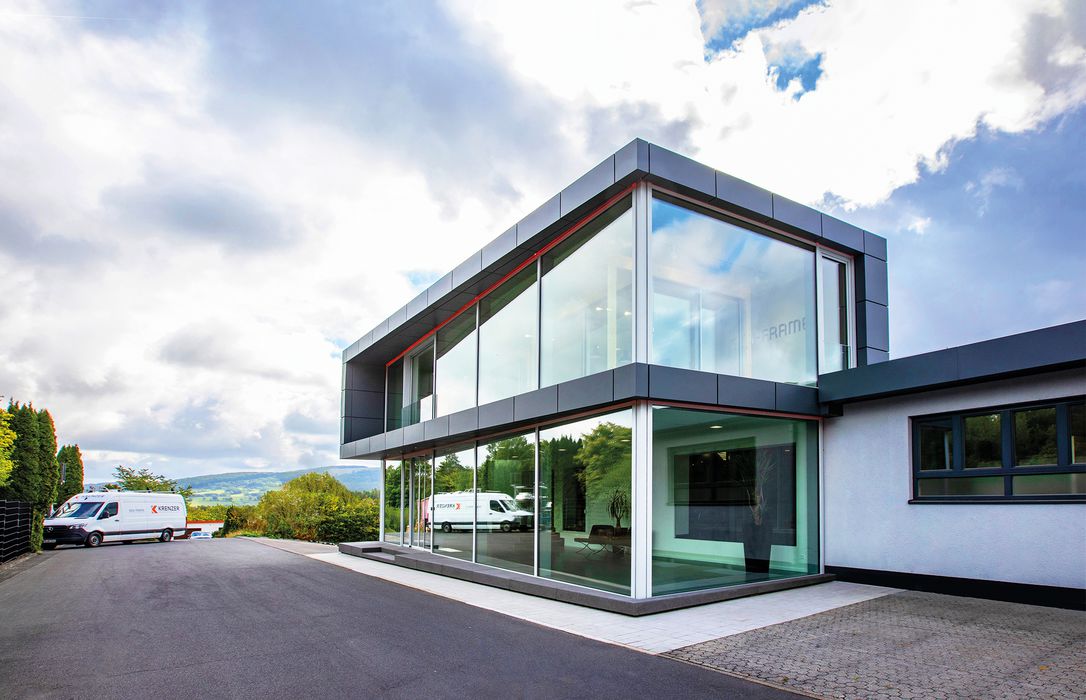
Boundless Space
Krenzer's new showroom is more than a display space—it's a working example of what modern glass solutions can accomplish.
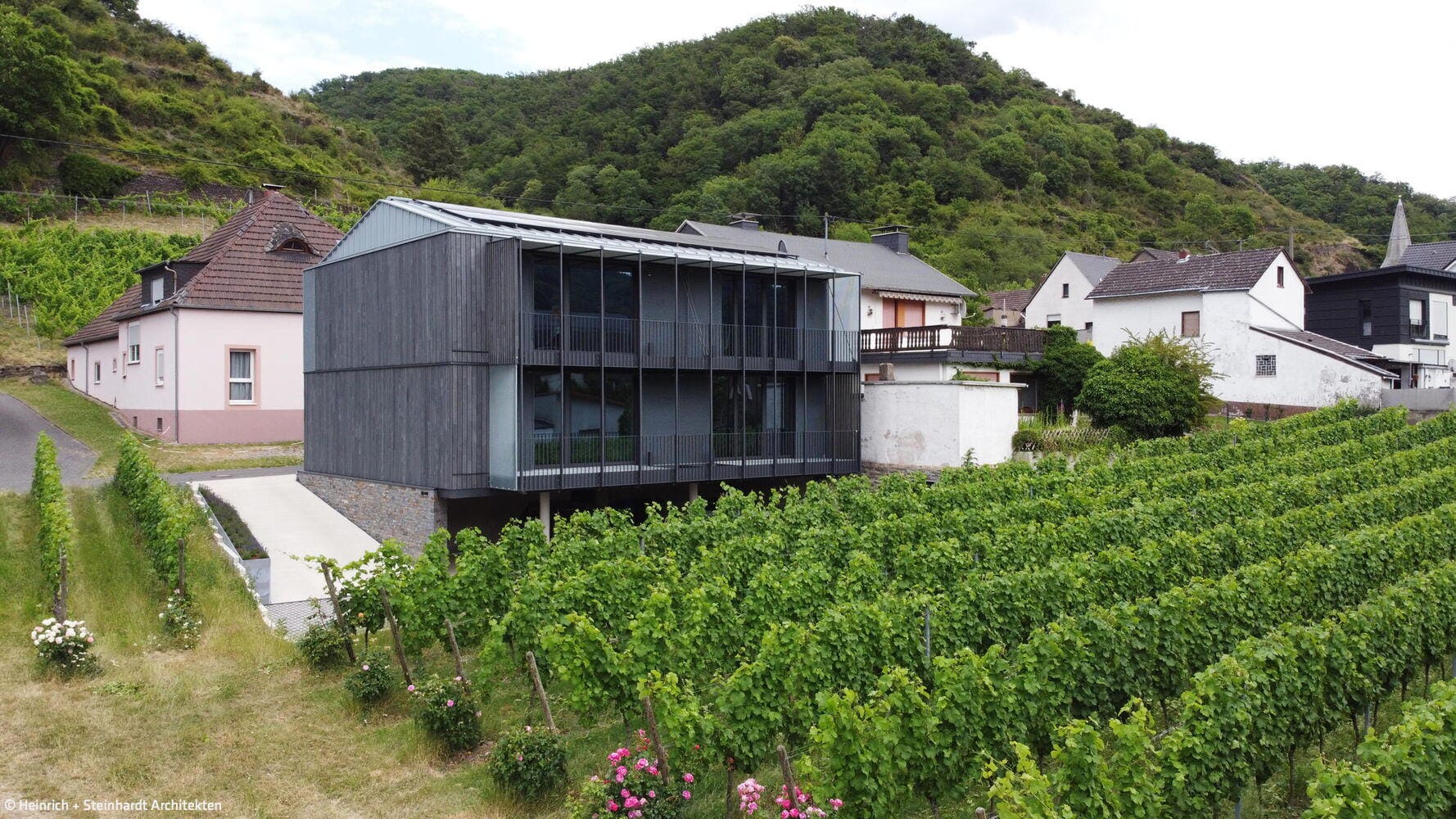
Confident & respectful
The winery's guesthouse has deep local roots and a strong presence