


There's Another Way
A residential building that celebrates individuality and thoughtful community living


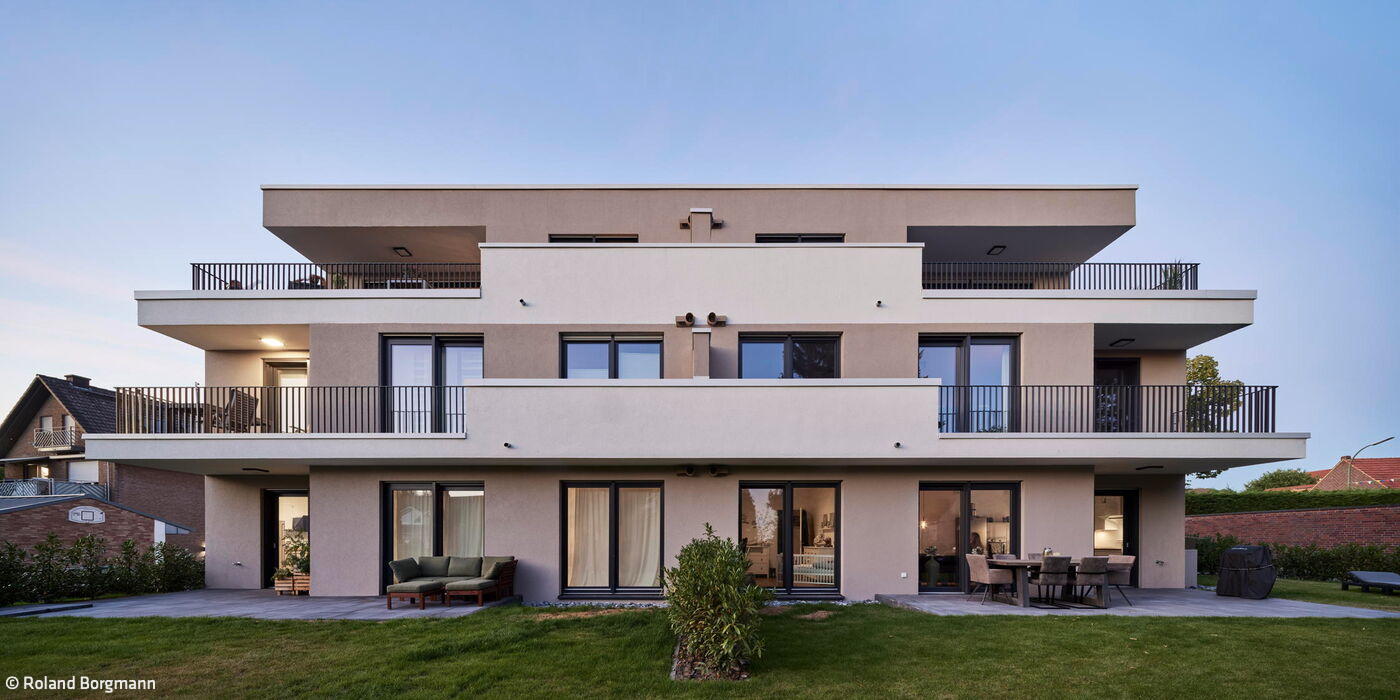





When a single-family home is demolished to make way for a multi-family building, developers typically maximize every square centimeter for living space. But the apartment building designed by Berghaus Architekten from Hamm tells a different story. Not only did the architects take a different path—the residential building stands out for its exceptional individuality and thoughtful design details. It was fortuitous for both the client and the neighborhood that the developer and architects aligned so naturally from the outset, sharing a unified vision from day one.
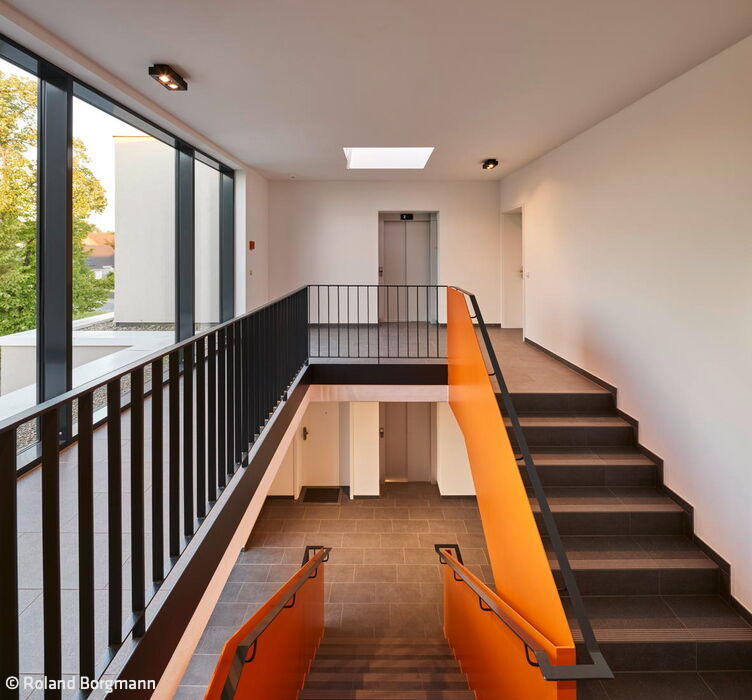
The vision became clear: the barrier-free building with ten residential units and underground parking would maintain considerable distance from neighboring properties—a mix of single-, two-, and multi-family homes—while maintaining a compatible massing that preserves the urban fabric and offering diverse apartment sizes. What truly captures attention is the expansive, glass-enclosed stairwell anchored by an orange sculptural steel staircase—a gathering space that rejects anonymity while making a bold cultural statement. "Orange is the client's favorite color and also the signature color of the observation towers in Lippepark Hamm, which our office designed and which has won numerous awards," explains architect Jens Berghaus. "When he learned that connection, he was immediately drawn to it." From the street, the continuous stairwell glazing and the building's offset profile create an intriguing illusion—two impressive villas rather than a multi-family residence.
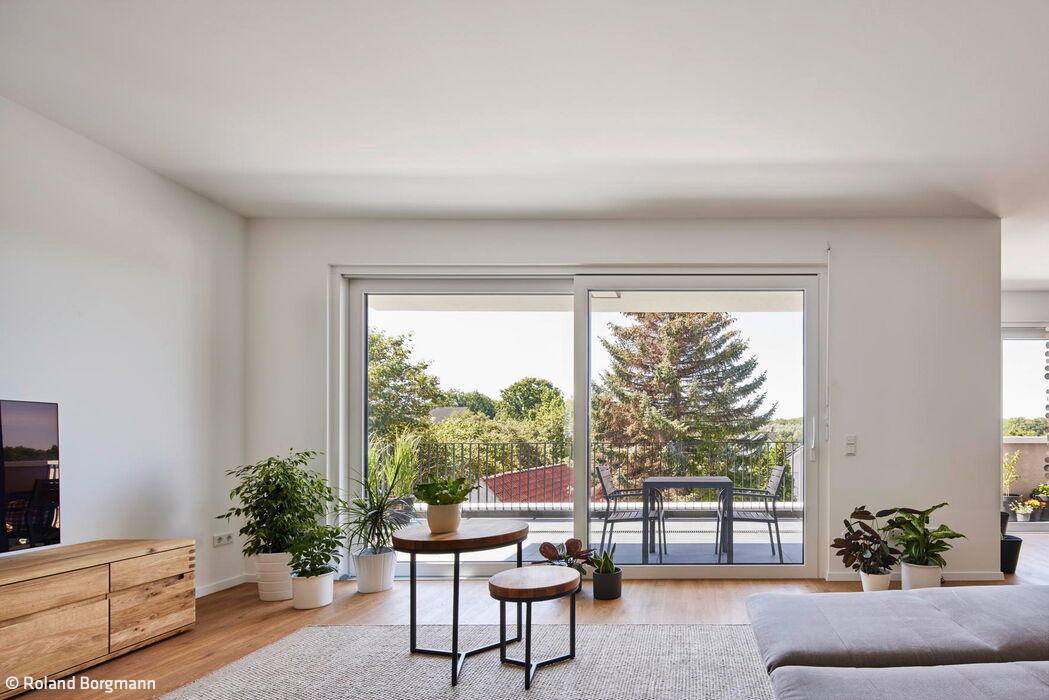
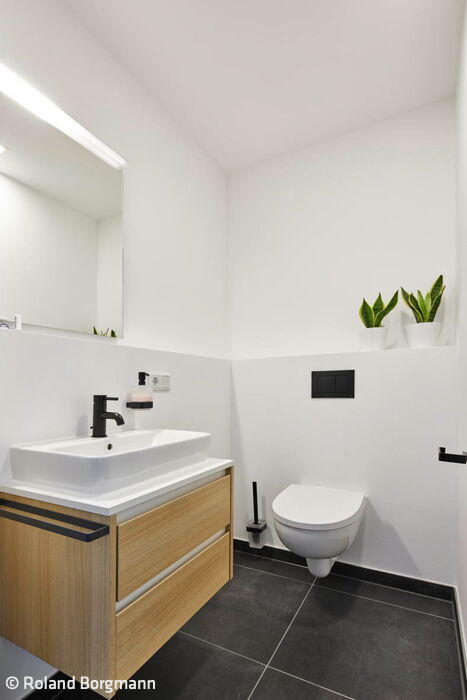
The rear façade features a refined composition of projections and recesses, which—combined with the balustrades of the wraparound terraces—lend the structure a delicate, distinctive character. The substantial distance to neighbouring properties, generously planted with greenery, becomes immediately apparent. Even the built surface has reclaimed a touch of nature through its verdant roof. Apartments range from 70 to 130 m² and each offers an open-plan living-dining area, two separate rooms, a guest toilet with shower, and an additional en-suite bathroom. Every room enjoys natural daylight, and nearly all open directly to the outdoors—whether to private gardens or, on upper levels, to spacious balconies. The architectural team also designed the kitchens for the penthouse units, finished in striking black to provide an elegant counterpoint to the bright, sun-filled interiors. Even the air-source heat pump is seamlessly integrated into the design, discreetly concealed on the roof.
Looking back at the remarkably swift eighteen-month planning and construction timeline, the client and architects highlight two particularly memorable moments: the controlled detonation of functional anti-tank weapons discovered on the site, and the ingenious installation of the flat steel stair railing. The latter was threaded through the stairwell core using a temporary crane mounted directly to the ceiling—a technical feat in its own right. The flight treads are formed from exposed reinforced concrete, a material choice carried through to the ceiling soffit for visual continuity. The intermediate landings are structurally integrated with the floor plates above, allowing the staircase to appear to hover weightlessly within the volume.
Photos:
Roland Borgmann
www.rolandborgmann.com
(Published in CUBE Ruhrgebiet 03|24)


Future-ready and welcoming
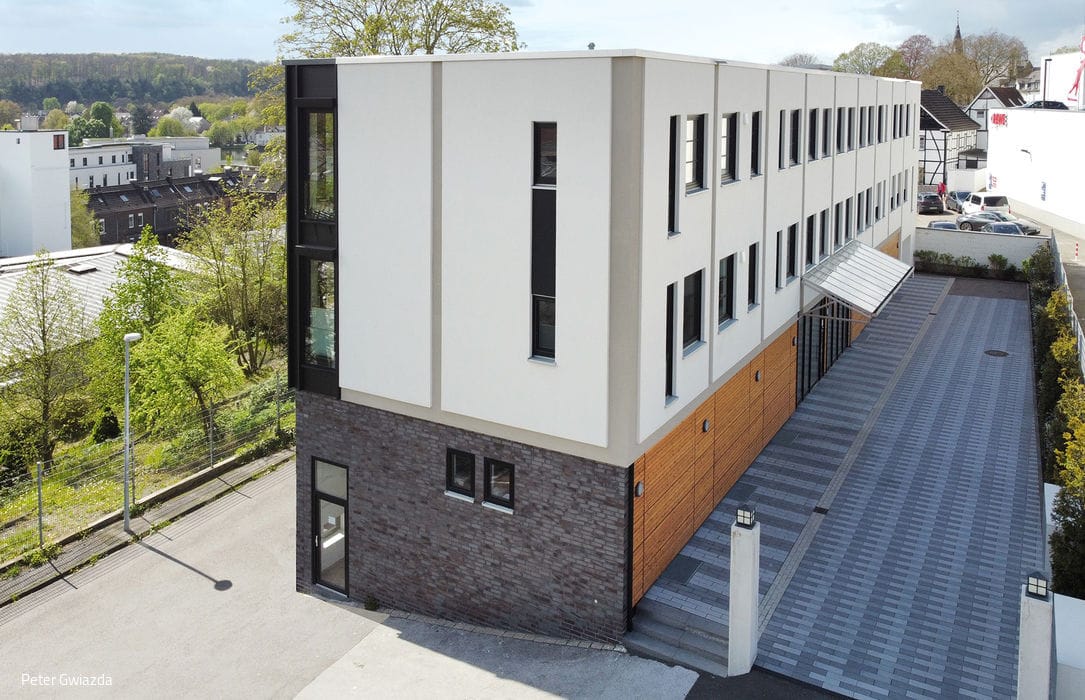
The Protestant University in Bochum Receives Modern Refresh and New Entrance
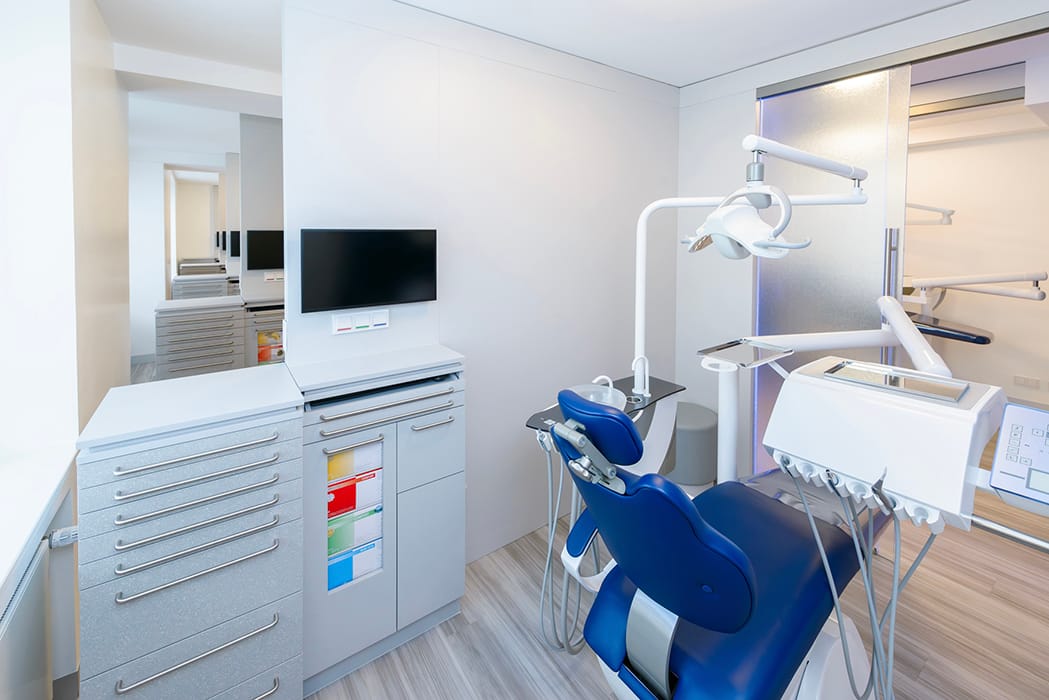
Making optimal use of space
An Essen Orthodontic Practice Reimagines Space: From Individual Rooms to Open Treatment Bays
Nature as Partner
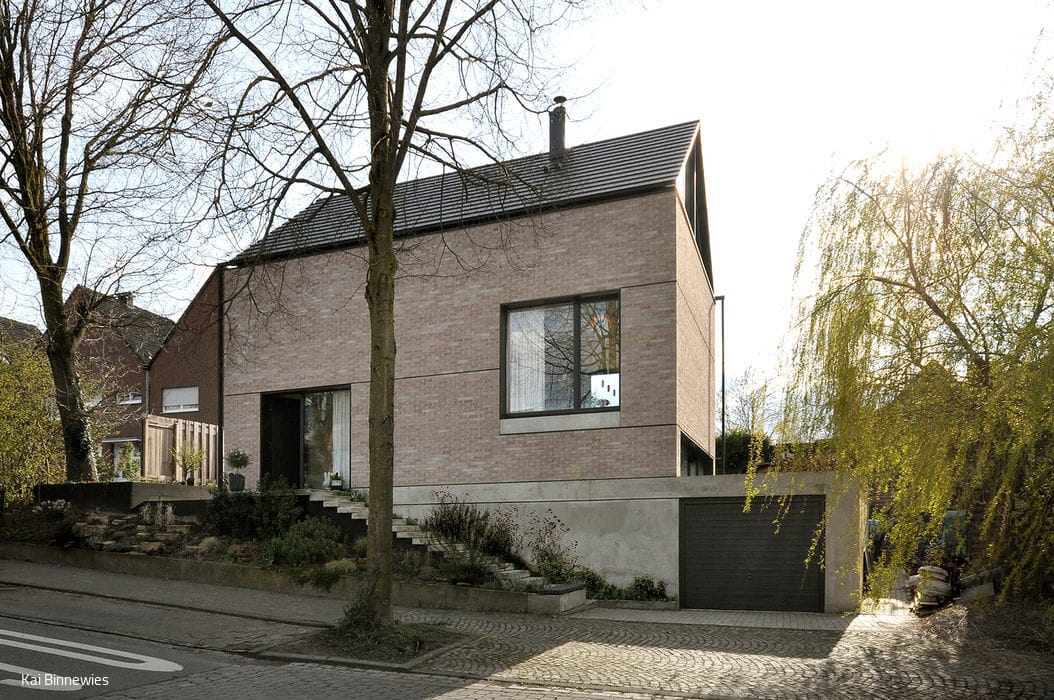
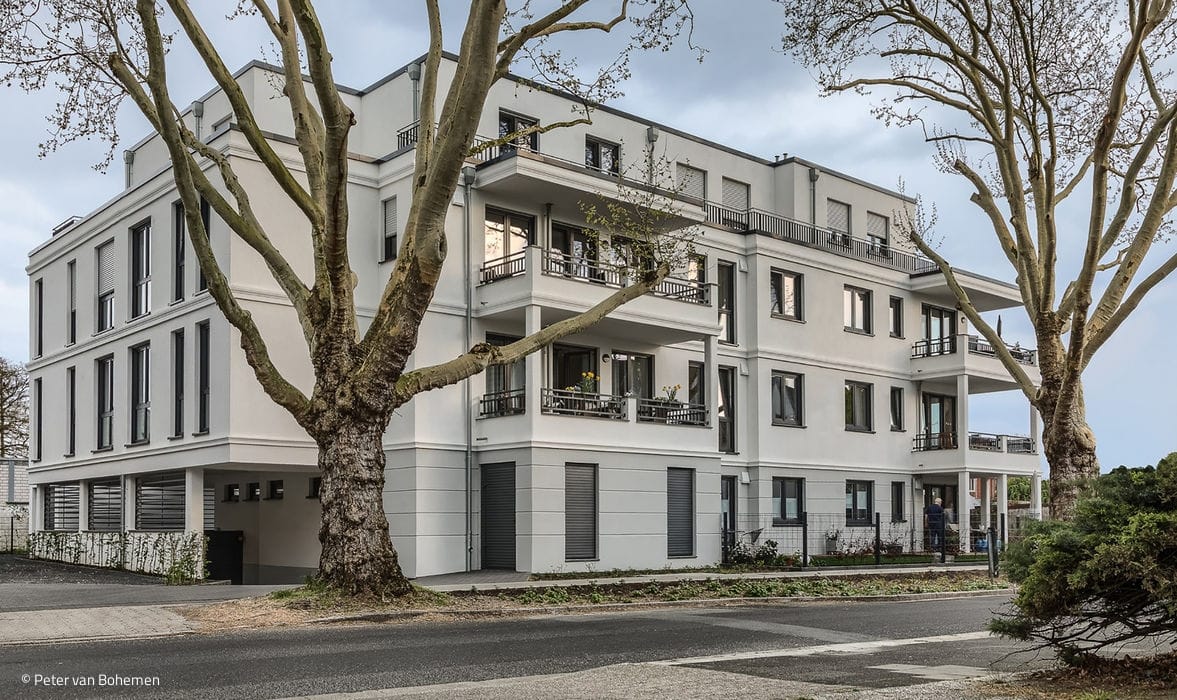
Designing around heritage: how plane trees shaped this Moers residential complex

Sustainable Design
Dustin Jessen designs furniture and accessories from recycled materials.