


The Tree as a Symbol of Life
A master of his craft: Swiss landscape architect Enzo Enea
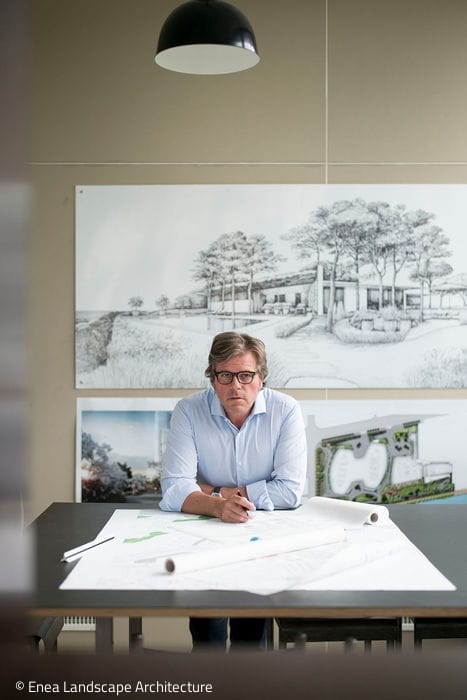
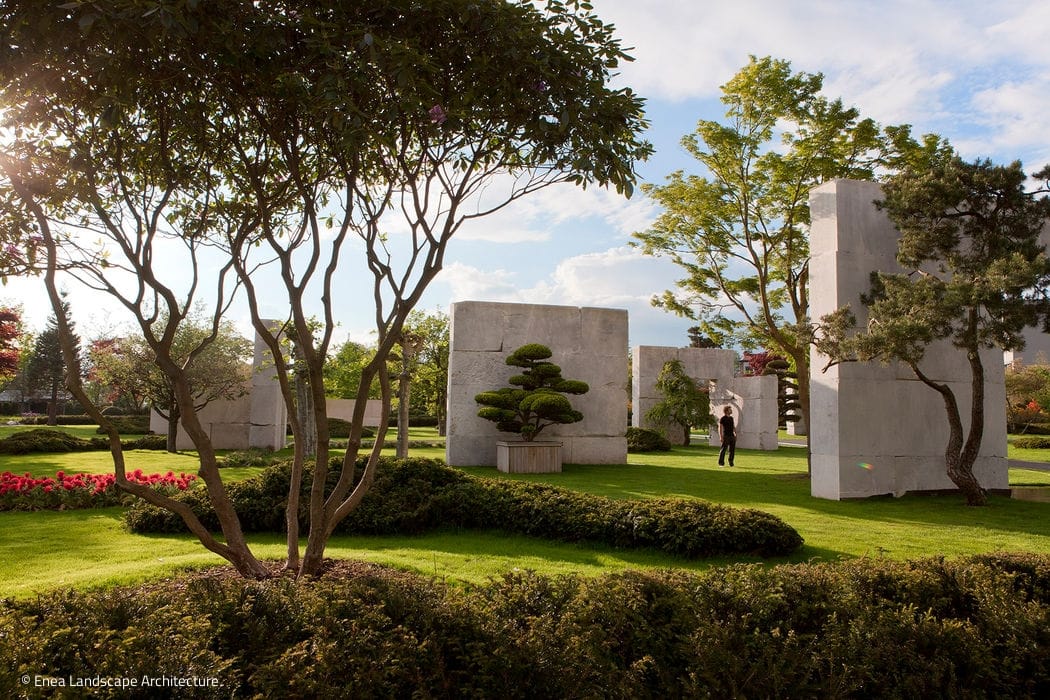


CUBE: You create three-dimensional works of art collaborating with nature. Your "tree museum" here in Rapperswil-Jona is itself a total work of art – what inspired this vision?
Enzo Enea: The Tree Museum is where my vision of landscape design comes to life. Here, I can freely orchestrate nature, architecture, botany, and art as a living space for people – and create a lasting monument to the life-giving tree.
The grounds also feature an art collection by international artists.
Absolutely. Art articulates what we feel but cannot express in words. It transcends boundaries and creates connection. I place human-made sculptures in dialogue with the tree sculptures nature has shaped. I discover new works at international art fairs and through conversations with experts.
You design gardens around the world – what's the secret to achieving such remarkable success in your field? Are you a workaholic?
Well, how shall I put it – I'm someone who wakes up and tries to truly live. For me, it's not work in the conventional sense; it's life itself. Sometimes the distances make it a bit demanding. But it's never an obligation – it's pure joy and passion.
You couldn't possibly manage all these projects alone.
Every project does cross my desk, but you're absolutely right – without my exceptional team, I couldn't deliver on this scale, especially given the distances involved. We have offices in Miami and New York, with our main headquarters here in Rapperswil-Jona employing around 250 people. In Germany, for example, landscape architects can't execute work directly – there's a tendering process, and a landscaping company takes over. Enea operates as a full-service provider. We have carpenters, electricians, plumbers, metalworkers, sculptors, tree specialists, gardeners, landscape architects, and engineers – all working as one team. Our commitment is delivering the highest quality at every stage.
The fundamentals of landscape architecture can be taught, but everything else comes down to intuition and talent – how would you characterize yourself?
Like any profession, you learn the theory and master the practice. You can deepen your skills by studying the masters, but I believe the real driving force is passion – the love for what you do. That's what motivates athletes, painters, writers, and musicians too.
How do you approach each project?
My philosophy centers on genius loci – the spirit of place. I read the landscape, then create a garden that belongs there. I don't decorate; I integrate. That means considering geology, wind patterns, sun angles, and how the space will actually be used.
Working globally means navigating vastly different climates and vegetation – that's quite a challenge.
Exactly – that's where botanical gardens come in handy. We assess what's possible on site, then develop solutions based on existing conditions and the client's vision. That's why we're landscape architects, not artists – we can't simply create "free art." Legal constraints, climate challenges, space limitations, and budget realities make every project complex and deliberate.
Munich is getting a new garden right now – the outdoor spaces for the "Karl" designed by David Chipperfield. What's your vision for that project?
It's a courtyard garden – a small park with spacious seating. It serves multiple purposes: lunch breaks, colleague conversations, outdoor work, and quiet retreat. Visible from all sides, it creates a beautiful vista and a welcoming outdoor sanctuary.
Your design philosophy merges indoor and outdoor spaces seamlessly. Is that the defining signature of your work?
That's what matters most. Today's expansive glass facades – with nearly all construction done in concrete and glass – blur the boundaries between inside and outside. They become one unified experience. What we do is thoughtfully design the perimeter so that views, materials, and sun protection work together as one – placing a tree to cast shade, for instance. We plan meticulously, considering every variable – and that's precisely why clients trust us. The result is a microclimate perfectly calibrated to its setting, transforming a garden into a living legacy for generations.
You also "rescue" trees – what does that entail?
The entire Tree Museum operates on this principle. We rescue trees from sites slated for development – private gardens, hospital expansions, university projects. Using a specialized root-pruning technique, we can cut very close to the trunk where water uptake is most active, allowing us to transport mature trees with their root ball intact. We've refined this method across different climate zones and with countless tree species – even tropical varieties and ancient specimens. Rather than felling a 300-year-old linden, we relocate it. Why? Because you'd need to plant 2,000 new lindens just to replace its oxygen production. Beyond the cost, you lose something irreplaceable: the shade, the microclimate, the presence only a mature tree can offer. This is profoundly valuable, yet people often overlook it. That's precisely why I created the Tree Museum – to celebrate and preserve these rescued trees as the treasures they are. We've salvaged roughly 2,000 trees overall; currently, 50 are on display in the museum.
You also operate a laboratory. What research happens there?
We test trees for transplant viability and climate resilience as our climate shifts. Species we planted decades ago simply won't survive today. UV radiation is dramatically stronger – we now coat tree trunks with white chalk to prevent sunburn. Trees with thin bark need far more protection. It's a real problem. That said, hardier species exist, though they demand different soil conditions. This is ongoing research we conduct constantly with dendrologists and biologists on-site.
Among your many projects, which ones stand out – what makes you most proud?
The Tree Museum, unquestionably. That's the heart of everything – a legacy project I'll dedicate my entire career to. Of course, collaborations like "Karl" with Chipperfield or the "Twisted Towers" with Bjarke Ingels in New York are thrilling. We just finished a futuristic tower in Miami with Zaha Hadid. We've worked with OMA, completed a Beijing project with Tadao Ando, collaborate with Antonio Citterio, and are now designing the Learning Centre at St. Gallen University with Sou Fujimoto. We're also partnering with Herzog & de Meuron. Each project presents different architects with distinct philosophies – it's deeply inspiring to work with practitioners of this calibre.
Last year, you were an official partner at Art Basel – what message did your installation "Use/Abuse" convey?
We wrapped 800-year-old olive trees' root balls in bondage-style bindings to highlight a critical issue: cities must guard against greenwashing. Parks and gardens are proliferating in urban areas – but as decoration only. Trees can't develop roots because of underground parking; they can't spread horizontally because concrete and glass walls create reflected heat on both sides. So we end up with these fragile, ornamental saplings. The message: plants need space to thrive. Without it, they're like bound captives – the more they grow, the more they constrict. That's how samurai transported prisoners. I showcased that 800-year-old tree because, if we continue this way, we'll never see such ancient specimens again.
You made a similar statement shortly after with Klaus Littmann's collaborative project "For Forest" in Klagenfurt.
That project stemmed from a 1973 sketch by Max Peintner showing a park inside a stadium – titled "Nature as an Object of Contemplation." Klaus Littmann asked if I could realize it. I said: "I can – but I'm creating a forest, not a park." Here's why: the monocultures we plant devastate biodiversity. Forestry typically spaces fir trees densely, depriving them of side branches so they yield clean timber. It's pure wood production – nothing else. You see this across Germany, Austria, Switzerland – everywhere. And it's fundamentally wrong.
And we treat nature itself as a rarity – like animals in a zoo.
Precisely. That became the statement: nature reduced to an object of contemplation.
You're expanding landscape design to encompass climate responsibility?
Exactly – or better yet, we should emphasize that landscaping itself is a climate solution. With every garden we design, we're creating a lasting benefit that will pay dividends for generations to come.
Mr. Enea, thank you for your time today.
Interview by Christina Haberlik
Enzo Enea
Born in Rüti, Switzerland (Zurich canton) in 1964, Enzo Enea trained as an industrial designer before studying landscape architecture at the University of Greenwich and the Chelsea Physic Garden in London through 1984. He then traveled to Brazil and Hawaii, where he realized his first major project—a landscape design for a Sheraton hotel. His work has garnered numerous accolades at Basel and Zurich's Giardina trade shows, and in 1998 he received the Newcomer Prize at the prestigious Chelsea Flower Show in London. His practice is thoroughly documented in the book "enea private gardens." Beyond his landscape architecture practice, Enea is a dedicated art collector who showcases works by renowned artists—including Martin Kippenberger, Sylvie Fleury, Jean Dubuffet, and Jaume Plensa—in his Tree Museum.
(Published in CUBE Munich 01|20)
Reaching for the Munich Sky
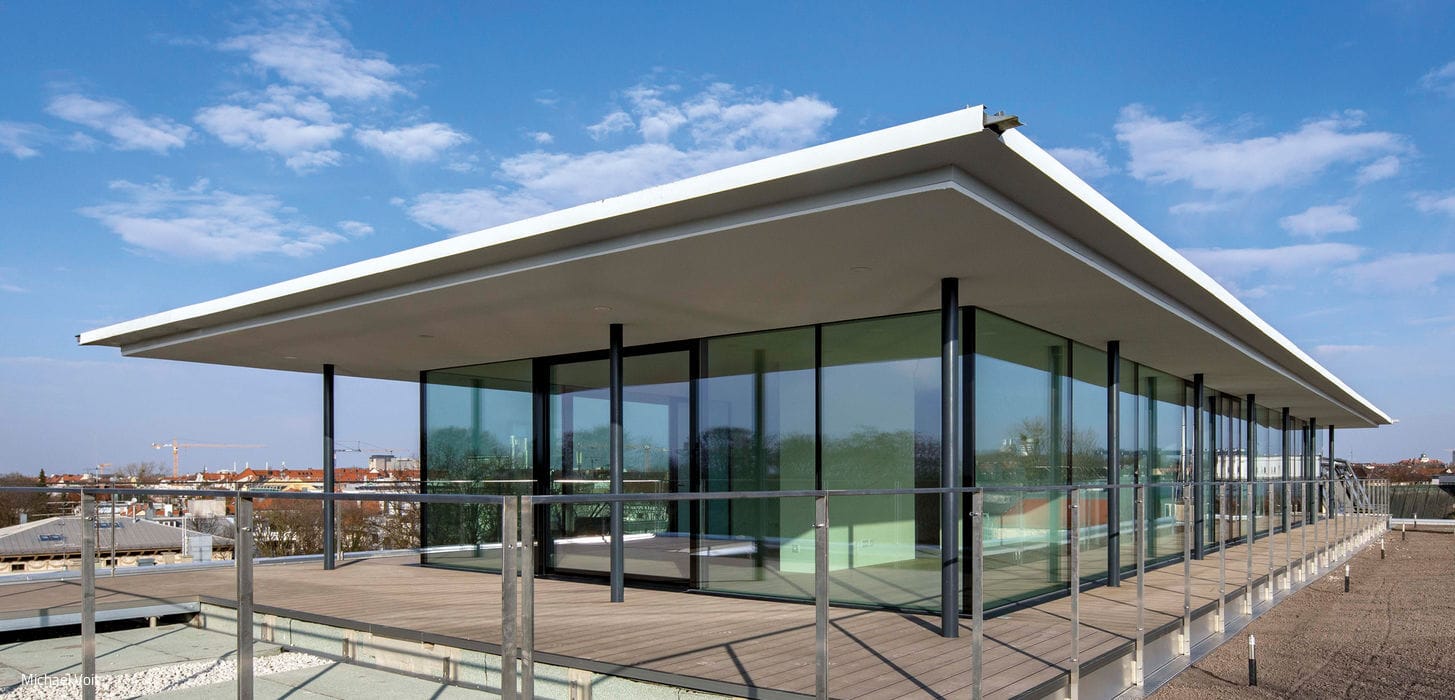
A Masterful Penthouse Addition to a 1950s Building
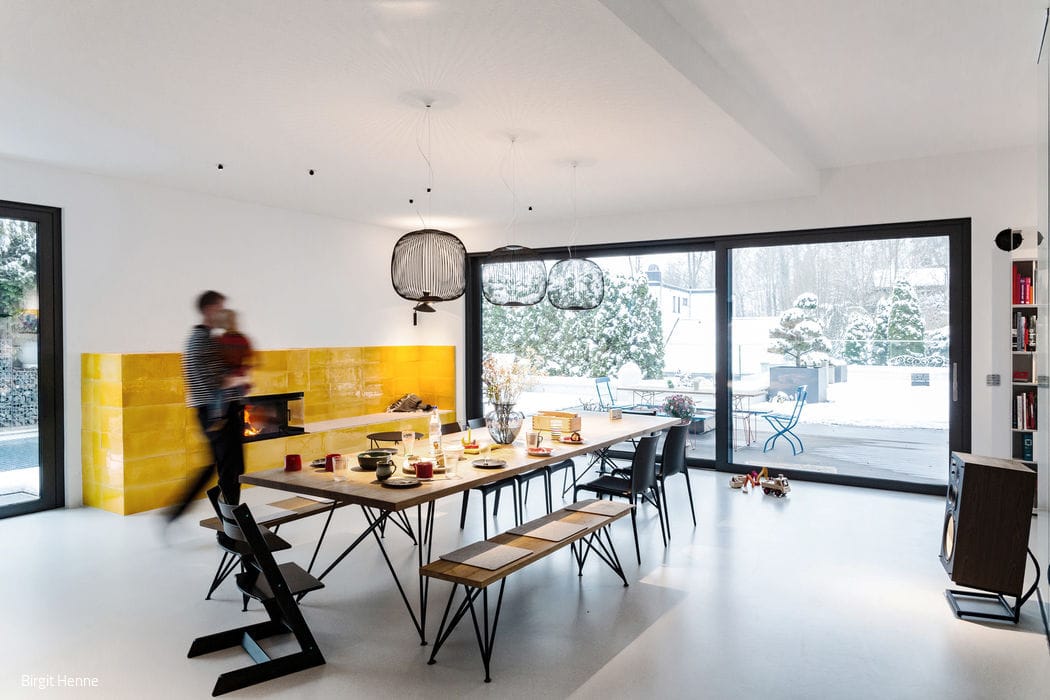
A Sunny Family Haven
A Family's Living-Dining Space Becomes the Heart of Home
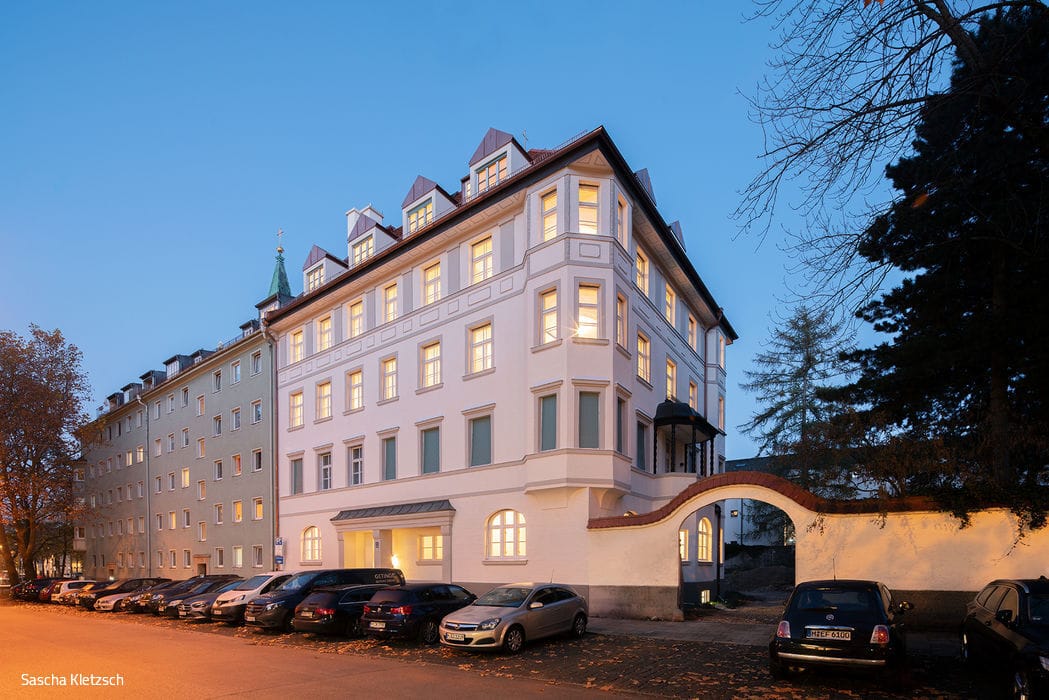
Sacred Becomes Secular
A Heritage Rectory Reimagined as Contemporary Housing
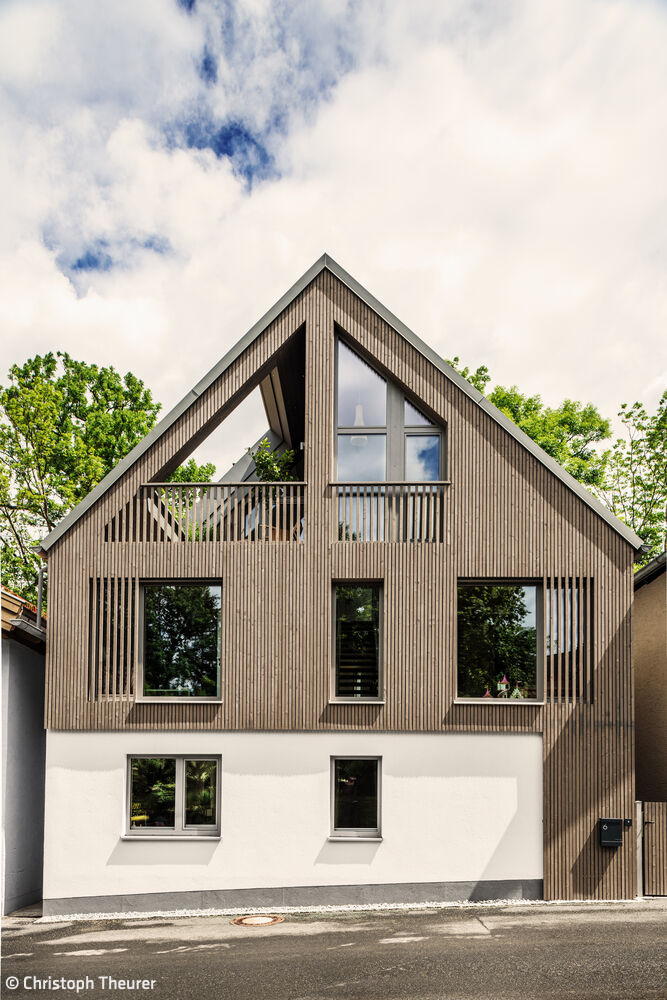
A Harmonious Interplay
Solid wood family home makes a contemporary statement within a historic setting