


A True Son of Barmbek
The new building interprets local architectural heritage through a contemporary lens, thoughtfully restoring the urban fabric.
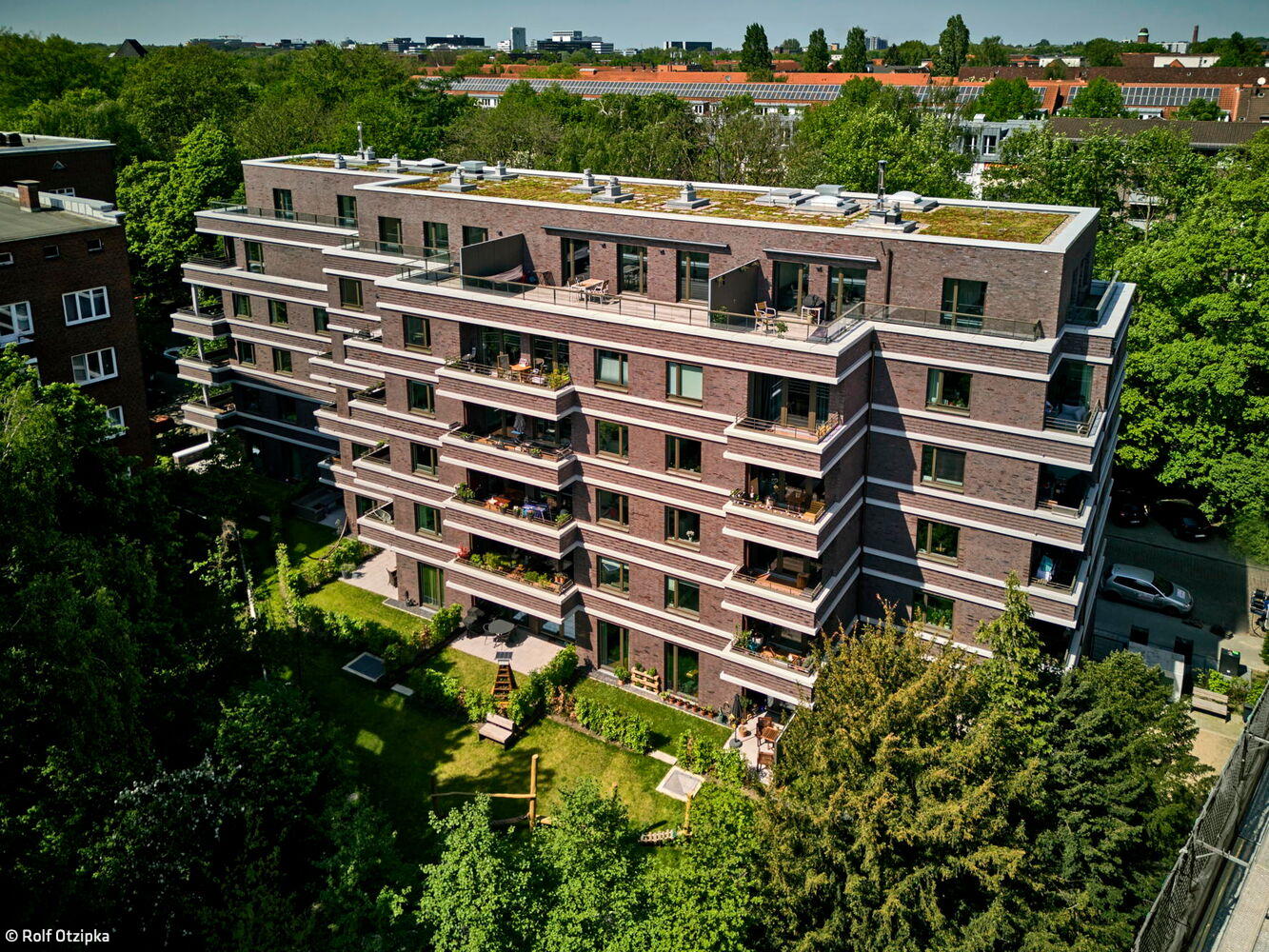
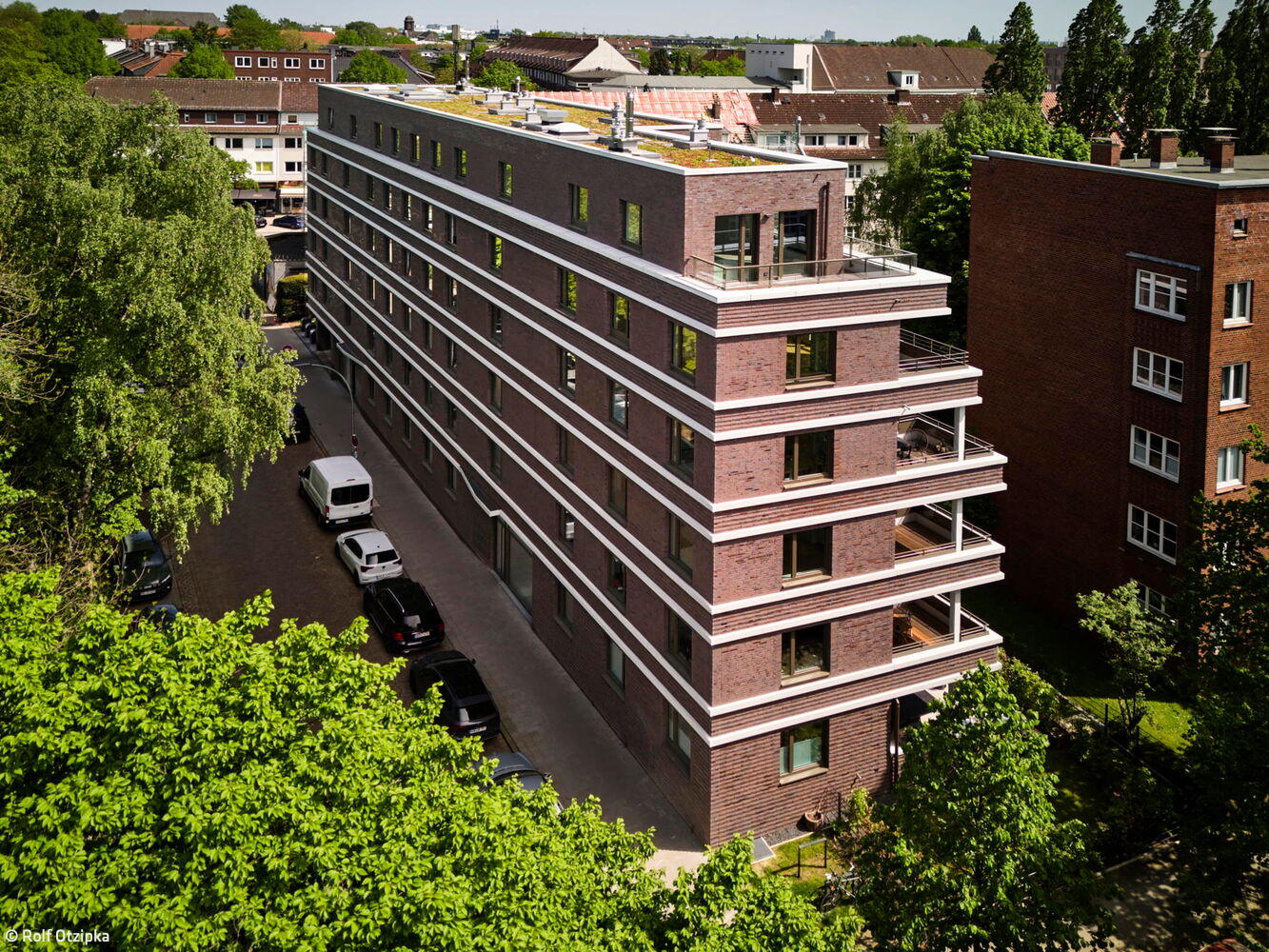
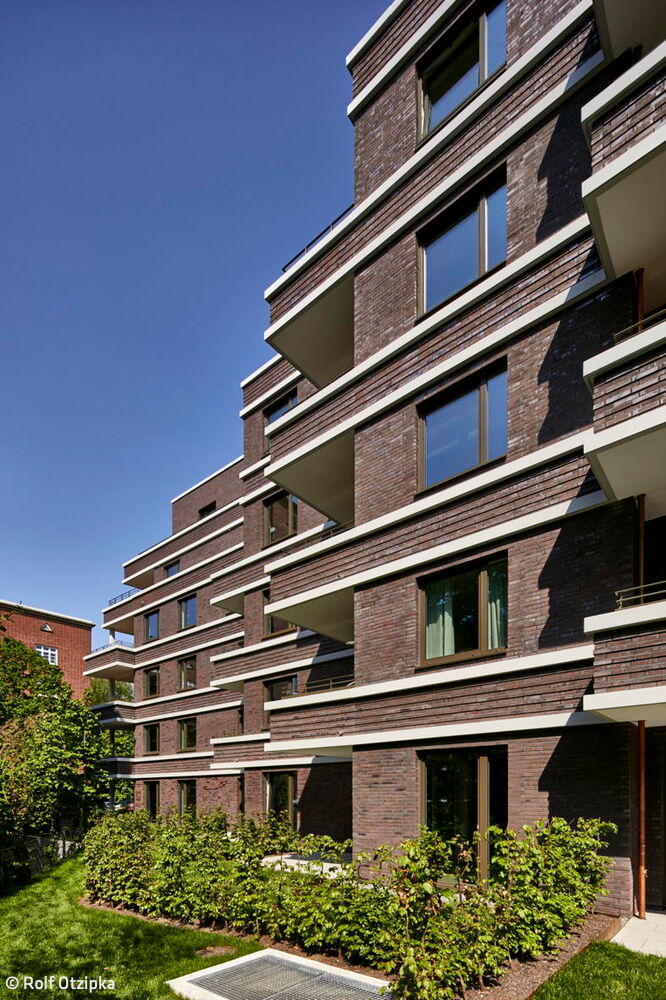
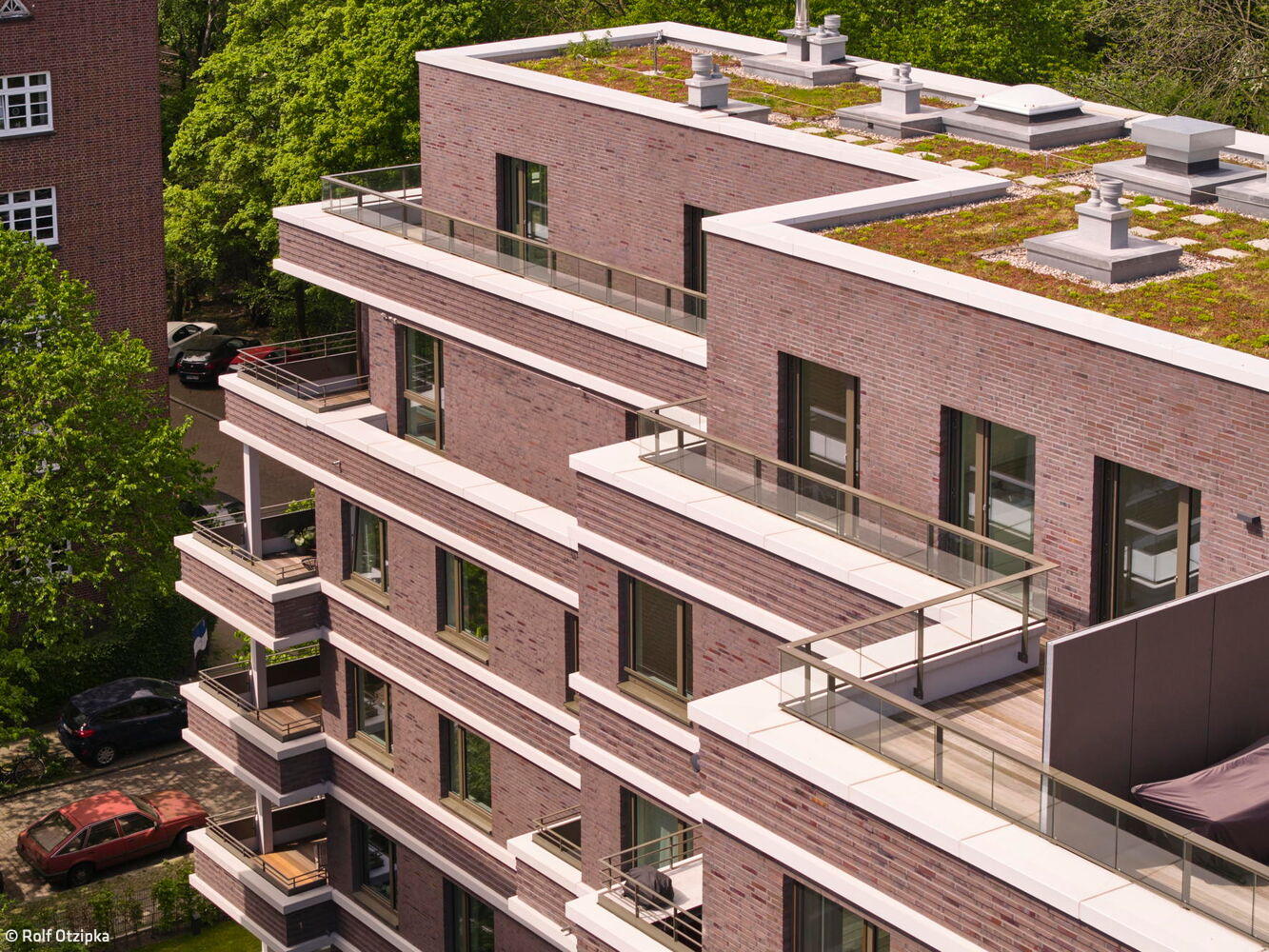
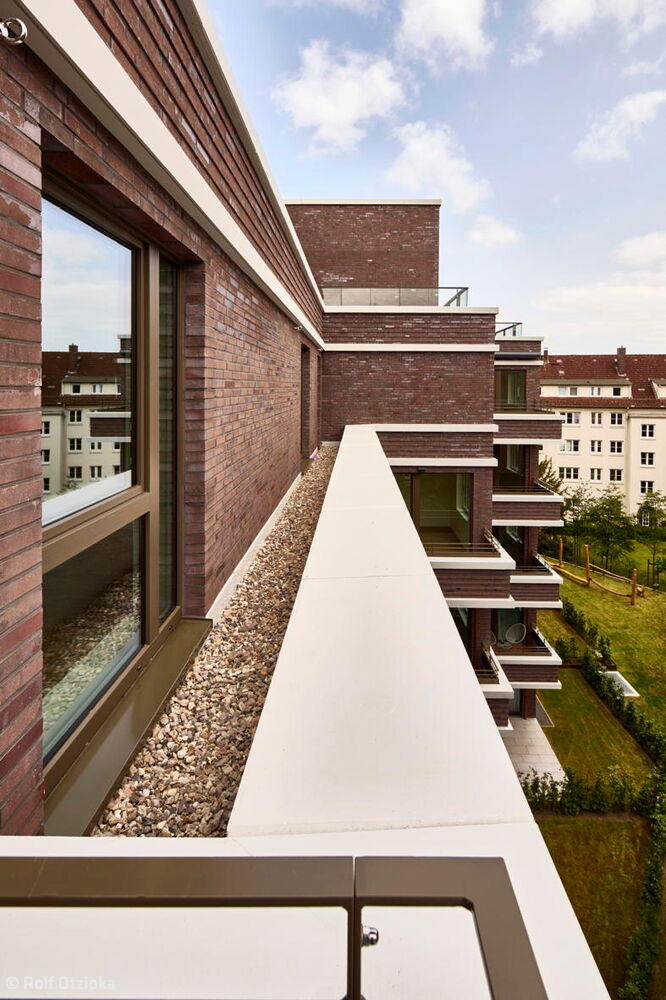
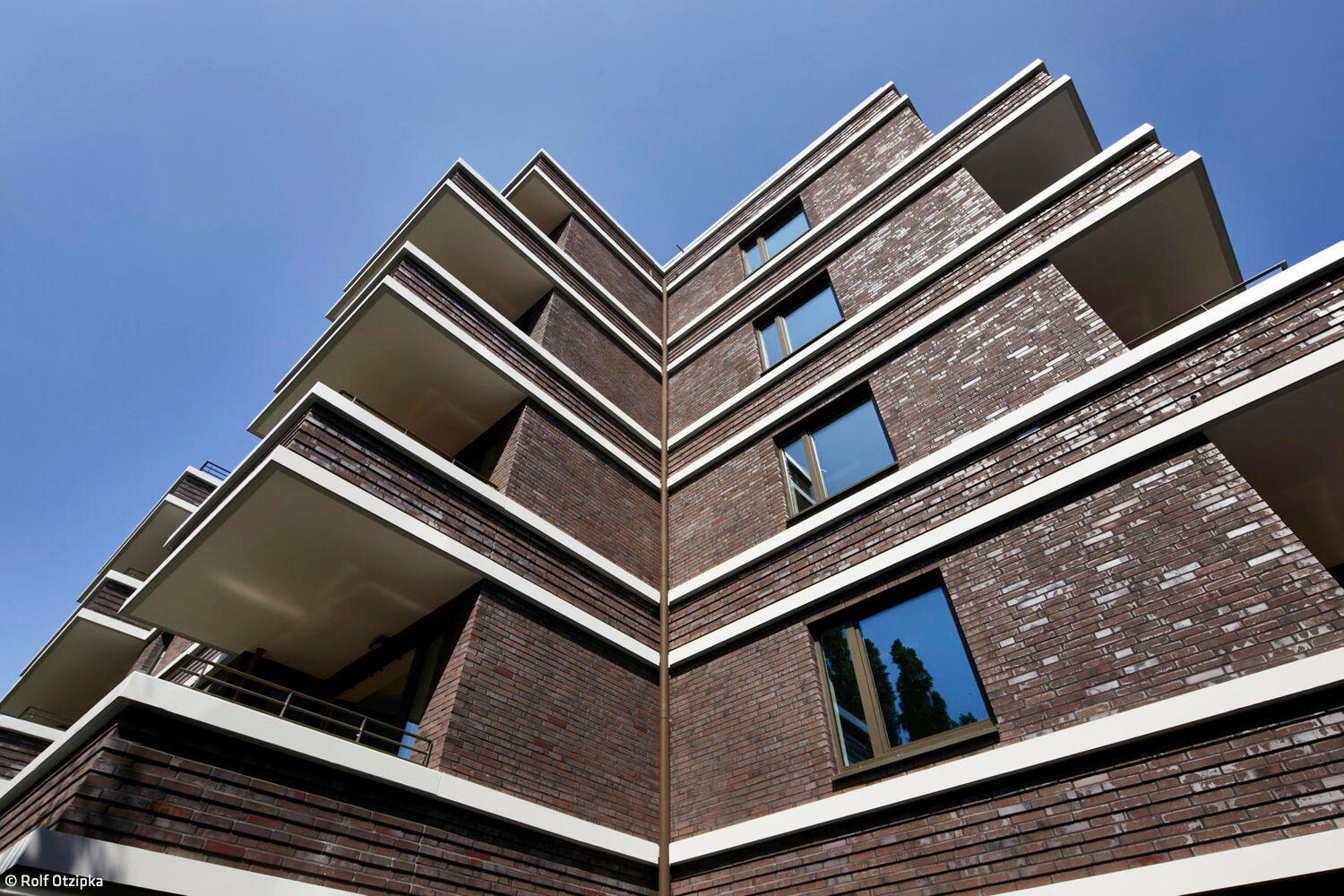
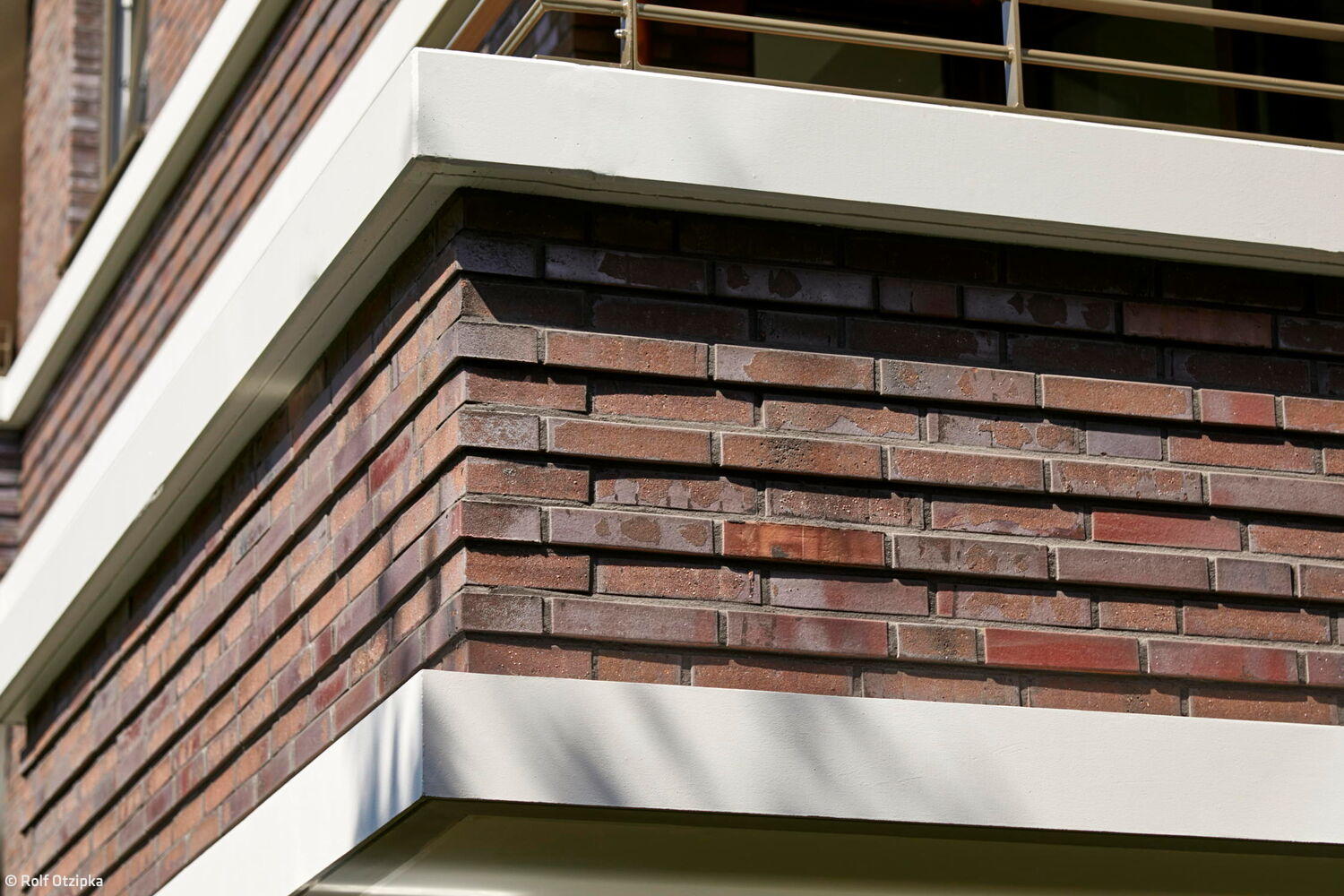

From 1918 onward, Barmbek-Nord emerged as Hamburg's largest urban expansion area. City planner Fritz Schumacher conceived it according to progressive ideals for healthy housing, featuring characteristic block perimeter developments, schools, green spaces, and elevated railway lines. After suffering severe destruction during World War II, much of the district's 1920s urban fabric was meticulously reconstructed.
This new building by Planwerkeins Architektur represents a conversion project that transforms a flat 1970s car park into high-quality residential housing, thereby restoring the visual continuity of the street block along Hardorffsweg. Since neighboring structures were built with setbacks from property lines—deviating from the original development plan—the new building similarly incorporates the required clearance distances to the site boundaries.
The five-storey building with stepped upper floors on all sides seamlessly integrates into the surrounding brick architecture—matching its scale, street frontage, and material character. The stepped massing responds to the triangular site geometry, optimizing the south-west exposure for 30 residences ranging from 49 to 144 m². Horizontal parapet bands with subtle stone relief articulate the façade and frame a cohesive composition of loggias, windows, and walls. All living spaces along the southern stepped façade open via terraces, balconies, and loggias toward the verdant inner courtyard, while the 50-metre north façade presents a calm, rhythmic perforated front defining the block edge. The ground floor is elevated, ensuring privacy from street level at the entrance while facilitating basement access with 21 automated parking spaces. The perforated façades feature insulated clinker brick cladding that echoes the warm red-brick character defining the surrounding neighbourhood. A uniform bronze window format and continuous horizontal banding create a composed, unified expression, punctuated by accent loggias at the south façade corners.
Photography: Rolf Otzipka
(Published in CUBE Hamburg 04|24)


New Yet Familiar
On the expansion and transformation of Hamburg's green heart
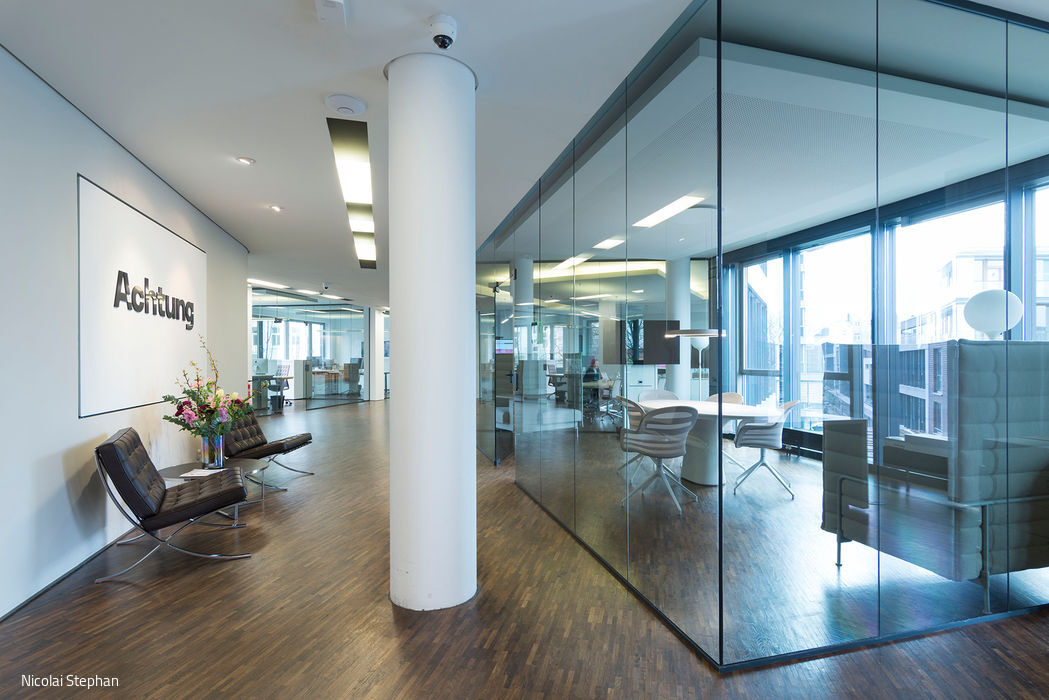
What Makes an Office Inspiring?
A communications agency proves it: thoughtful design brings people back.
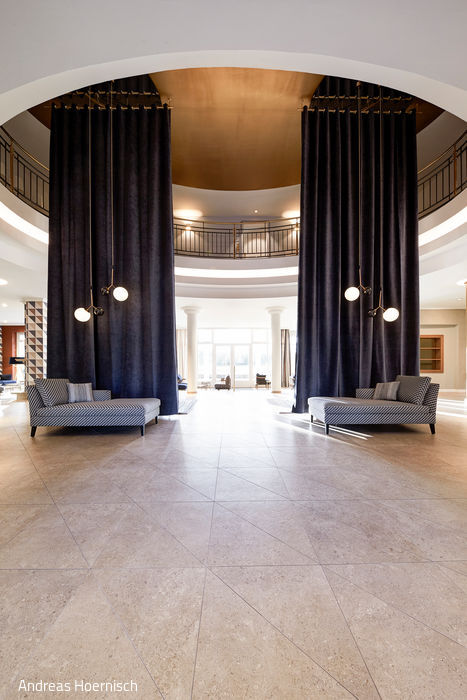
A Bold Statement
Historic Hamburg's charm blends seamlessly with contemporary vitality at Hotel Treudelberg, where residents and guests alike discover a refined sense of belonging...

A Labor of Love
How a 1746 Frisian Farmstead Seamlessly Bridges Historic and Contemporary Design