


A Refined Transformation
A magnificent architectural landmark in a prominent urban setting
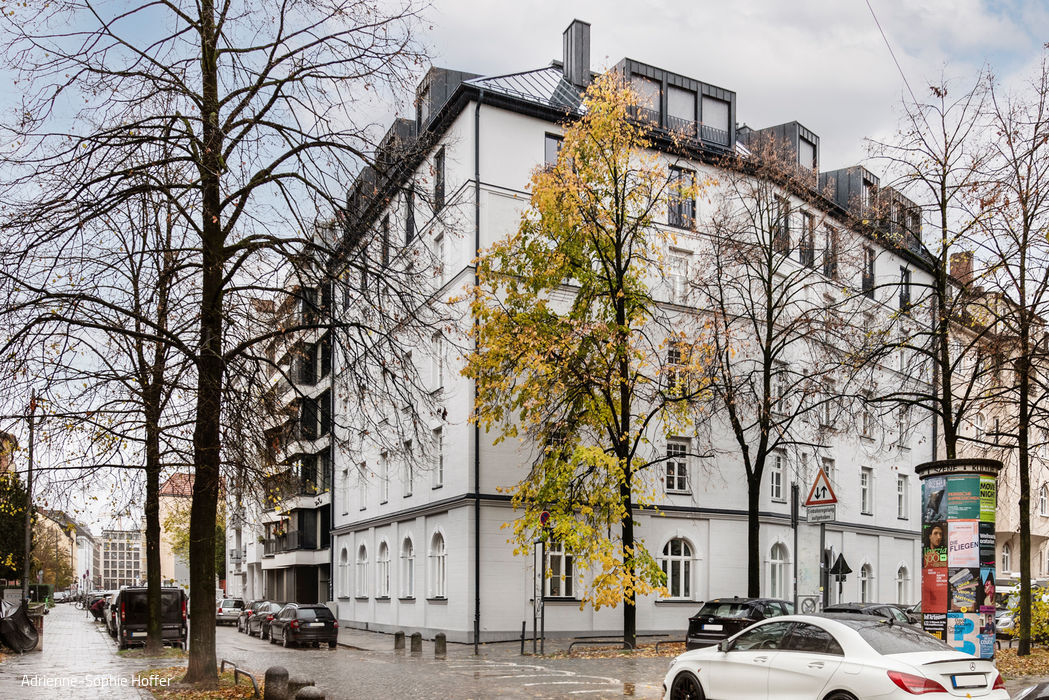
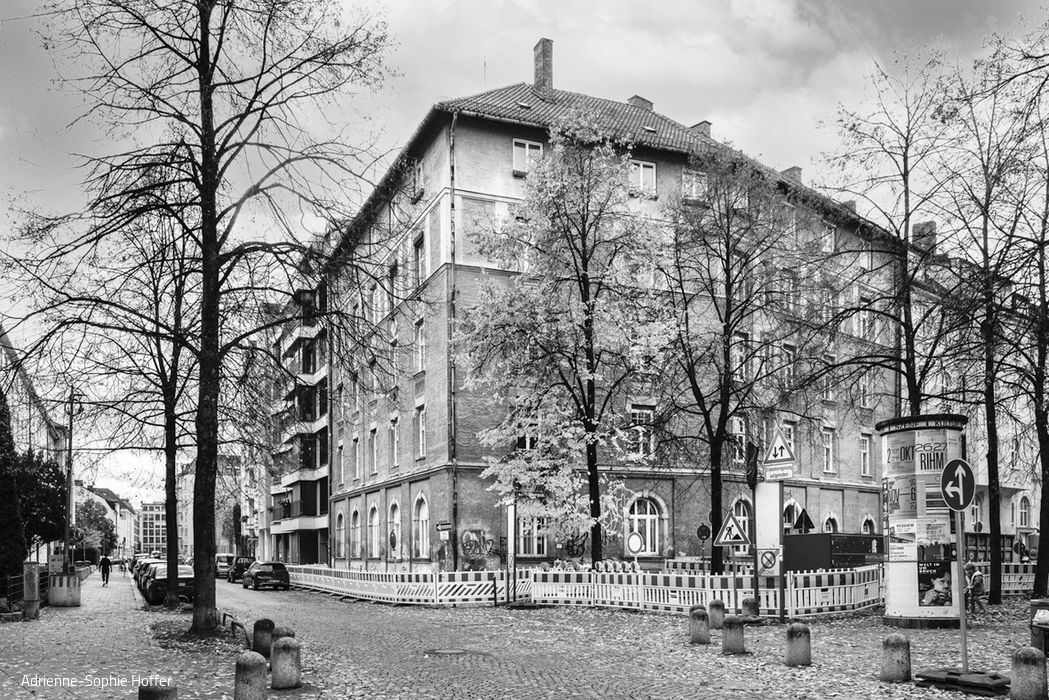
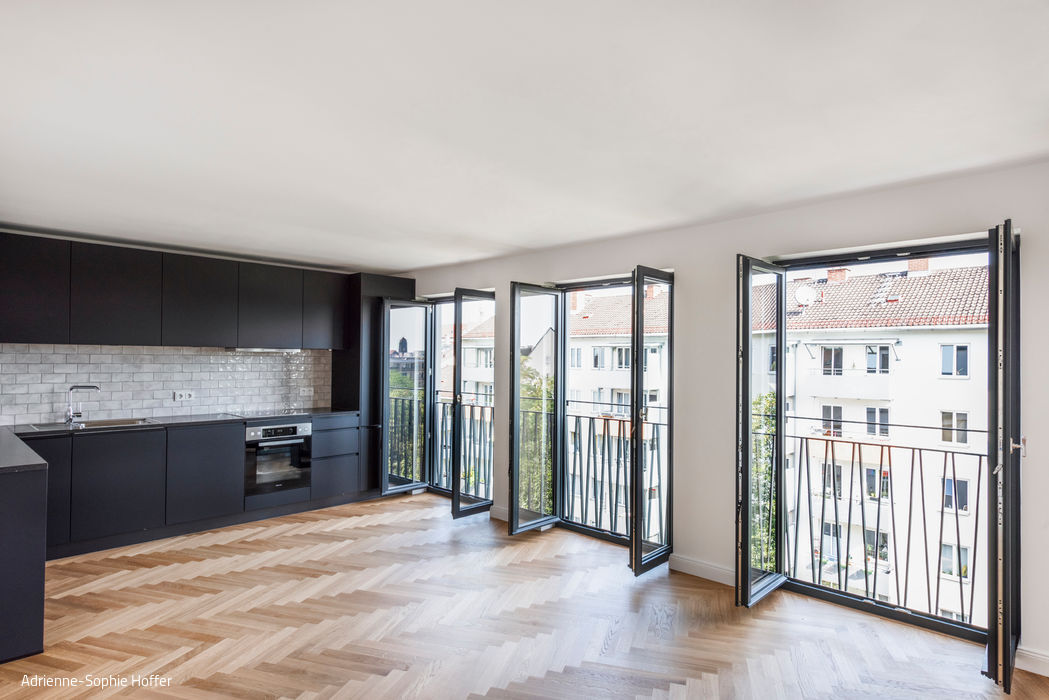
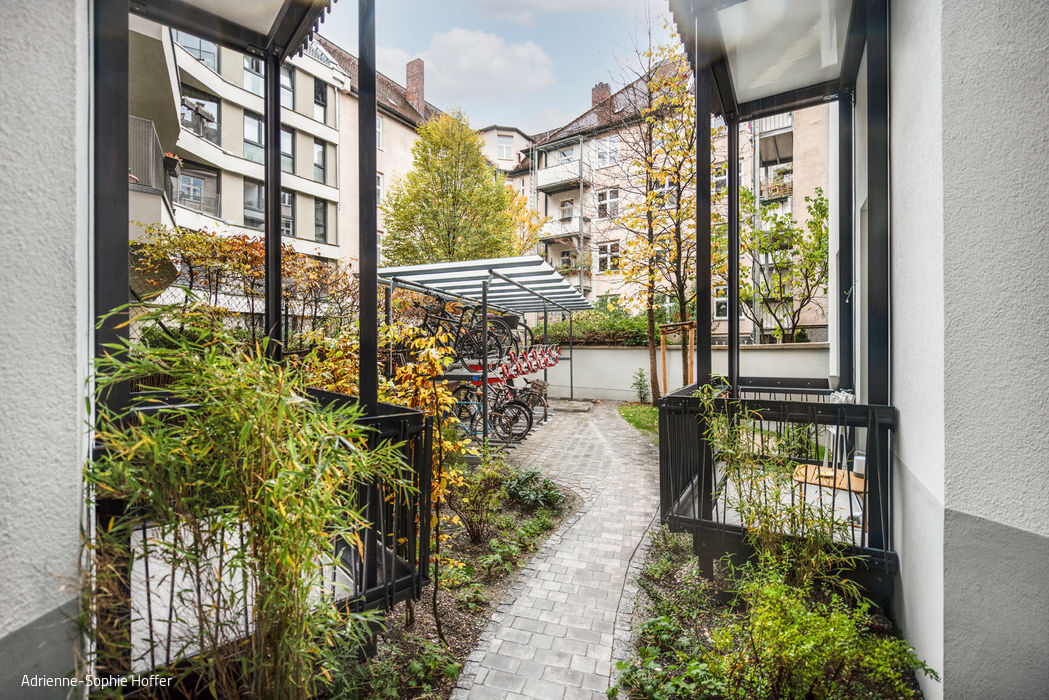
The residential building at Kesselbergstraße and Raintaler Straße in Obergiesing follows the street's curvature, resulting in an acute-angled floor plan. Built in 1910 to architect Franz Popp's design, it originally featured the spacious apartments typical of the era—five rooms or more per unit. After fire damage in the 1950s, the original hipped roof was replaced with an additional standard storey and a gabled roof.
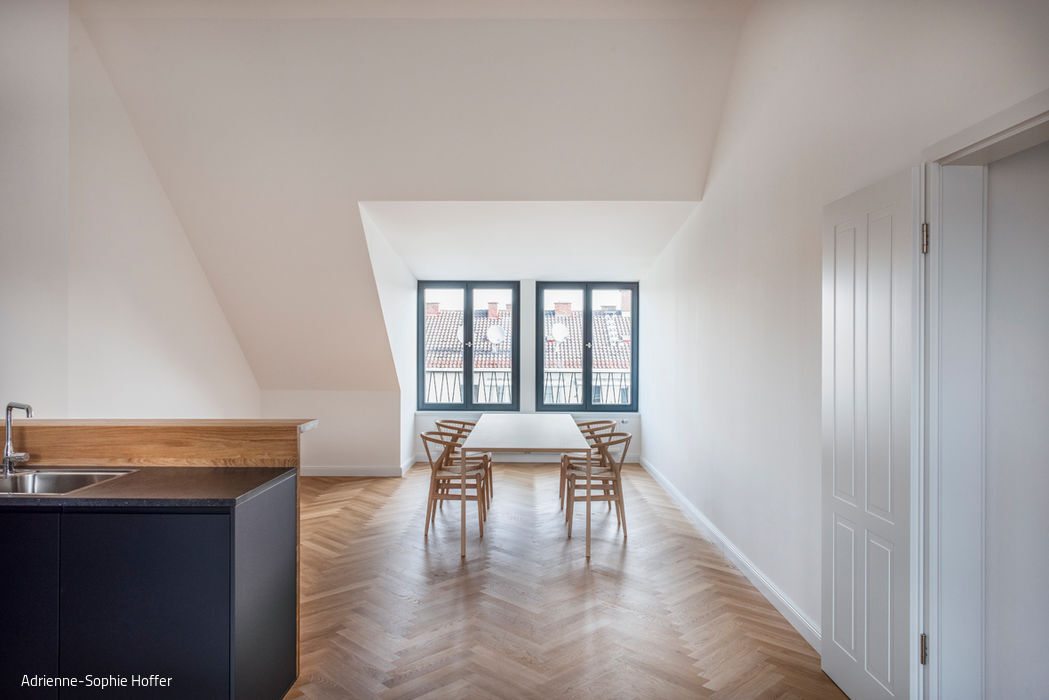
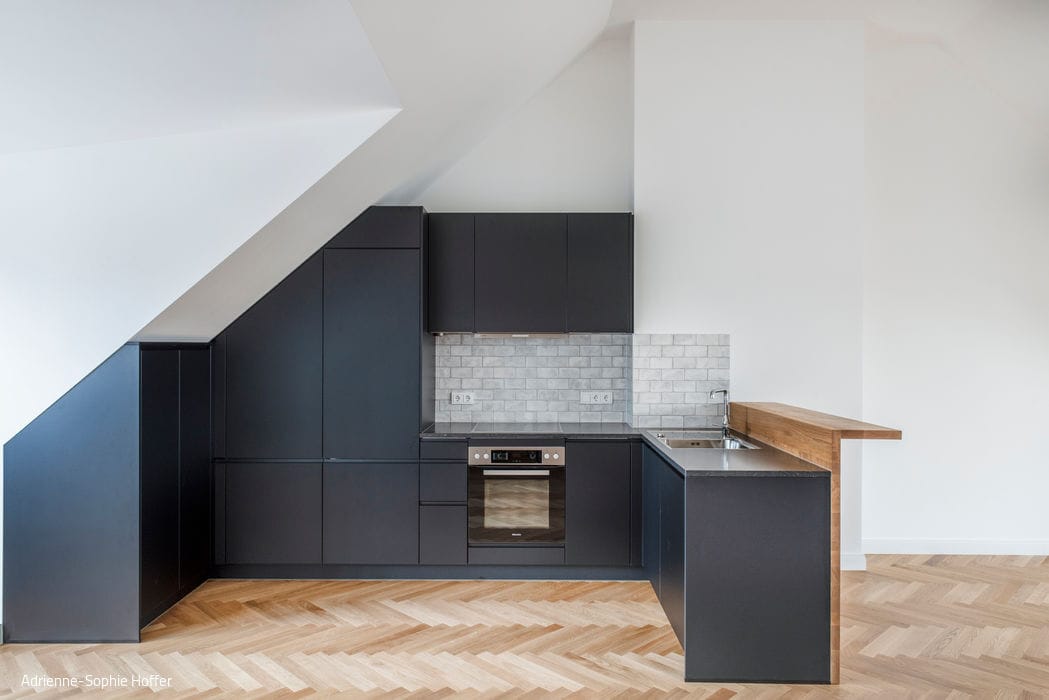
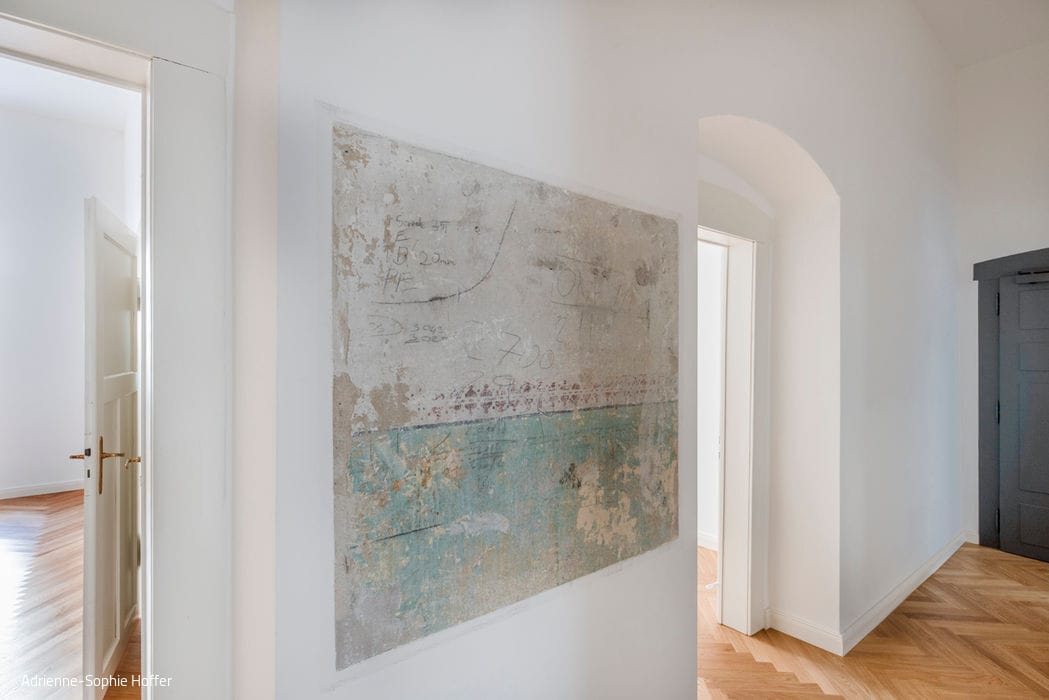
More than a century after its completion, the building required comprehensive renovation. A private developer made it possible to modernize and convert the structure with sensitivity to its heritage. Munich-based firm Knopp/Wassmer Architekten, specialists in exactly this kind of work, executed the project and brought it to completion last year. Sustainability and climate efficiency remain central to their architectural philosophy. The redesigned floor layout now yields thoughtfully proportioned, premium rental apartments that honor both the building's exceptional urban context and its original grandeur. Each floor now contains four apartments instead of three, while the attic units within the expanded gabled roof feature oversize dormers rather than traditional balconies.
Unlike the neighboring historic buildings with their traditional tile roofing, this roof sports an anthracite-coloured metal covering that harmonizes with the top floor's window frames and the new dormers. The fourth floor's modest square windows were transformed into French windows, deliberately referencing the original large-scale casement windows of the lower historic storeys. In colour and proportion, they dialogue with the newly designed dormers of the attic level.
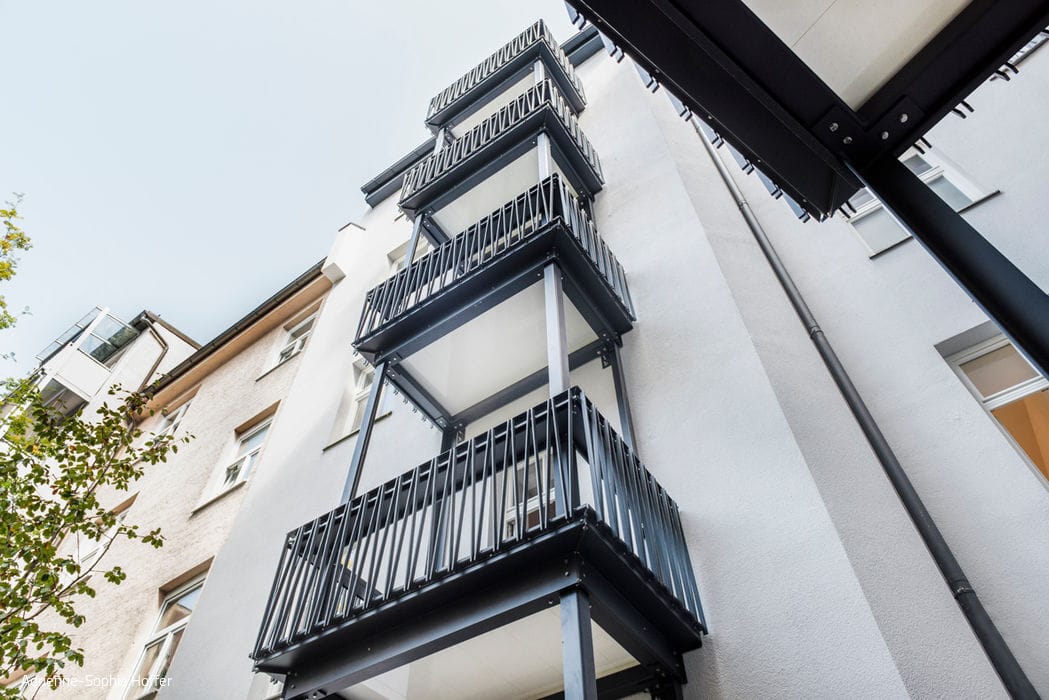
The roof expansion required a complete renovation of the richly articulated plaster façade, with the color palette faithfully reflecting its historical character. Working closely with the local heritage authority, the team carefully documented and restored the façade's geometric Art Nouveau ornamentation, including all stucco profiles. New balconies with integrated planter boxes enhance the courtyard elevation, blending seamlessly with the existing structure while providing valuable outdoor space for the new residents. The total living area increased by over 200 m². Now complete, the listed building has been transformed—its new splendor barely hints at its century-old bones.
Photography Credits:
Adrienne-Sophie Hoffer
www.adriennehoffer.com
(Published in CUBE Munich 01|24)


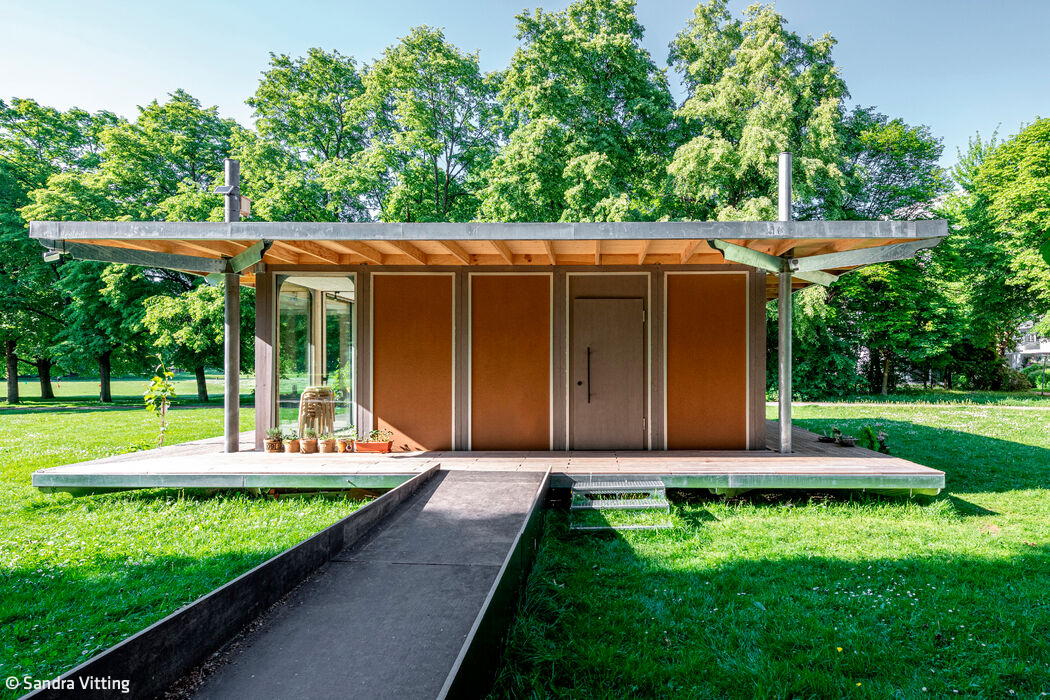
Far More Than a Tiny House
A Prototype for Tomorrow's Home
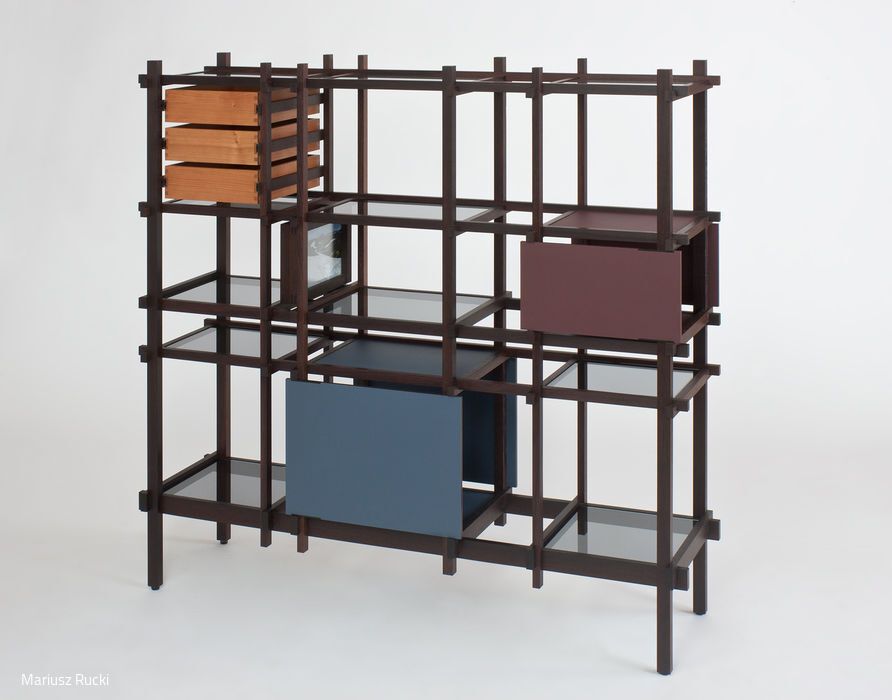
Heart and craft
Mariusz Rucki designs and creates wooden furniture and home accessories.
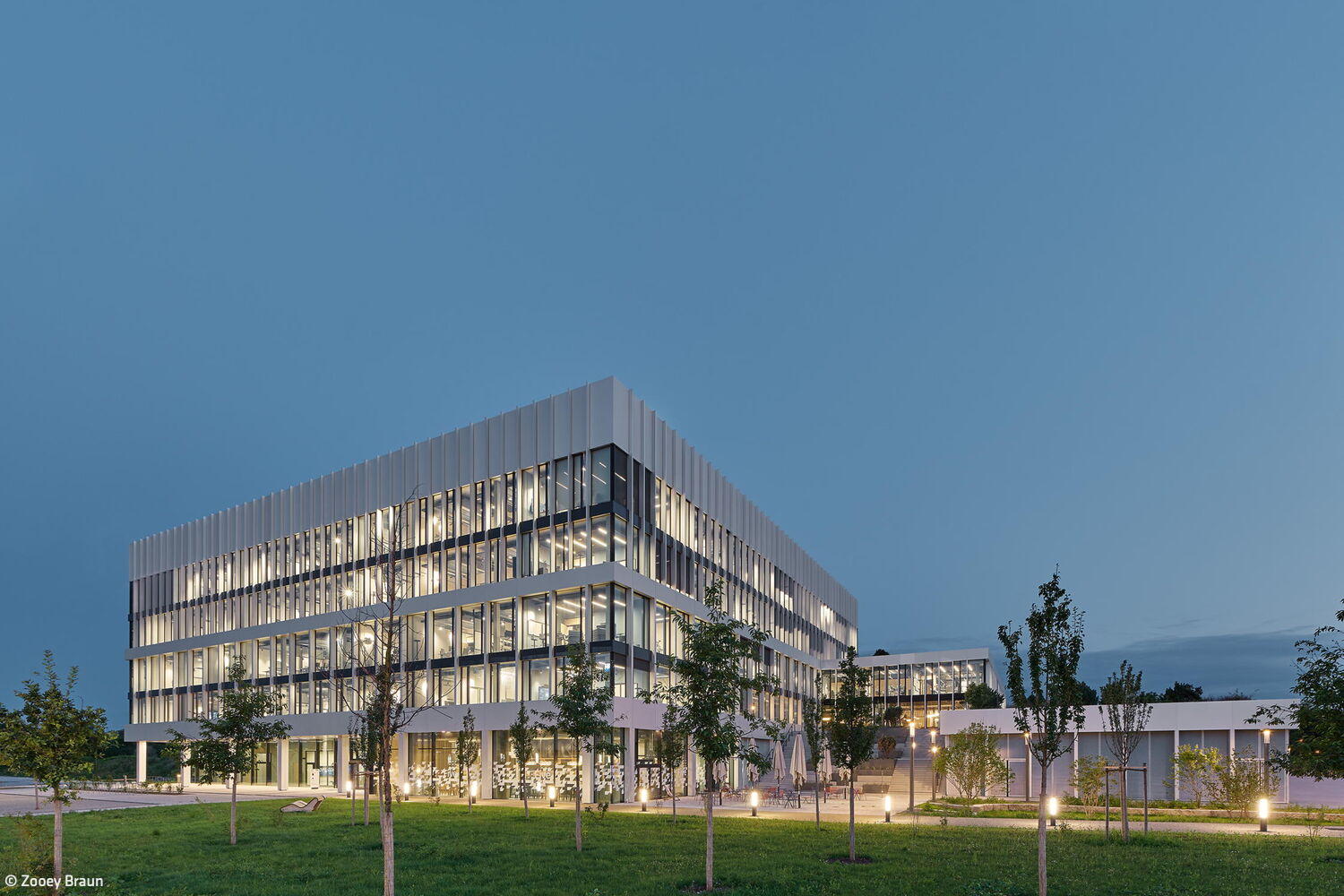
Campus in Miniature
A striking new architectural ensemble enriches Science City Munich
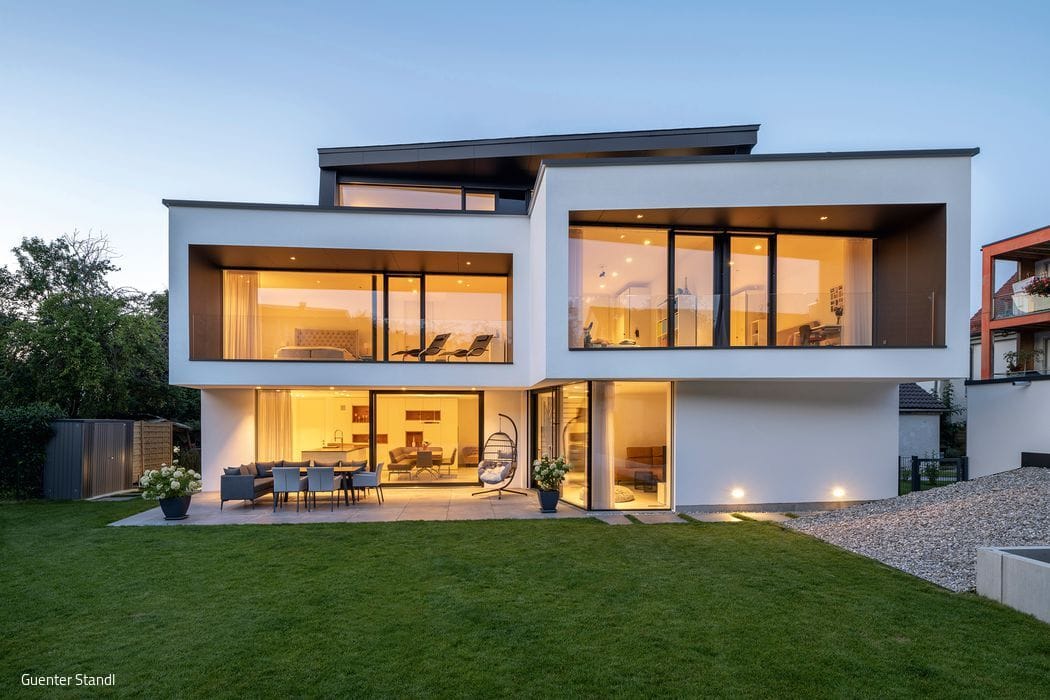
Villa in Understated Elegance
Single-Family Home with Panoramic Views in Landsberg am Lech