


Dynamic and Sustainable
The office building "One Plaza" organizes its flexible work environments around a verdant central courtyard
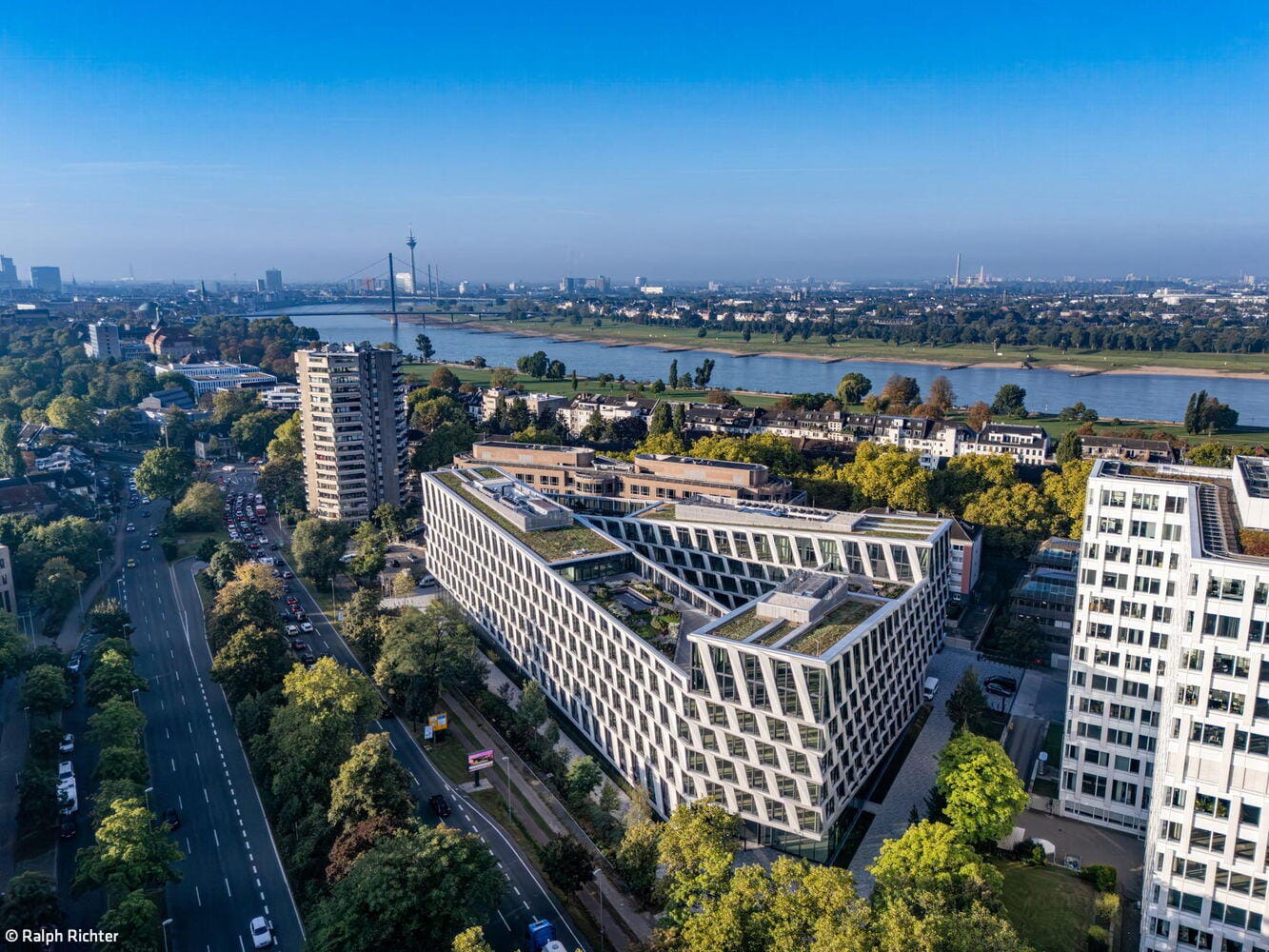
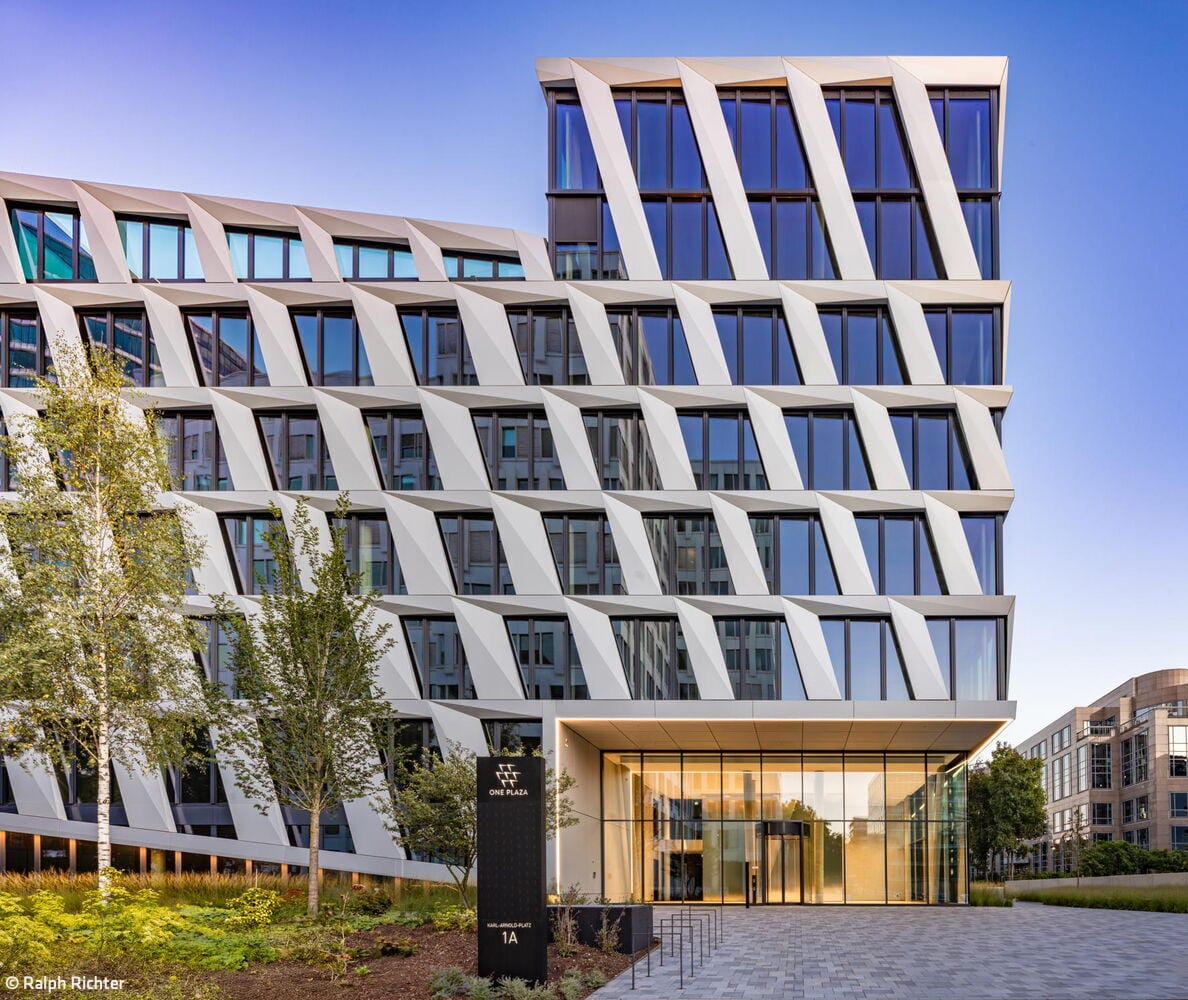


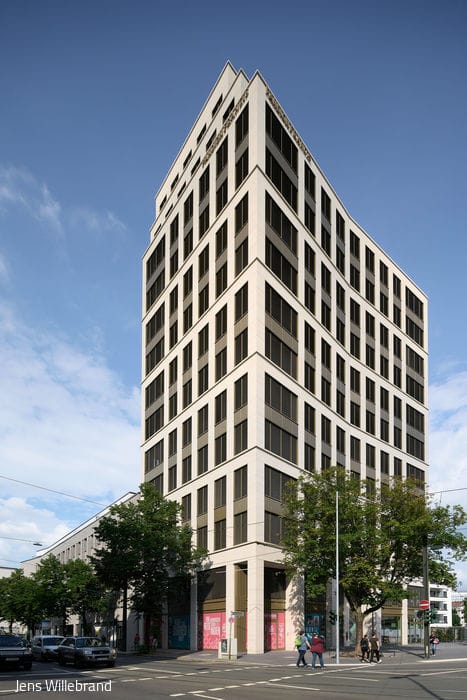
The Kennedydamm in Düsseldorf-Golzheim is considered one of the gateways to downtown Düsseldorf. Over recent years, HPP Architects has created landmark buildings here, including the headquarters for L'Oréal Germany and, in collaboration with UN Studio, the vertical campus Eclipse, a distinctive urban architectural form. Most recently, the Düsseldorf-based architecture firm completed "One Plaza": The new development, spanning over 45,000 m² of gross floor area for the Momeni Group, marks the beginning of Kennedydamm toward the Rhine. In addition to its office function, the building offers space for specialized uses, gastronomy, and neighborhood services. With its striking façade, a generously landscaped inner courtyard, usable roof gardens, and modern work environments, the building embodies identity, sustainability, and flexibility.
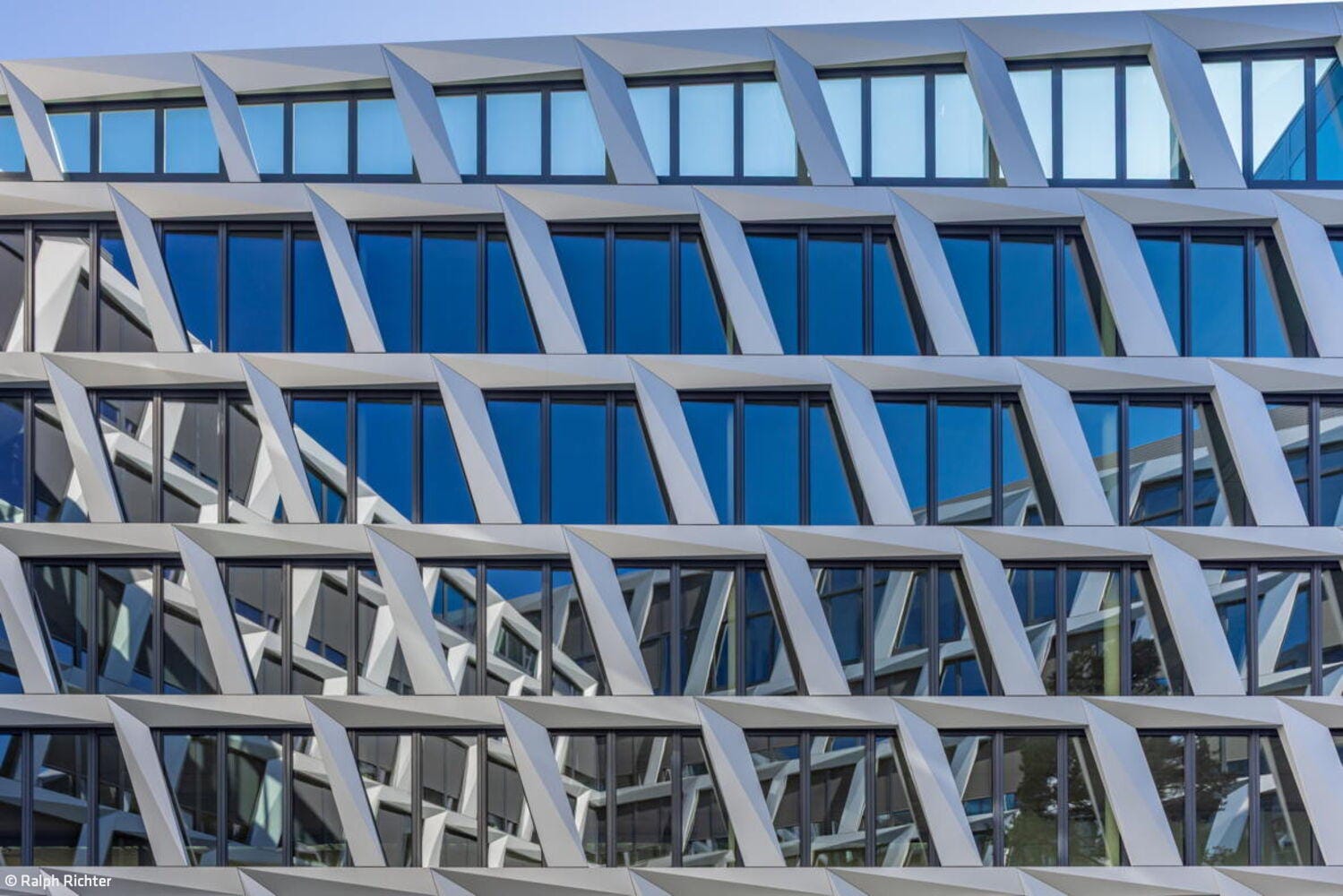
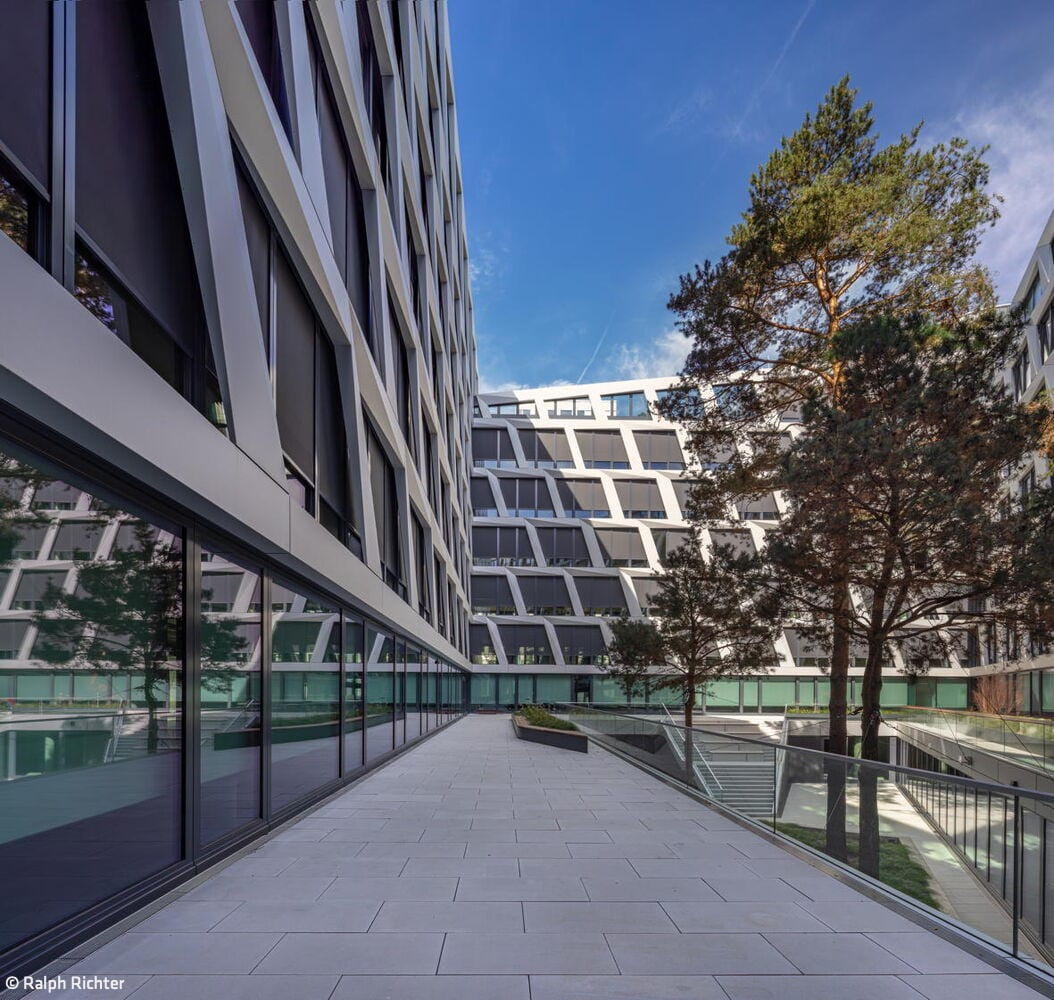
The composition brings together three building wings around a triangular courtyard, creating a sculptural structure with distinctive visual presence. The two-story elevation at each building corner opens the structure to all three sides, establishing three generous entrance scenarios that connect the ground floor zone with the surrounding neighborhood. Simultaneously, the height variation at the upper façade creates a dynamically shaped roof landscape with wind-protected gardens for office tenants. Separated from the thermal envelope, the similarly dynamic curtain wall—composed of folded aluminum panels—functions as an external, structural sunshade, reducing summer heat gain into the building. Every other façade panel can be opened for natural ventilation. This approach also enables significant flexibility: any office concept—from open plan to cellular or combination offices—can be realized. Fixed workstations are positioned near the perimeter. In the central zones, flexible collaborative work areas with diverse offerings complement the space for employees.
The inner courtyard serves as an internal gathering point and green heart. Combined with the roof gardens, this strengthens the building's ecological value and establishes a connection to the surrounding open spaces. The landscape design follows the "Forest Home" vision: 25-meter-tall Scots pines along with approximately 50 additional trees create an urban oasis that elevates the quality of outdoor experience in the city by improving air quality, regulating microclimate, and reducing heat and noise stress—thereby enhancing comfort and well-being. The building additionally fulfills numerous Green Building criteria: In addition to electric charging stations and an above-average number of bicycle parking spaces, it features reduced water consumption, energy-optimized building systems, and maximum daylight penetration with presence-controlled sensor technology.
Photography:
Ralph Richter
www.ralph-richter.com
(Published in CUBE Düsseldorf 01|26)

Mr. Gatsby's Second Home
Grande Étoile d'Or: Bringing Glamour to Carlstadt
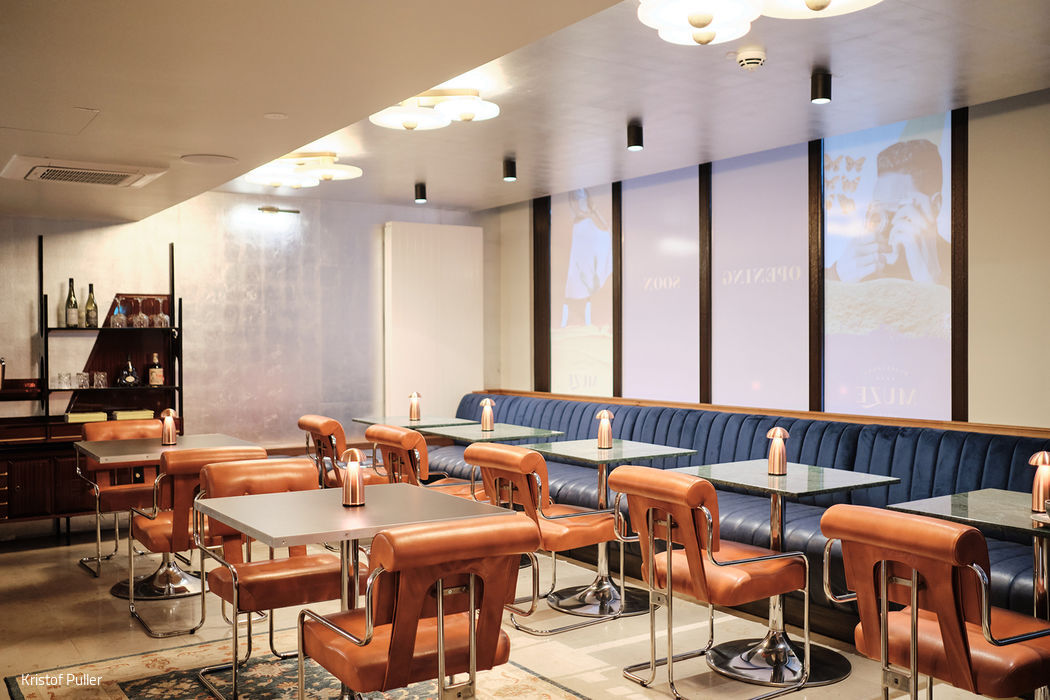
A Symbiosis of Art and Comfort
New Pempelfort Hotel Gives Artists a Space to Shine
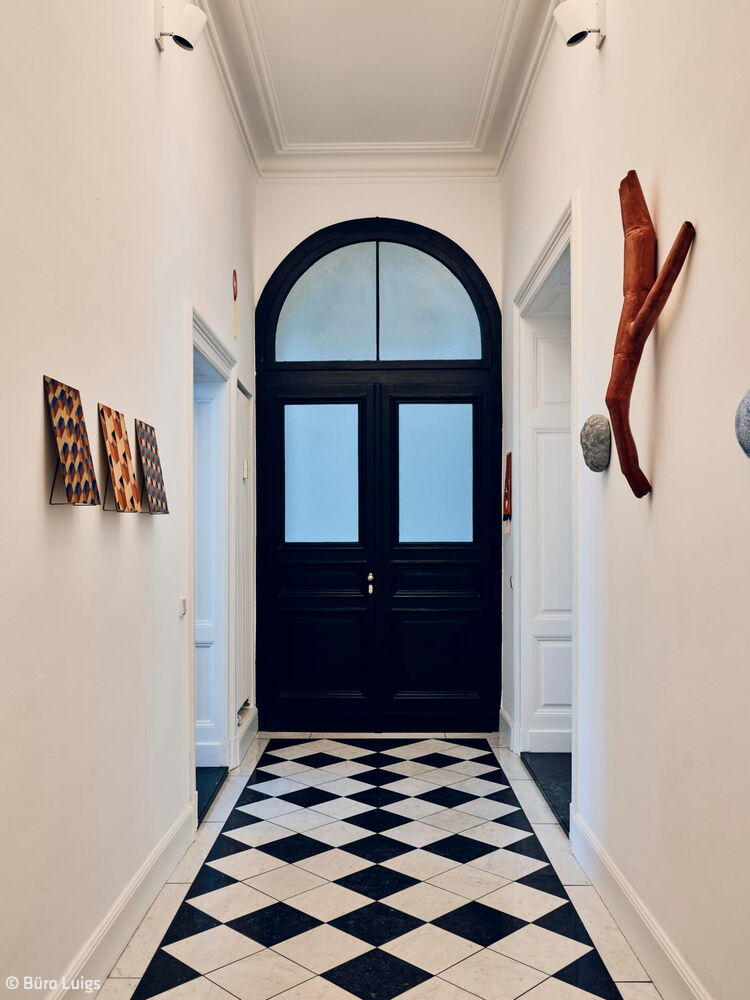
Thoughtfully Modernized
A heritage townhouse in Unterbilk reimagined as a bespoke living and working environment.
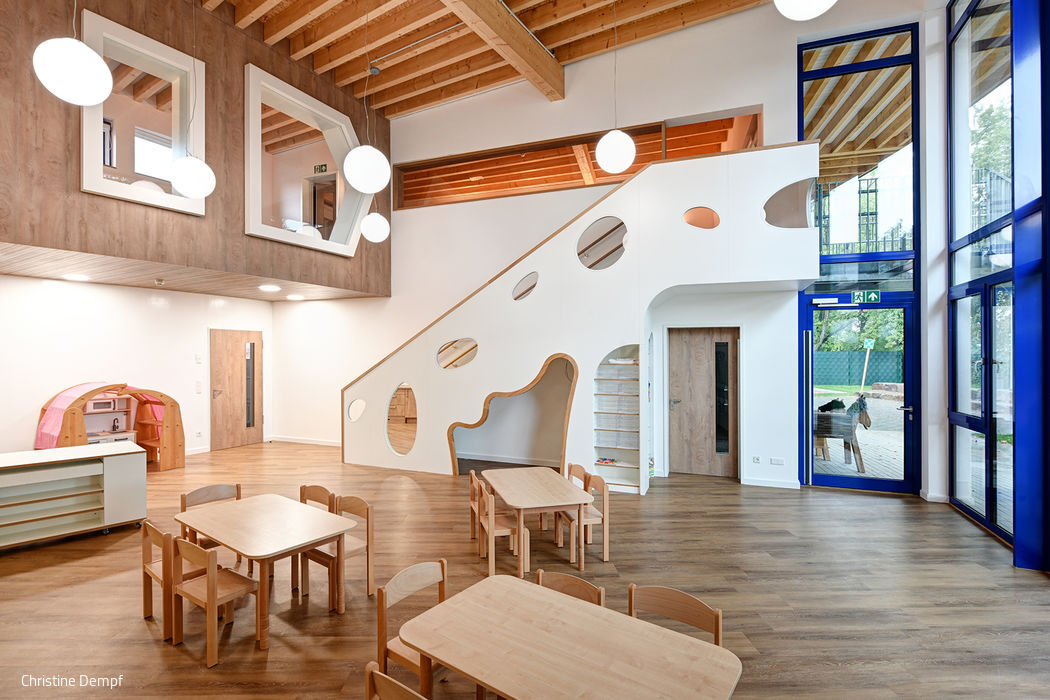
Spreading into the Garden
The ISR kindergarten in Niederkassel captivates with thoughtfully designed, individualized spaces.