


Living room and loft
An apartment in Rheinauhafen has been given a minimalist makeover
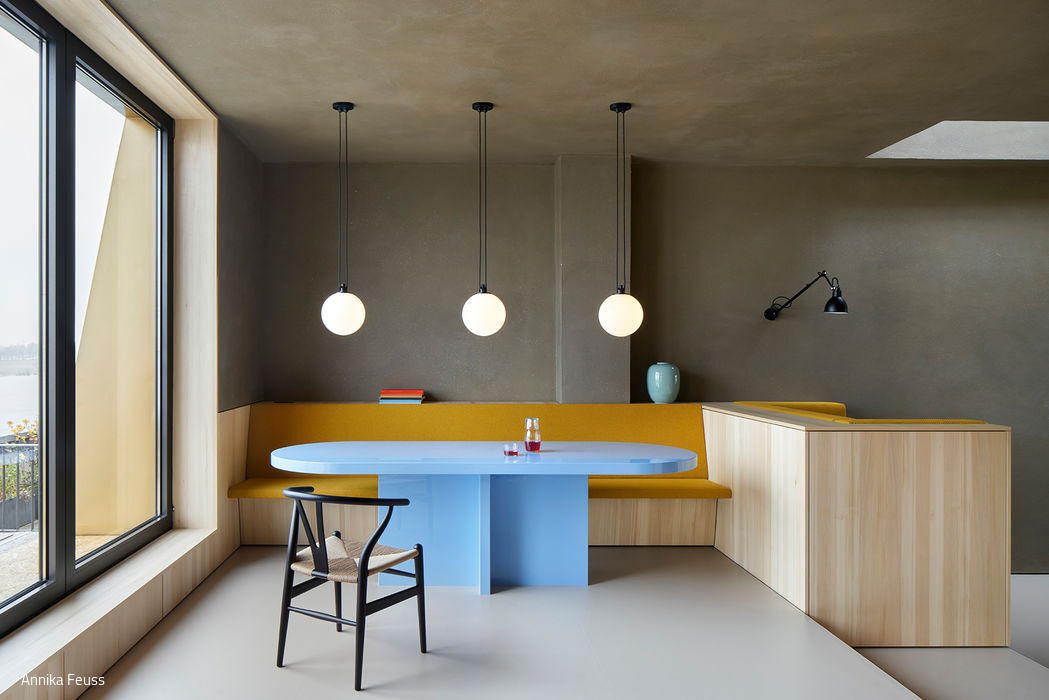
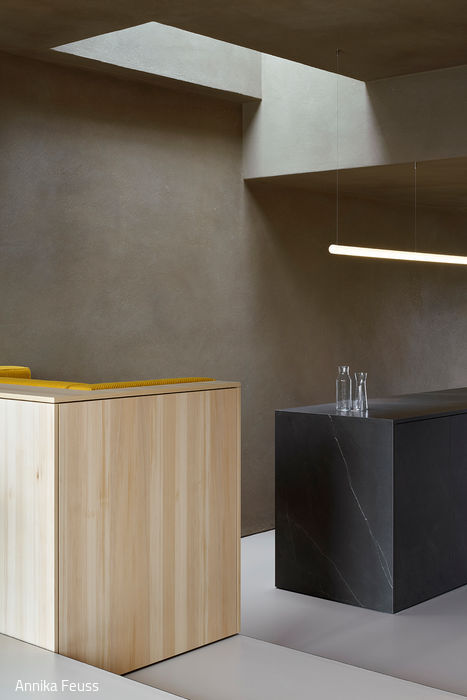
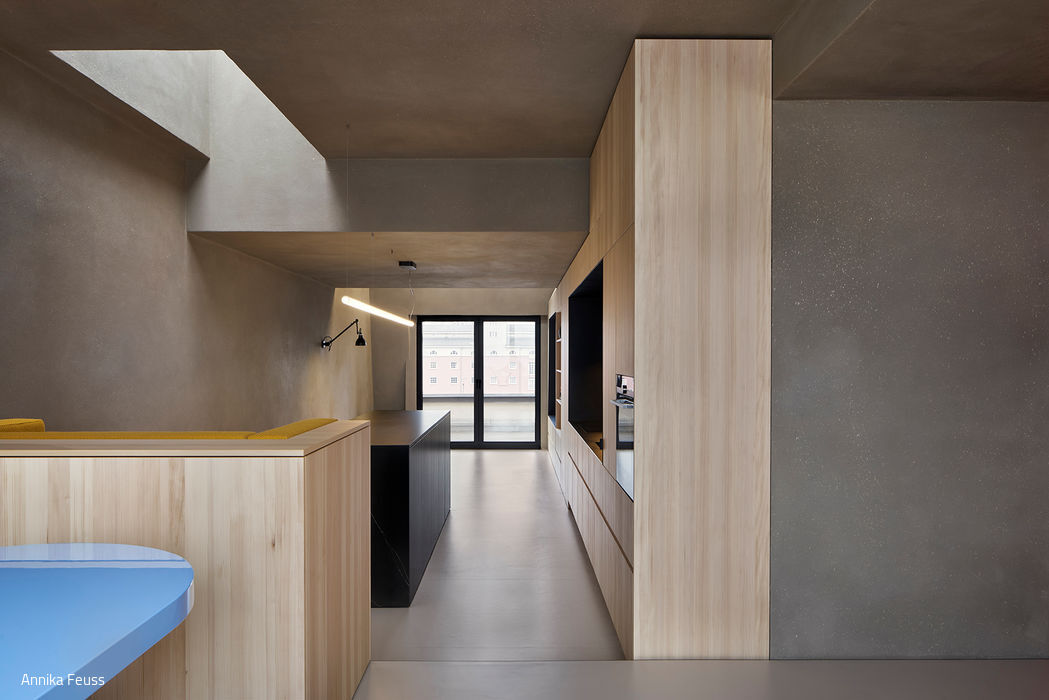
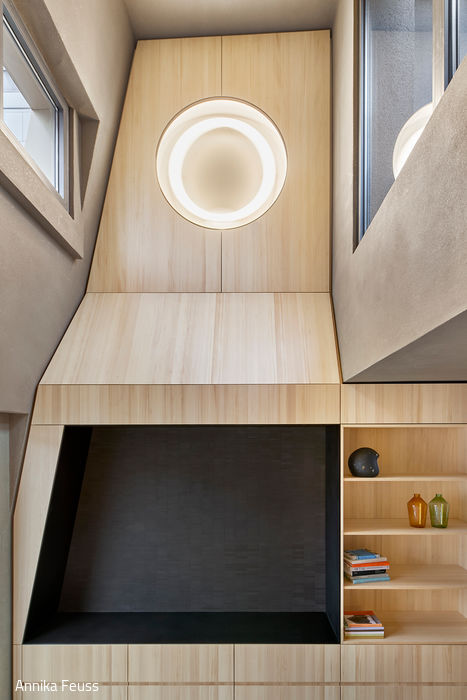
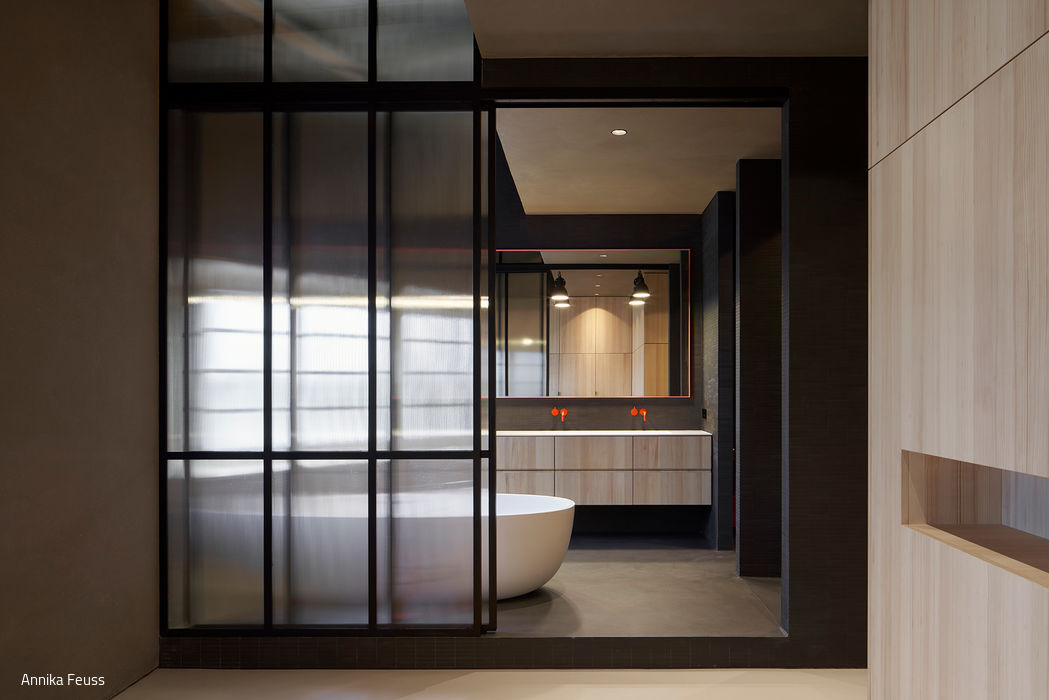
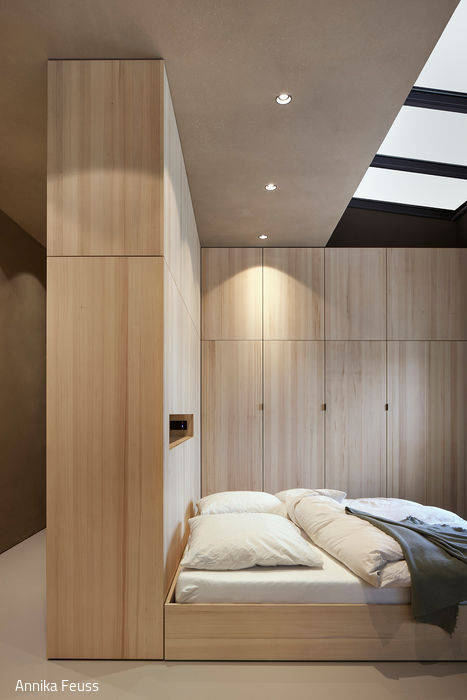
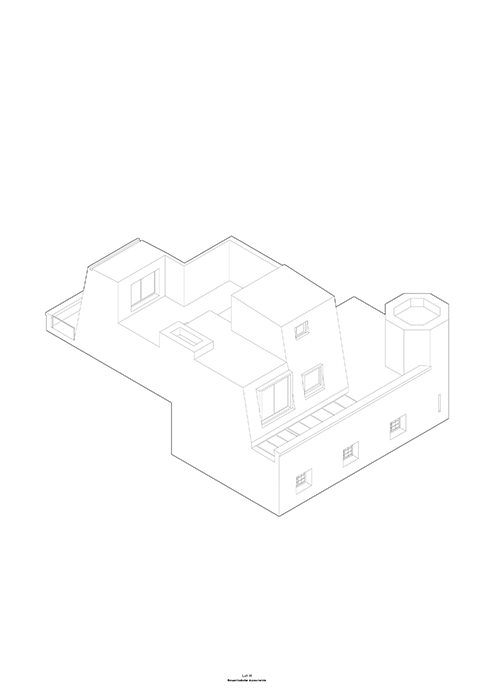


When the young couple approached Cologne-based architects diiip for help, they only had plans to redesign their kitchen and bathrooms in mind. However, it soon became apparent that the three-storey apartment in the Siebengebirge warehouse building in Rheinauhafen was in need of renovation. This meant that the modernisation project also provided an opportunity to rethink the living concept.
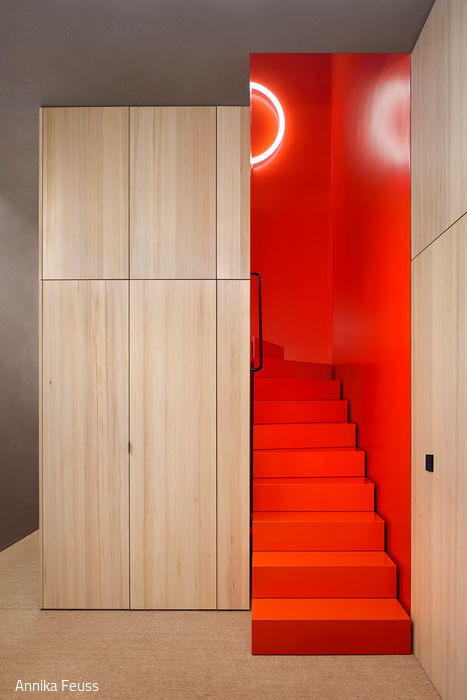
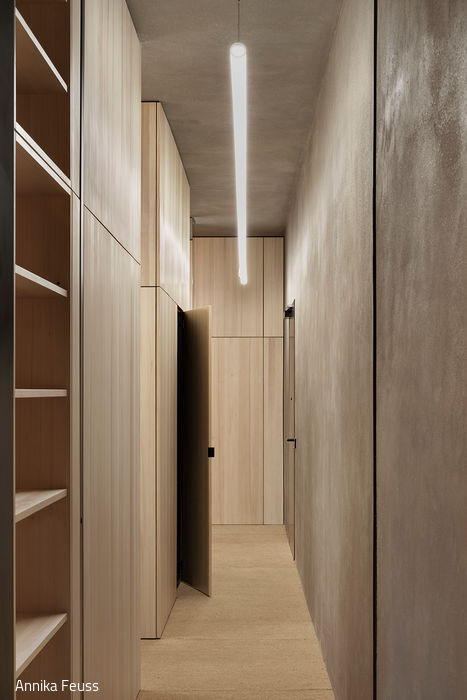
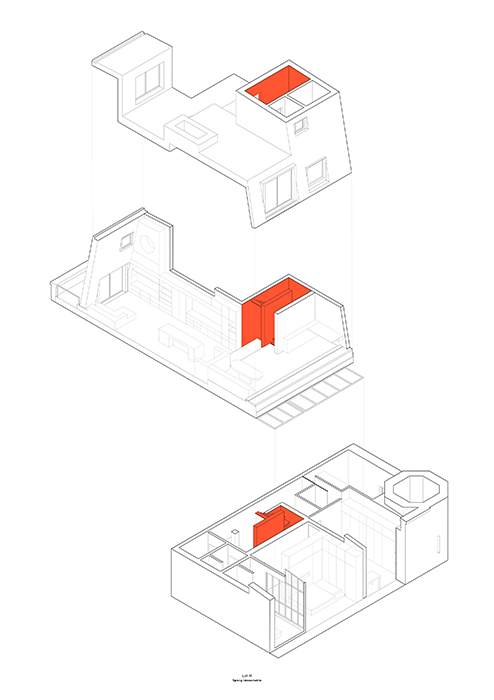
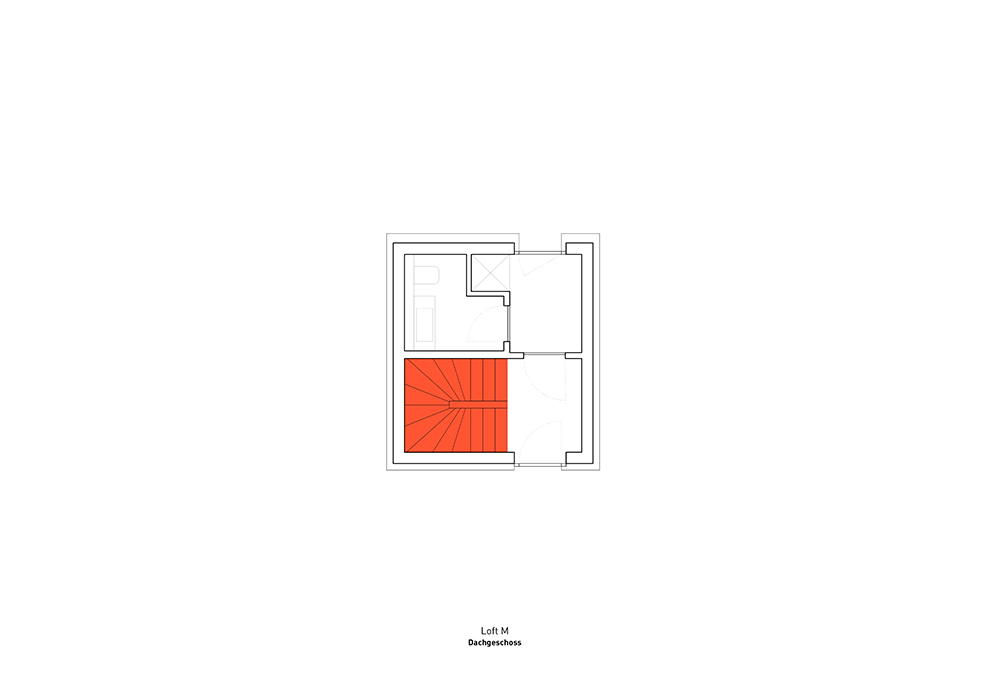
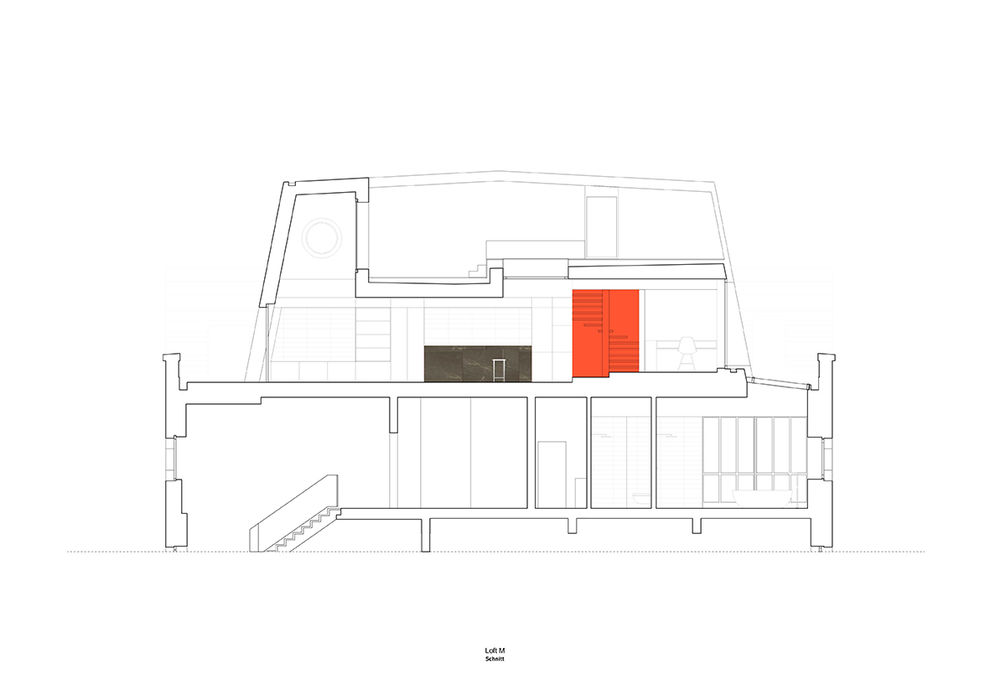
Over the course of several discussions, a briefing for the renovation was drawn up: the central ideas for the conversion were "loft" and "living room", but also "flexible living" and "storage space". Based on this, a new spatial layout for the flat was created: the formerly free-standing staircase in the middle of the room was converted in such a way that flush-mounted fixtures provided additional storage space and minimised the traffic area. While all private rooms are located on the lowest floor, the floor above was designed to be fluid: A surrounding built-in element supports the zoning of the living area by fitting onto the newly introduced two-step staircase, which separates the kitchen and living area from the dining and working area. Raising the floor also reduces the height of the window parapet, giving the residents an expanded view of the Rhine. Behind the kitchen niche, the living area opens up surprisingly into a two-storey room. This communicates with the terrace area via a large window. The "living room" design concept is evident in the dining area, for example, where the combination of a fabric-covered bench and a permanently installed, light blue lacquered table forms the centre of the room. A fabric-covered seating alcove mediates between the different platform heights of the dining table and kitchen area and cleverly forms a communicative bridge to the free-standing kitchen block. The classic "loft" design concept has been reinterpreted, primarily through the use of sustainable materials: A natural olive-coloured clay plaster with straw was applied to all wall and ceiling surfaces. All surfaces of the fixtures were made from regionally produced silver fir three-layer panels. Both are complemented by a cream-coloured rubber floor, which was laid in almost all living areas as a foot-warm floor covering. Only in the stairwell does the warm atmosphere of the floors experience a design friction: the colour space, completely bathed in a silky-gloss pure orange, which extends from the entrance to the top floor, acts as a luminous contrast in the renewed spatial organism.
Photography Credits:
Annika Feuss
www.annikafeuss.com
(Published in CUBE Cologne Bonn 03|23)

Old and New Interwoven
A conversion that completely transforms a home's character while keeping its structural core intact.
Open-Air Room
Field-fired brick walls frame the verdant landscape of a thoughtfully layered courtyard
Simply Inviting
Sensitive renewal of an artist's courtyard home speaks through restrained design
Representative & Communal
How a Longerich consultancy embraces teamwork and networking through office design