


Dialogue Within Constraints
A primary school in Unterbilk gains new purpose through the addition of a canteen and sports hall


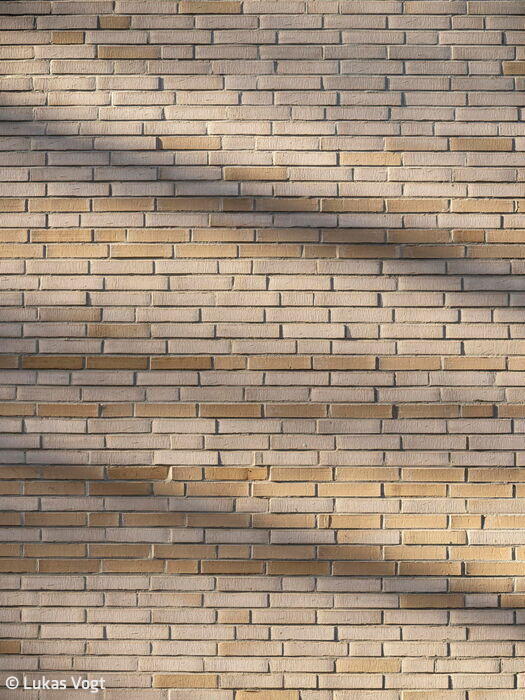
Since its construction in 1892, the Kronprinzenstraße community primary school in Unterbilk has stood virtually unchanged. The heritage-listed brick building—a standalone structure of considerable character—required expansion with a new canteen and sports hall. Düsseldorf-based wollenweberarchitektur was tasked by IPM Immobilien Projekt Management to craft a cohesive ensemble that respects and engages with the existing structure.
The project faced significant constraints: the tight urban setting and the site's mature tree canopy—which the team was committed to preserving. The two cubic volumes housing the sports hall and canteen were strategically positioned to the sides and rear of the existing building, anchoring the perimeter of the site. Their proportions respond directly to neighboring structures' heights and forms. This arrangement creates tree-lined courtyards on both sides of the main building. The sports hall—serving the school community as both training space and gathering venue—benefits from generous floor-to-ceiling glazing that floods the interior with natural light. Impact protection required for sports activities was elegantly integrated through muntined windows. Close coordination between the sports authority, school, and administration allowed the architects to reduce the hall's width, preserving the row of mature trees directly behind the school building. This constraint means the hall accommodates training but not competitive events. The two-story canteen building, complete with a cook & chill kitchen, opens generously toward the northern playground, which transforms into an outdoor terrace during warmer months.
The upper floor contains the kitchen, storage, staff areas, a spaces for the after-school program staff, and faculty restrooms. The roof accommodates both the photovoltaic system and ventilation equipment, organized efficiently beneath a raised parapet that screens them from the courtyard view. Both new buildings employ facing brick, a restrained palette, and horizontal rhythms that echo the existing structure. At the sports hall, window trios reinforce the cadence of the original facade across the way. The listed building itself required minimal intervention: a new glass lift tower ensures barrier-free access through to the top floor, while the main entrance has been relocated from the south-facing side to the car-free northern facade.
Photography:
Lukas Vogt
(Published in CUBE Düsseldorf 03|24)

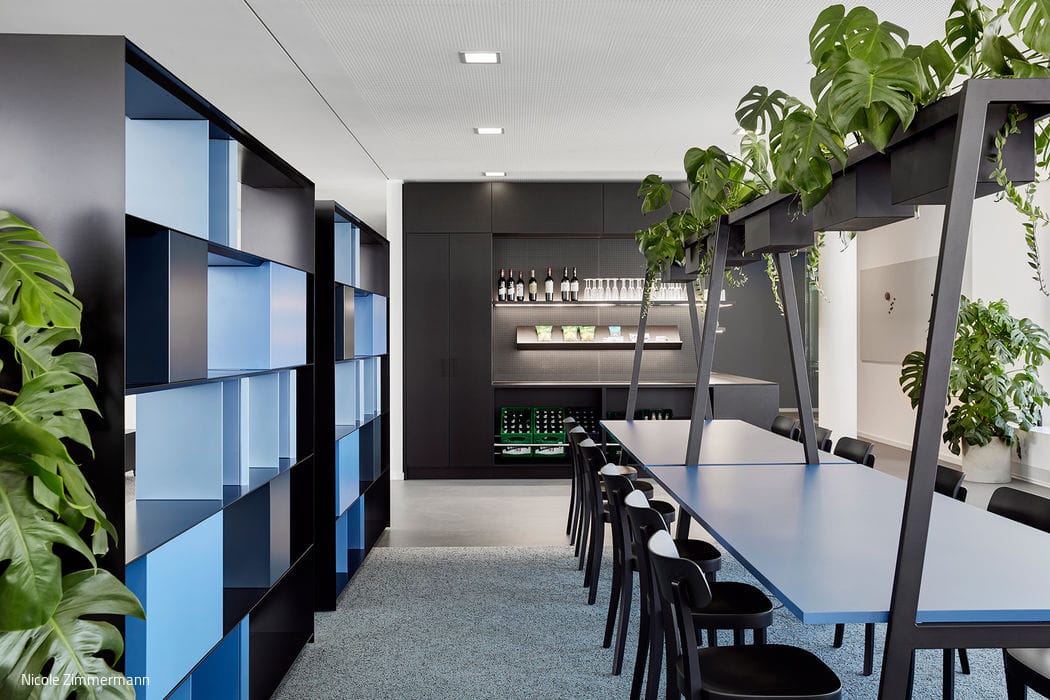
Office as Experience Space
Designing a collaborative workspace for an in-house company

Metamorphosis of Reduction
A residence in northern Düsseldorf, expanded and reimagined with minimalist precision
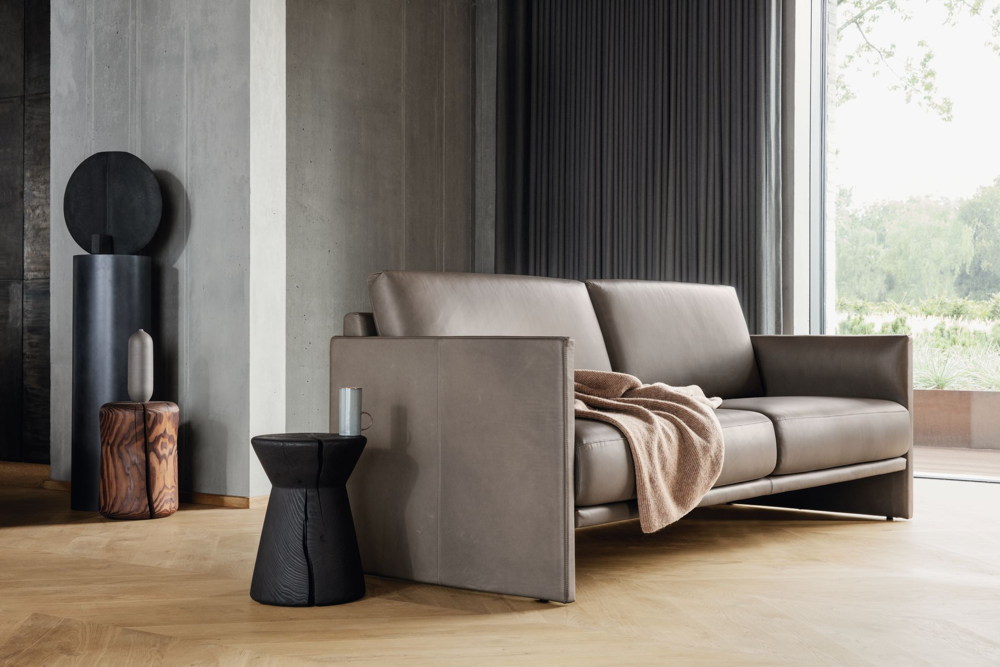
Rolf Benz Cara
Rolf Benz Cara. Cara reveals character.
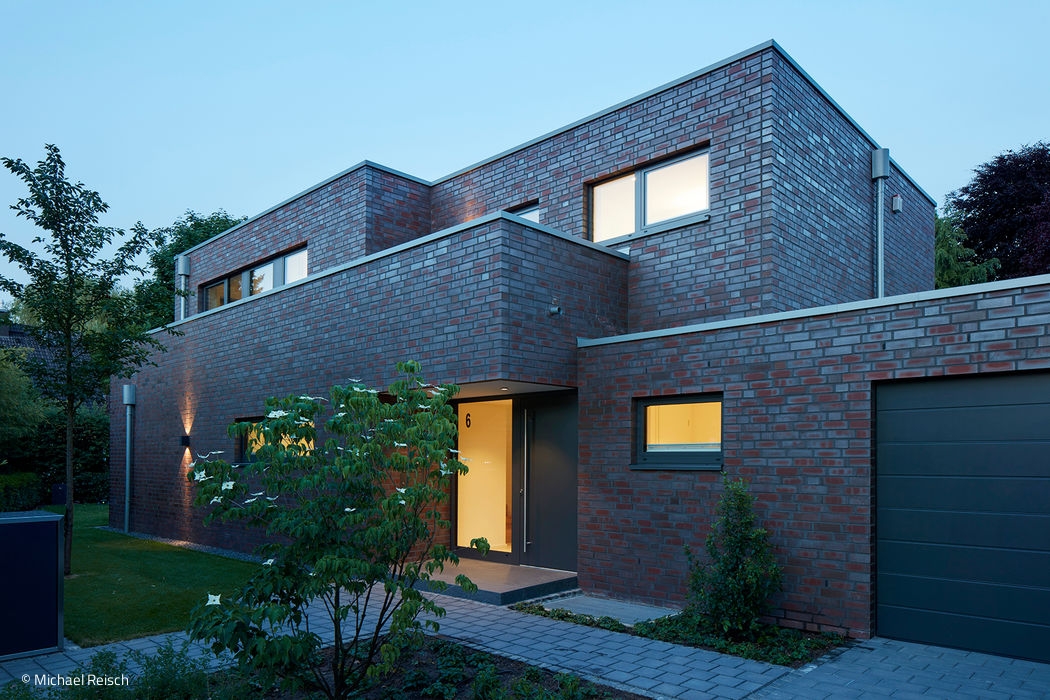
A Dynamic Play of Forms
A single-family home in Angermund: how sculptural façade design transforms regulatory constraints into architectural excellence.