


Warmly Inviting
Thoughtful Renovation of an Artist's Courtyard House – Defined by Restraint
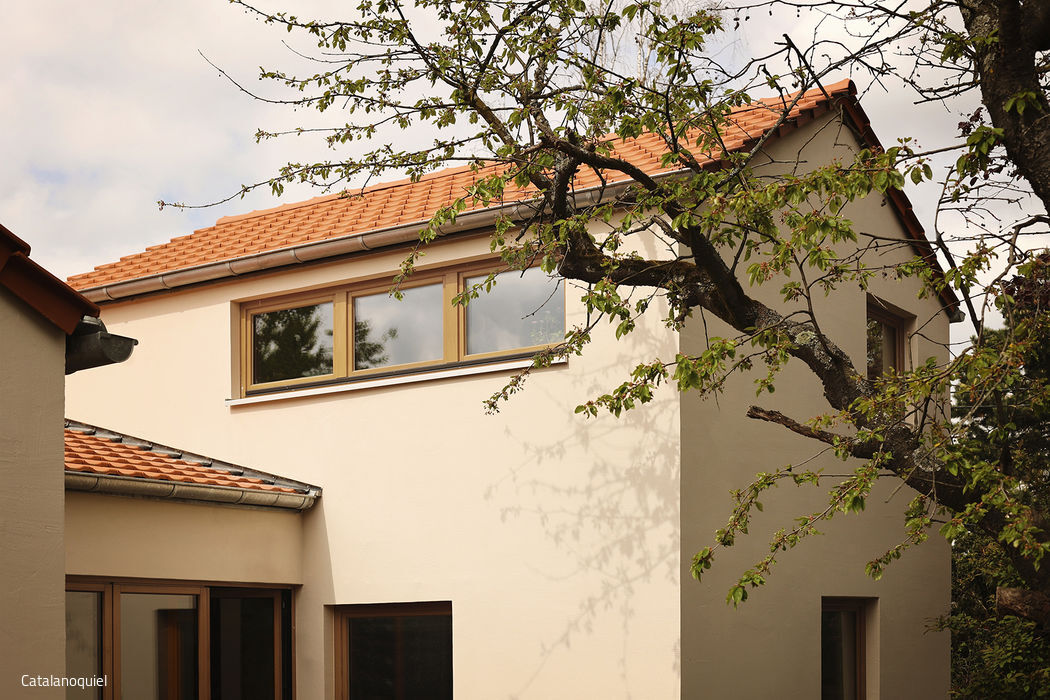
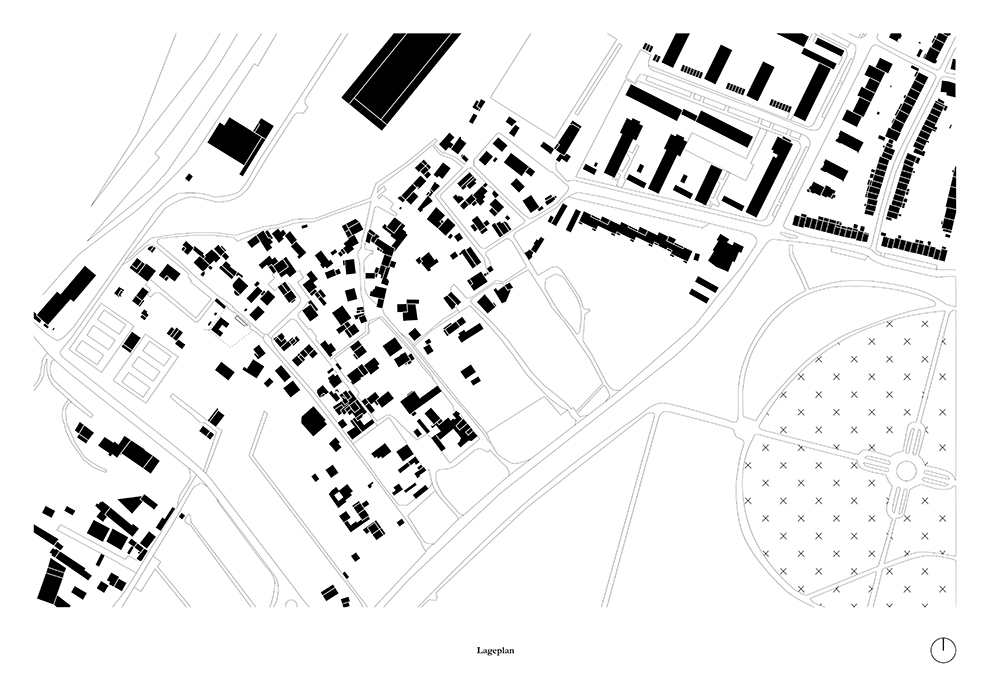
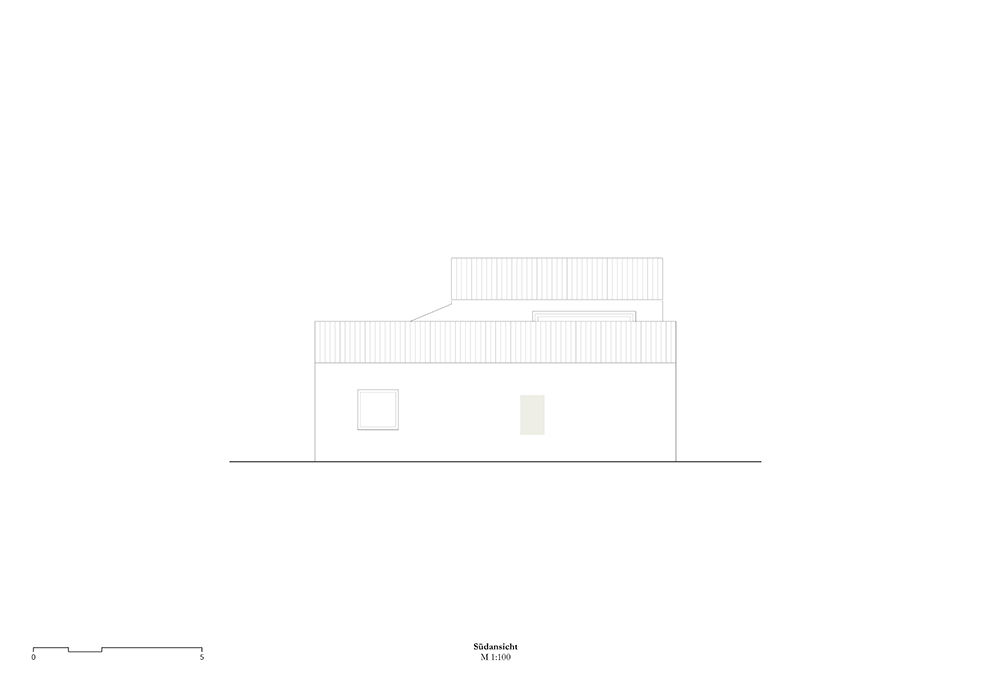
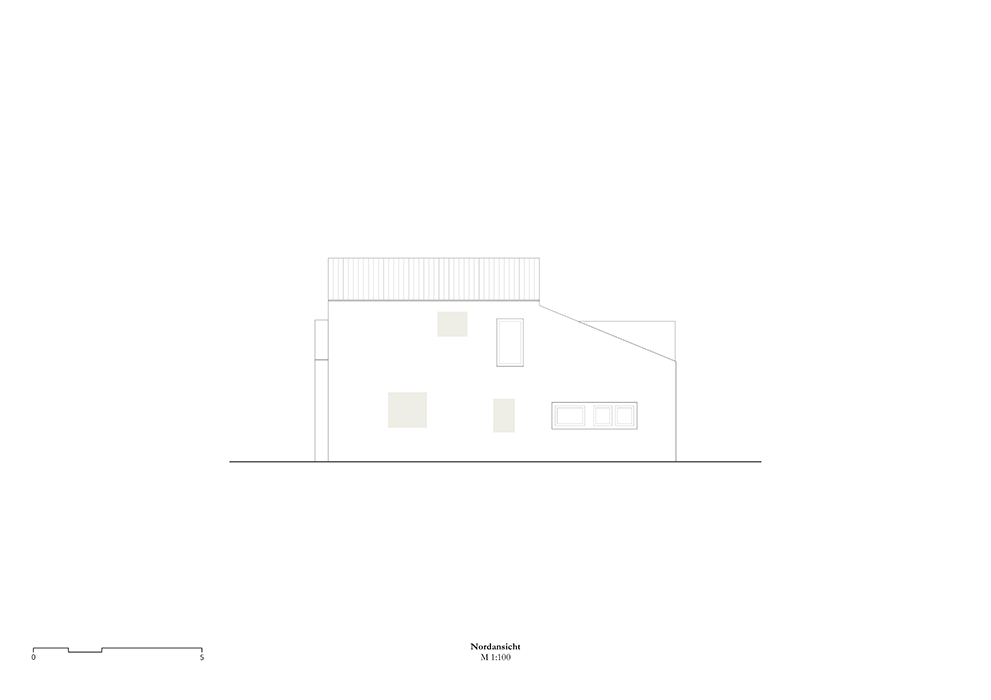
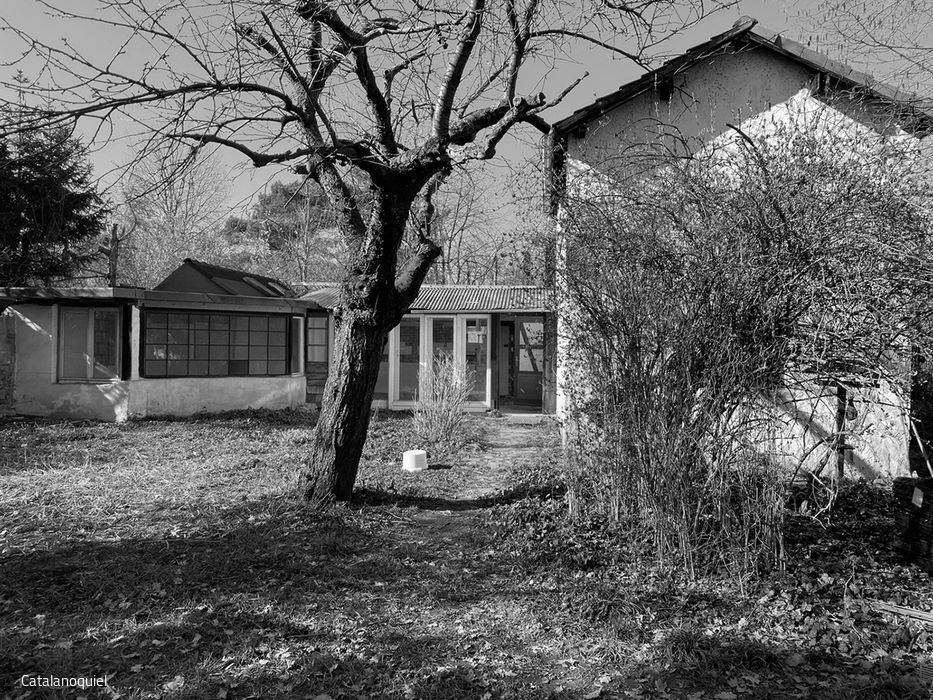
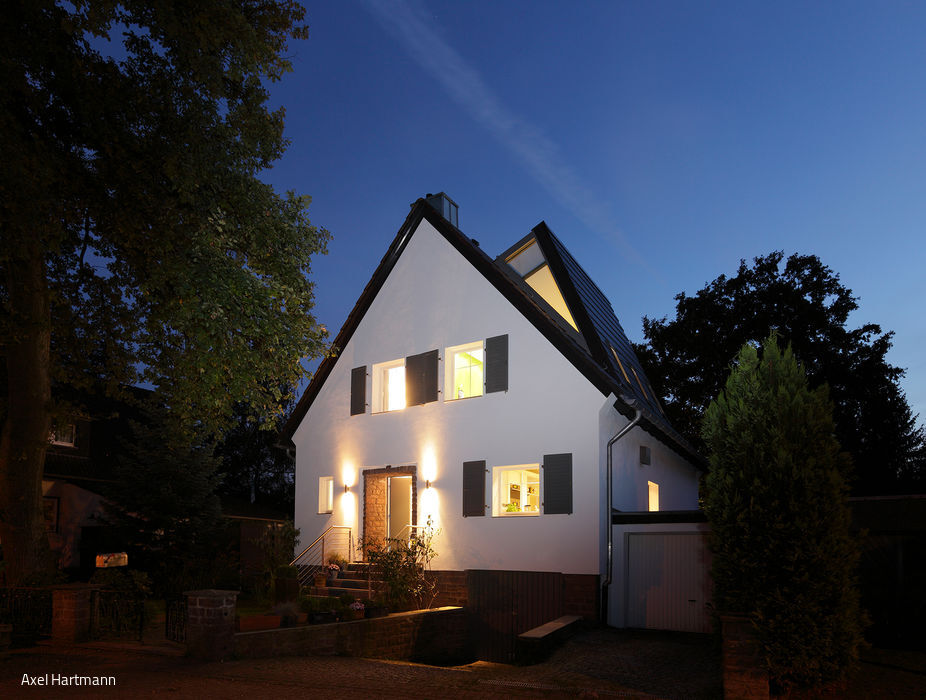
The so-called "Indian settlement" in Zollstock was founded in the 1920s as a provisional housing area for large families facing unemployment. Development was largely organic and unplanned. After World War II, refugees took up residence, later joined by students and artists from the alternative scene. Today, it retains the charm of an enchanted, self-contained world – Cologne's answer to Copenhagen's Freetown Christiania, minus the tourist crowds.
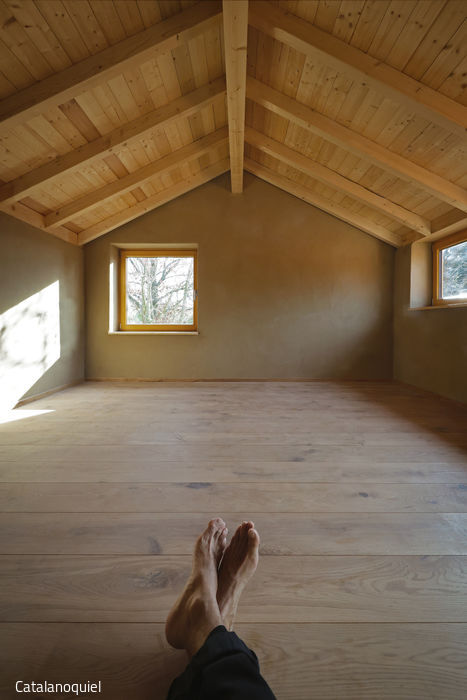
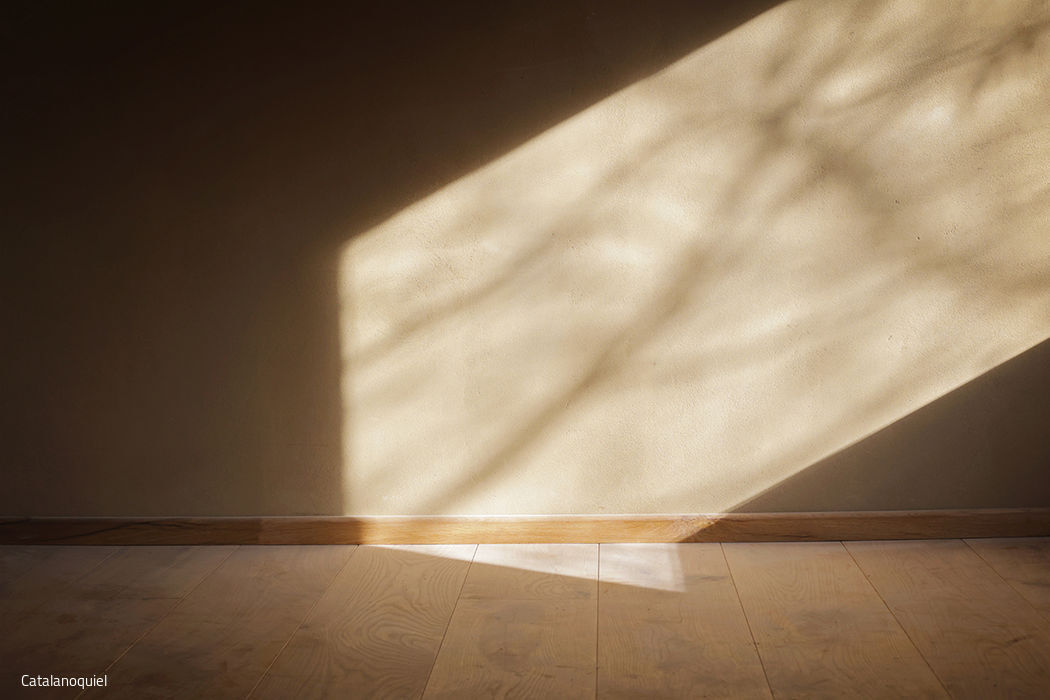
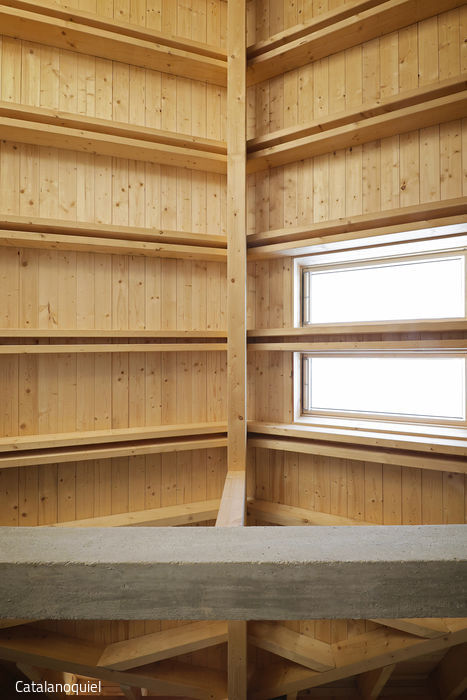
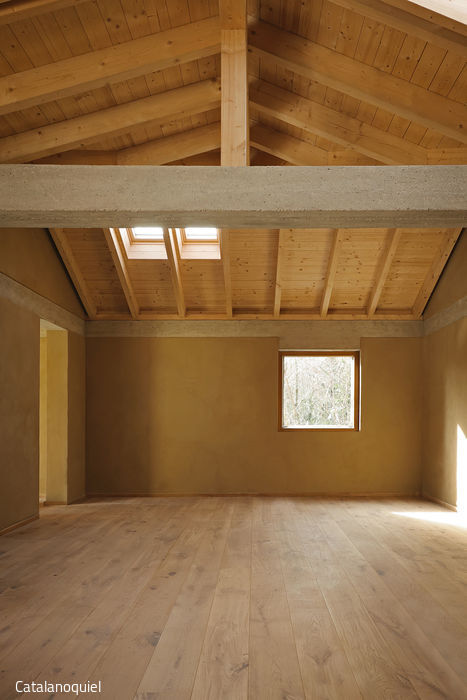
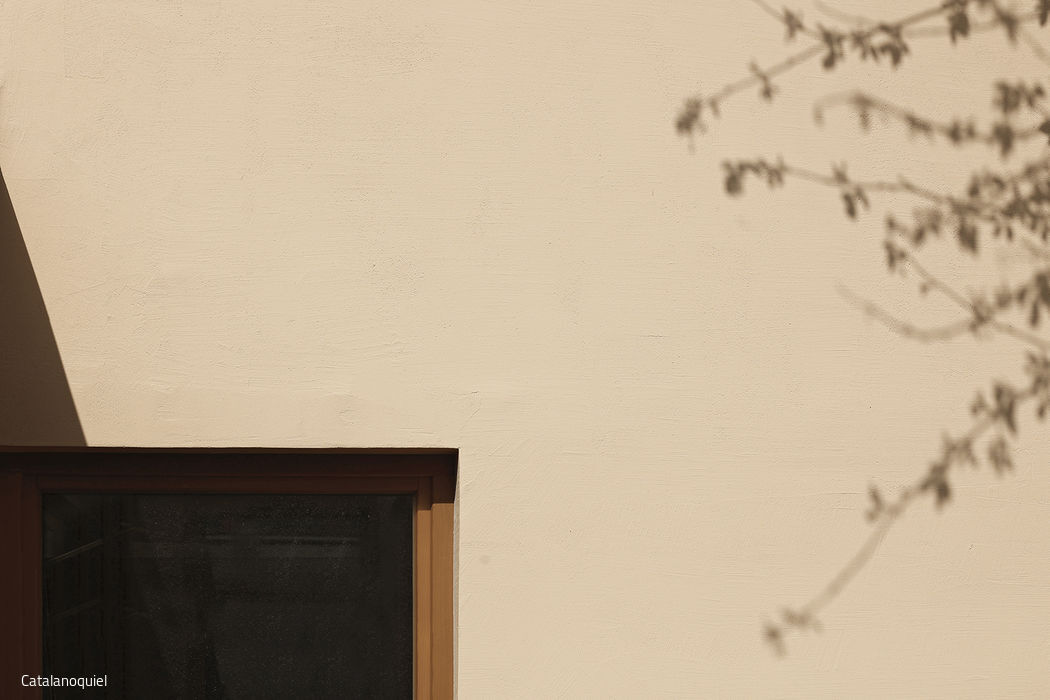
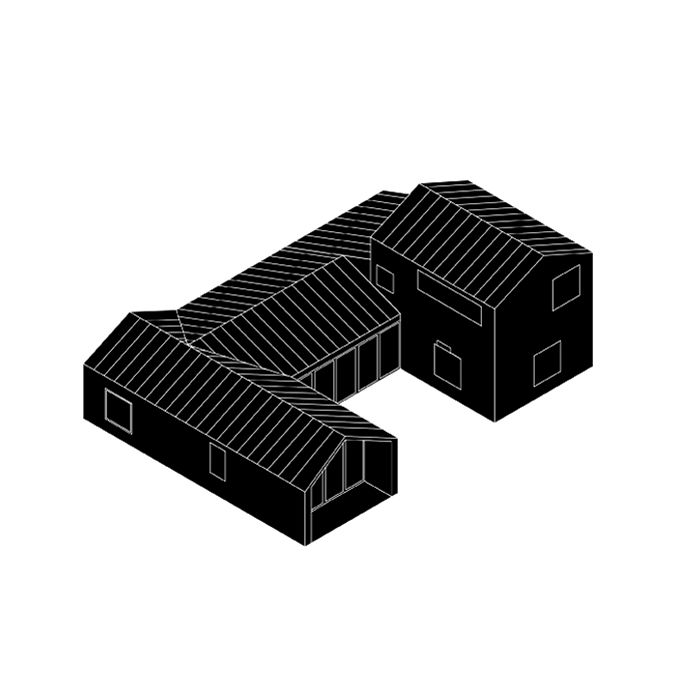
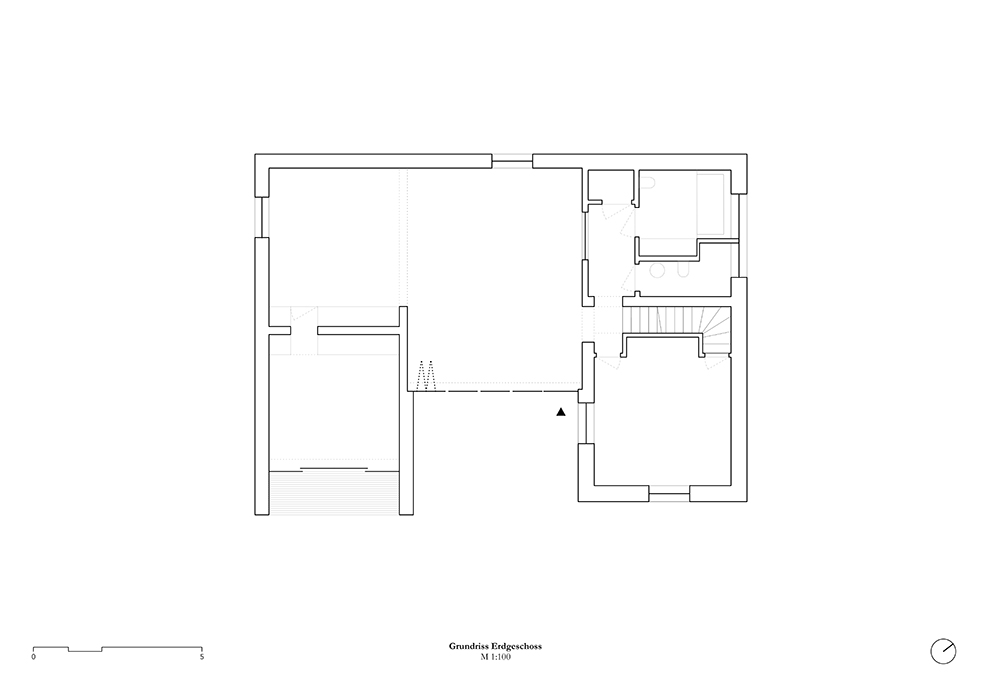
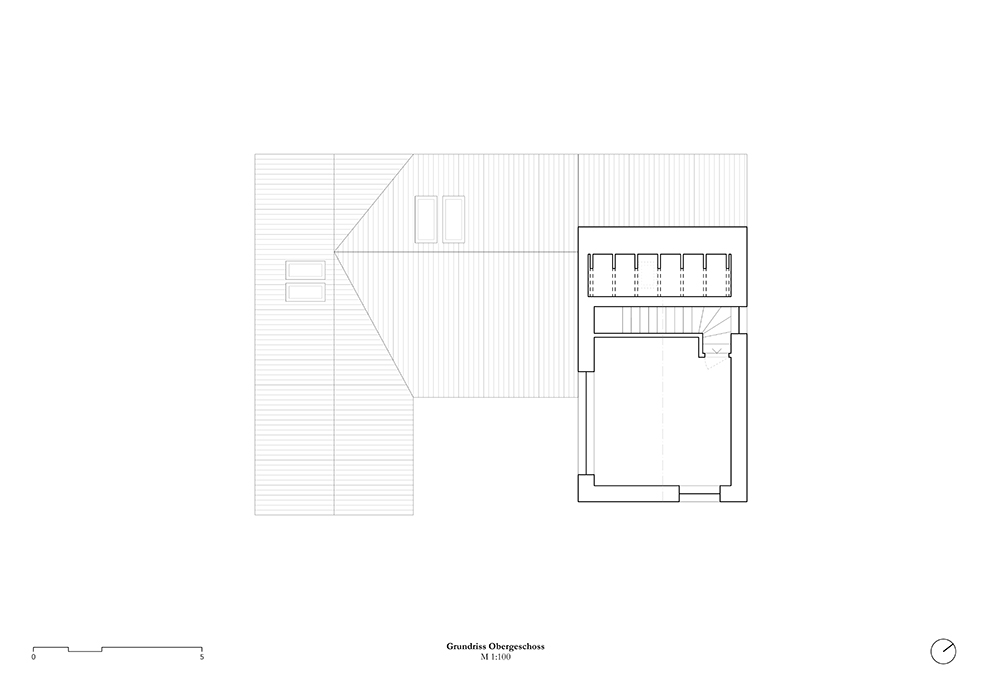
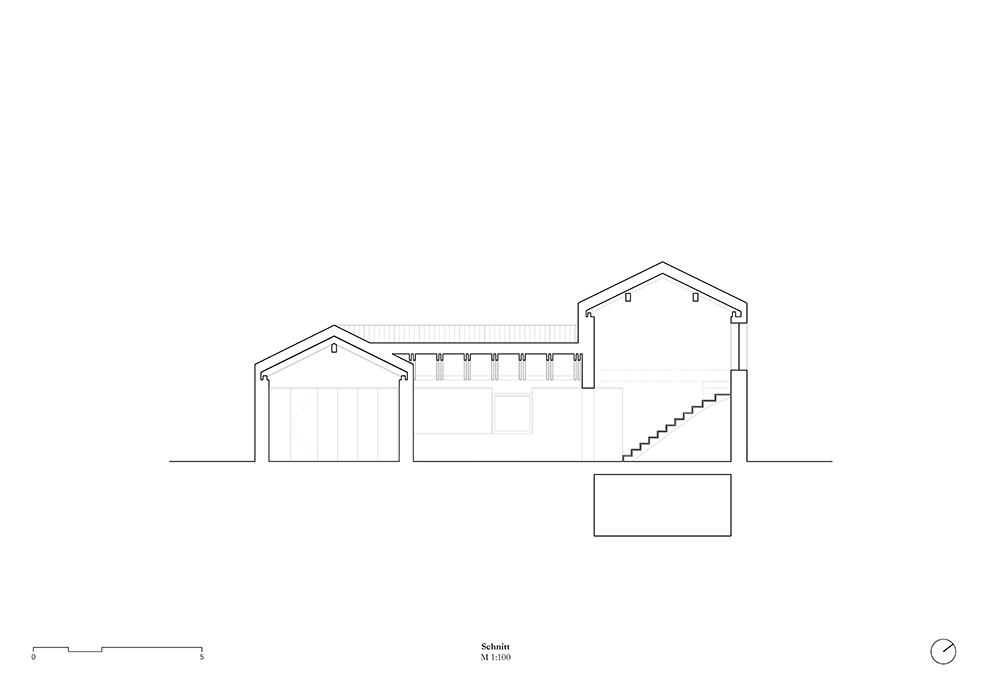
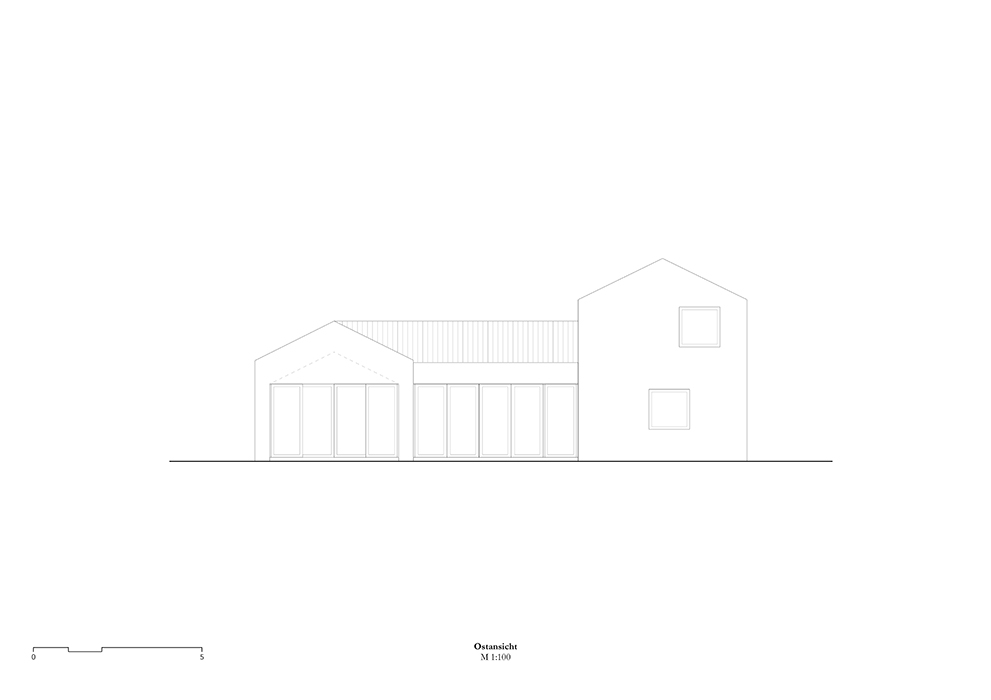
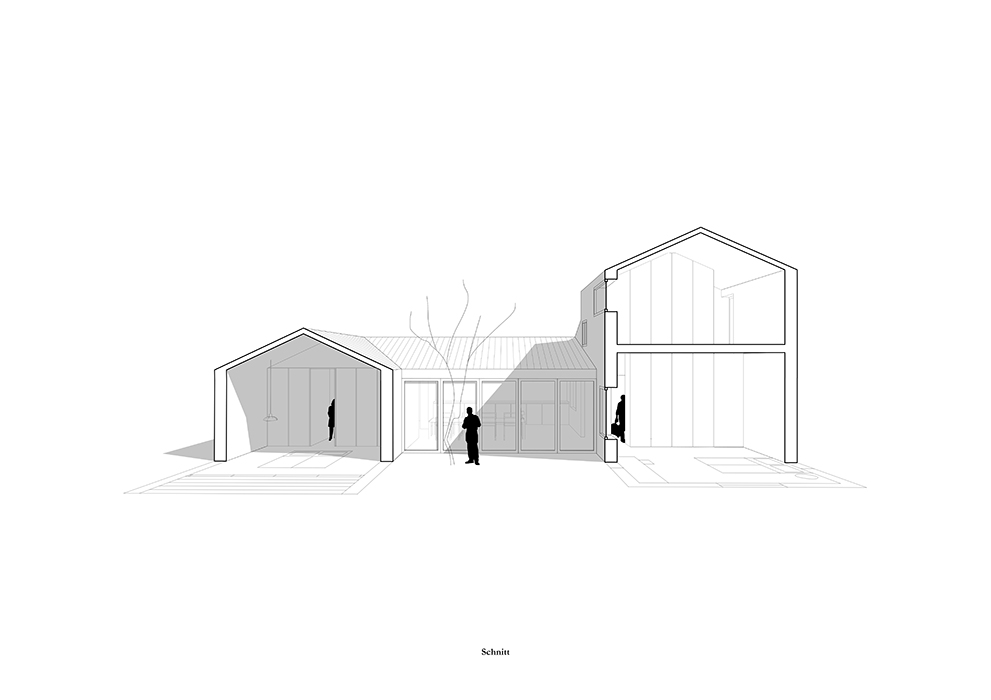
The existing building and outhouses that a couple acquired—for themselves, their two children, and a cat—had long served as home and studio to an artist who had thoughtfully renovated and expanded it over time. Catalanoquiel Architects in Cologne were tasked with carefully restoring this unique home within the settlement's existing regulations while honoring and evolving the inviting courtyard typology that had developed organically over decades. The colorful patchwork of partly heated, partly weatherproofed living and workspace structures had grown increasingly unstable. The first priority was underpinning the building foundations—a task complicated by the settlement's narrow, labyrinthine pathways. Construction crews delivering equipment and materials regularly complained: "There's no way through... where am I supposed to unload this?" The guiding principle was clear: preserve the enchanted, artistic character of this place while delivering contemporary living standards. The courtyard house concept—already present in the original design through two connected free-standing structures—was thoughtfully expanded. The open kitchen and dining area in the connecting wing now functions as both gathering space and main entry point, like a traditional hall. A flexible folding wall opens this space directly to the courtyard, creating an inviting, flowing Mediterranean-like experience. The existing masonry was partially rebuilt with a new roof structure—deliberately left exposed to echo the settlement's unadorned building traditions. The new concrete ring beam becomes a defining design gesture, paired with a wooden roof constructed with double rafters over the dining area and single rafters over the living space. Throughout the project, material and technical restraint tell the story: locally sourced stone, wood, and clay, complemented by a heat pump and rainwater cistern system for sustainable low-tech living.
Photography:
Catalanoquiel
(Published in CUBE Cologne 02|23)
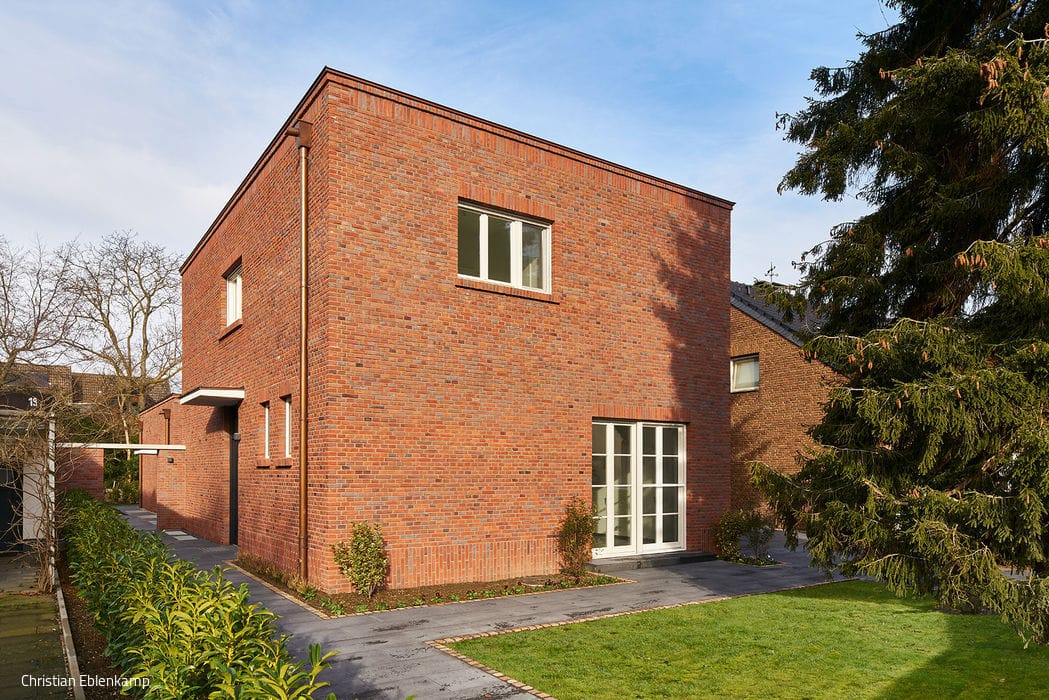
The House Behind the House
A residential and studio house ensemble that expands the site with flexible, future-proof uses
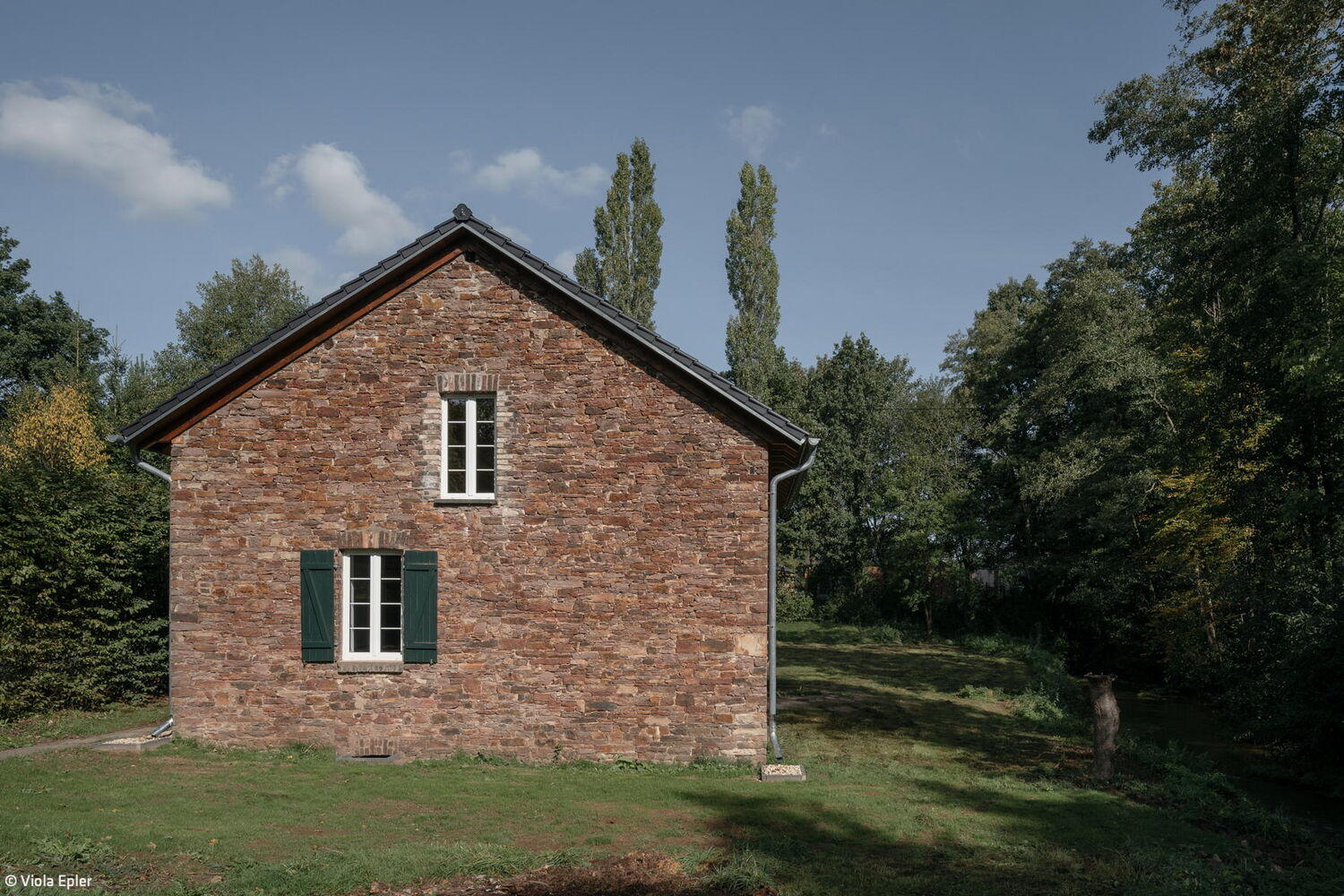
After the Flood Comes the Next One
A historic residence in Mechernich—restored with heritage sensitivity and future-proofed against climate risk
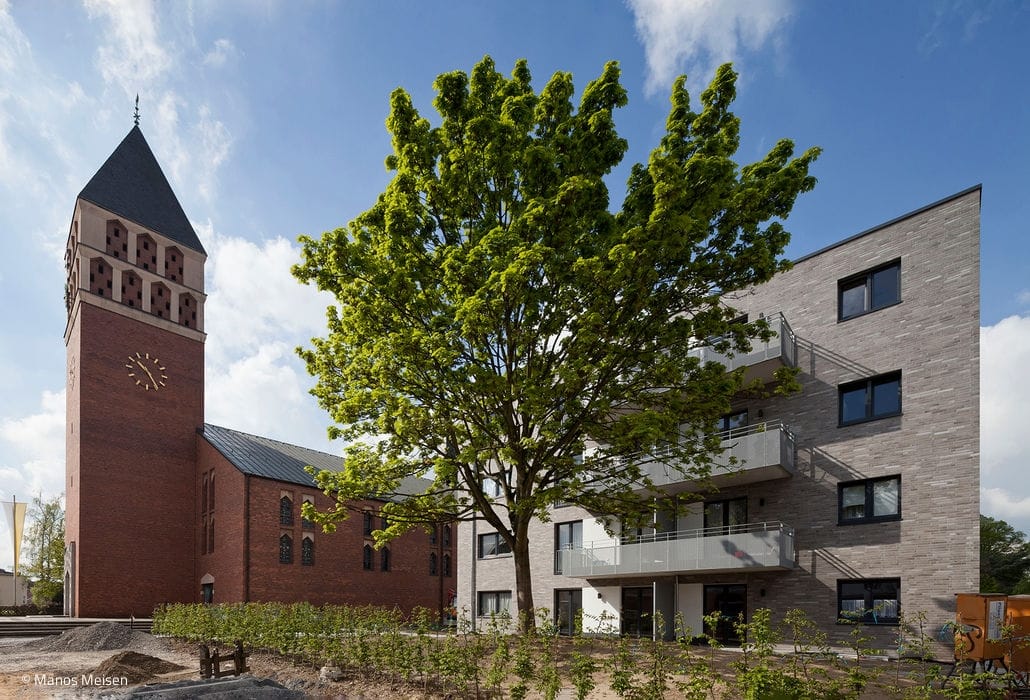
Self-Determined at the Center
The communal areas and residential units for both group and individual apartments orient toward a sheltered yet open courtyard.
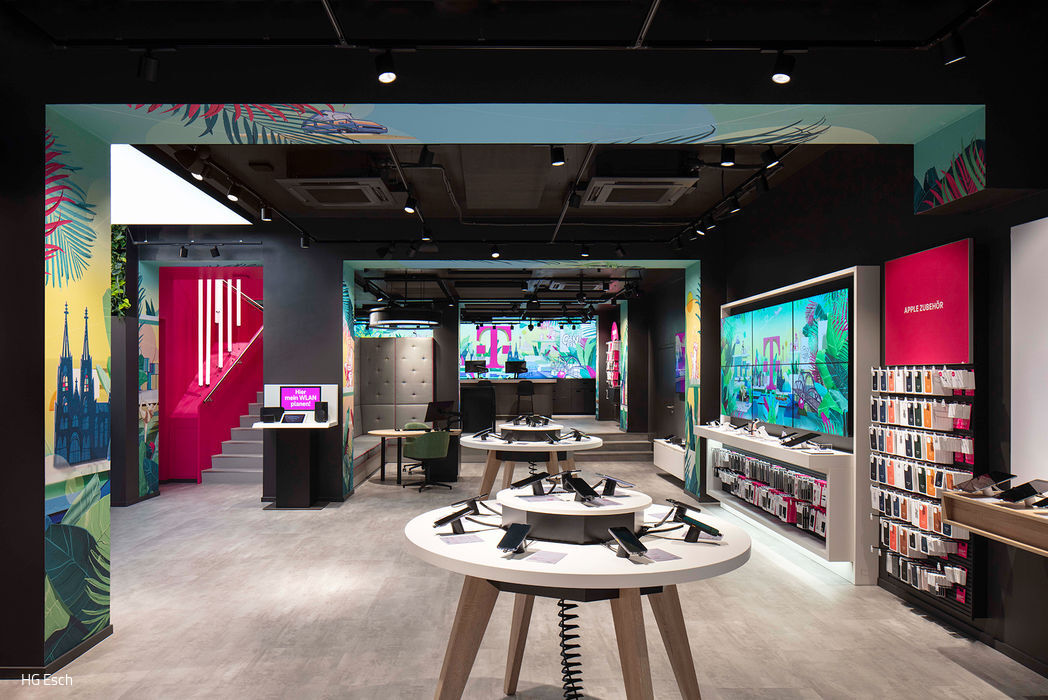
Magenta Goes Loft
The Telekom flagship store: scaled for impact, designed for sustainability