


Father and Son
Paul Böhm's new plaza unfolds around Gottfried Böhm's St. Konrad
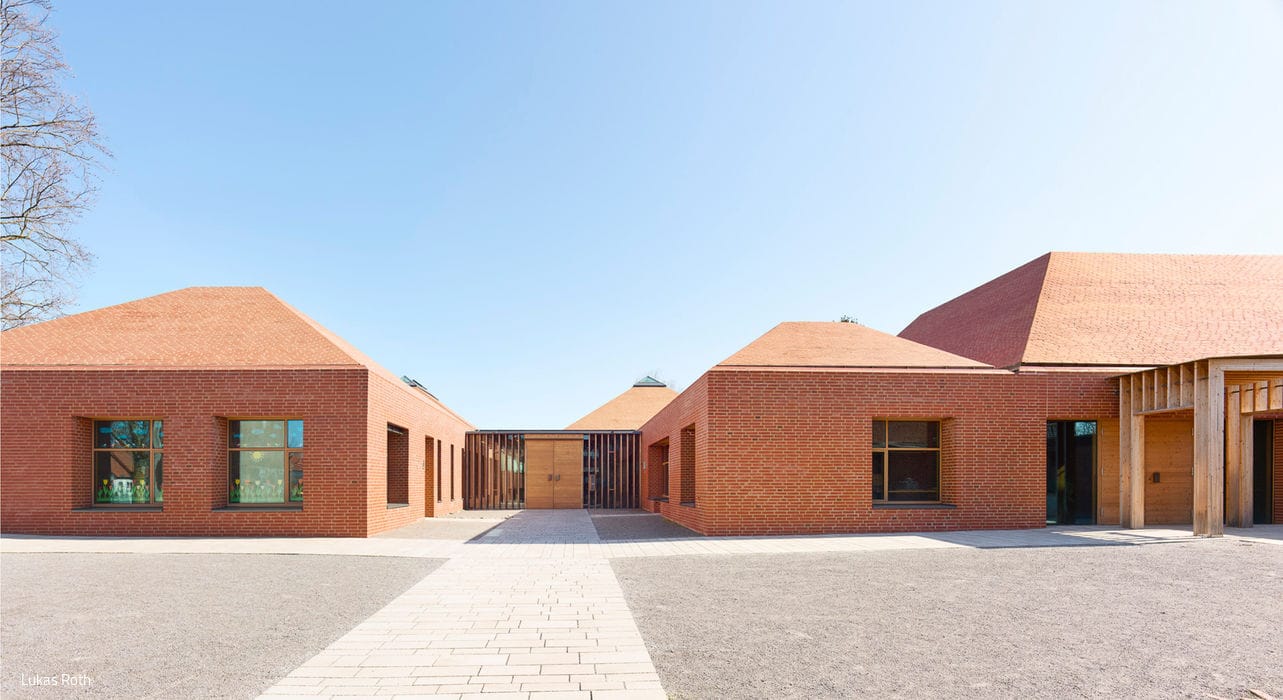
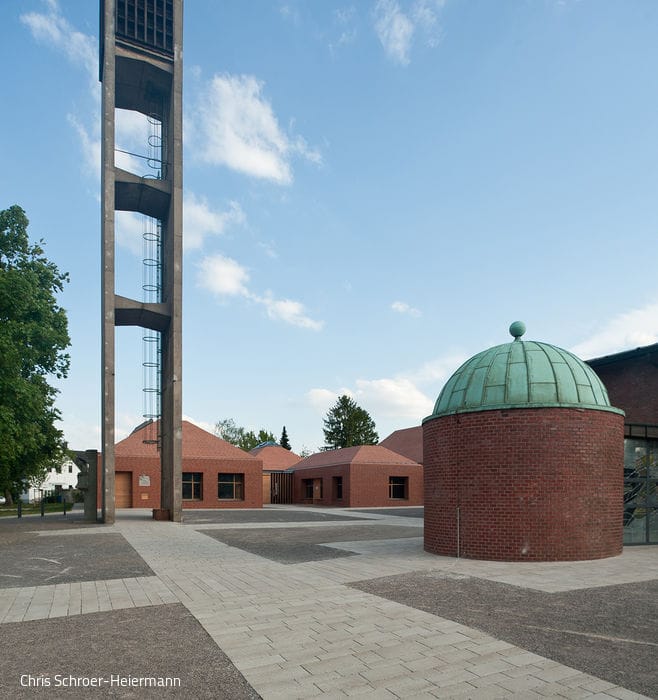
Between 1953 and 1954, Cologne architect Gottfried Böhm (1920–2021) conceived St. Konrad's Church in Neuss-Gnadental. The parish rector, Peter Richrath, possessed the "courage to embrace something new" – and indeed he did. Completed in 1955, the nearly square nave is defined by four reinforced-concrete frame structures supporting a vaulted pitched roof. Red brick infill panels and floor-to-ceiling glass façades that wrap around the corners give the exterior the appearance of a light, modern industrial hall. Yet upon entering, the space transforms into a graceful assembly hall, dominated by a soaring floor-to-ceiling glass wall opposite the entrance – decorated with paradisiacal coloured stained glass – while the slender silhouette of the exposed-concrete altar floats before it.
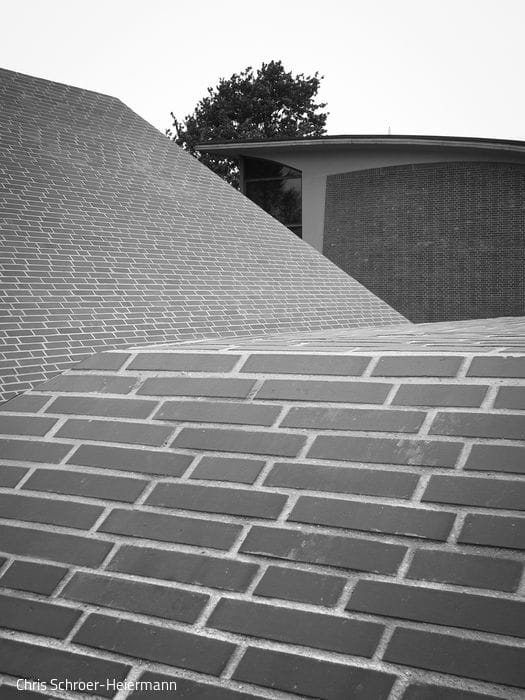
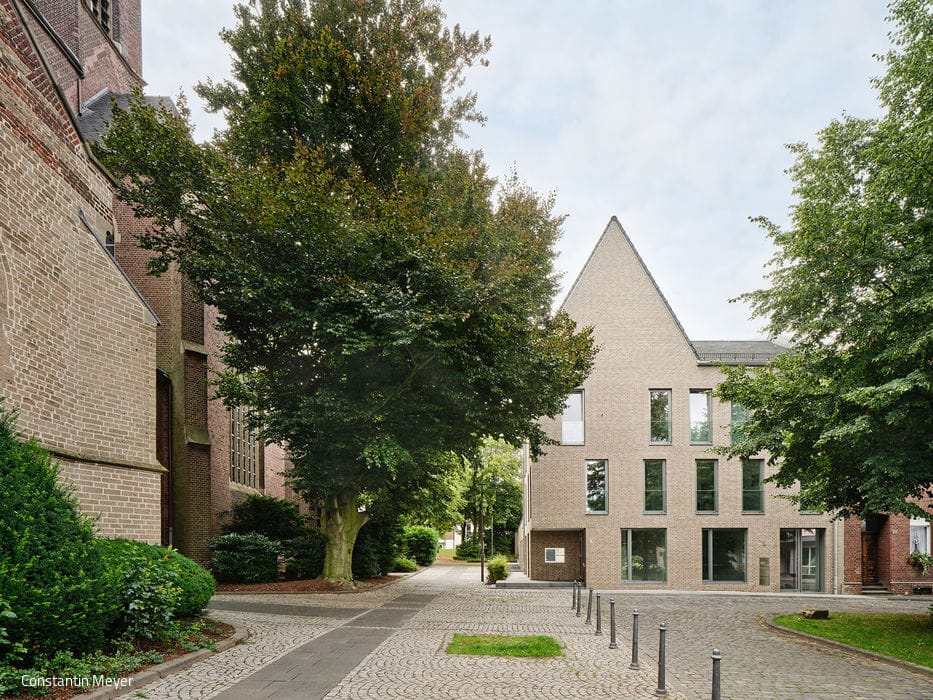
For decades, the parish house and daycare centre occupied the eastern edge of the church, adjacent to a modest sacristy. To maximize the parish's limited resources, these buildings needed replacement and modernization, while a separate portion of the land would be developed for residential use. Paul Böhm (b. 1959) prevailed in the 2012 architectural competition. Yet during the extensive planning phase, Gottfried Böhm's son fundamentally reimagined the scheme: the single large structure became an ensemble of five single-storey buildings. Their red-brick aesthetic, extended into the hipped roofs, engages in quiet dialogue with the existing church. Together—the original church, the new parish hall (its roof pitch and height deliberately emphasized), the kindergarten, and the standing bell tower—these volumes frame a welcoming public plaza that balances openness with a sense of belonging. The baptistry, now separated from the church and crowned with a copper roof, stands more prominently than before, its place within the ensemble further strengthened. An orthogonal grid inlaid into the plaza reinforces this coherence while subtly referencing the Roman fort Novaesium, whose archaeological remains lie preserved beneath the new construction.
(Published in CUBE Düsseldorf 03|22)
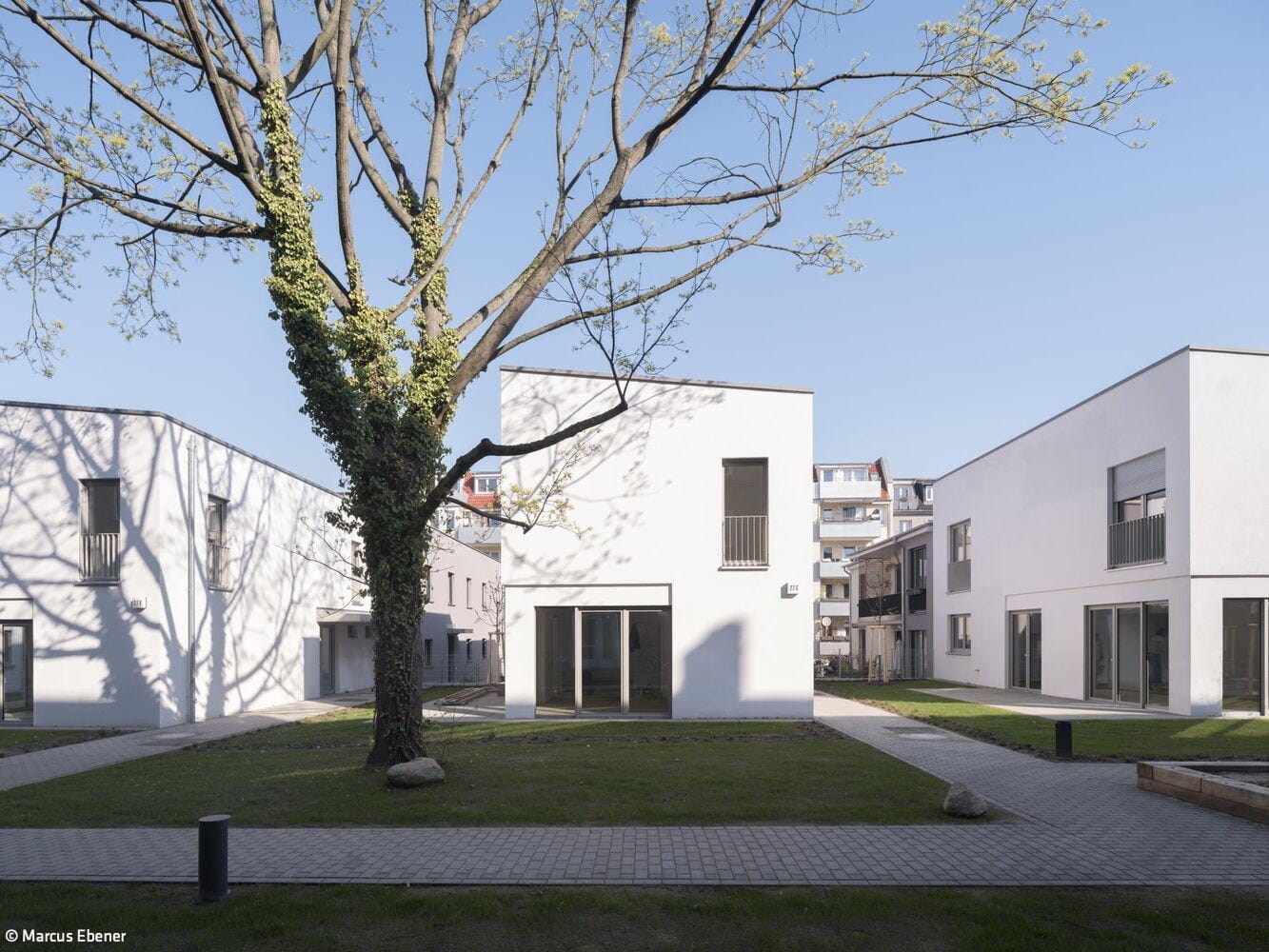


Diversity in harmony
A vibrant new residential quarter with generous green space has emerged on Ulmer Höh' in Derendorf.
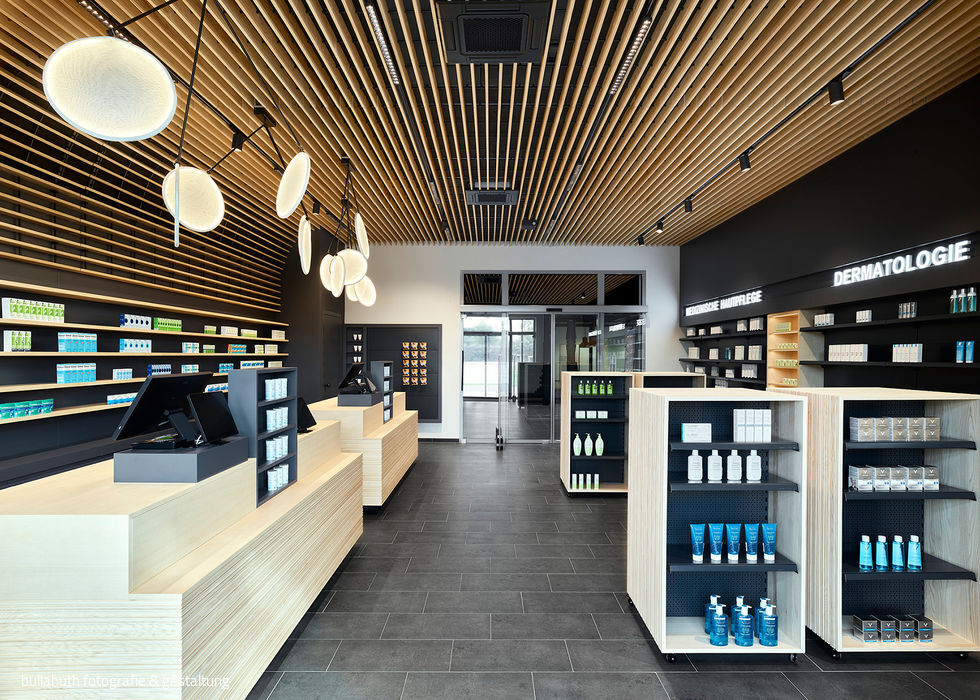
Spaces for wellbeing
This pharmacy embodies focused tranquility and clarity.

Distinctive Design
In her designs, Hoffmann deliberately contrasts smooth surfaces with raw, textured ones.
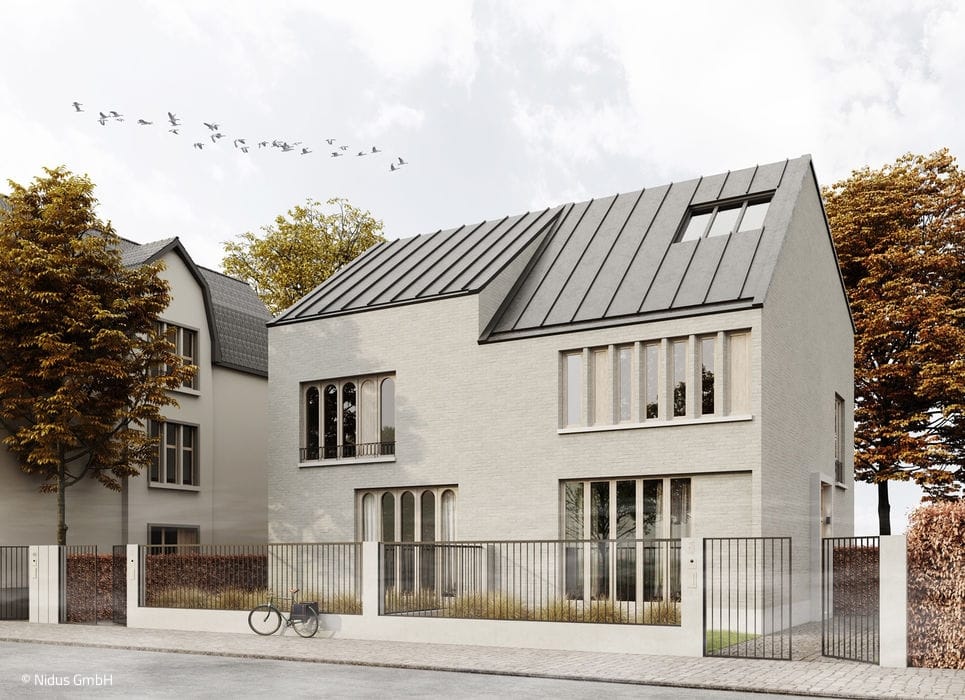
Reflection of the surroundings
Two New Townhouses in Kaiserswerth