


Recycling Reimagined
Wirtschaftsbetriebe Duisburg transforms its depot for tomorrow
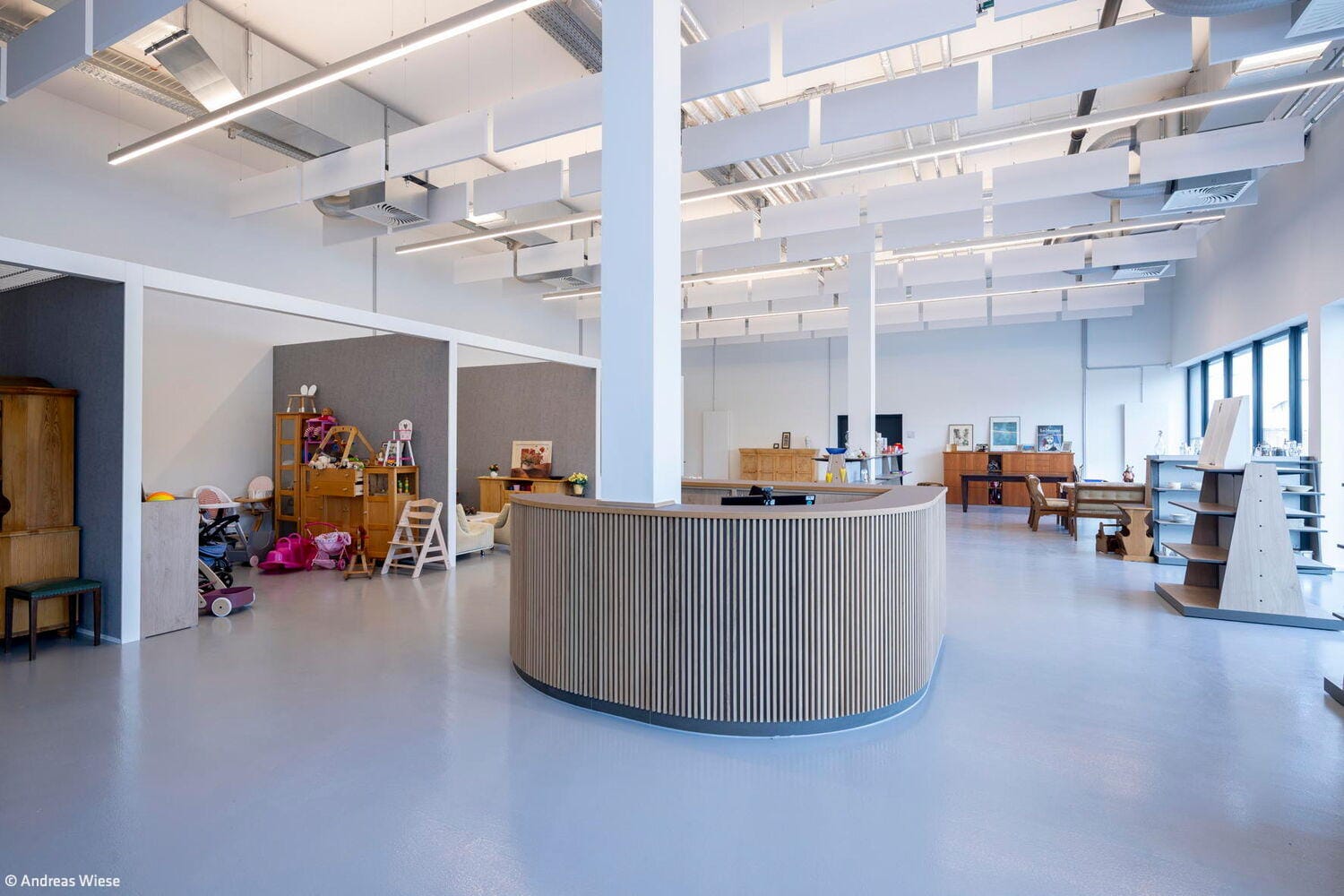
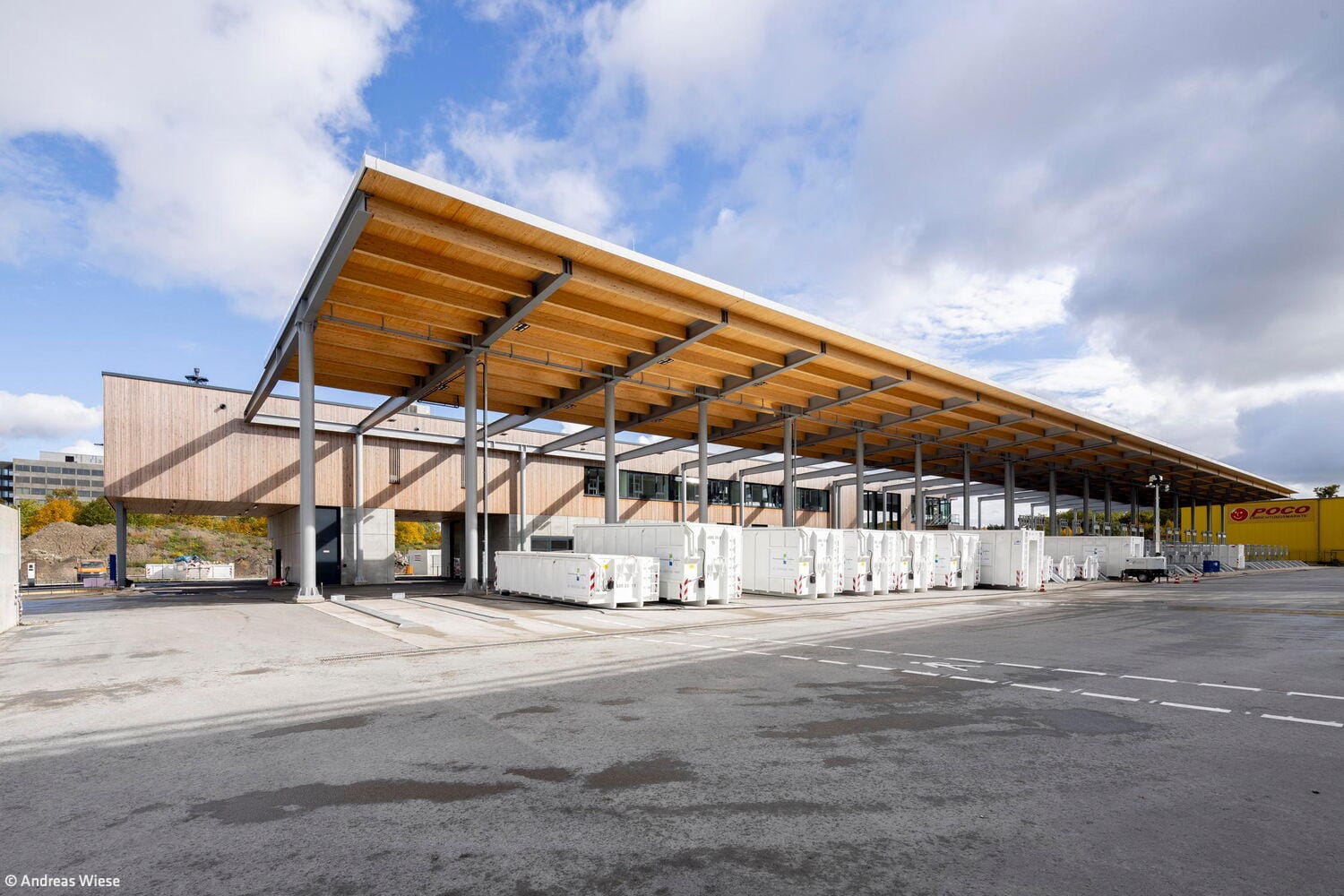
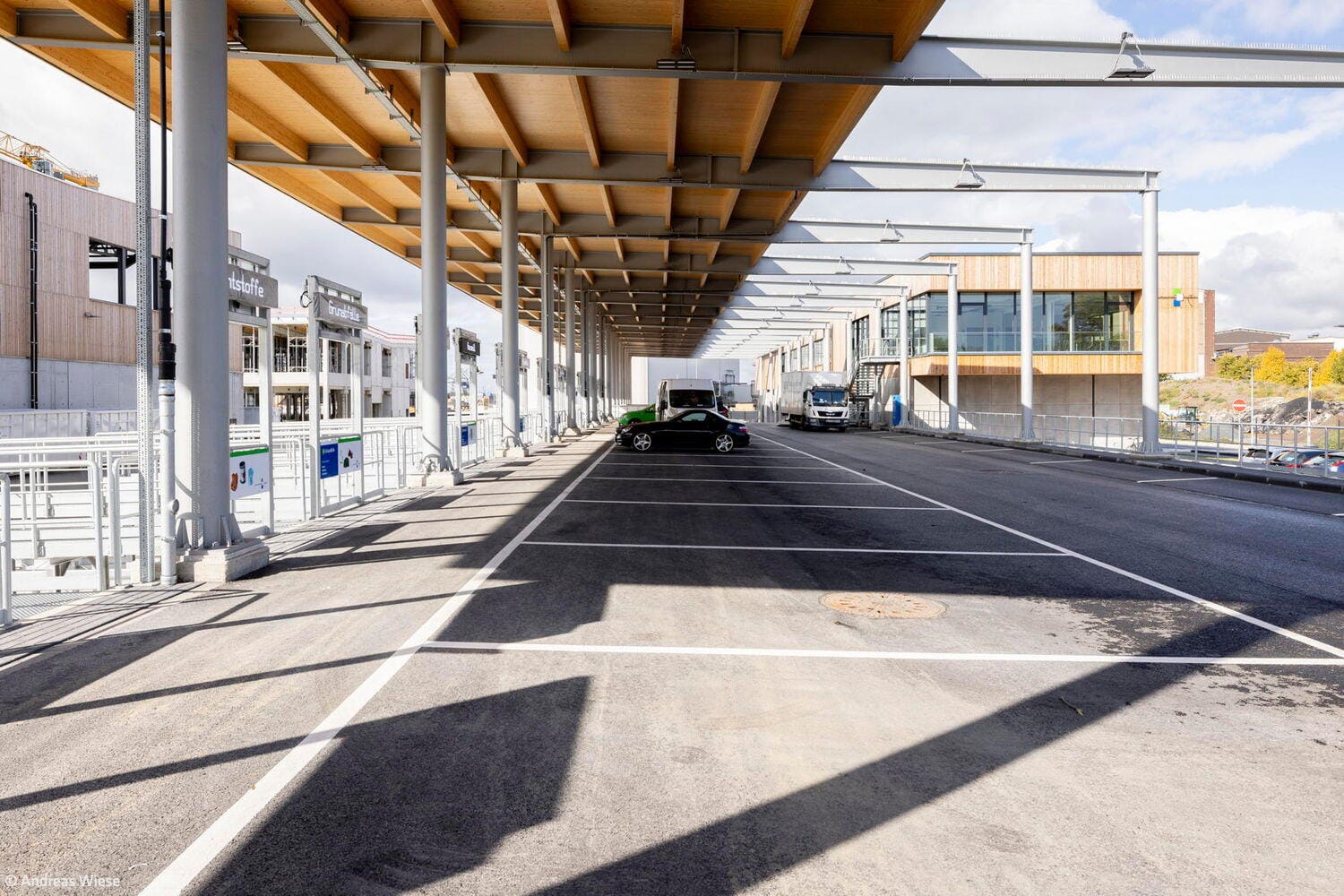
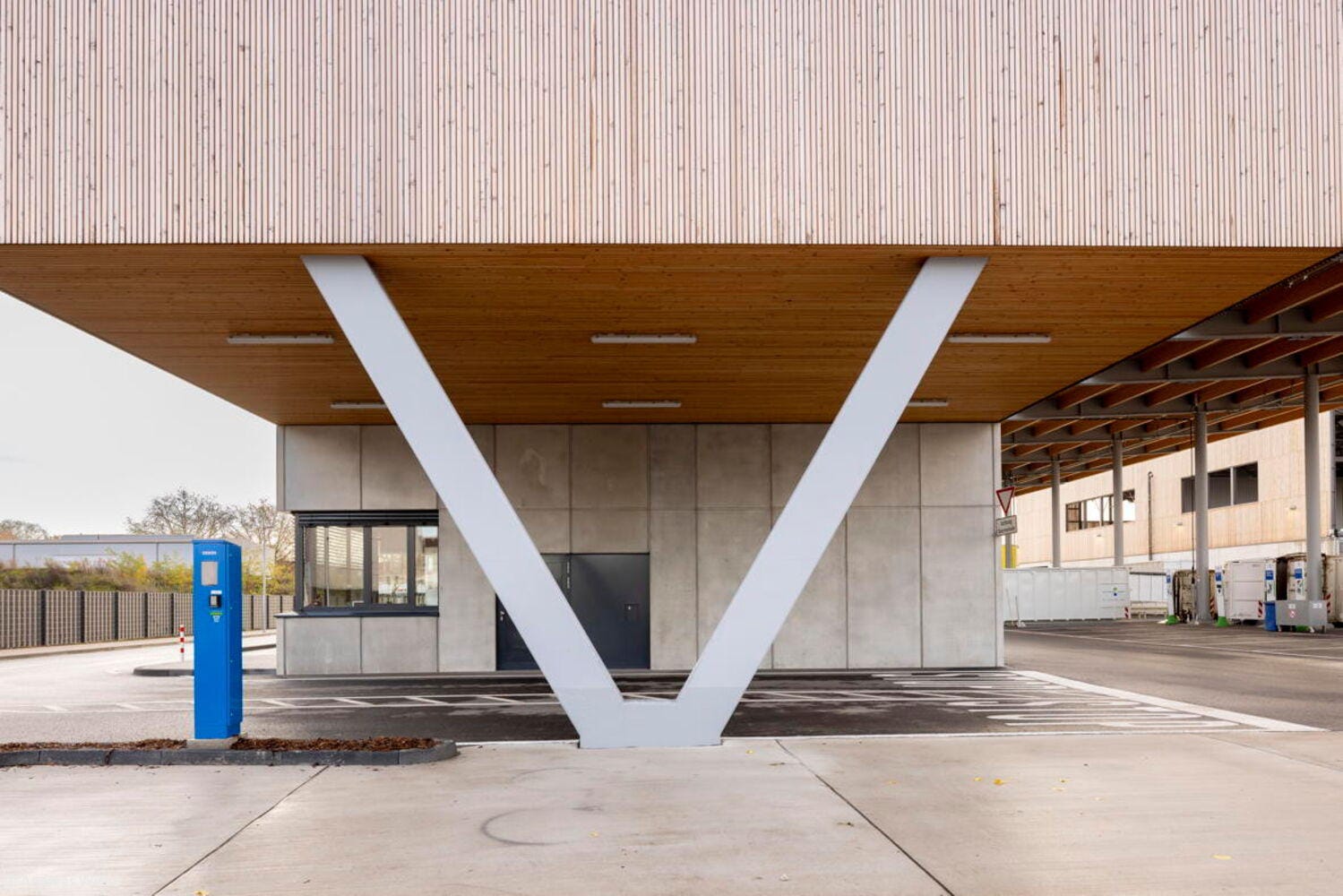
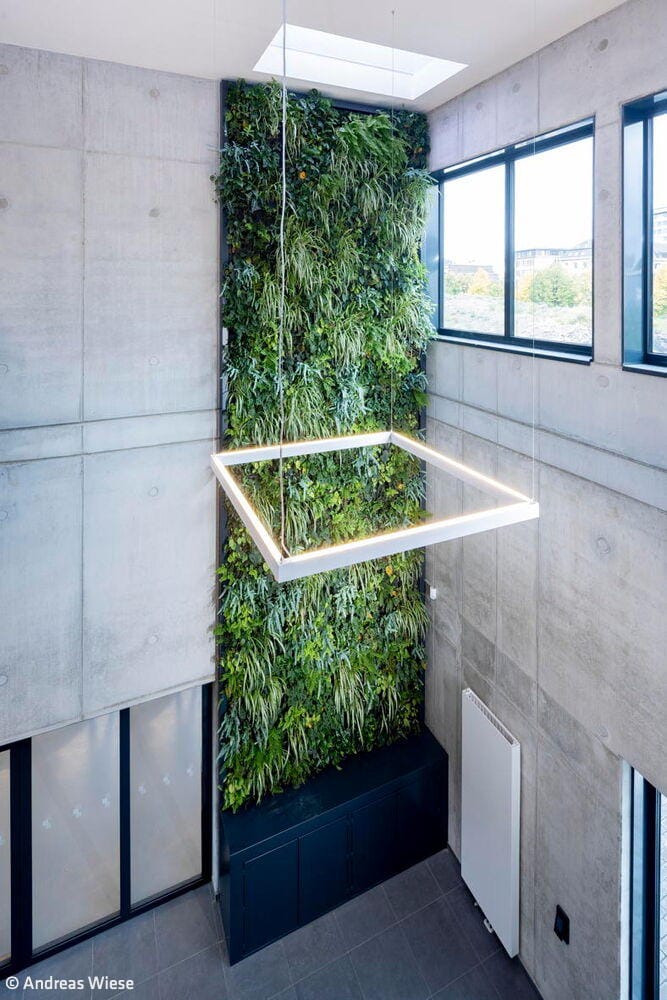
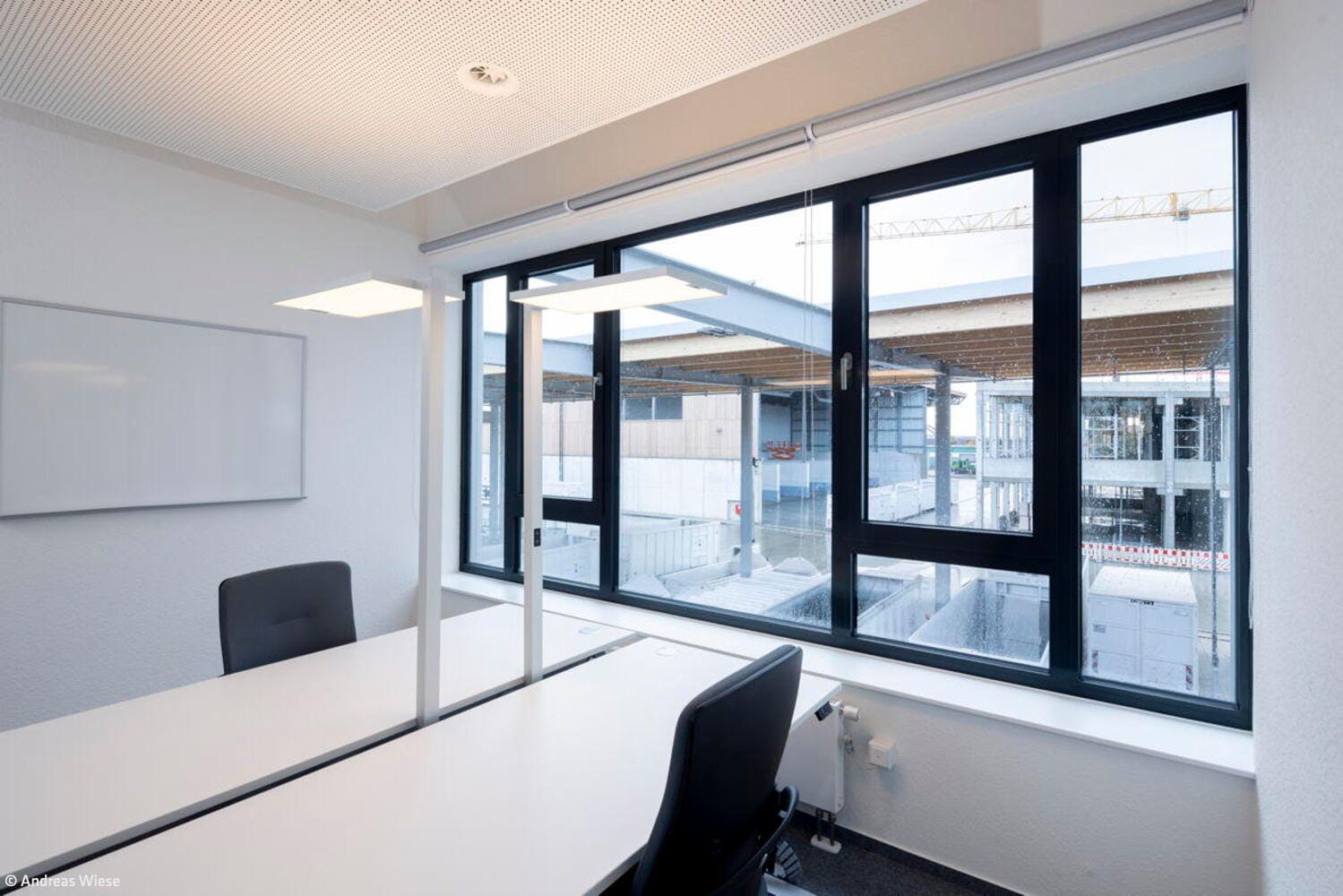
To establish itself as a sustainable and economically viable operation for the future, Wirtschaftsbetriebe Duisburg planned an expansion of its depot at the Hochfeld location. The firm commissioned sgp Hachtel | Bauer architekten from Bonn to lead the design. The first phase brought a multifunctional recycling centre, bin storage, and materials transfer station to a formerly vacant industrial site. The design carefully considered circulation patterns while seamlessly connecting to the surrounding structures. A second phase will introduce expanded administrative facilities and additional buildings. The depot operates as two distinct zones: a public-facing recycling centre and a restricted operational area. The primary design goal was establishing an efficient, conflict-free workflow that ensures long-term economic viability. "Drawing inspiration from the industrial setting, we designed this area with clear, robust geometric forms," explains architect Wolfgang Bauer. The customer-focused buildings along the street—accessed by a new approach road—step down to two-storey structures. Robust concrete base zones anchor the design, while lightweight timber rises above, serving as a CO₂-neutral material that balances sustainability with warm aesthetic appeal. Built along parallel axes, the design can accommodate future changes in function or capacity through flexible expansion or reconfiguration.
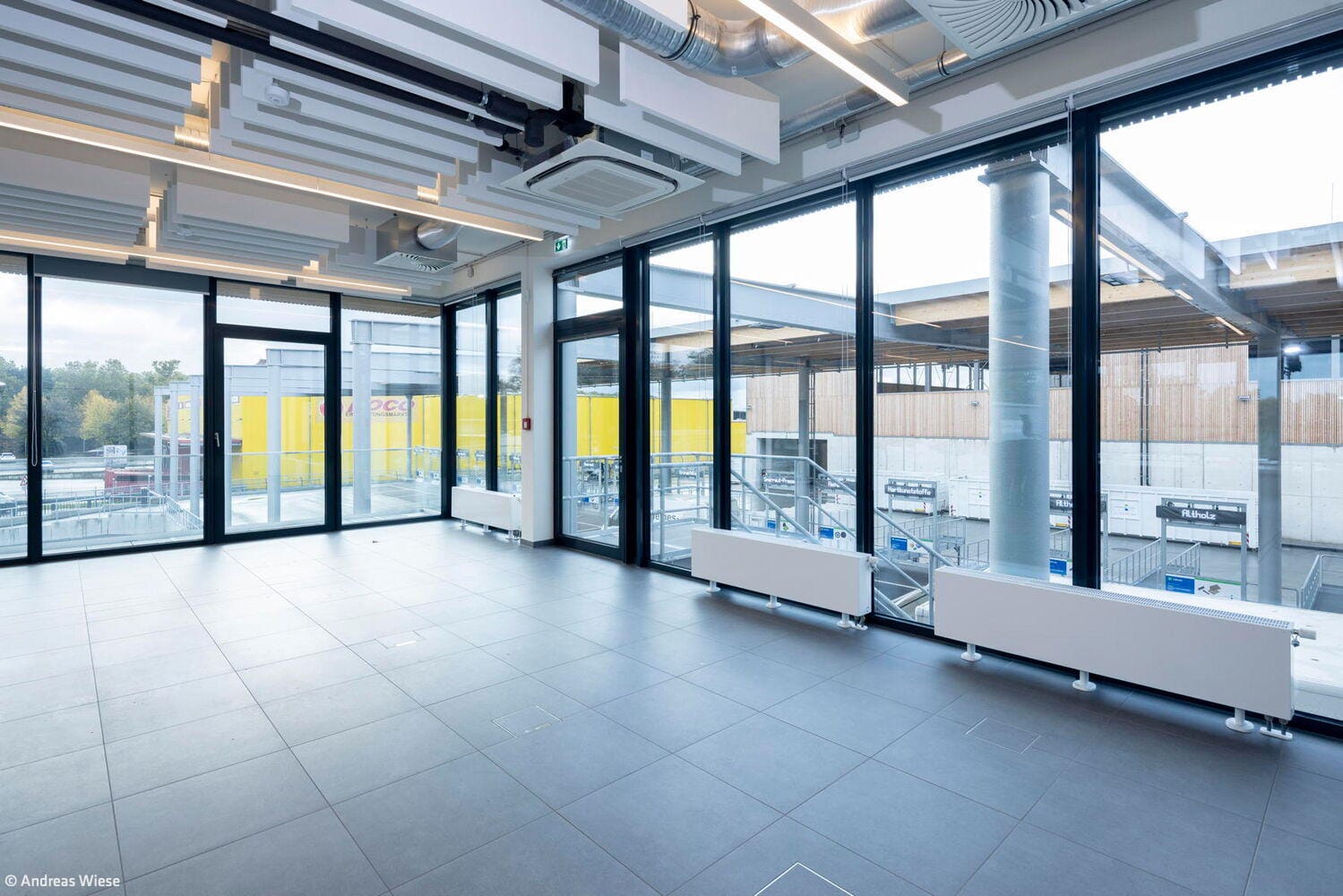
Green roofs offset soil sealing and enhance local climate conditions; rainwater is collected for a fire suppression system or filtered through infiltration trenches. The recycling centre embodies the principle of "recycling reimagined," creating the infrastructure to make it real: within the facility sits R(h)einladen, a second-hand marketplace where volunteers restore functional items destined for disposal, returning them to productive use. An educational seminar room overlooking the drop-off zones helps visitors and school groups understand the circular economy in action. Well-marked ramps and pathways streamline material delivery. The municipal fleet is transitioning to electric vehicles in phases, with comprehensive e-mobility infrastructure already in place from phase one.
Photos:
Andreas Wiese
www.fotografie-wiese.de
(Published in CUBE Ruhrgebiet 03|25)

3D-Printed Unique Pieces
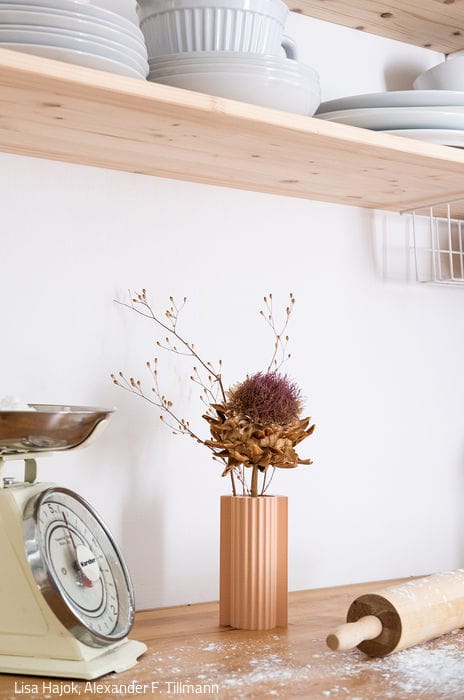
Persea Design creates sustainable lighting and vessels from biological resources
Mission: Change and Sustainability
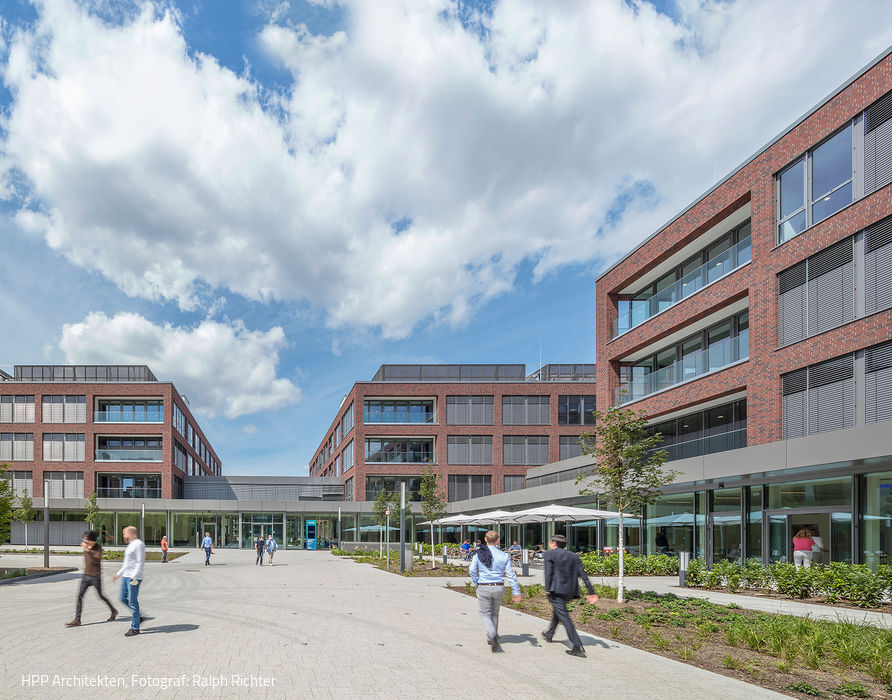
The new RWE campus in Essen embodies the evolution of RWE AG.
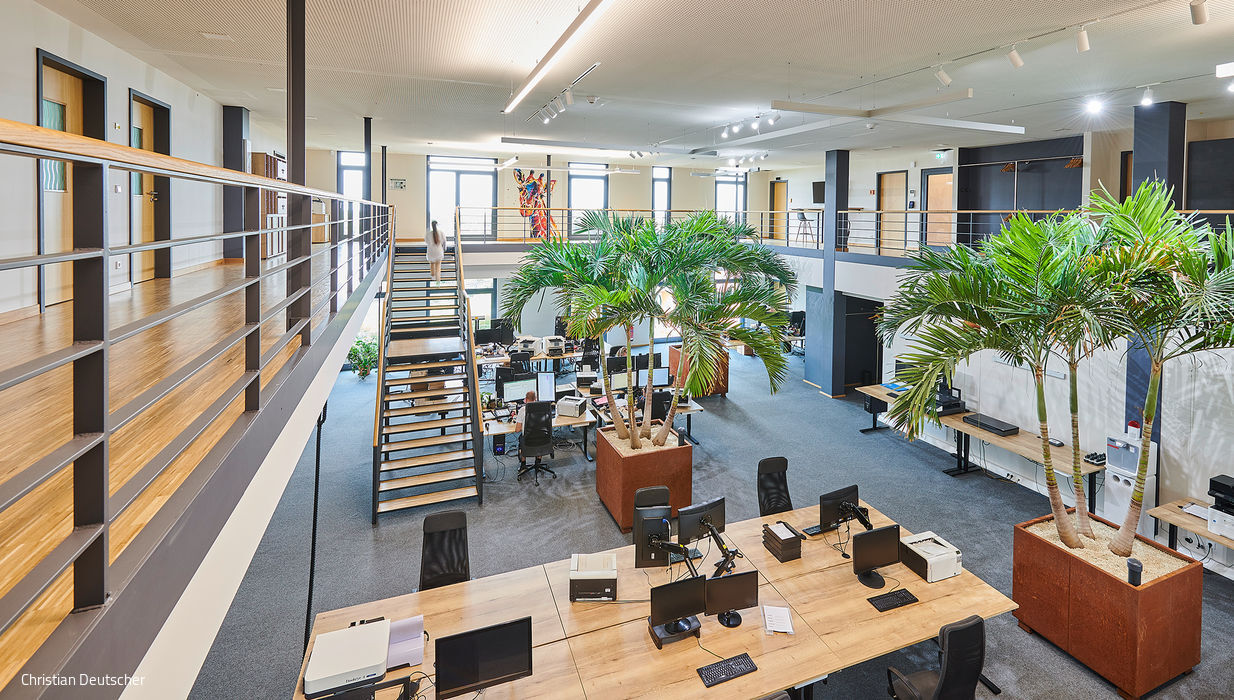
Work and Play
Contemporary Office Building with Integrated Daycare in Oberhausen
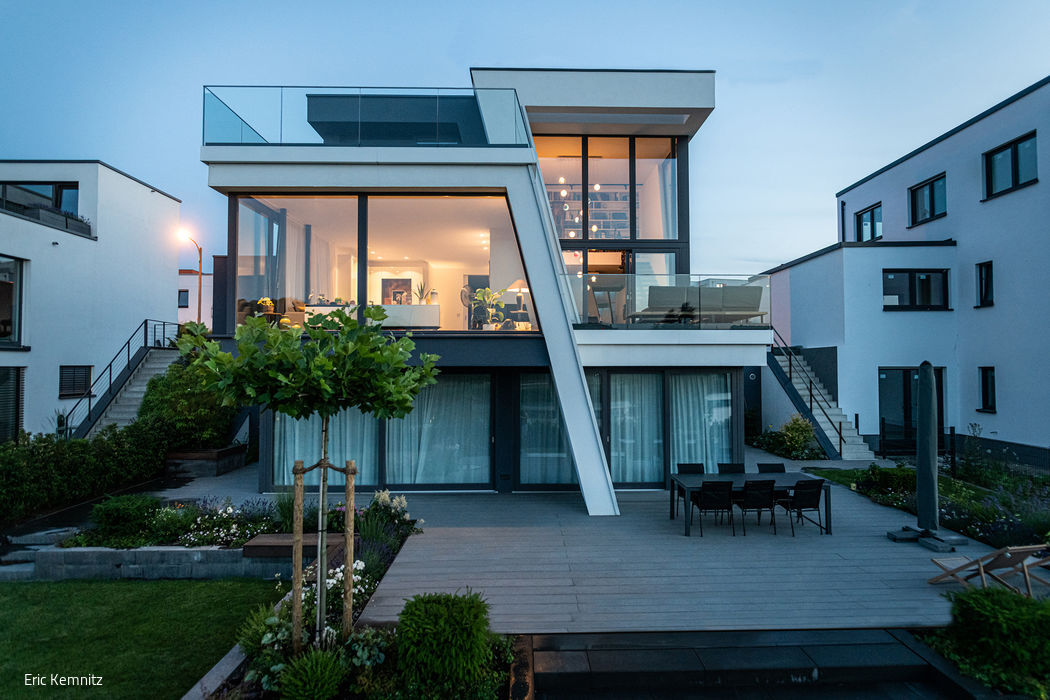
Defying Uniformity
A lakeside house defined by dramatic angular lines