


Sometimes, less truly is more
Through its minimalist design, the Cube Garden in Krefeld evokes a sense of calm and balance.
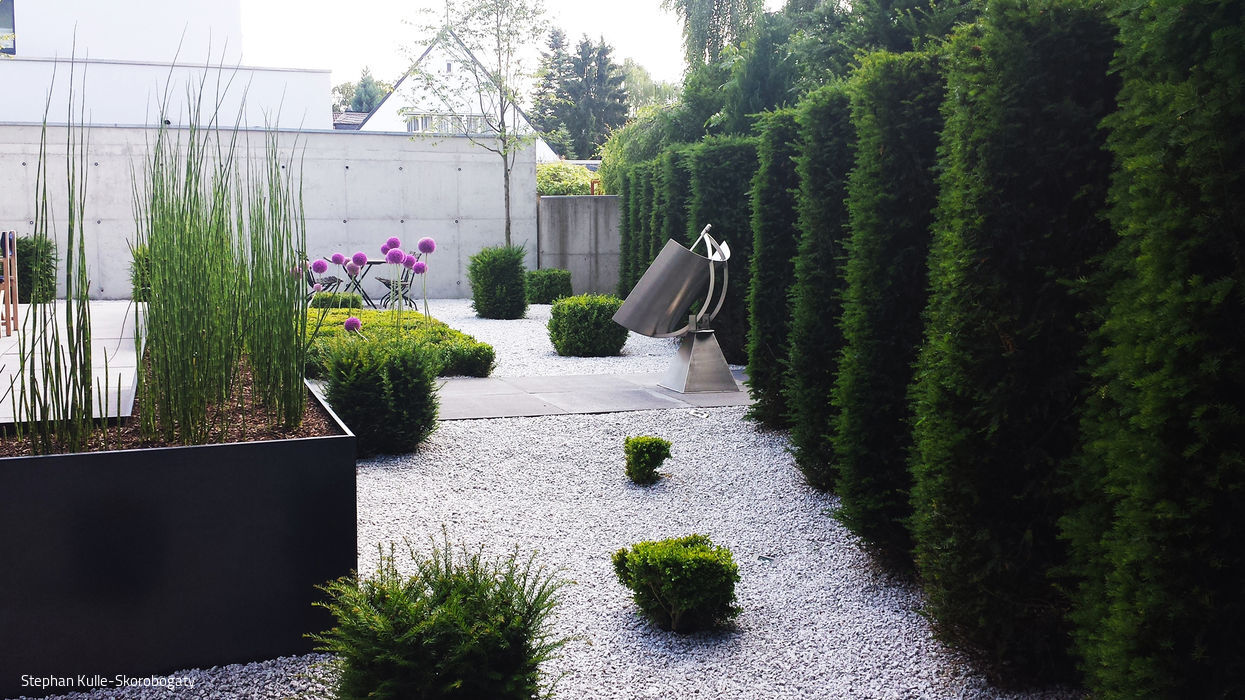


A Krefeld homeowner commissioned Sudden Gardens and Landscapes with an ambitious brief: divide a U-shaped garden into three distinct zones—each self-contained, yet visually connected through thoughtful planting, materials, and plant form. The design also needed to be unmistakably contemporary, framing the three sides that face neighbouring properties, maintain visual appeal across all seasons, require minimal maintenance, and meet strict stormwater infiltration standards.
A complex set of demands, yet the Cube Garden executes them with remarkable finesse. The design achieves this by exercising restraint with colour, orchestrating shapes, materials, and levels to create an overall sense of tranquility. Colour enters deliberately—giant alliums with their spherical blooms on slender stems, and three serviceberry trees in the kitchen garden whose foliage ignites to deep red each autumn. The main garden flows seamlessly from the living spaces via a generous terrace of oversized paving stones. Planters, toned to echo the window frames, bridge the level change to a secondary garden zone accessed by two broad steps. Horsetails create layered sightlines between areas while framing the terrace as a sheltered sanctuary. Beyond the seating area stretches a generous expanse of boxwood, punctuated by gaps for perennial plantings. Elsewhere in this zone, freely arranged cubic boxwood masses—varied in height—create visual rhythm and playful spatial articulation. The boundary with the neighbouring property is established by carefully pruned yews reaching approximately 2.5 metres, their alternating solid and transparent sections creating a dynamic screen. A wooden wall panel, positioned on axis with the patio door, anchors this hedge composition, serving both as a focal point and as the backdrop for a sculpture. Subtle illumination—only the stairs and alternating hedge segments receive ground spotlights—preserves the garden's quiet character after dark. To the north, where a basement window sits below grade, a sunken garden with stepped levels ensures the interior never faces a blank wall. Height changes unfold as a series of engaging steps, each discovery building on the last. Broad stepping stones set in gravel lead toward the elevated garage, passing seemingly random boxwood plantings—some rounded, some angular, some poised on delicate stems, each with distinctive character. The final garden room, nestled between the neighbour's garage wall and the kitchen, hosts a collection of culinary plants in containers that function as productive raised beds.
Photography Credits:
Stephan Kulle-Skorobogaty
(Published in CUBE Ruhrgebiet 02|20)

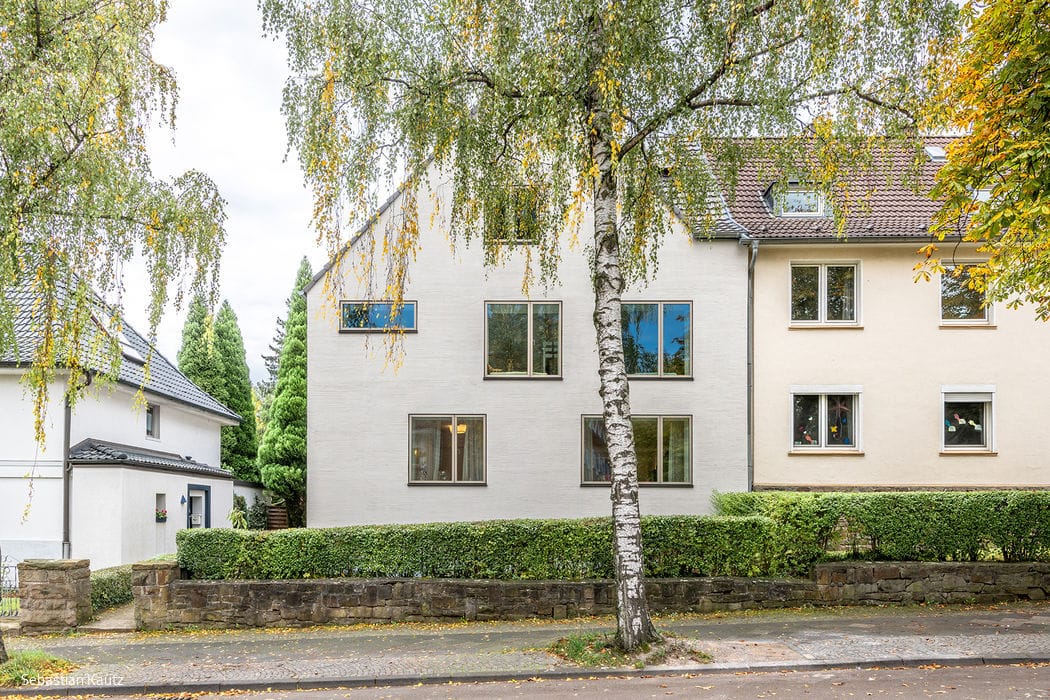
Making Two into One
A two-family house in Bochum undergoes modernization and conversion into a single-family residence.
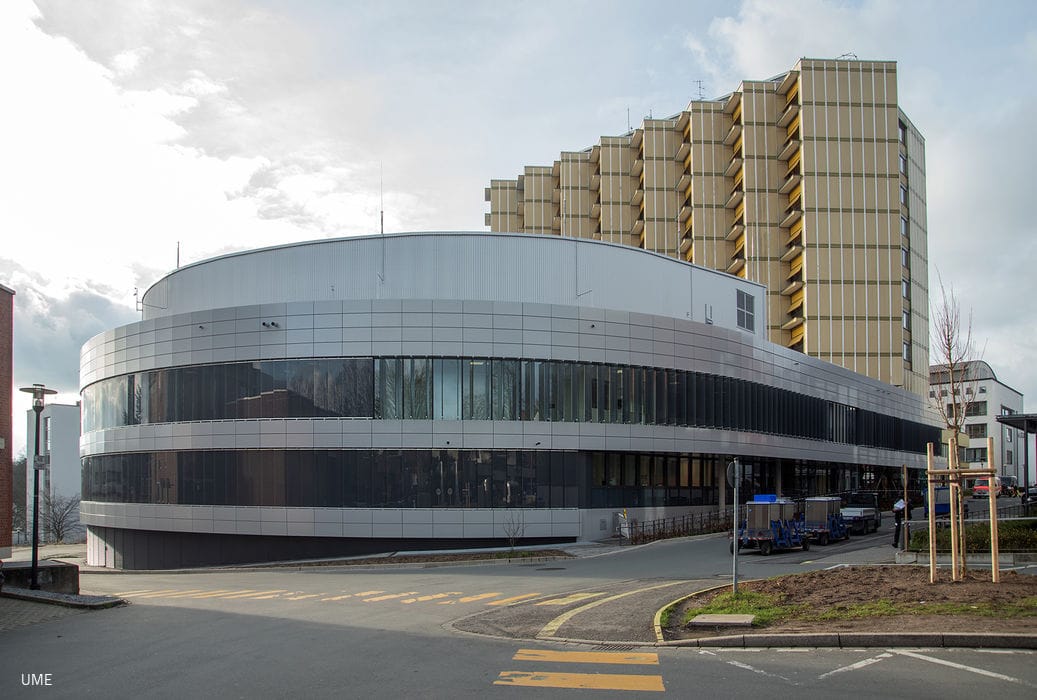
High-Tech and Comfort Environments
Building Tomorrow's Medicine at Essen University Hospital
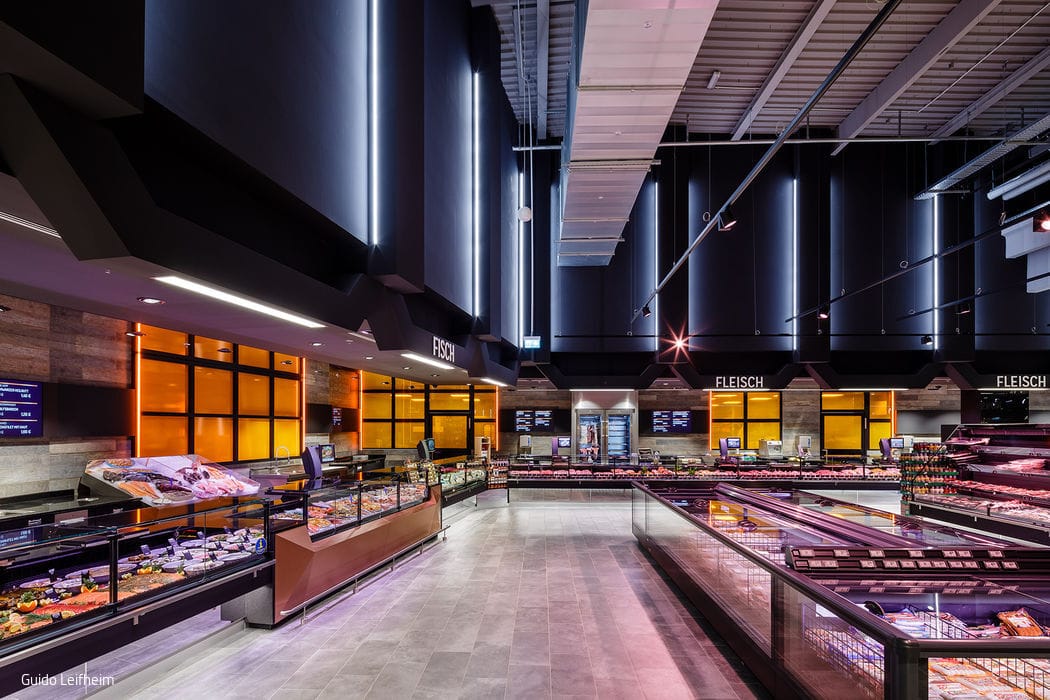
Don't Steal the Show
Clean industrial design lets the products shine
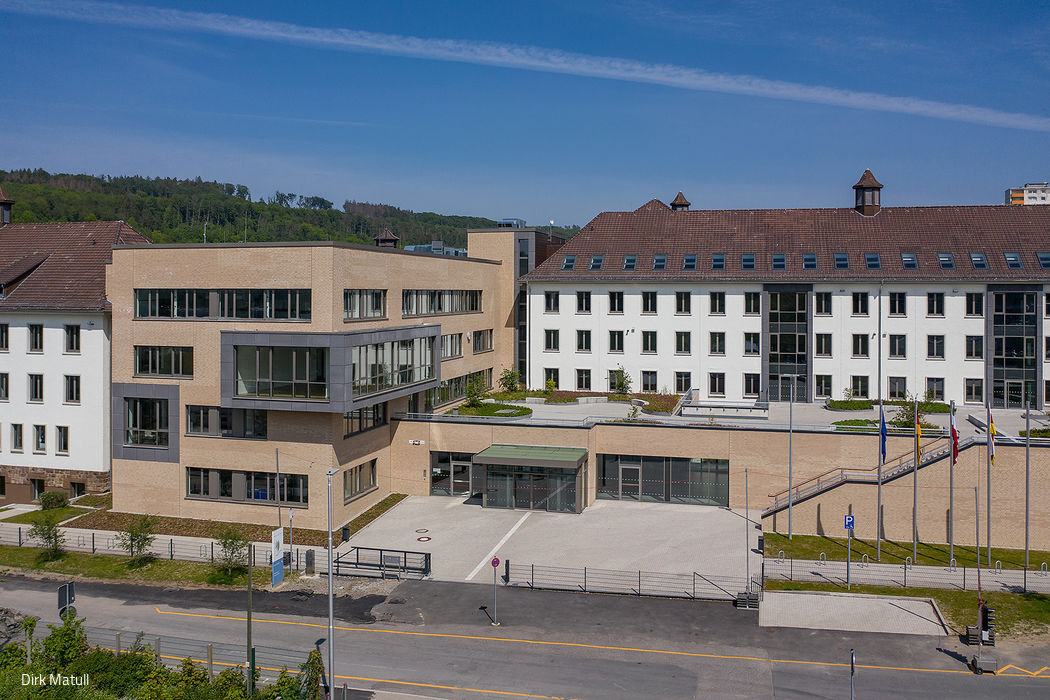
Contemporary School Campus
Where Old Meets New: A School Extension Grounded in Ecological Responsibility