


From cramped to spacious
A 1970s family home reimagined for today
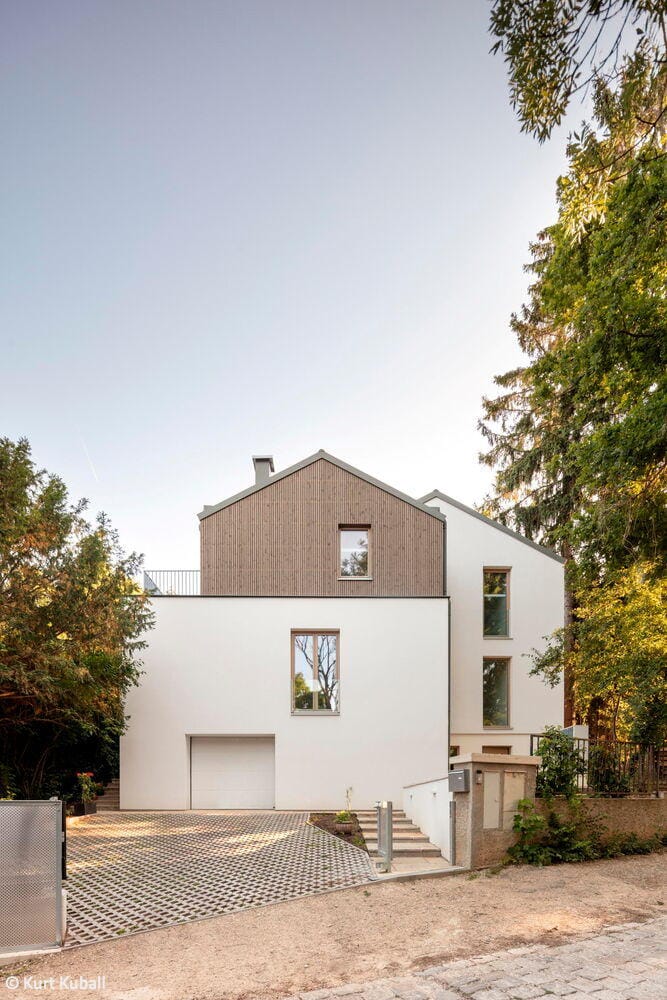
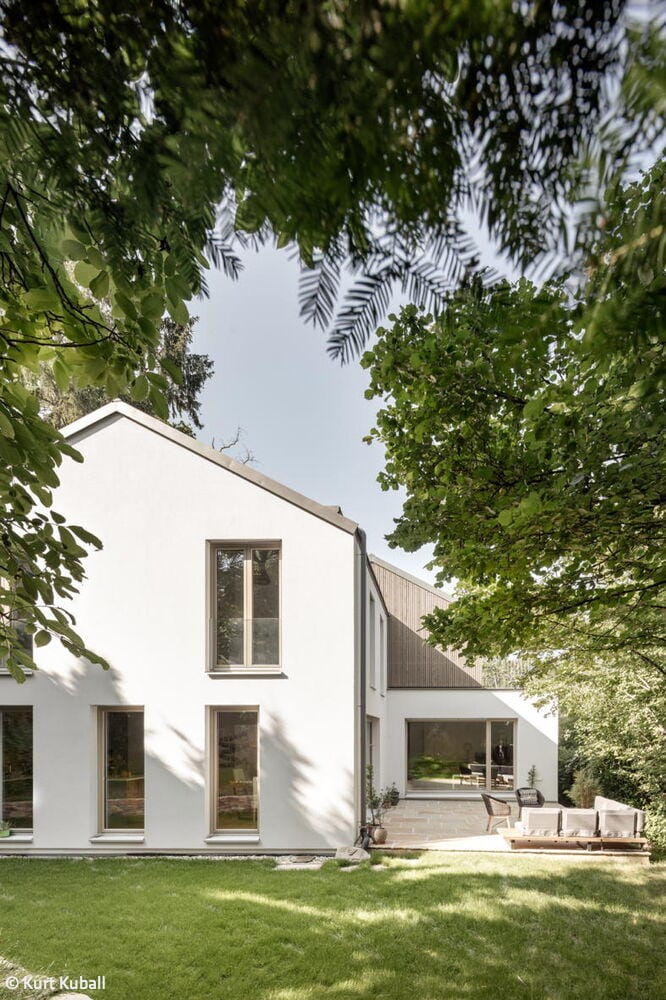
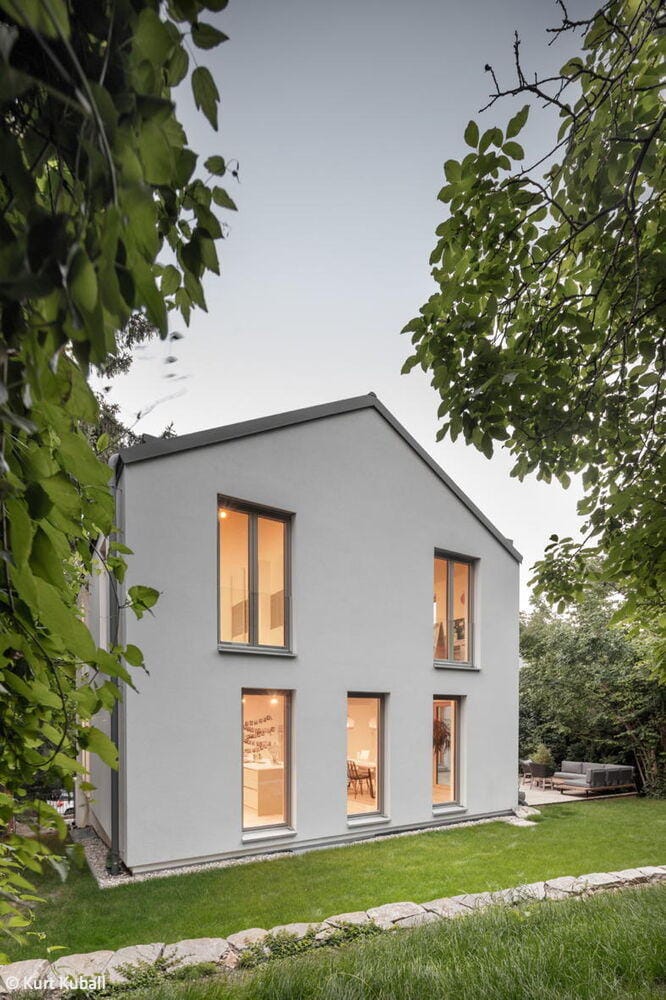
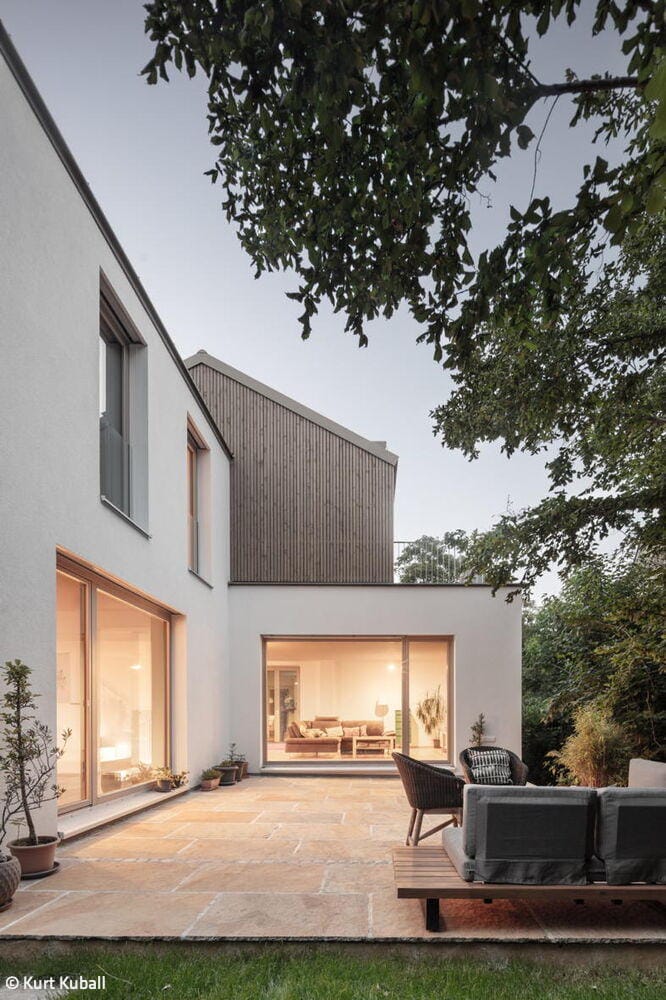
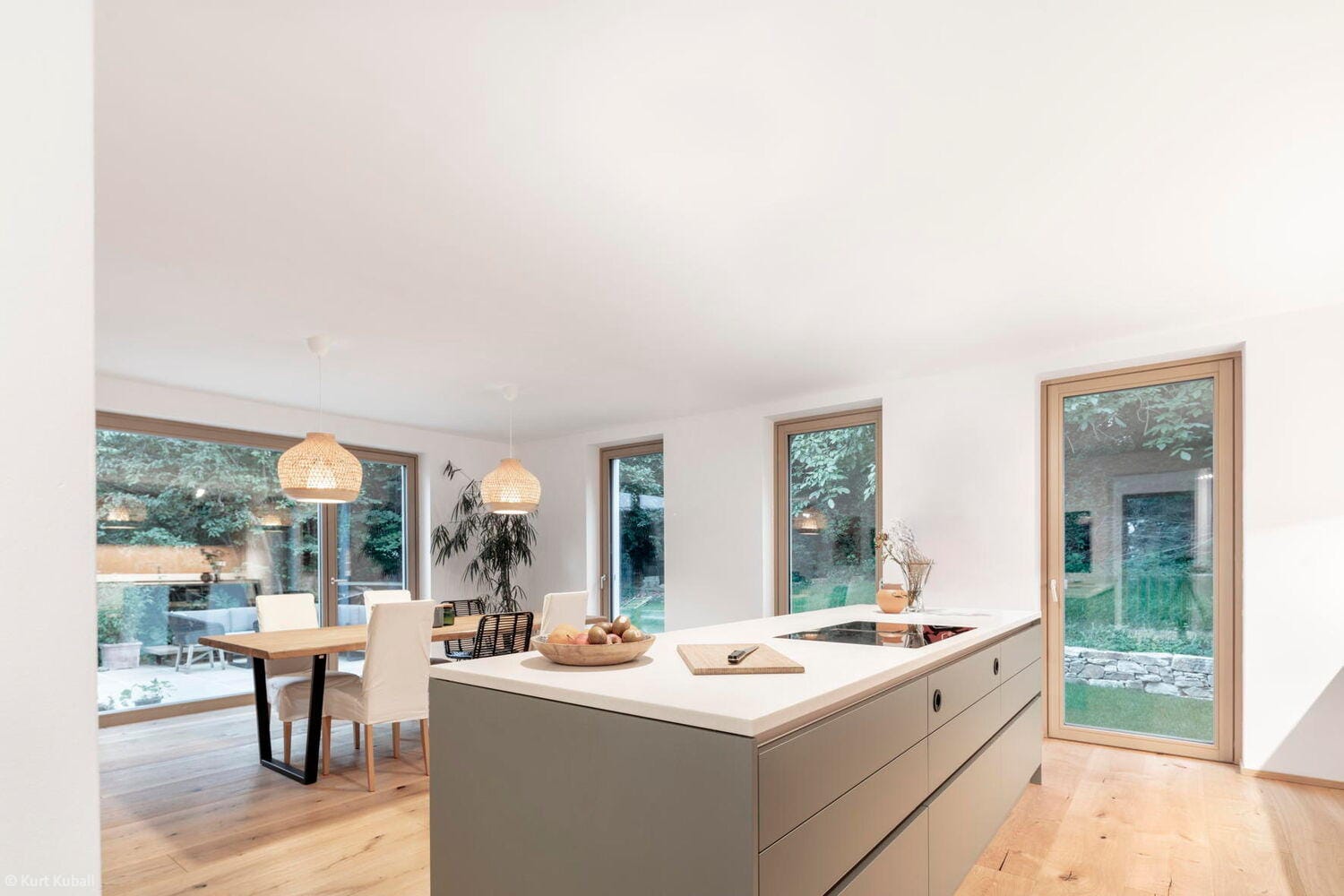
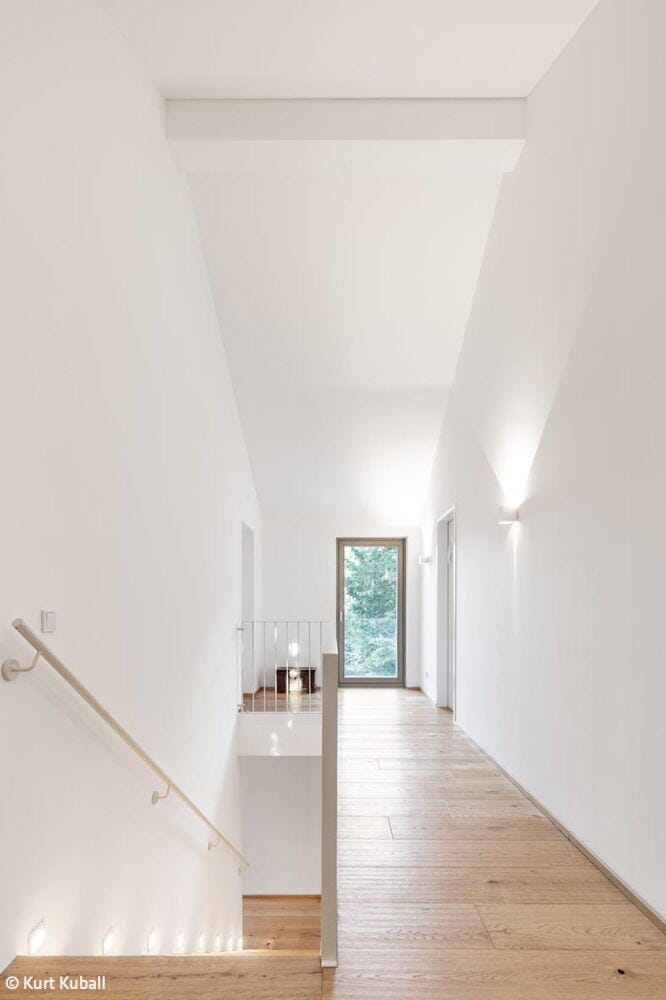
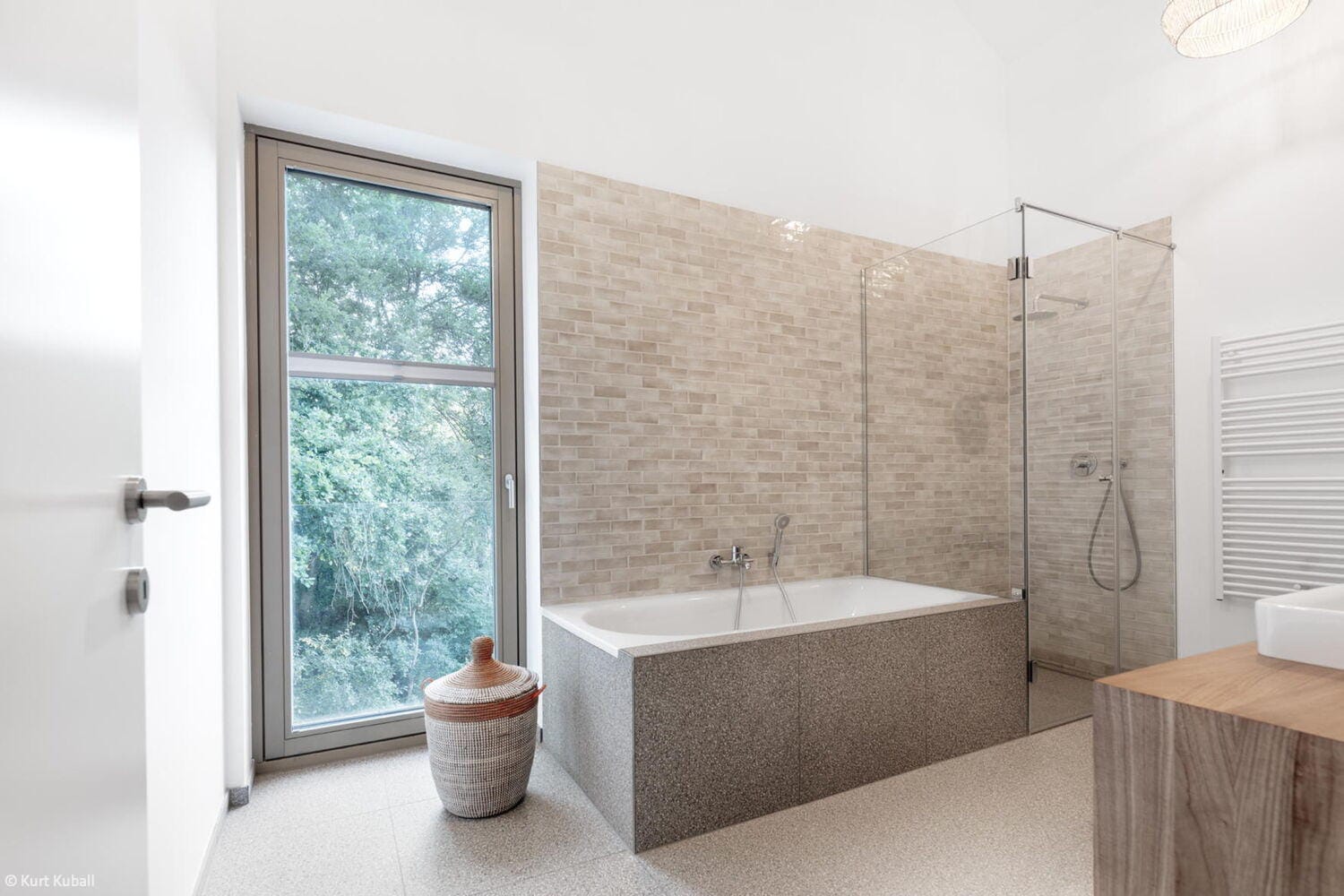
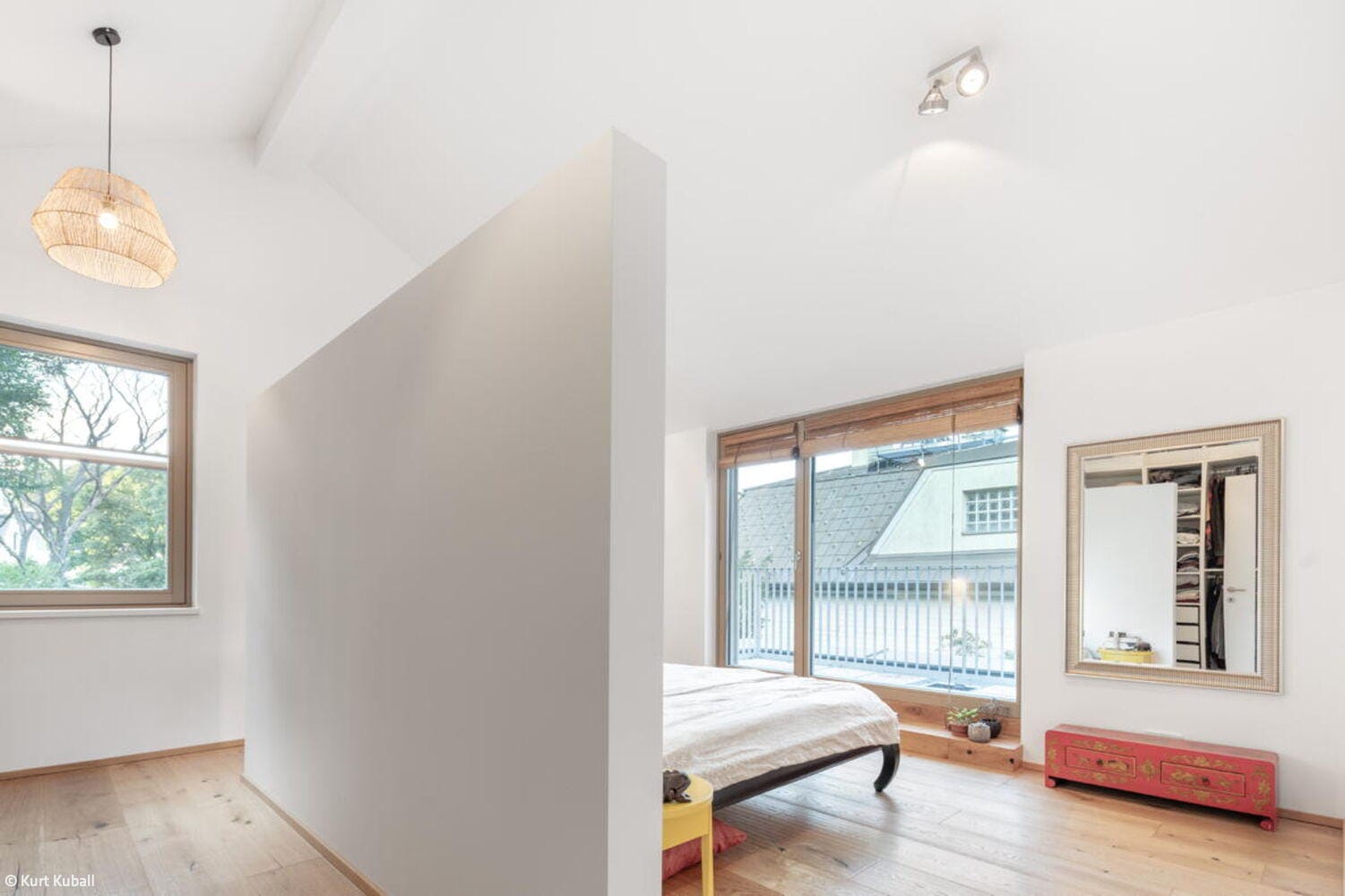
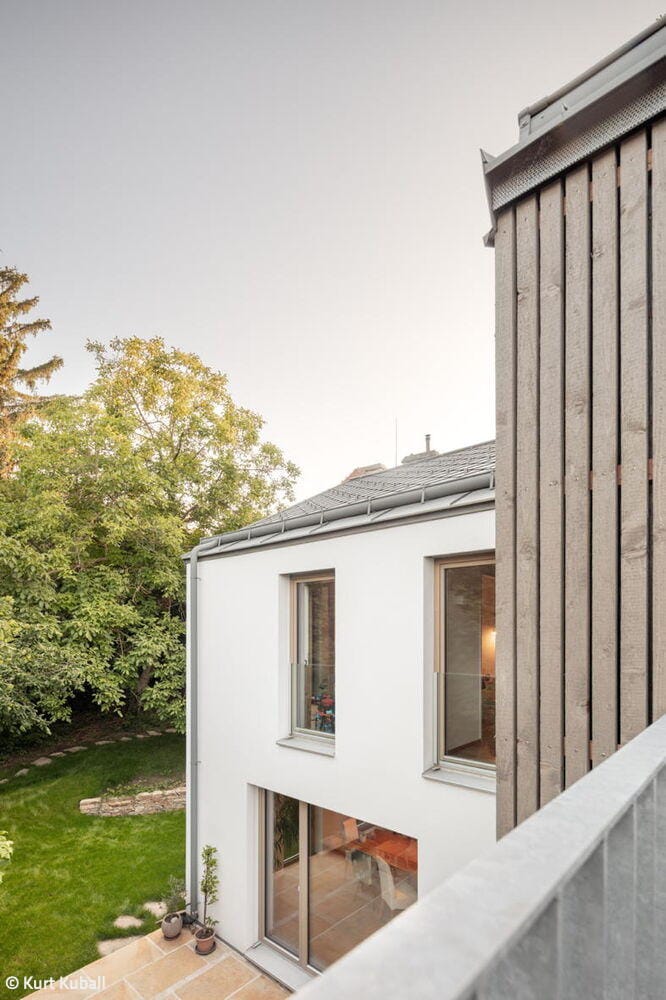
This residential renovation demonstrates how a spatially and functionally problematic 1975 structure can evolve into a contemporary, open-plan living environment. The original design suffered from a cramped, dark entry sequence, an awkwardly positioned staircase at the perimeter, fragmented interior spaces, and a weak connection to the garden—challenges typical of 1970s construction. The upper floor offered equally limited spatial quality.
Architects Sebastian Illichmann and Martina Hornek, working with Simon Jackson, orchestrated a fundamental spatial reorganization through a radically repositioned circulation strategy. Two offset staircases now define a soaring, light-filled two-story entrance hall that transforms the home's entire character. The first staircase leads to a generous, naturally lit living area that flows seamlessly into the expansive kitchen-dining zone. Both spaces open directly onto the terrace and garden through floor-to-ceiling glazing, establishing a cohesive interior-exterior relationship. The second staircase—crisply framed between two walls—ascends to the upper floor, deliberately marking the transition to the private realm. Two bedrooms with French doors face the garden on the street-free side. A completely redesigned, recessed timber structure with an east-facing terrace serves as the master bedroom. The roof structure was accordingly rebuilt while retaining the original floor plans. Construction presented a constraint: the floor plates lacked sufficient load capacity. Rather than costly reinforcement or dry screed systems, the team chose a lightweight foam concrete floor with a 5-centimeter specialized heating screed—a pragmatic solution that managed both performance and budget.
Climate control combines an air-source heat pump with radiant floor heating, while the solid structure is wrapped in a complete thermal envelope. Notably, the project bypassed a general contractor in favor of individual trades managed directly by the design team, who handled all procurement, tendering, and site supervision. An extended design phase proved instrumental in cost control, leveraging a second tender round and strategic redesigns—particularly in the landscaping—to optimize the budget.
www.illichmann-architecture.com
www.architektin-hornek.at
Photography:
Kurt Kuball
www.kurtkuball.com
(Published in CUBE Select 01|26)


Inside and Out: A Cohesive Design
Reimagining work culture at DB Gasometer

Historic Elegance Reimagined
An elegant Düsseltal residence that proves transparency and timeless character can beautifully coexist.
A sanctuary in nature
Where architecture, design, and epicurean pleasure converge

Where linear meets round
Office Building with Integrated Lighting Design That Works