


Essentials Only
Award-winning design: the new changing facilities at Gelsenkirchen's Jahnstadion


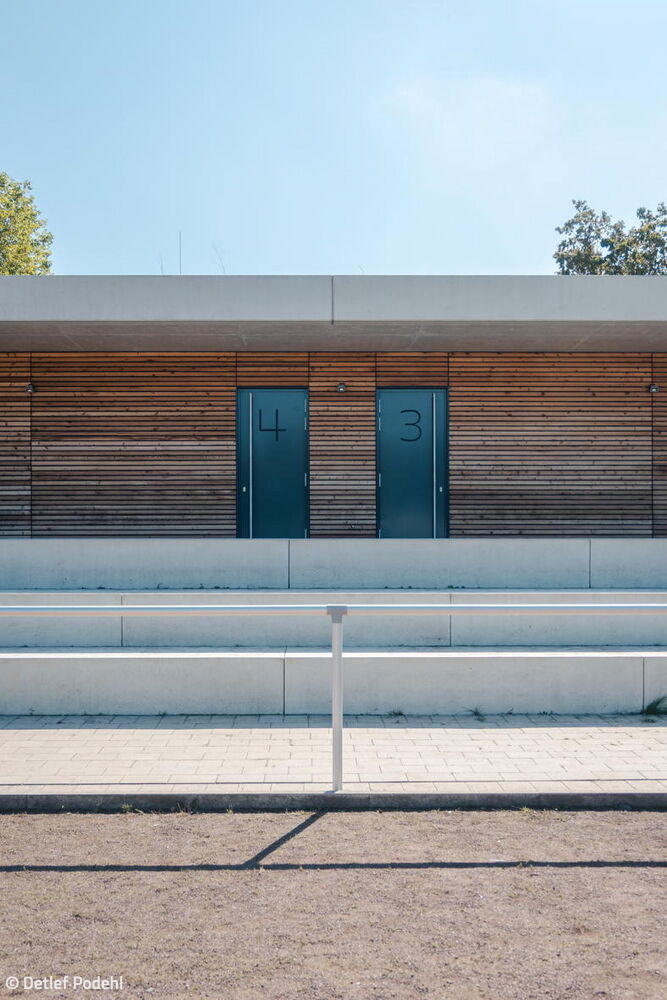

Sometimes less is more – this also applies to the energy-optimised new construction of the changing room building at the Friedrich-Ludwig-Jahn-Stadion district sports facility in Gelsenkirchen. quadrat + architekten implemented the project, which was made possible under the Municipal Investment Promotion Act (KlnvFG), from planning to completion. "The focus of our design was on a durable and robust construction that is reduced to the essential features," explains Alexander Pick, whose Recklinghausen-based architectural firm was awarded the BDA Architecture Prize Vest Recklinghausen and Gelsenkirchen 2023 for this project.
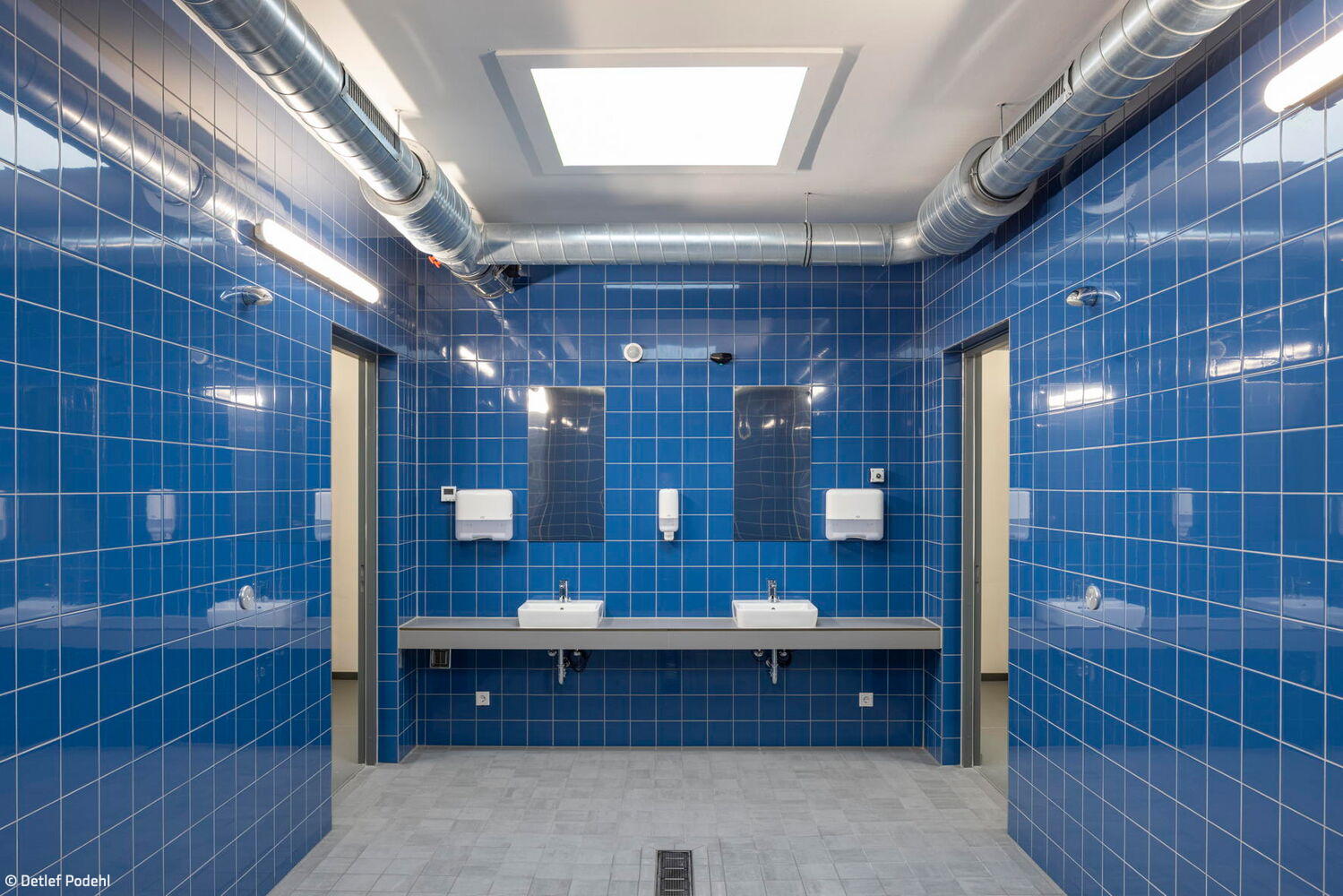
Built on the site of the former grandstand, the exposed concrete wall catches the eye as a defining element of the south side, bearing the lettering "Jahnstadion". Under the generous, surrounding canopy, the horizontally laid, rear-ventilated wooden façade emphasises the horizontal cubature of the building. The entrances to the changing room areas face the main sports field. In front of them is the new tiered seating stand. The entrances are located at the front ends. On the west side, there is ground-level access to the grandstand plateau. The building is designed to be completely barrier-free, with ramps on the outside and seating on the grandstand, as well as a front row for wheelchairs, a tactile system with high-contrast surfaces and a central barrier-free disabled toilet. Durable and robust – this is how the exposed concrete used for the façade can be described, which has to withstand sometimes rough handling. In addition, the construction made it possible to erect a surrounding, column-free cantilevered roof. Conventional mineral oil-based insulation was dispensed with in favour of foam glass insulation. This is durable and can be easily recycled later. The load-bearing exterior walls and non-load-bearing interior walls are constructed of vertically perforated bricks. Openings in the façade were deliberately omitted; natural lighting is provided by skylights in the green roof. This improves thermal insulation in winter and regulates the building climate in summer. It also contributes to an improved microclimate in the district and ensures water retention during heavy rainfall. Heating is provided by heat pumps, while ventilation is provided by ventilation systems with heat recovery. Inside, there are eight changing rooms connected by four shower areas. There is also a separate changing room for the referee. Necessary rooms such as technical, storage and function rooms are located within the building. The floors of the cabins have a hard-wearing coating and transition into tiles in the shower area, which are glazed blue on the walls as a reminder of the history of Schalke 04.
Photography:
Detlef Podehl
www.podehl.com
(Published in CUBE Ruhrgebiet 04|24)

Rethink, Don't Forgo
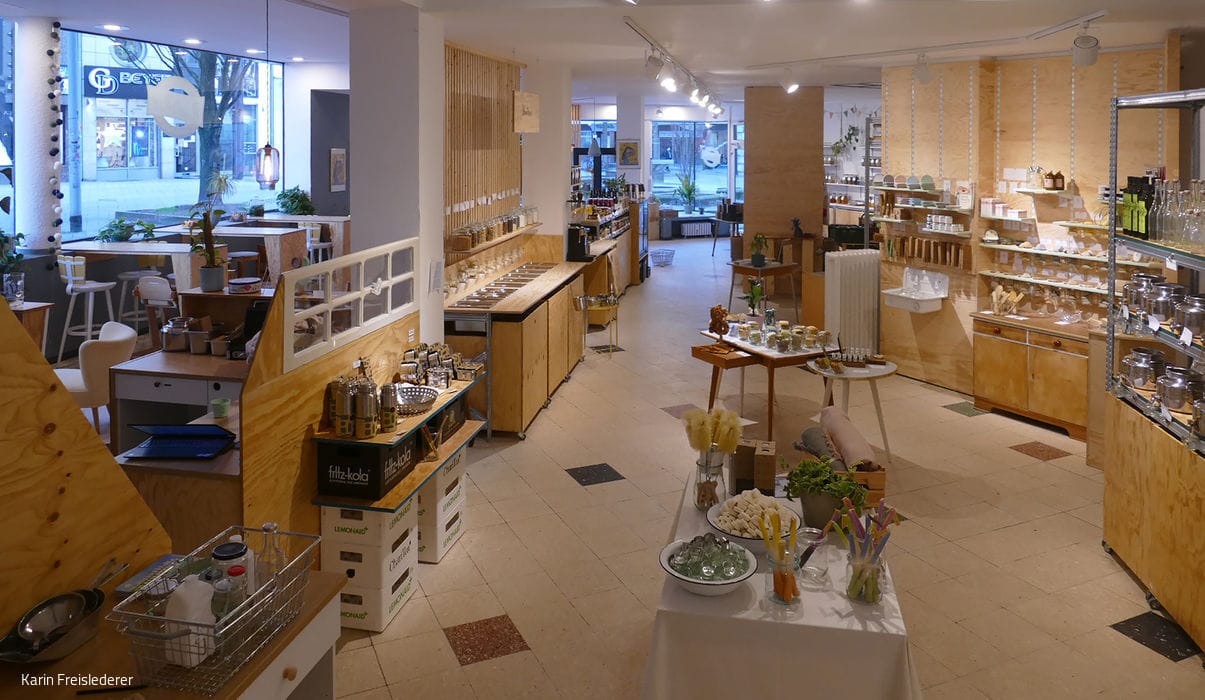
This zero-waste shop in Mülheim an der Ruhr inspires a more mindful approach to shopping
Where Design Meets Engineering
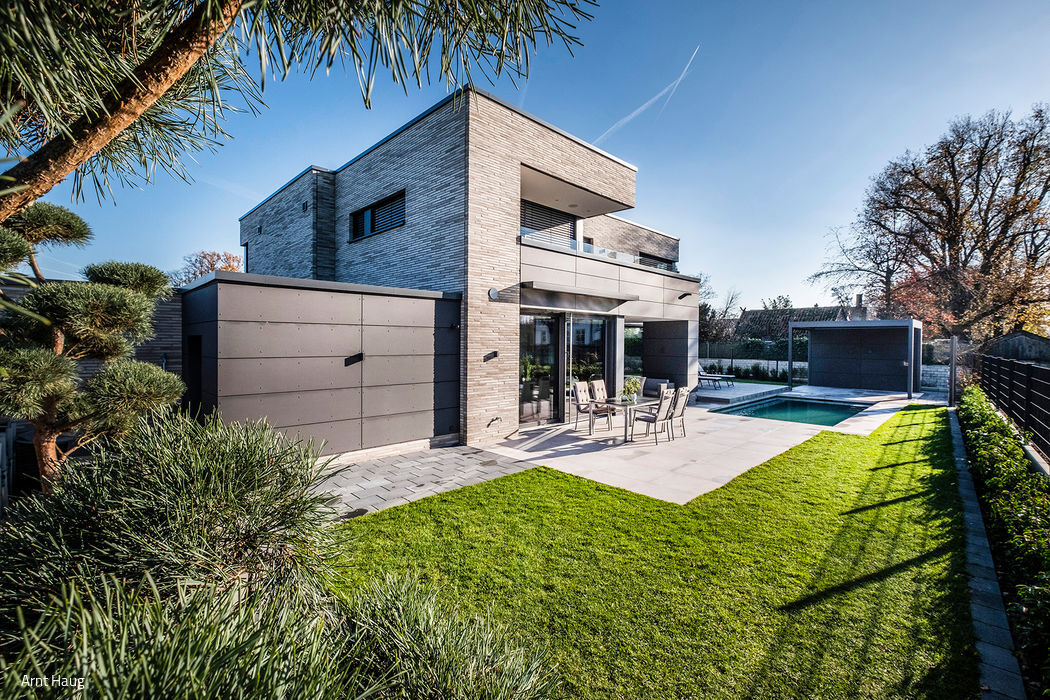
A Family Home That Excels Across Every Dimension
Driving Change and Sustainability
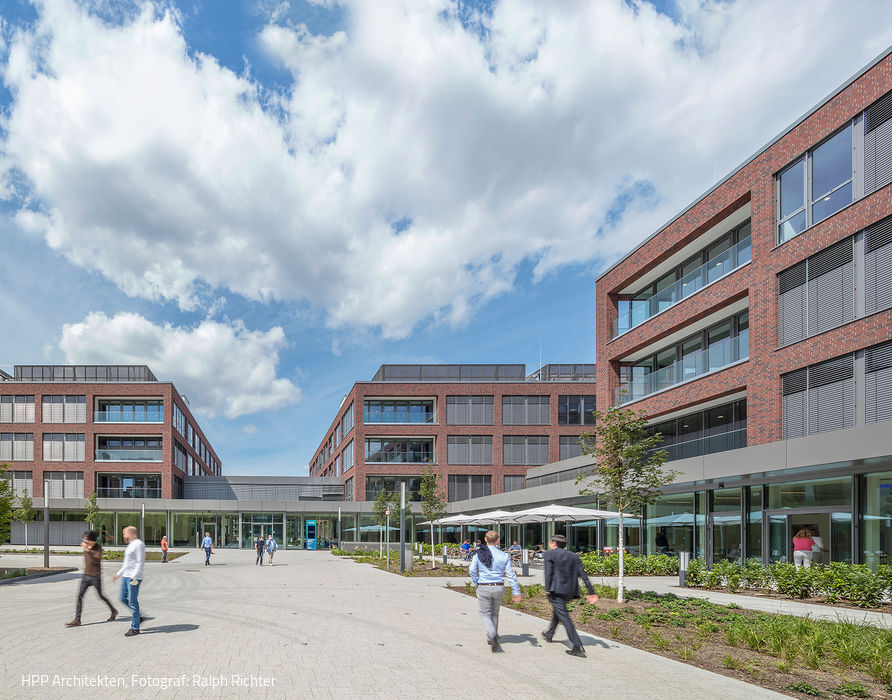
The new RWE campus in Essen embodies the evolution of RWE AG.
Elegant Grey
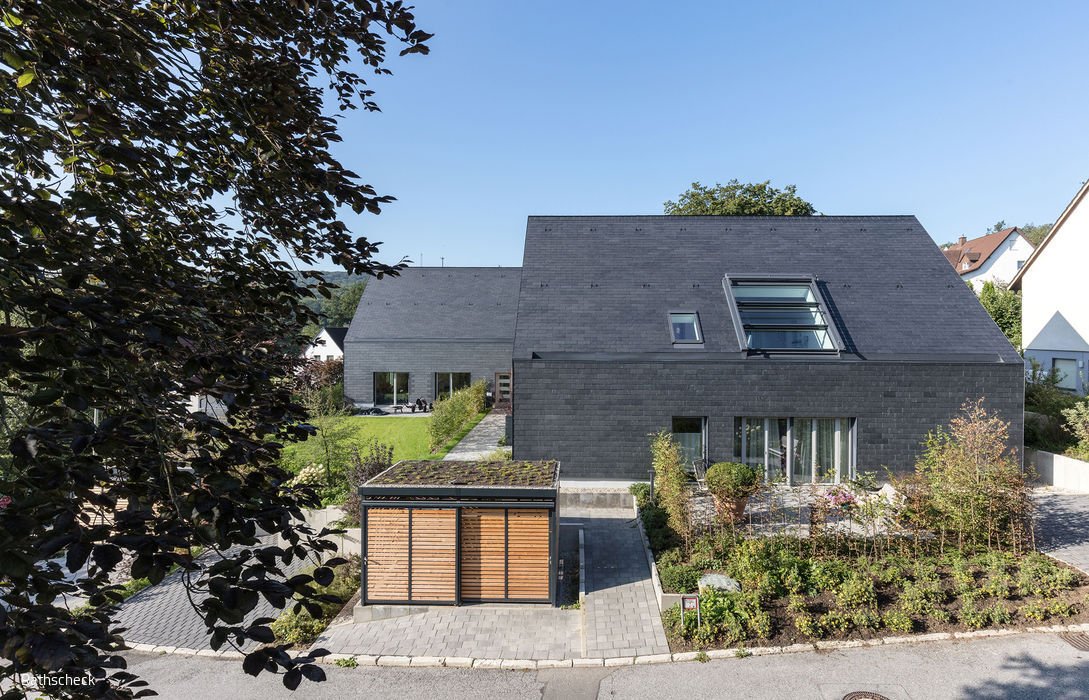
Two homes in contemporary dress: regional slate tradition reimagined