


Alhambra in the Schlachthofviertel
The new Volkstheater blends industrial architecture with Moorish palace aesthetics
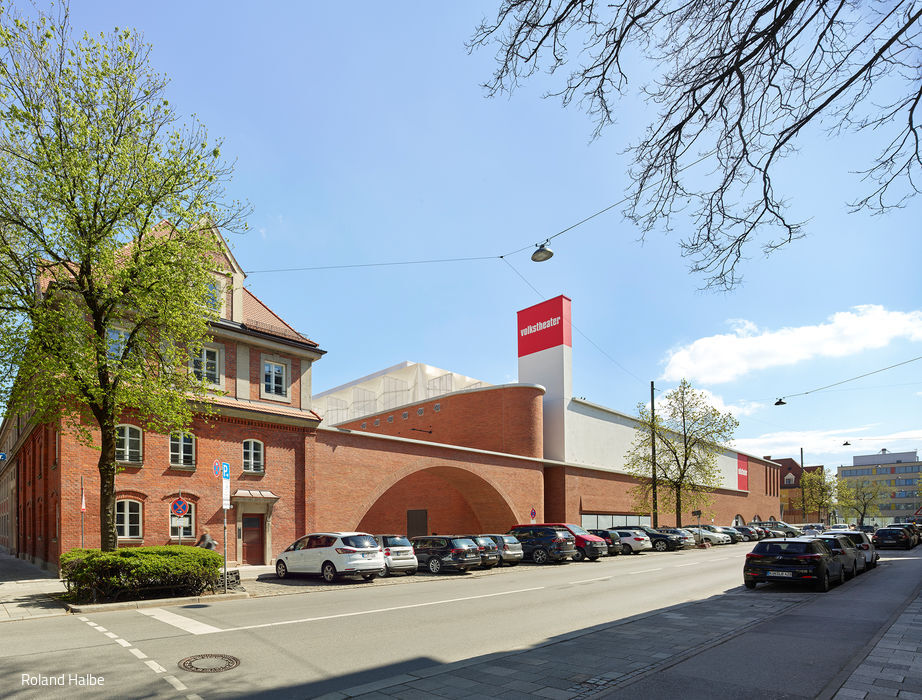


Remarkably, this new theatre came together with all the stars aligned: construction stayed on schedule and within budget—a source of genuine pride for the architects and entire team. When Munich set out to build a larger, more beautiful Volkstheater, they turned to the internationally acclaimed architectural firm Lederer Ragnarsdóttir Oei (LRO). This decision was made possible by Artistic Director Christian Stückl's two-decade stewardship of the theatre, transforming it into one of Munich's most beloved venues. Today, the new Volkstheater in Schlachthofviertel stands as testament to that vision.
Here are the essentials: On a 50-hectare site, the Stuttgart-based architects created an architectural landmark. The location presented real constraints: the historic row houses on Zenettistraße required preservation, and consideration for nearby residents on Tumblingerstraße meant only quiet-operating spaces could occupy the western side. The site's industrial heritage guided the material choice—brick emerged as the only appropriate solution.
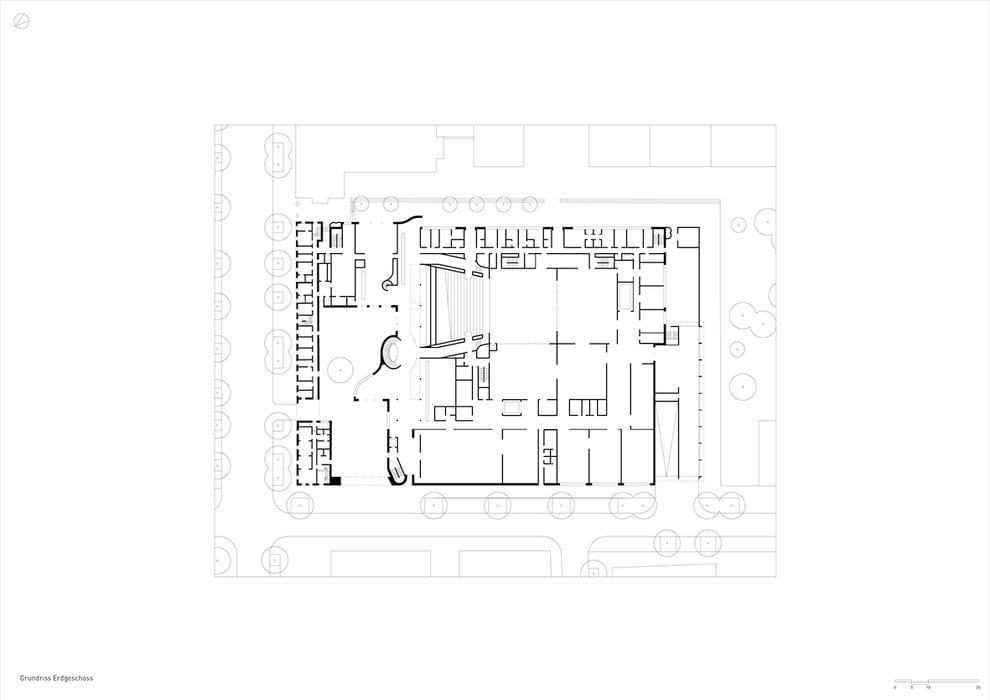
A flat brick arch—an inviting threshold framed by the façade—opens into an inner courtyard that doubles as the forecourt. One section preserves the rear of a listed historic building, its façade deliberately left unfinished to reveal the passage of time. Now home to administrative offices and artist residences, this heritage structure connects to the new building via the archway and main entrance. Inside unfolds a generous foyer: cloakroom, break bar, lounge seating, and a thoughtfully spacious restaurant that extends onto an east-facing terrace in summer months. Step through, and color surrounds you. Vibrant yet restrained. "Le Corbusier colours," architect Arno Lederer notes with evident satisfaction. "We simply did it—no endless debates." And it works beautifully: deep blue grounds the entrance, soft yellow wraps the walls, and lime green animates the stair risers ascending to the theatres above. One main hall seats 600; a smaller studio accommodates 250. The large space features a true orchestra pit fronting the curtain, enabling operas, musicals, and concerts. Worth noting: "Volkstheater" is now more heritage than description. You won't find broad-dialect slapstick here, but rather provocative classical revivals, contemporary work, and the celebrated newcomer festival "Radikal jung." Behind the scenes lie hidden technical and creative departments: the towering stage house, workshops, rehearsal studios, offices, dressing rooms—the vital machinery of theatre. Guided tours available upon request.
Photography Credits:
Roland Halbe
www.rolandhalbe.eu
(Published in CUBE Munich 04|21)
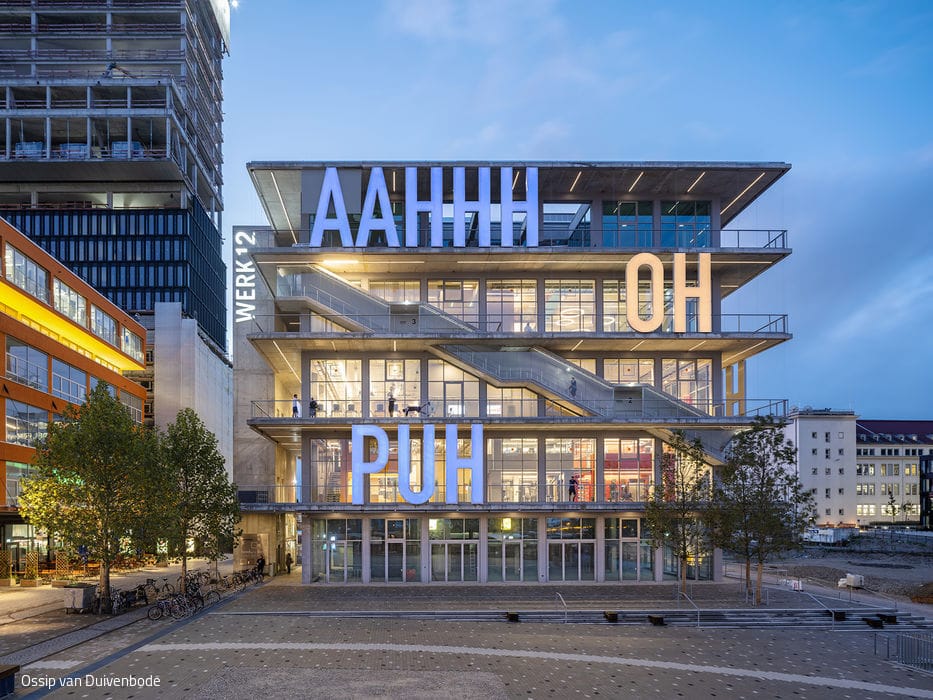
WOW – OH – PUH – AAHHH
Werk 12 is a five-storey cubic structure built for flexible use – and it's already operating as a vibrant commercial destination.
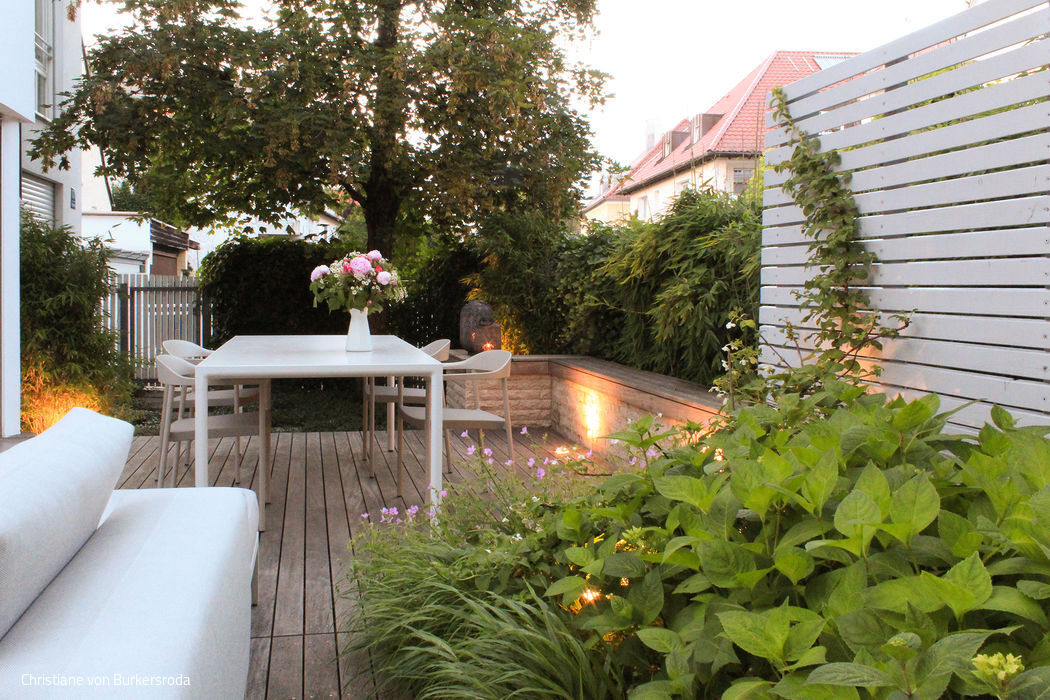
Hamptons Elegance
A half-shaded urban garden sanctuary with compelling maritime character

Old Town Inspiration
Hotel interior design at its best: function and beauty in perfect balance.
Dogs Welcome at Work
The new headquarters of a leading online retailer creates inspiring workspaces designed for both people and their four-legged friends