


To make one's own
Interior design of a country house villa
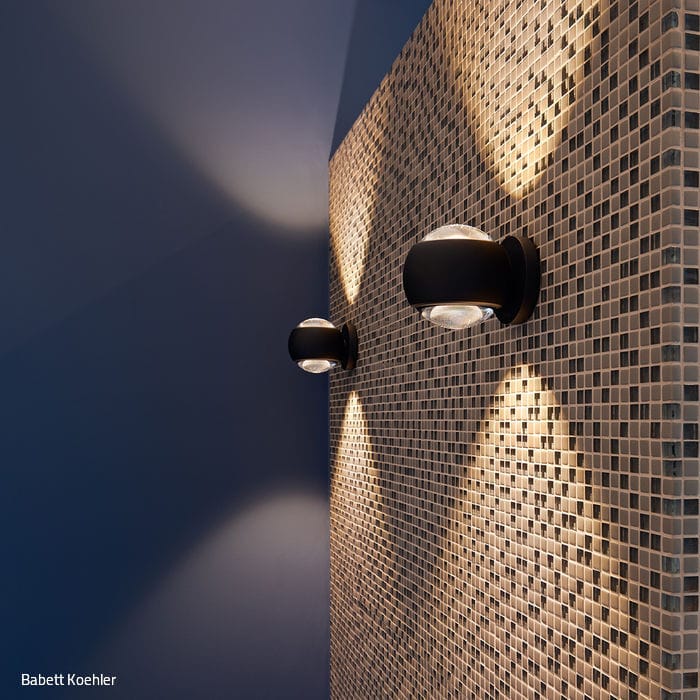
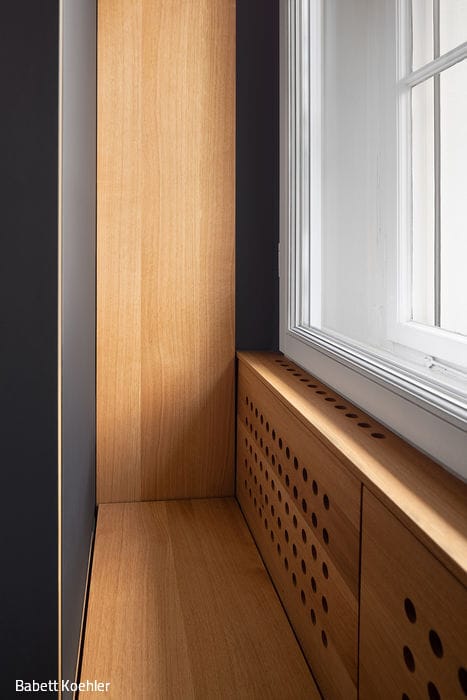
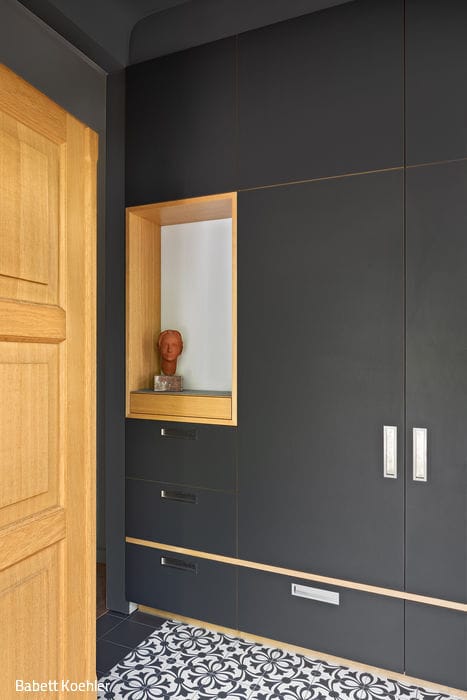
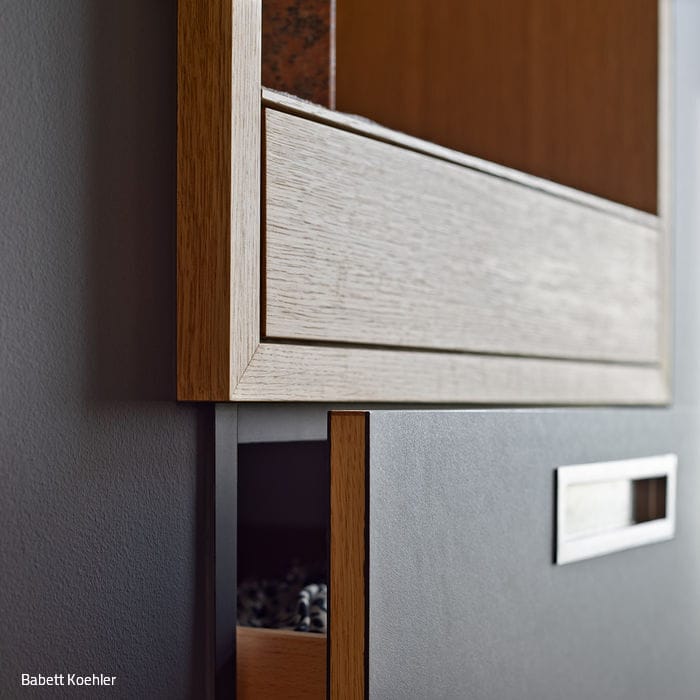
It was an unusual task for architect Isabel Droste zu Senden to design the interior for a 1920s country house villa. The new owners wanted something dignified, something that matched the style of the house but was still contemporary. Above all, the entrance area, kitchen and master bathroom were to be given a modern look and shed their old appearance. The architect is a trained colour designer and collaborates with the Swiss colour manufacturer kt.Color. Her work focuses on developing colour concepts tailored to each individual room in close collaboration with lighting designers. The concept in this project guides you through the newly designed rooms, starting with the entrance area and foyer. The implementation was developed in collaboration with Potsdam-based carpenter Sebastian Riessbeck, with particular emphasis placed on the quality of the materials used, their feel and the craftsmanship involved.
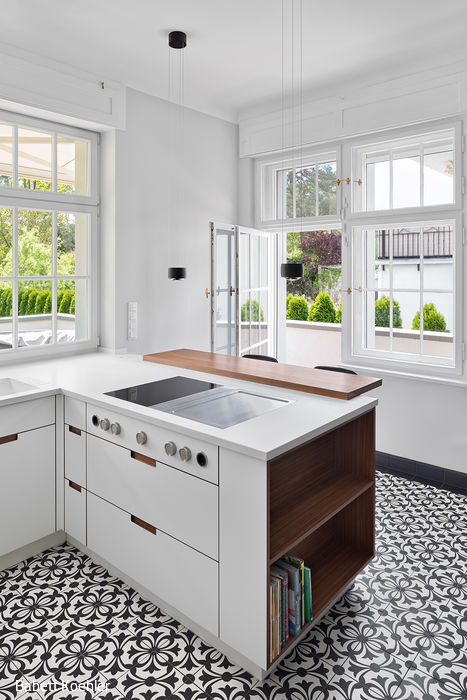
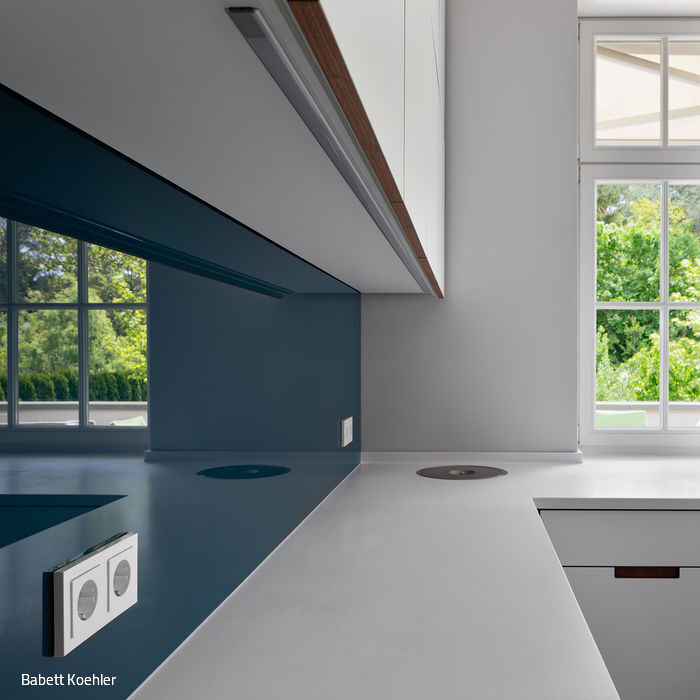
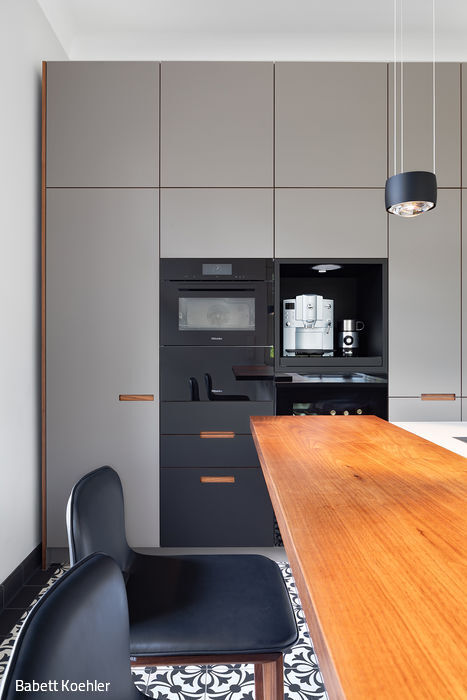
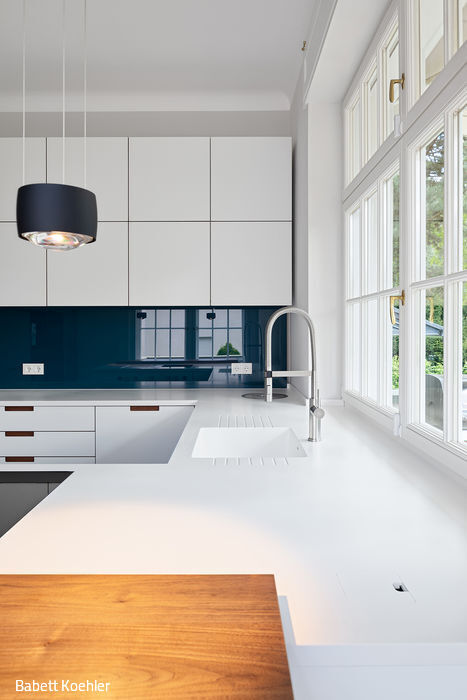
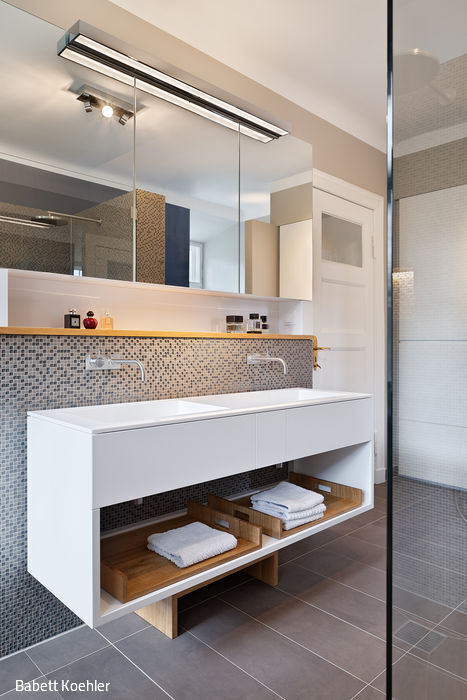
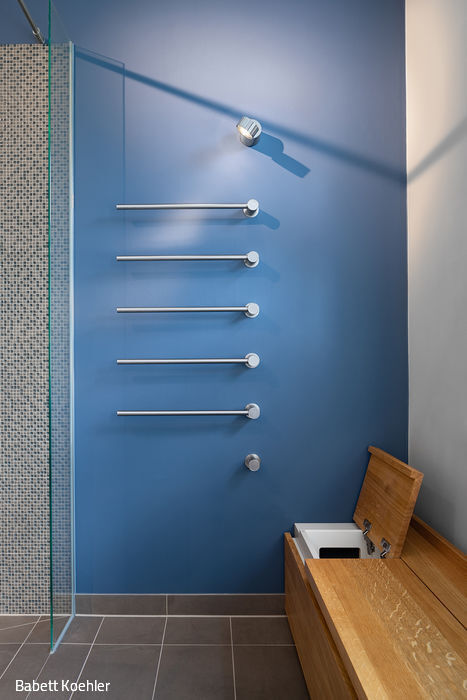
The first step was to eliminate storage options in the hallway, as they easily tempt people to throw everything down when they come home. "Nests" of this kind have disappeared. Instead, the space has been designed in such a way that it can be read as a calling card for the residents. The cupboard, which fits perfectly into the niche, is a storage miracle, as is the accompanying bench, which also reveals itself to be a hidden chest when the seat is lifted. This area is decorated in various shades of grey, from anthracite for the linoleum surfaces of the cupboard to a light grey for the walls and ceilings. As is typical for country houses, the kitchen is the central meeting place on the ground floor. With a large terrace, it is connected to the garden outside. Black and white floor tiles with a floral pattern create a cheerful atmosphere and match the building's construction period. The kitchen furniture and cooking area are arranged in a peninsula shape, which creates a communicative situation. The fronts of the furniture are covered with a smart, matt surface material. The recessed handles were milled out and lined with walnut wood. The white of the cooking area contrasts with the tall cabinets in subtle dark grey, and the appliance block in between counters this with black. Upstairs, an attic room was transformed into a spacious master bathroom by exposing the old beams of the roof truss. This now houses a large, open, walk-in shower with a view of the garden. The toilet is located in a niche next to it. Opposite, the carpenter crafted a hanging washbasin for two sinks with an illuminated mirror cabinet above it. An oak bench with a hinged lid invites you to linger and relax. The deep dark midnight blue of one wall creates visual depth, especially in contrast to the wall and floor tiles in earthy, natural tones in the rest of the room.
www.architektur-interior.berlin
Photography Credits:
Babett Köhler
b-koe.de
(Published in CUBE Berlin 01|21)

Passenger Ship in Pankow
How Architects Unlocked a Buildable Site and Created Housing for Charité Staff
Not Set in Stone
A Sculptor's Studio Reimagined: Living Space Across Multiple Levels
Transformation Over Time
Monumental Planning and Logistical Challenges in Transforming Two Historic Buildings
The Box Trick
A Deceptively Simple Concept for Penthouse Living