


City Simulation
Multi-story Residential Buildings with Contemporary Urban Character
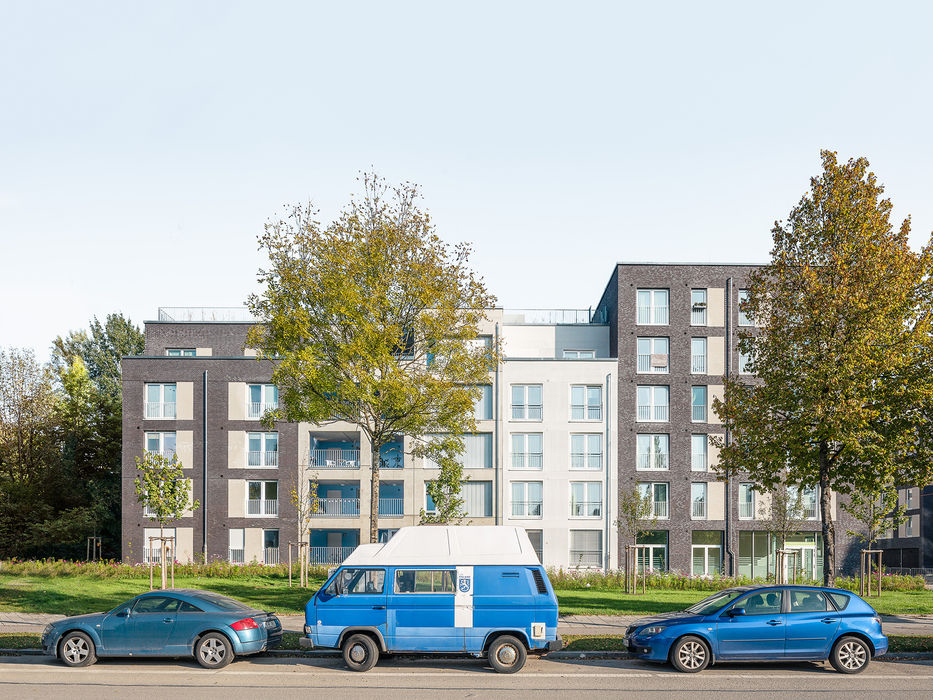
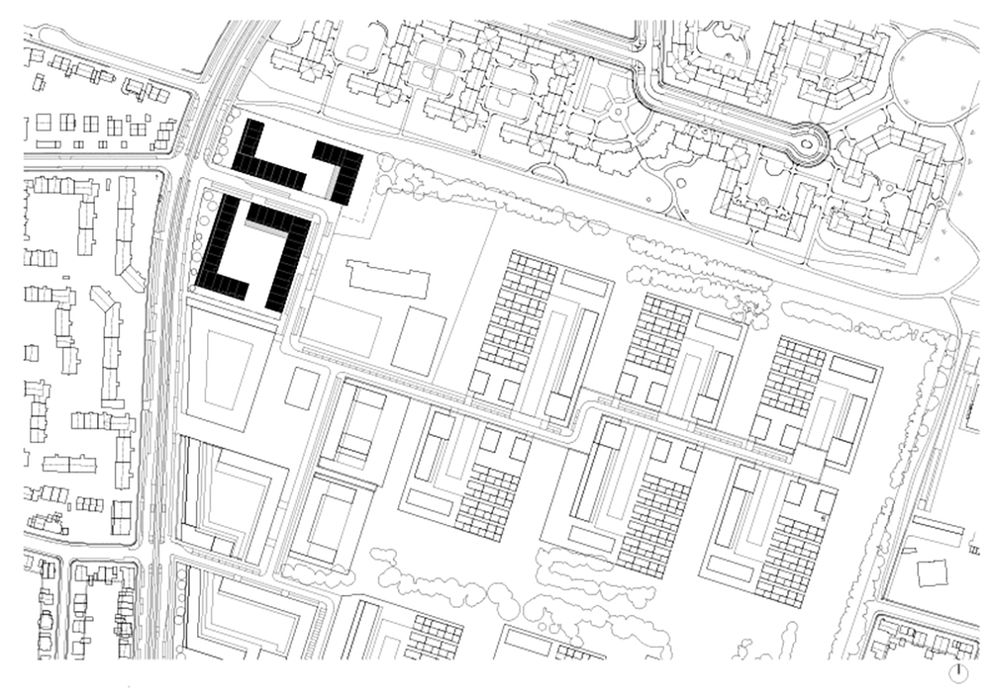
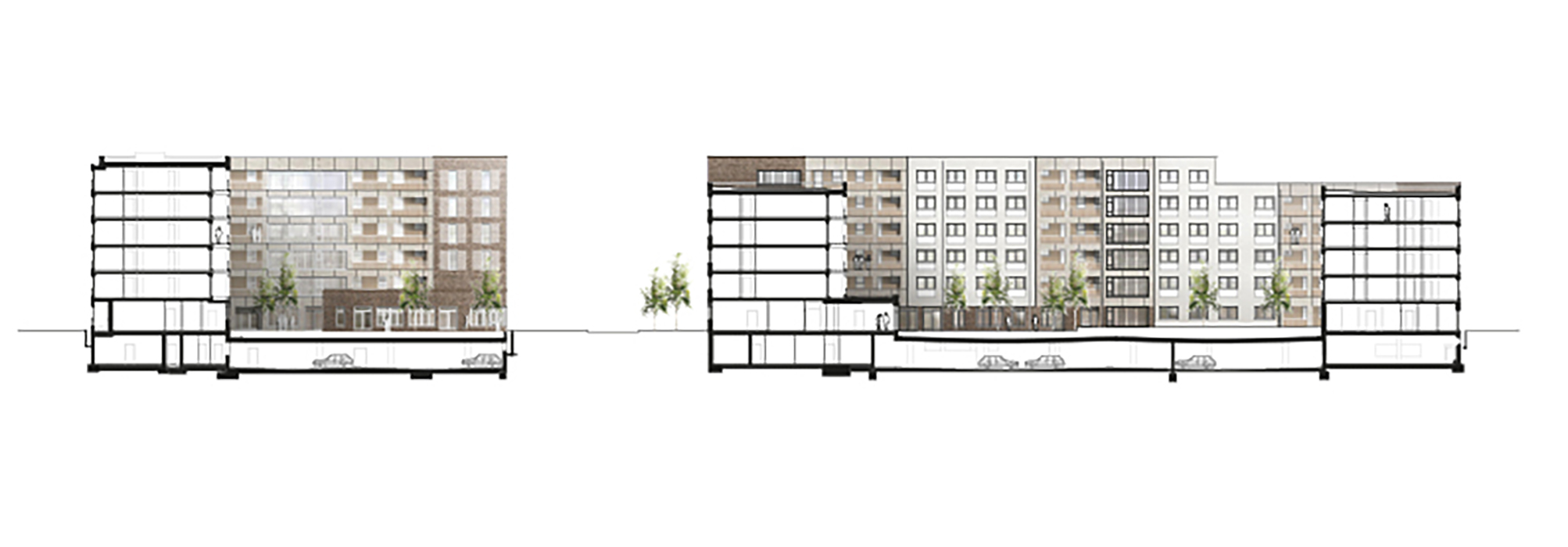
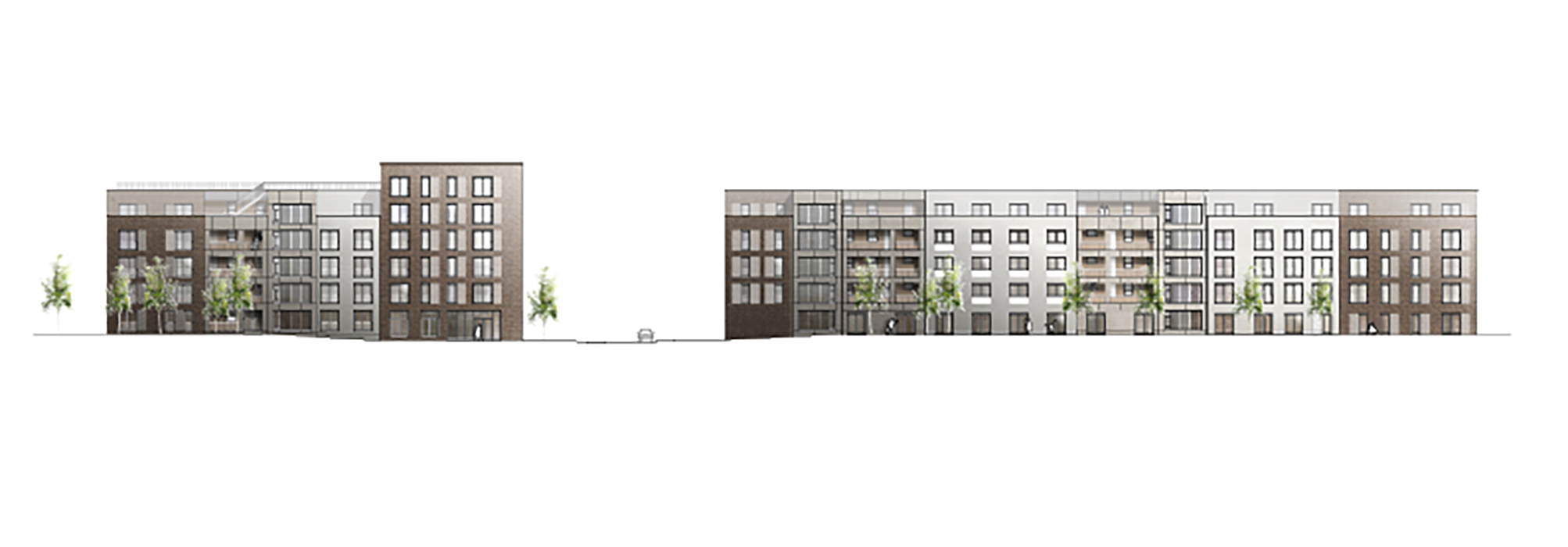
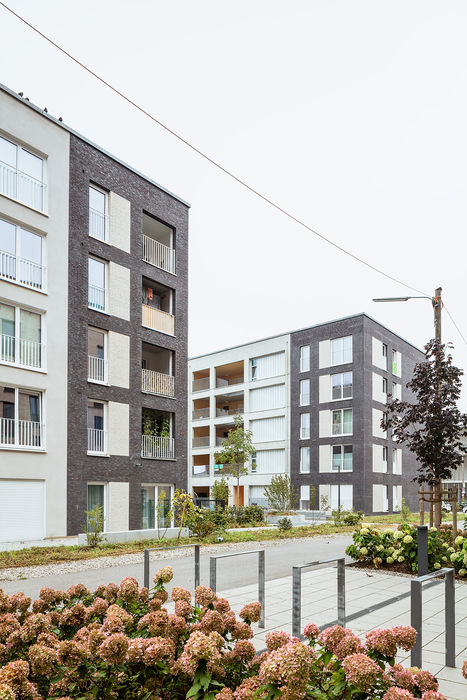
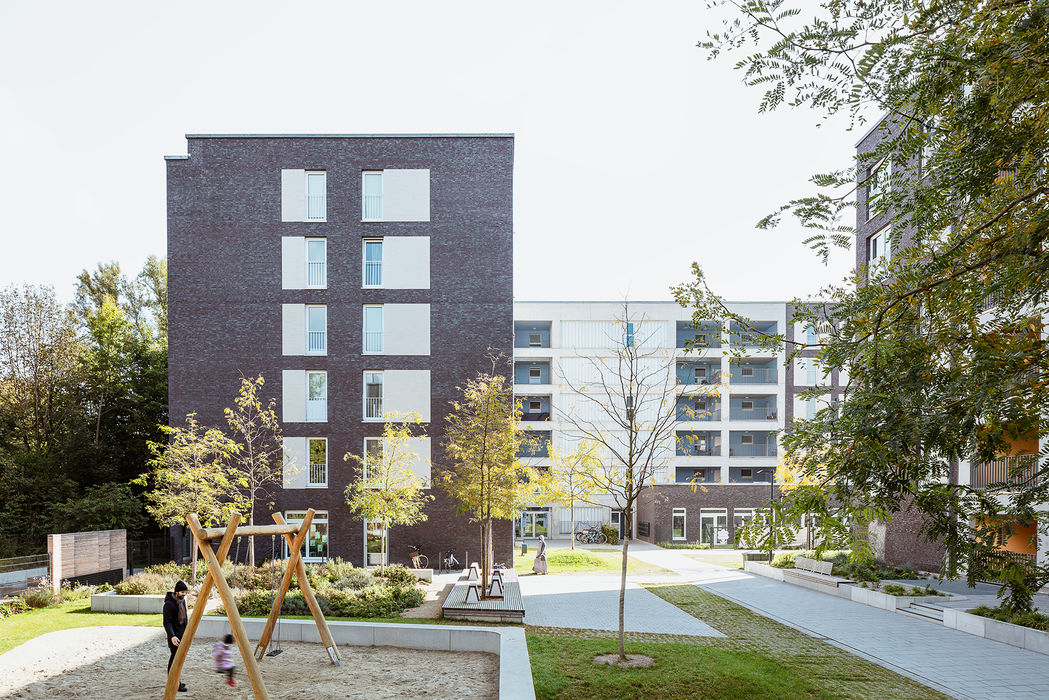
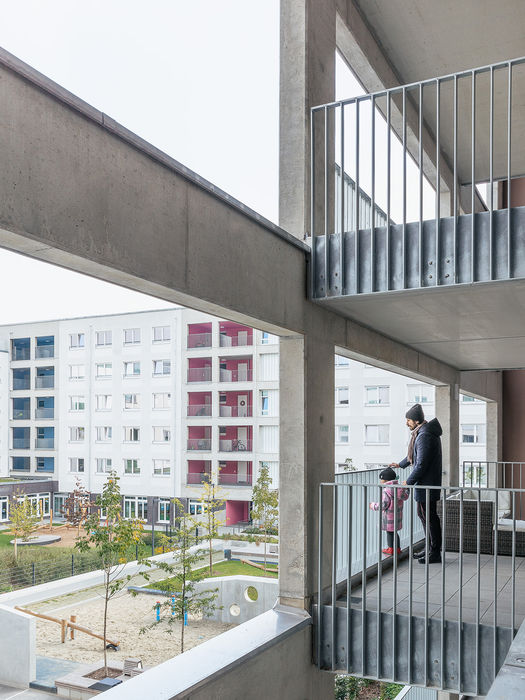
Located in Munich's northeast quadrant, Prinz-Eugen-Park sits among the districts of Herzogpark, Oberföhring, Johanneskirchen, and Englschalking. Once a military barracks complex, it has been reimagined as a vibrant residential neighborhood spanning 29.7 hectares. The master plan called for 1,800 apartments to welcome roughly 4,000 new residents beginning in 2011. The development splits into two distinct zones: the west features urban-density residential towers, while the east showcases an ecological model settlement with timber-frame construction and smaller-scale design.
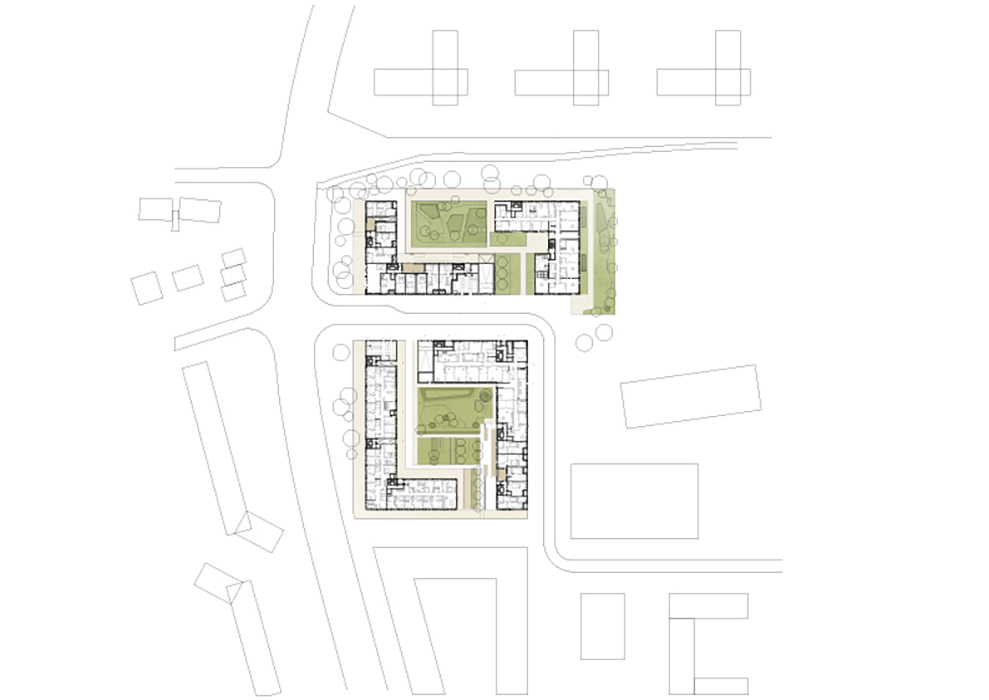
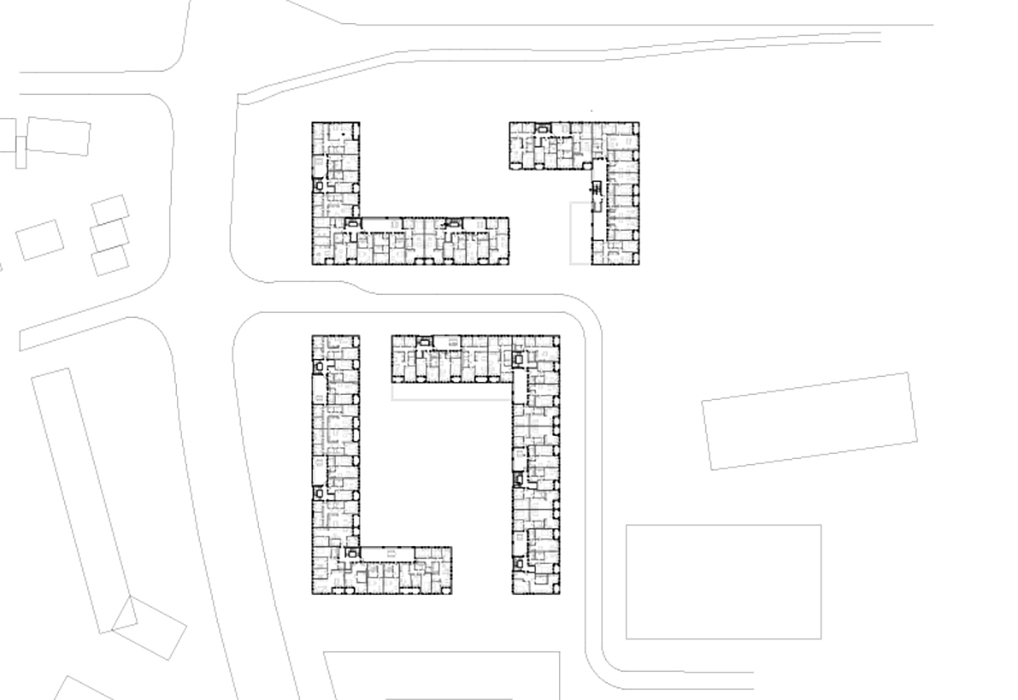
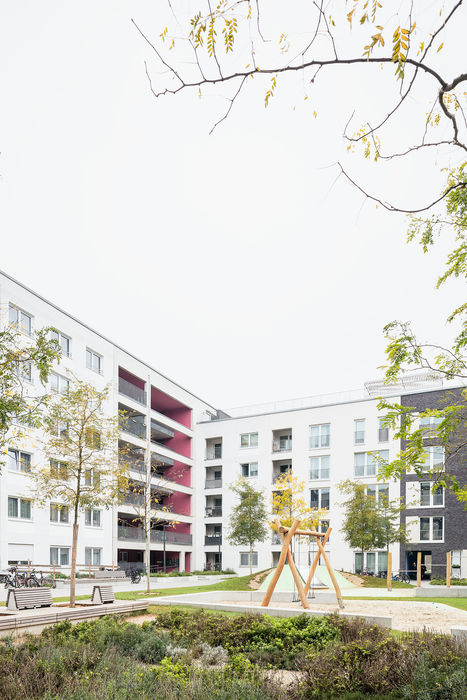
AllesWirdGut Architects (Vienna/Munich) triumphed in a 2015 invited competition for these prime plots along the settlement's northeastern edge. For Gewofag, the municipal housing company, they designed four buildings across two parcels at the neighborhood's northern gateway, fronting Cosimastraße. By 2019, the development—straddling Ruth-Drexel-Straße north and south—delivered 261 subsidized apartments plus market-rate units, along with two childcare centers accommodating 110 children. The unit mix spans 40 one-bedroom, 97 two-bedroom, 41 three-bedroom, 47 four-bedroom, 30 five- to six-bedroom, and six seven- to eight-bedroom apartments. Each of the four L-shaped buildings offsets its neighbors—two smaller structures to the north, two larger to the south—creating individual courtyards. Landscape architects Club L94 (Cologne) introduced greenery to these interior spaces.
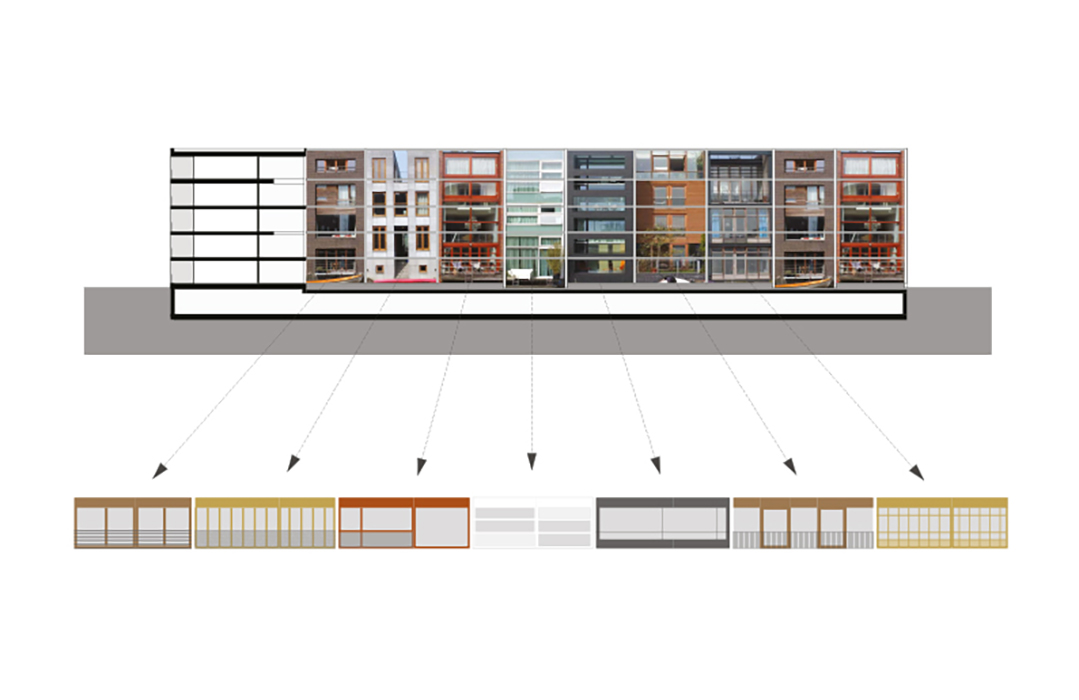
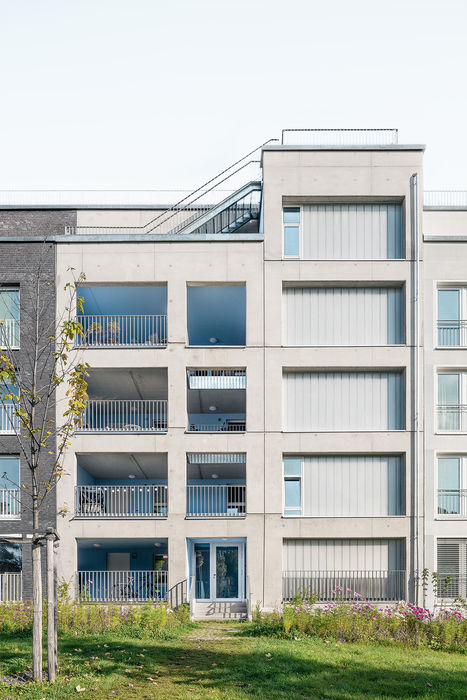
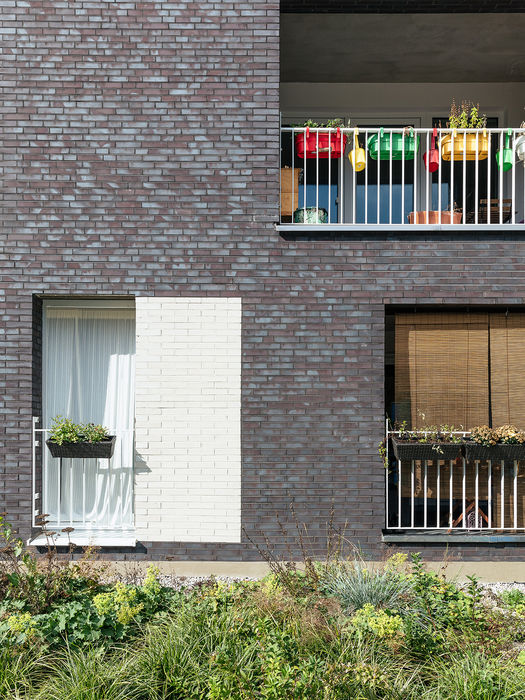
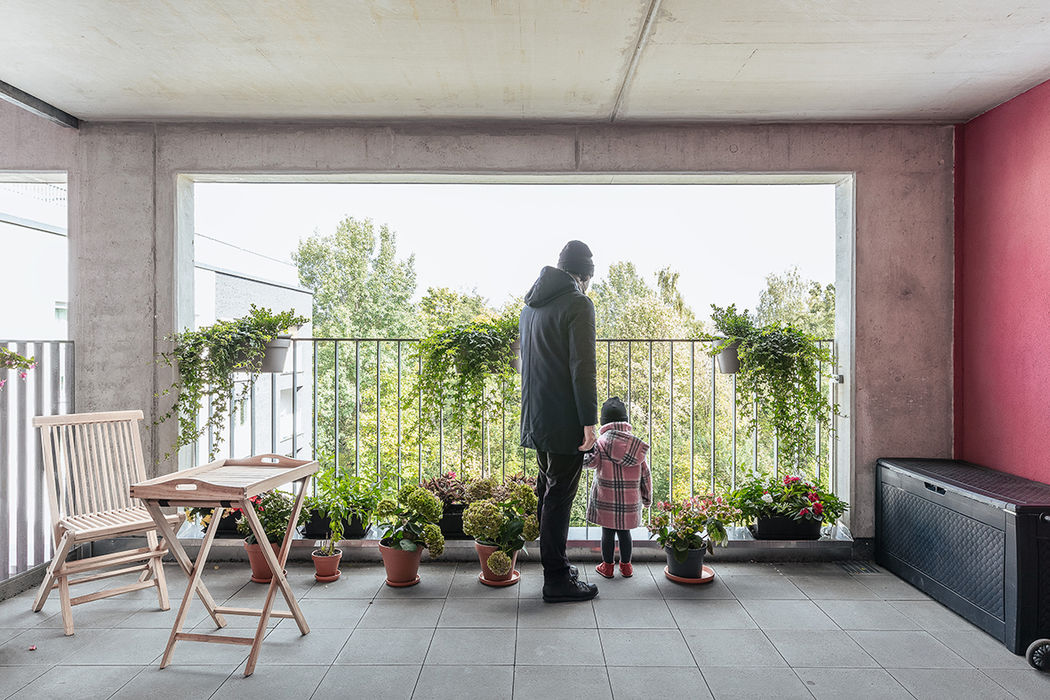
The architects describe their concept as "a shelf that creates order"—and the design delivers exactly that. Façades feature uniformly arranged window openings of varying scales, creating visual calm. Alternating concrete and clinker-brick treatments—white-rendered sections paired with rust-red brick-slip cladding—establish a rhythmic pattern. The result? A dynamic streetscape that reads as intimate village-like rows of distinct homes, forming an authentic urban landscape. Facing the courtyards, the architecture reveals another dimension: extended stairwells cut deep into the buildings, creating play of color through varied paint treatments and opening into generous terraces that serve as social gathering spaces. These light-filled incisions encourage residents to animate their surroundings, fostering the kind of diverse, lived-in character that communities create themselves.
Photography Credits:
tschinkersten photography/AllesWirdGut Architecture
www.tschinkersten.com
(Published in CUBE Munich 04|22)

Sustainable and Healthy
Finian Carey and Daniel Brunsteiner design flexible standing desk solutions

Learning Through Space Design
The Geberit Campus combines architecture, learning and the brand to create an open space for knowledge
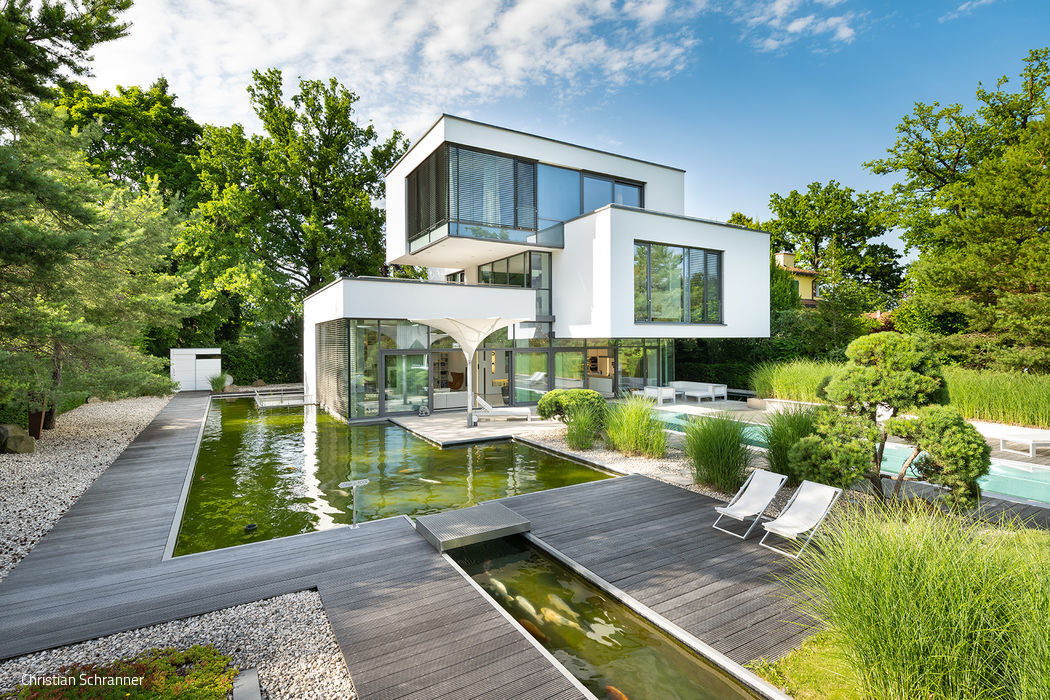
Stacked Cubes
A Modern Villa Emerges from the Pond
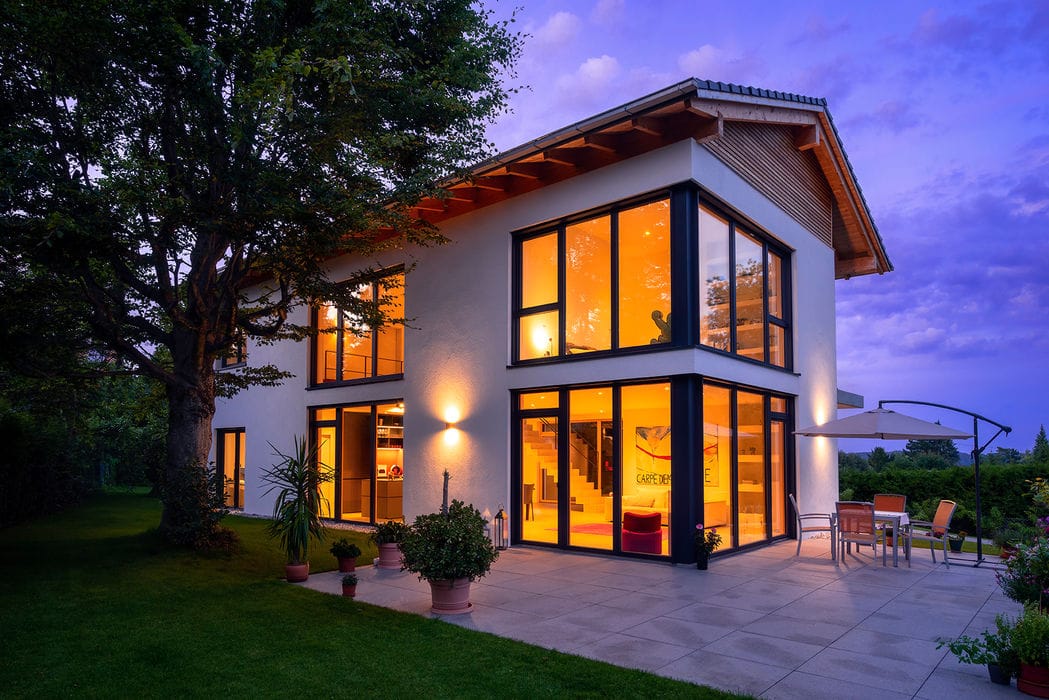
Sunshine All Day Long
Full-height timber windows on the east and west facades invite sunlight to flow through the entire structure, framing views of the grand beech tree in the...