


Allegro
Expansion building for string instrument accessory manufacturer draws inspiration from Bach's legacy


Pirastro, the venerable Offenbach-based company, stands as a world-leading manufacturer of hand-crafted strings, rosin, and accessories for string instruments. Founded in 1798 by Italian string maker Giorgio Pirazzi, the firm recently turned to Wellnitz Architects to design an expansion that would honor its heritage—one built on a reputation for reliability and, most importantly, sonic excellence. The new office and workshop building spans 2,060 m² and was designed to amplify existing administrative and production capacity, creating an optimized work environment. Architecturally distinct from the company's existing white structures, the expansion accommodates product development and manufacturing departments alongside meeting spaces and a works council office. At ground level, it features a versatile hall for events and exhibitions, purposefully oriented toward the street to showcase the company's legacy and innovation.
The façade commands immediate attention: a rear-ventilated, gold-toned aluminum skin that wraps the lower two stories. But there's more to this design than visual appeal. The arrangement of façade elements encodes the opening three bars of the first movement (Allegro) from Bach's Violin Concerto No. 2 in E major (BWV 1042). Five horizontal bands of varying heights correspond to the piece's instrumentation, while each band comprises three differently proportioned vertical elements—representing quarter notes, half notes, and whole notes. Music, translated into architecture.
This façade-as-score brings an unmistakably lively, elegant, and uplifting character to the building. The musical logic continues throughout the interior, most notably in the thoughtfully composed corridors and transitions. Here, geometric forms and natural light transform everyday passages into deliberately crafted spaces that invite contemplation. Floor-to-ceiling glazing establishes a visual connection to the outside, while clean lines and restrained aesthetics foster a calm, concentrated environment. The ground-floor event space echoes this openness—expansive windows blur the boundary between interior and street, welcoming the public inside.
Photography:
Rene Spalek
www.spalek.com
(Published in CUBE Frankfurt 02|24)

Clear Vision & Bold Horizons
A University Senate Hall That Strengthens Identity and Dialogue

Purist Elegance
Interior design where architecture, materials, and light speak a unified language
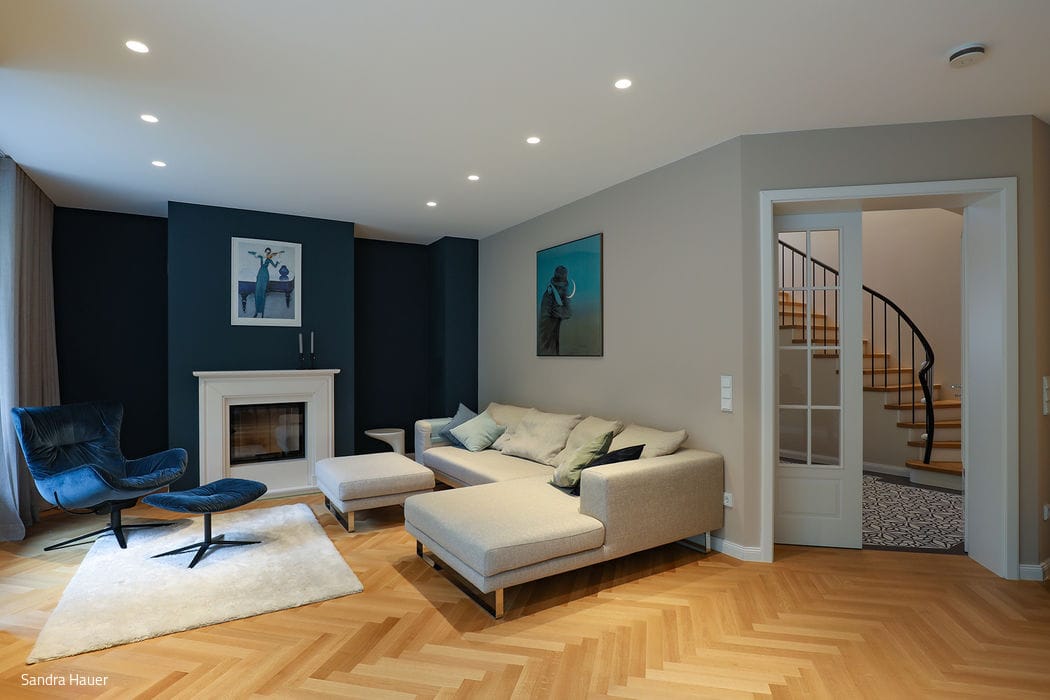
Making the Most of It
A 1950s Semi-Detached Home Transformed into a Family Dream
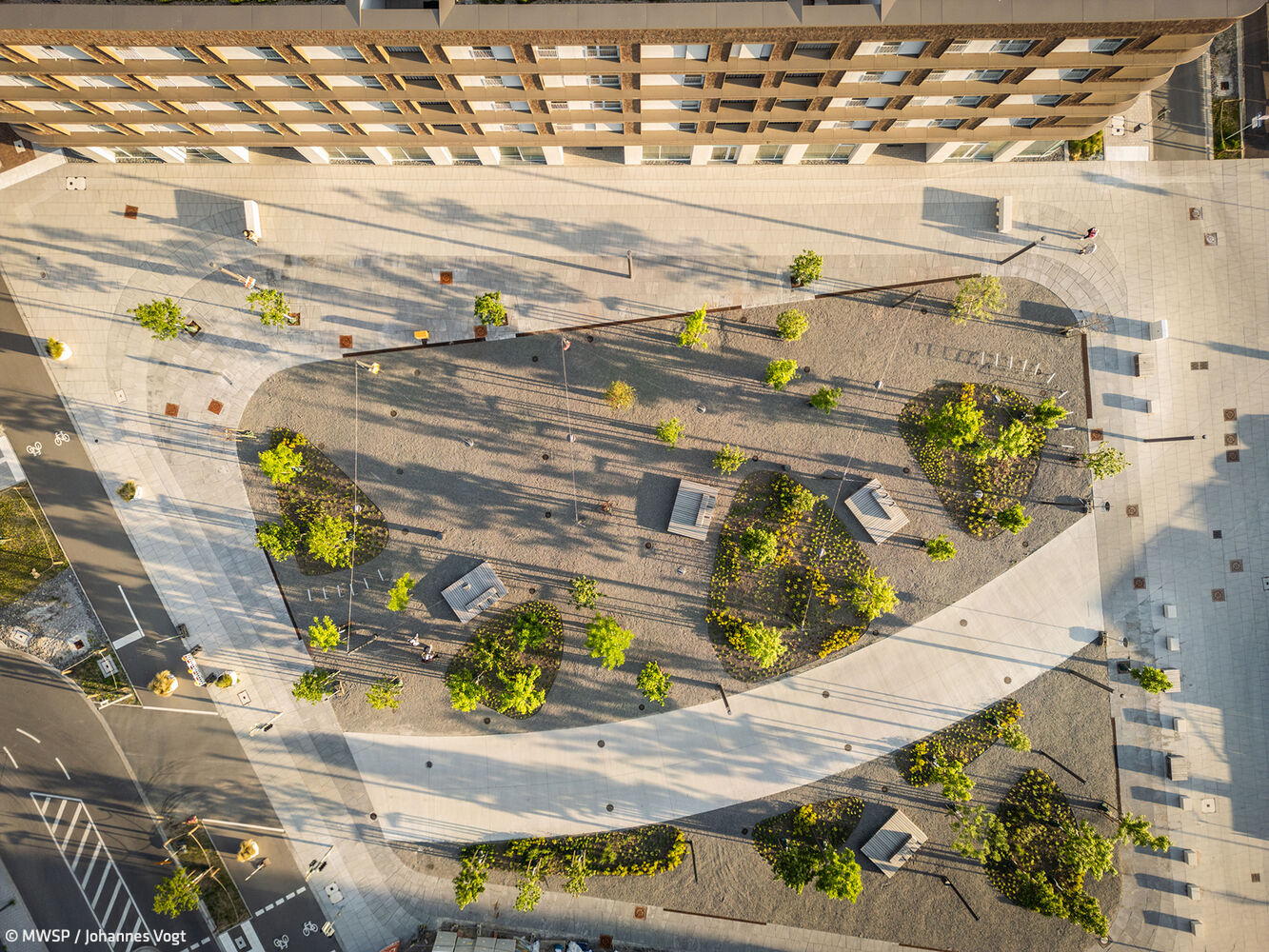
Vibrant Centre
A Vision for Tomorrow: Reimagining Spinelli Quarter Square