


A View with Purpose
Linear villa design creates sightlines and provides privacy for residents
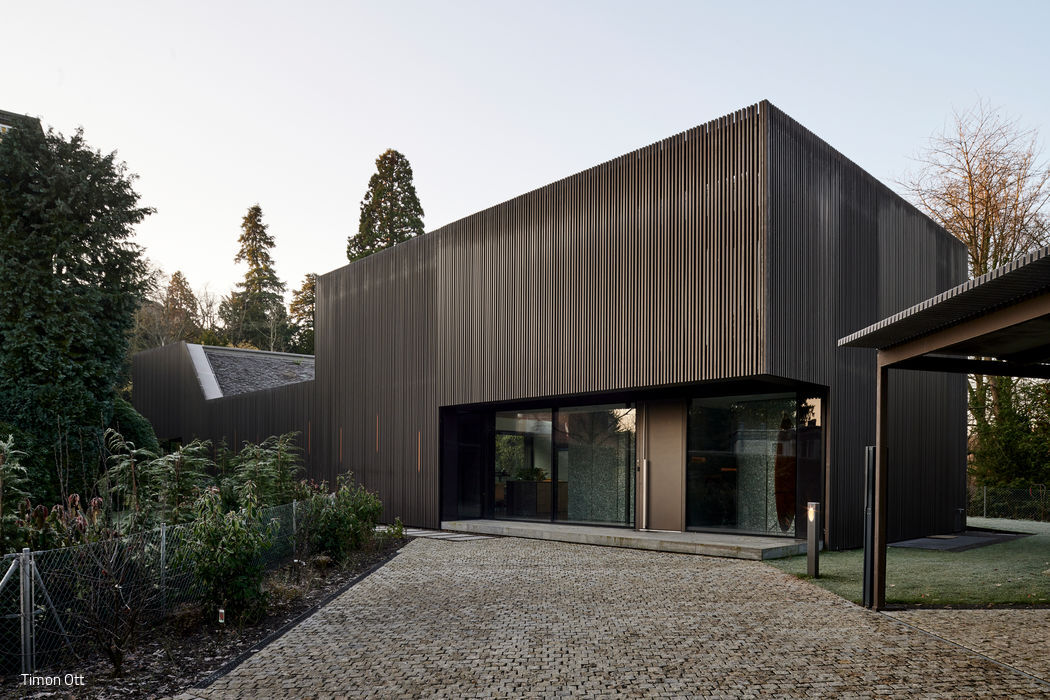
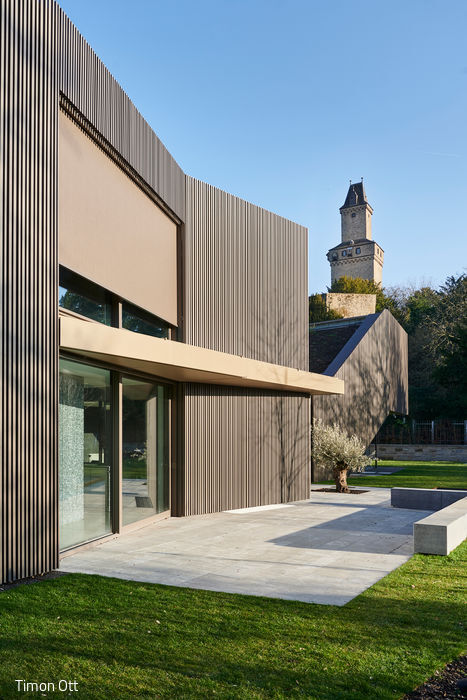
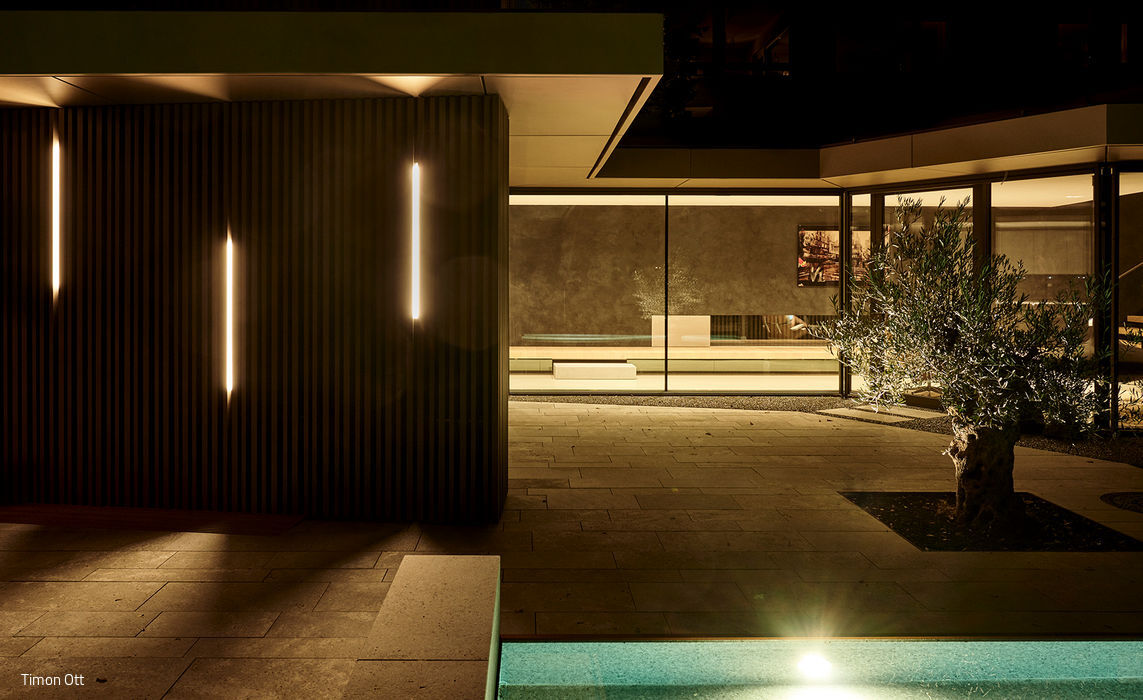
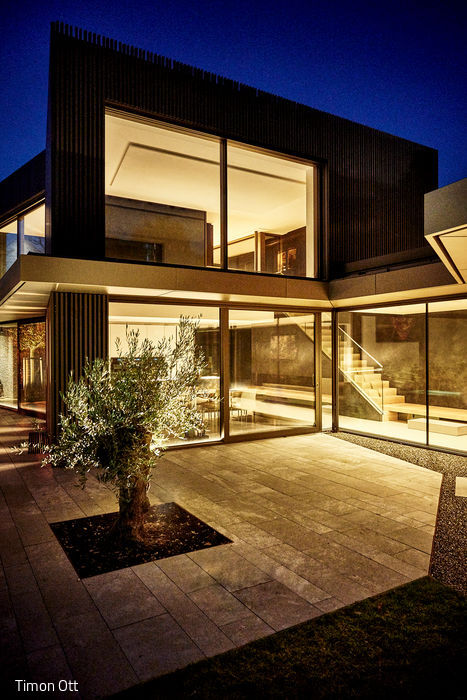
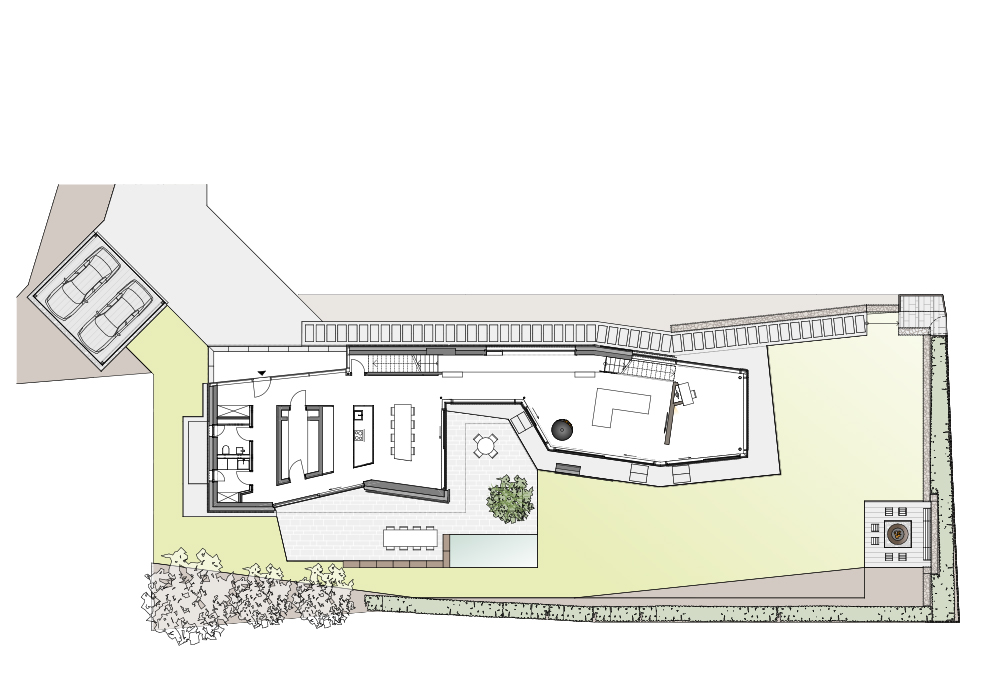
Kronberg Castle stands as one of the region's few preserved medieval fortifications. For those living in Kronberg, capturing views of this iconic landmark is a cherished privilege. Architect Wolfgang Ott from Kronberg transformed this desire into reality for his clients. The design also needed to frame vistas across the nearby valley and showcase a magnificent sequoia tree that commands the narrow plot.
To orchestrate these sightlines, the architects conceived a linearly oriented structure anchored by a distinctive tower-like element. Rising from the ground floor, this "tube" extends toward the castle, its fully glazed end wall framing the fortress as the focal point. The sloped roof of this form naturally draws the eye from the living quarters through the upper level to the illuminated castle tower at night—a view accessible from the kitchen across the courtyard's planted roof, and from the bedroom through the open dining void. To integrate the ancient sequoia, the wall planes of both volumes were angled slightly, creating a counterpoint to the tower's castle-ward orientation. This gesture produced a two-story basement entry pavilion and the ascending tower with an interior courtyard and a slender connecting passage binding both structures. The courtyard functions as the building's hinge and heart of the outdoor composition, incorporating a generous natural stone terrace, housing the venerable sequoia, and terminating at a sunken seating pool with integrated bench.
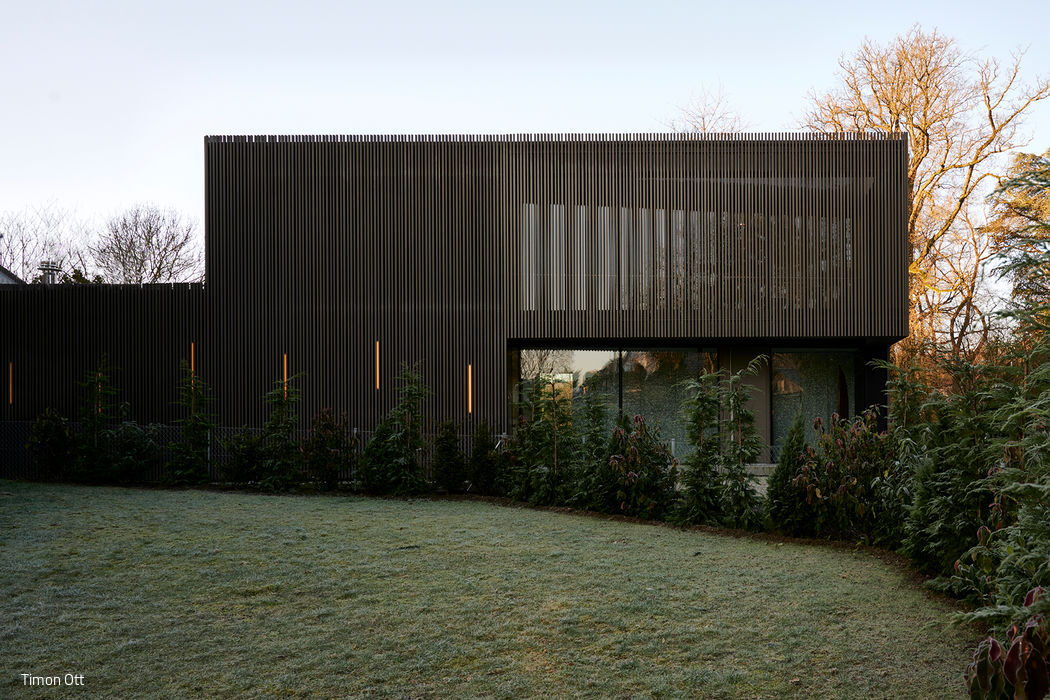
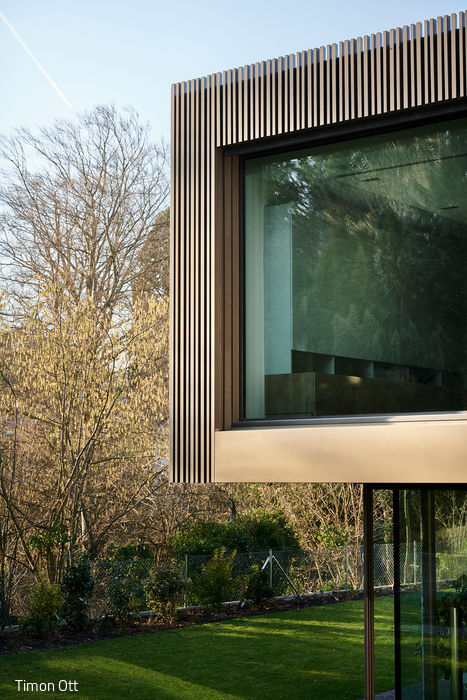
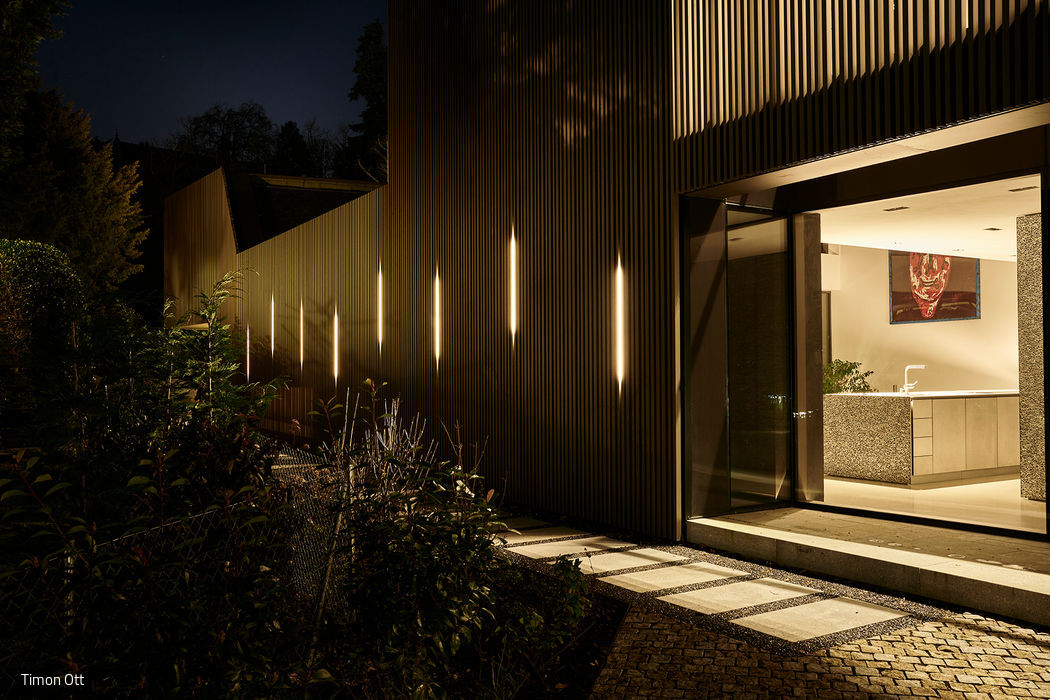
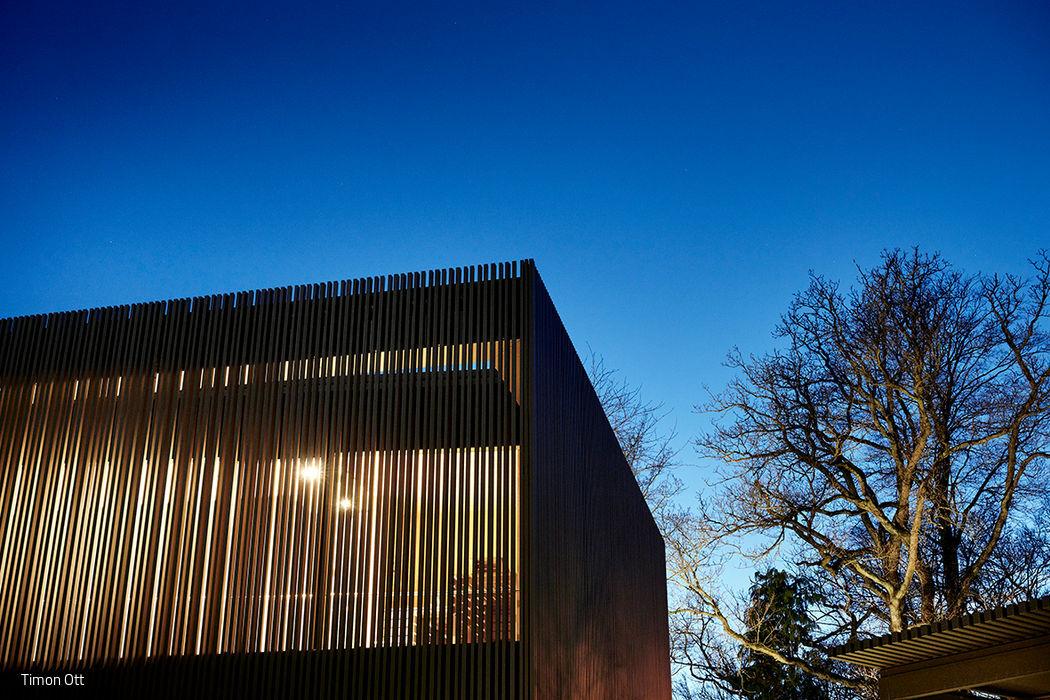
The building's sculptural skin—crafted from custom conical aluminum fins—captivates the eye. The staggered louvers create a dynamic, iridescent facade while their translucency strategically veils certain windows, shielding residents from external views. Integrated light seams trace the building's silhouette along the ground plane and roof edges, unifying the two volumes.
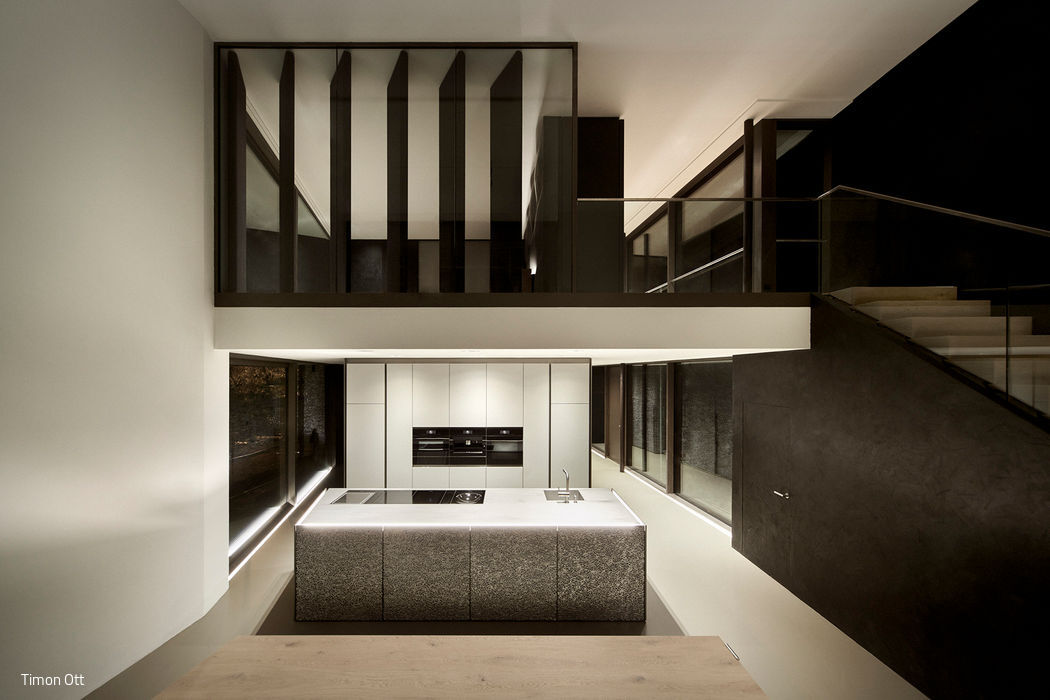
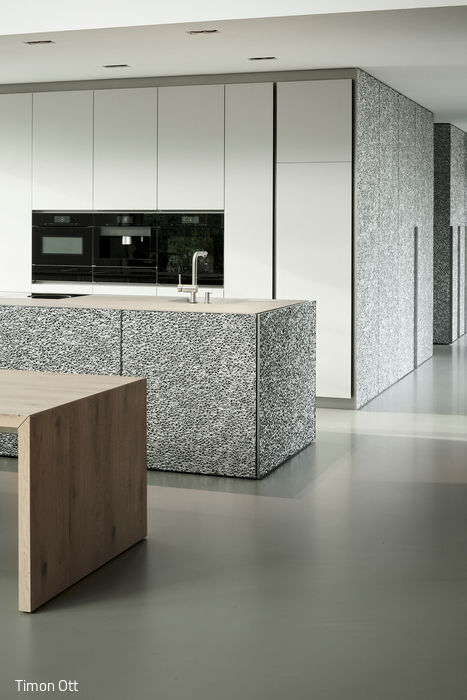
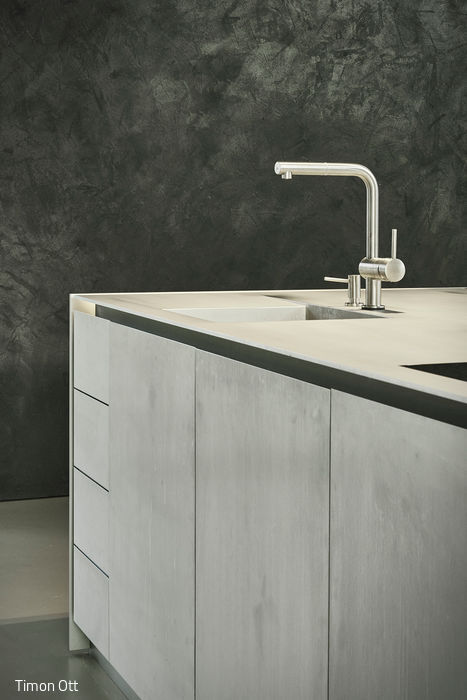
The main volume's ground floor houses essential services in a function block clad with brushed aluminum panels, integrating a kitchen whose cooking zone opens to the two-story dining void. Above, the private realm unfolds with dressing area, bathroom, and sauna. The tower's ground level contains the living area and a think tank—separated by exposed concrete and triple-glazed. The upper floor accommodates the workspace.
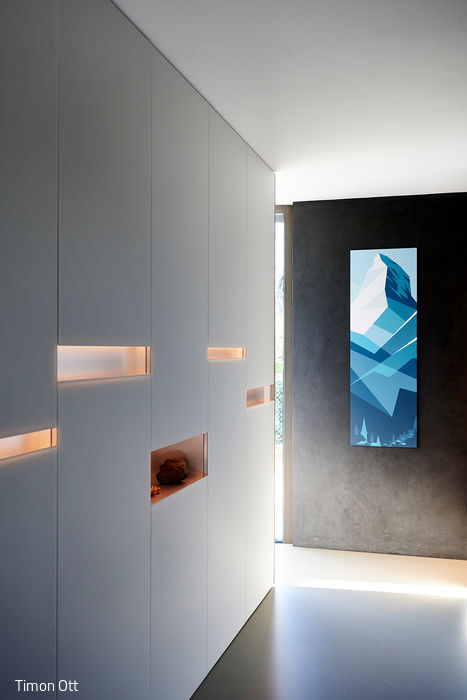
Twin staircases, connected by an inviting bench, ascend to their respective upper floors. Every furnishing and built-in element reinforces the architectural clarity—from flush-mounted doors and custom hardware to rotating felt-clad louvers that can open to frame the castle tower from the bedroom. Load-bearing concrete elements, pillow-formed, serve as both sculptural accent and bedroom headwall.
The landscape is woven seamlessly with the building's language. An entry pavilion, carport, and fire feature extend the residential design throughout. Natural stone paving and stepping stone zones delineate areas, while stone walls establish planes that anchor the structure. Through consistent material vocabulary—natural stone in varied finishes paired with bound gravel—a refined, cohesive character emerges.
Photography Credits:
Timon Ott
www.timonott.com
(Featured in CUBE Frankfurt 02|22)

Home and Heritage
Refined residential ensemble providing space for two families

Green Sanctuary
A year-round blooming garden that harmonizes with the residence

Harmonious Connection
Reimagining Historic Fabric: Two Residences from One
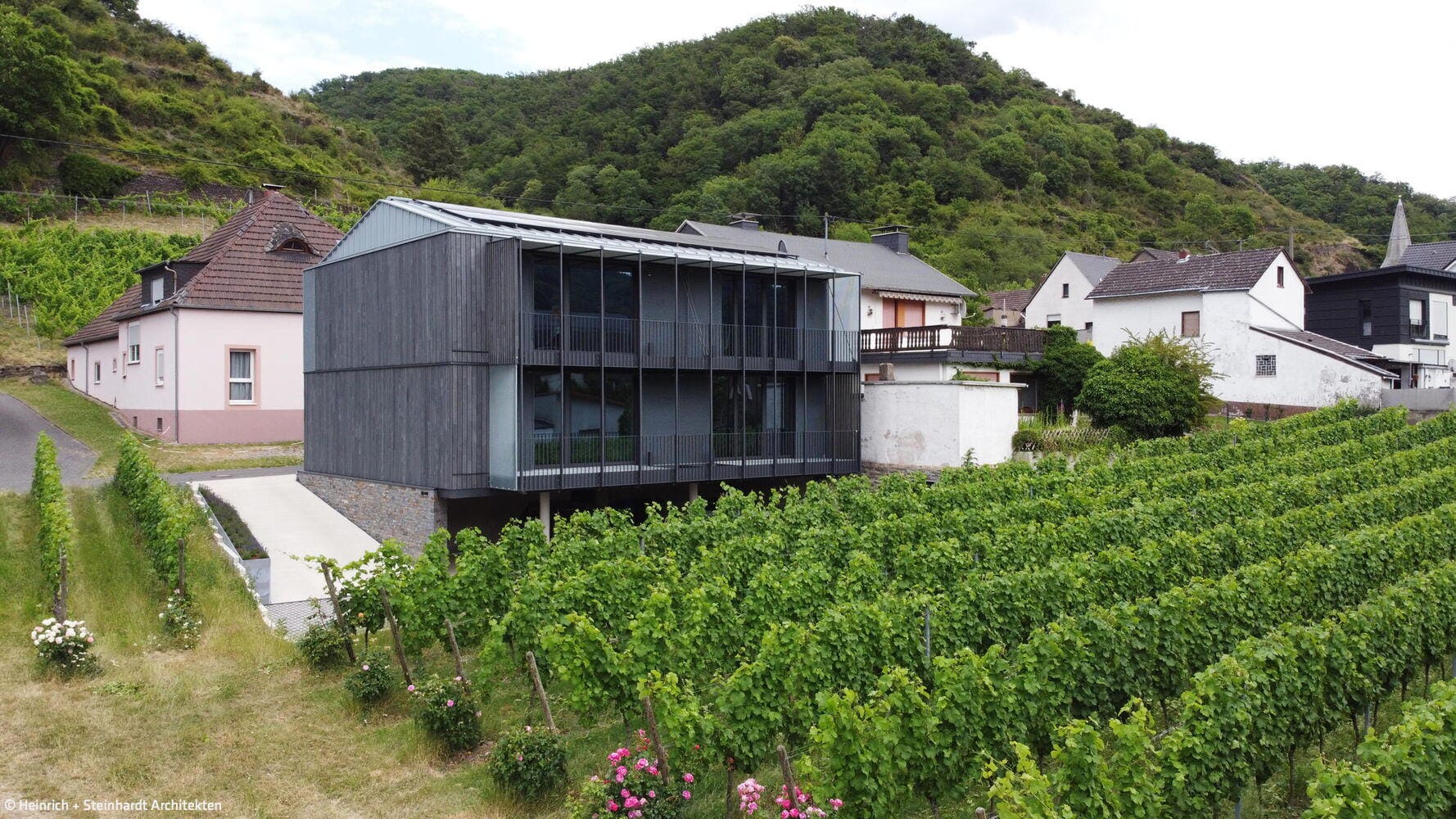
Confident & Respectful
The winery's guesthouse has deep local roots and a strong presence