


Reborn
A few thoughtful interventions breathed new life into this old farmhouse.
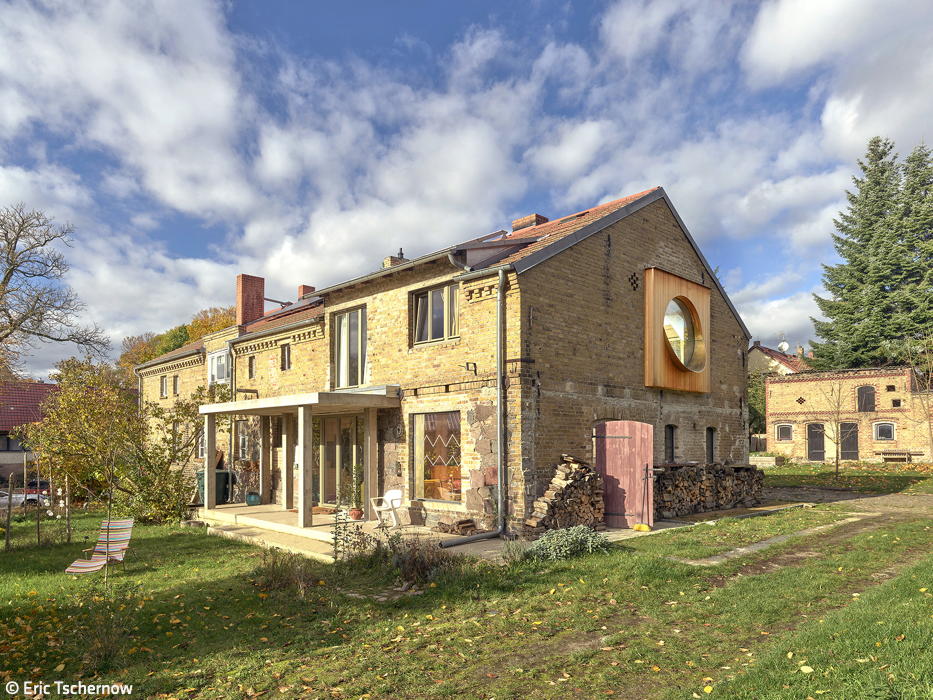


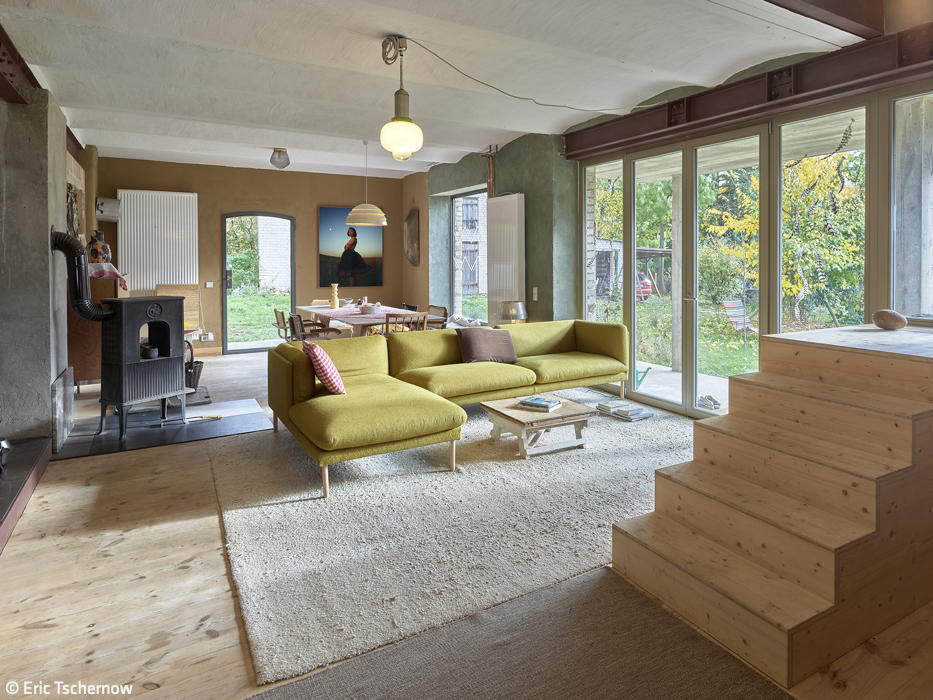
A farmhouse in a state of age-appropriate disrepair was thoughtfully renewed and upgraded through careful architectural interventions. A minimalist transformation—one that reveals its ingenuity only upon closer inspection.
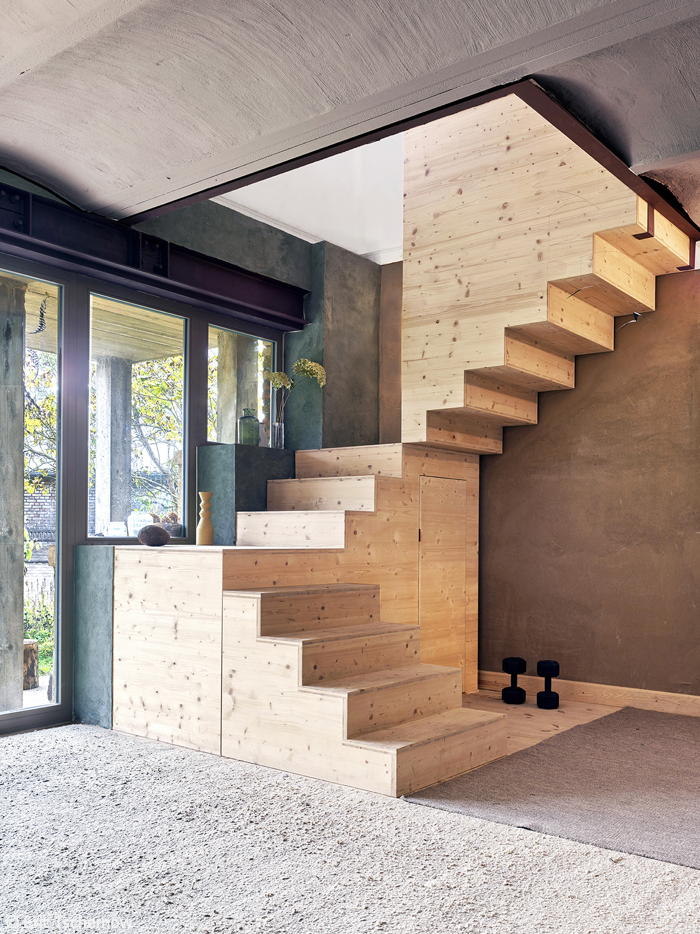
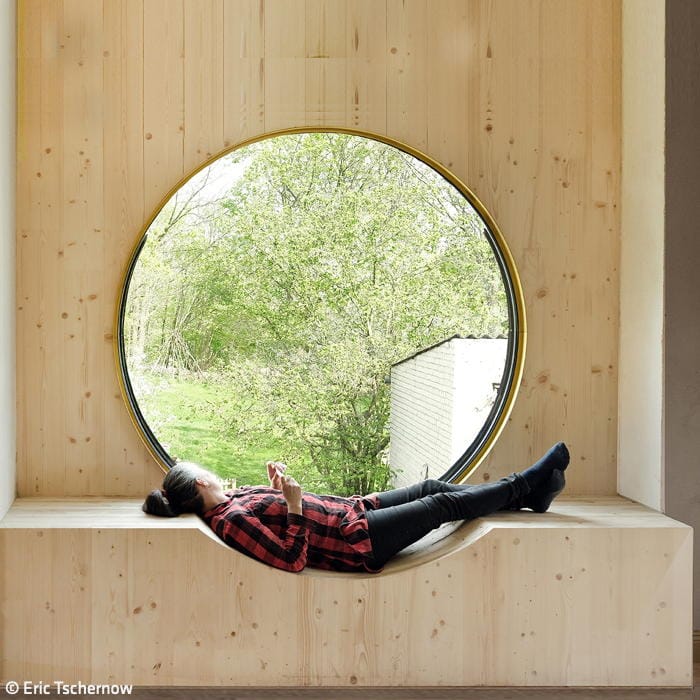
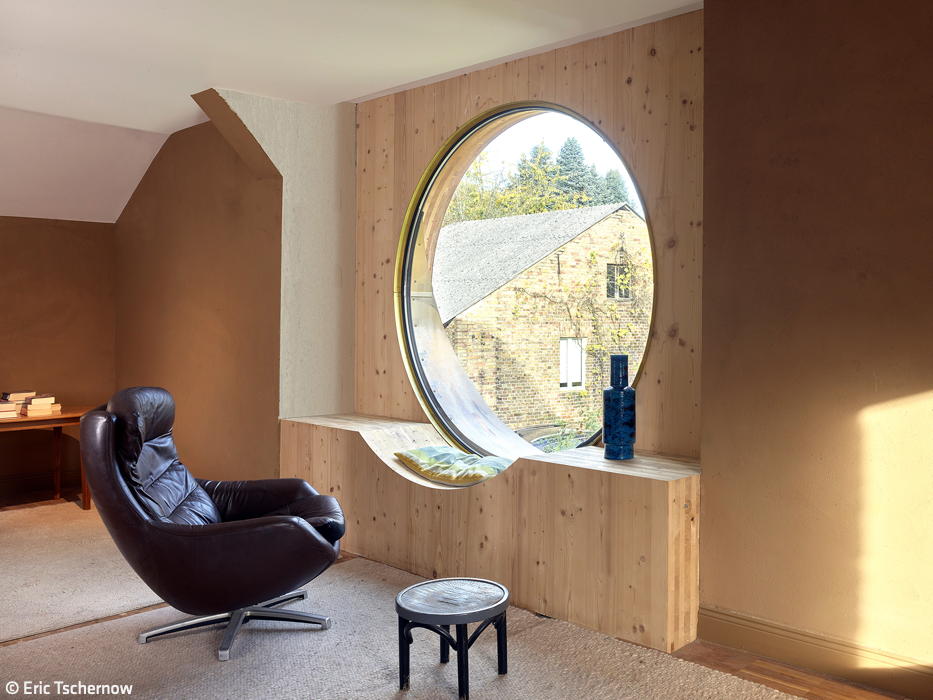
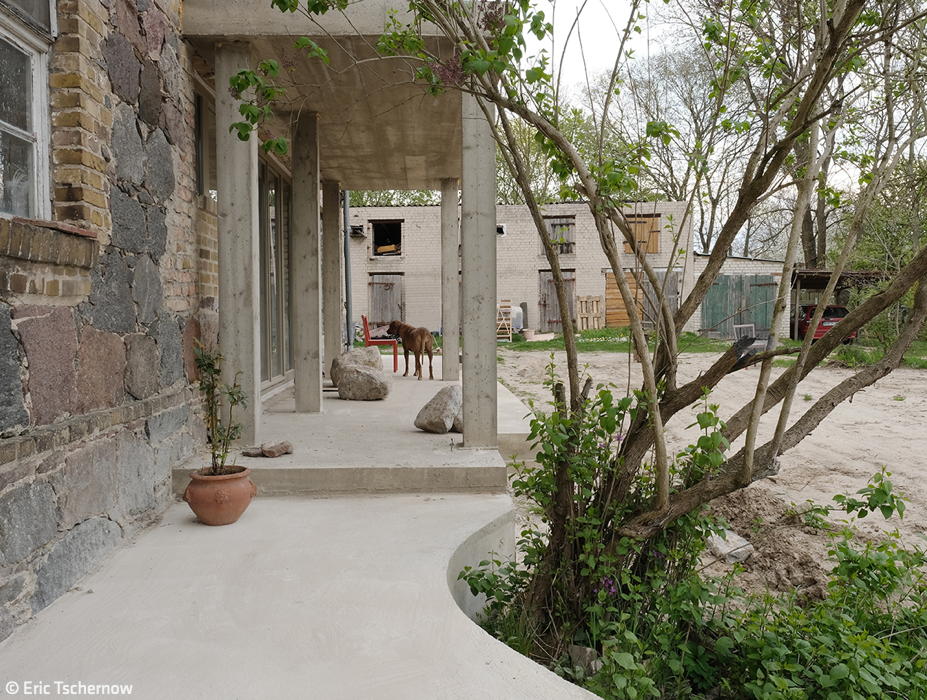
Let's start at the beginning: this Brandenburg farmhouse in Lanke, just 40 km north of Berlin, required a sensitive renovation. The client—a goldsmith and jewelry designer—needed a home and studio where the original building fabric would remain largely intact, save for a few essential modifications. She turned to Berlin-based architect Christoph Wagner to realize this vision. The most striking intervention is an off-center circular window puncturing the eastern gable. Once blank, this new opening now welcomes morning light into the interior. The brass panel framing the window is carefully angled to shed rainwater while reflecting additional sunlight inward. The "porthole" was delivered prefabricated and inserted into a cross-laminated timber frame, creating a bay that projects from the facade. Inside, a wooden base with a recessed nook invites you to settle in and linger. The more substantial moves—executed by Wagner in collaboration with colleague Wenke Schladitz—involved opening the south wall for a floor-to-ceiling glazed door and cutting through the ceiling to accommodate the staircase. A cantilevered balcony structure counterbalances the outer wall's spandrel masonry, eliminating the need for interior supports while doubling as the veranda roof. A compact wooden staircase, railingless, spirals upward to the first floor. Its clever engineering lies in how it combines negative and positive forms into a unified whole. The result appears straightforward and robust—deceptively so, given the complexity required to build it.
Equally remarkable was the restoration's commitment to recycled materials throughout: the floor system—built from reclaimed glass aggregate and regional clay—requires no waterproofing layers. The parquet was reassembled from salvaged wood fragments sourced elsewhere. Demolition bricks found new purpose as non-load-bearing partitions. The result is a model transformation—thoroughly adapted to contemporary living, yet honoring the house's historical soul. It's a homecoming of sorts.
Photography:
Eric Tschernow
www.tschernow.de
(Published in CUBE Berlin 02|24)


Timber Construction, Refined Exterior
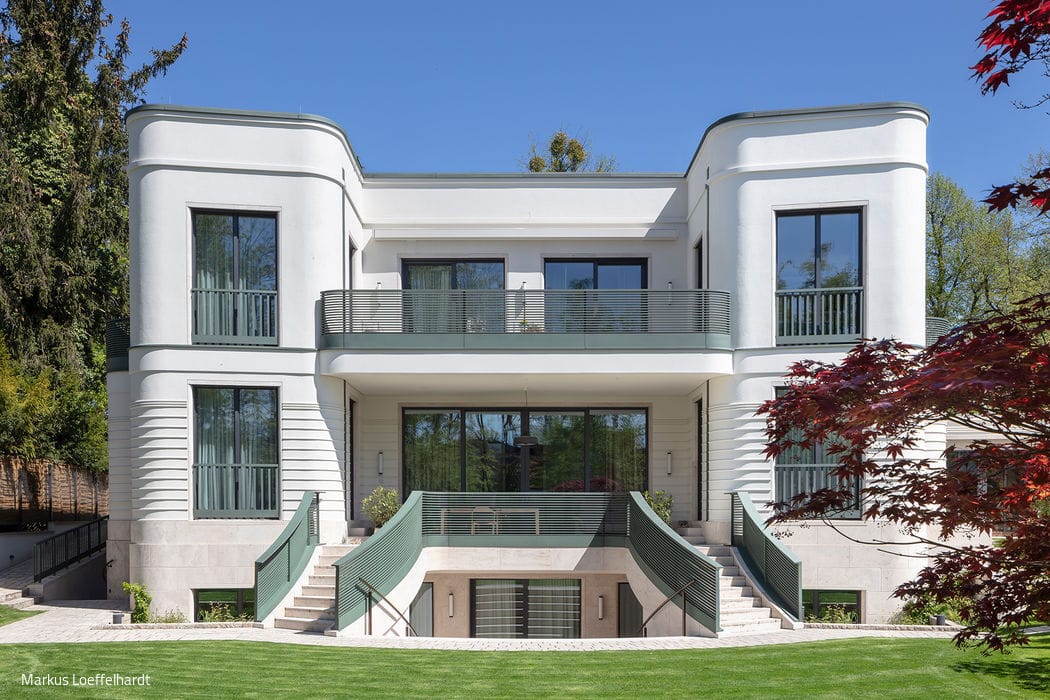
A Distinctive Residence in Dahlem
Black brick at the gasometer
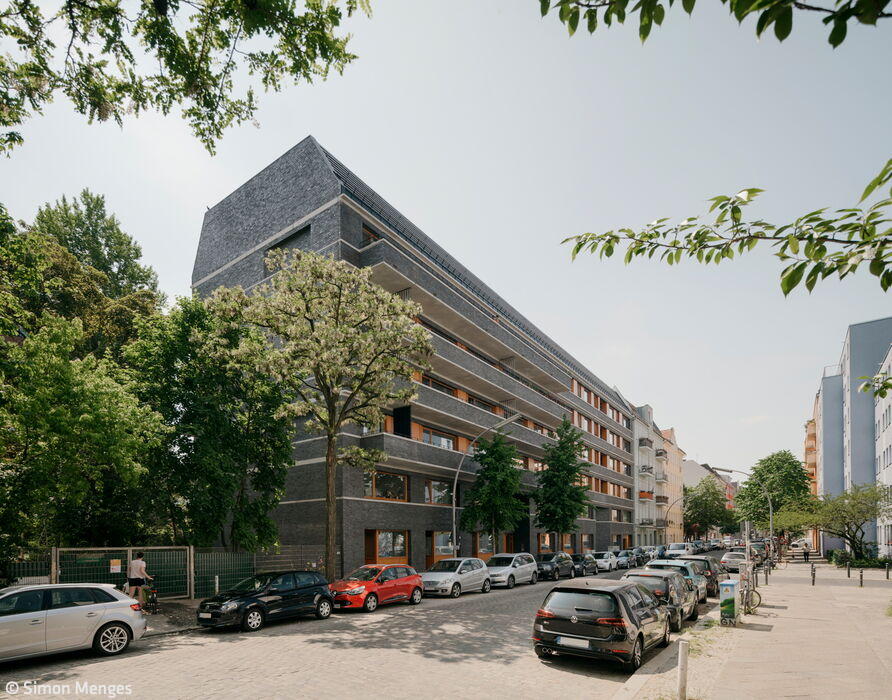
A residential building unconventional in both concept and expression
Reaching New Heights? The Question Posed Here
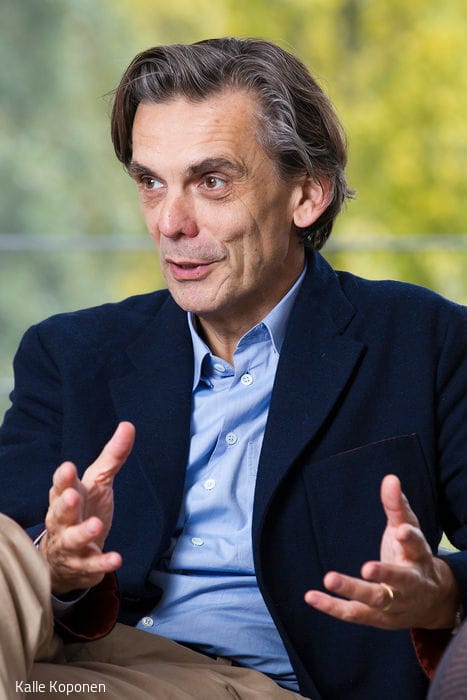
Do Berlin and Munich Need High-Rises? Weighing the Arguments with Matthias Sauerbruch
Alpine Architecture in the Capital
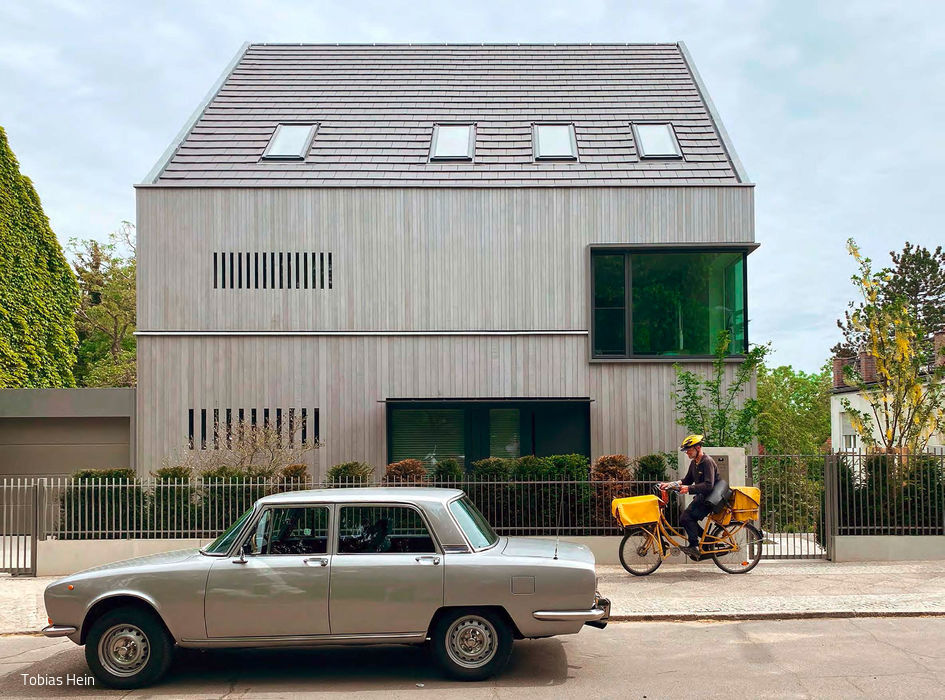
Inward-Facing Front, Open Rear: A Hillside Home