


Open Front, Protected Rear
Wheelchair-accessible family home with ancillary dwelling across three levels


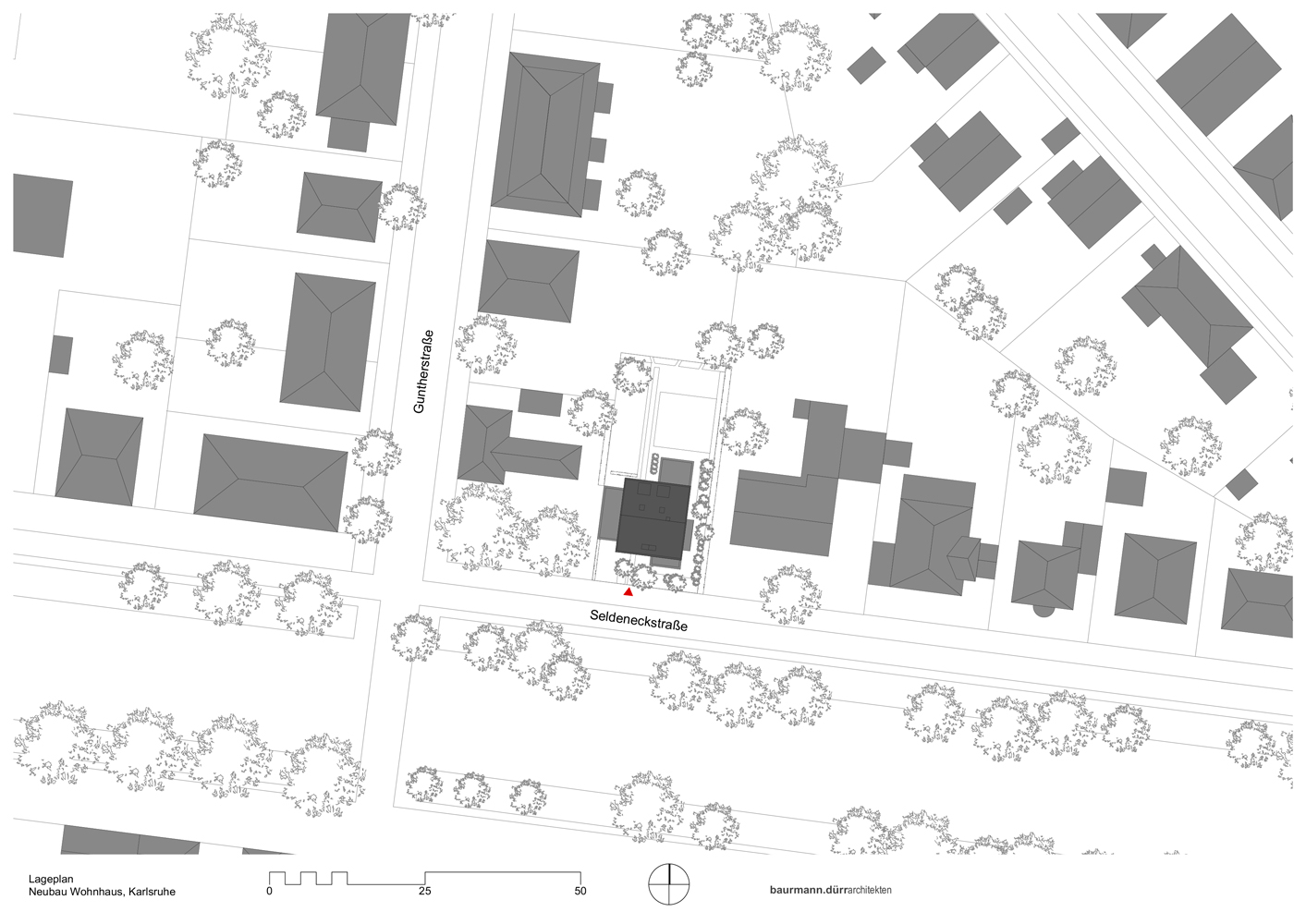


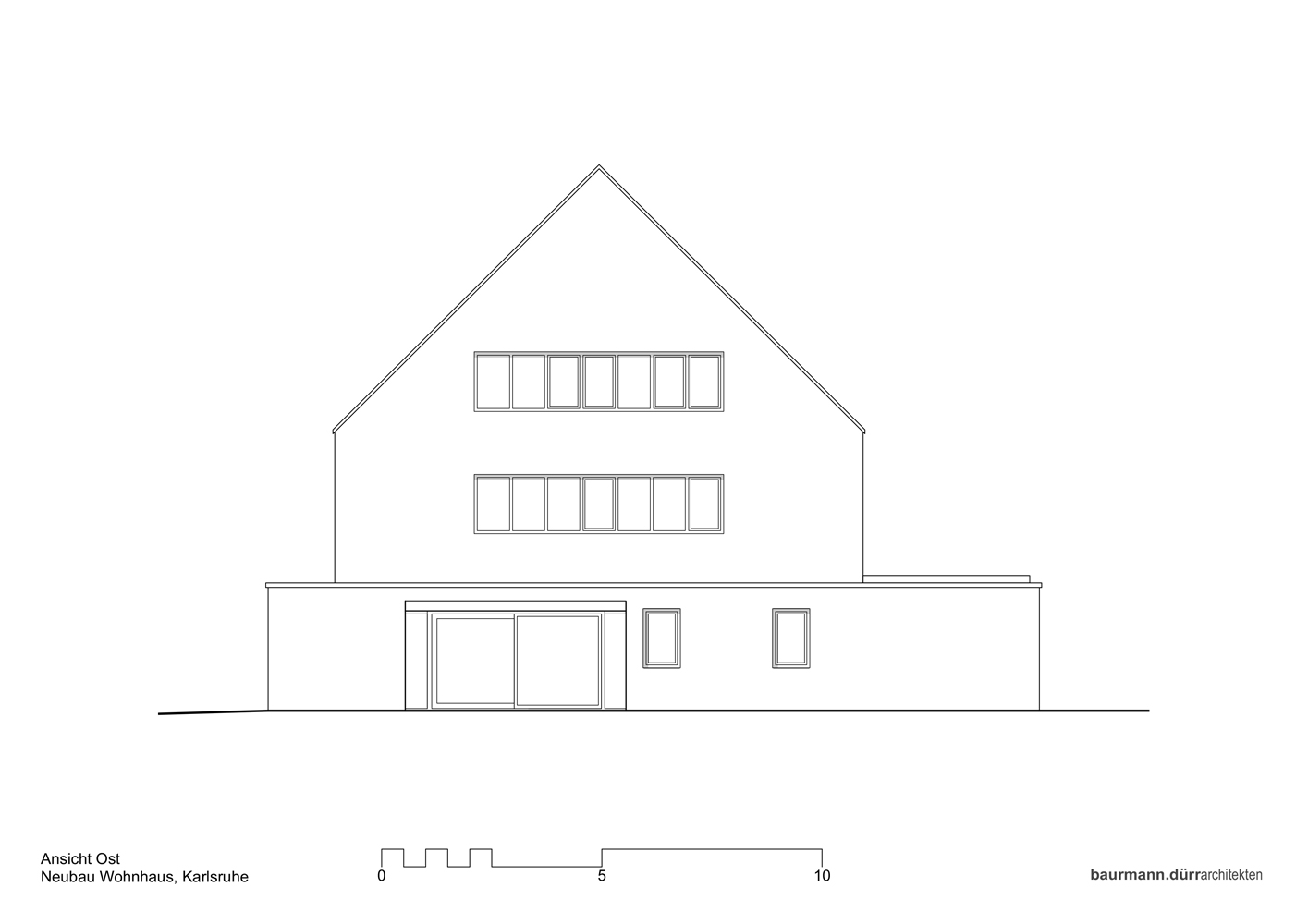


In a sought-after neighborhood close to the city center, an older building was demolished, leaving a narrow plot ready for development. Situated in the northern reaches of the district, the site sits along a verdant corridor that winds through this elegant quarter of turn-of-the-century villas. For Baurmann Dürr Architects, the challenge was to craft a compelling design that honored both stringent building codes and the clients' distinctive vision. The owners envisioned maximum transparency toward the street—a gesture of welcome—while the private garden would remain secluded and shielded from view. The ground floor needed to accommodate an in-law apartment for the mother-in-law, while the entire house had to serve as a gracious setting for a refined collection of contemporary art. Technical requirements added another layer of complexity: the homeowner uses a wheelchair, and the design had to ensure she could navigate her daily life with ease and independence.
The house's organization is elegantly straightforward: the ground floor contains the in-law apartment, parking, and the art gallery, while the couple's living and sleeping quarters occupy the two upper stories. An elevator connects all levels, including access to the basement art storage. A partially covered terrace extends from the ground floor into the garden—entirely barrier-free, with wide, level pathways. Above, two generous cantilevered balconies extend the living spaces into the open air. The architectural challenge lay in creating seamless, level transitions throughout, without a single step. Kitchen work surfaces adjust fluidly to accommodate different heights, and bathrooms are fully accessible. Despite the compact floor plan, carefully considered sightlines and vistas impart an unexpected sense of openness and flow.
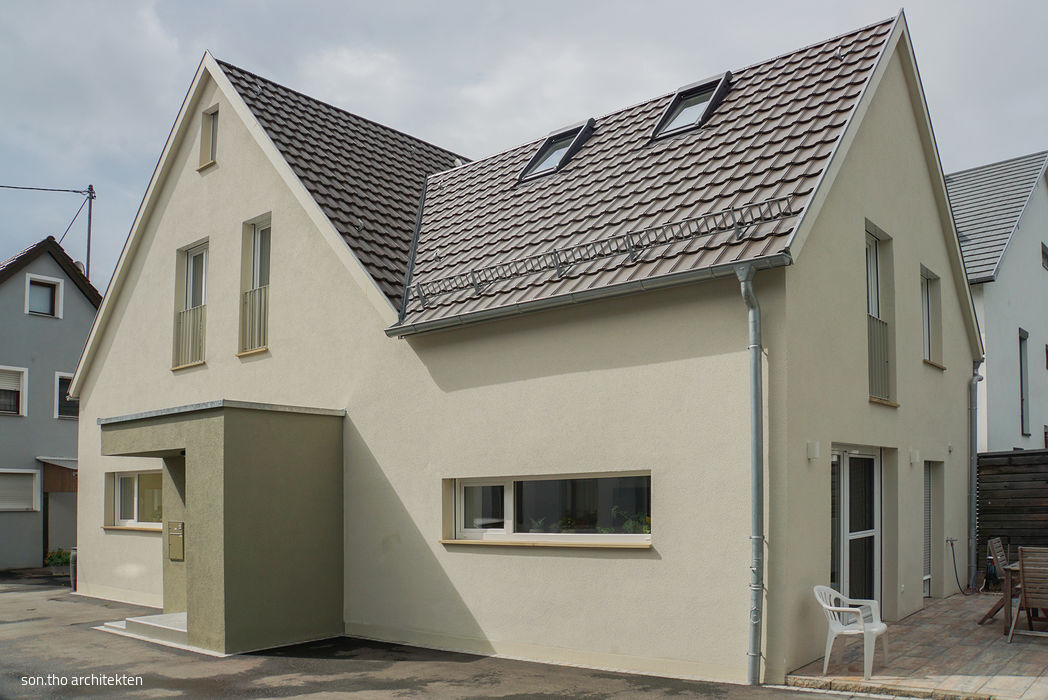
The façade maintains a refined restraint, respecting the character of neighboring homes rather than demanding attention. Materials and roofline reference the surrounding architecture: rendered plaster and brick, metal-framed windows, and a pitched roof with dormers. The front garden functions as a social hub—a natural gathering spot for the neighborhood. A ribbon window on the upper floor offers the homeowner views of street life from her workspace, even on gray days. The result is a deceptively simple yet genuinely sophisticated house that honors the couple's particular needs while achieving genuine architectural grace.
Photography:
Swen Carlin
www.swencarlin.com
(Published in CUBE Stuttgart 04|24)
Unlocking Existing Potential
From overlooked barn to extraordinary multi-level home
Swimming in a Historic Monument: Feuerbach
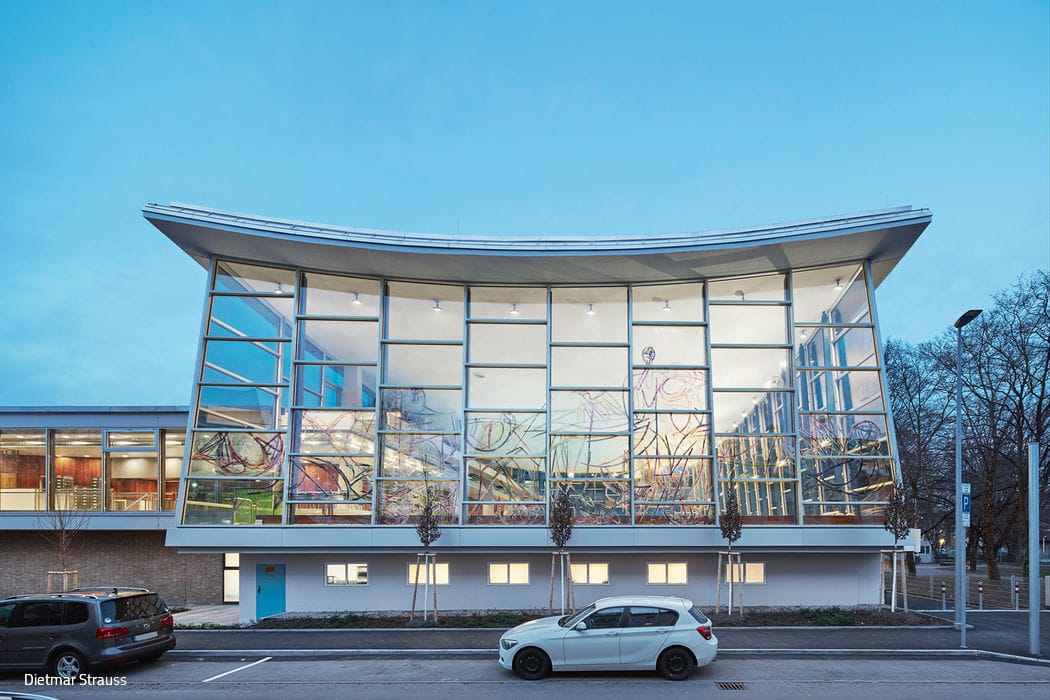
The planning consortium of pbr (architects and engineers) and HSP Hoppe Sommer Planung set out to preserve the architectural heritage while…
Timber House in a Gründerzeit Quarter
An open staircase serves as the focal point of this residential and commercial building, drawing light from the skylight down through to the ground-floor entrance and...
Where the Magic Happens
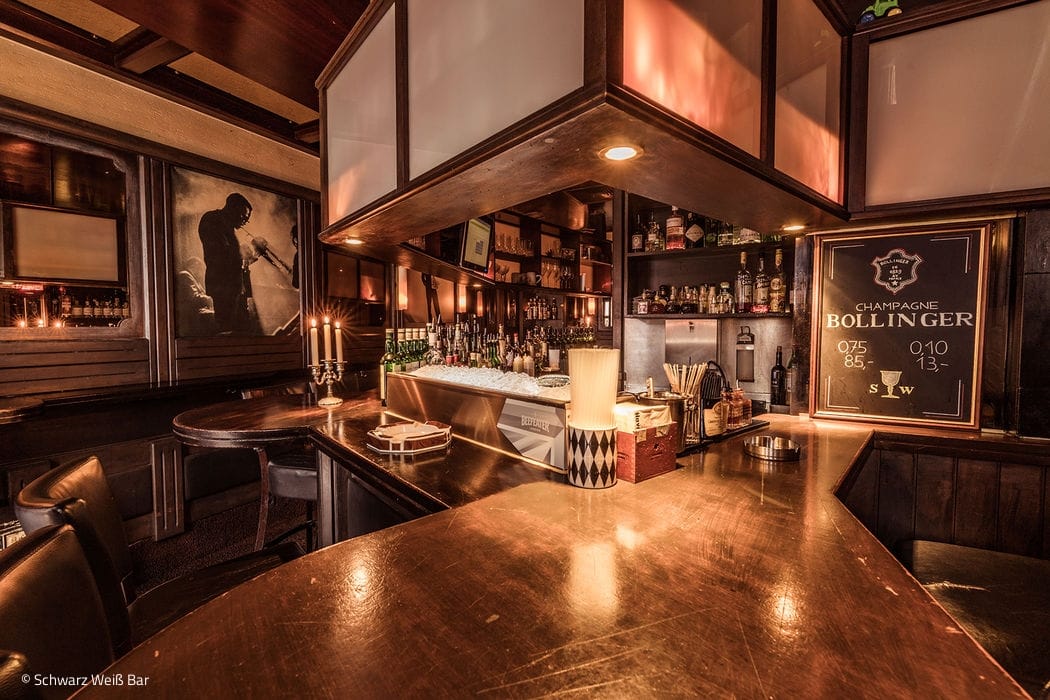
The Schwarz Weiß Bar ranks among Stuttgart's most sought-after destinations for night owls.