


From Vault to Suite
A former savings bank in Alt-Hürth transformed into distinctive residential spaces
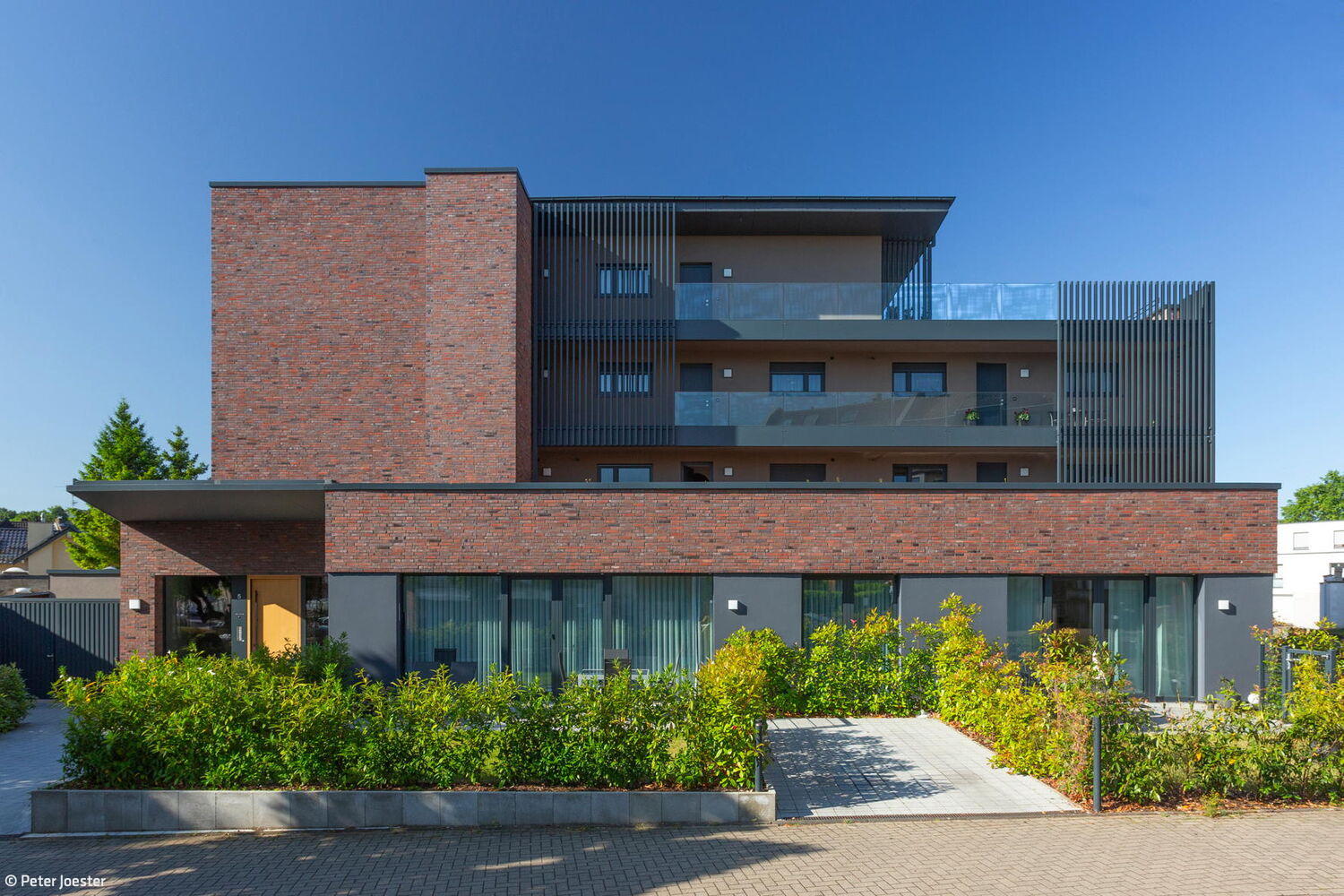


After fifty years, the savings bank branch at the heart of Cologne's Alt-Hürth district closed its doors – with online banking becoming the norm, the location no longer made economic sense. The brutalist structure from the early 1970s, which already housed apartments on its upper floors, underwent a complete transformation into a multi-unit residence. Cologne-based architecture firm Wilkin & Hanrath Bauphasen crafted a solution that preserves the building's existing fabric and embodied energy while thoughtfully reimagining it as a distinctive residential landmark.
Central-location landmark buildings like this savings bank often hold underutilized potential waiting to be unlocked. Such structures demand sensitive intervention—carefully calibrating scale and urban integration. Here, the mission was clear: transform the existing footprint into genuinely affordable housing. Throughout renovation, residents in the upper floors remained in place, with upgrades proceeding systematically. A new lift and barrier-free entrance now ensure age-appropriate accessibility. The building also received a comprehensive energy retrofit to KfW 85 standards. The original façade—typical early-1970s brutalism with exposed aggregate panels and light clinker brickwork—stood visually incongruous against the town's warm, traditional masonry heritage. Multiple façade strategies were tested during design development. The winning solution: a regionally authentic red clinker skin, refined by vertical shading elements and glazed balcony railings that introduce an unexpected lightness and refinement. The vault room presented an unexpected obstacle—its massive reinforced concrete construction proved immovable. Rather than fight it, the architects integrated it ingeniously: minimal new openings carved into the concrete walls yielded an exclusive master suite with ensuite bath and dressing room, with drill marks deliberately exposed as honest detail. Since the building lacks a basement, all secondary spaces—mechanical rooms, storage, and communal laundry facilities—occupy a dedicated ancillary structure.
Photography:
Peter Joester
https://peterjoesterfotografie.zenfoliosite.com/home
(Published in CUBE Munich 03|25)
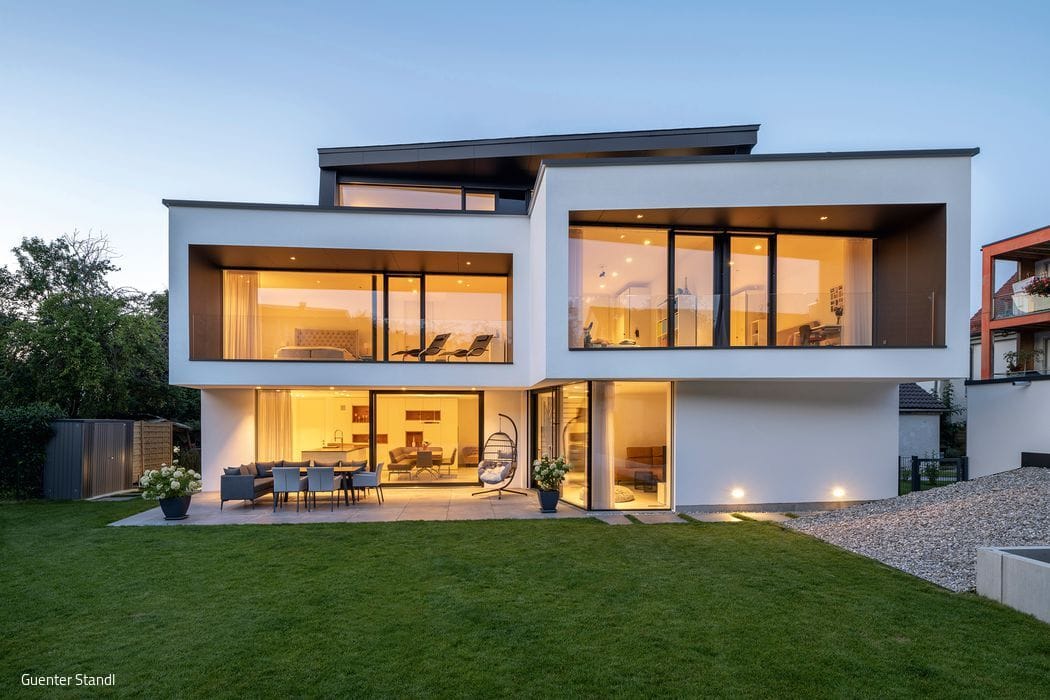
Villa in Understated Elegance
Single-Family Home with Panoramic Views in Landsberg am Lech
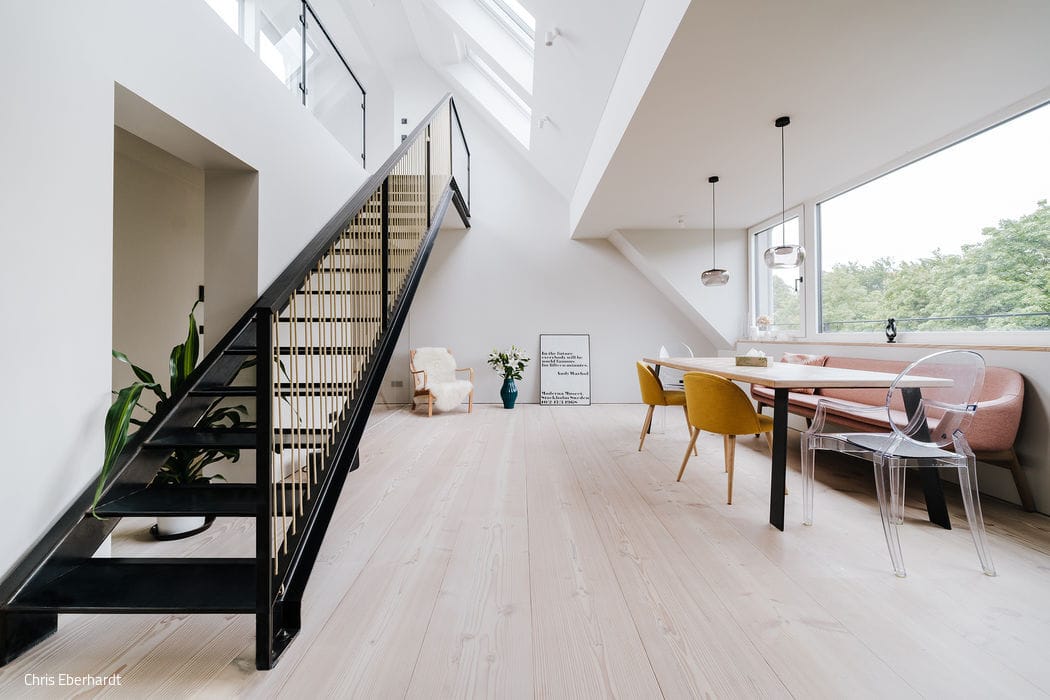
Panoramic City Views
A minimalist maisonette design explores compelling spatial arrangements.
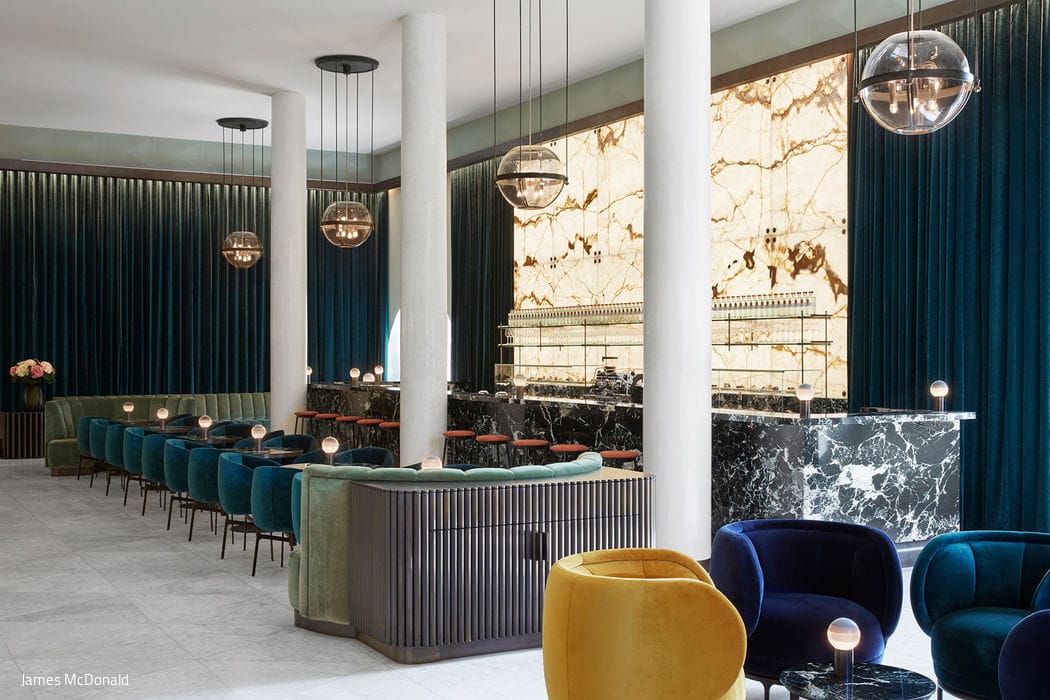
Wagala Weia!
The new Rheingold bar-bistro unfolds as a mystical stage environment.
A Harmonious Result
A 1960s detached house reimagined for contemporary living.